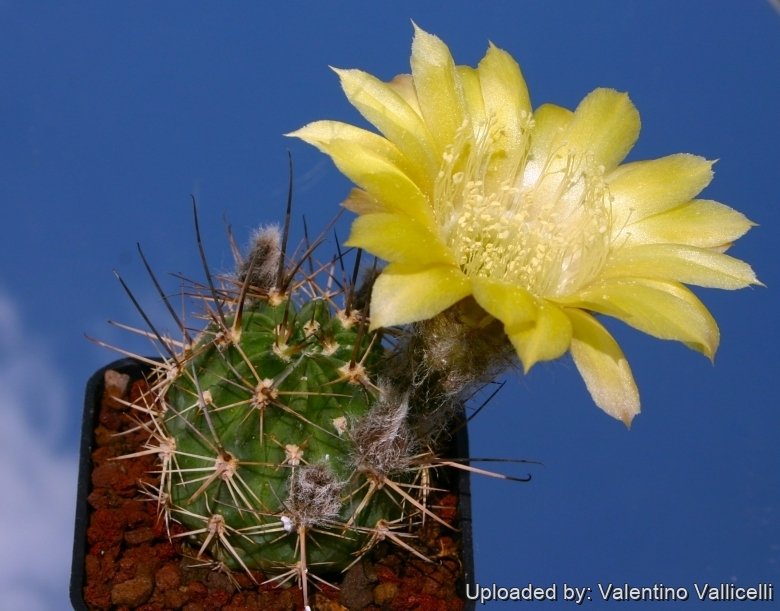
Publication: Monatsschr. Kakteenk. 17: 151. 1907
Description
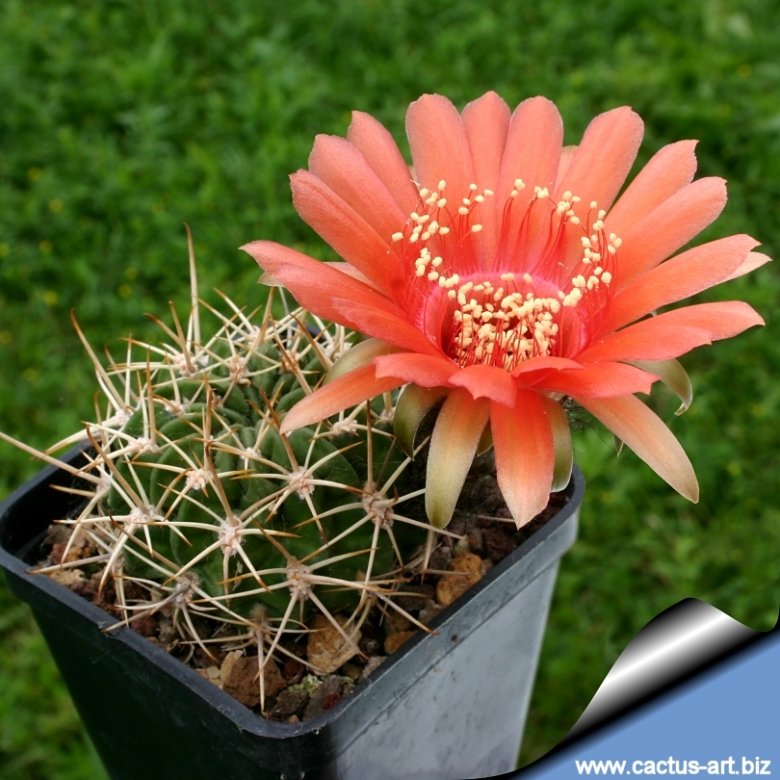
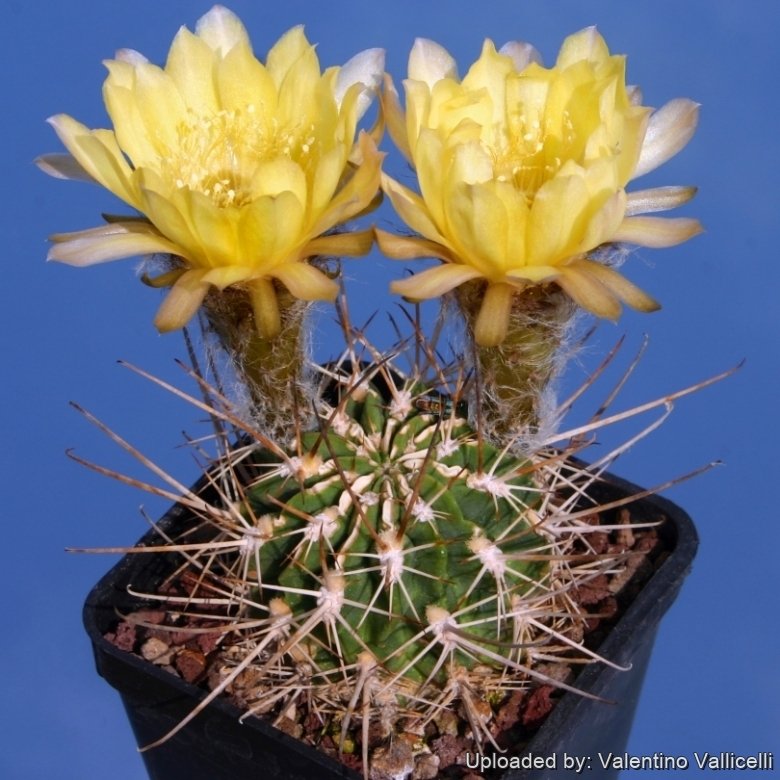
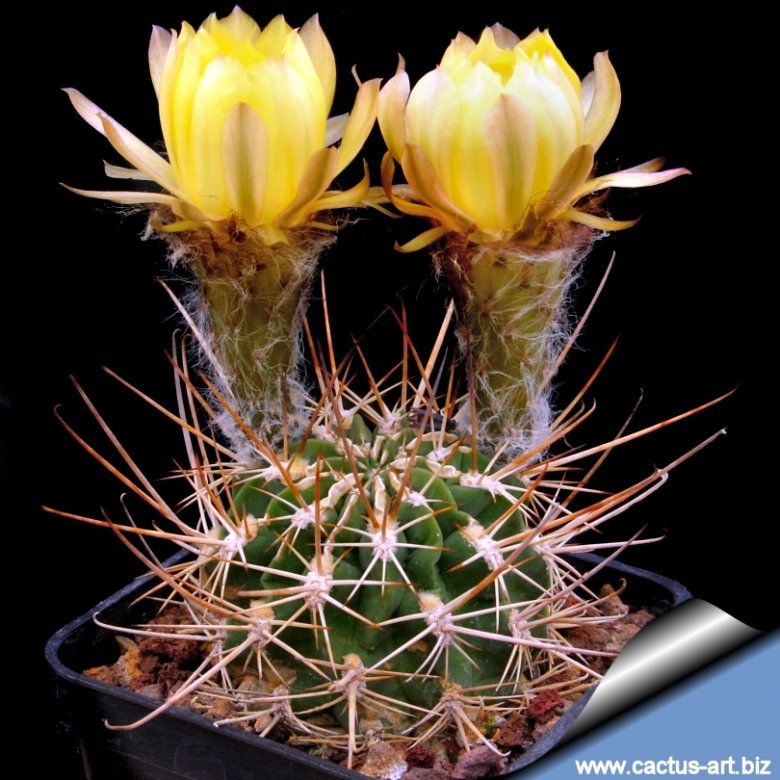
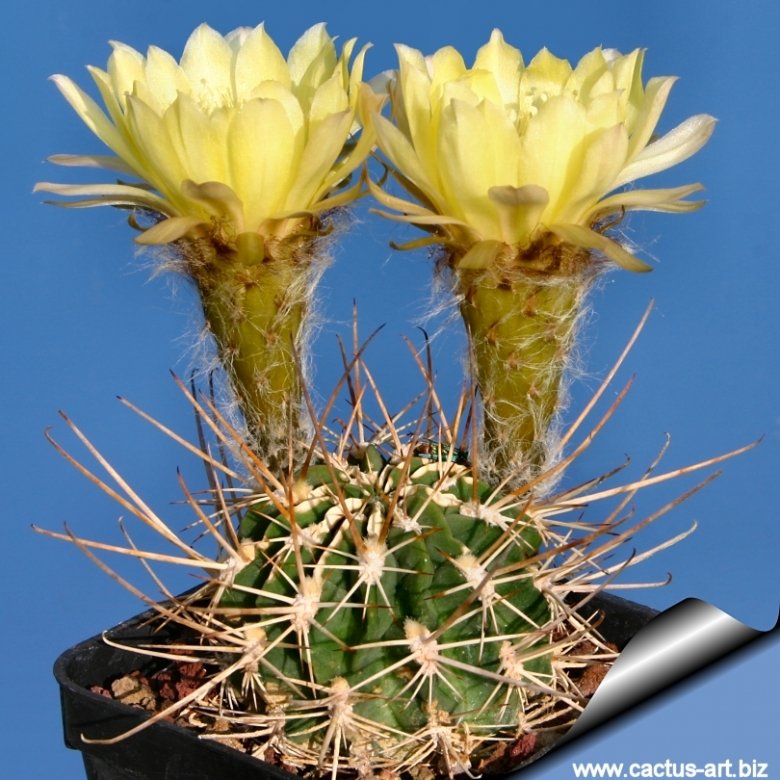
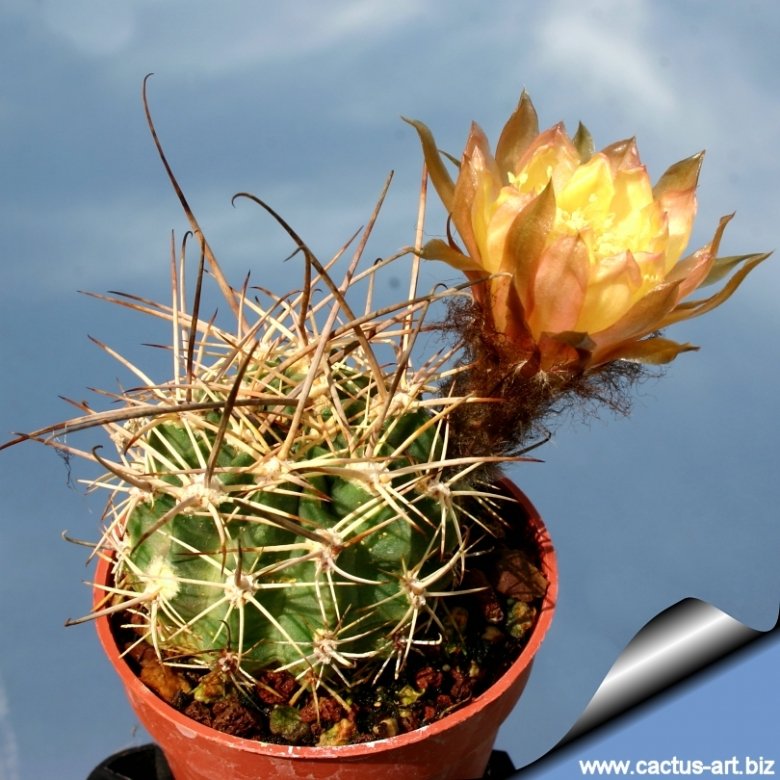
Lobivia lateritia is a pretty little species, with a low thick flat to cylindrical stem. Plant almost always grows solitary but sometime ramifies from the base to form clusters, size depending on the clone.
Root: Tap root.
Stem: Nearly globular or slightly elongated glaucous green. About 5-8 cm tall.
Ribs: About 18, broad at the base, acute straight or wavy, approx 1 cm high.
Areoles: Felted1-2 cm apart.
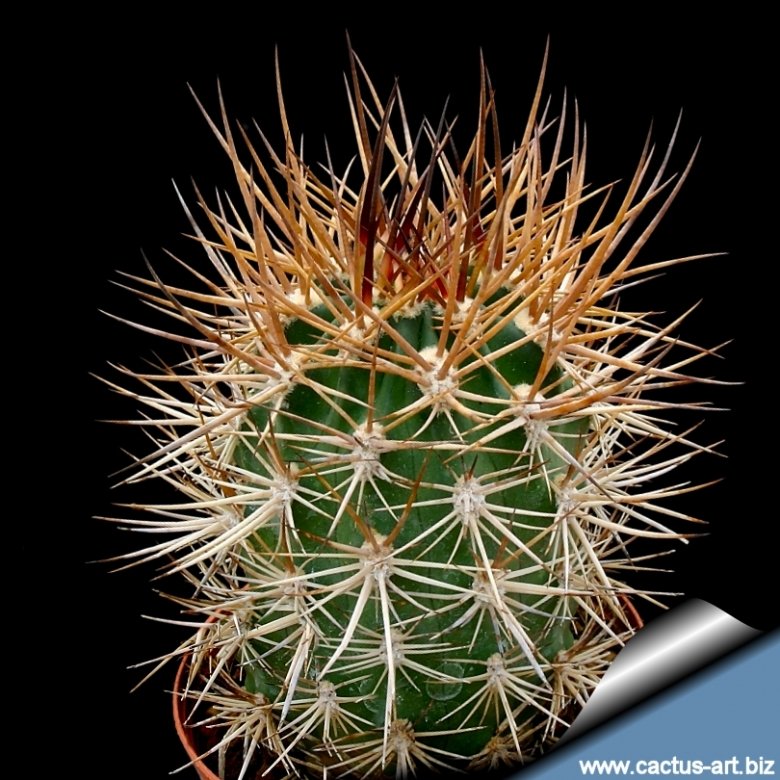
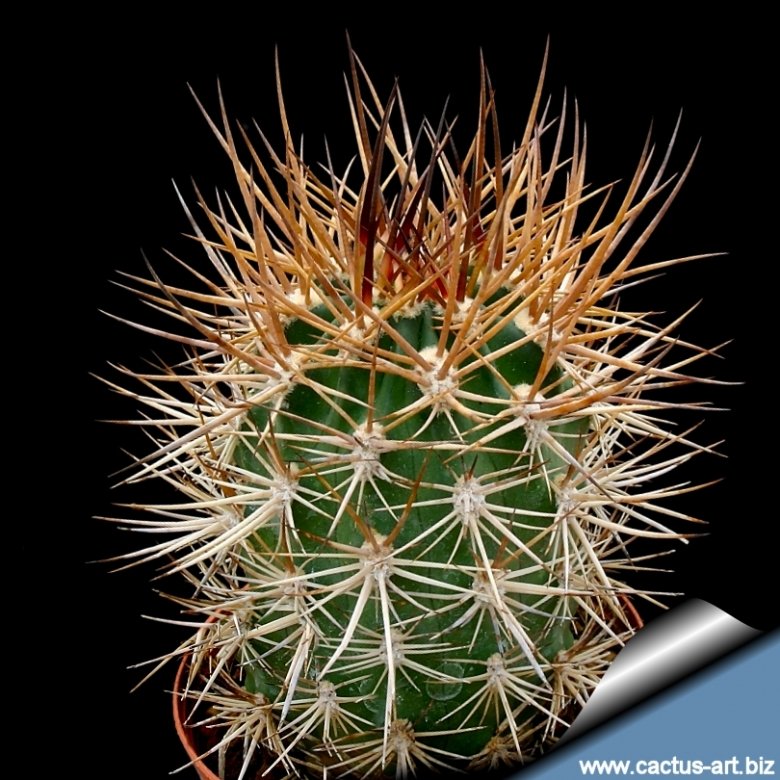
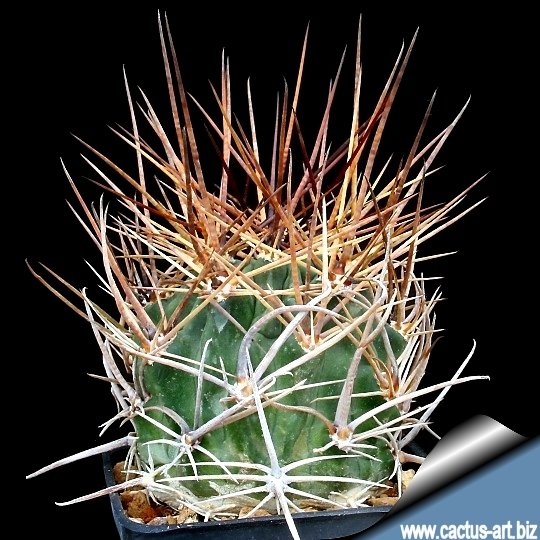
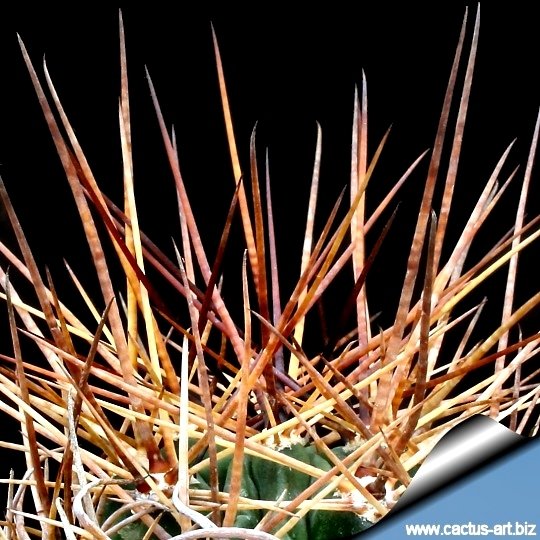
Radial spines: 9-10 straight or more or less curved, up to 5 cm long, whitish, yellowish or brownish.
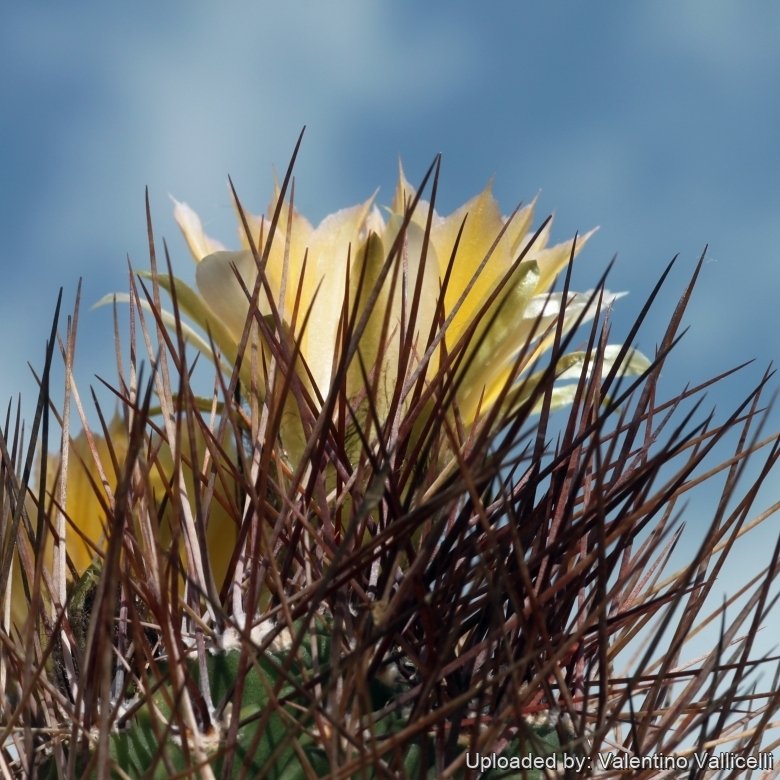
Central spines: 1 to 2 ± longer than the radials curved upward, somewhat thickened at the base sometime slightly hooked. Older plant begins to produce very long spines (up to 10 cm in some clones)
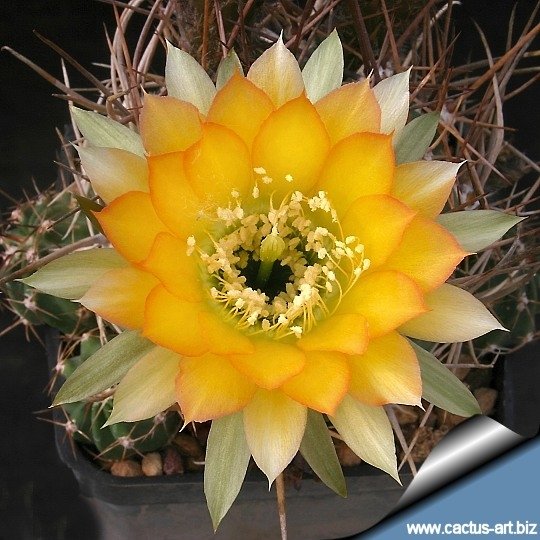
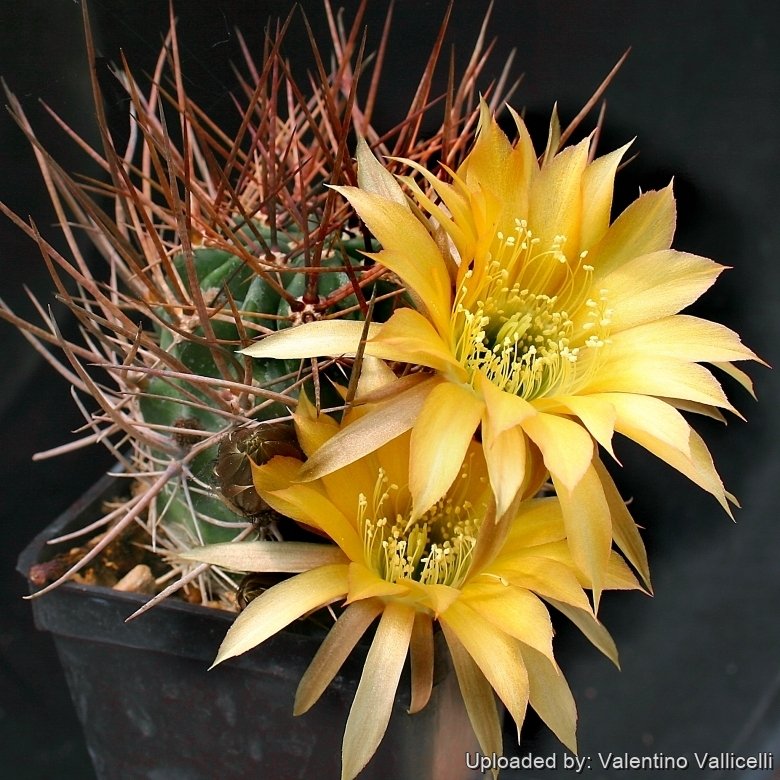
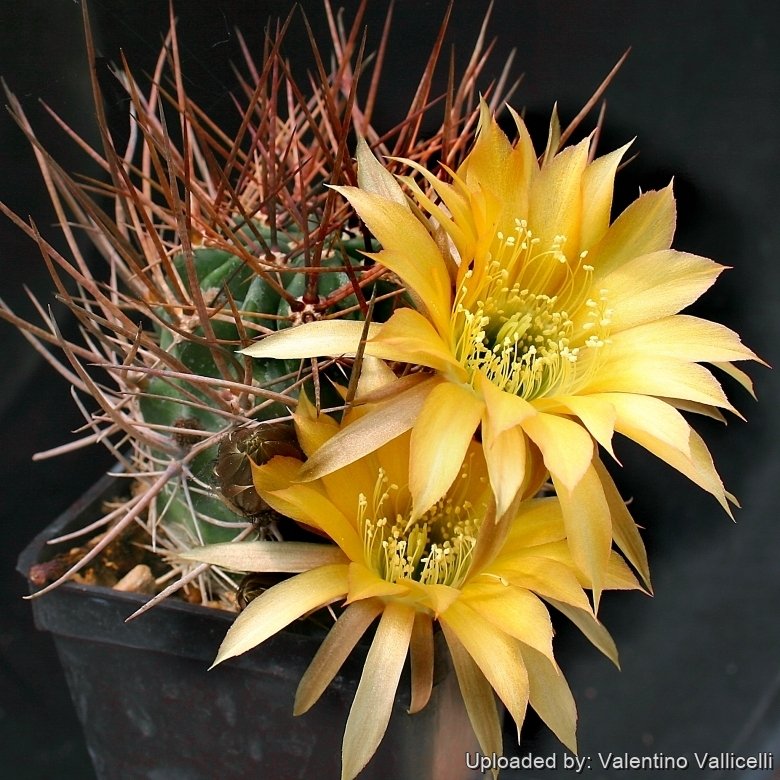
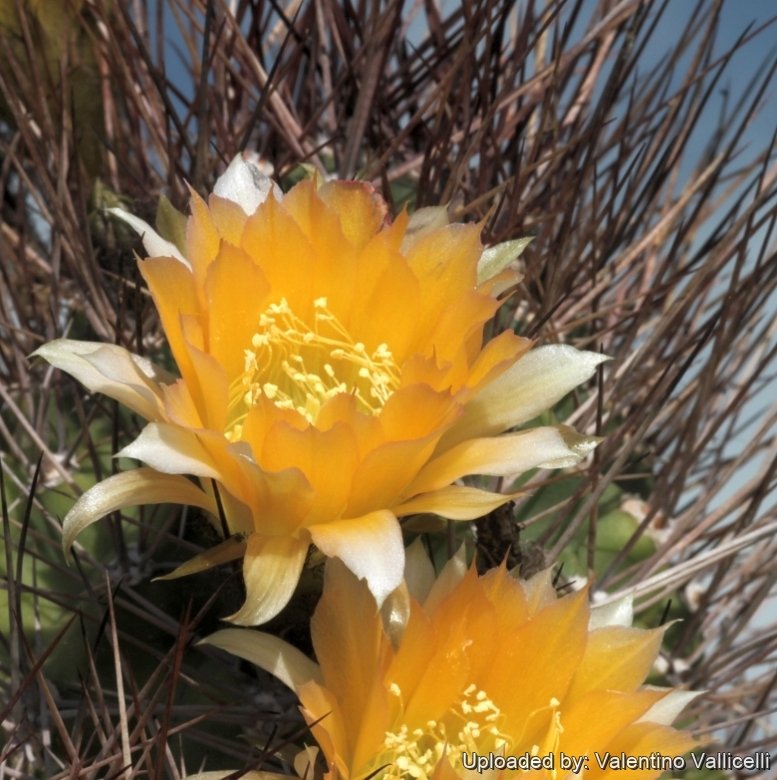
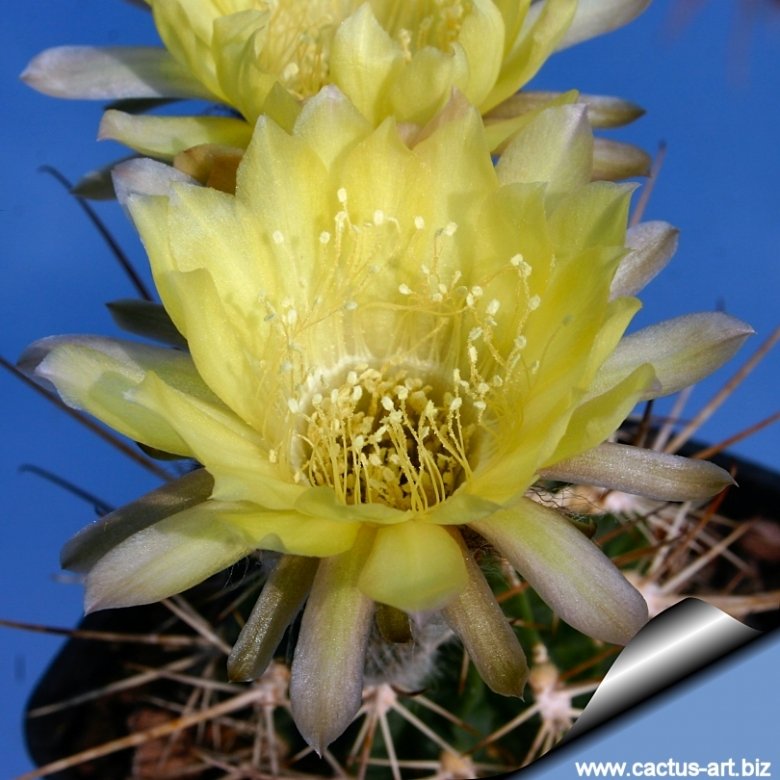
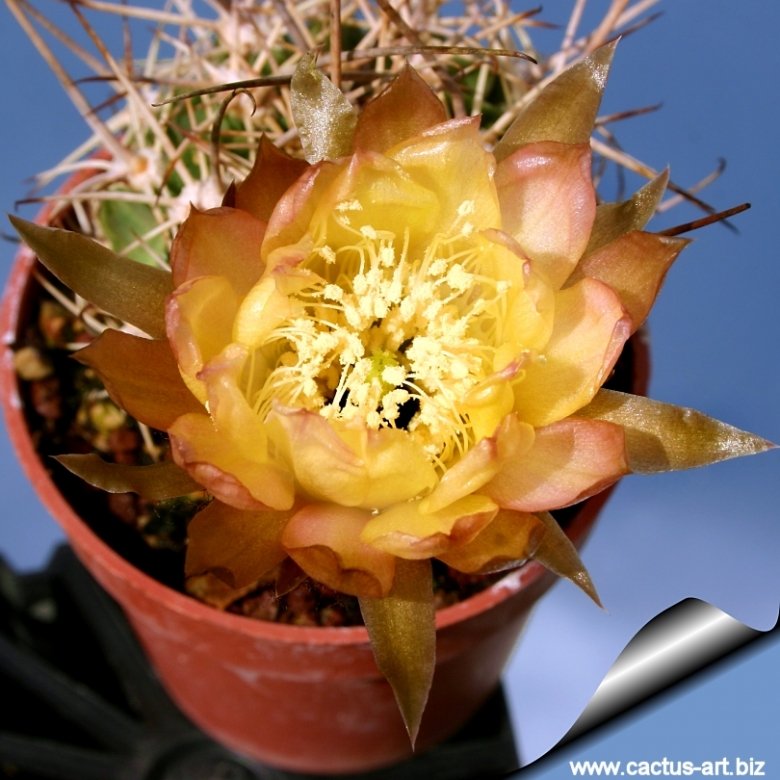
Flowers: Short funnel-formed 3 to 5 cm long, 5-6 cm in diameter, yellow, orange, pinkish, brick-red to carmine in colour with a usual clearer centre. Inner perianth segments oblong, acute. Scales on the ovary and flower tube lanceolate, acute with black hairs in the axil. Filaments yellow to red. Stigma lobes about 7 or 8.
Blooming season: Bloom in the daytime, from late spring to summer and remain open for about three days.
Origin and Habitat
Potosi, Chuquisaca, Tarija (Bolivia) and (?) Jujuy, Argentina.
Lobivia lateritia was collected at the turn of the last century by Fiebrig in Southern Bolivia.
Altitude: 2400-3200(-3700) above sea level.
Cultivation and Propagation
It is a summer grower species that offers no cultivation difficulties.
Soil: Needs a large pot to accommodate a large root system. Use a very draining and porous substrate that allows therefore roots to breath, since it’s natural habitat is in volcanic soil, it has adapted to more acidic conditions.
Water: They like only a short winter’s rest and should be kept almost completely dry during the winter months, If the soil is allowed to be dry for too long root loss could follow but equally the same result would occur if the plants are both wet and cold. From March onwards the plant will begin to grow and watering should be increased gradually until late May when the plant should be in full growth. Water regularly during the summer so long as the plant pot is allowed to drain and not sit in a tray of water. During hot weather you may need to water the plants more frequently so long as the plant is actively growing. From late September watering should be reduced to force the plant to go in to a state of semi dormancy, by October you should be back in to the winter watering regime.
Exposure: It needs full sun avoiding only the harshest summer sun, if kept too dark it may become overly lush and greener and could be prone to rotting due to over watering.
Fertilization:Feeding may not be necessary at all if the compost is fresh then, feed in summer only if the plant hasn’t been repotted recently. Do not feed the plants from September onwards as this can cause lush growth which can be fatal during the darker cold months.
Hardiness: It is quite frost resistant if kept dry (hardy to -5° C)
Maintenance: They should be re-potted frequently until they attain their desired size.
Pests & diseases: It is especially susceptible to spider mite mealybugs and scales infestation.
Propagation: Propagate by seed or shoots.
Notes
The Echinopsis lateritia complex comprises a large number of infraspecific taxa, differing in various combinations of flower colour, spine colour, number and thickness of central spines, and other characters. The taxonomic and geographic boundaries among the segregate species or infraspecific taxa of E. lateritia remain nebulous and controversial. In no place do pure populations exist sympatrically, and all taxa appear completely interfertile.
Bibliography
Major references and further lectures
-
Edward Anderson “The Cactus family” Timber Press, Incorporated, 2001
-
James Cullen, Sabina G. Knees, H. Suzanne Cubey “The European Garden Flora Flowering Plants: A Manual for the Identification of Plants Cultivated in Europe, Both Out-of-Doors and Under Glass” Cambridge University Press, 11/Aug/2011
-
David R Hunt; Nigel P Taylor; Graham Charles; International Cactaceae Systematics Group. “The New Cactus Lexicon” dh books, 2006
-
N. L. Britton, J. N. Rose “The Cactaceae. Descriptions and Illustrations of Plants of the Cactus Family.” Volume 4, The Carnegie Institution of Washington, Washington 1923
From llifle page Echinopsis carminantha
Origin and Habitat
Bolivia (Western South America, Southern America)
Source: Echinopsis carminantha, LLIFLE - Encyclopedia of living forms, CC-BY-SA, retrieved 2026-10-25.
From llifle page Lobivia kupperiana
Description
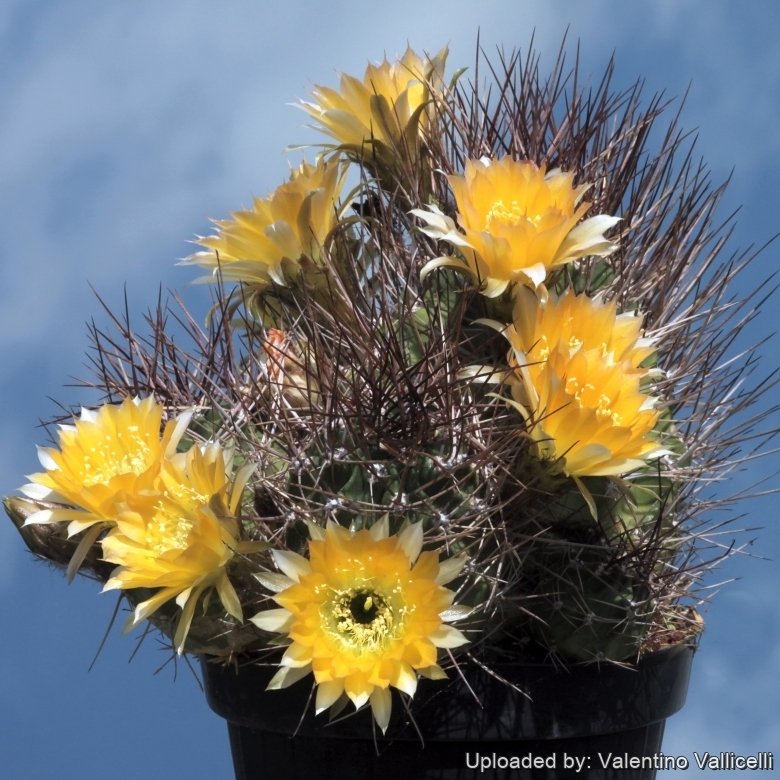
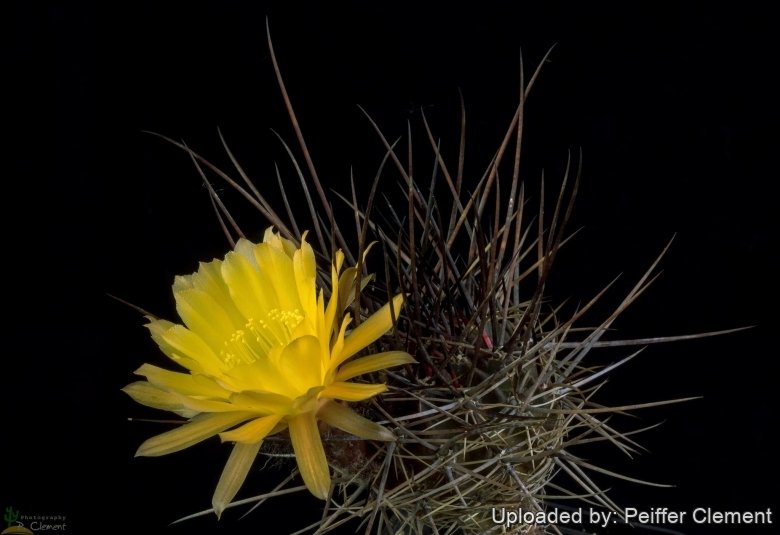
Although Lobivia kupperiana (Echinopsis) is a long known taxa, it is still rare in collections. It belongs to the Echinopsis lateritia complex that comprises a large number of infraspecific taxa, differing in various combinations of flower colour, spine colour, number and thickness of central spines, and other characters. The taxonomic and geographic boundaries among the segregate species or infraspecific taxa of E. lateritia remain nebulous and controversial. In no place do pure populations exist sympatrically, and all taxa appear completely interfertile. Lobivia kupperiana distinguishes for its flowers that are cream-yellow to yellow-orangish and for its very long needle-like reddish or blackish spines.
Origin and Habitat
Tupiza and adjacent areas, Potosí, Bolivia.
Altitude: 3500-4300 metres above sea level.
Habitat: It grows on rocky slopes in crevices or on gravelly soil.
Cultivation and Propagation
It is a summer grower species that offers no cultivation difficulties. Water regularly in summer (but do not overwater ) Needs a large pot to accommodate a large root system. Use a very draining and porous substrate, keep rather dry in winter.
It is quite frost resistant if kept dry (hardy to -5° C) Outside full sun or afternoon shade, inside needs bright light, and some direct sun.
Source: Lobivia kupperiana, LLIFLE - Encyclopedia of living forms, CC-BY-SA, retrieved 2026-10-25.
From llifle page Lobivia lateritia var. citriflora
Description
Lobivia lateritia var citriflora is a pretty species, with a low thick flat to cylindrical stem 15 cm high and 9 cm thick. Plant almost always grows solitary but sometime ramifies from the base to form clusters.
Root: Tap root.
Ribs: About 18, broad at the base, acute straight, approx 1 cm high.
Areoles: Felted1-2 cm apart.
Radial spines: 9-10 straight interlaced horizontally with one another, up to 5 cm long, whitish, yellowish or brownish.
Central spines: 1 to 2 ± longer than the radials curved upward, somewhat thickened at the base sometime slightly hooked. Older plant begins to produce very long spines (up to 10 cm in some clones)
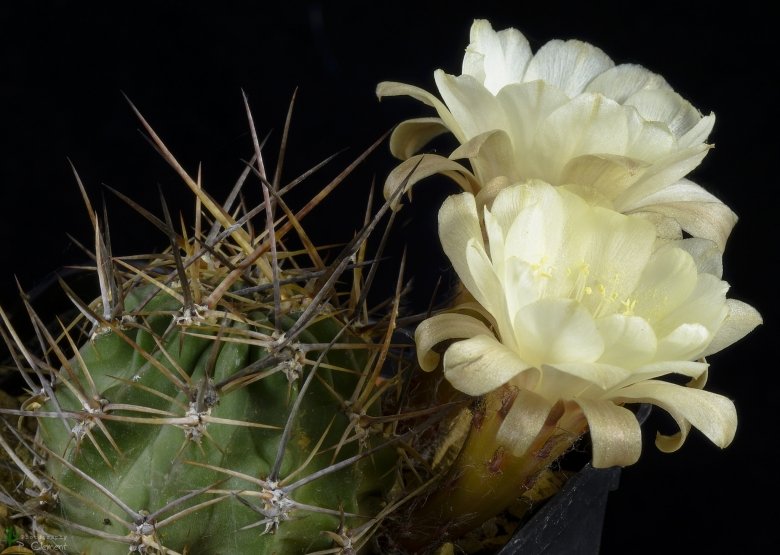
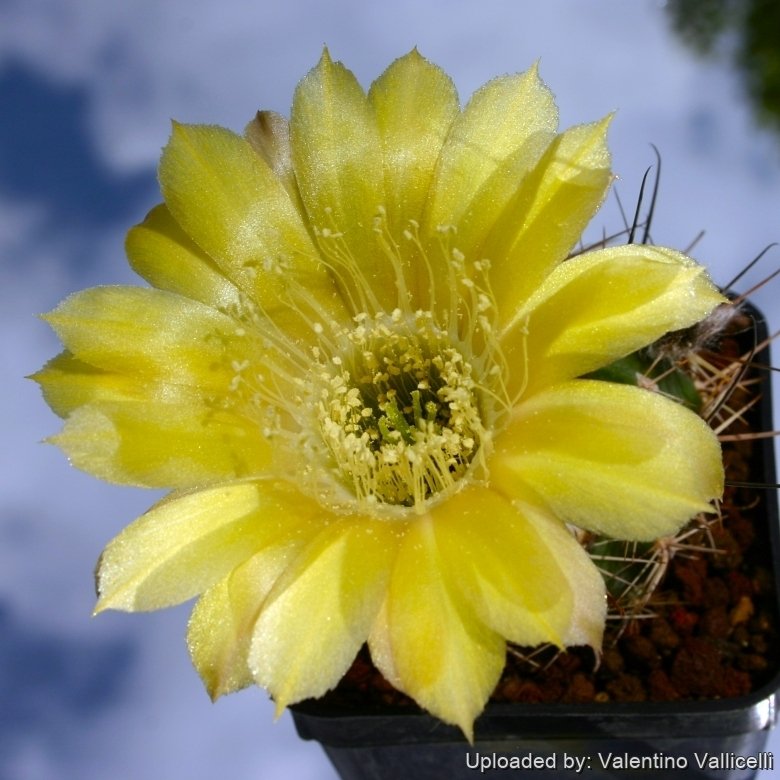
Flowers: Short funnel-formed 3 to 5 cm long, 5-6 cm in diameter, the name “citriflora” means “lemon-like flower” and refers to the lemon-yellow or whitish-yellow colour of the blooms. colour) that are usually clearer at centre. Inner perianth segments oblong, acute. Scales on the ovary and flower tube lanceolate, acute with dull-white hairs in the axil. Filaments yellow, anthers yellowhis-white. Stigma lobes about 7 or 8.
Blooming season: Bloom in the daytime, from late spring to summer and remain open for about three days.
Fruits: Similar to theLobivia lateritia var. kupperiana.
Origin and Habitat
Potosi, (Southern Bolivia) Type location close Talina. Altitude 3300-3500 m
Cultivation and Propagation
It is a summer grower species that offers no cultivation difficulties. Water regularly in summer (but do not overwater ) Needs a large pot to accommodate a large root system. Use a very draining and porous substrate, since it’s natural habitat is in volcanic soil, it has adapted to more acidic conditions; keep rather dry in winter.
It is quite frost resistant if kept dry (hardy to -5° C) Outside full sun or afternoon shade, inside needs bright light, and some direct sun.
Propagation: Propagate by seed or shoots.
Source: Lobivia lateritia var. citriflora, LLIFLE - Encyclopedia of living forms, CC-BY-SA, retrieved 2026-10-25.
From llifle page Lobivia lateritia var. cotagaitensis
Description
Echinopsis lateritia var. cotagaitensis is one of the many geografical form of the widespread and morphologically variable Echinopsis lateritia. Many of its morphological and geographical variant was early classified as different independent species, but nowadays all this plant are considered part of a multiform species, where each form is linked to others by populations of plants with intermediate characteristics. Lobivia lateritia var. cotagaitensis has distinctive pale yellow flowers and strong amber coloured spines.
Habit: It is a pretty little species, with a low thick flat to cylindrical stem. Plant almost always grows solitary but sometime ramifies from the base to form clusters, size depending on the clone.
Root: Tap root.
Stem: Nearly globular or slightly elongated glaucous green. About 5-8 cm tall.
Ribs: About 18, broad at the base, acute straight or wavy, approx 1 cm high.
Areoles: Felted1-2 cm apart.
Radial spines: 9-10 straight or more or less curved, up to 5 cm long, amber or brownish.
Central spines: 1 to 2 longer than the radials curved upward, somewhat thickened at the base . Older plant begins to produce very long spines (up to 10 cm in some clones).
Flowers: Short funnel-formed 3 to 5 cm long, 5-6 cm in diameter, pale yellow in colour with a usual clearer centre. Inner perianth segments oblong, acute. Scales on the ovary and flower tube lanceolate, acute with black hairs in the axil. Filaments yellow to red. Stigma lobes about 7 or 8.
Blooming season: Bloom in the daytime, from late spring to summer and remain open for about three days.
Origin and Habitat
Cotagaita to Tupiza, Potosí, Bolivia
Altitude: 2700-3300 metres above sea level.
Habitat: It grows on steep stony slopes and valley floor with dark rocks.
Source: Lobivia lateritia var. cotagaitensis, LLIFLE - Encyclopedia of living forms, CC-BY-SA, retrieved 2026-10-25.
Cultivars and forms (4)
Gallery