Description
The typical San Pedro cactus (Trichocereus pachanoi) is a multi-stemmed “organ-pipe cactus” with light green stems (slightly glaucous when young, dark green in age) that that forms a small tree 3 to 6 meters tall by 1,8 m spread, with several branches, usually extending from the base
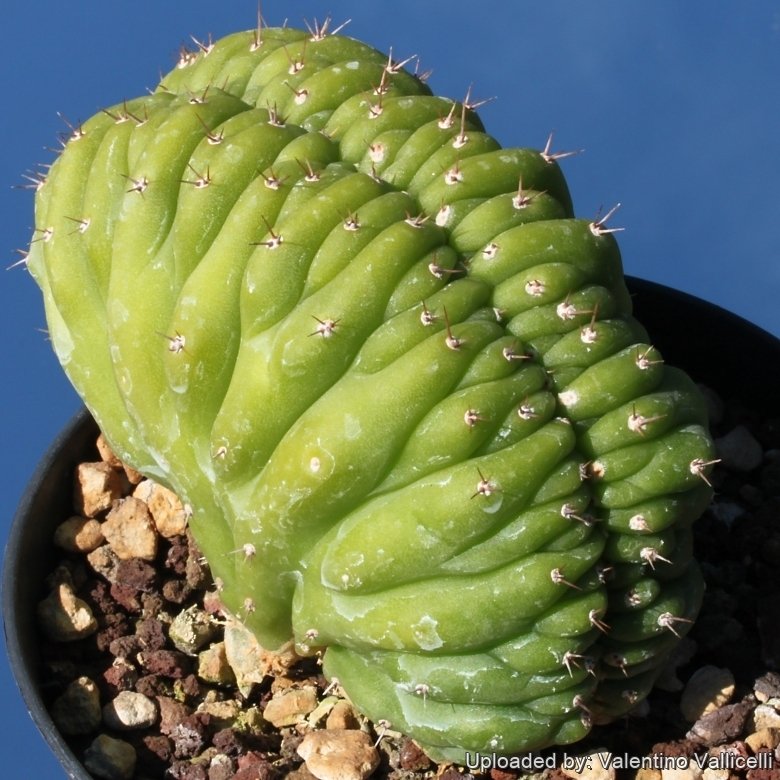
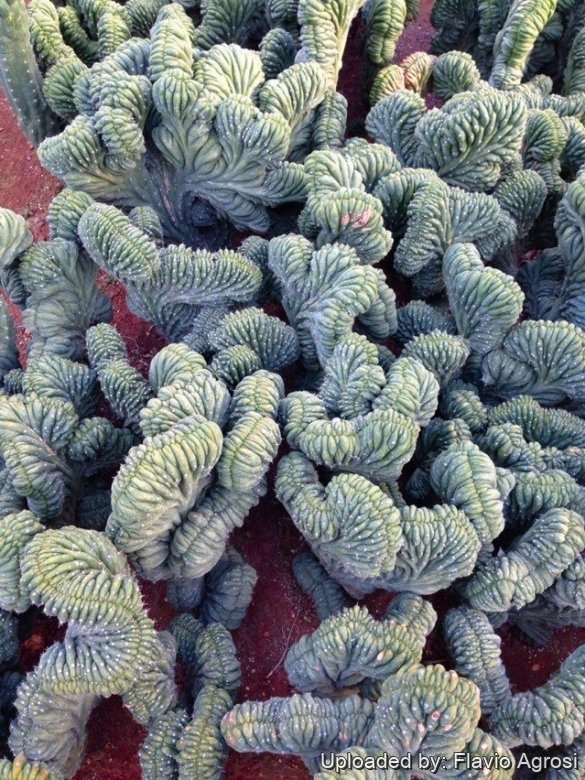
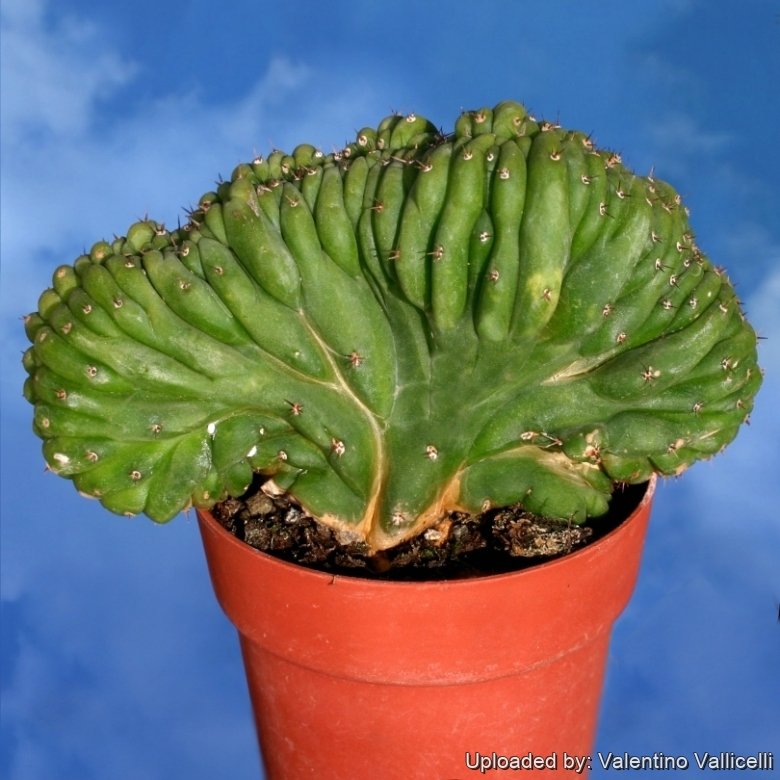
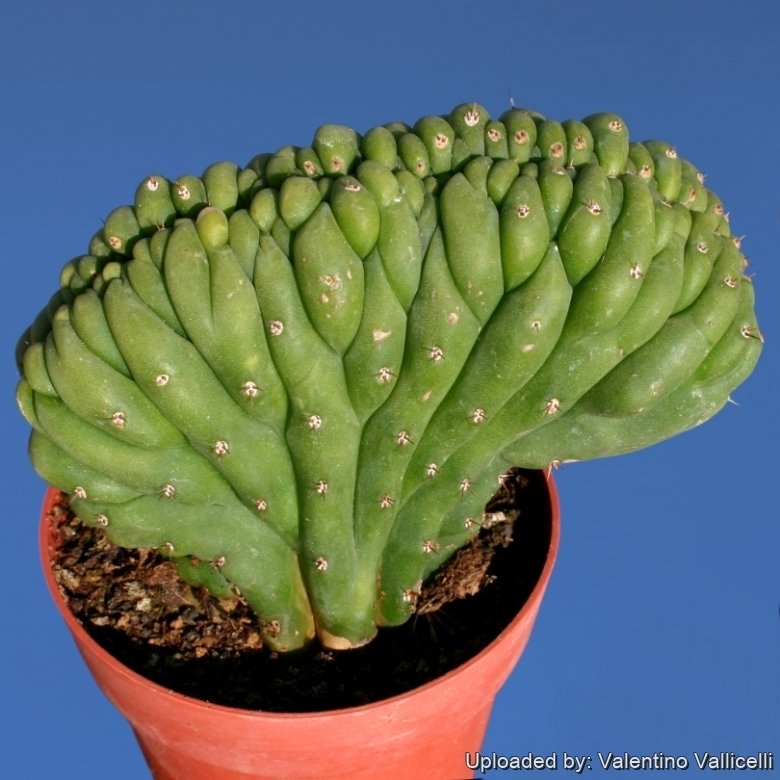
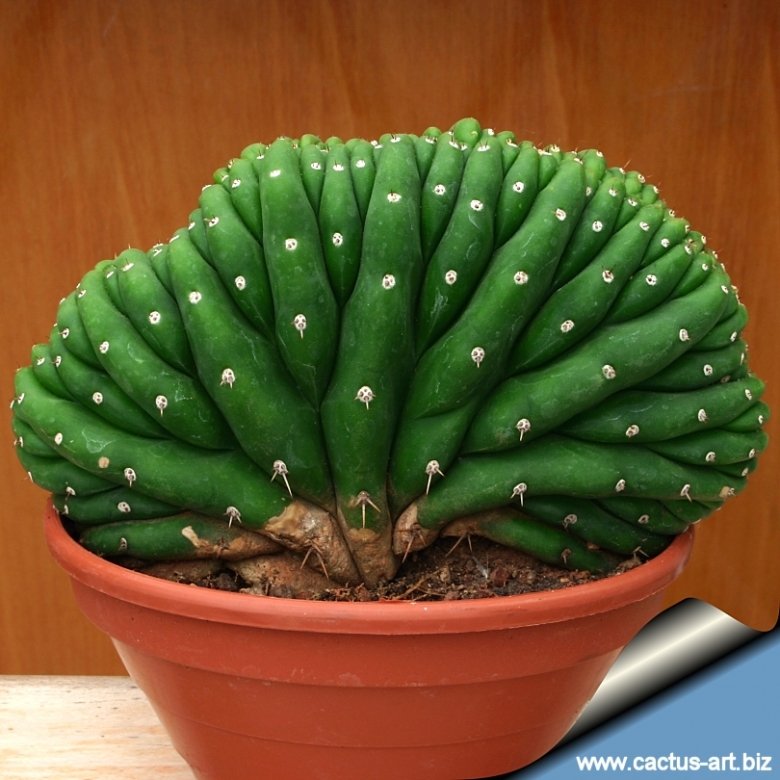
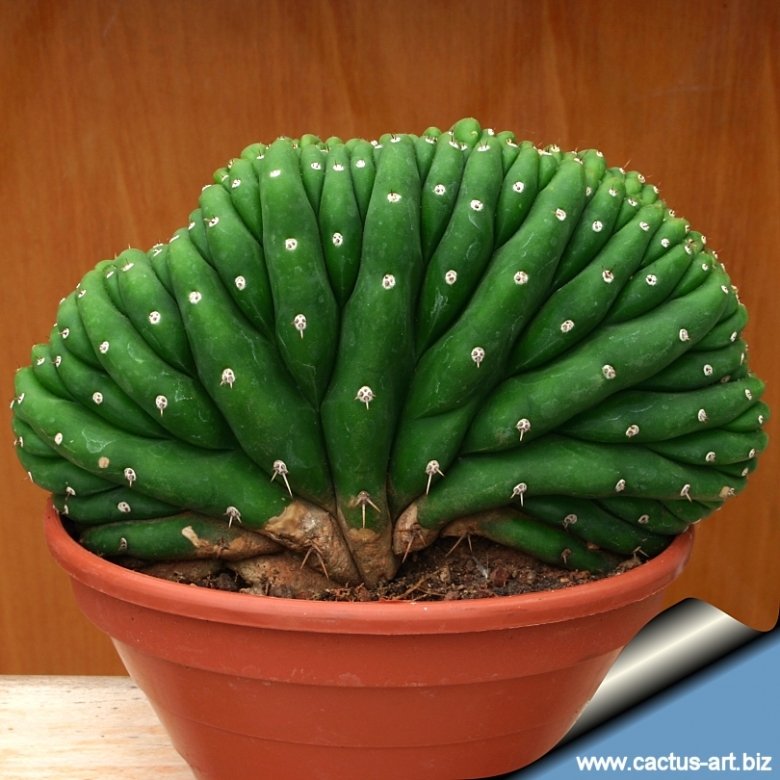
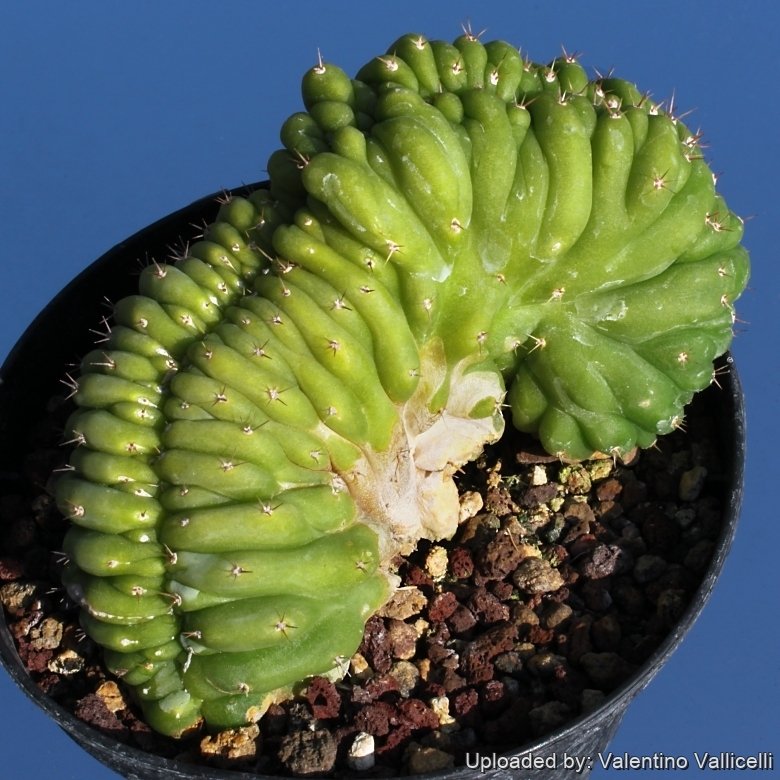
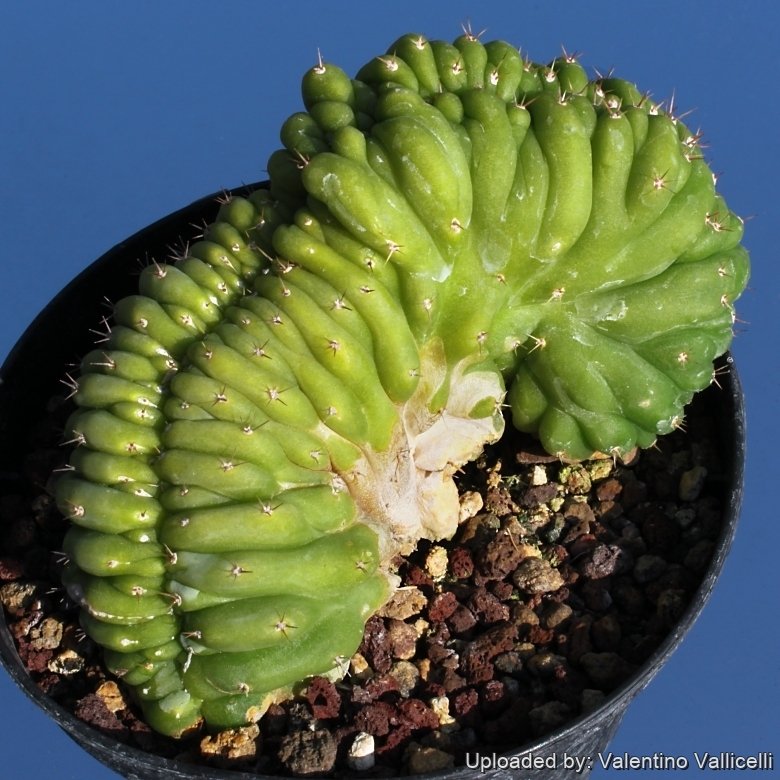
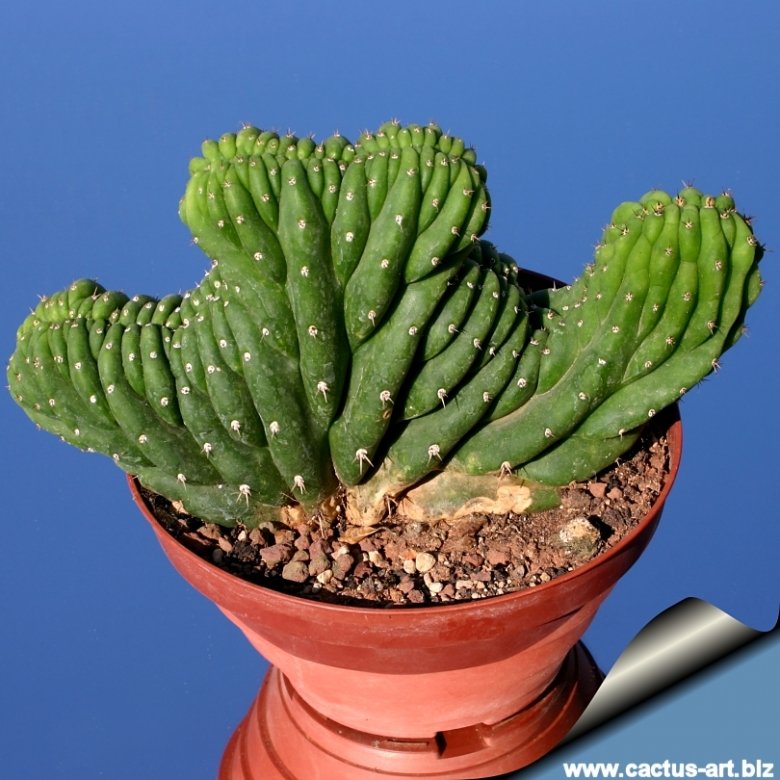
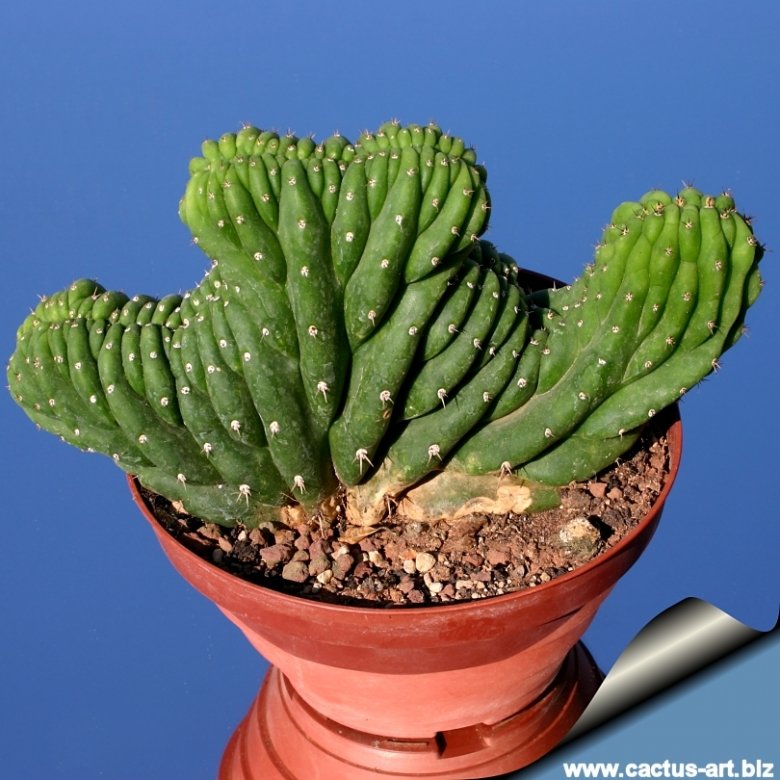
Crested form: The rare crested form can also get very big making a spectacular specimen.
Stems: Fan-shaped, pale to dark bluish green or green, forming with time imposing brain-like mounds to 1 metre in diameter and height.
Ribs: Broad at base, obtuse, rounded, with a deep horizontal depression above the areole.
Areoles: Whitish, close set.
Spines: Often wanting, when present 3 to 7, unequal only few millimetres long, dark yellow to light brown. Spines are located at the nodes which are spaced evenly (approximately 1-2 cm apart) along the ribs.
Flowers: Very large, white, night blooming and remaining open for the following day, fragrant, up to 22 cm in diameter.
Blooming time: July.
Fruit: Oblong, dark-green, 5-6 cm long, 3 cm in diameter.
Origin and Habitat
Garden origin (Nursery produced cultivar). The wild species occurs over a considerable range from the mountains of Peru, Ecuador, Bolivia and northern Argentina.
Cultivation and Propagation
Trichocereus pachanoi is very easy to grow and cold hardy as low as -12°C (or less). It needs a fertile, well drained soil mix. Water the plants well and allow them to dry before watering again. This species seems to do better with a little more water than most cacti. In fact, its cultivation requirements are really more like ‘normal’ plants than most other cacti. During the growing season fertilize them monthly with a balanced fertilizer
Sun Exposure: Outside full sun, but during hot summers the cactus are subject to sun burning, so grow them in light shade. Inside they need bright light, and some direct sun. During winter months, put them in a cool luminous place and encourage them to enter winter dormancy by withholding water and fertiliser over the winter, as they will etiolate, or become thin, due to lower levels of light. They are susceptible to fungal diseases if over-watered, but are not nearly as sensitive as many other cacti, especially in warm weather. They tend characteristically towards black rotted spots unless watering is moderate and only in hot weather. If kept damp through cold periods, they will invariably suffer.
Trichocereus pachanoi produces good amounts of growth each year if kept well fed and watered throughout the warmest months, particularly if it has been acclimatised to accept full sun.
Propagation: The way to multiply this cactus is by dividing the main crest in smaller pieces that can be rooted. It can also be grafted.
Bibliography
Major references and further lectures
-
Curt Backeberg “Die Cactaceae: Handbuch der Kakteenkunde.” Volume 3, 1959
-
Ostalaza, C., Cáceres, F. & Roque, J. 2013. Echinopsis pachanoi. In: IUCN 2013. “IUCN Red List of Threatened Species”. Version 2013.2. <www.iucnredlist.org>. Downloaded on 29 March 2014.
-
Britton & Rose “The Cactaceae” 4: 273, 1923
-
Edward Anderson “The Cactus family” Timber Press, Incorporated, 2001
-
James Cullen, Sabina G. Knees, H. Suzanne Cubey “The European Garden Flora Flowering Plants: A Manual for the Identification of Plants Cultivated in Europe, Both Out-of-Doors and Under Glass” Cambridge University Press, 11/Aug/2011
-
David R Hunt; Nigel P Taylor; Graham Charles; International Cactaceae Systematics Group. “The New Cactus Lexicon” dh books, 2006
7)Dobkin de Rios, M. “Trichocereus Pachanoi: a Mescaline Cactus Used in Folk Healing in Peru.” Economic Botany 22 (1968): 191–194.
-
Cordy-Collins, A. “Psychoactive Painted Peruvian Plants.” in: Journal of Ethnobiology 2, no. 2 (1982): 144–153.
-
Torres, D., and M. “San Pedro in the Pressure Pot.” Yearbook for Ethnomedicine and the Study of Consciousness 1995, no. 4 (1996): 283–284.
-
Davis, E.W. “Sacred Plants of the San Pedro Cult.” Botanical Museum Leaflets 29, no. 4 (1983): 367–386.
-
Hofmann, A., Ratsch, C., Schultes, R., “Plants of the Gods: Their Sacred, Healing, and Hallucinogenic Powers.” Rochester: Healing Arts Press, 1992.
-
Furst, P.T. “Shamanism, Transformation, and Olmec Art.” In The Olmec World: Ritual and Rulership. Princeton, N.J.: The Art Museum, Princeton University, 1996.
-
Polia, M., and A. Bianchi. “Ethnological Evidences and Cultural Patterns of the Use of Trichocereus Pachanoi Britt. Et Rose Among Peruvian Curanderos.” Integration 1 (1991): 65–70.
-
Ratsch, Christian., “The Encyclopedia of Psychoactive Plants: Ethnopharmacology and its Applications.” Rochester: Park Street Press, 1998.
Gallery