Publication: I.O.S. Bull. 3(3): 96. 1974
Description
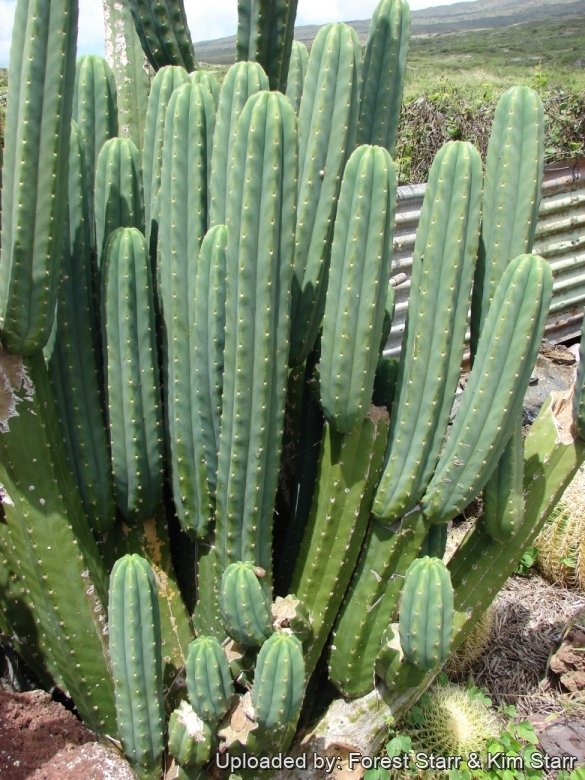
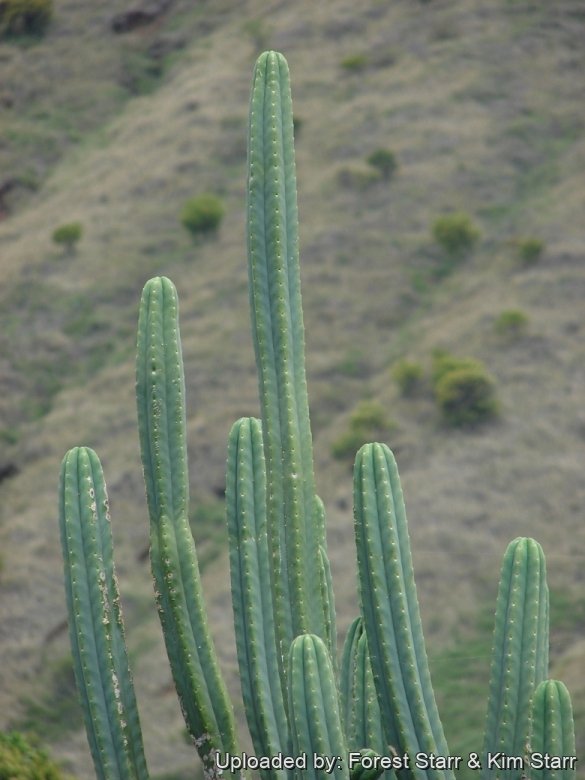
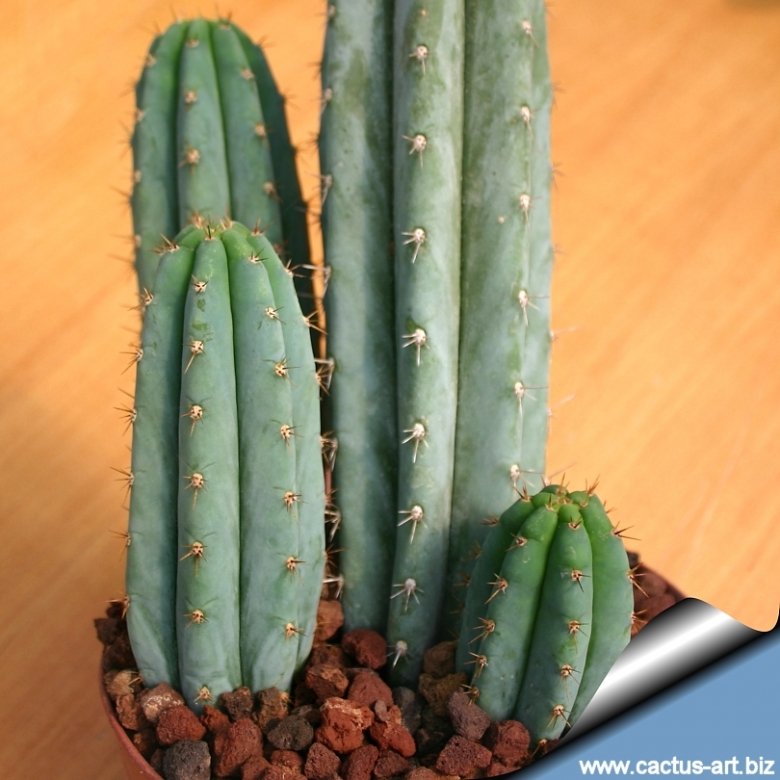
Large, multi-stemmed fast-growing columnar cactus. Forms a small tree 3 to 6 meters tall by 1,8 m spread, with several branches, usually extending from the base.
Stem: Upright columnar and flexible, pale green to blue-green, slightly glaucous when young, dark green in age. Up to 6 m tall, 6-15 cm in diameter.
Ribs: 4-8, (usually 5-7) broad at base, obtuse, rounded, with a deep horizontal depression above the areole.
Areoles: Whitish, close set.
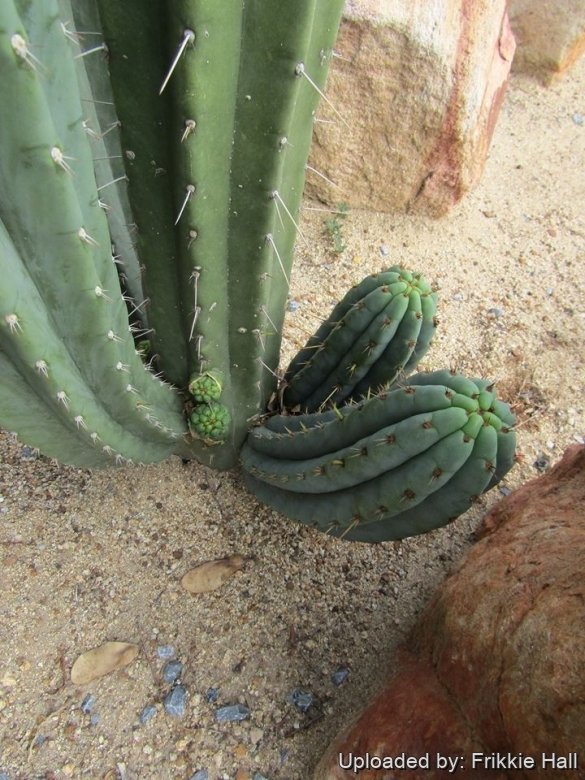
Spines: Highly variable, often wanting, when present few (3 to 7), unequal, the longest 1 to 2 cm. long, dark yellow to light brown. Spines are located at the nodes which are spaced evenly (approximately 2 cm apart) along the ribs.
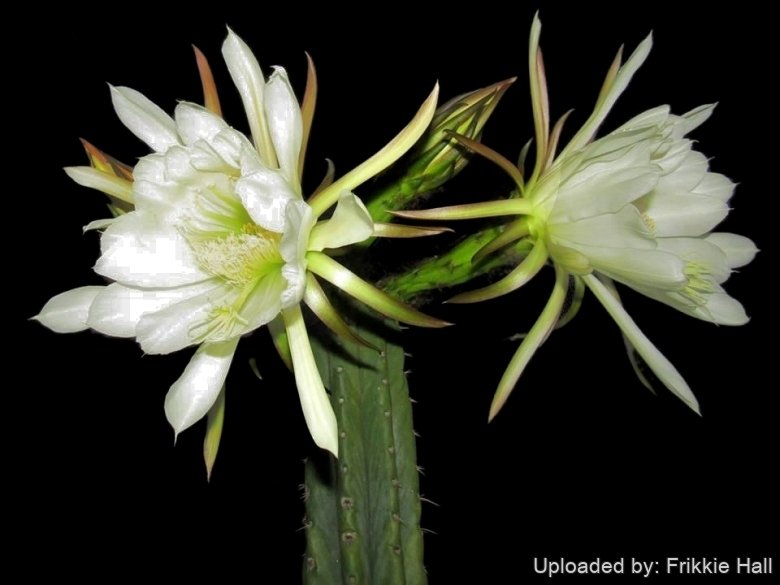
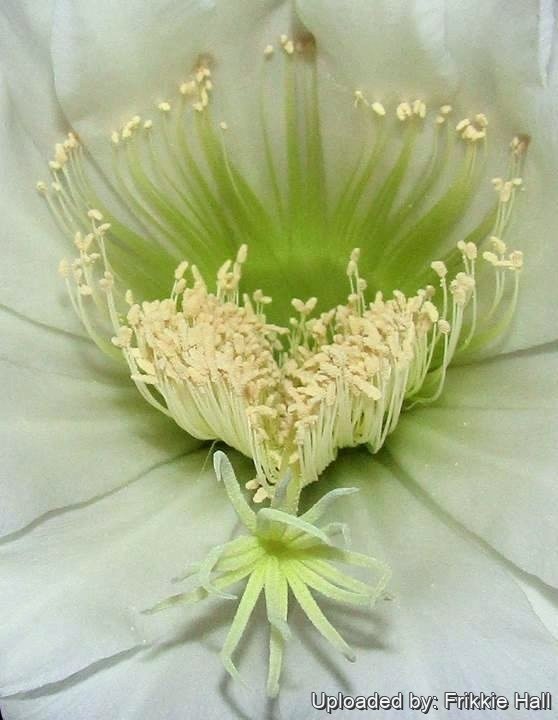
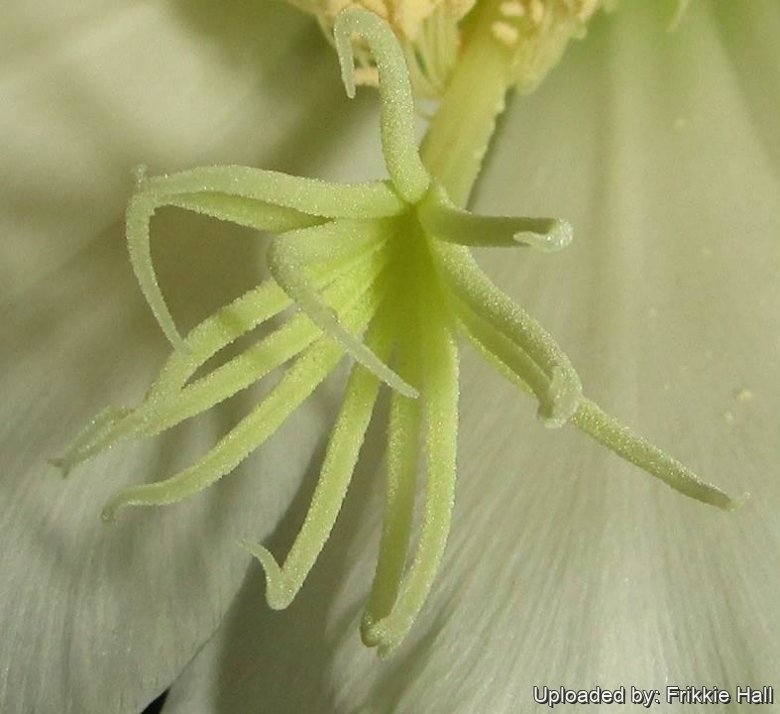
Flowers: Very large, white, night blooming and remaining open for the following day, fragrant, up to 22 cm in diameter. They are very showy. Inner perianth segments white, outer segments brik red, stamen filaments greenish. In this species, the flowers buds are produced from the spine clusters along the margins near the top of branches. The buds are pointed. Flowers tube, and fruits are covered with scales and black curled hairs.
Blooming time: July.
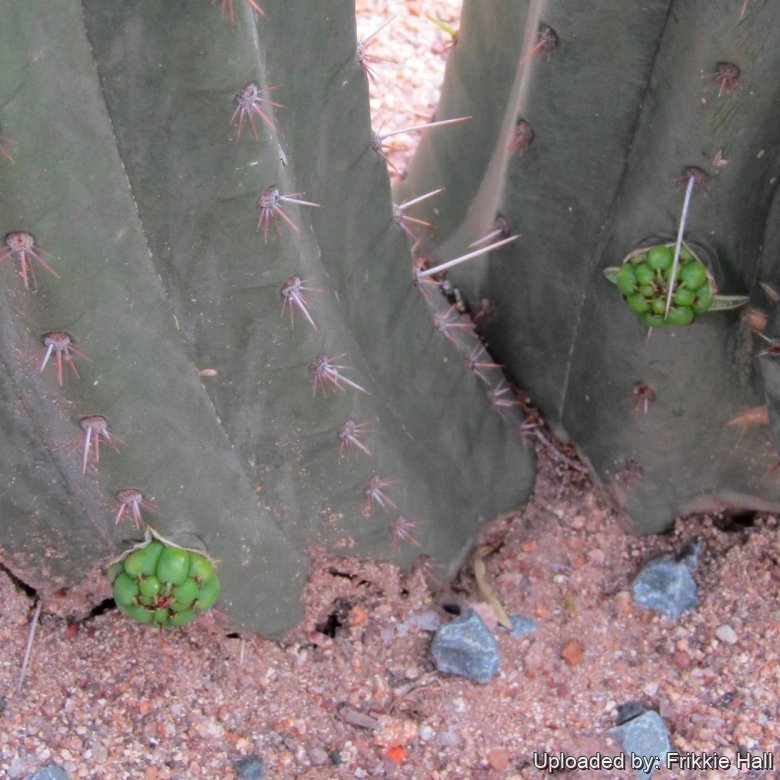
Fruit: Oblong, dark-green, 5-6 cm long, 3 cm in diameter.
Remarks: The San Pedro cactus (Echinopsis pachanoi) is often confused with its close relative, the Peruvian Torch cactus (Trichocereus peruvianus) which contains small quantities of mescaline, a hallucinogenic drug.
Origin and Habitat
Mountains of Peru, Ecuador, Bolivia and northern Argentina. It is subspontaneous in several South American and in some tropical countries in other continents.
Altitude: It grows between 1500 and 3300 metres above sea level.
Habitat: Echinopsis pachanoi has a wide distribution and stable population. It grows naturally in the high altitude dry shrublands and high rainfall areas of the Andes. It can withstand temperatures far below that of many other cacti. This cactus is frequently sold as an ornamental and for rituals. Some specimens are extracted from the wild, but it is also cultivated. San Pedro is a fast-growing cactus.
Cultivation and Propagation
Trichocereus pachanoi is very easy to grow and cold hardy.
Growth Rate: It produces prodigious amounts of growth each year if kept well fed and watered throughout the warmest months, particularly if it has been acclimatised to accept full sun. Once this cactus is established it can easily produce 30cm of growth every year.
Soils: It needs a fertile, well drained soil mix.
Repotting: Use pot with good drainage.
Watering: Water the plants well and allow them to dry before watering again. This species seems to do better with a little more water than most cacti. In fact, its cultivation requirements are really more like ‘normal’ plants than most other cacti, keep dry in winter or when night temperatures remain below 10° C. Water it less than average if in bigger pots.
Fertilization: During the growing season fertilize them monthly with a balanced fertilizer
Hardiness: Trichocereus pachanoi is very easy to grow and cold hardy as low as -12°C (or less). Assure a good ventilation.
Exposition: Outside full sun, but during hot summers the cactus are subject to sun burning, so grow them in light shade. Inside they need bright light, and some direct sun. During winter months, put them in a cool luminous place and encourage them to enter winter dormancy by withholding water and fertiliser over the winter, as they will etiolate, or become thin, due to lower levels of light..
Pests & diseases: They are susceptible to fungal diseases if over-watered, but are not nearly as sensitive as many other cacti, especially in warm weather. They tend characteristically towards black rotted spots unless watering is moderate and only in hot weather. If kept damp through cold periods, they will invariably suffer.
Ornamental usess: Often cultivated for hedges and also planted as ornamental worldwide in tropical climate gardens .
Grafting stock: It is commonly suggested as a universal grafting stock and is widely grown for this purpose. It is by far one of the best and hardy root stocks for smaller, slower, low-growing cacti often seen as the base stock in photographs within numerous publications. Several others of the Trichocereus species also work well as fast growing columnar stocks, and have a good success rate for lasting a long time. Some forms of Trichocereus bridgesii, Trichocereus peruvianus, T. spachianus and faster growing strains of Trichocereus werdermannianus will also work well. Trichocereus macrogonus and Trichocereus pasacana are often recommended for colder climates and for grafting species of cold hardy scions. Scions grafted on Trichocereus might initially take slightly longer to begin their growth burst (when compared to other grafting stocks), but usually have a very good life span of steady fast growth.
Hallucinogenic drug: The young stems are chopped because of their alkaloid content and frequently sold in the markets in Ecuador, north Peru and Bolivia. The indigenous people of the andes recognize several “kinds” of San pedro, distinguished by the number of ribs. Cacti with seven ribs are the least potent and most common. Cacti with four ribs are rare, considedered the more potent and belived to have special power because each rib correspond with one of the “four winds”. The four winds and the four roads are supernatural powers associated with the four cardinal directions. It is still used in present days by shamans and folk healers. The use of this plant date back to 3000 yeas ago.
Propagation: By cutting or from seed. The seeds are quite easy to germinate and grow. Their main requirements consist of high humidity levels, free-draining soil mix, and enough water, light, and nutrition.
Bibliography
Major references and further lectures
-
Curt Backeberg “Die Cactaceae: Handbuch der Kakteenkunde.” Volume 3, 1959
-
Ostalaza, C., Cáceres, F. & Roque, J. 2013. Echinopsis pachanoi. In: IUCN 2013. “IUCN Red List of Threatened Species”. Version 2013.2. <www.iucnredlist.org>. Downloaded on 29 March 2014.
-
Britton & Rose “The Cactaceae” 4: 273, 1923
-
Edward Anderson “The Cactus family” Timber Press, Incorporated, 2001
-
James Cullen, Sabina G. Knees, H. Suzanne Cubey “The European Garden Flora Flowering Plants: A Manual for the Identification of Plants Cultivated in Europe, Both Out-of-Doors and Under Glass” Cambridge University Press, 11/Aug/2011
-
David R Hunt; Nigel P Taylor; Graham Charles; International Cactaceae Systematics Group. “The New Cactus Lexicon” dh books, 2006
7)Dobkin de Rios, M. “Trichocereus Pachanoi: a Mescaline Cactus Used in Folk Healing in Peru.” Economic Botany 22 (1968): 191–194.
-
Cordy-Collins, A. “Psychoactive Painted Peruvian Plants.” in: Journal of Ethnobiology 2, no. 2 (1982): 144–153.
-
Torres, D., and M. “San Pedro in the Pressure Pot.” Yearbook for Ethnomedicine and the Study of Consciousness 1995, no. 4 (1996): 283–284.
-
Davis, E.W. “Sacred Plants of the San Pedro Cult.” Botanical Museum Leaflets 29, no. 4 (1983): 367–386.
-
Hofmann, A., Ratsch, C., Schultes, R., “Plants of the Gods: Their Sacred, Healing, and Hallucinogenic Powers.” Rochester: Healing Arts Press, 1992.
-
Furst, P.T. “Shamanism, Transformation, and Olmec Art.” In The Olmec World: Ritual and Rulership. Princeton, N.J.: The Art Museum, Princeton University, 1996.
-
Polia, M., and A. Bianchi. “Ethnological Evidences and Cultural Patterns of the Use of Trichocereus Pachanoi Britt. Et Rose Among Peruvian Curanderos.” Integration 1 (1991): 65–70.
-
Ratsch, Christian., “The Encyclopedia of Psychoactive Plants: Ethnopharmacology and its Applications.” Rochester: Park Street Press, 1998.
-
- Forest & Kim Starr Echinopsis pachanoi (San Pedro cactus). Plants of Hawaii. <http://www.starrenvironmental.com\>. Downloaded on 22 August 2014.
From llifle page Trichocereus pachanoi f. cristata
Description
The typical San Pedro cactus (Trichocereus pachanoi) is a multi-stemmed “organ-pipe cactus” with light green stems (slightly glaucous when young, dark green in age) that that forms a small tree 3 to 6 meters tall by 1,8 m spread, with several branches, usually extending from the base
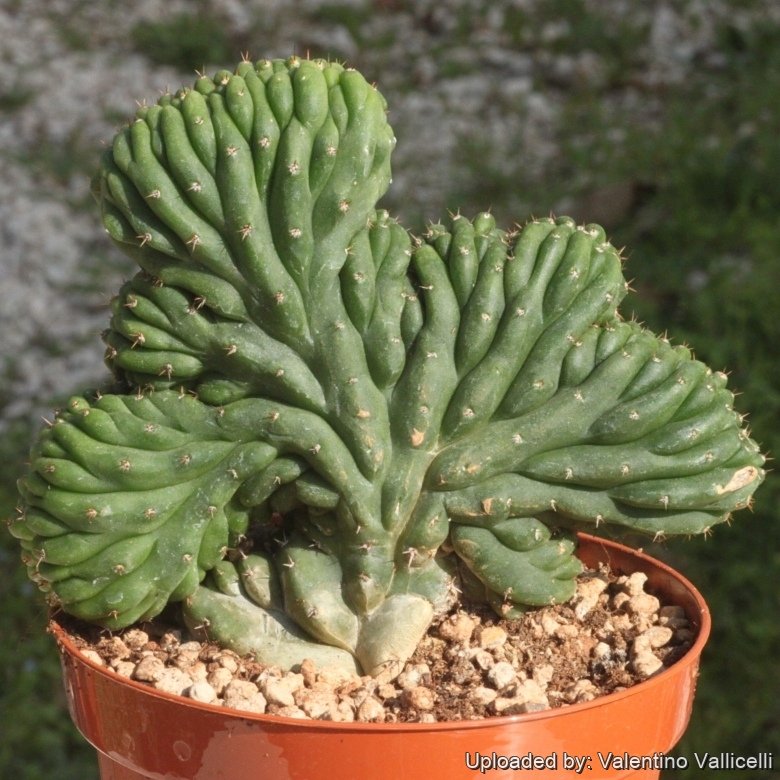
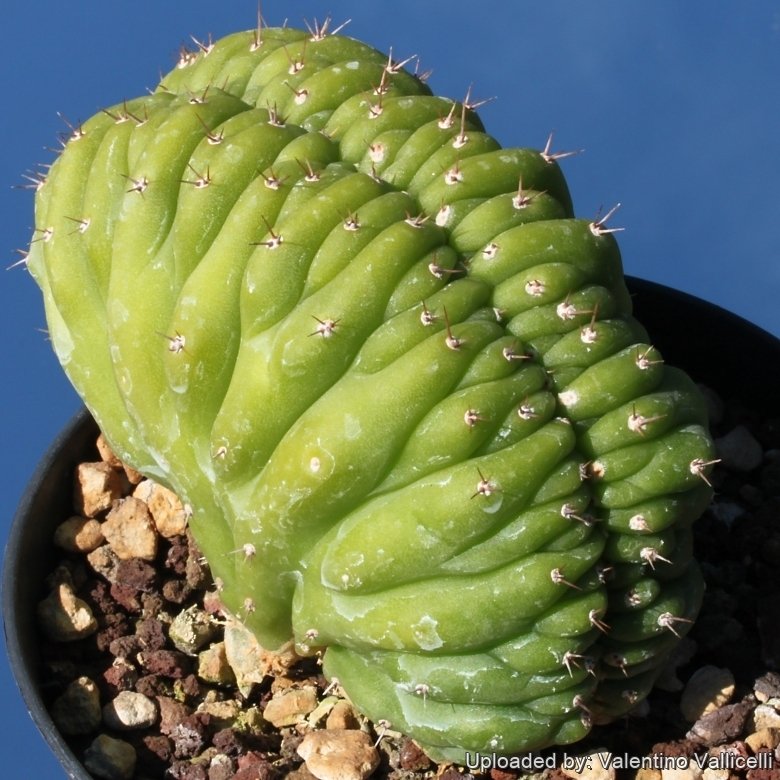
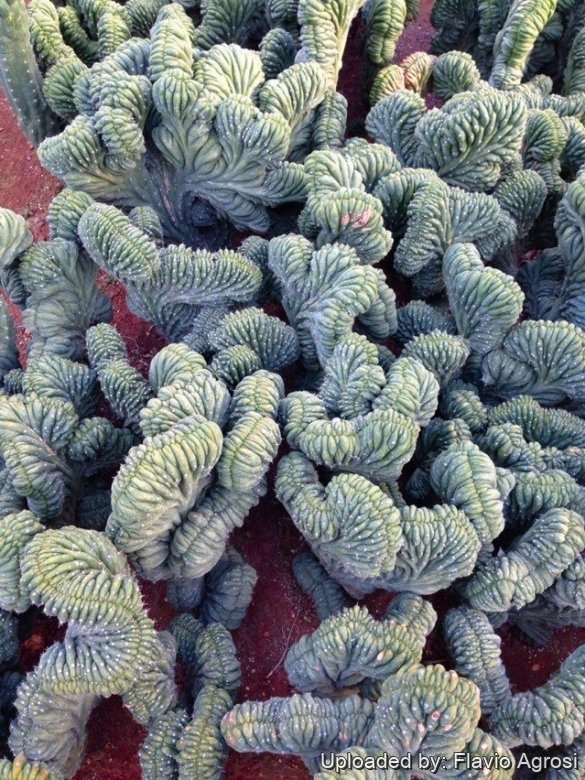
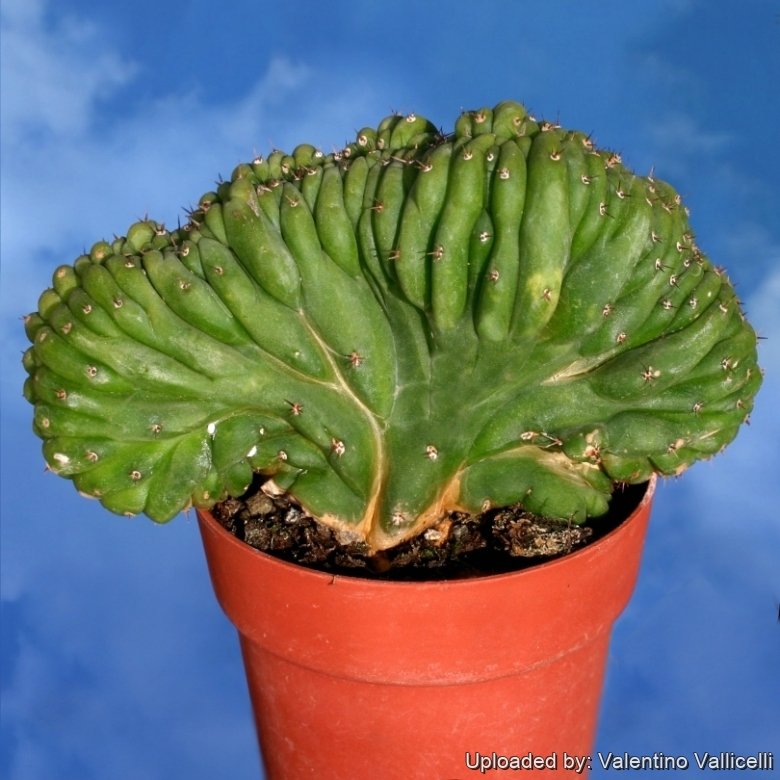
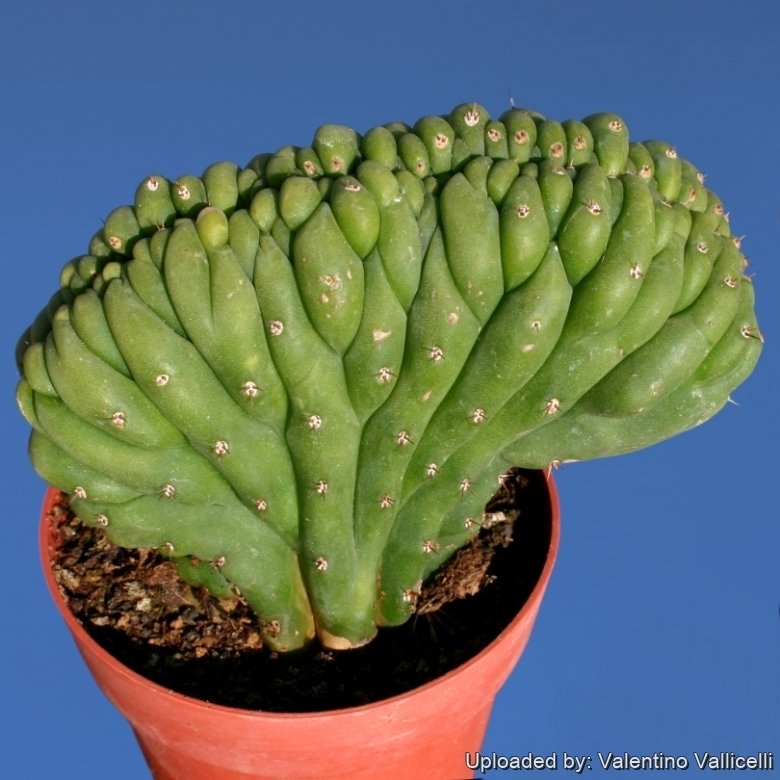
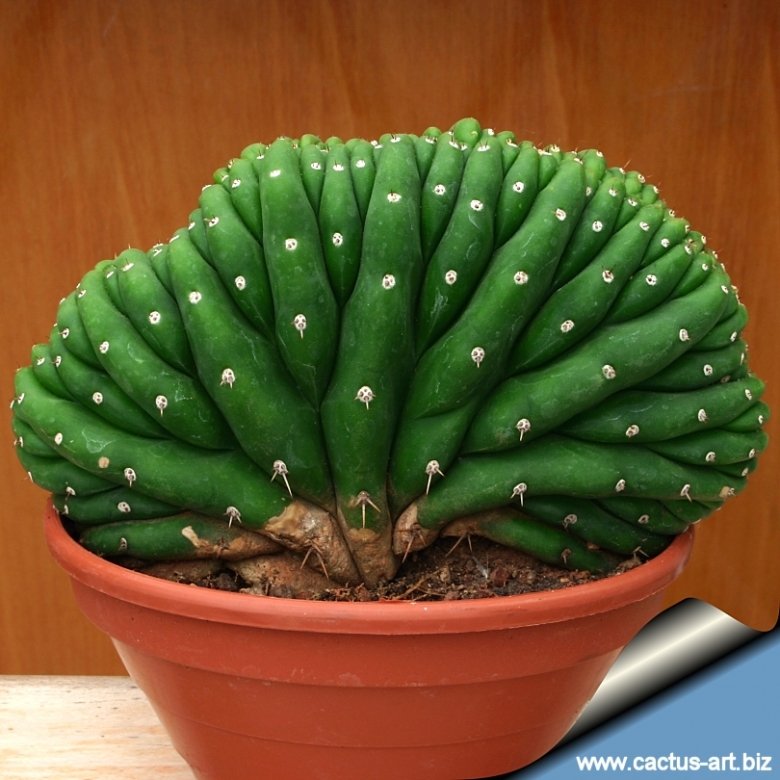
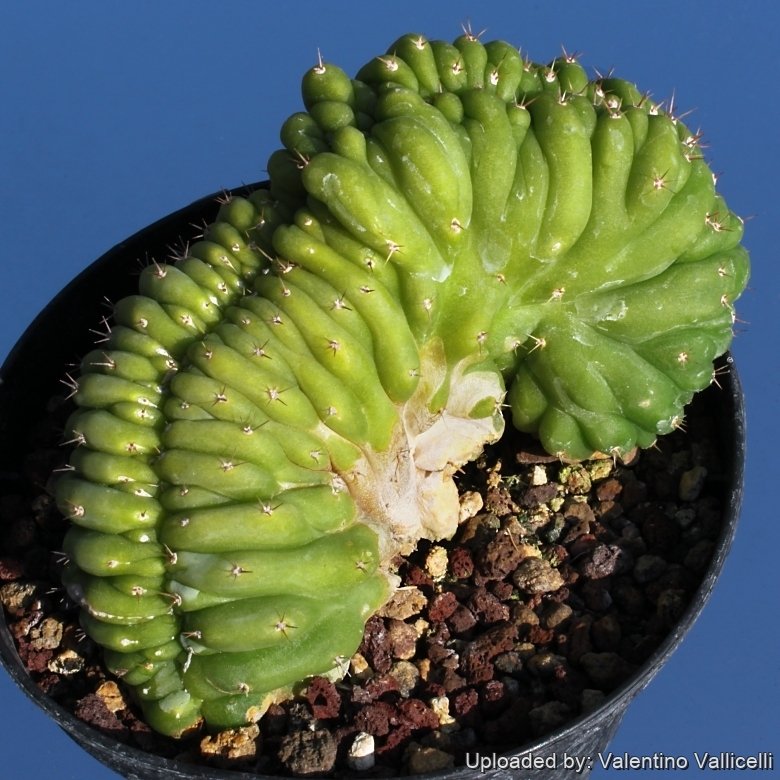
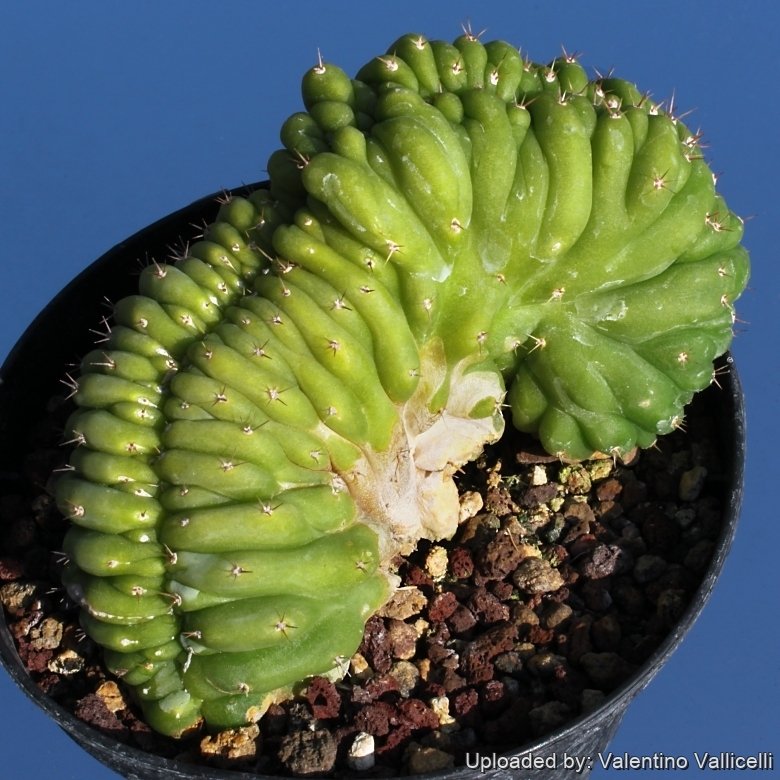
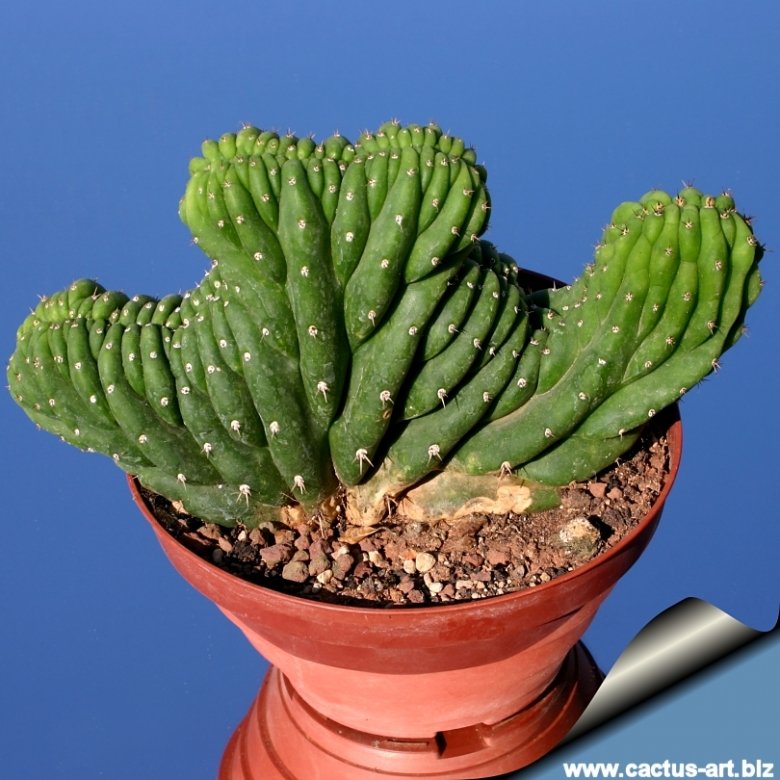
Crested form: The rare crested form can also get very big making a spectacular specimen.
Stems: Fan-shaped, pale to dark bluish green or green, forming with time imposing brain-like mounds to 1 metre in diameter and height.
Ribs: Broad at base, obtuse, rounded, with a deep horizontal depression above the areole.
Areoles: Whitish, close set.
Spines: Often wanting, when present 3 to 7, unequal only few millimetres long, dark yellow to light brown. Spines are located at the nodes which are spaced evenly (approximately 1-2 cm apart) along the ribs.
Flowers: Very large, white, night blooming and remaining open for the following day, fragrant, up to 22 cm in diameter.
Blooming time: July.
Fruit: Oblong, dark-green, 5-6 cm long, 3 cm in diameter.
Origin and Habitat
Garden origin (Nursery produced cultivar). The wild species occurs over a considerable range from the mountains of Peru, Ecuador, Bolivia and northern Argentina.
Cultivation and Propagation
Trichocereus pachanoi is very easy to grow and cold hardy as low as -12°C (or less). It needs a fertile, well drained soil mix. Water the plants well and allow them to dry before watering again. This species seems to do better with a little more water than most cacti. In fact, its cultivation requirements are really more like ‘normal’ plants than most other cacti. During the growing season fertilize them monthly with a balanced fertilizer
Sun Exposure: Outside full sun, but during hot summers the cactus are subject to sun burning, so grow them in light shade. Inside they need bright light, and some direct sun. During winter months, put them in a cool luminous place and encourage them to enter winter dormancy by withholding water and fertiliser over the winter, as they will etiolate, or become thin, due to lower levels of light. They are susceptible to fungal diseases if over-watered, but are not nearly as sensitive as many other cacti, especially in warm weather. They tend characteristically towards black rotted spots unless watering is moderate and only in hot weather. If kept damp through cold periods, they will invariably suffer.
Trichocereus pachanoi produces good amounts of growth each year if kept well fed and watered throughout the warmest months, particularly if it has been acclimatised to accept full sun.
Propagation: The way to multiply this cactus is by dividing the main crest in smaller pieces that can be rooted. It can also be grafted.
Bibliography
Major references and further lectures
-
Curt Backeberg “Die Cactaceae: Handbuch der Kakteenkunde.” Volume 3, 1959
-
Ostalaza, C., Cáceres, F. & Roque, J. 2013. Echinopsis pachanoi. In: IUCN 2013. “IUCN Red List of Threatened Species”. Version 2013.2. <www.iucnredlist.org>. Downloaded on 29 March 2014.
-
Britton & Rose “The Cactaceae” 4: 273, 1923
-
Edward Anderson “The Cactus family” Timber Press, Incorporated, 2001
-
James Cullen, Sabina G. Knees, H. Suzanne Cubey “The European Garden Flora Flowering Plants: A Manual for the Identification of Plants Cultivated in Europe, Both Out-of-Doors and Under Glass” Cambridge University Press, 11/Aug/2011
-
David R Hunt; Nigel P Taylor; Graham Charles; International Cactaceae Systematics Group. “The New Cactus Lexicon” dh books, 2006
7)Dobkin de Rios, M. “Trichocereus Pachanoi: a Mescaline Cactus Used in Folk Healing in Peru.” Economic Botany 22 (1968): 191–194.
-
Cordy-Collins, A. “Psychoactive Painted Peruvian Plants.” in: Journal of Ethnobiology 2, no. 2 (1982): 144–153.
-
Torres, D., and M. “San Pedro in the Pressure Pot.” Yearbook for Ethnomedicine and the Study of Consciousness 1995, no. 4 (1996): 283–284.
-
Davis, E.W. “Sacred Plants of the San Pedro Cult.” Botanical Museum Leaflets 29, no. 4 (1983): 367–386.
-
Hofmann, A., Ratsch, C., Schultes, R., “Plants of the Gods: Their Sacred, Healing, and Hallucinogenic Powers.” Rochester: Healing Arts Press, 1992.
-
Furst, P.T. “Shamanism, Transformation, and Olmec Art.” In The Olmec World: Ritual and Rulership. Princeton, N.J.: The Art Museum, Princeton University, 1996.
-
Polia, M., and A. Bianchi. “Ethnological Evidences and Cultural Patterns of the Use of Trichocereus Pachanoi Britt. Et Rose Among Peruvian Curanderos.” Integration 1 (1991): 65–70.
-
Ratsch, Christian., “The Encyclopedia of Psychoactive Plants: Ethnopharmacology and its Applications.” Rochester: Park Street Press, 1998.
Source: Trichocereus pachanoi f. cristata, LLIFLE - Encyclopedia of living forms, CC-BY-SA, retrieved 2026-10-25.
From llifle page Trichocereus pachanoi f. quadricostatus
Description
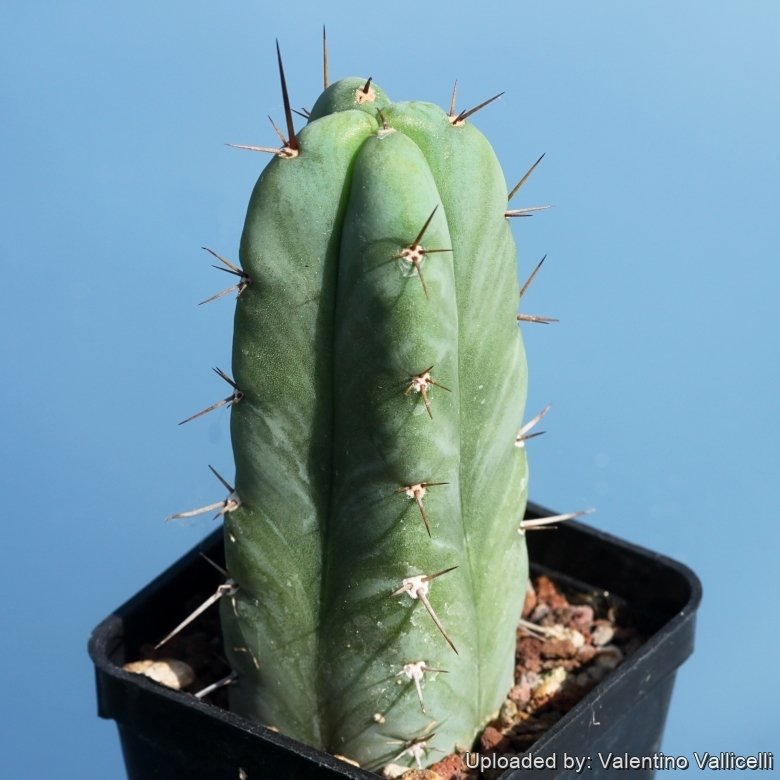
Echinopsis pachanoi more often known as: Trichocereus pachanoi or “San Pedro cactus” usually has 6-8 ribs, but ribs number can vary from 4 to 14 ribs as it have been reported observed on the occasional Trichocereus pachanoi by commercial growers, botanists travelling extensively in Peru and other reliable sources.
The cactus in full bloom is found depicted cryptically on two thousand-year-old shamanic textiles of the Chavin culture, albeit in its idealized form, with only four ribs. It is still believed by Peruvian shamans to this day that the four ribbed San Pedro cactus is the most potent, however, no actual modern-day specimens have ever been documented in nature. The sacred four ribbed “Cactus of the Four Winds” is sometime observed in cultivation, but four ribbed growth is an anomaly and this plant is quite uncommon.
Origin and Habitat
This four ribbed form is a selected cultivated variety. The wild species occurs over a considerable range from the mountains of Peru, Ecuador, Bolivia and northern Argentina.
Source: Trichocereus pachanoi f. quadricostatus, LLIFLE - Encyclopedia of living forms, CC-BY-SA, retrieved 2026-10-25.
From llifle page Trichocereus pachanoi f. cristata aurea
Description
The typical San Pedro cactus (Echinopsis pachanoi syn: Trichocereus pachanoi) is a multi-stemmed “organ-pipe cactus” with light green stems (slightly glaucous when young, dark green in age) that that forms a small tree 3 to 6 meters tall by 1,8 m spread, with several branches, usually extending from the base
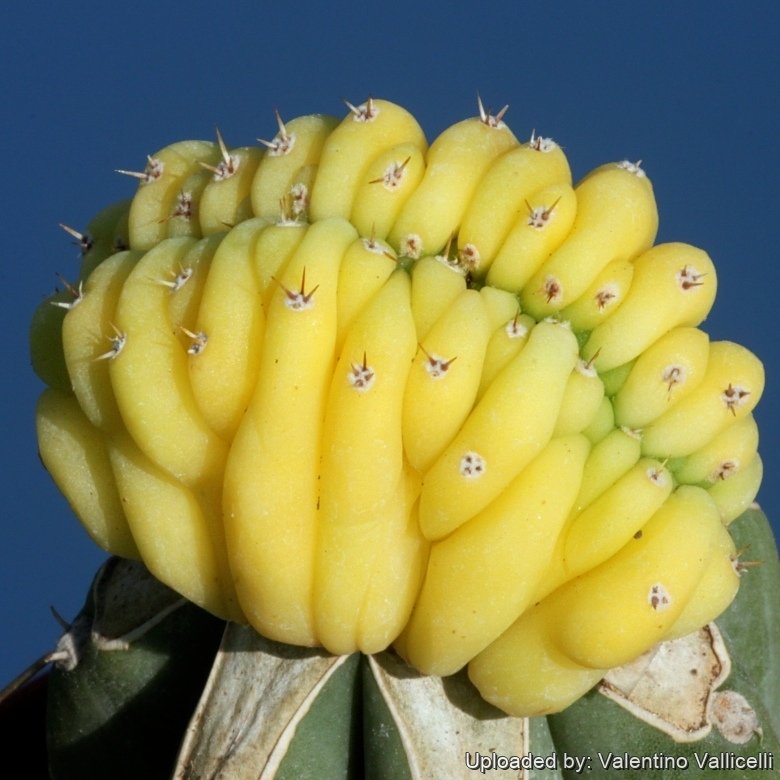
Forma cristata aurea (yellow crested form): The yellow schizochromic crested form (Echinopsis pachanoi f. cristata aurea) has bright yellow crested stems due to the absence (or reduced production) of chlorophyll pigments: every other pigment is present at normal levels, the dominant green colouration is lost, but will still more than likely have normal other pigments that give the yellow overall appearance of the stem. This form with yellow fan shaped stems is very attractive and highly prized. This schizochromic form is almost always seen grafted on stronger columnar species, and cannot can be grown on its own roots. However some clones have enough chlorophyll in their tissues and can be grown on they own roots too, but very slow growing.
Stems: Fan-shaped, lemon to golden yellow, forming with time brain-like mounds to 30 cm in diameter and height.
Ribs: Broad at base, obtuse, rounded, with a deep horizontal depression above the areole.
Areoles: Whitish, close set.
Spines: Often wanting, when present few (3 to 7), unequal only few millimetres long, dark yellow to light brown. Spines are located at the nodes which are spaced evenly (approximately 1-2 cm apart) along the ribs.
Flowers: Very large, white, night blooming and remaining open for the following day, fragrant, up to 22 cm in diameter.
Blooming time: July.
Origin and Habitat
Garden origin (Nursery produced cultivar). The wild form is of Mountains of Peru, Ecuador, Bolivia and northern Argentina. It is subspontaneous in several South American and in some tropical countries in other continents.
Cultivation and Propagation
Variegated and albinos cacti are regarded as choice and difficult in cultivation, but despite that many of them are relatively easy to grow. But be aware that they cannot tolerate prolonged exposure to direct sun light (especially during the hottest summer days), so grow them in half-shade or under filtered sun. They are sometime seen as grafted plants, but many grow well on their own roots, too.
On the contrary, the albinos can survive only if grafted on a strong green base.
Use mineral well-permeable substratum with little organic matter (peat, humus). Water sparingly from March till October and keep perfectly dry in winter at temperatures from 5 to 15 degrees centigrade. (In general these plants are more tender and cannot endure freezing temperatures ) In the rest period no high atmospheric humidity!!
Propagation: Plants are often grafted onto column-shaped cacti.
Notes
Variegation, Albinism & Schizochromism.
Variegation: A variegated plant has sectors, patches or stripes with two or more different colours, even distinct shades of green. Plants with variegated stems or leaves are often attractive and highly prized. In most species the stems or leaves are normally green, and variegated epidermis is an uncommon mutation, termed a chimera. A chimeral variegation is due to losing the ability to produce chlorophyll in some of the plant’s tissue, so that this tissue is no longer green. Tissues lacking chlorophyll are usually white or pale yellow coloured (due to carotenoid pigments) or red (due to betalain or anthocyanin pigments) contrasting with the normal green tissue. There are several forms of variegation, depending on the tissues that have been affected. The variegation in some forms is unstable. The extent and nature of the variegation can vary, and sometimes the plant will return to the green form. In others it is stable and does not change under normal conditions. Because the variegation is due to the presence of two kinds of plant tissue, propagating the plant must be by a vegetative method of propagation that preserves both types of tissue in relation to each other.
Albinism: Every once in a while a plant exhibits albinism (completely lacking chlorophyll pigment). This means that its tissue is unable to carry out photosynthesis. The result is a completely cream-white yellow or reddish plant. This plant will be weaker than a green plant, and albinism is generally a fatal trait (it can’t produce its own food and it’s not getting it from anything else). Without chlorophyll, the albino plant has no way to manufacture the food needed for survival and growth to maturity. This implies that these plants cannot survive on their own roots and necessitate being grafted on a normal green plant that provides food. Some of these albino plants are indeed very popular, and sought after by collectors.
Schizochromism: The yellow or red appearance of some plants is more precisely caused by another aberration called “schizochromism”. Here, though, the specific green pigment (chlorophyll) is missing: every other pigment is present at normal levels. The dominant green colouration is lost, but the plant will still more than likely have normal other pigments that give the yellow overall appearance of stems and the red colouration of spines.
Source: Trichocereus pachanoi f. cristata aurea, LLIFLE - Encyclopedia of living forms, CC-BY-SA, retrieved 2026-10-25.
Cultivars and forms (4)
Gallery