Publication: Lazaroa 17: 53. 1996
Description
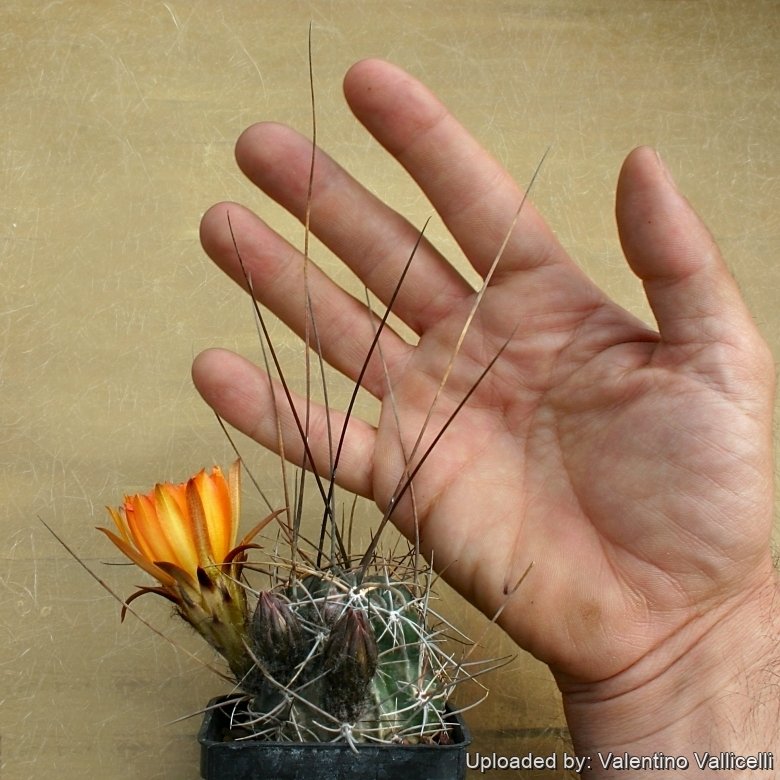
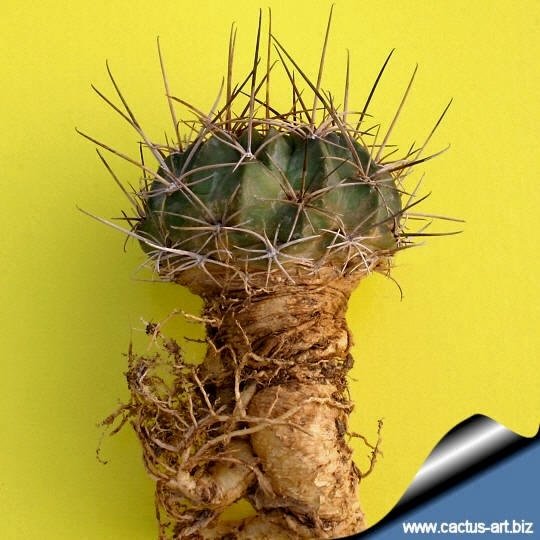
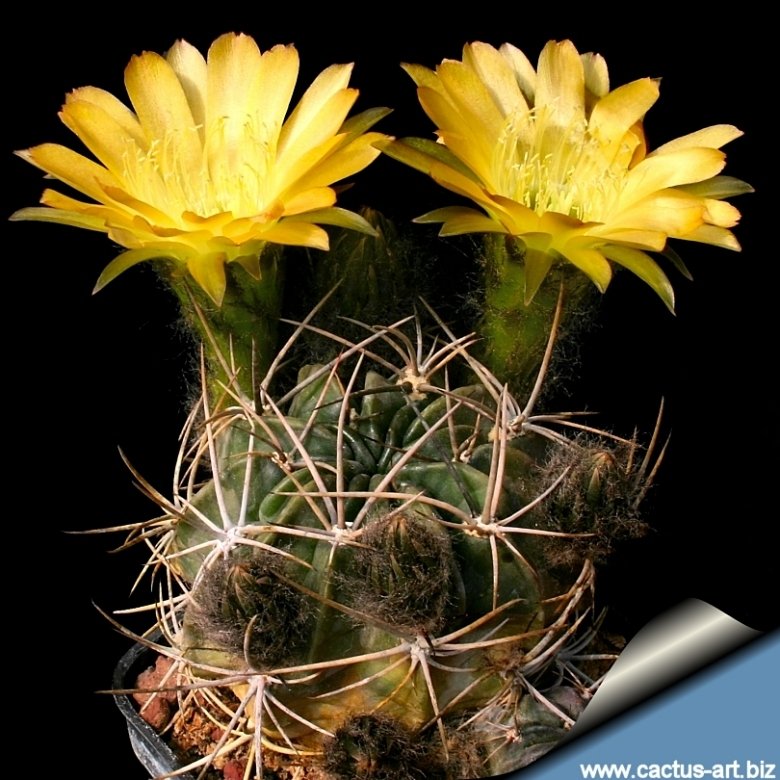
A pretty little species, with a low, thick, flat to cylindrical stem. The dark green body slowly ramifies from the base to form clusters, whose size depends on the clone. Felted areoles line the edges of 25 to 30 ribs.
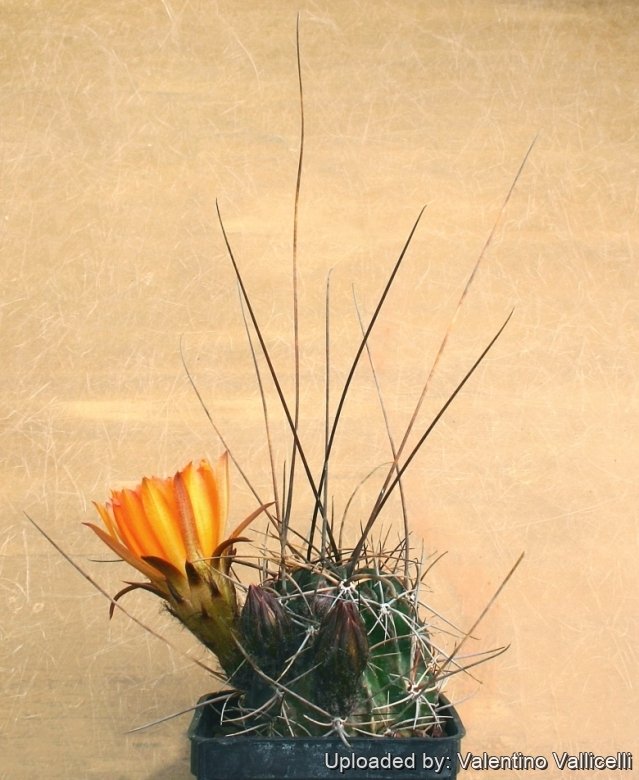
Spines: 7 or more, brownish, radial spines that grow up to 5 cm. Old plants begin to produce very long spines (up to 25 cm in some clones).
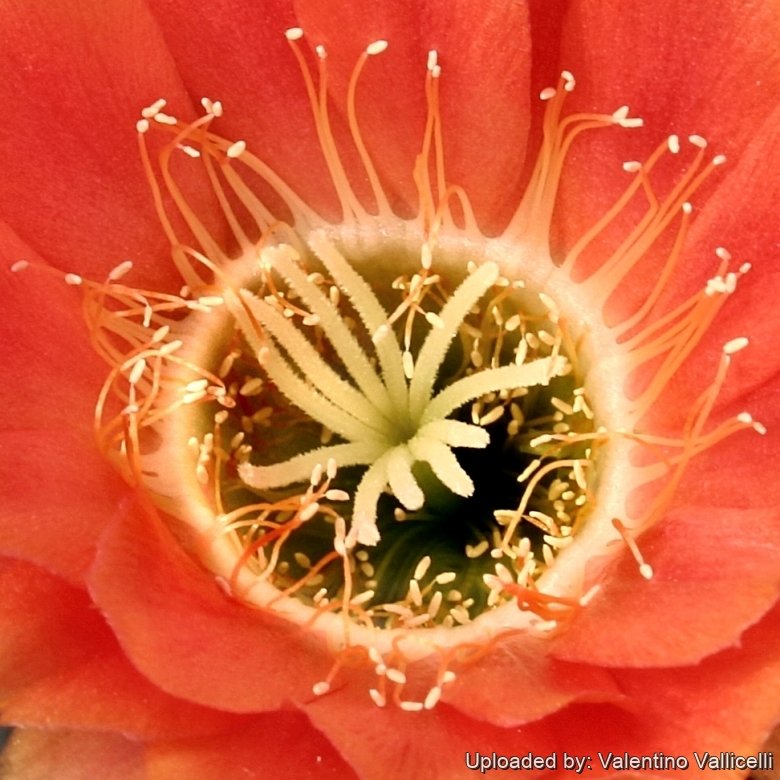
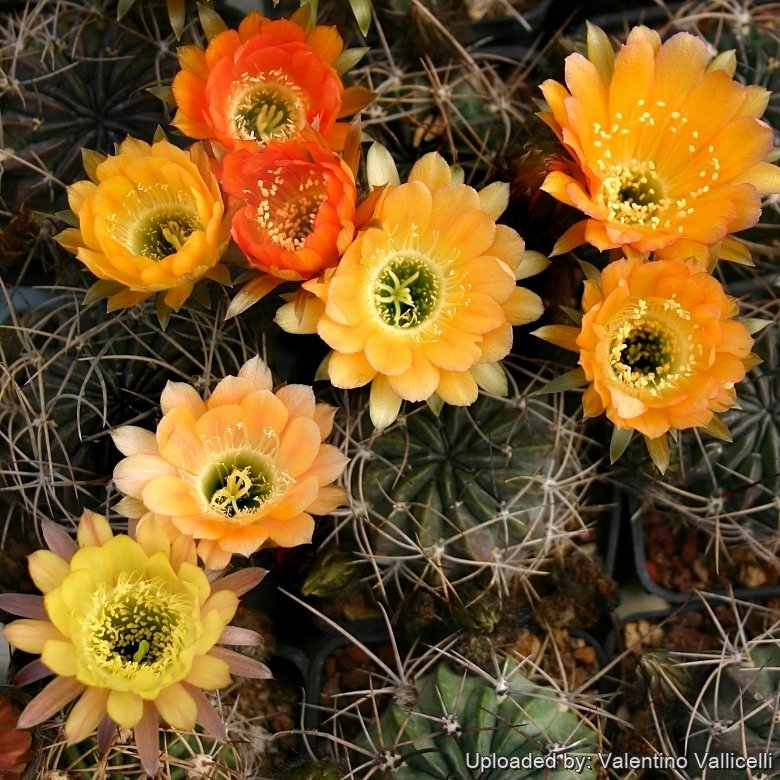
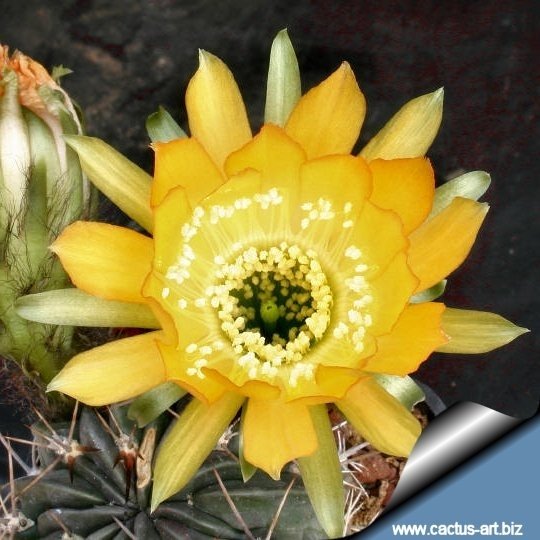
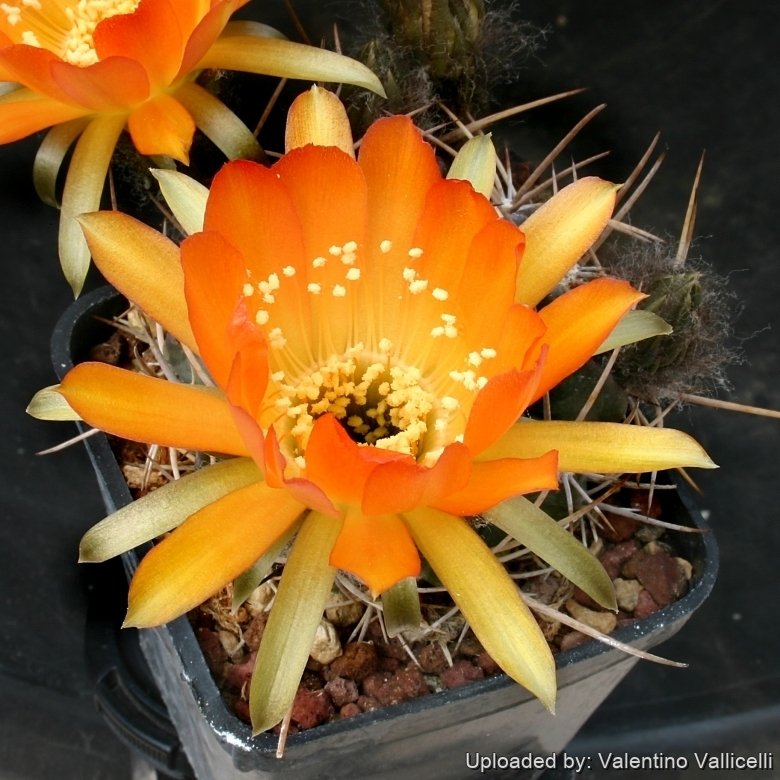
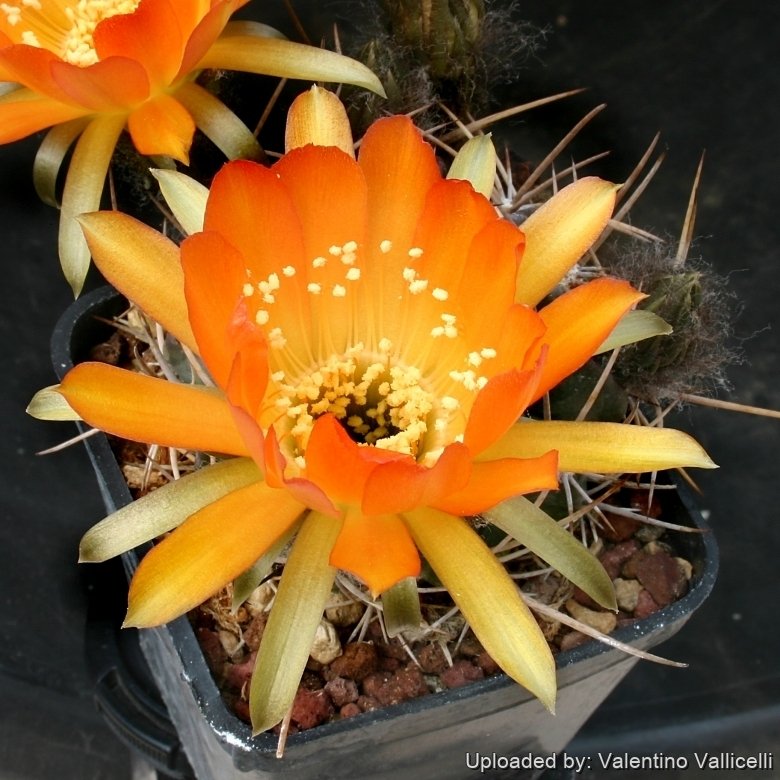
Flowers: Slender, pink to reddish-brown, orange or yellow with usually a clearer centre, approx. 6.0 cm. long, 5.0 cm. in diameter. Blooms are produced in spring, and remain open for about three days.
Roots: Tap root.
Origin and Habitat
Native to Northern Bolivia and the Andean plateaus and slopes of Southern Peru.
Cultivation and Propagation
This is a a much decorative frost hardy cactus easily found in cultivation. It is a summer grower species that offers no cultivation difficulties.
Soil: Use a very a particularly draining substratum, as it is very sensitive to rottenness when in presence of humidity and low temperatures and let the soil dry out between waterings, since it’s natural habitat is in volcanic soil, it has adapted to more acidic conditions.
Repotting: Repot in the spring, when their roots become cramped. Generally, they should be repotted every other year in order to provide fresh soil. After repotting, do not water for a week or more. Needs a large pot to accommodate a large root system.
Water: In summer, during the vegetative period, it must be regularly watered, but allowing the substratum to completely dry up before irrigating again (but do not overwater); in winter, it’s to be kept dry. Preferable not to water on overcast days, humid days or cold winter days.
Hardiness: It is a quite frost resistant cactus, hardy to -5° C (- 10° C if very dry). However in cultivation it is better not to expose it to temperatures lower than -0° C, even if in an aerated and protected location, in order to avoid the formation of anti-aesthetic spots on the epidermis. In presence of high atmospheric humidity avoid any frost as it is particularly sensitive to root rot.
Exposure: Outside full sun or afternoon shade, inside needs bright light, and some direct sun, but, as a former mountain dweller, does not care for extremely high temperatures in summer.
Use: It is suitable for small “desert” gardens, in association with other xerophytes. Where the open air cultivation is not possible due to the climate, it is to be cultivated in pot in order to shelter it in winter.
Propagation: By seeds and by cuttings, provided left drying up well, in summer.
Notes
The Lobivia pentlandii group is a complex that comprises many different varieties, forms, and ± similar related species. It was found by Pentland and described in 1844 by W. Hooker as Echinocactus pentlandii. Salm Dyck overcombined it into the genus Echinopsis. When Britton and Rose 1922 had established the genus Lobivia.
Lobivia pentIandii was chosen as type species.
Gallery