Publication: Allg. Gartenzeitung (Otto & Dietrich) 14: 250. 1846
Description
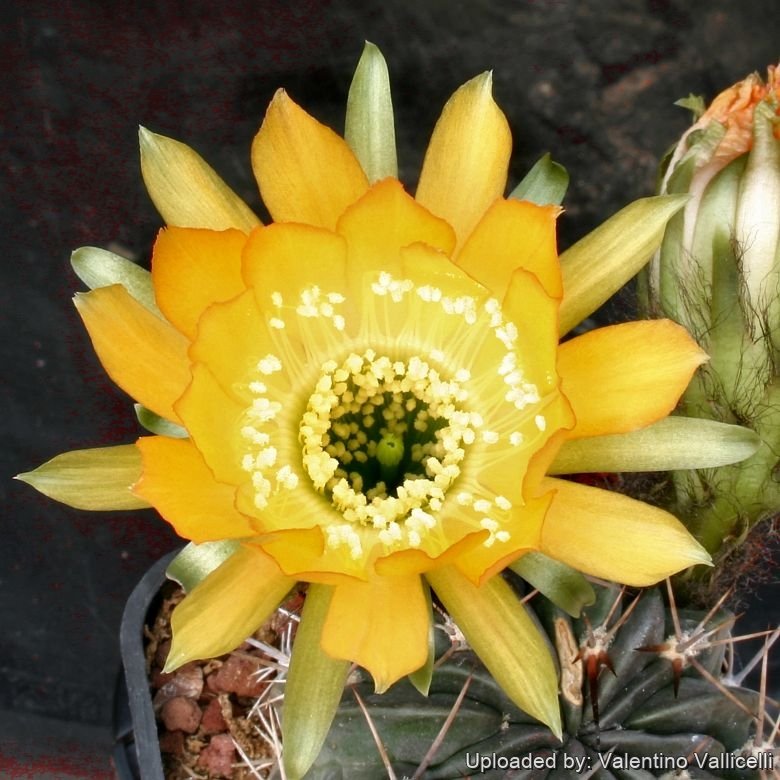
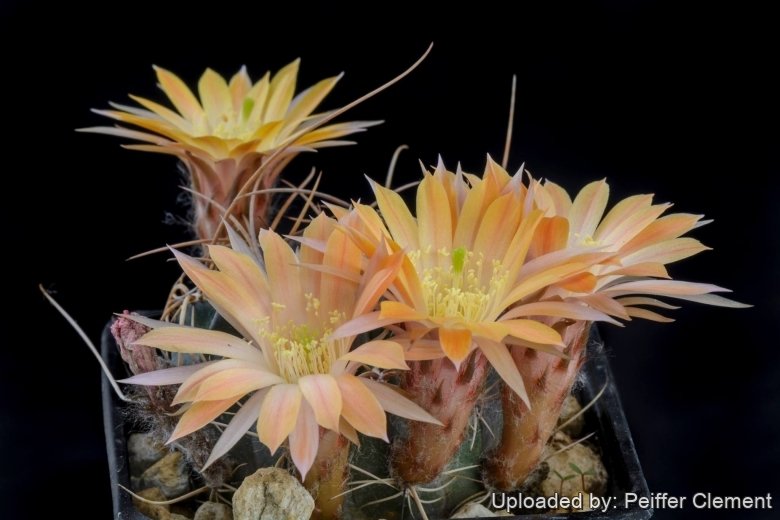
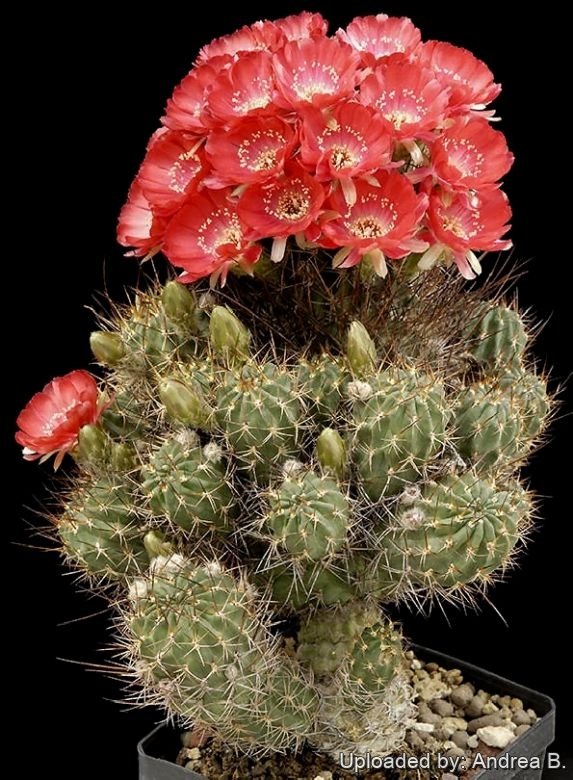
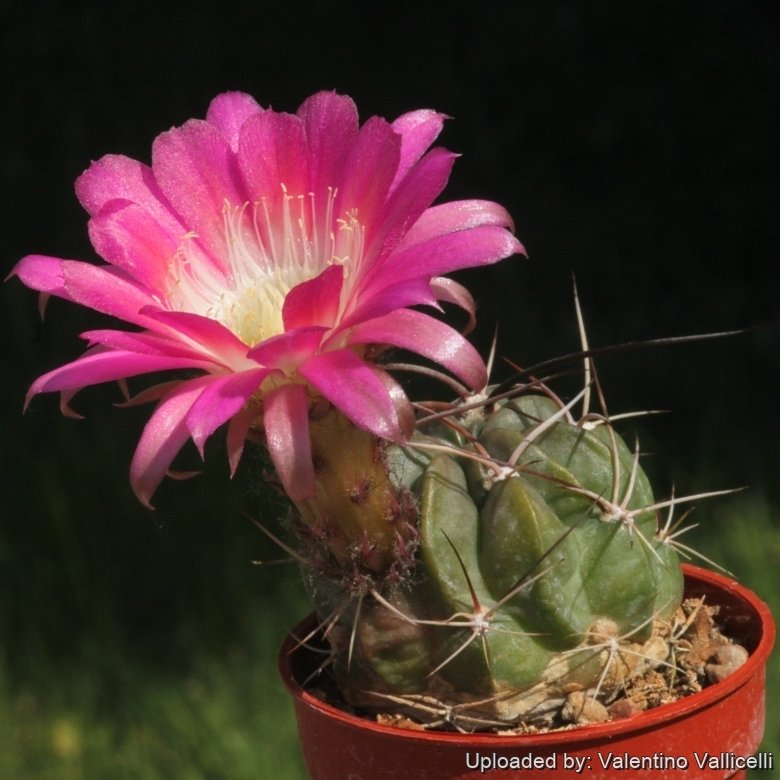
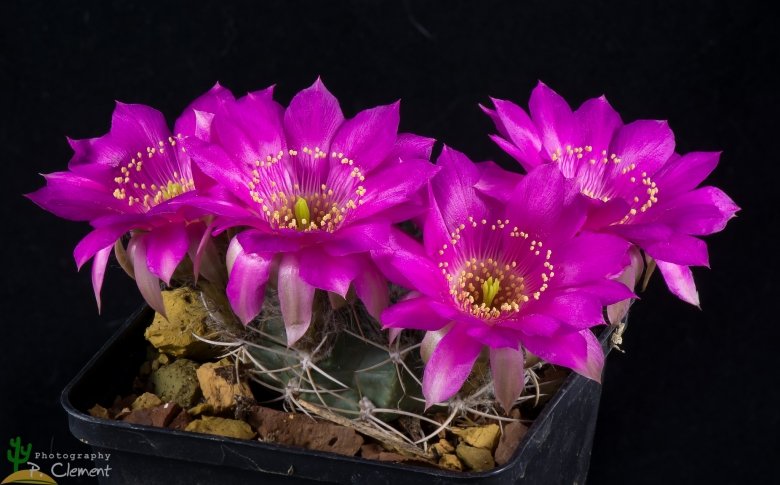
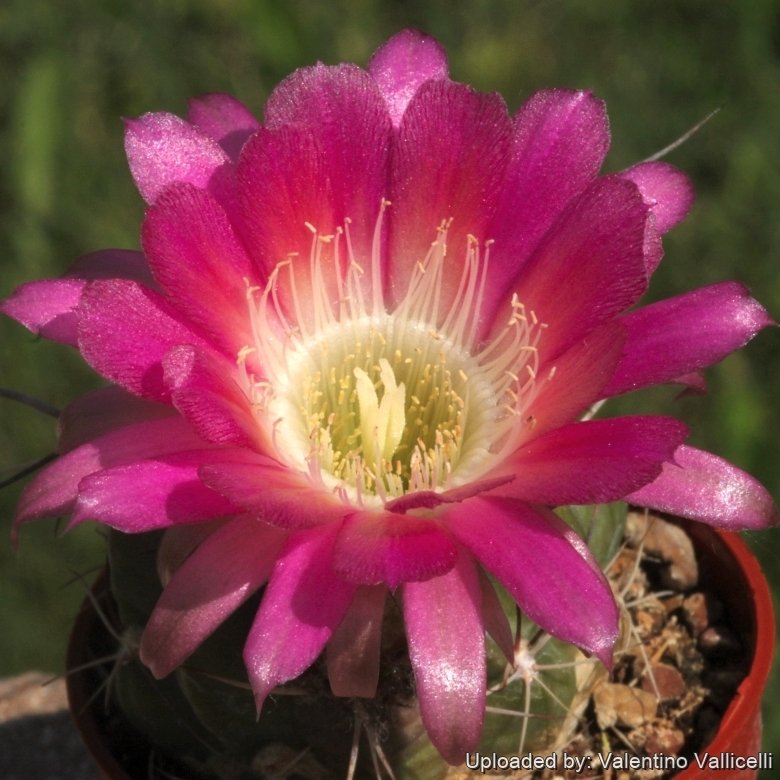
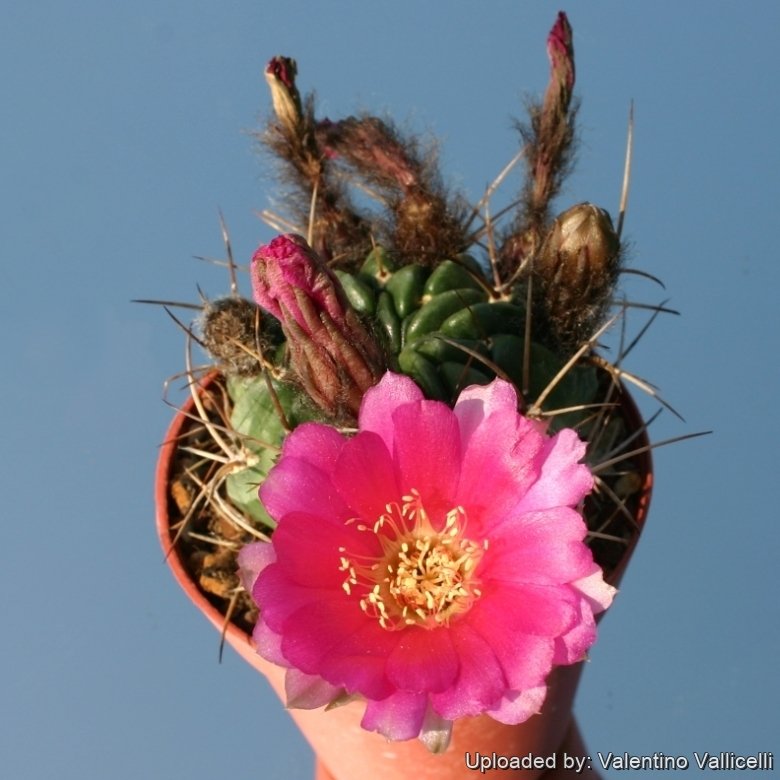
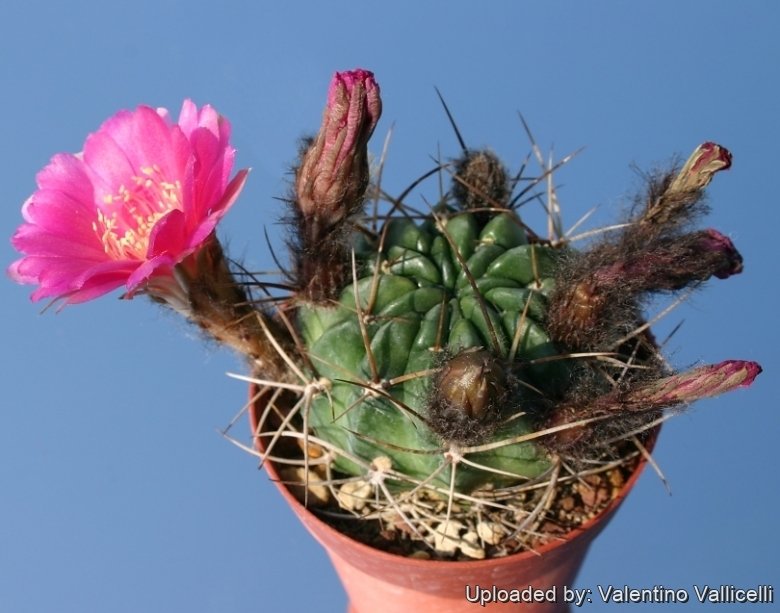
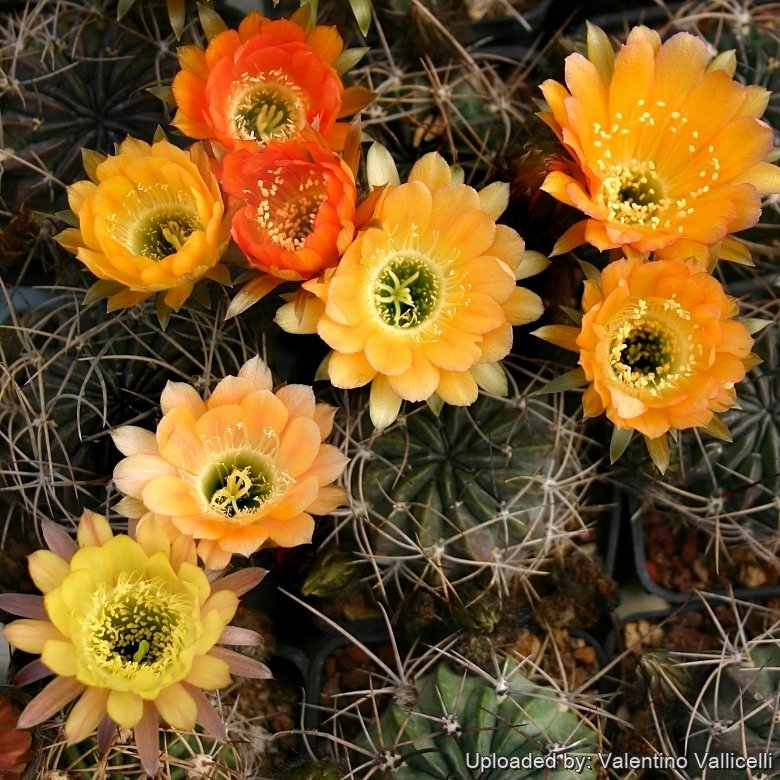
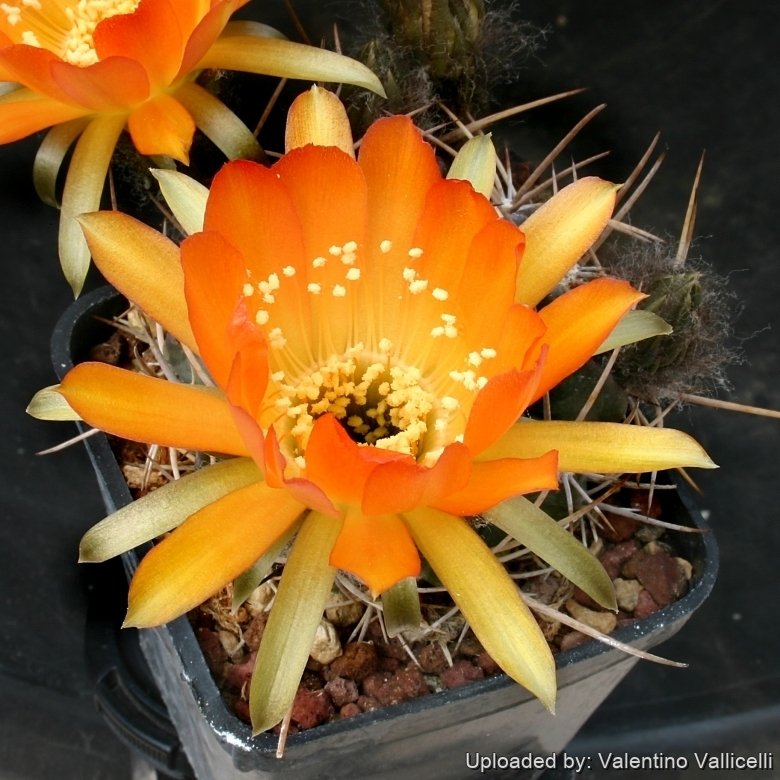
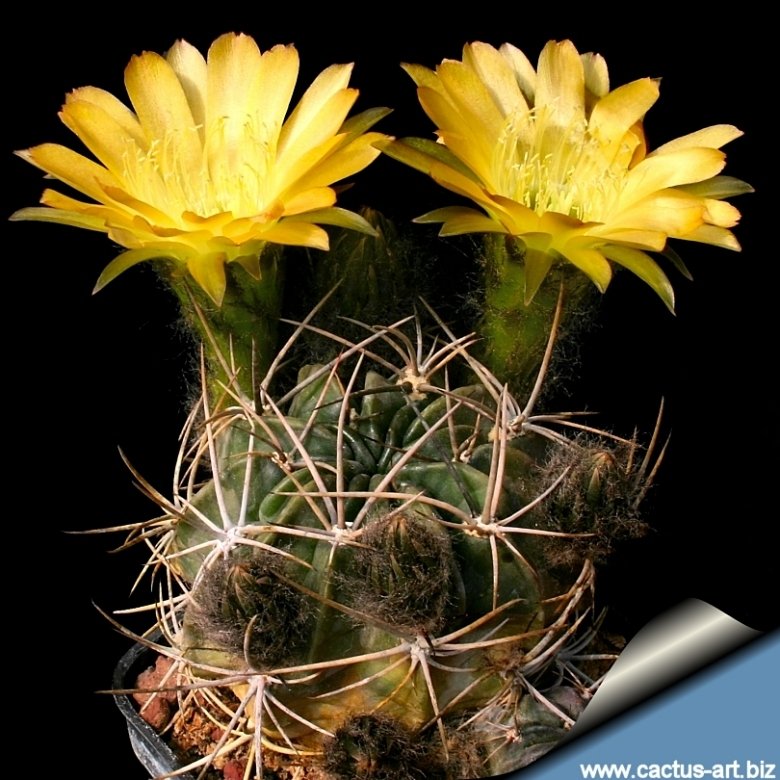
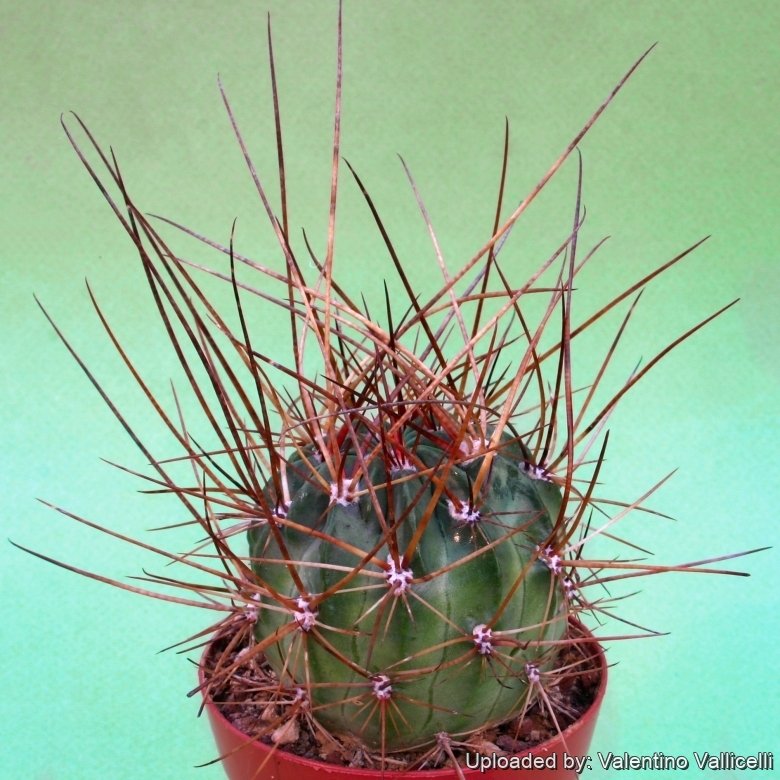
Echinopsis pentlandii, better known as Lobivia pentlandii, is a common attractive dwarf clumping cactus and particularly is fun as it matures and flowers at an early age. Probably the best known species, it includes many varieties of desirable plants with pretty flowers in almost any colour. This is one of the most variable species in the genus and has lots of unnecessary names, none deserving acceptance as shown by field studies (like many other cacti) and comprises a multitude of different regional or morphological forms as well as various cryptic allied species. But where each form is linked to others by populations of plants with intermediate characteristics. This species is in cultivation with many cultivated and propagated forms. Generations of cactophiles have had this plant as one of their first acquisition and few can have been disappointed by its easy cultivation and free-flowering habit. It is the type species of the genus Lobivia.
Habit: Simple at first it slowly ramifies from the base to form clusters.
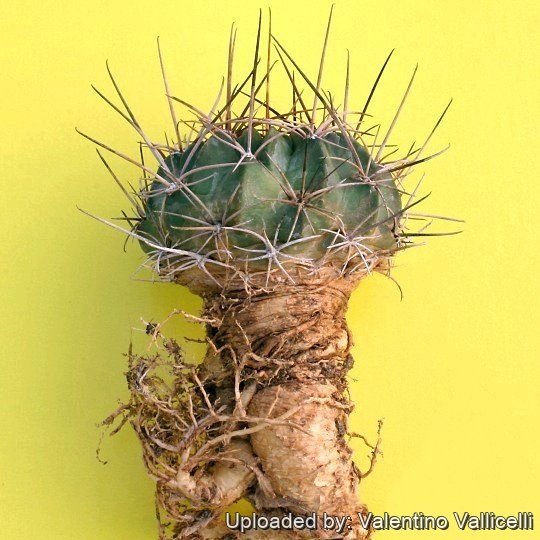
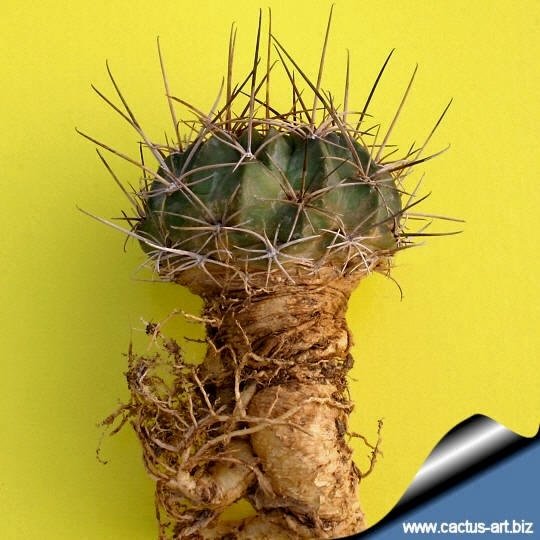
Roots: Tap root.
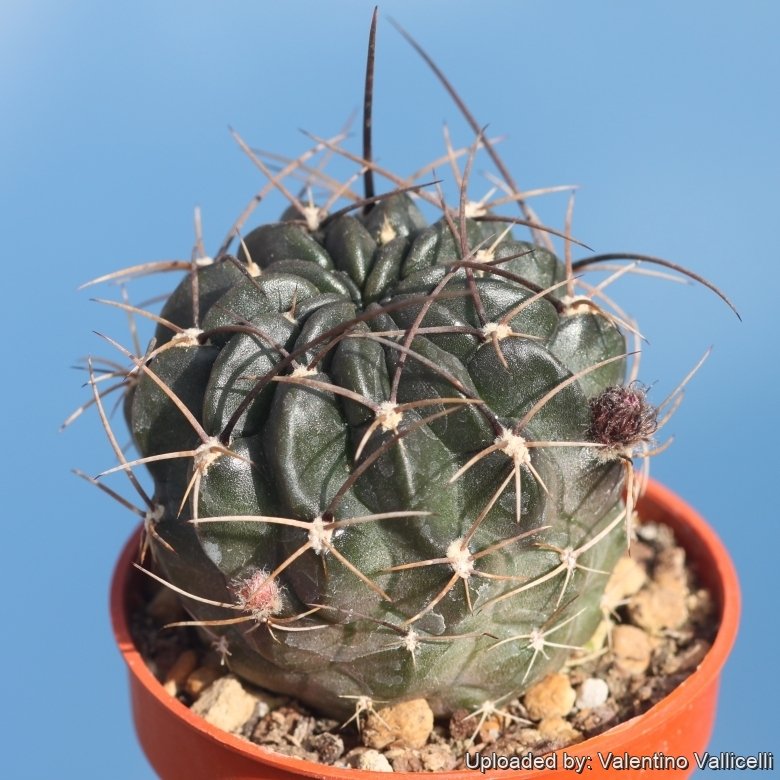
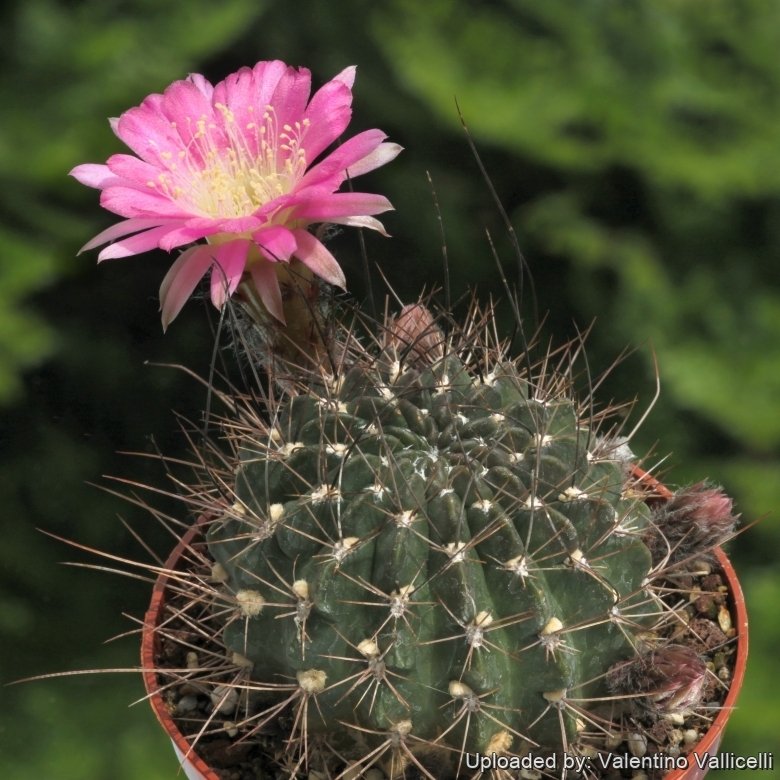
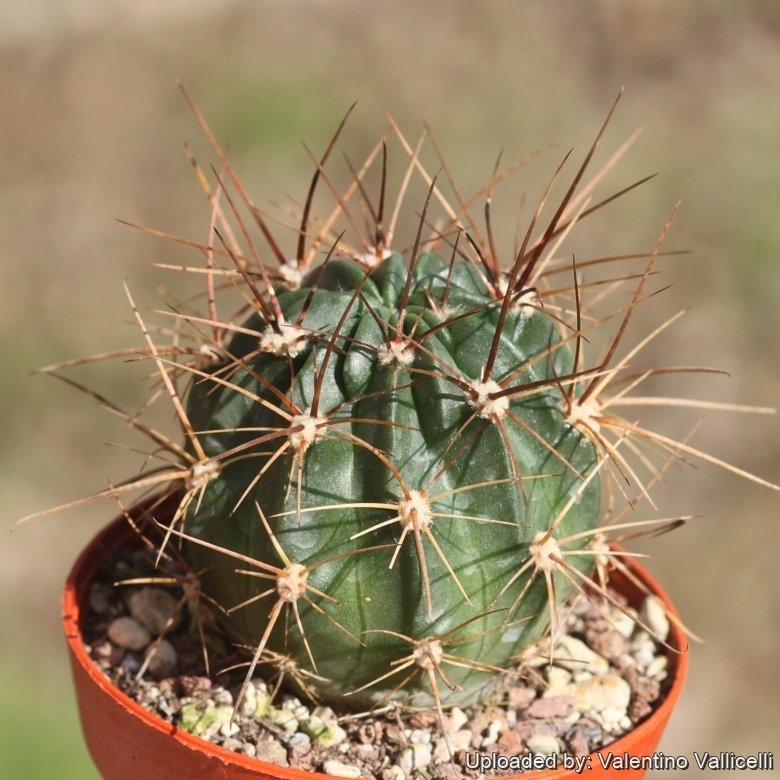
Stem: Low thick flat, ovoid or cylindrical, but usually higher than broad, somewhat umbilicate at apex, bright green, dark green, or somewhat glaucous; size depending on the clone.
Ribs: 12 to 15 (or more) deeply crenate, rather high, broken into long acute, hatchet-shaped, tubercles, separated by acute intervals.
Areoles: Felted about 2 cm apart.
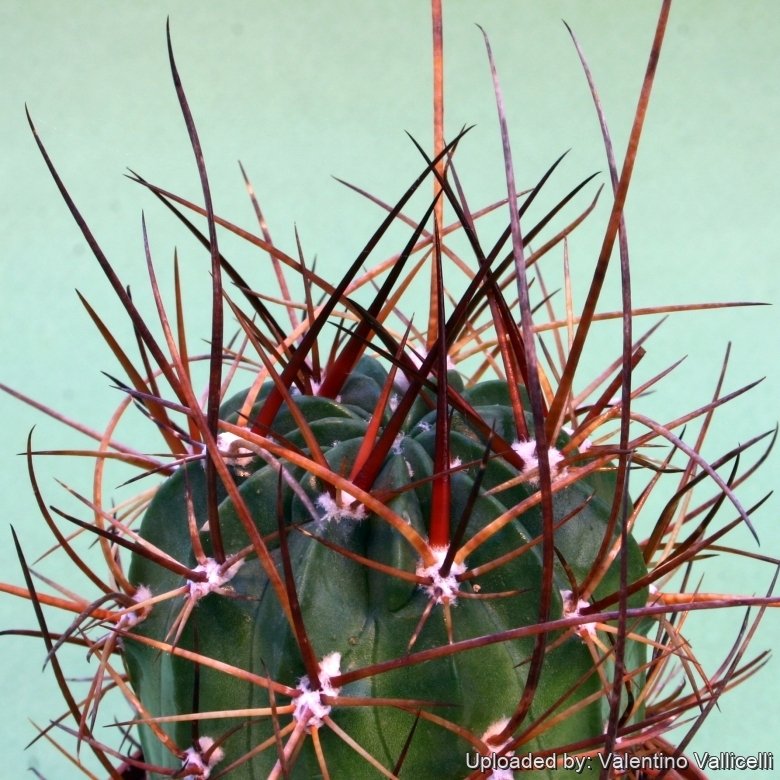
Spines: Variable, stout, all radial or sometime with one central.
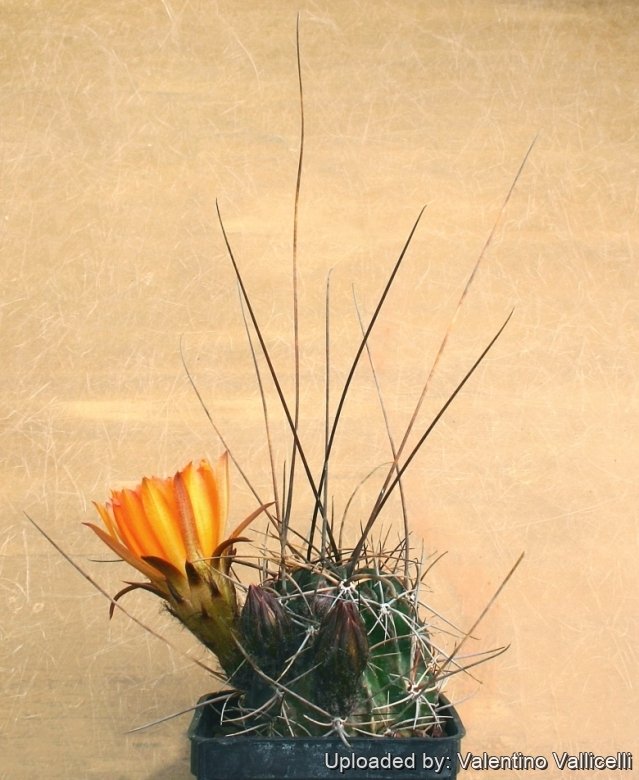
Central spines: 0-1, acicular to subulate somewhat recurved 3-9 cm long or less in young specimens; yellowish brown, or brownish. Old plants may produce very long spines (up to 25 cm in some clones)
Radial spines: 5-15, curved backward, acicular, yellowish brown, to 3 cm long.
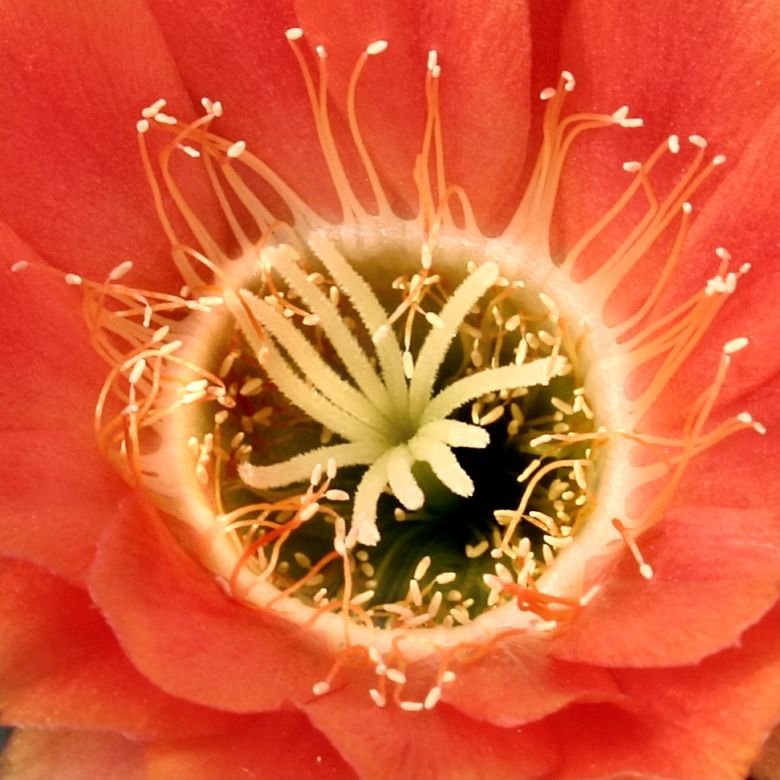
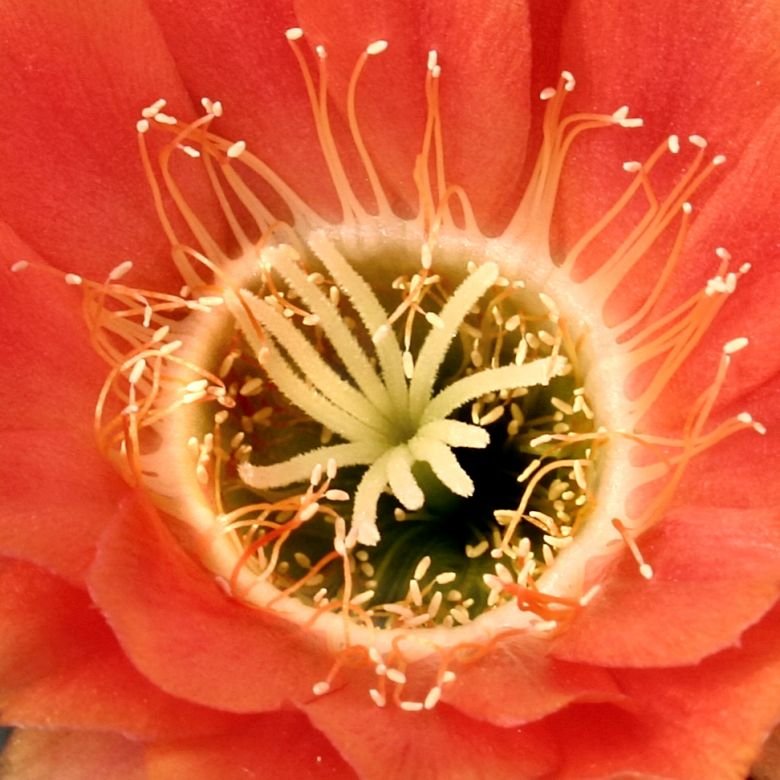
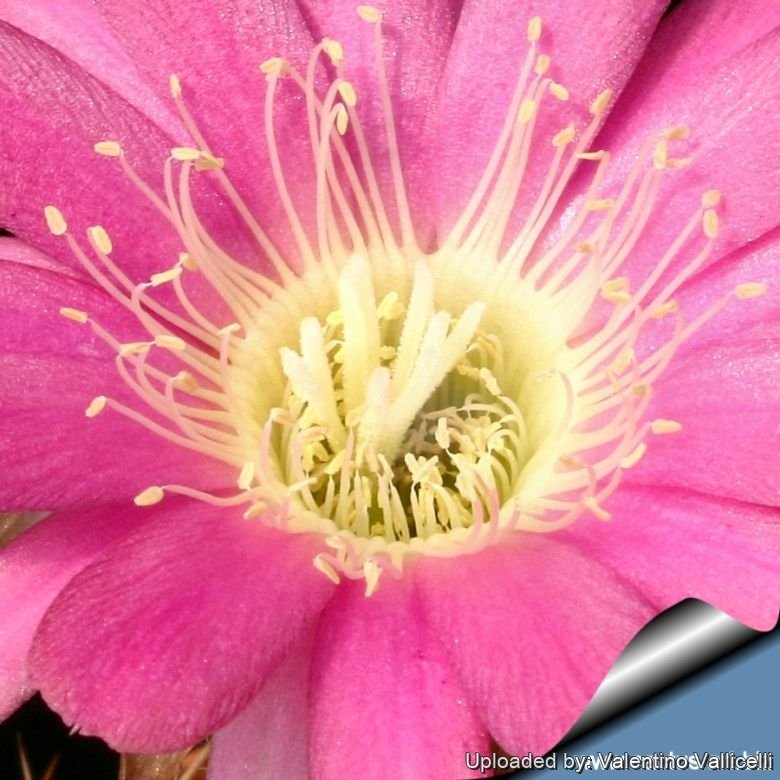
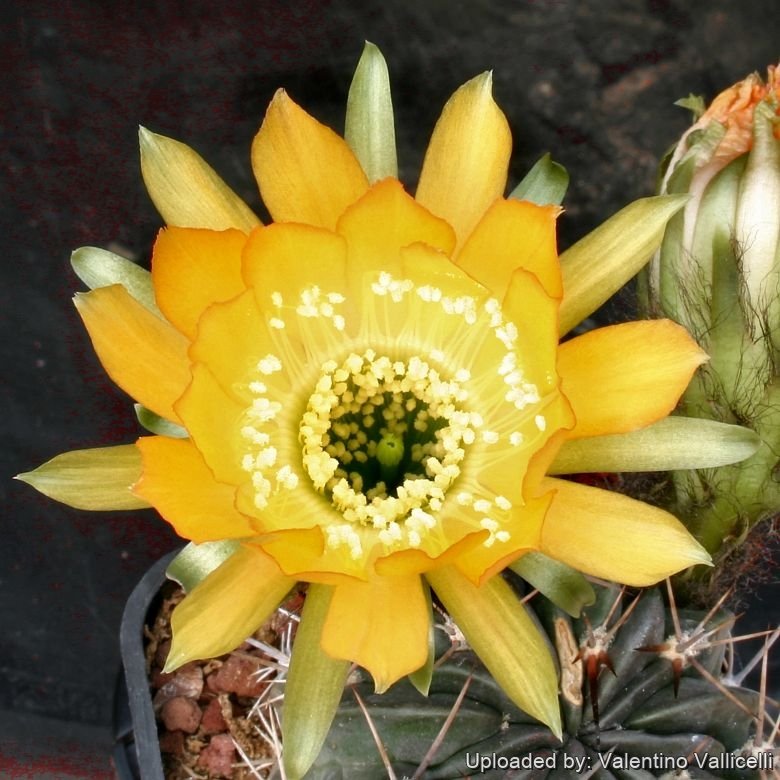
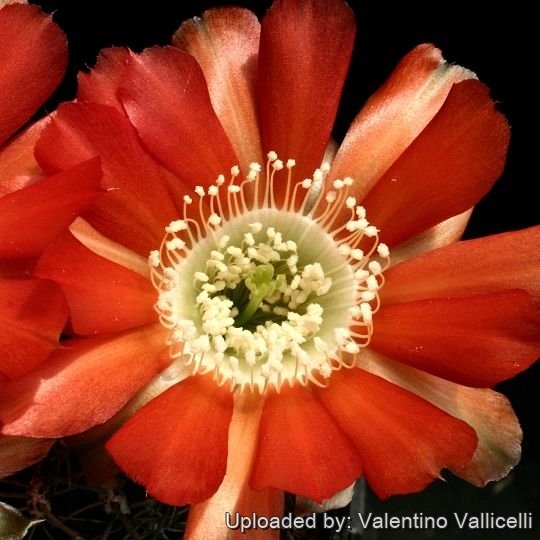
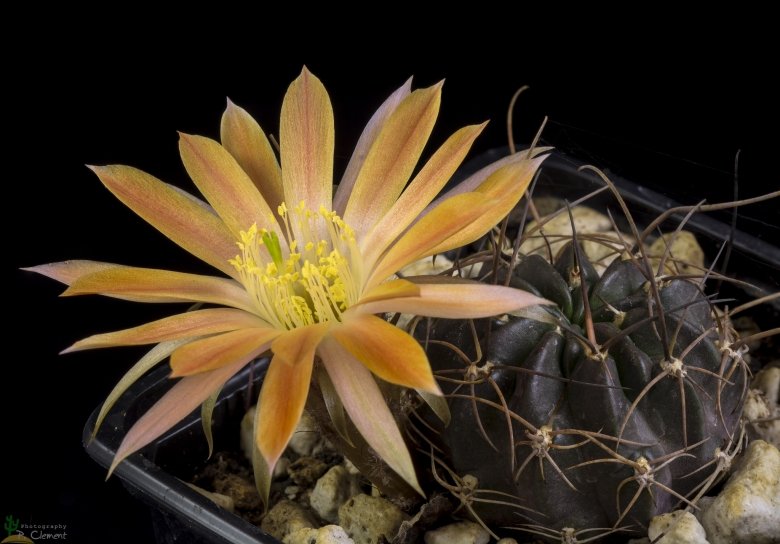
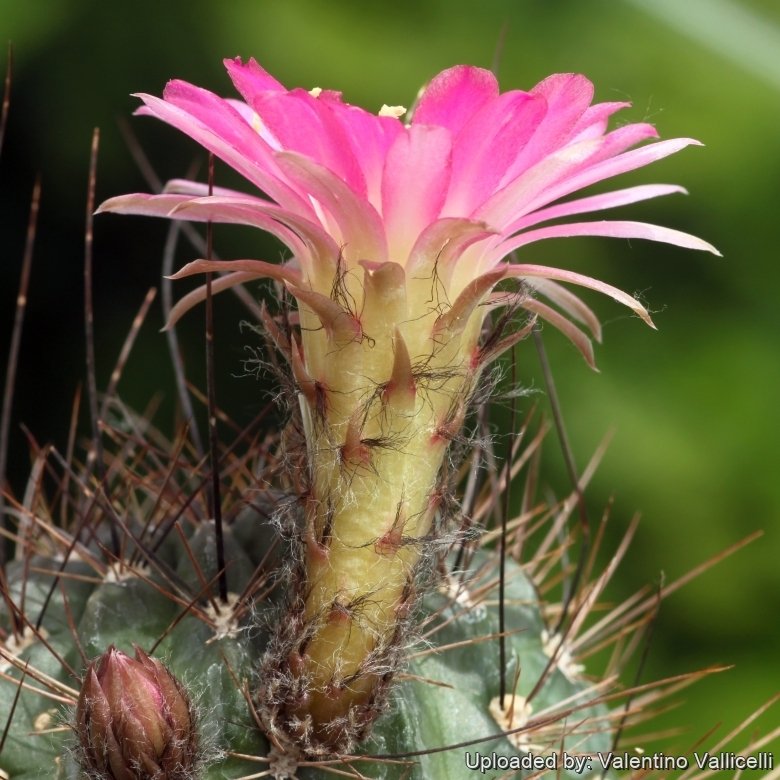
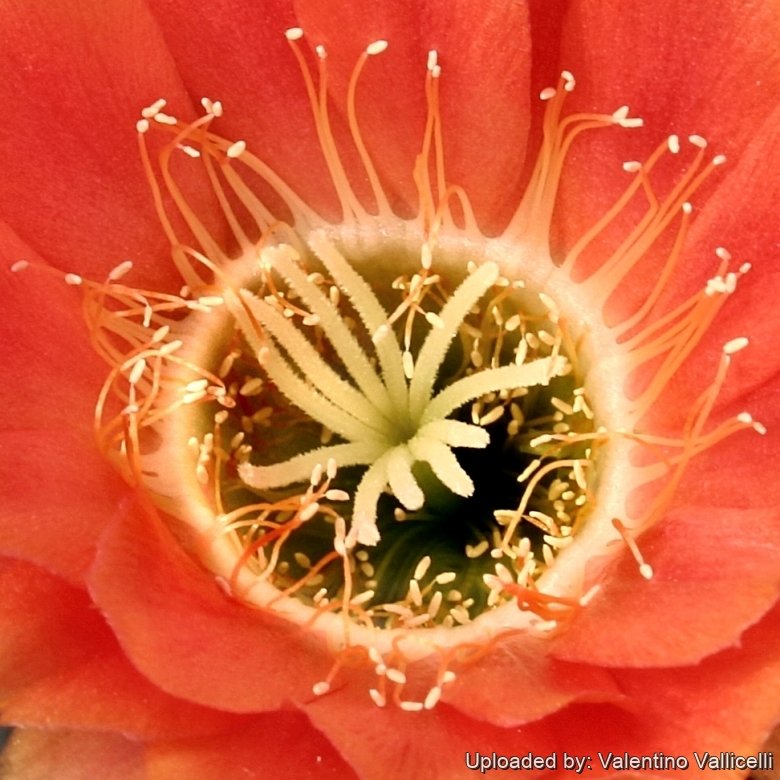
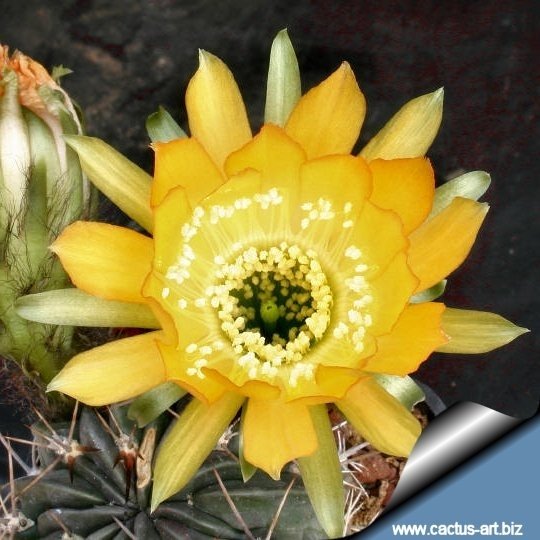
Flowers: Diurnal, short-funnelform, extremely variable in colour purplish-pink, pale-pink, reddish-brown, orange, red, to yellow, with a usual clearer centre, 4-6 cm long, 5 cm diameter. Tube relatively stout greenish up to 1 cm in diameter. Inner perianth-segments, narrowly obovate, abruptly acute, spreading. Stamens and style much shorter than the inner perianth-segments. Scales on ovary and flower-tube lanceolate with short-hairy in their axils.
Blooming season: Blooms are produced in spring and remain open for about three days.
Fruit: Subglobose, 10 to 12 mm in diameter.
Origin and Habitat
Native to Northern Bolivia and the Andean plateaus and slopes of Southern Peru.
Altitude: 3500-4200
Habitat: Echinopsis pentlandii is locally common among grasses and large boulders on flats, slopes and ridges, on a wide range of soil types and rocks comprising eroded granite, conglomerate, and sandstone, together with Tephrocactus floccosus, Lobivia hermanniana, Lobivia omasuyensis.
Cultivation and Propagation
This is a a much decorative frost hardy cactus easily found in cultivation. It is a summer grower species that offers no cultivation difficulties.
Soil: Use a very a particularly draining substratum, as it is very sensitive to rottenness when in presence of humidity and low temperatures and let the soil dry out between waterings, since it’s natural habitat is in volcanic soil, it has adapted to more acidic conditions.
Repotting: Repot in the spring, when their roots become cramped. Generally, they should be repotted every other year in order to provide fresh soil. After repotting, do not water for a week or more. Needs a large pot to accommodate a large root system.
Water: In summer, during the vegetative period, it must be regularly watered, but allowing the substratum to completely dry up before irrigating again (but do not overwater ); in winter, it’s to be kept dry. Preferable not to water on overcast days, humid days or cold winter days.
Hardiness: It is a quite frost resistant cactus, hardy to -5° C (- 10° C if very dry). However in cultivation it is better not to expose it to temperatures lower than -0° C, even if in an aerated and protected location, in order to avoid the formation of anti-aesthetic spots on the epidermis. In presence of high atmospheric humidity avoid any frost as it is particularly sensitive to root rot.
Exposure: Outside full sun or afternoon shade, inside needs bright light, and some direct sun, but, as a former mountain dweller, does not care for extremely high temperatures in summer.
Use: It is suitable for small “desert” gardens, in association with other xerophytes. Where the open air cultivation is not possible due to the climate, it is to be cultivated in pot in order to shelter it in winter.
Propagation: By seeds and by cuttings, provided left drying up well, in summer.
Notes
Lobivia (Echinopsis) pentlandii group is a complex that comprises many different varieties, forms and ± similar related species. It was found by Pentland and described in 1844 by W. Hooker as Echinocactus pentlandii. Salm Dyck overcombined it into the genusEchinopsiss. When Britton and Rose 1922 had established the genus Lobivia.Lobivia pentlandii was chosen as type species.
Bibliography
Major references and further lectures
-
N. L. Britton, J. N. Rose “The Cactaceae. Descriptions and Illustrations of Plants of the Cactus Family.” Volume 3, The Carnegie Institution of Washington, Washington 1922
-
Edward Anderson “The Cactus family” Timber Press, Incorporated, 2001
-
James Cullen, Sabina G. Knees, H. Suzanne Cubey “The European Garden Flora Flowering Plants: A Manual for the Identification of Plants Cultivated in Europe, Both Out-of-Doors and Under Glass” Cambridge University Press, 11/Aug/2011
-
David R Hunt; Nigel P Taylor; Graham Charles; International Cactaceae Systematics Group. “The New Cactus Lexicon” dh books, 2006
-
E Haustein “Der Kosmos Kakteenfuehrer” Balogh Scientific Books, United States, 01/Dec/1998
-
Willy Cullmann, Erich Götz (Dozent Dr.), Gerhard Gröner “The encyclopedia of cacti” Timber Press, 1987
-
S. H. Scott “The Observer’s Book of Cacti and Other Succulents” F. Warne, 1958
-
Clive Innes, Charles Glass “Cacti” Portland House, 01/May/1991
From llifle page Echinopsis scheeri
Description
Echinopsis scheeri (Lobivia scheeri), is a controversial cactus species generally included within (as a synonym of) {{SN’>10595’ alt=‘10595’>Echinopsis pentlandii#SN#10595’>{{[[Echinopsis pentlandiiSN’ style=‘border:none;’>|}}, suggesting that there is not really a fundamental difference between the two. The dark greyish-green or tan body with a long carrot like root, thin brownish or greyish spines, and long pale orange-red flowers helps distinguish this tree from other related species.
Stem: Single or forming shoots, ellipsoidal, 5-6(-10) cm thick dark greyish-green, dark blue-green or tan.
Ribs: 10-20 (or more), acute, separated by deep vertical grooves, crenate ( notched),obliquely interrupted at the areola.
Spines: Variable, all radial or sometime with one central.
Radial spines: 6, stronger and 4-5 thinner, acicular, slightly bent inward, about 26 mm long, at first dark purple and subsequently brownish or grey.
Central spines: 0-1, acicular to subulate somewhat recurved 3-9 cm long or less in young specimens.
Notes: Rumpler writes (1885): Sepaloid perianth segments elongated-linear, dark green, petaloid perianth segments numerous, pointed-lanceolate, lilac in the outside, light-cinnabar-red (or or also orange and yellow) with a darker mid-rib. W. Rausch 1992 (KuaS, 1992, H. 9, S. 9, S. 198-201): named Lobivia pampana as Lobivia scheeri because this later name would be older.
For more details see: Echinopsis pentlandii
Origin and Habitat
Arequipa,Peru.
Altitude range: 3600-4700 metres above sea level.
Bibliography
Major references and further lectures
-
Förster-Rümpler, “Die Cacteenkunde”. zweite Auflage. 1885.
-
Tim Inskipp, Harriet J. Gillett “Checklist of CITES species and annotated CITES appendices and reservations: a reference to the appendices to the Convention on International Trade in Endangered Species of Wild Fauna and Flora” CITES Secretariat, 2005
-
Lobivia pampana retrieved from Cactusinflo.nl on 09-07-2017 <http://cactusinfo.nl/index.php/64-cactus-en-vetplant-soorten/lobivia/119-lobivia-pampana\>
-
Echinopsis scheeri Salm-Dyck, 1849 retrieved from cactuslove.ru on 09-07-2017 <http://www.cactuslove.ru/vid.php?vidid=2172\>
Source: Echinopsis scheeri, LLIFLE - Encyclopedia of living forms, CC-BY-SA, retrieved 2026-10-25.
From llifle page Lobivia aculeata
Description
Echinopsis pentlandii var. aculeata, better known as Lobivia aculeata, is one of the many geographical or morphological form of Echinopsis pentlandii. Many variant of Echinopsis pentlandii was early classified as different independent species, but nowadays all this plants are considered part of a multiform species, where each form is linked to others by populations of plants with intermediate characteristics. Echinopsis pentlandii var. aculeata has distinctive bright purple-red flowers with a paler throat and long stiff spines.
Habit: Simple at first it slowly ramifies from the base to form clusters.
Roots: Tap root.
Stem: Stem: Ovoid or cylindrical, but usually higher than broad, somewhat umbilicate at apex, bright green, dark green.
Ribs:9–12 (or more), sharp edged, broken into long acute, hatchet-shaped, tubercles, separated by acute intervals.
Areoles: Felted about 1,5-2 cm apart.
Spines: Variable, stout, all radial or sometime with one central, often difficult to distinguish as centrals and radials, brownish. Usually 3-7 cm long, but often longer in old specimens.
Flowers: Diurnal, funnel shaped, bright purple-red, with a usual clearer centre, 6 cm long, 5 cm diameter. Tube relatively stout up to 1 cm in diameter. Inner perianth-segments, narrowly obovate, abruptly acute, spreading. Stamens and style much shorter than the inner perianth-segments. Scales on ovary and flower-tube lanceolate with short-hairs in their axils.
Blooming season: Blooms are produced in spring and remain open for about three days.
Fruit: Subglobose, 10 to 12 mm in diameter.
Origin and Habitat
Tinquipaya, Potosi, Bolivia
Altitude: 3500-4200 metres above sea level.
Bibliography
Major references and further lectures
-
Nathaniel Lord Britton, Joseph Nelson Rose “Cactaceae: Descriptions and Illustrations of Plants of the Cactus Family” Courier Dover Publications, 1963
-
James Cullen, Sabina G. Knees, H. Suzanne Cubey “The European Garden Flora Flowering Plants: A Manual for the Identification of Plants Cultivated in Europe, Both Out-of-Doors and Under Glass” Cambridge University Press, 11/Aug./2011
-
David Hunt, Nigel Taylor “The New Cactus Lexicon” DH Books, 2006 ISBN 0953813444, 9780953813445.
-
Edward F. Anderson “The Cactus Family” Timber Press, 2001
-
Clive Innes, Charles Glass “Cacti” Portland House, 01/May/1991
Source: Lobivia aculeata, LLIFLE - Encyclopedia of living forms, CC-BY-SA, retrieved 2026-10-25.
From llifle page Lobivia backebergii var. larae
Description
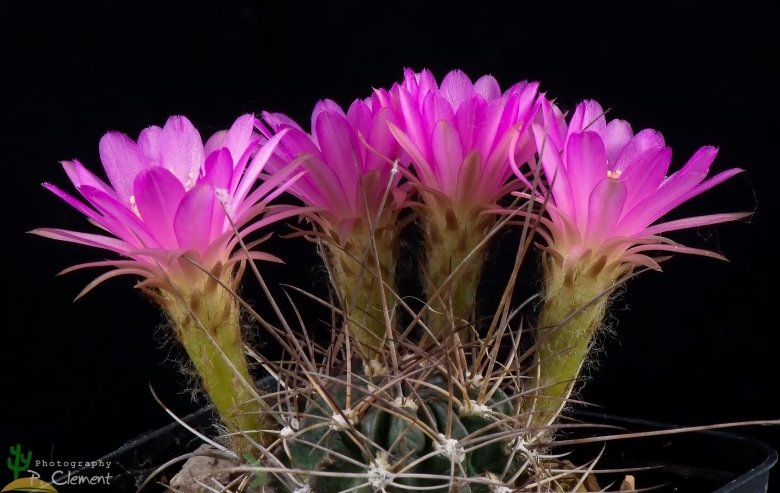
Echinopsis pentlandii subs. Larae, better known as Lobivia larae, is one of the many geographical or morphological form of Echinopsis pentlandii. Many variant of Echinopsis pentlandii was early classified as different independent species, but nowadays all this plants are considered part of a multiform species, where each form is linked to others by populations of plants with intermediate characteristics. Echinopsis pentlandii subs. Larae has distinctive dark purple, to pink lilac flowers with a paler throat. The stems are hemispherical and quite flattened with comb shaped radial spines, slightly curved and thickened at the base.
Habit: Simple at first it slowly ramifies from the base to form clusters.
Roots: Tap root.
Stem: Low thick flat, or spherical, but usually broader than high, somewhat umbilicate at apex, bright green, dark green, up to 4 cm tall and 12 cm in diameter.
Ribs:9–12, sharp edged, broken into long acute, hatchet-shaped, tubercles, separated by acute intervals.
Areoles: Felted about 1,5 cm apart.
Spines: Variable, stout, all radial or sometime with one central.
Central spines: Usually absent.
Radial spines: 9–12, somewhat pectinated, slightly curved backward, pale grey to whitish, thickened at the base.
Flowers: Diurnal, funnel shaped, dark purple to pink lilac, with a usual clearer centre, 6 cm long, 5 cm diameter. Tube relatively stout up to 1 cm in diameter. Inner perianth-segments, narrowly obovate, abruptly acute, spreading. Stamens and style much shorter than the inner perianth-segments. Style below green, above yellow. Scales on ovary and flower-tube lanceolate with short hairs in their axils.
Blooming season: Blooms are produced in spring and remain open for about three days.
Fruit: Subglobose, 10 to 12 mm in diameter.
Origin and Habitat
Tarata to Rio Caine, Dept. Cochabamba, Bolivia
Altitude: 2500 metres above sea level.
Cultivation and Propagation
This is a a much decorative frost hardy cactus easily found in cultivation. It is a summer grower species that offers no cultivation difficulties.
Soil: Use a very a particularly draining substratum, as it is very sensitive to rottenness when in presence of humidity and low temperatures and let the soil dry out between waterings, since it’s natural habitat is in volcanic soil, it has adapted to more acidic conditions.
Repotting: Repot in the spring, when their roots become cramped. Generally, they should be repotted every other year in order to provide fresh soil. After repotting, do not water for a week or more. Needs a large pot to accommodate a large root system.
Water: In summer, during the vegetative period, it must be regularly watered, but allowing the substratum to completely dry up before irrigating again (but do not overwater); in winter, it’s to be kept dry. Preferable not to water on overcast days, humid days or cold winter days.
Hardiness: It is a quite frost resistant cactus, hardy to -5° C (- 10° C if very dry). However in cultivation it is better not to expose it to temperatures lower than -0° C, even if in an aerated and protected location, in order to avoid the formation of anti-aesthetic spots on the epidermis. In presence of high atmospheric humidity avoid any frost as it is particularly sensitive to root rot.
Exposure: Outside full sun or afternoon shade, inside needs bright light, and some direct sun, but, as a former mountain dweller, does not care for extremely high temperatures in summer.
Use: It is suitable for small “desert” gardens, in association with other xerophytes. Where the open air cultivation is not possible due to the climate, it is to be cultivated in pot in order to shelter it in winter.
Propagation: By seeds and by cuttings, provided left drying up well, in summer.
Bibliography
Major references and further lectures
-
N. L. Britton, J. N. Rose “The Cactaceae. Descriptions and Illustrations of Plants of the Cactus Family.” Volume 3, The Carnegie Institution of Washington, Washington 1922
-
Edward Anderson “The Cactus family” Timber Press, Incorporated, 2001
-
James Cullen, Sabina G. Knees, H. Suzanne Cubey “The European Garden Flora Flowering Plants: A Manual for the Identification of Plants Cultivated in Europe, Both Out-of-Doors and Under Glass” Cambridge University Press, 11/Aug/2011
-
David R Hunt; Nigel P Taylor; Graham Charles; International Cactaceae Systematics Group. “The New Cactus Lexicon” dh books, 2006
-
E Haustein “Der Kosmos Kakteenfuehrer” Balogh Scientific Books, United States, 01/Dec/1998
-
Willy Cullmann, Erich Götz (Dozent Dr.), Gerhard Gröner “The encyclopedia of cacti” Timber Press, 1987
-
S. H. Scott “The Observer’s Book of Cacti and Other Succulents” F. Warne, 1958
-
Clive Innes, Charles Glass “Cacti” Portland House, 01/May/1991
-
Haage Walther “Kakteen von A bis Z” Anaconda 2008
Source: Lobivia backebergii var. larae, LLIFLE - Encyclopedia of living forms, CC-BY-SA, retrieved 2026-10-25.
From llifle page Lobivia hardeniana
Description
A pretty little species, with a low, thick, flat to cylindrical stem. The dark green body slowly ramifies from the base to form clusters, whose size depends on the clone. Felted areoles line the edges of 25 to 30 ribs.
Spines: 7 or more, brownish, radial spines that grow up to 5 cm. Old plants begin to produce very long spines (up to 25 cm in some clones).
Flowers: Slender, pink to reddish-brown, orange or yellow with usually a clearer centre, approx. 6.0 cm. long, 5.0 cm. in diameter. Blooms are produced in spring, and remain open for about three days.
Roots: Tap root.
Origin and Habitat
Native to Northern Bolivia and the Andean plateaus and slopes of Southern Peru.
Notes
The Lobivia pentlandii group is a complex that comprises many different varieties, forms, and ± similar related species. It was found by Pentland and described in 1844 by W. Hooker as Echinocactus pentlandii. Salm Dyck overcombined it into the genus Echinopsis. When Britton and Rose 1922 had established the genus Lobivia.
Lobivia pentIandii was chosen as type species.
Source: Lobivia hardeniana, LLIFLE - Encyclopedia of living forms, CC-BY-SA, retrieved 2026-10-25.
From llifle page Lobivia pentlandii f. varians
Description
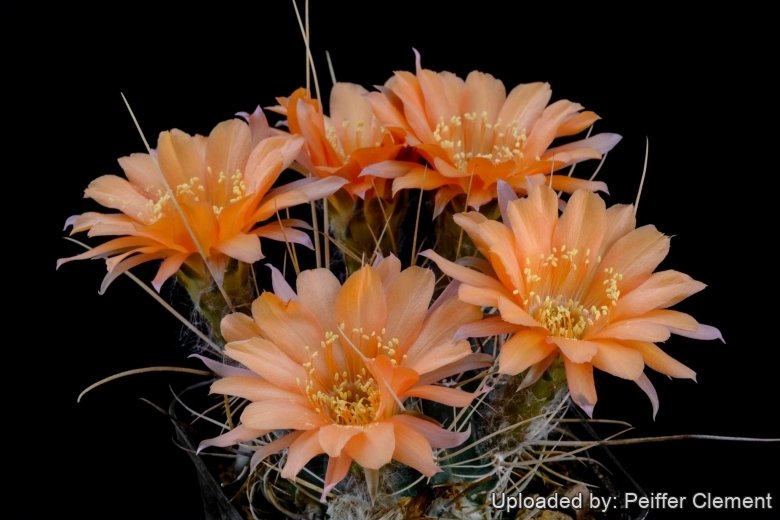
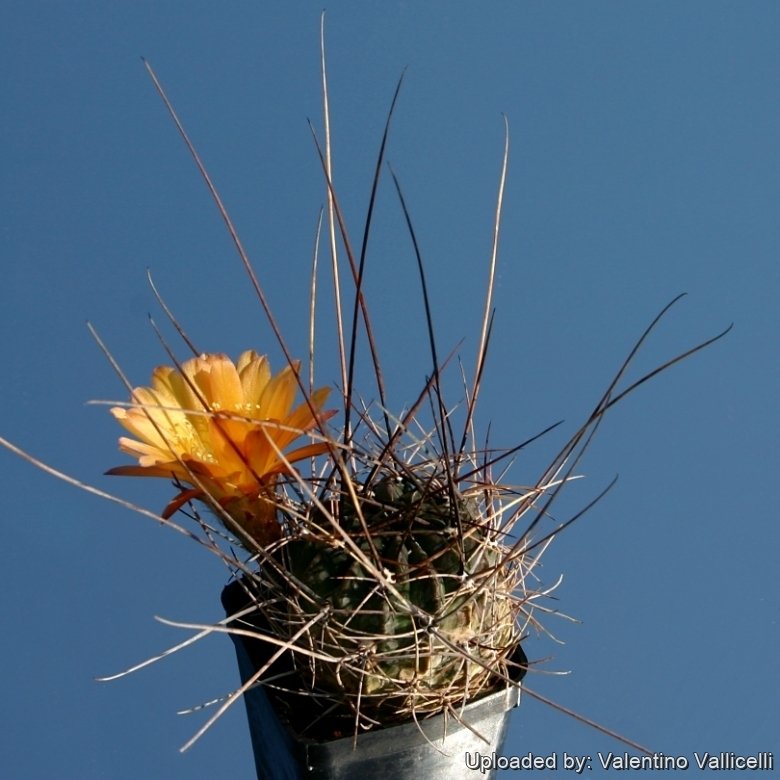
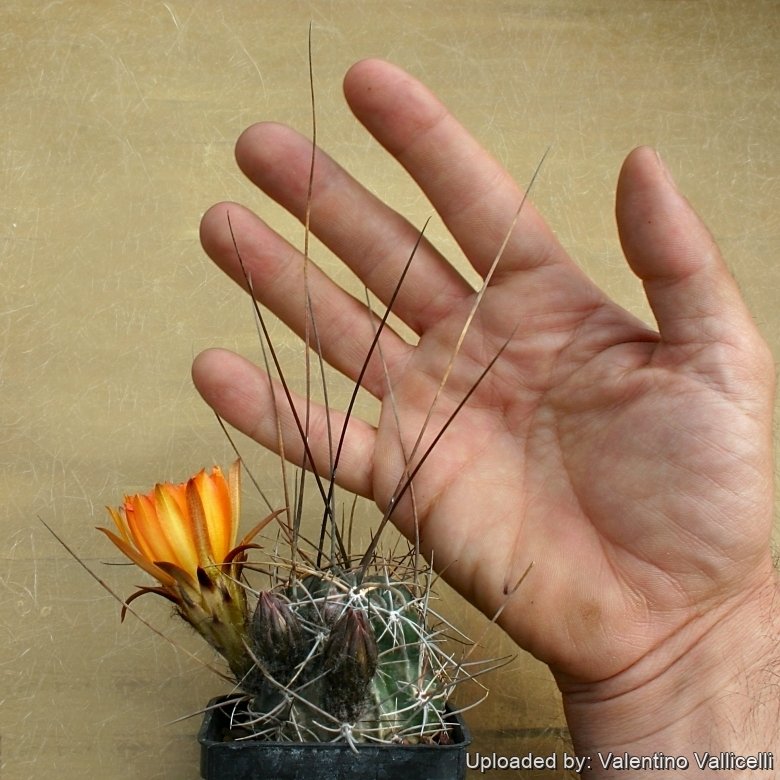
Echinopsis pentlandii f. varians, better known as Lobivia varians, is one of the many geographical or morphological form of Echinopsis pentlandii. Many variant of Echinopsis pentlandii was early classified as different independent species, but nowadays all this plants are considered part of a multiform species, where each form is linked to others by populations of plants with intermediate characteristics. Echinopsis pentlandii f. varians has distinctive orange flowers with a paler throat and extremely long spines (up to 25 cm long!)
Habit: Simple at first it slowly ramifies from the base to form clusters.
Roots: Tap root.
Stem: Low thick flat, or spherical, but usually broader than high, somewhat umbilicate at apex, bright green, dark green, up to 4 cm tall and 12 cm in diameter.
Ribs:9–12, sharp edged, broken into long acute, hatchet-shaped, tubercles, separated by acute intervals.
Areoles: Felted about 1,5 cm apart.
Spines: Variable, stout, all radial or sometime with one central, often difficult to distinguish as centrals and radials, brownish. In young specimens usually 3-7 cm long, but becoming longer and longer as the plants mature and occasionally up to 25 cm (or more) long.
Flowers: Diurnal, funnel shaped, orange, with a usual clearer centre, 6 cm long, 5 cm diameter. Tube relatively stout up to 1 cm in diameter. Inner perianth-segments, narrowly obovate, abruptly acute, spreading. Stamens and style much shorter than the inner perianth-segments. Style below green, above yellow. Scales on ovary and flower-tube lanceolate with short hairs in their axils.
Blooming season: Blooms are produced in spring and remain open for about three days.
Fruit: Subglobose, 10 to 12 mm in diameter.
Origin and Habitat
Challapata to Potosí, Potosí, Bolivia
Altitude: Around 3950 metres above sea level.
Source: Lobivia pentlandii f. varians, LLIFLE - Encyclopedia of living forms, CC-BY-SA, retrieved 2026-10-25.
Cultivars and forms (5)
Gallery