Publication: Kakteen Südamerika 1: 263 (1979)
Description
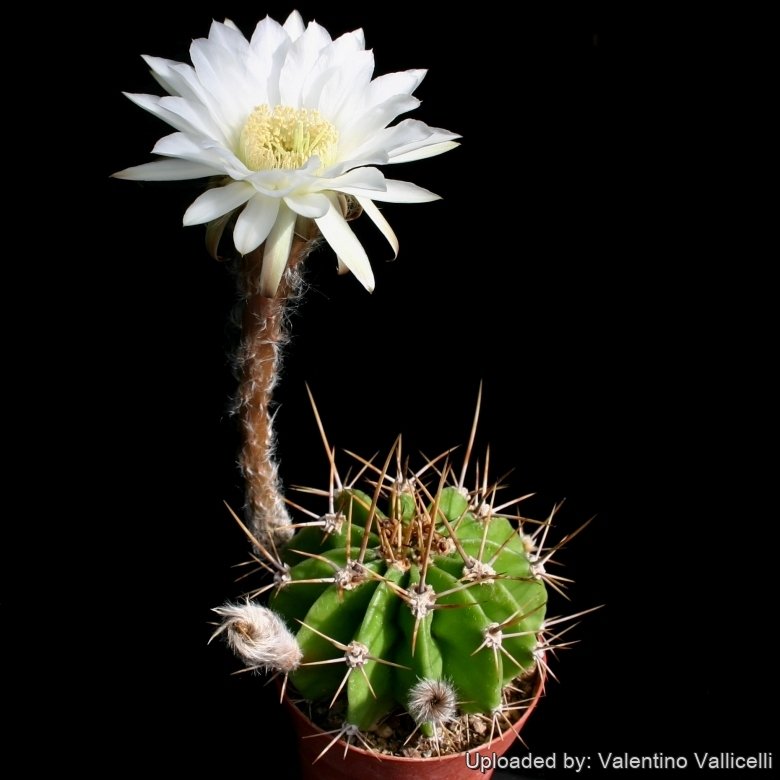
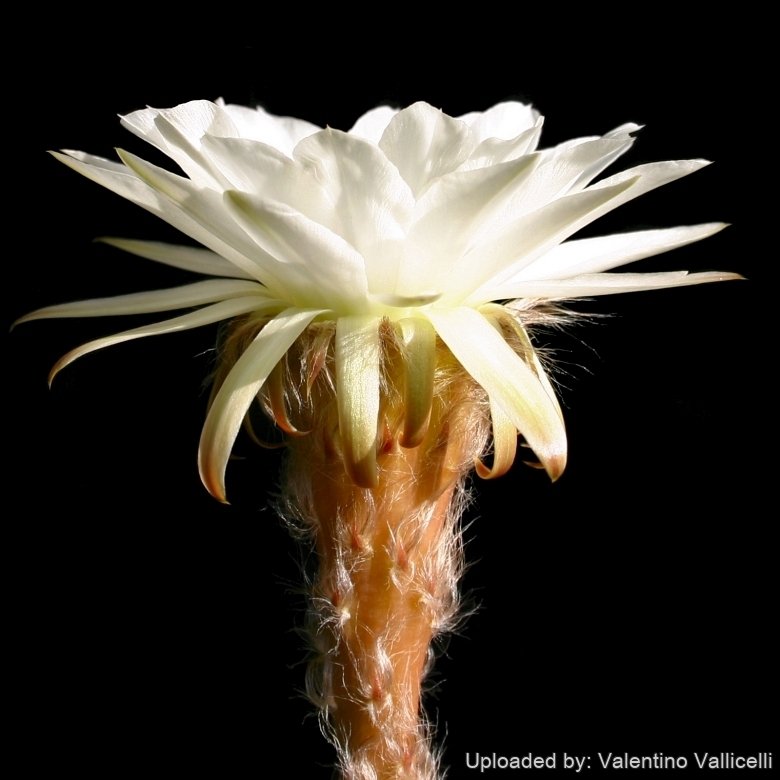
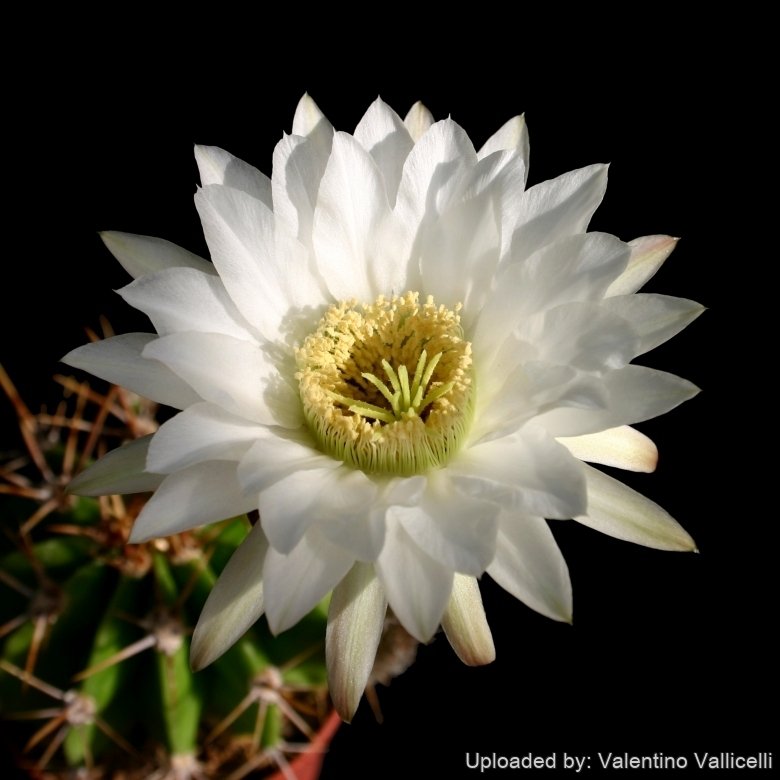
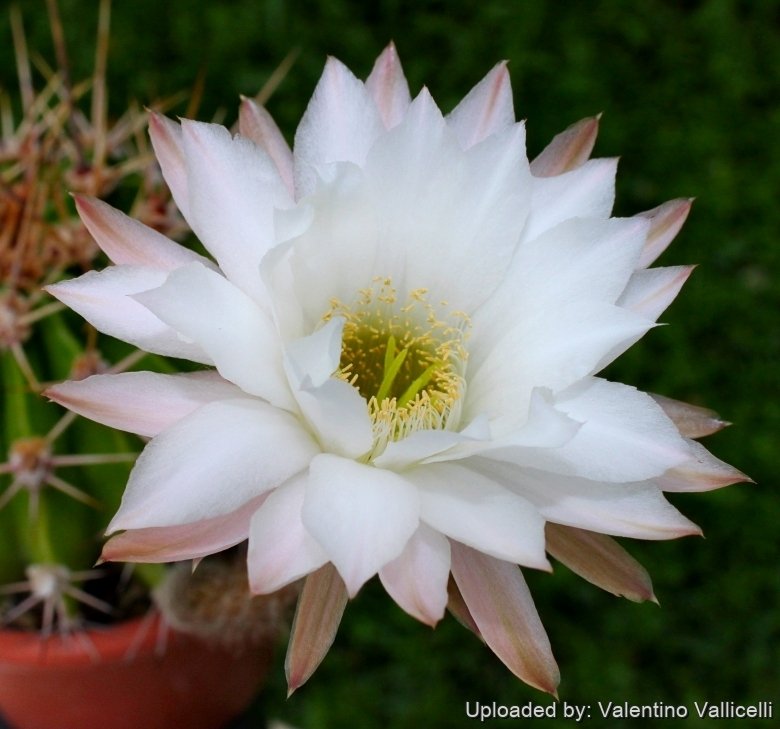
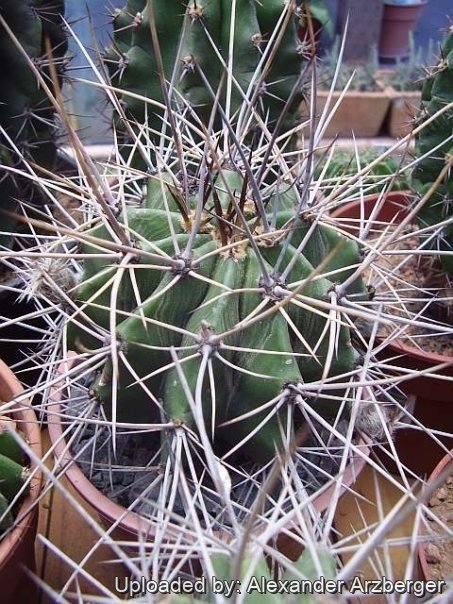
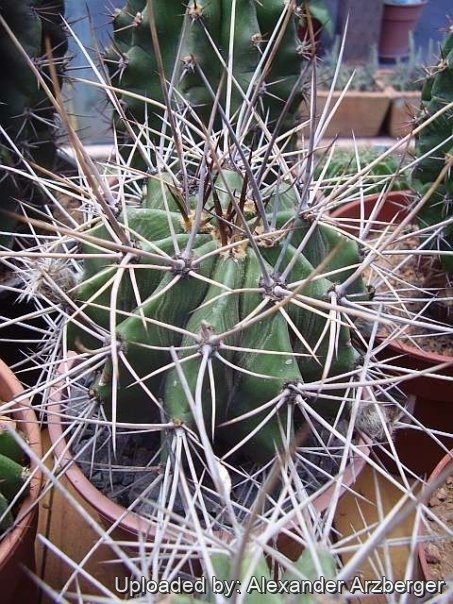
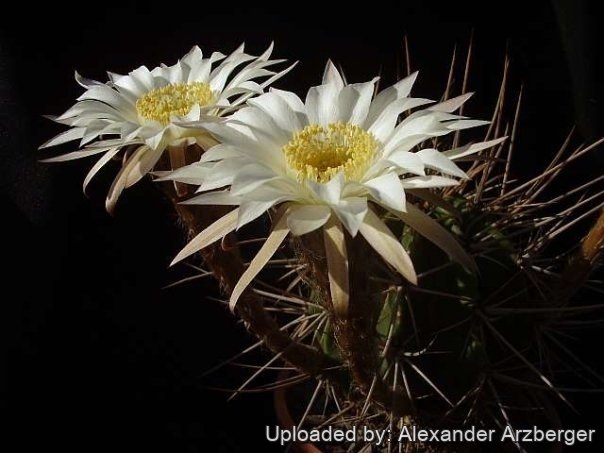
Echinopsis rhodotricha subs. chacoana is an attractive plant because of its long spines. It is a clumping plant with erect or ascending stems, sometime solitary in cultivation and unusually tall for an echinopsis. This subspecies is distinguished for the higher number of rib (12—18) and radial spines (7—8). It has splendid white trumpet-shaped flowers with long brown-woolly tube. Nevertheless, the long, dark spines contrast well with the white flower.
Derivation of specific name: ‘chacoanus -a -um’ for the occurrence in the Chaco (annually flooded flatlands) Chaco region of Paraguay.
Stems: At first ball-like or oval, but as the plant mature cylindrical, dull grey green, 30-80 cm tall, up to 9 cm in diameter
Ribs: 12-18, low, straight or moderately sinuate, not tuberculate.
Areoles: Large rounded, coarse, grey, 1,5-2,5 mm apart.
Spines: Yellowish with brownish tips.
Central spines: 0-1 slightly bent upward long and stiff. In habitat the central spine may reach 2,5-7 cm in length although it will almost certainty be rather shorter in cultivation.
Radial spines: 7-8, spreading, stright to slightly curved, up to 2 cm long.
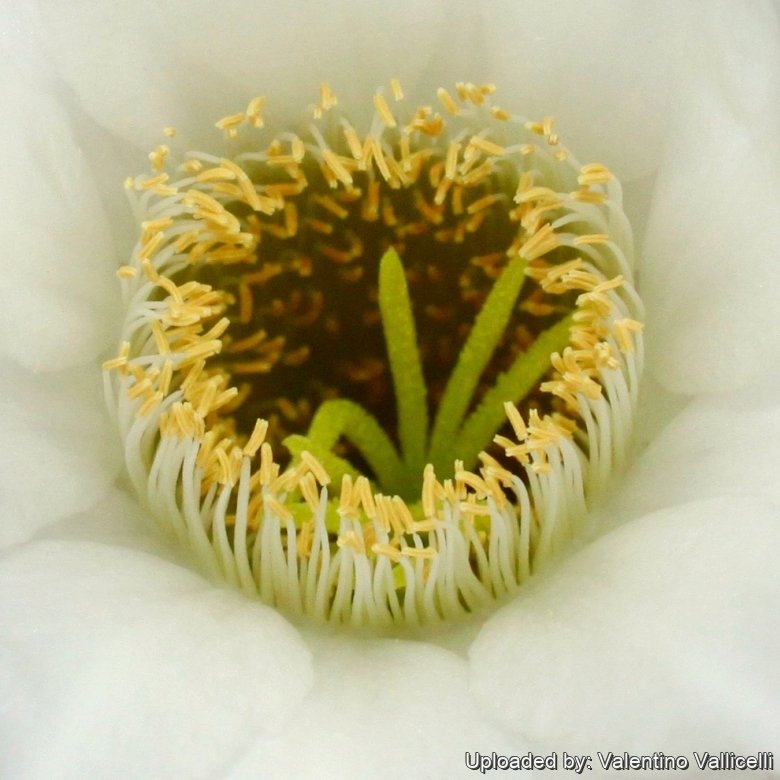
Flowers: White, up to 15 cm long. Inner perianth segments pure white, oblong, acute, stigma lobes linear, ± 11, greenish, tube long woolly. It will flower when about 7-8 cm in diameter, the buds often appear laterally from areoles in the lowest part of the stem.
Origin and Habitat
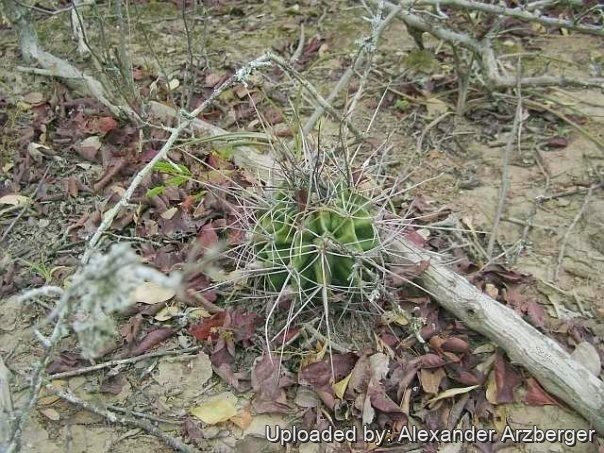
Paraguay (Chaco Boreal).
Habitat and ecology: Echinopsis rhodotricha subs. chacoana grows under the dense shrubs that cover this hot and arid area.
Cultivation and Propagation
Echinopsis rhodotricha subs. chacoana is a summer grower species that offers no cultivation difficulties. Water regularly in summer (but do not overwater ) needs good drainage and very porous soil, keep rather dry in winter. Feed with a high potassium fertilizer in summer. It is quite frost resistant if kept dry (hardy to -7° C). Need a bright exposure, full sun or half shade in summer.
Propagation: Direct sow after last frost, offsets.
Bibliography
Major references and further lectures
-
Edward Anderson “The Cactus family” Timber Press, Incorporated, 2001
-
Hunt, D., Taylor, N. and Charles, G. (compilers and editors). “The New Cactus Lexicon.” dh Books, Milborne Port, UK. 2006
-
Oakley, L., Duarte, W. & Pin, A. 2013. Echinopsis rhodotricha. The IUCN Red List of Threatened Species 2013: e.T152091A596143. http://dx.doi.org/10.2305/IUCN.UK.2013-1.RLTS.T152091A596143.en. Downloaded on 17 July 2016.
-
Pin, A.B. and Simon, J. “Guía ilustrada de los Cactus del Paraguay”. SEAM/GReB, Asunción. 2004.
Gallery