Publication: Anales Mus. Nac. Buenos Aires ser. 3, 4: 487. 1905
Description
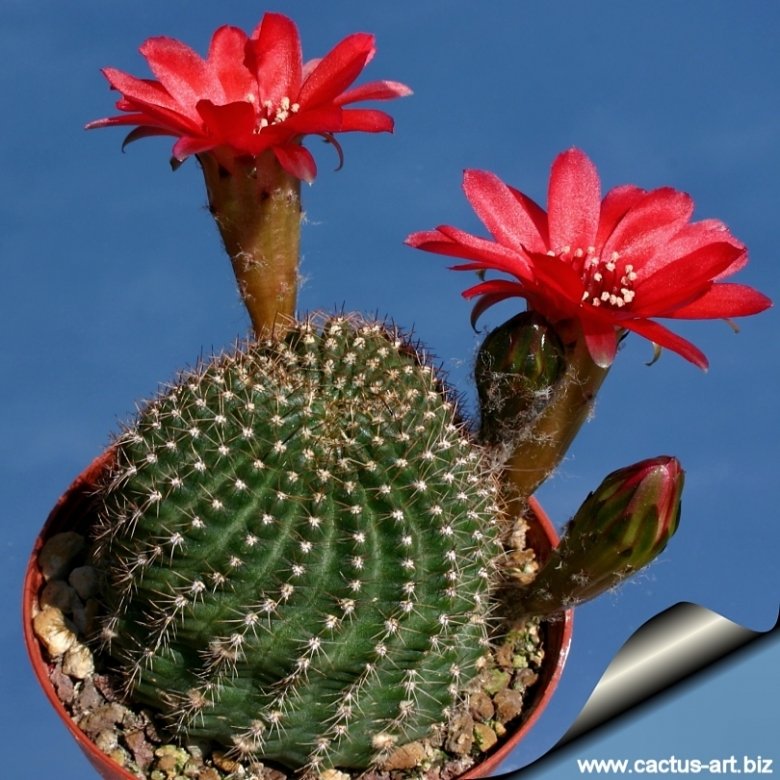
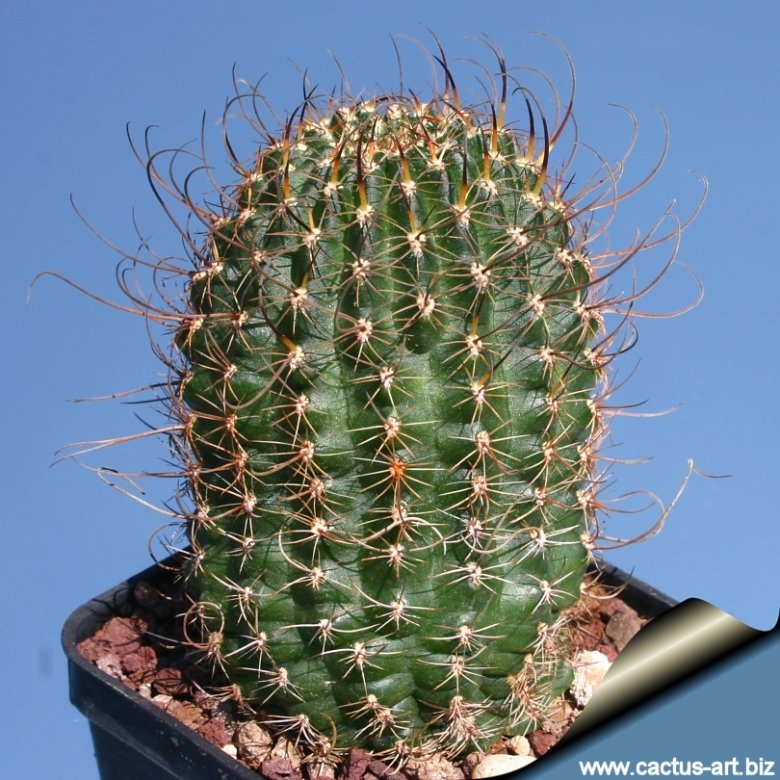
Echinopsis saltensis (best known as: Lobivia saltensis) is a very interesting but variable species with several forms and variety. Two subspecies are recognized, the nominate form and Echinopsis saltensissubsp. schreiteri (A. Cast) M. Lowry.
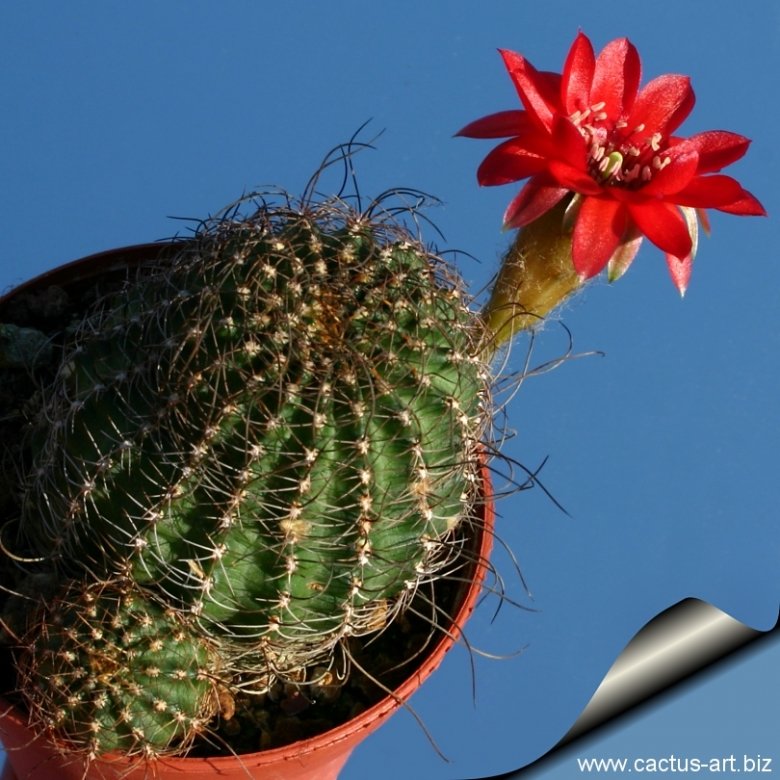
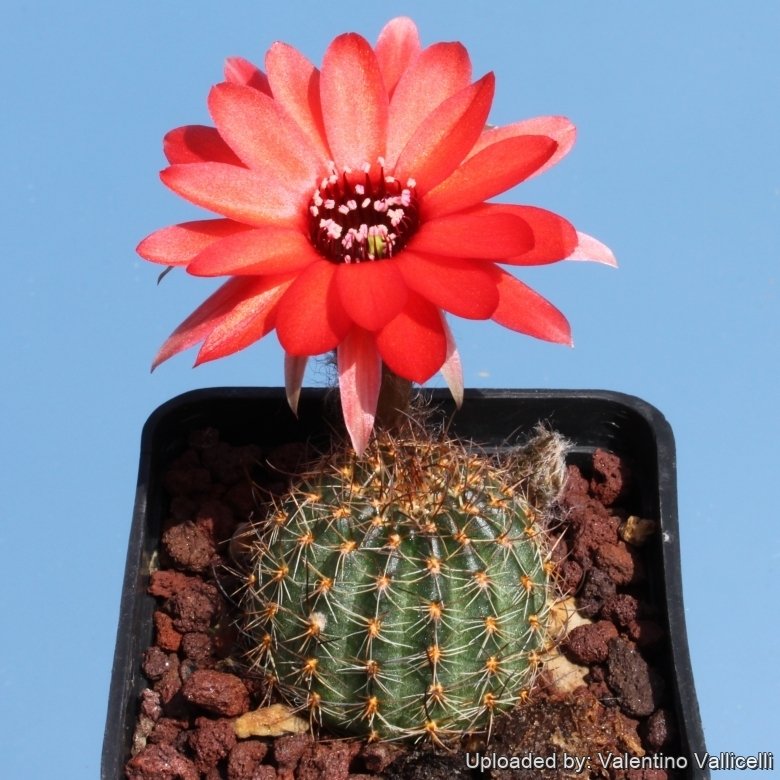
Habit: It is a small cactus, usually solitary, or heavily clustering.
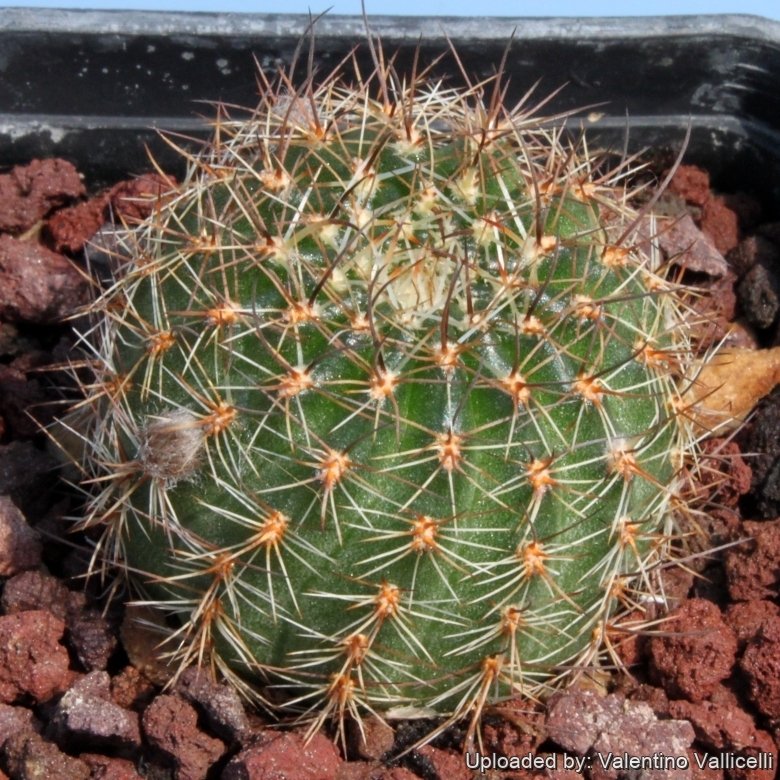
Stem: Flattish, egg-shaped or slightly elongated, up to 12 cm tall, 9 cm in diameter, bright green to dark green or almost black.
Areoles: 5-7 mm apart.
Ribs: 17-18.
Roots: Tap root.
Radial spines: 12-14, thin, reddish.
Central spines: 1-4, whisker-like, twisted, asymmetrical, more or less long, interlaced up and in disorder curved up to 3 cm long. The length of spines greatly depends on sun exposure and plant’s age.
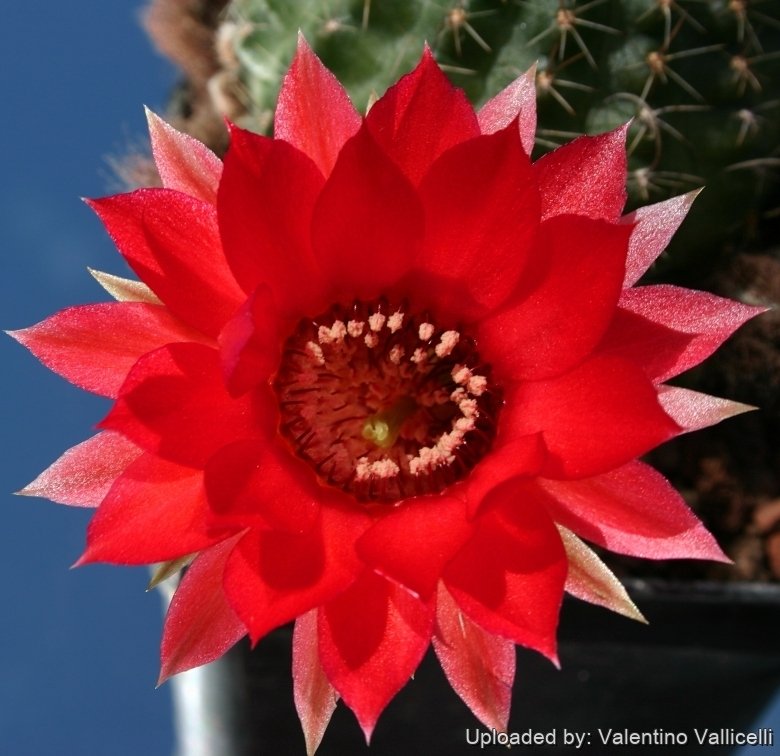
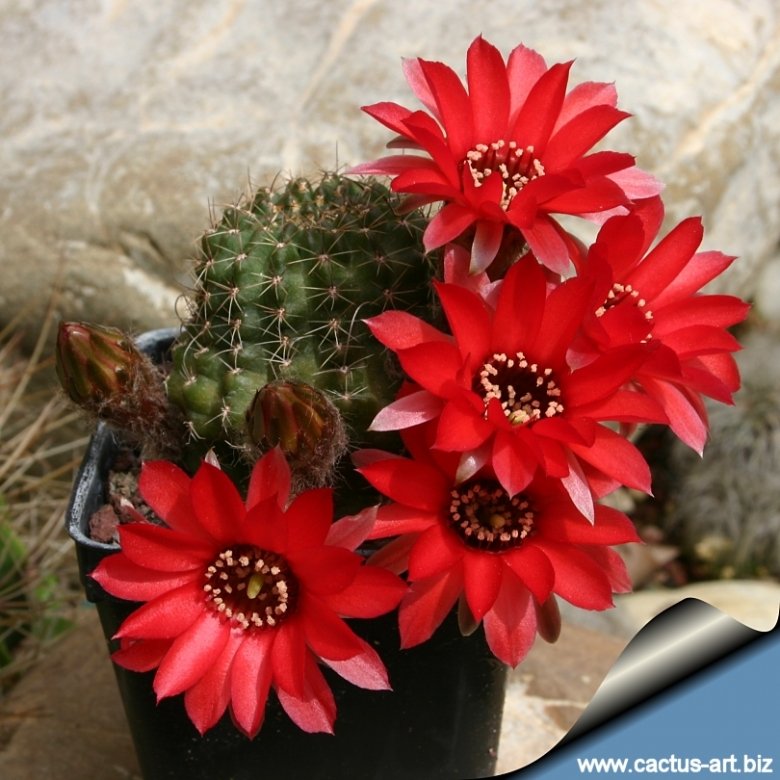
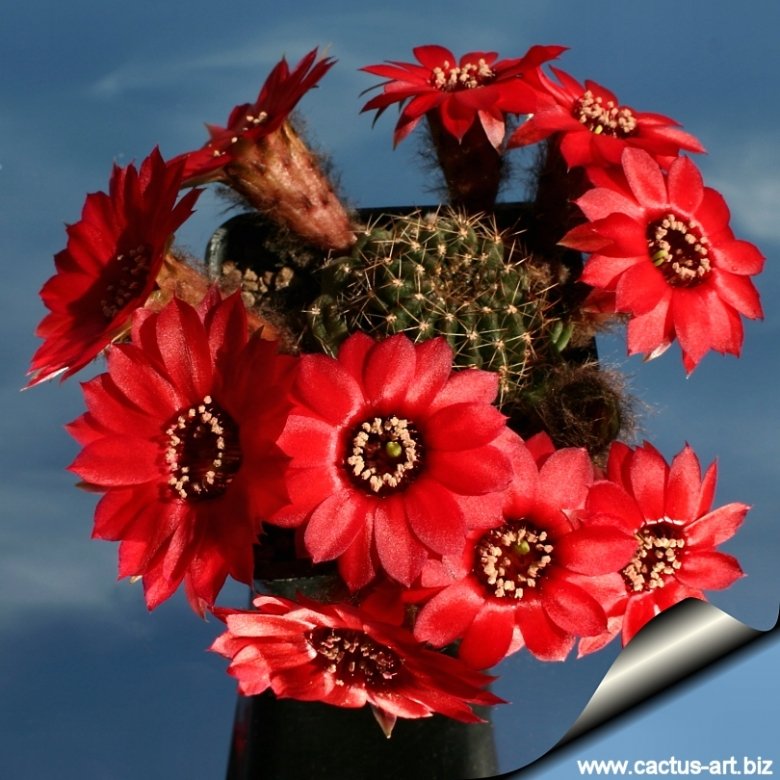
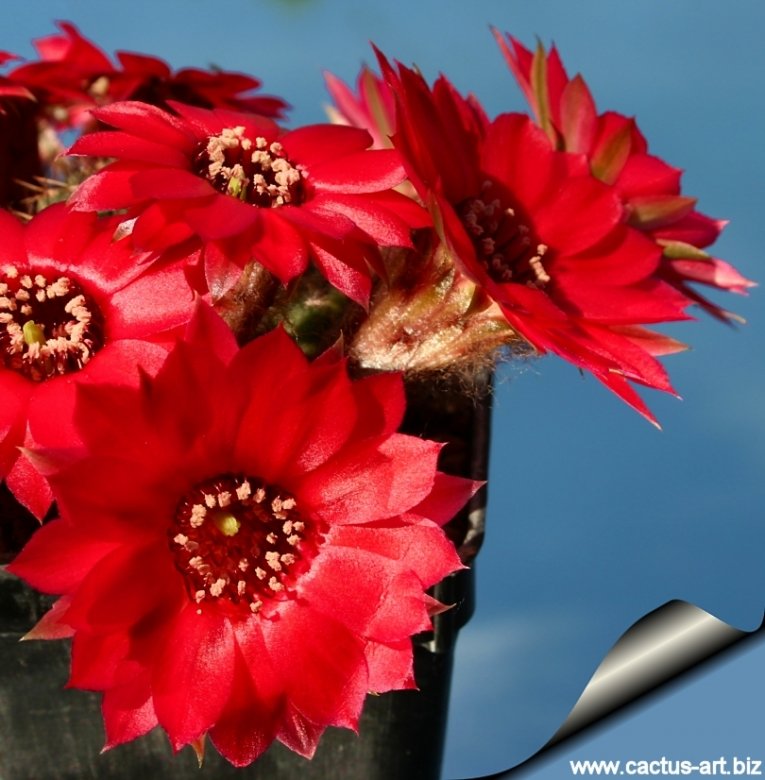
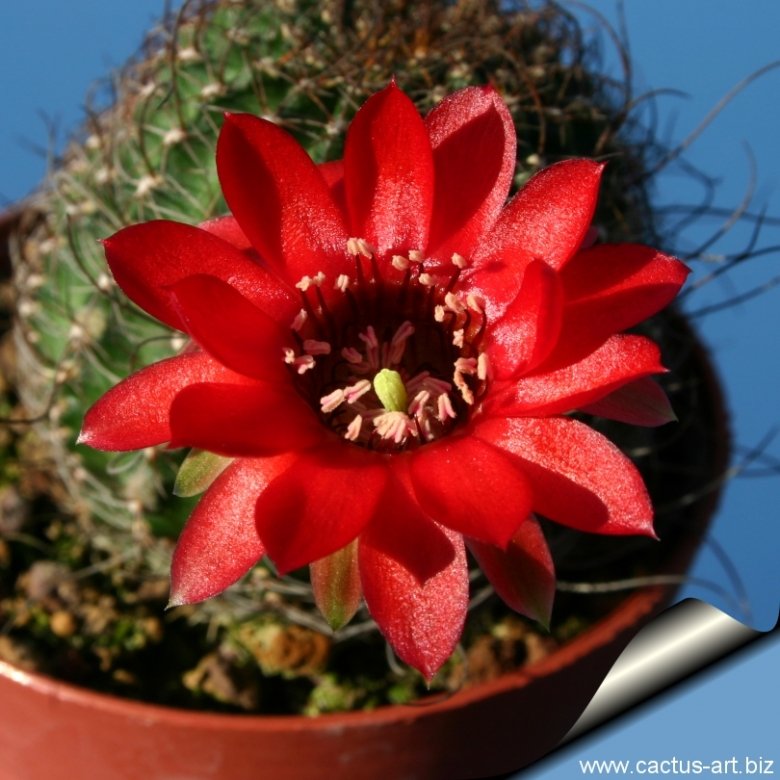
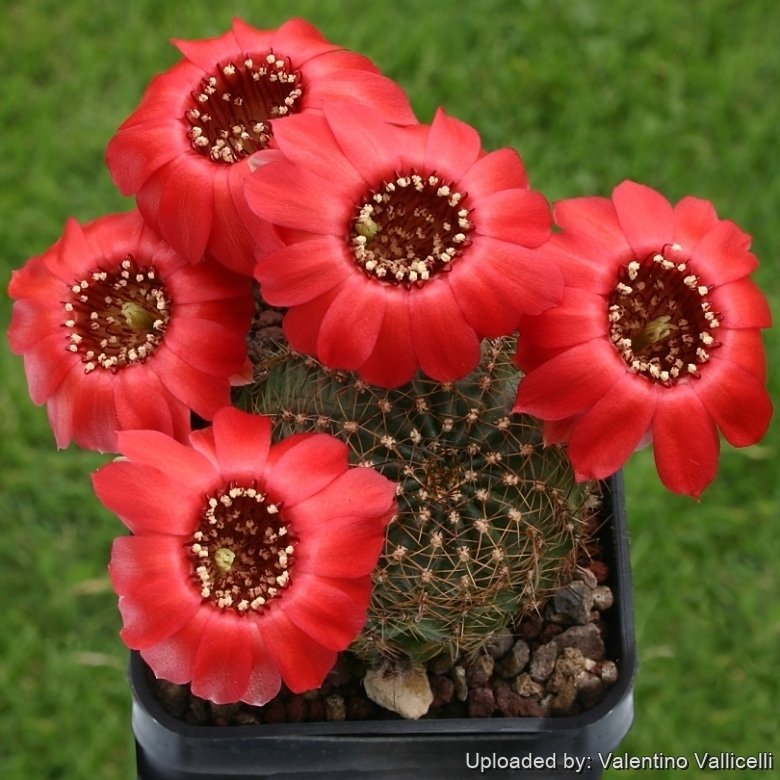
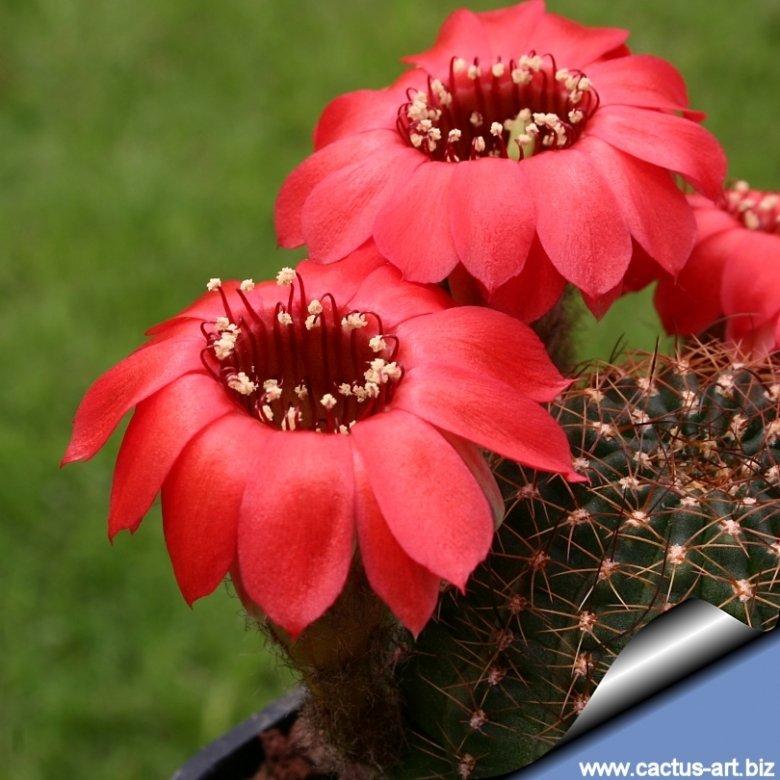
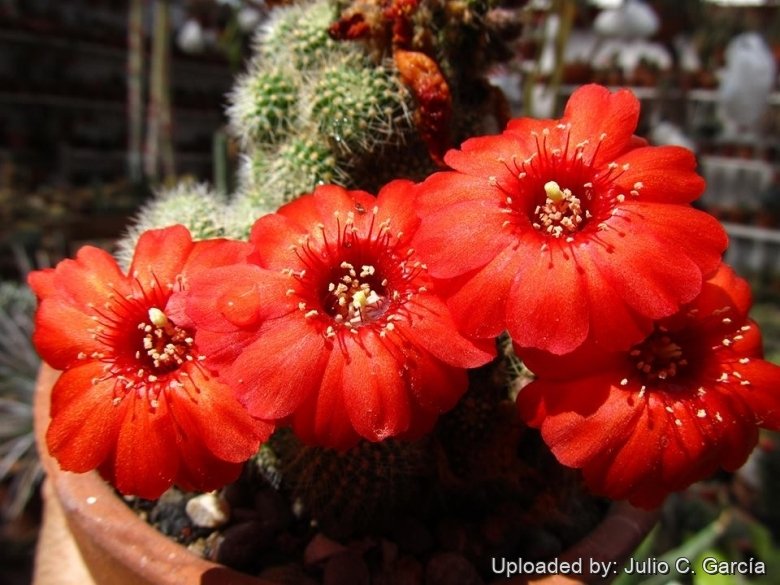
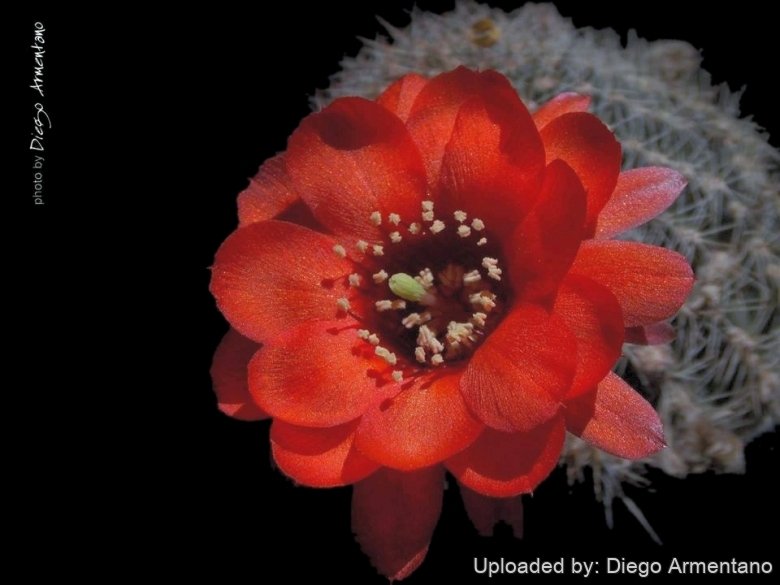
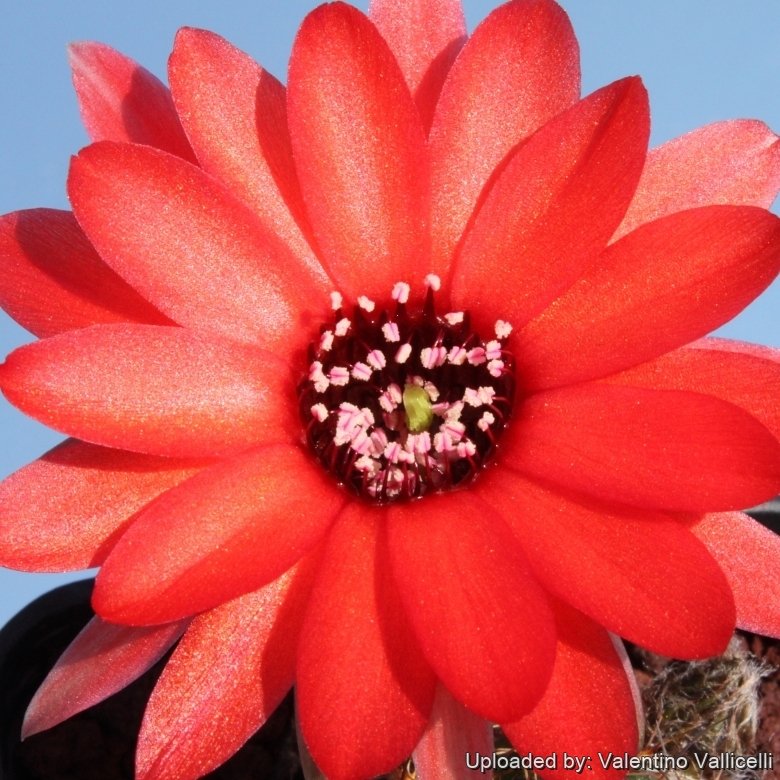
Flowers: Pretty, shining, small up to 5 cm long, unscented, somewhat bell-shaped-bulgy, dark orange-red or crimson that appears almost black when starting to open. The stamen’s filaments are dark red, and bear cream-white contrasting anthers. The stigma lobes are greenish.
Blooming season: The greater part of flowers appears in spring in the first flowering, but the plant can erratically produce some flowers in summer too.
Fruits: Globular, 5 mm in diameter, with little brown wool, up-drying.
Seeds: Globular, small grained.
Origin and Habitat
Echinopsis saltensis has wide range and is locally common in Argentina (Salta and Tucumán provinces).
Altitude: 1200 and 2400 metres above sea level.
Habitat and Ecology: This cactus grows in shrublands on clayey soils.
Cultivation and Propagation
This is a a much decorative frost hardy cactus easily found in cultivation. It is a summer grower species that offers no cultivation difficulties.
Soil: Use a very a particularly draining substratum, as it is very sensitive to rottenness when in presence of humidity and low temperatures and let the soil dry out between waterings, since it’s natural habitat is in volcanic soil, it has adapted to more acidic conditions.
Repotting: Repot in the spring, when their roots become cramped. Generally, they should be repotted every other year in order to provide fresh soil. After repotting, do not water for a week or more. Needs a large pot to accommodate a large root system.
Water: In summer, during the vegetative period, it must be regularly watered, but allowing the substratum to completely dry up before irrigating again (but do not overwater ); in winter, it’s to be kept dry. Preferable not to water on overcast days, humid days or cold winter days.
Hardiness: It is a quite frost resistant cactus, hardy to -5° C (- 10° C if very dry). However in cultivation it is better not to expose it to temperatures lower than -0° C, even if in an aerated and protected location, in order to avoid the formation of anti-aesthetic spots on the epidermis. In presence of high atmospheric humidity avoid any frost as it is particularly sensitive to root rot.
Exposure: Outside full sun or afternoon shade, inside needs bright light, and some direct sun, but, as a former mountain dweller, does not care for extremely high temperatures in summer.
Use: It is suitable for small “desert” gardens, in association with other xerophytes. Where the open air cultivation is not possible due to the climate, it is to be cultivated in pot in order to shelter it in winter.
Propagation: By seeds and by cuttings, provided left drying up well, in summer.
Bibliography
Major references and further lectures
-
Edward Anderson “The Cactus family” Timber Press, Incorporated, 2001
-
James Cullen, Sabina G. Knees, H. Suzanne Cubey “The European Garden Flora Flowering Plants: A Manual for the Identification of Plants Cultivated in Europe, Both Out-of-Doors and Under Glass” Cambridge University Press, 11/Aug/2011
-
David R Hunt; Nigel P Taylor; Graham Charles; International Cactaceae Systematics Group. “The New Cactus Lexicon” dh books, 2006
-
Friedrich Ritter “Kakteen in Südamerika: Ergebnisse meiner 20jährigen” Volume 2, Argentinien/Bolivien, Volume 2 Selbstverlag, 1980
-
Curt Backeberg “Die Cactaceae: Handbuch der Kakteenkunde,” Volume 2 G. Fischer, 1959
-
Walter Rausch “Lobivia: The Day Flowering Echinopsidinae from a Geographical Distribution Point of View” Volumes 1-3 R. Herzig, 1975
-
Urs Eggli, Leonard E. Newton “Etymological Dictionary of Succulent Plant Names.” Springer, Berlin/Heidelberg 2010.
-
N. L. Britton and J. N. Rose “The ‘Cactaceae’, Descriptions and Illustrations of Plants of the ‘Cactus’ Family” volume 2 Carnegie Institution, 1920
-
Ortega-Baes, P. & Méndez, E. 2013. Echinopsis saltensis. In: IUCN 2013. “IUCN Red List of Threatened Species.” Version 2013.1. <www.iucnredlist.org>. Downloaded on 31 October 2013.
From llifle page Echinopsis nealeana
Description
Echinopsis saltensis var. nealeana was firstly described as a variety of Lobivia nealeana Its appearance is very much like that of standard Lobivia nealeana but shows a somewhat larger solitary body, sometimes also with long, curved Central-spines, the red blooms are more spread and rarely yellow too. The fruit and seed are similar to those of the other Varieties.
Habit: Small cactus, usually solitary, or heavily clustering.
Stem: Flattish, egg-shaped or slightly elongated, up to 12 cm tall, 9 cm in diameter, bright green to dark green or almost black.
Areoles: 5-7 mm apart.
Ribs: 17-20 (or more).
Roots: Tap root.
Radial spines: 10-14 Thin, reddish.
Central spines: 0 - 4 whisker-like, twisted, asymmetrical, more or less long, interlaced up and disorderly curved up to 3 cm long (This taxon comprises both individuals with or without central spines). The length of these spines greatly depends on sun exposure and plant’s age.
Flowers: Pretty, shining, small up to 5 cm long, unscented, somewhat bell-shaped-bulgy, dark orange-red or crimson that appears almost black when starting to open. The stamen’s filaments are dark red, and bear cream-white contrasting anthers. The stigma lobes are greenish.
Blooming season: The greater part of flowers appears in spring in the first flowering, but the plant can erratically produce some flowers in summer too.
Fruits: Globular, 5 mm in diameter, with little brown wool, up-drying.
Seeds: Globular, small grained.
Origin and Habitat
Tucumán, Salta, nothern Argentina
Cultivation and Propagation
It is a summer grower species that offers no cultivation difficulties. Lobivia saltensis has a fairly large tap root, and should be kept in a deep pot with a very draining mineral substrate. Water regularly in summer (but do not overwater ) keep dry in winter. Feed with a high potassium fertilizer in summer. Repot yearly until reaching about 100 mm in size, then every two or three years will suffice. Repotting is best done at the end of winter but can be done at other times. Do not water for a couple of weeks after repotting to reduce risk of root rot via broken roots. Repotting will increase size of stems. It is quite cold tolerant if kept dry (hardy to -5° C). Outside it need a bright exposure, full sun or half shade in summer, inside it needs bright light, and some direct sun.
Propagation: Seed, grafting, cutting.
Source: Echinopsis nealeana, LLIFLE - Encyclopedia of living forms, CC-BY-SA, retrieved 2026-10-25.
From llifle page Lobivia saltensis var. multicostata
Description
Echinopsis saltensis (best known as: Lobivia saltensis) is a very interesting but variable species with several forms and variety.
Echinopsis saltensis var. multicostata: The var. multicostata Rausch is similar to the standard species, however with 20 and more ribs, closer spaced areoles and therefore also closer, broom-like Spination. In all other characteristics, namely shape of stems, flowers, fruits, roots etc. it is very similar to the standard E. saltensis.
Habit: It is a small cactus, usually solitary, or heavily clustering.
Stem: Flattish, egg-shaped or slightly elongated, up to 12 cm tall, 9 cm in diameter, bright green to dark green or almost black.
Areoles: 5-7 mm apart.
Ribs: 20 or more.
Roots: Tap root.
Radial spines: 12-14, thin, reddish.
Central spines: 1-4, whisker-like, twisted, asymmetrical, more or less long, interlaced up and in disorder curved up to 3 cm long. The length of spines greatly depends on sun exposure and plant’s age.
Flowers: Pretty, shining, small up to 5 cm long, unscented, somewhat bell-shaped-bulgy, dark orange-red or crimson that appears almost black when starting to open. The stamen’s filaments are dark red, and bear cream-white contrasting anthers. The stigma lobes are greenish.
Blooming season: The greater part of flowers appears in spring in the first flowering, but the plant can erratically produce some flowers in summer too.
Fruits: Globular, 5 mm in diameter, with little brown wool, up-drying.
Seeds: Globular, small grained.
Origin and Habitat
Cuesta de Lajar, Salta, Argentina
Altitude range: Around 1900-1950 metres above sea level.
Habitat and ecology: Echinopsis saltensis v. multicostata grows on rock covered with thin layer of moss & soil.
Cultivation and Propagation
Echinopsis saltensis var. multicostata is a a much decorative frost hardy cactus easily found in cultivation. It is a summer grower species that offers no cultivation difficulties.
Soil: Use a very a particularly draining substratum, as it is very sensitive to rottenness when in presence of humidity and low temperatures and let the soil dry out between waterings, since it’s natural habitat is in volcanic soil, it has adapted to more acidic conditions.
Repotting: Repot in the spring, when their roots become cramped. Generally, they should be repotted every other year in order to provide fresh soil. After repotting, do not water for a week or more. Needs a large pot to accommodate a large root system.
Water: In summer, during the vegetative period, it must be regularly watered, but allowing the substratum to completely dry up before irrigating again (but do not overwater ); in winter, it’s to be kept dry. Preferable not to water on overcast days, humid days or cold winter days.
Hardiness: It is a quite frost resistant cactus, hardy to -5° C (- 10° C if very dry). However in cultivation it is better not to expose it to temperatures lower than -0° C, even if in an aerated and protected location, in order to avoid the formation of anti-aesthetic spots on the epidermis. In presence of high atmospheric humidity avoid any frost as it is particularly sensitive to root rot.
Exposure: Outside full sun or afternoon shade, inside needs bright light, and some direct sun, but, as a former mountain dweller, does not care for extremely high temperatures in summer.
Use: It is suitable for small “desert” gardens, in association with other xerophytes. Where the open air cultivation is not possible due to the climate, it is to be cultivated in pot in order to shelter it in winter.
Propagation: By seeds and by cuttings, provided left drying up well, in summer.
Source: Lobivia saltensis var. multicostata, LLIFLE - Encyclopedia of living forms, CC-BY-SA, retrieved 2026-10-25.
From llifle page Lobivia saltensis var. zapallarensis
Description
Echinopsis saltensis var. zapallarensis, firstly described as a variety of Lobivia saltensis var. zapallarensis, is the smallest form from the Sierra Zapallar it has only 9-11 sharp-edged ribs, the epidermis is black-green, often also violet coloured with red to orange flowers, the fruit is more oval, however otherwise nearly like Lobivia saltensis.
Habit: It is a small cactus, usually solitary, or heavily clustering.
Stem: Flattish, egg-shaped or skightly elongated, up to 12 cm tall, 9 cm in diameter, dark green or almost black.
Areoles: 5-7 mm apart.
Ribs: 9-11.
Roots: Tap root.
Radial spines: 12-14 Thin, reddish.
Central spines: 1-4, whisker-like, twisted, asymmetrical, more or less long, interlaced up and in disorder curved up to 3 cm long. The length of spines greatly depends on sun exposure and plant’s age.
Flowers: Pretty, violet coloured with red to orange, small up to 5 cm long, unscented, somewhat bell-shaped-bulgy that appears almost black when starting to open. The stamen’s filaments are dark red, and bear cream-white contrasting anthers. The stigma lobes are greenish.
Blooming season: The greater part of flowers appears in spring in the first flowering, but the plant can erratically produce some flowers in summer too.
Fruits: Oval, 5 mm in diameter, with little brown wool, up-drying.
Seeds: Globular, small grained.
Origin and Habitat
Sierra Zapallar and adjacent area (Cachipampa, Cuesta de Isonza and Mollar) Salta, Argentina.
Altitude: 3000-3200 metres above sea level.
Habitat and Ecology: This cactus grows in shrublands on with red rocks mostly on east facing slope.
Source: Lobivia saltensis var. zapallarensis, LLIFLE - Encyclopedia of living forms, CC-BY-SA, retrieved 2026-10-25.
Cultivars and forms (2)
Subspecies (1)
Varieties (1)
Gallery