Description
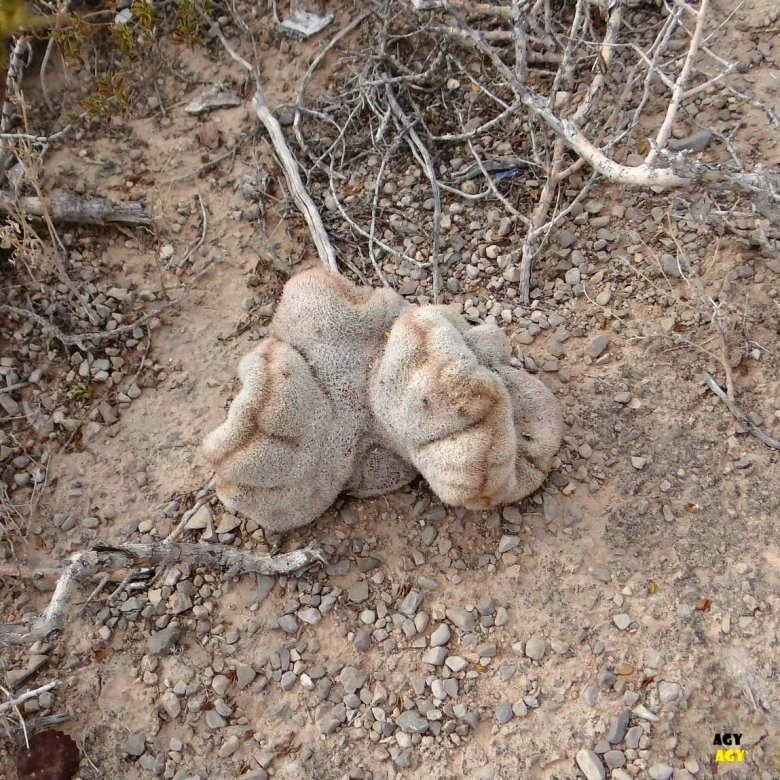
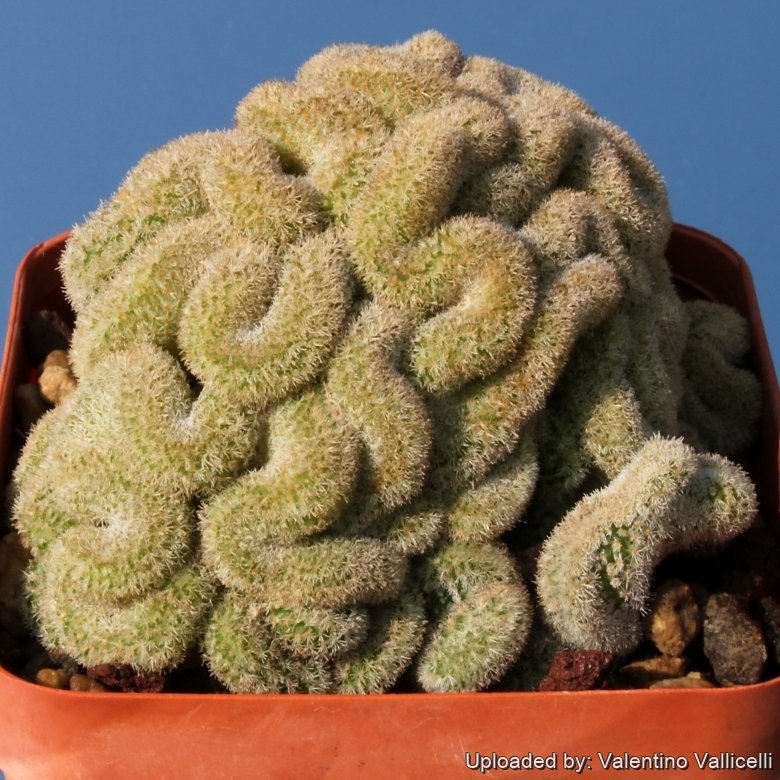
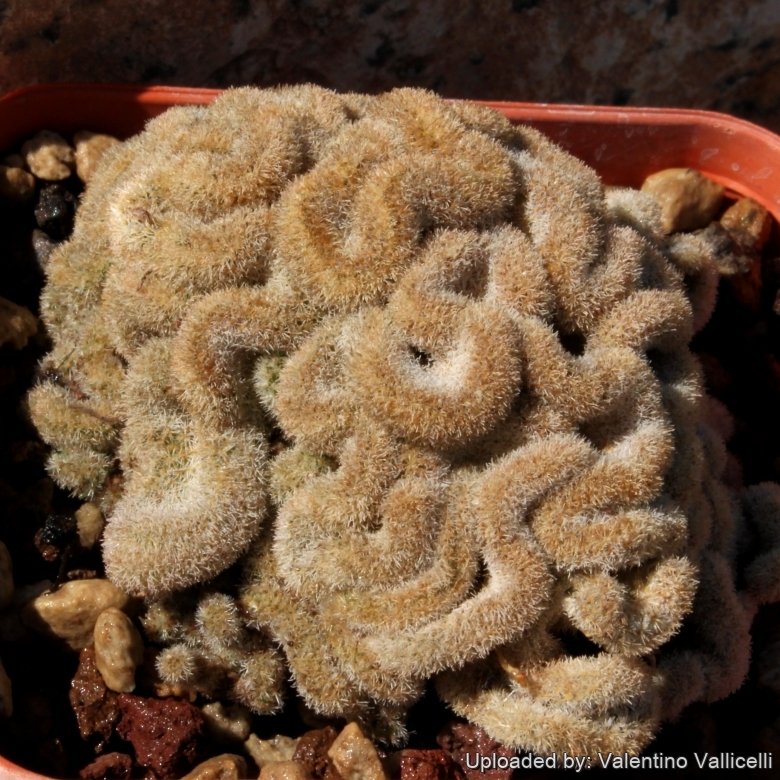
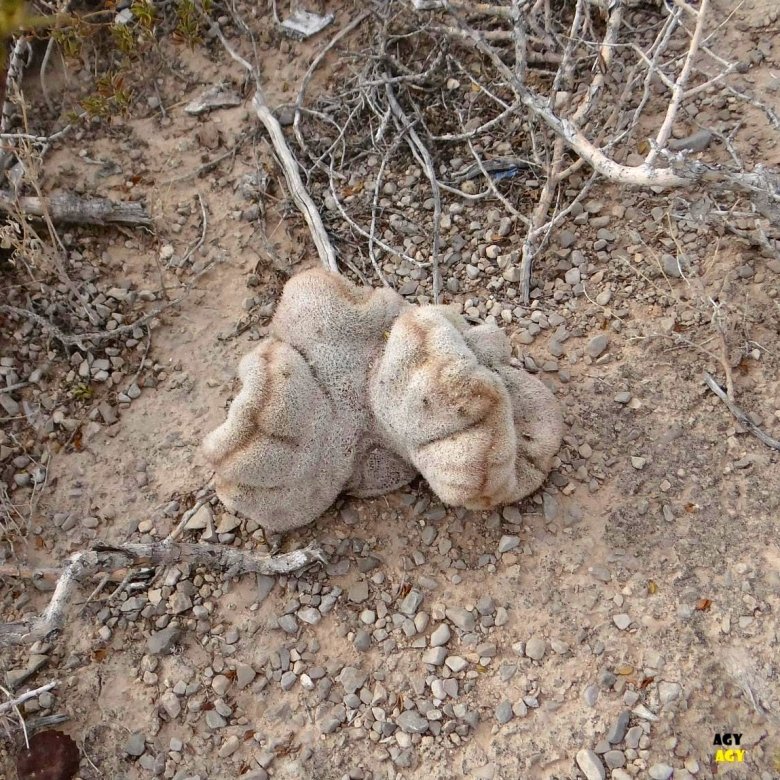
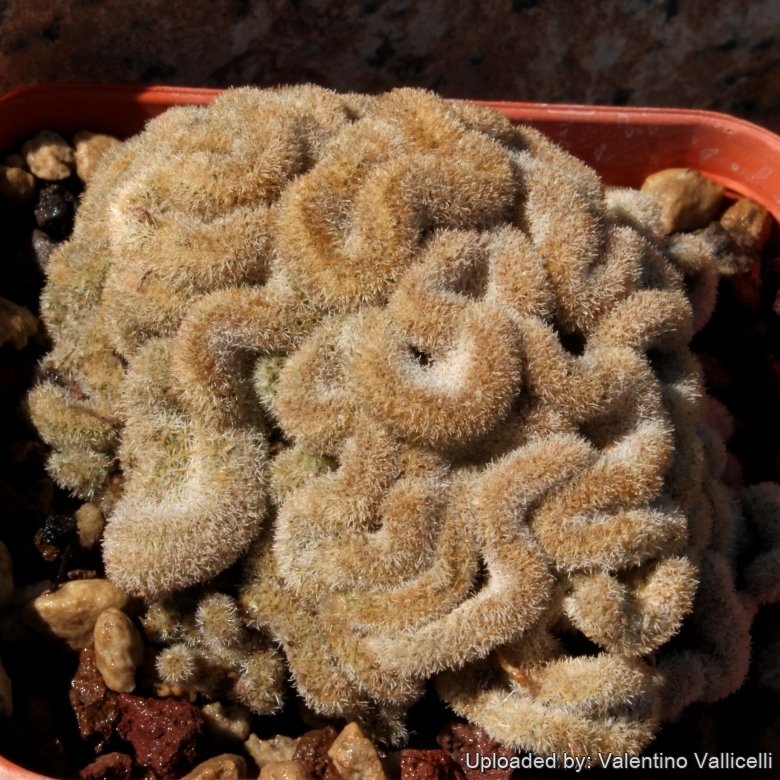
Epithelantha micromeris subs. greggii is the largest and most common of the Epithelantha micromeris subspecies that appears ashy grey and relatively rough, somewhat bristly in general aspect. The crested form Epithelantha micromeris subs. greggii f. cristata - despite to its beauty - is still very rare and sought after by collectors, for its nice features. In cultivation there are several crested forms (or clones) mainly selected in Europe.
Stem: Fan shaped, forming tangles, convolute mounds, surface completely obscured by spines.
Tubercles: Numerous, not confluent into ribs, hemispheric or short cylindric, very small, ca. 1-2 mm.
Areoles: Small at tips of tubercles, 1 mm long, nearly circular, elliptic when distended by flower or fruit, slightly woolly when young, copiously woolly only at sexually mature stem apex; areolar glands absent.
Spines: 20 or more chalky white, ashy grey to reddish brown, 3-5 mm long, spreading and radiating at an early age rather than pectinate and appressed on sides of stems, straight, terete, slender, innocuous. The upper ones much longer.
Roots: Diffuse (usually).
Flower: Inconspicuous, funnel-shaped, diurnal, deeper pink than the type, borne at adaxial margins of spine clusters in the plant top. Only partly opened just distal portion visible, as they barely stick out above the wool obscured by longer spines at stem apex.
Blooming season: Flowers in May-June.
Fruits: Indehiscent, bright red, thin narrowly cylindric, 18 × 2-3(-5) mm, weakly succulent, soon drying and papery, smooth, spineless; pulp absent; floral remnant deciduous. Fruiting summer.
Origin and Habitat
Crested plants are occasionally found both in habitat in Northern Mexico (especially Saltillo and Coahuila) and in cultivation.
Cultivation and Propagation
It is not too difficult in a greenhouse, although grows quite slowly. It is usually seen as a grafted plant but can grow on its own roots too.
Soil: Use a mineral well permeable soil with little organic matter (peat, humus).
Exposure: They need a good amount of light shade to full sun this help to keep the plants healthy, although slow growth.
Watering: Water sparingly from March till October (weekly during summertime, if the weather is sunny enough), with a little fertilizer added. Less or no water during cold winter months, or when night temperatures remain below 10° to prevent root loss. It is sensitive to overwatering (rot prone).
Fertilization: Feeding may not be necessary at all if the compost is fresh then, feed in summer only if the plant hasn’t been repotted recently. Do not feed the plants from September onwards as this can cause lush growth which can be fatal during the darker cold months.
Hardiness: Keep perfectly dry in winter at temperatures from 5 to 15 degrees centigrade. (but it is relatively cold resistant and hardy to -5° C, or possibly colder for short periods) In the rest period no high atmospheric humidity!! (Temperature Zone: USDA 9-11)
Crested growth: Unlike ‘monstrose’ varieties of plants, where the variation from normal growth is due to genetic mutation, crested growth can occur on normal plants. Sometimes it’s due to variances in light intensity, or damage, but generally the causes are unknown. A crested plant may have some areas growing normally, and a cresting plant that looks like a brain, may revert to normal growth for no apparent reason. If you have any of the crested part left you need to remove the normal growth and leave the crested part behind this will need to be done regularly.
Propagation: Grafting or cuttings. Plants are usually grafted onto column-shaped cacti but proved to be able to produce their own roots if degrafted. Cuttings will take root in a minimum temperature of 20° C (but better in hot weather). Cuttings of healthy shoots can be taken in the spring and summer. Cut the stem with a sharp, sterile knife, leave the cutting in a warm, dry place for a week or weeks (depending on how thick the cutting is) until a callus forms over the wound. Once the callus forms, the cutting may be inserted in a container filled with firmed cactus potting mix topped with a surface layer of coarse grit. They should be placed in the coarse grit only; this prevents the cut end from becoming too wet and allows the roots to penetrate the rich compost underneath. The cuttings should root in 2 to 6 weeks. Large crested piece must be placed on the soil surface without burying the plant base down in the soil.
Bibliography
Major references and further lectures
-
James Cullen, Sabina G. Knees, H. Suzanne Cubey “The European Garden Flora Flowering Plants: A Manual for the Identification of Plants Cultivated in Europe, Both Out-of-Doors and Under Glass” Cambridge University Press, 11/Aug./2011
-
David Hunt, Nigel Taylor “The New Cactus Lexicon” DH Books, 2006
-
Edward F. Anderson “The Cactus Family” Timber Press, 2001