Publication: Dict. Hort. [Bois] 2: 804. 1898 Britton & Rose, Cactaceae, 3: 93, fig. 102. 1922
Description
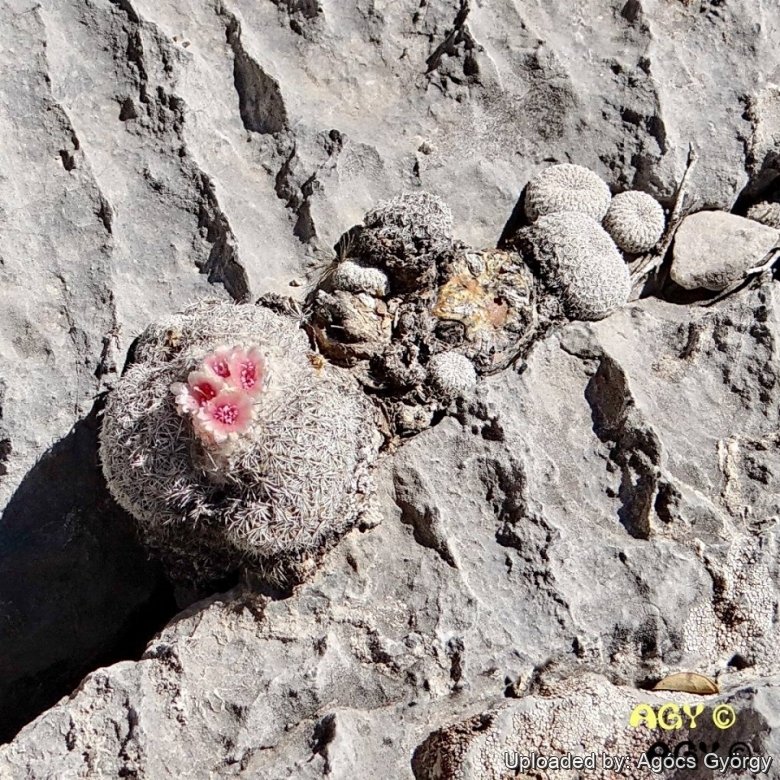
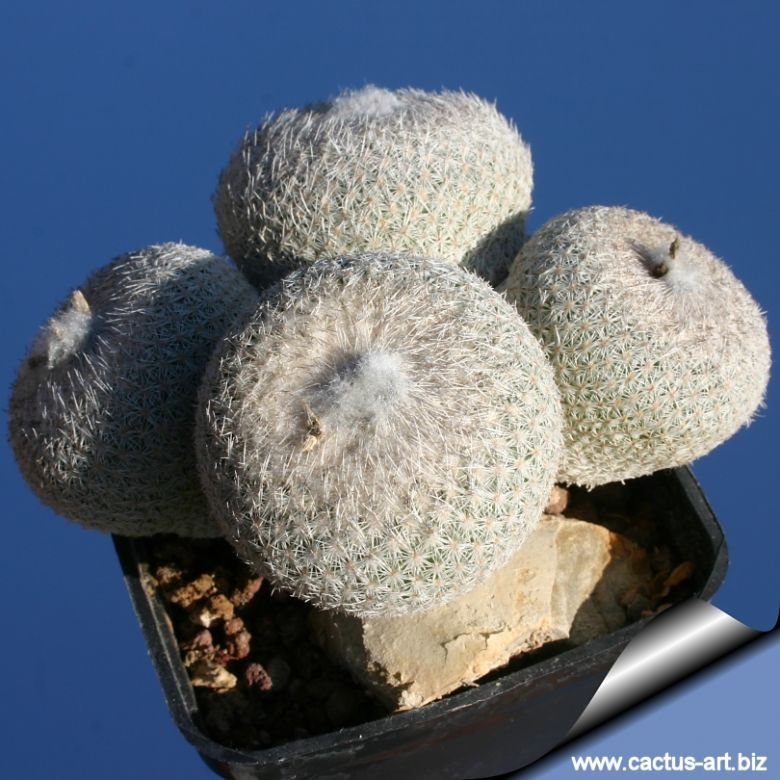
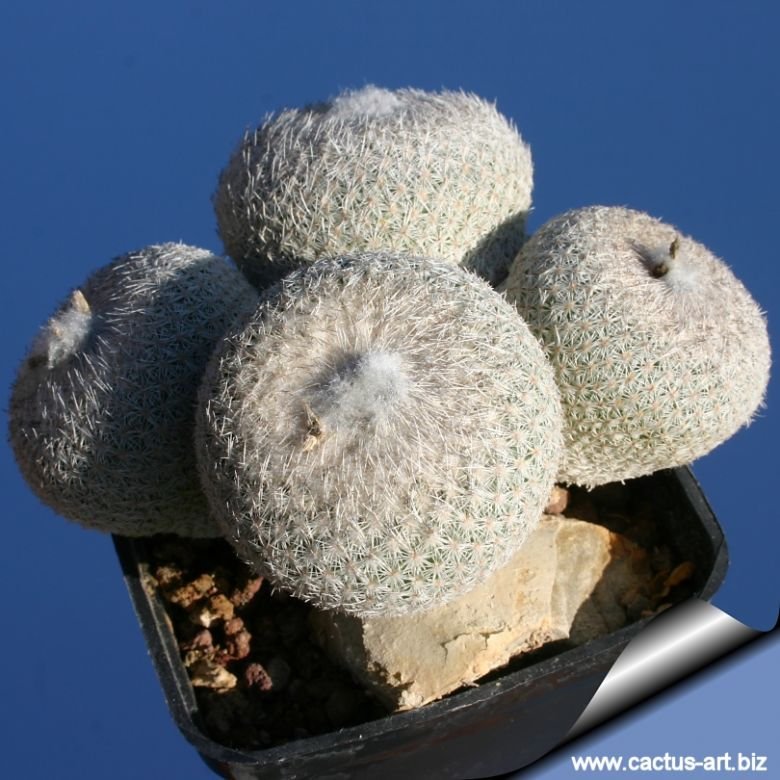
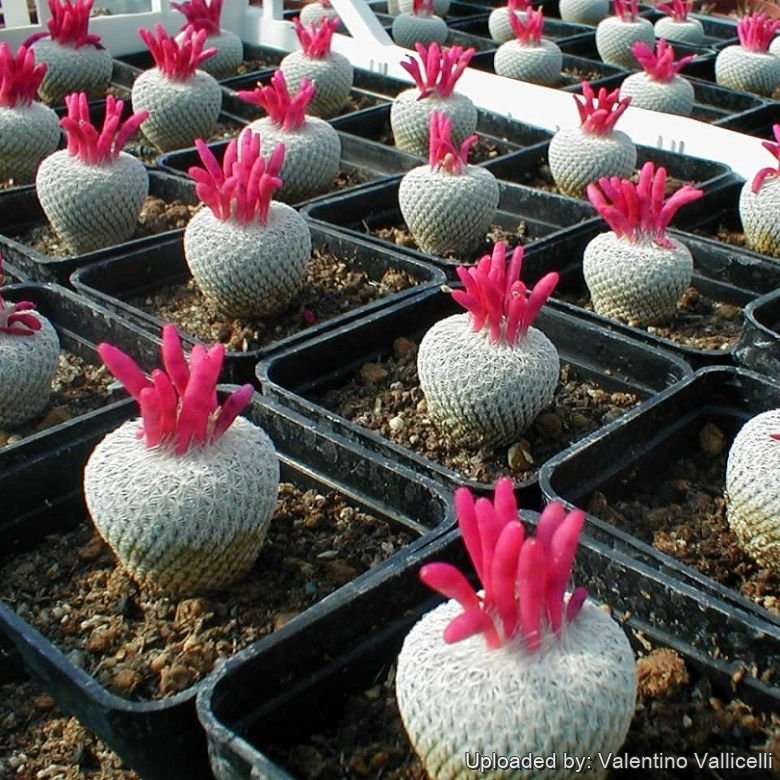
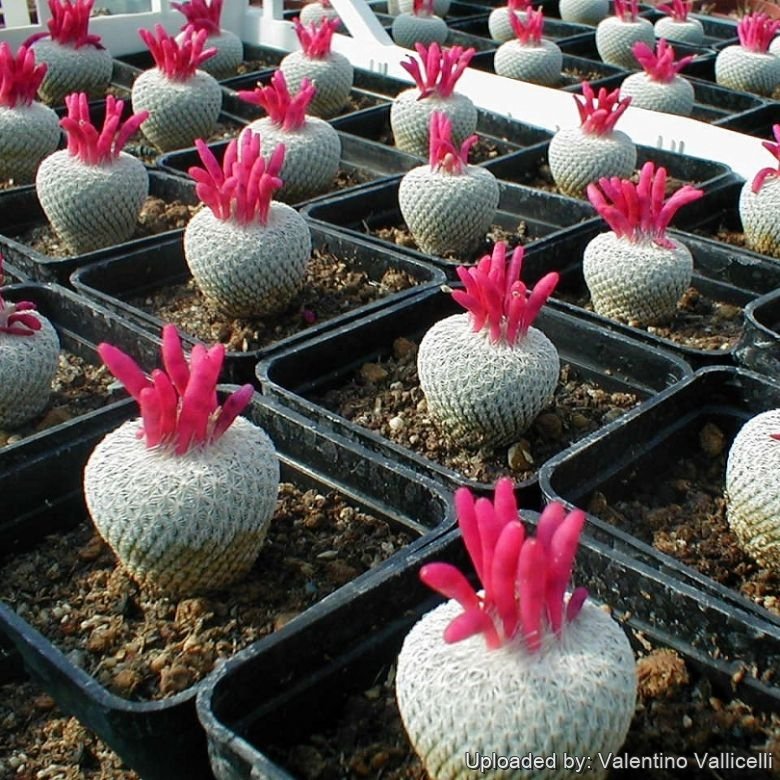
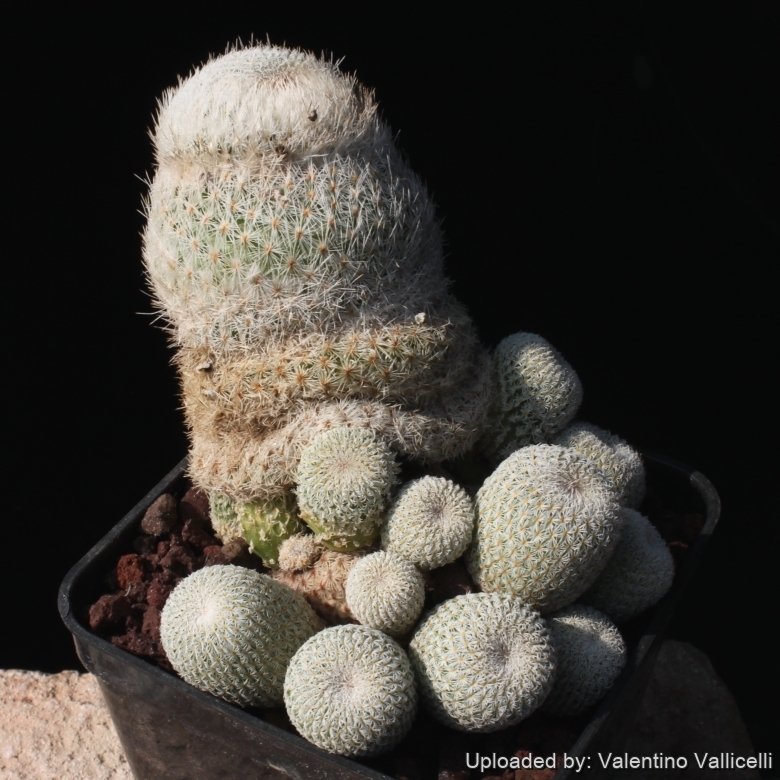
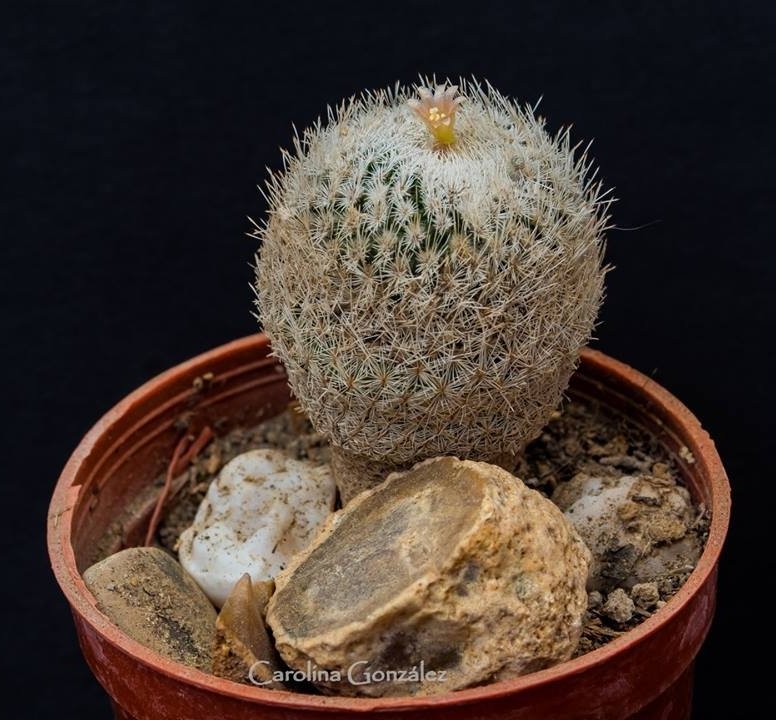
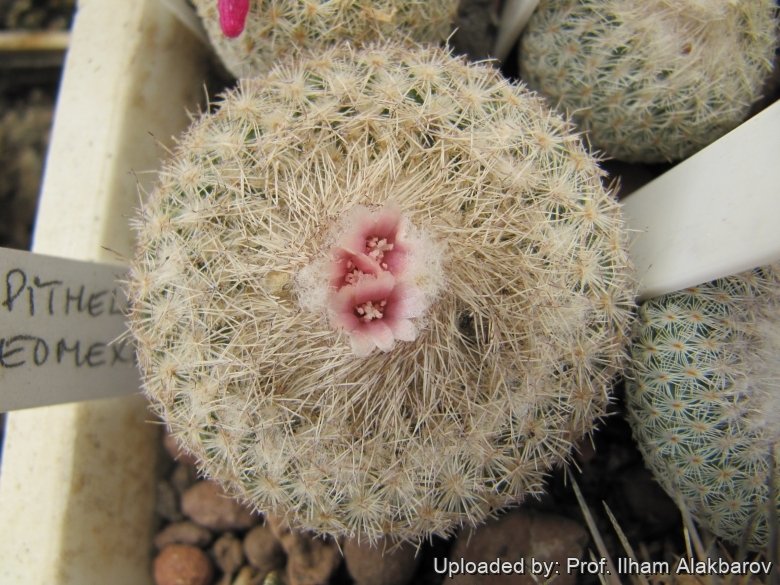
Epithelantha micromeris is a miniature globose cactus, erect, unbranched or in small clumps, not deep-seated in substrate, appearing ashy grey and relatively rough in general aspect.
Stem: Unsegmented, mostly spheric or obovoidal, rarely cylindric, often flat-topped with a depressed centre, 1-5(-9)cm tall and up to 2-4 (-7,5) cm in diameter, occasionally more; surface completely obscured by spines; cortex and pith are not mucilaginous.
Tubercles: Numerous, not confluent into ribs, hemispheric or short cylindric, very low, ca. 1(-3) mm long arranged in tight spirals around the plant.
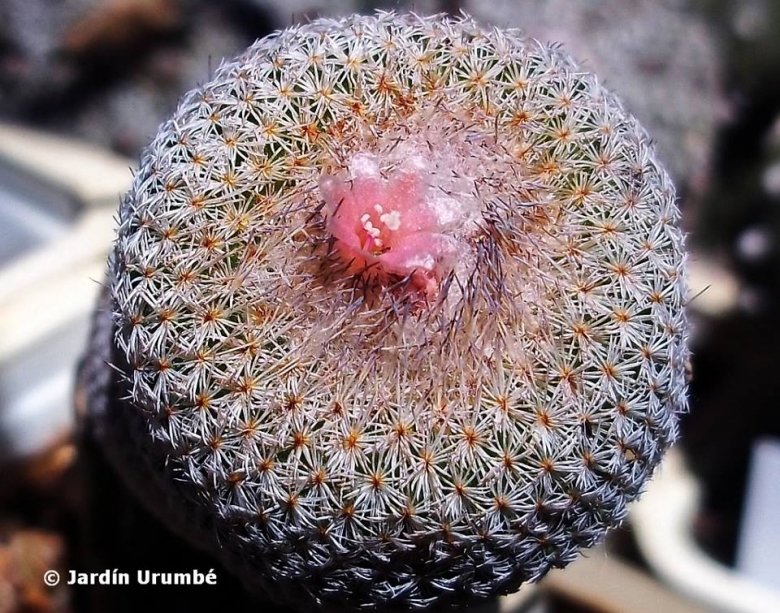
Areoles: Small at tips of tubercles, 1 mm long, nearly circular, elliptic when distended by flower or fruit, slightly woolly when young, copiously woolly only at sexually mature stem apex; areolar glands absent;
Spines: 20-35(-40) white to ashy grey 2-5 mm long, appressed on sides of stems, straight, terete, slender, innocuous, in 1-3 superimposed series except for a longer (4-12 mm) and erect adaxial tuft on the top, on sexually mature stem apex often greyish or purplish white, frequently with brown bases, collectively forming brown spots at the centre of each spine cluster. The upper radials on the young tubercles longer and connivent over the apex, narrowly clavate, the upper half finally falling off. Spine clusters at the sides of stem 4-5(-7) mm in diameter. Smooth or microscopically roughened by break-up of epidermis, not distinguishable as radial and central spines. In fully adult plants, the distal portions of the longest spines are worn, leaving the apex of the plant covered with short, innocuous spines.
Roots: Diffuse (usually) or tap-root (in some populations) also tuberlike (see: Epithelantha pachyriza )
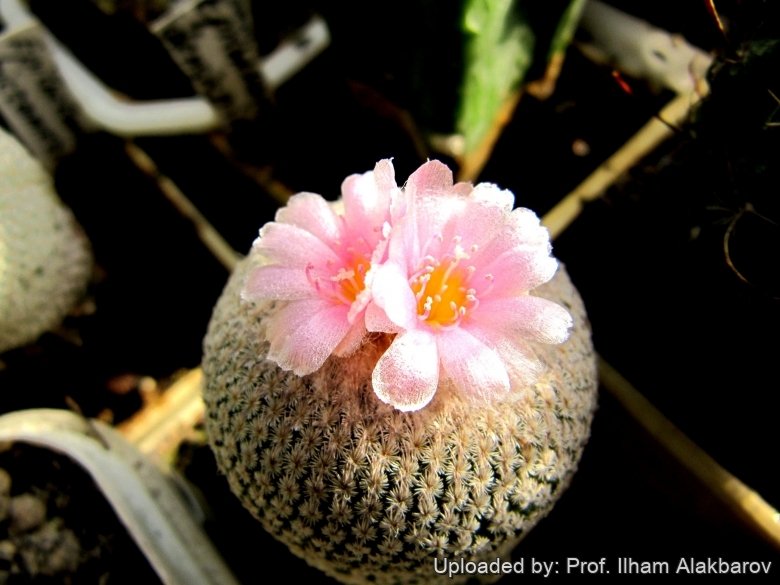
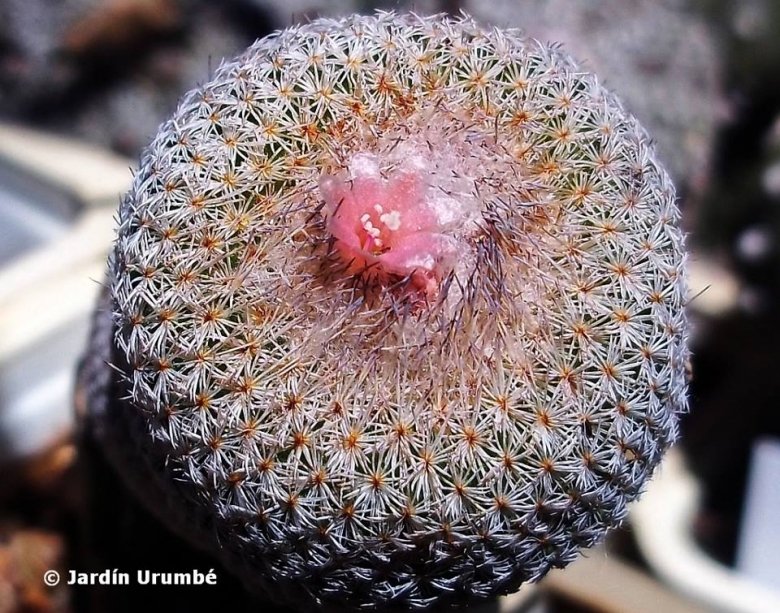
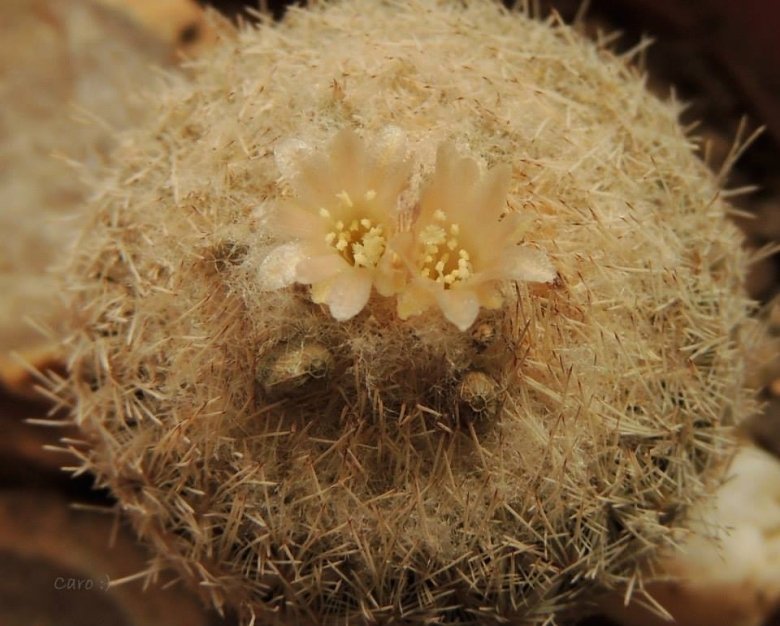
Flower: Inconspicuous, funnelform diurnal, borne at adaxial margins of spine clusters in the plant top. Only partly opened just distal portion visible, as they barely stick out above the wool obscured by longer spines at stem apex. Outer tepals entire or sparsely erose-fimbriate; Inner tepals 5-8 per flower, pink to white (rarely yellow), (1-)2-6(-9) × 3(-5) mm; stamens 15-16; ovary smooth, scales, hairs, and spines absent; stigma lobes (2-)3-4(-6), white, to 1 mm.
Blooming season:: Flowers late winter-early spring (Feb-Apr).
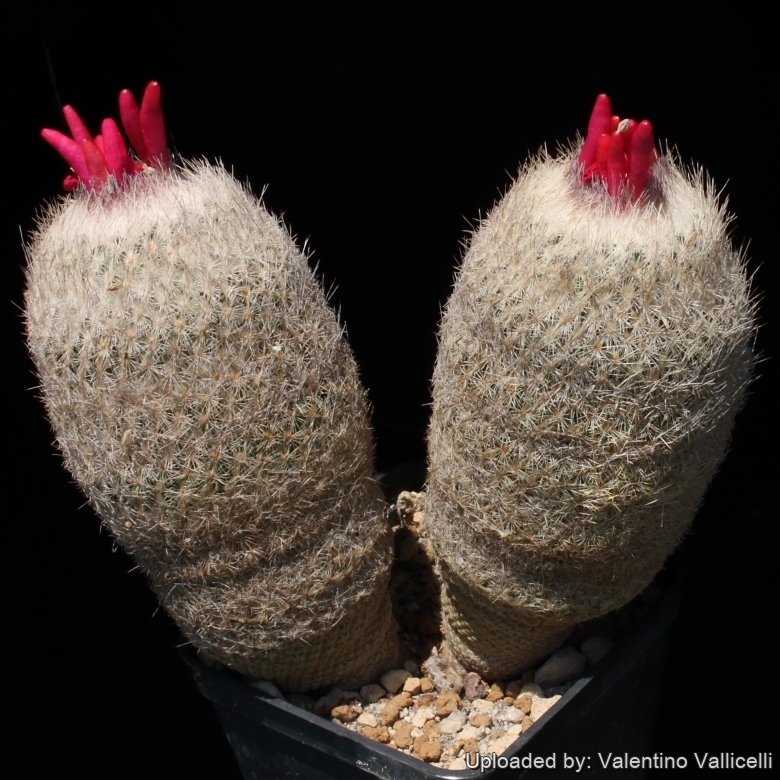
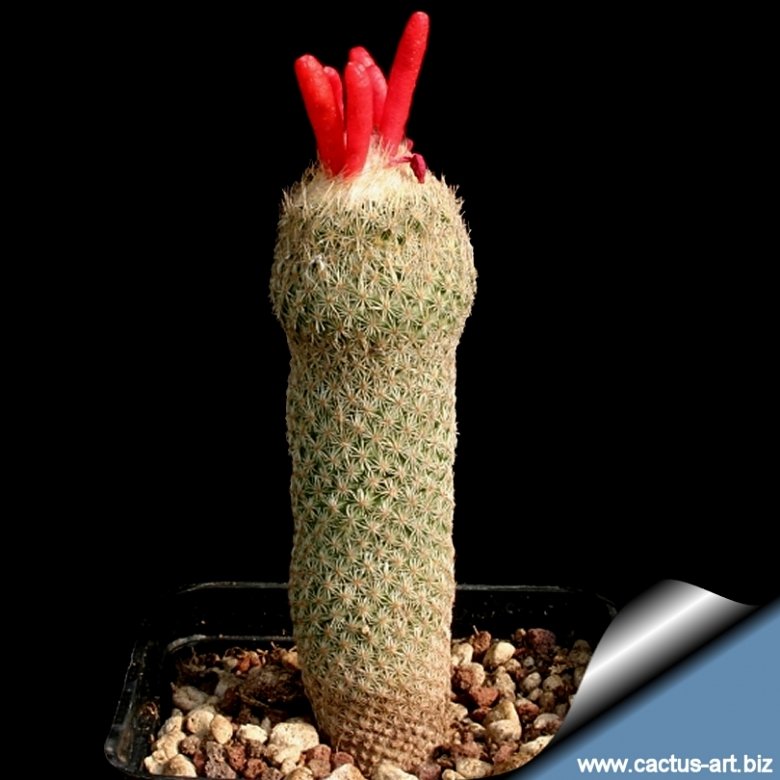
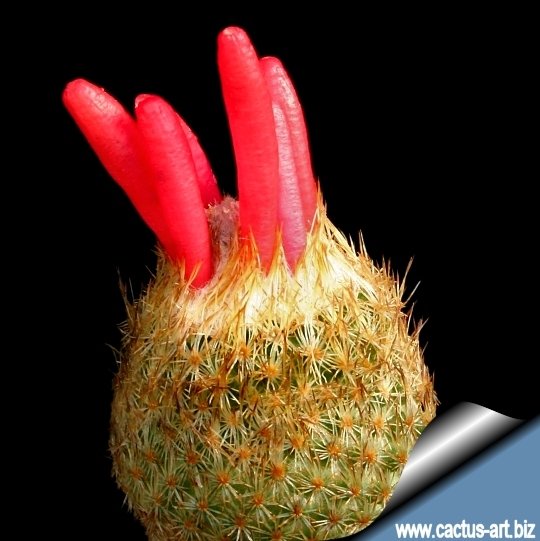
Fruits: Indehiscent, bright red, thin narrowly cylindric, 3-20 × 2-3(-5) mm, weakly succulent, soon drying and papery, smooth, spineless; pulp absent; floral remnant deciduous. Fruiting late spring-early summer (Apr-Jun).
Seeds: Blackish, obliquely hemispheric reticulated in 0,5-1,5 mm diameter.
Remarks: Epithelantha micromeris var. micromeris has some of the smallest flowers among cactus species. Unlike other taxa in this genus, it is Autogamous. Its fruit are known in mexico as “chilitos.”
Origin and Habitat
USA - Arizona (Santa Cruz and Cochise County) New Mexico (Hildago and Sandoval Co, From Sierra and Chaves to Eddy Co), western Texas. Mexico (northern Chihuahua).
The endemic Mexican taxa have relatively large flowers like those of Epithelantha bokei.
Altitude: It grows from 500 to 1800 metres in elevation.
Habitat and Ecology: Widespread in desert grasslands and woodlands It grows on crevices, coarse gravel, cliffs, sedimentary calcareous rock (rarely igneous) substrates on hills and ridges in the Chihuahuan Desert. These cacti are normally found in small clusters because the seeds fall nearby. Also wind, rain, and wildlife help with the dispersal of seeds. The species has an exceptionally large range, high number of individuals and low threat, therefore it is listed as Least Concern.
Cultivation and Propagation
Although regarded as a choice and difficult plant, in cultivation it is relatively easy. It needs a particularly well-draining soil mix (rot prone). Water sparingly.
Frost Tolerance: Depending on the variety, will handle -12° C (Temperature Zone: USDA 8-11)
Sun Exposure: Light shade to full sun.
Propagation: Seeds, offsets.
Bibliography
Major references and further lectures
-
Edward Anderson “The Cactus family” Timber Press, Incorporated, 2001
-
James Cullen, Sabina G. Knees, H. Suzanne Cubey “The European Garden Flora Flowering Plants: A Manual for the Identification of Plants Cultivated in Europe, Both Out-of-Doors and Under Glass” Cambridge University Press, 11/Aug/2011
-
David R Hunt; Nigel P Taylor; Graham Charles; International Cactaceae Systematics Group. “The New Cactus Lexicon” dh books, 2006
-
N. L. Britton, J. N. Rose: “The Cactaceae. Descriptions and Illustrations of Plants of the Cactus Family.” Volume III, The Carnegie Institution of Washington, Washington 1922
-
A. Michael Powell, James F. Weedin “Cacti of the Trans-Pecos & Adjacent Areas” Texas Tech University Press, 2004
-
Pierre C. Fischer “70 Common Cacti of the Southwest” Western National Parks Association, 1989
-
Brian Loflin, Shirley Loflin “Texas Cacti: A Field Guide” Texas A&M University Press, 26/ott/2009
-
Del Weniger “Cacti of the Southwest: Texas, New Mexico, Oklahoma, Arkansas, and Louisiana” University of Texas Press, 1969
-
Del Weniger “Cacti of Texas and Neighboring States: A Field Guide” University of Texas Press, 1984
-
Leo J. Chance “Cacti and Succulents for Cold Climates: 274 Outstanding Species for Challenging Conditions” Timber Press, 19/giu/2012
-
Jeff Nugent “Permaculture Plants: Agaves and Cacti” permacultureplants, 1999
-
Douglas B. Evans “Cactuses of Big Bend National Park” University of Texas Press, 1998
-
Flora of North America Editorial Committee “Flora of North America: North of Mexico. Magnoliophyta: Caryophyllidae, part 1” Oxford University Press, 1993
-
Carolyn Dodson “A Guide to Plants of the Northern Chihuahuan Desert” UNM Press, 15/feb/2012
-
Edgar Lamb, Brian Michael Lamb “Colourful cacti and other succulents of the deserts” Blandford Press, 1974
-
Corral-Díaz, R., Fitz Maurice, B, Fitz Maurice, W.A., Goettsch, B.K., Heil, K. & Terry, M. 2013. Epithelantha micromeris. In: IUCN 2013. “IUCN Red List of Threatened Species.” Version 2013.2. <www.iucnredlist.org>. Downloaded on 19 February 2014.
From llifle page Epithelantha greggii var. rufispina
Description
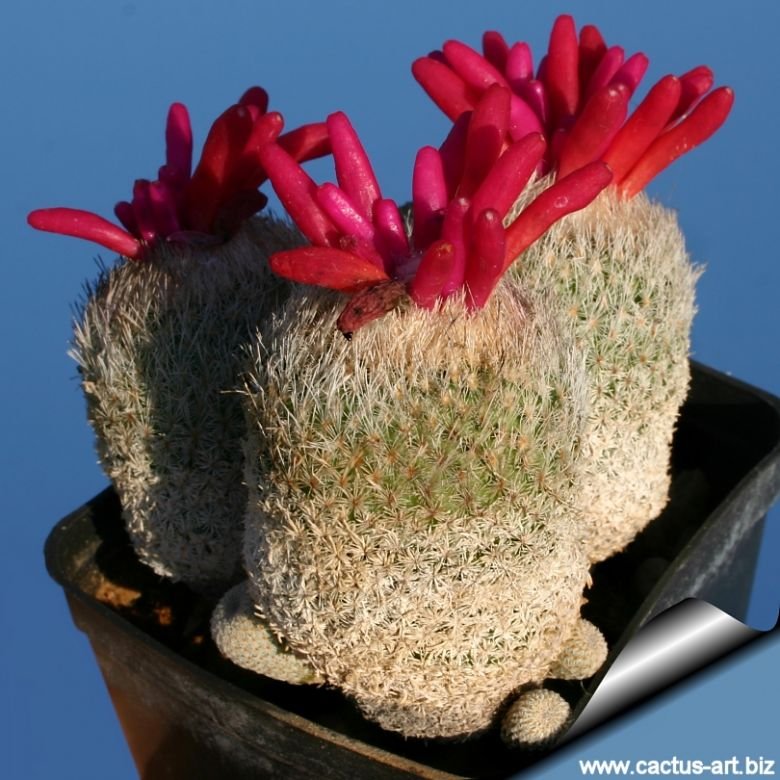
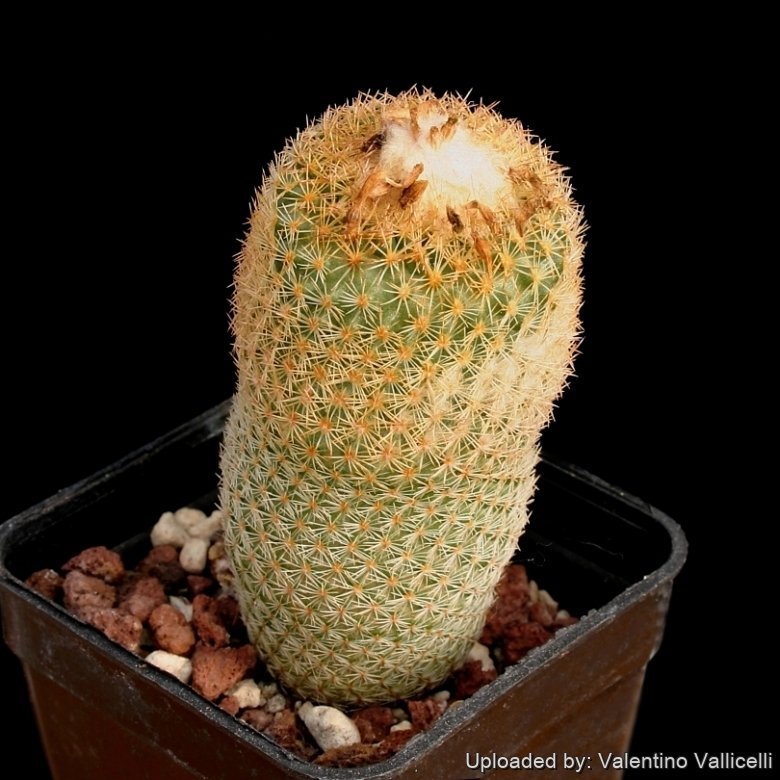
Epithelantha micromeris var. rufispina is a minute globular button cactus, becoming somewhat elongated when old. A dainty plant, and an easy one to handle. The short spines of this little cactus are appressed to its body and so do not puncture your hands.
Stem: Solitary, up to 10 cm tall, but at times has offsets at the base. The appressed apex contains many reddish spines. The stem becomes quite dehydrated during drought, but fills out quickly.
Spines: 30-40 all radials, greyish-white in young specimens, turning to a grey-reddish or brownish tinge in adult plants crown, while the rest of the spines on the body of the plant are greyish.
Flowers: Small cream-pink coloured, emerging from the wool at the apex.
Blooming season Flowers start open from April in succession over a longer time later in summer.
Fruits: Oblong to clavate, red, edible, referred to as “chilitos” or little chili peppers. Their taste is tart, however, and not peppery.
Taxonomy: Dr. Helia Bravo first described this cactus in 1951 as Epithelantha rufispina. Backeberg in 1954 found it to be a variety of Epithelantha micromeris and called it E. micromeris var. rufispina.
Origin and Habitat
Epithelantha micromeris var. rufispina is found in abundance from Parras de la Fuente to south of Saltillo in the state of Coahuila, Mexico.
Habitat: It grows in the shelter of bushes and grasses and is a bit difficult to spot in its half- hidden location.
Cultivation and Propagation
Although regarded as a choice and difficult plant in cultivation it is relatively easy. Needs a soil mix particularly well draining (rot prone). Water sparingly and keep perfectly dry in winter. Hardy to -7°C
Sun Exposure: Light shade to full sun.
Propagation: Seeds, offsets.
Bibliography
Major references and further lectures
-
Curt Backeberg “Die Cactaceae: Handbuch der Kakteenkunde” Gustav Fischer Verlag, Stuttgart New York 1982–1985
-
Curt Backeberg “Das Kakteenlexikon”, 1966
-
Saguaroland Bulletin, Volumi 26-27, page 40, Arizona Cactus and Native Flora Society, 1972
Source: Epithelantha greggii var. rufispina, LLIFLE - Encyclopedia of living forms, CC-BY-SA, retrieved 2026-10-25.
From llifle page Epithelantha neomexicana
Description
Epithelantha micromeris v. neomexicana, is an unpublished catalogue name (nomen nudum) used by some seeds collectors and succulent traders to indicate the naturally occurring New Mexican form of Epithelantha micromeris. It is very similar to the type species and not readily distinguishable, if not for the geographical provenance. It is another little white beauty with very small radial spines, combed and projected toward the apex and all spring produces many tiny cream/pink flower. This taxon is self-fertile. It produces viable seeds even without extra pollination.
Habit: It is a miniature globose cactus, erect, unbranched or in small clumps, not deep-seated in substrate, appearing ashy grey and relatively rough in general aspect.
Stem: Unsegmented, mostly spheric or obovoidal, rarely cylindric, often flat-topped with a depressed centre, about 5cm tall and 4 cm in diameter, occasionally more; surface completely obscured by spines.
Tubercles: Numerous, not confluent into ribs, hemispheric or short cylindric, very small, ca. 1-3 mm; arranged in tight spirals around the plant.
Areoles: Small at tips of tubercles, 1 mm long, nearly circular, elliptic when distended by flower or fruit, slightly woolly when young, copiously woolly only at sexually mature stem apex; areolar glands absent;
Spines: Approx. 20-30 white to ashy grey very small (2-5 mm long), appressed on sides of stems, combed, straight, terete, slender, innocuous, in 1-3 superimposed series except for a longer (4-12 mm) and erect adaxial tuft of spines projected toward the apex, on sexually mature stem apex. Spine clusters at the sides of stem 4-5(-7) mm in diameter. Smooth or microscopically roughened by break-up of epidermis, not distinguishable as radial and central spines. In fully adult plants, the distal portions of the longest spines are worn, leaving the apex of the plant covered with short, innocuous spines.
Roots: Diffuse.
Flower: Inconspicuous, creamy-pink to pink, funnelform diurnal, borne at adaxial margins of spine clusters in the plant top. Only partly opened just distal portion visible, as they barely stick out above the wool obscured by longer spines at stem apex.
Blooming season: Flowers late winter-early spring .
Fruits: Indehiscent, bright red, thin narrowly cylindric, 3-20 × 2-3(-5) mm, weakly succulent, soon drying and papery, smooth, spineless; pulp absent; floral remnant deciduous. Fruiting late spring-early summer (Apr-Jun) and persisting several months. Its fruit are known as “chilitos.”
**Seeds:*** Blackish, obliquely hemispheric reticulated in 0,5 mm diameter.
Origin and Habitat
New Mexico (USA)
Bibliography
Major references and further lectures
-
Edward Anderson “The Cactus family” Timber Press, Incorporated, 2001
-
James Cullen, Sabina G. Knees, H. Suzanne Cubey “The European Garden Flora Flowering Plants: A Manual for the Identification of Plants Cultivated in Europe, Both Out-of-Doors and Under Glass” Cambridge University Press, 11/Aug/2011
-
David R Hunt; Nigel P Taylor; Graham Charles; International Cactaceae Systematics Group. “The New Cactus Lexicon” dh books, 2006
-
Sean Hogan “Flora: a gardener’s encyclopedia” Volume 1 Timber Press (Portland, Or.) 2003
-
Cactus and Succulent Journal (US) 50: 186, f 5 1978
-
Hiroshi Hirao “Colour encyclopaedia of cacti” Japan 1979 (Japanese language and script)
Source: Epithelantha neomexicana, LLIFLE - Encyclopedia of living forms, CC-BY-SA, retrieved 2026-10-25.
Cultivars and forms (19)
Subspecies (6)
Varieties (8)
- Epithelantha micromeris var. dickisoniae
- Epithelantha micromeris var. greggii
- Epithelantha micromeris var. neomexicana
- Epithelantha micromeris var. pachyrhiza
- Epithelantha micromeris var. polycephala
- Epithelantha micromeris var. rufispina
- Epithelantha micromeris var. texensis
- Epithelantha micromeris var. unguispina
Gallery