Description
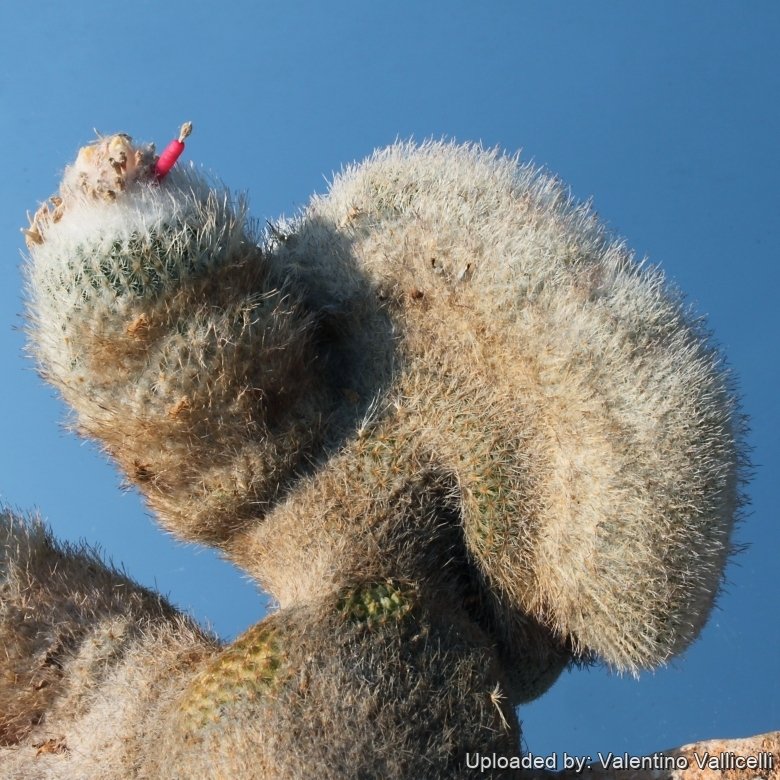
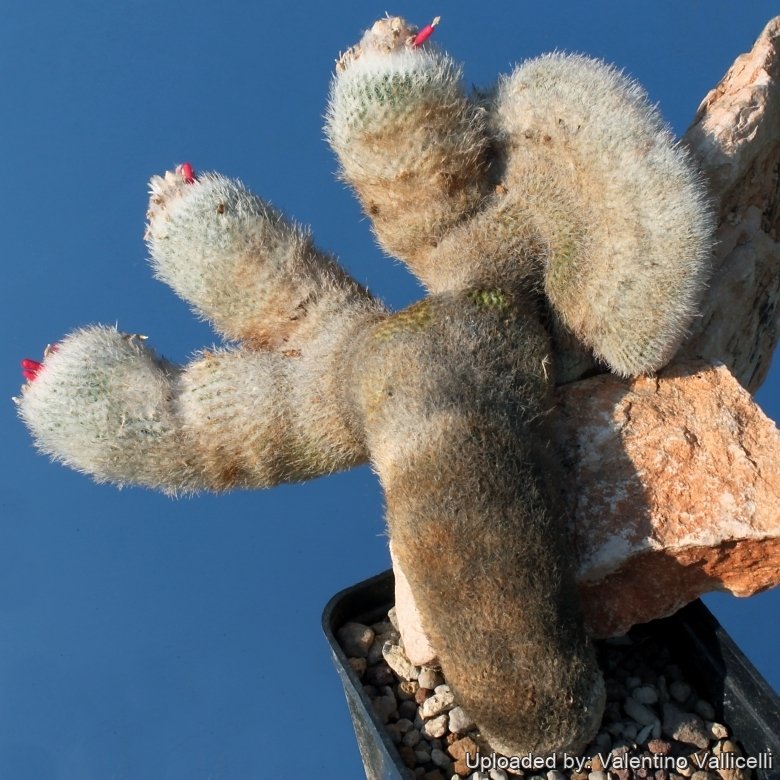
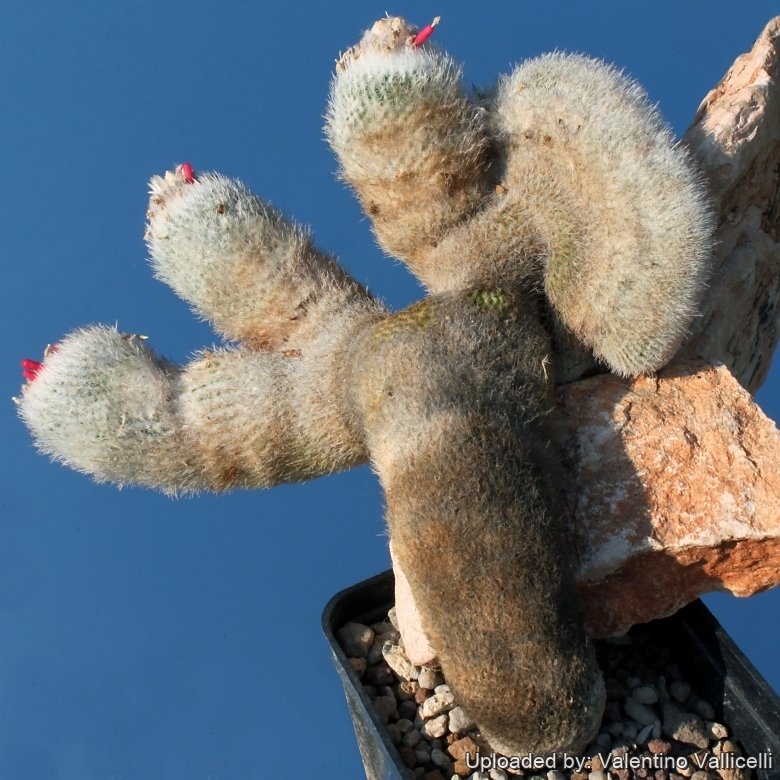
It is a slow growing rare miniature species, erect to prostrate usually unbranched [or rarely branched], not deep-seated in substrate.
Stem: Thin-necked, spinning top shaped only partially covered with spines. It grows to about 10 cm tall and elongates with age.
Spines: White to pale orange-tan or bluish-tan, that are smaller than in E. micromeris.
Roots: The roots are distinctly tuberous to carrot-like.
Flowers: Pinkish-white .
Origin and Habitat
Garden form.
Cultivation and Propagation
Although regarded as a choice and difficult plant, in cultivation it is relatively easy, but very slow growing.. These plants need very coarse potting soil that drains well (rot prone).
Frost Tolerance: Depending on the variety, it will take -5° C (or less) (Temperature Zone: USDA 8-11)
*Sun Exposure: It requires strong sun to part sun to develop good spinal growth, but some summer shade in the hottest hours of the day is beneficial. Assure a good ventilation.
Waterings should be rather infrequent, to keep the plant compact and not become excessively elongated or unnatural in appearance. If the plant becomes to much tall it will lean on a side because the thin neck cannot support the weight of the stem, to keep the plant erect one could either repot it into a deeper pot and bury part of the neck in gravel to give it some support or one could place a couple of nice stones/rocks either side of it to support it. The only trouble with burying the neck with white spined plants like Epithelantha is that the neck can act like a wick when you water and cause brown staining to the plant, watering from the bottom reduces this somewhat.
***Propagation: It can be reproduced by cuttings, but it is often grafted because difficult and rotprome on its own roots.