Publication: Cactaceae Consensus Init. . 5: 12. 1998
Description
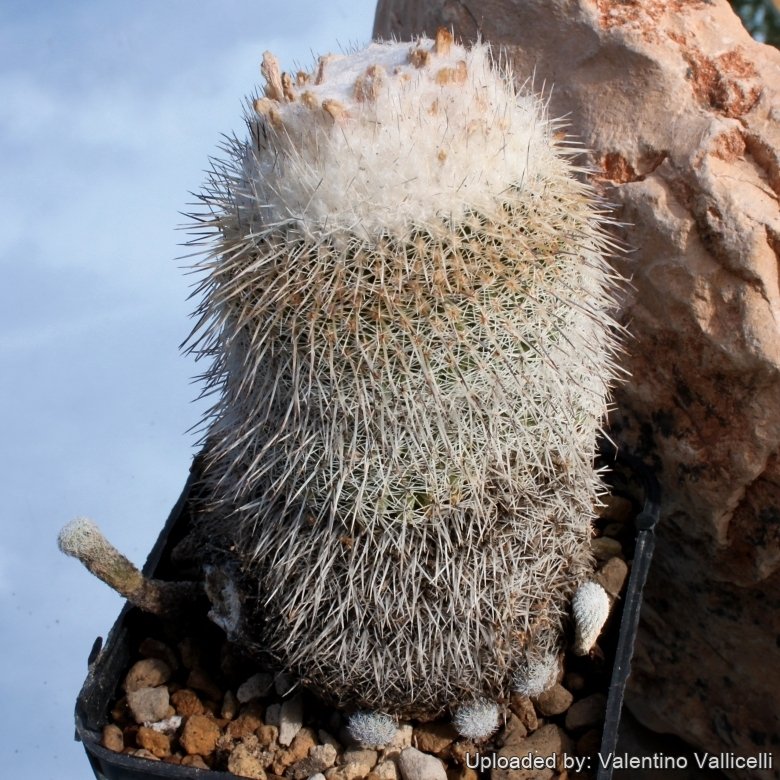
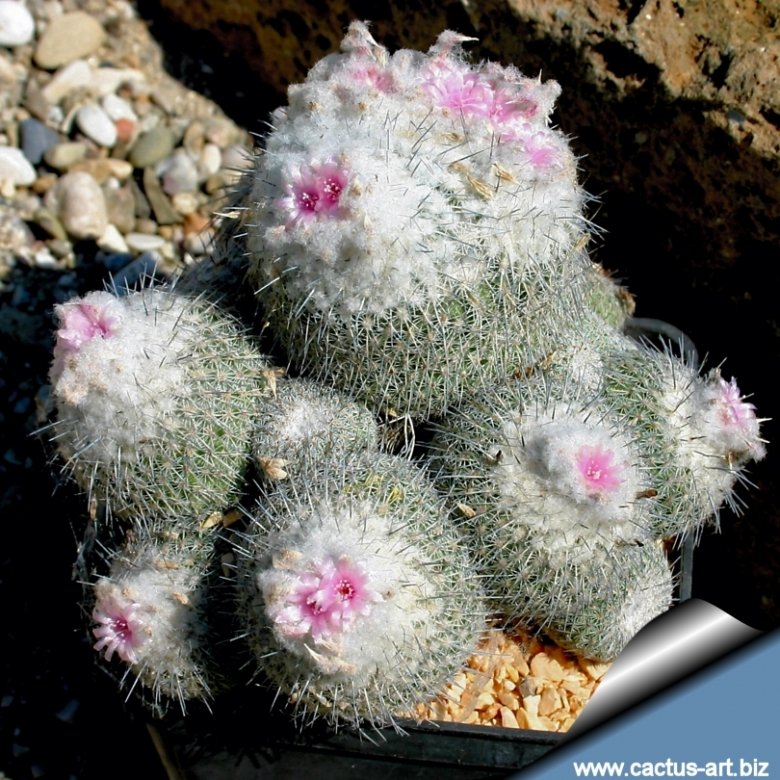
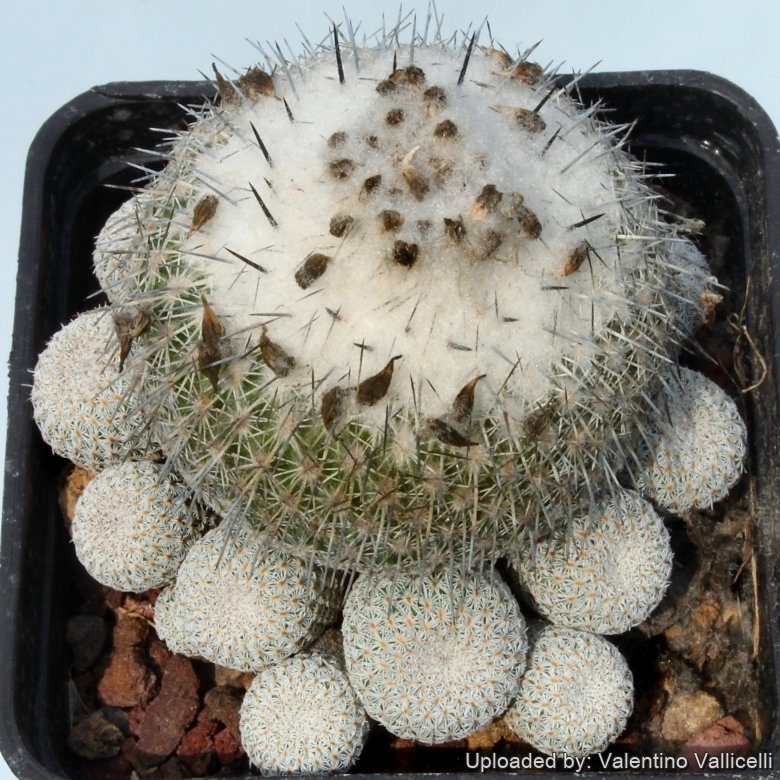
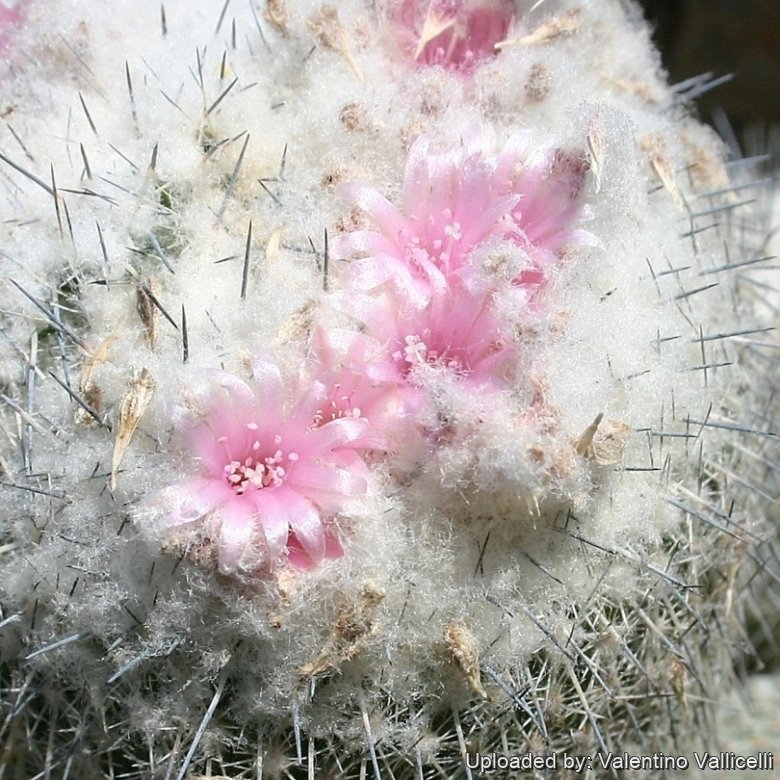
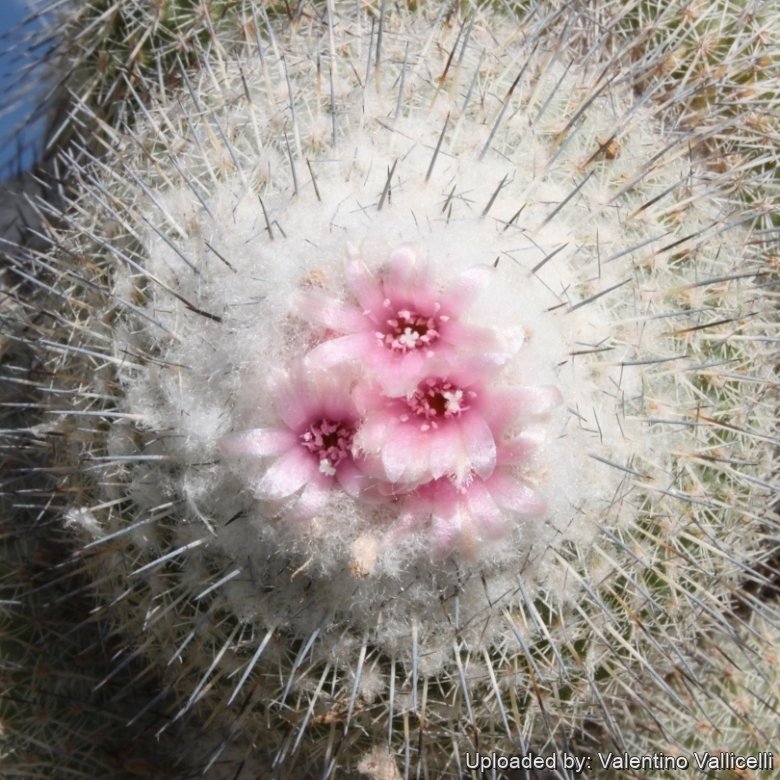
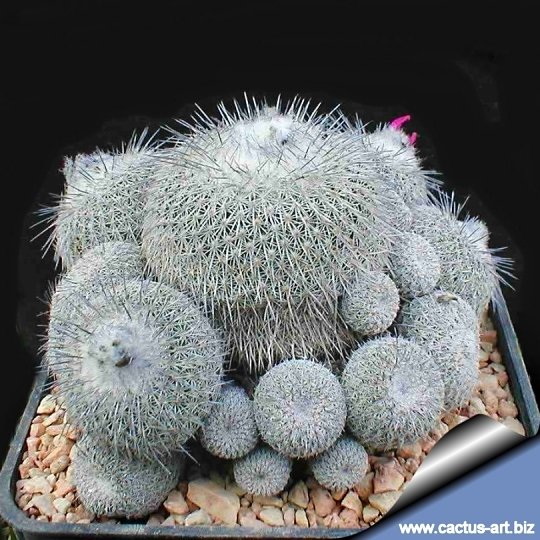
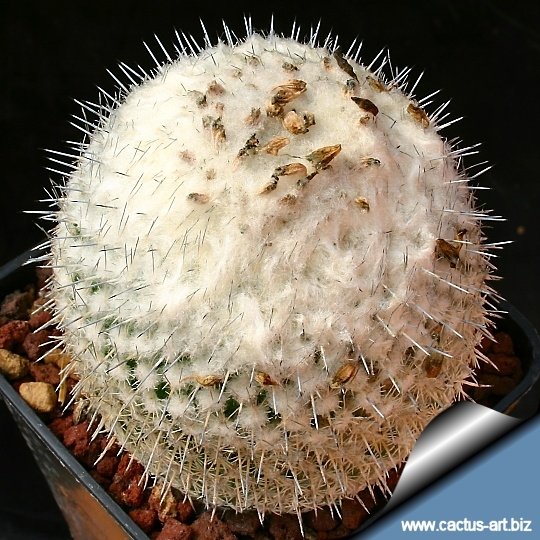
Epithelantha micromeris subs. unguispina (best known under its old name Epithelantha unguispina) is similar to the type species but usually a little larger and free clustering with a distinct, slightly long projecting black-tipped central spines, also the pink flowers are larger than the others.
Habit: It is a miniature globose cactus, erect, clumping over time, not deep-seated in substrate, appearing ashy grey and relatively rough in general aspect.
Stem: Unsegmented, globular, up to 8 cm tall and 6(-7) cm in diameter, often flat-topped with a depressed centre, 3-6 cm in diameter, occasionally more; surface not completely obscured by spines; cortex and pith are not mucilaginous.
Tubercles:** Numerous, not confluent into ribs, hemispheric or short cylindric, very small, ca. 1-3 mm; arranged in tight spirals around the plant.
Areoles: Small at tips of tubercles, 1 mm long, nearly circular, elliptic when distended by flower or fruit, slightly woolly when young, copiously woolly only at sexually mature stem apex; areolar glands absent;
Central spine: One, conspicuously longer than in other subspecies, mostly 4-5mm long (occasianally up to 20 mm), downwards curved and often black-tipped.
Radial spines: (16-)18-22(-24) white to ashy grey white and flattened, somewhat pectinate, appressed on sides of stems, straight, terete, slender, innocuous 1-2,5 mm long.
Roots: Diffuse.
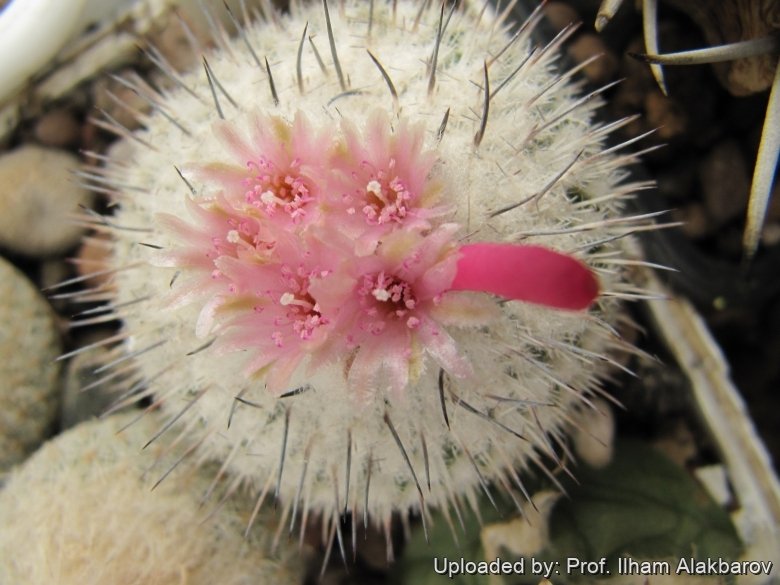
Flower: Small but larger than the others subspecies, pale to deep pink, funnelform diurnal, borne at adaxial margins of spine clusters in the plant top.
Blooming season: Flowers late winter to spring. Autosterile. It is very floriferous.
Fruits: Indehiscent, bright red, thin narrowly cylindric, 3-20 × 2-3(-5) mm, weakly succulent, soon drying and papery, smooth, spineless; pulp absent; floral remnant deciduous.
Remarks:*** Its fruit are known in mexico as “chilitos.”
Origin and Habitat
Monterrey and adjacent areas, Nuevo Leon, North-East Mexico
Altitude: Around 1200 metres above sea level.
Habitat: It grows nested on crevices in step calcareous cliffs together with Mammillaria melanocentra.
Cultivation and Propagation
Although regarded as a choice and difficult plant, in cultivation it is relatively easy, but very slow growing. These plants need very coarse potting soil that drains well (rot prone). Waterings should be rather infrequent, to keep the plant compact and not become excessively elongated or unnatural in appearance.
Frost Tolerance: Depending on the variety, it will take -5° C (or less) (Temperature Zone: USDA 8-11)
Sun Exposure: It requires strong sun to part sun to develop good spinal growth, but some summer shade in the hottest hours of the day is beneficial. Assure a good ventilation.
Propagation: It can be reproduced both by seeds and cuttings, but it is often grafted because difficult and slow to grow on its own roots. Older specimens shoot tillers from under tubercles, so they can be grafted, which is a much easier way of propagation than sowing. Young seedlings are tiny and they need several years to reach adult size, and require careful watering.
Bibliography
Major references and further lectures
-
Edward Anderson “The Cactus family” Timber Press, Incorporated, 2001
-
James Cullen, Sabina G. Knees, H. Suzanne Cubey “The European Garden Flora Flowering Plants: A Manual for the Identification of Plants Cultivated in Europe, Both Out-of-Doors and Under Glass” Cambridge University Press, 11/Aug/2011
-
David R Hunt; Nigel P Taylor; Graham Charles; International Cactaceae Systematics Group. “The New Cactus Lexicon” dh books, 2006
-
Sean Hogan “Flora: a gardener’s encyclopedia” Volume 1 Timber Press (Portland, Or.) 2003
-
Cactus and Succulent Journal (US) 50: 186, f 5 1978
-
Hiroshi Hirao “Colour encyclopaedia of cacti” Japan 1979 (Japanese language and script)
Gallery