Publication: Cactaceae [Itô] 529, without basionym ref. 1981
Description
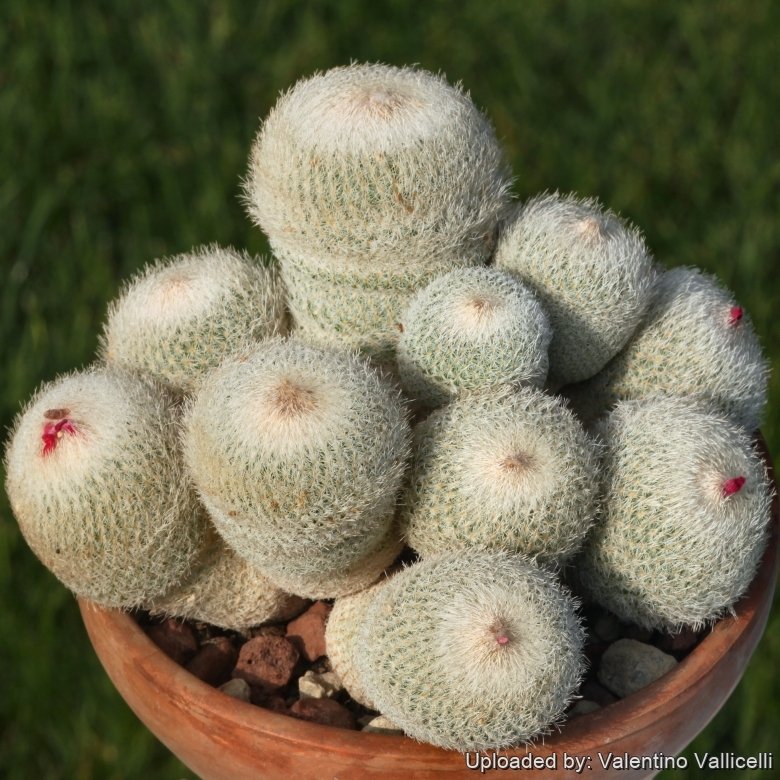
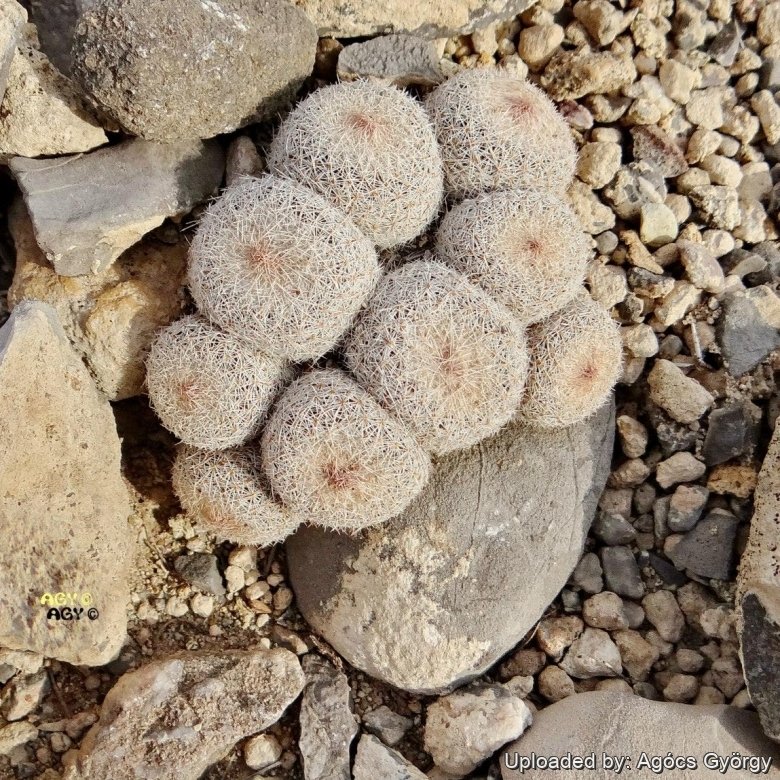
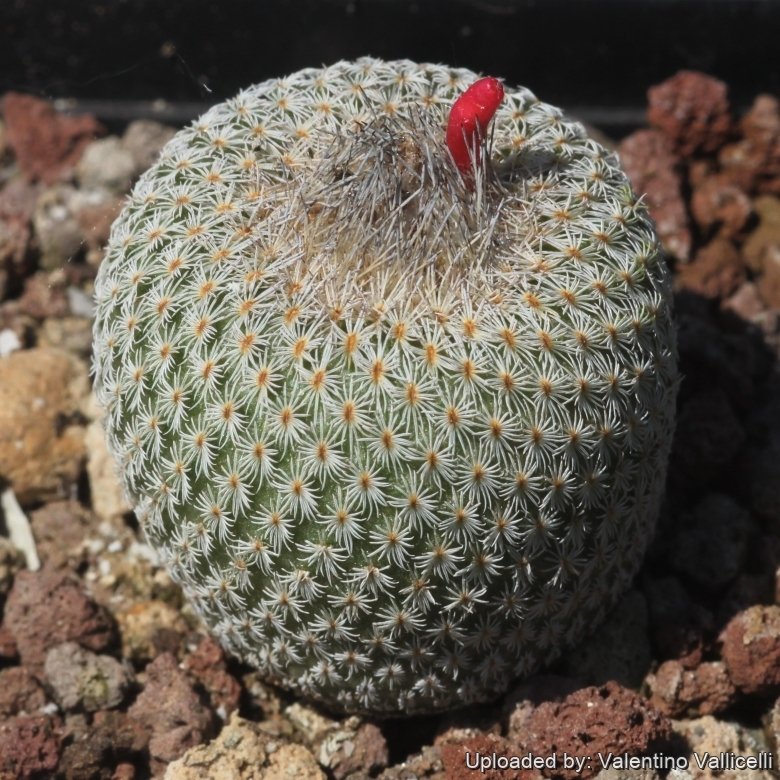
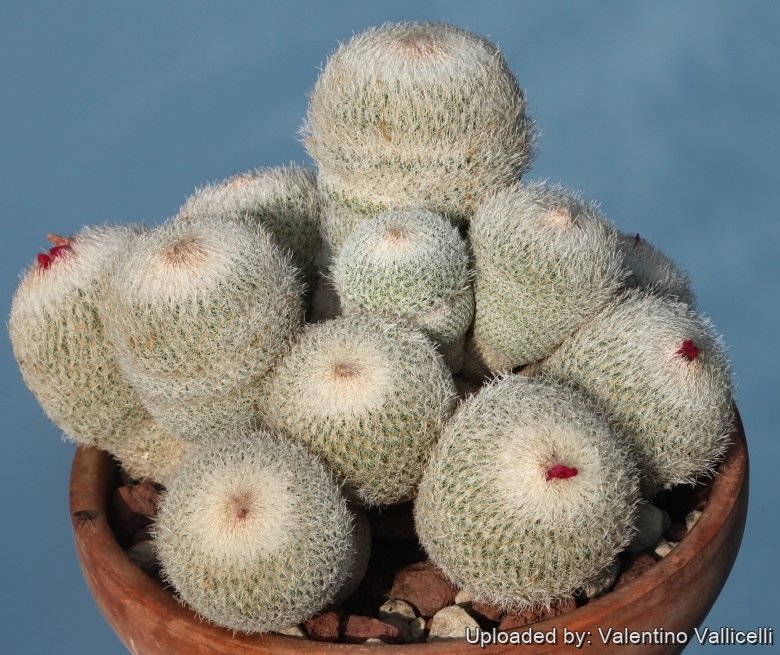
Epithelantha micromeris subs. greggii is the largest and most common of the Epithelantha micromeris subspecies that appears ashy grey and relatively rough, somewhat bristly in general aspect.
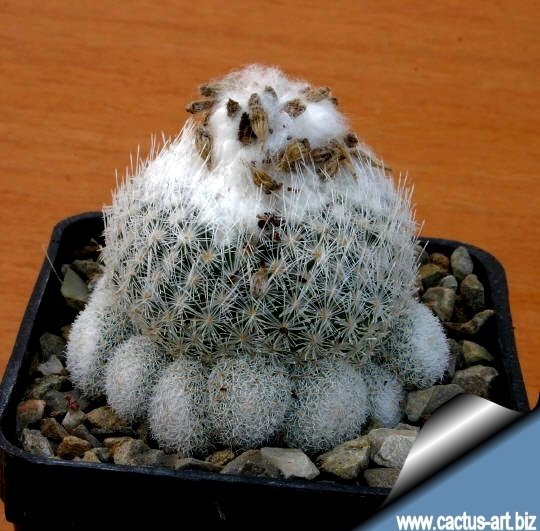
Stem: Branching, mostly spheric or obovoidal, often flat-topped with a depressed centre, 5-7,5 cm in diameter; surface completely obscured by spines.
Tubercles: Numerous, not confluent into ribs, hemispheric or short cylindric, very small, ca. 1-2 mm; arranged in tight spirals around the plant.
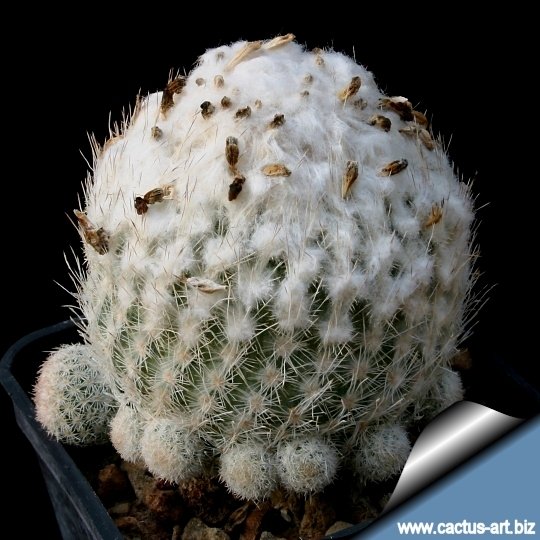
Areoles: Small at tips of tubercles, 1 mm long, nearly circular, elliptic when distended by flower or fruit, slightly woolly when young, copiously woolly only at sexually mature stem apex; areolar glands absent.
Spines: 20 or more chalky white, ashy grey to reddish brown, 3-5 mm long, spreading and radiating at an early age rather than pectinate and appressed on sides of stems, straight, terete, slender, innocuous. The upper ones much longer.
Roots: Diffuse (usually).
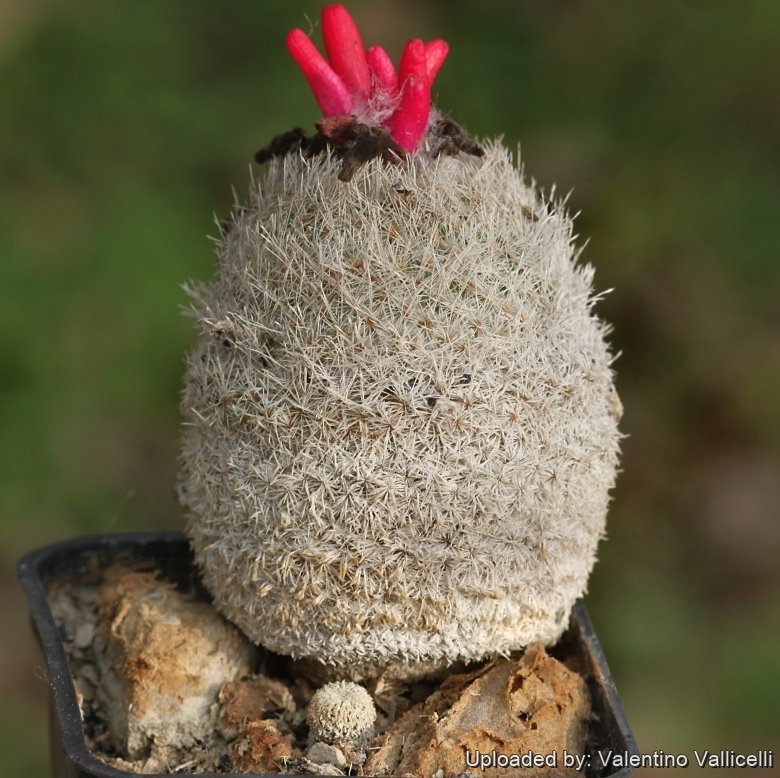
Flower: Inconspicuous, funnel-shaped, diurnal, deeper pink than the type, borne at adaxial margins of spine clusters in the plant top. Only partly opened just distal portion visible, as they barely stick out above the wool obscured by longer spines at stem apex.
Blooming season: Flowers in May-June.
Fruits: Indehiscent, bright red, thin narrowly cylindric, 18 × 2-3(-5) mm, weakly succulent, soon drying and papery, smooth, spineless; pulp absent; floral remnant deciduous. Fruiting summer.
Origin and Habitat
Northern Mexico, especially around Saltillo, Coahuila.
Altitude range: Around: 700-1300 m above sea level.
Habitat and ecology: Epithelantha greggii grows on hills with low slopes,
mountain plateaus, on coarse stone chips and gravels.
Associated species: Echinocactus horizonthalonius, Ariocarpus retusus, Ariocarpus fissuratus subsp. fissuratus, Coryphantha poselgeriana, Coryphantha pseudoechinus, Coryphantha poselgeriana, Coryphantha delaetiana, Coryphantha gladiispina, Grussonia bradtiana, Escobaria strombiliformis, Escobaria strombiliformis, Lophophora williamsii, Thelocactus bicolor, Echinomastus mariposensis, Mammillaria lasiacantha, Opuntia microdasys, Neolloydia conoidea, Mammillaria pottsii etc…
Cultivation and Propagation
Although regarded as a choice and difficult plant, in cultivation it is relatively easy. Sometimes it is grafted to avoid root rot problems. Suited for airy exposures.
Soil: It needs a particularly well-draining soil mix.
Exposure: Light shade to full sun.
Water: Water sparingly as it is susceptible to over-watering. Keep dry in winter.
Frost Tolerance: Depending on the variety, will handle -12° C (Temperature Zone: USDA 8-11). But a plant kept perfectly dry can easily survive at winter night-time temperatures below 0° C.
Pests & diseases: Epithelantha micromeris subs. greggii is prone to rot, therefore, underpot in a smaller container filled with very porous compost.
Propagation: Seeds, offsets or graft. Seeds can be sown in the spring or summer. The seedlings should not be disturbed until they are well rooted, after which they can be planted separately in small pots.
Bibliography
Major references and further lectures
-
James Cullen, Sabina G. Knees, H. Suzanne Cubey “The European Garden Flora Flowering Plants: A Manual for the Identification of Plants Cultivated in Europe, Both Out-of-Doors and Under Glass” Cambridge University Press, 11/Aug./2011
-
David Hunt, Nigel Taylor “The New Cactus Lexicon” DH Books, 2006
-
Edward F. Anderson “The Cactus Family” Timber Press, 2001
Gallery