Publication: Cactus (Paris) no. 39: 31. 1954
Description
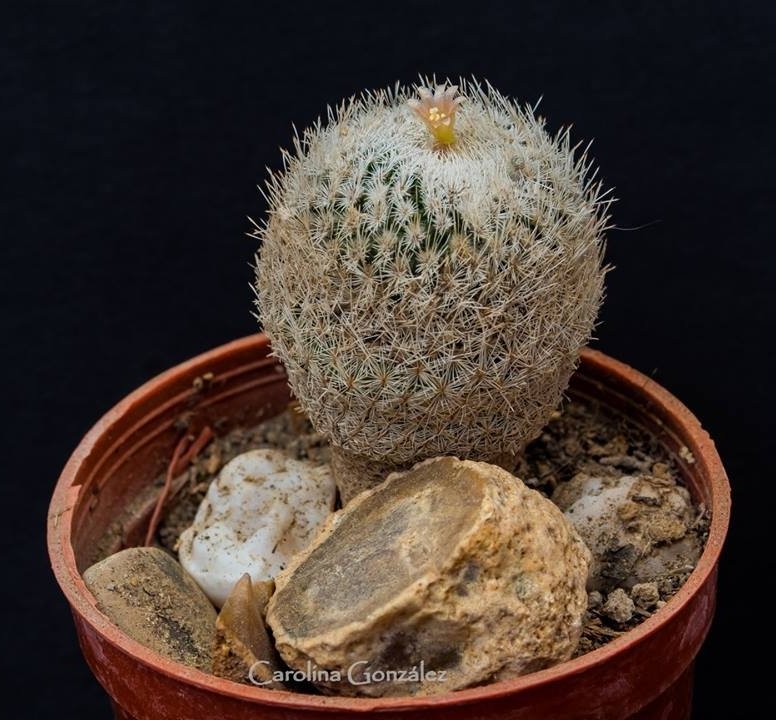
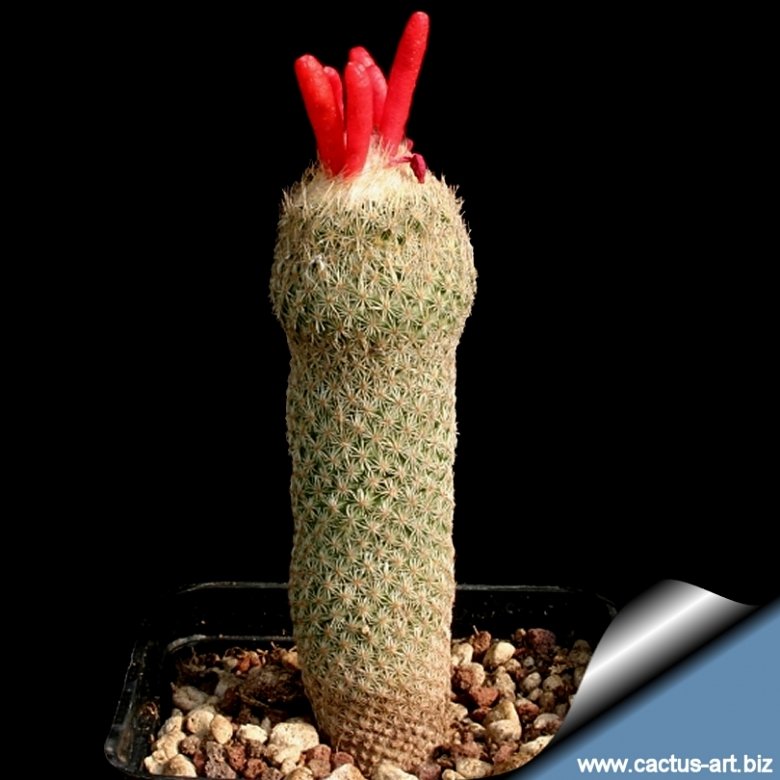
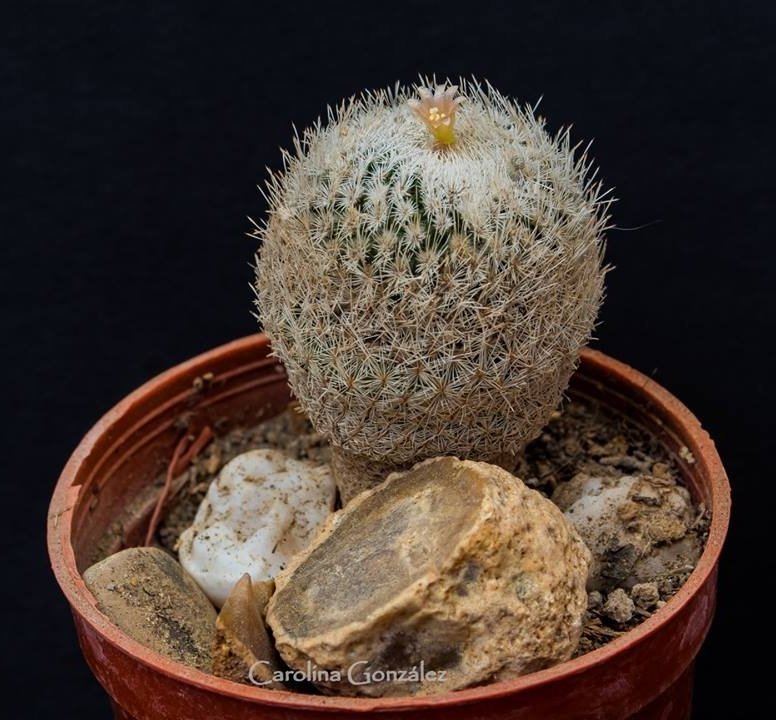
Epithelantha micromeris var. rufispina is a minute globular button cactus, becoming somewhat elongated when old. A dainty plant, and an easy one to handle. The short spines of this little cactus are appressed to its body and so do not puncture your hands.
Stem: Solitary, up to 10 cm tall, but at times has offsets at the base. The appressed apex contains many reddish spines. The stem becomes quite dehydrated during drought, but fills out quickly.
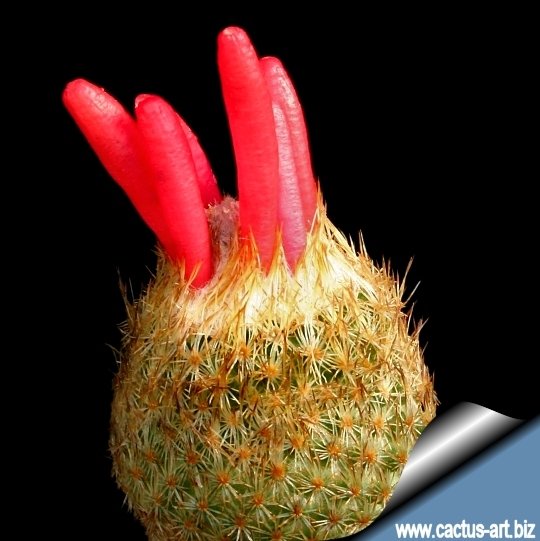
Spines: 30-40 all radials, greyish-white in young specimens, turning to a grey-reddish or brownish tinge in adult plants crown, while the rest of the spines on the body of the plant are greyish.
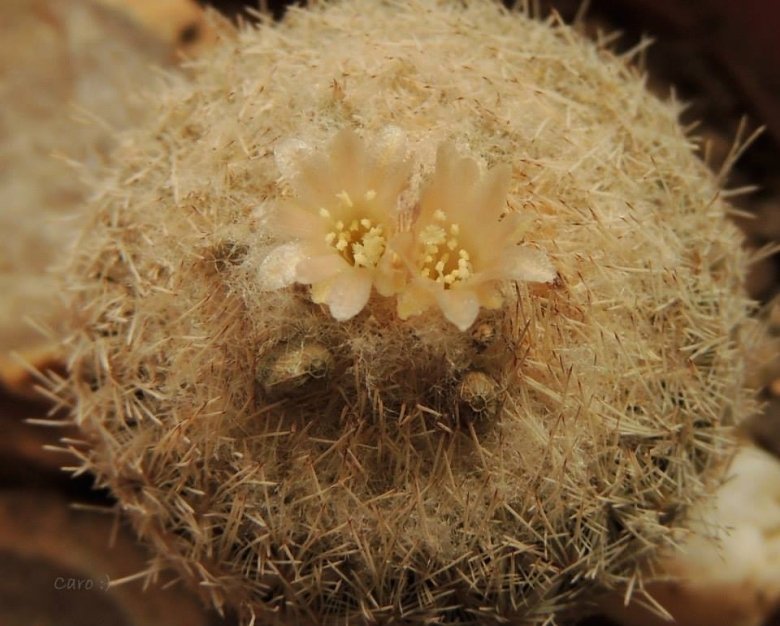
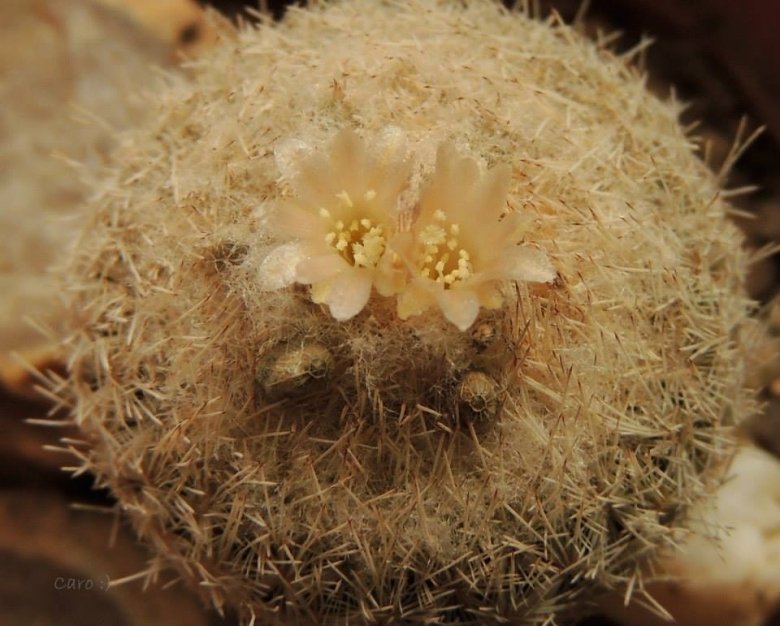
Flowers: Small cream-pink coloured, emerging from the wool at the apex.
Blooming season Flowers start open from April in succession over a longer time later in summer.
Fruits: Oblong to clavate, red, edible, referred to as “chilitos” or little chili peppers. Their taste is tart, however, and not peppery.
Taxonomy: Dr. Helia Bravo first described this cactus in 1951 as Epithelantha rufispina. Backeberg in 1954 found it to be a variety of Epithelantha micromeris and called it E. micromeris var. rufispina.
Origin and Habitat
Epithelantha micromeris var. rufispina is found in abundance from Parras de la Fuente to south of Saltillo in the state of Coahuila, Mexico.
Habitat: It grows in the shelter of bushes and grasses and is a bit difficult to spot in its half- hidden location.
Cultivation and Propagation
Although regarded as a choice and difficult plant in cultivation it is relatively easy. Needs a soil mix particularly well draining (rot prone). Water sparingly and keep perfectly dry in winter. Hardy to -7°C
Sun Exposure: Light shade to full sun.
Propagation: Seeds, offsets.
Bibliography
Major references and further lectures
-
Curt Backeberg “Die Cactaceae: Handbuch der Kakteenkunde” Gustav Fischer Verlag, Stuttgart New York 1982–1985
-
Curt Backeberg “Das Kakteenlexikon”, 1966
-
Saguaroland Bulletin, Volumi 26-27, page 40, Arizona Cactus and Native Flora Society, 1972