Publication: Eriosyce (Cactac.) gen. revis. & ampl. (Succ. Pl. Res., 1) 1): 117 (1994)
Description
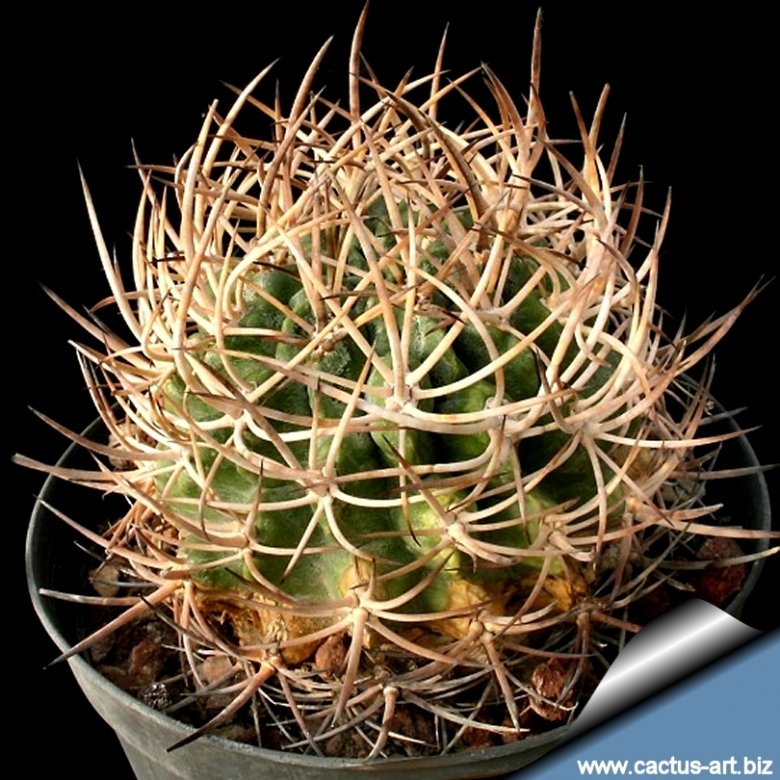
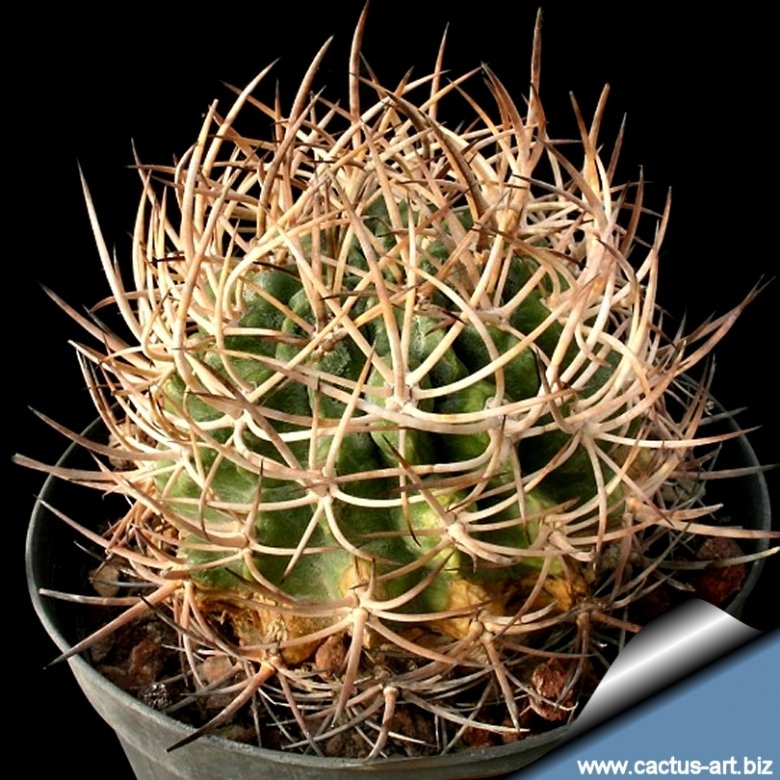
Eriosyce curvispina is one of the most wide-spread of the Eriosyce species. It is also highly variable in appearance and has been received numerous, often unnecessary, names. In fact, there are a number of different looking varieties, but only some authorities recognize the different populations as segregate varieties. Three subspecies are recognized, the nominate form, subsp. armata (F.Ritter) Katt., and subsp. marksiana (F.Ritter) Ferryman.
Habit: It is a solitary cactus that may occasionally form few branched clumps.
Roots: Fibrous though sometimes developing short napiform root.
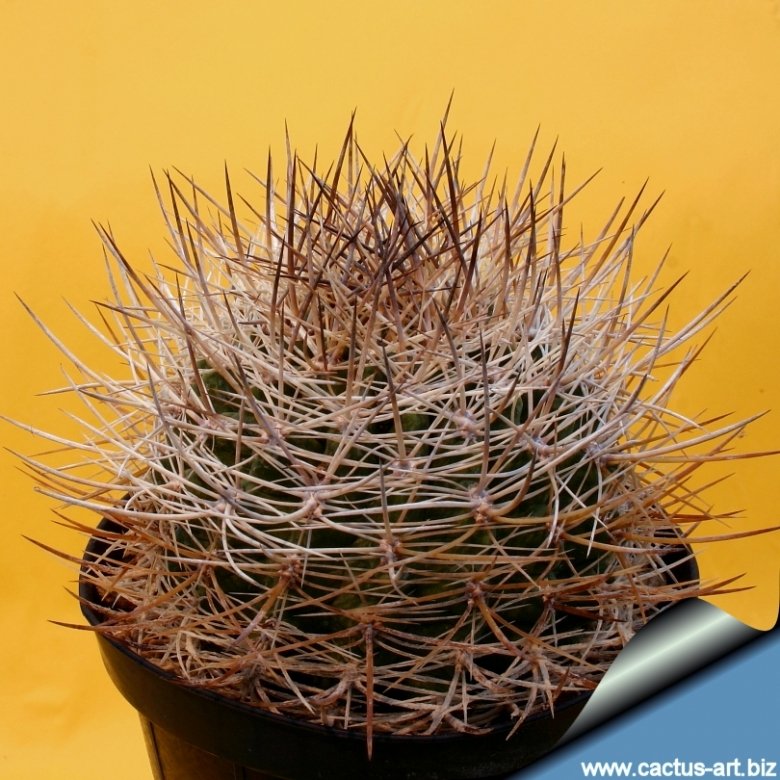
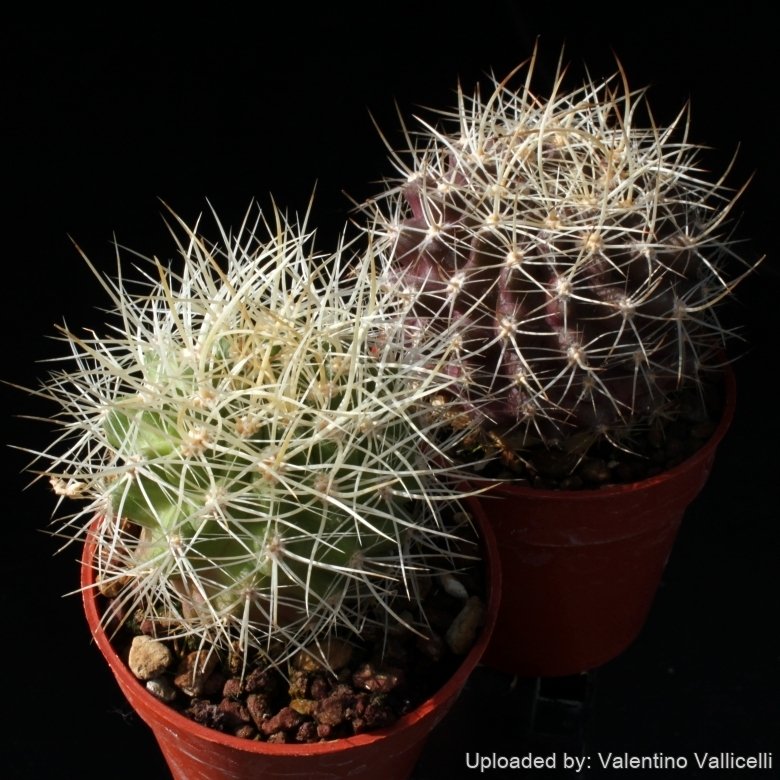
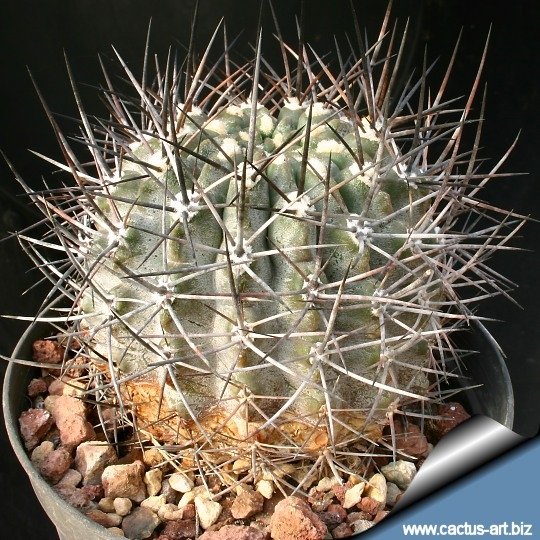
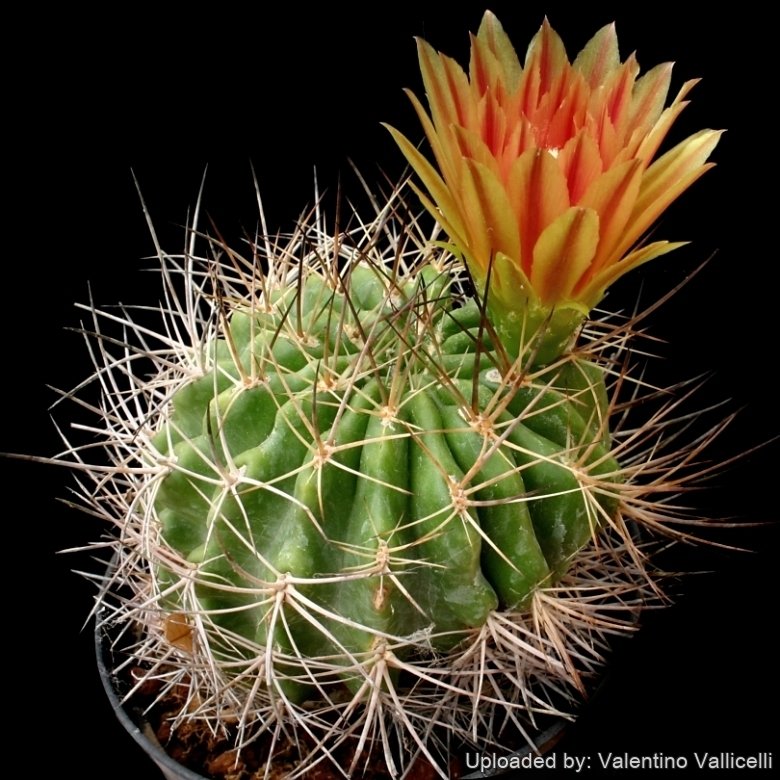
Stem: Subglobose or globose, sometime elongate (especially in cultivation), 8-20 cm across, greyish green, often with naked or with few spines at the top.
Ribs: 14-24, noticeably notched with chin-like protrusions.
Roots: Fibrous from a short tap root.
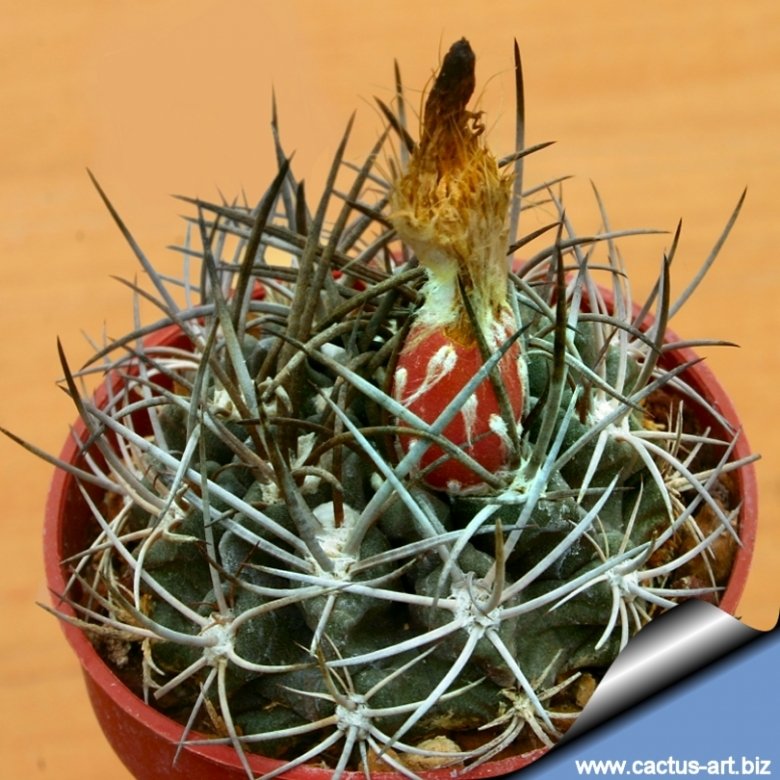
Spines: Long, stiff, greyish-brown spines with a darker tip, thin to thick, awl shaped. Young spines are almost black, while older ones turn greyish.
Central spines: 4-8,20-30 mm long.
Radial spines. 10-15,10-30 mm.
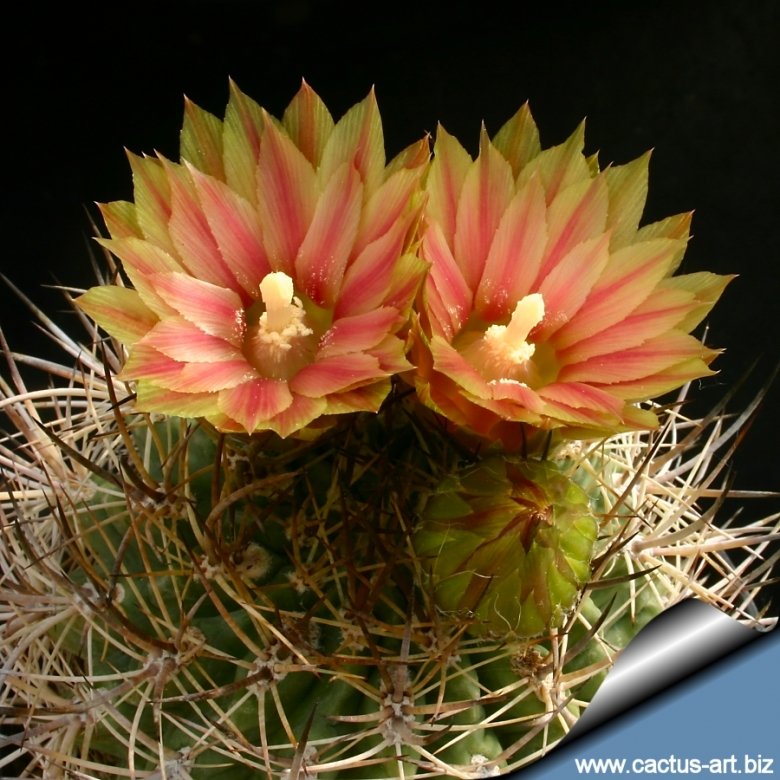
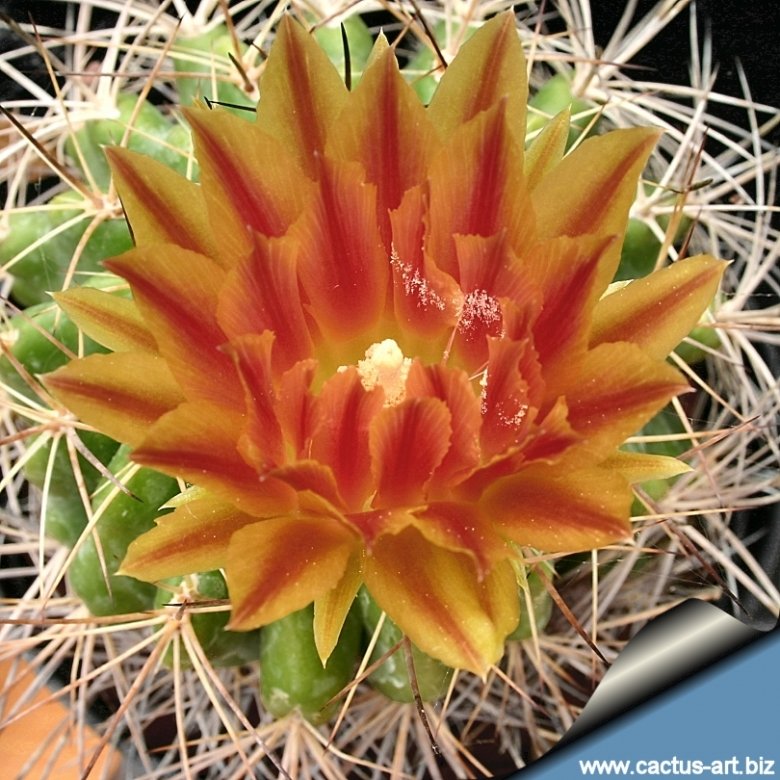
Flowers: Flowers are about 3-5,5 cm long and broad, broadly funnel-form, yellowish-green, dull-yellow or yellow with reddish-brown mid-veins or reddish.
Fruits: Somewhat elongate, reddish, fleshy, about 1 cm long splitting open by at the base.
Remarks: The variety curvispina (sensu stricto) is always solitary, has large flowers up to 5,5 cm in diameter, strongly curved spines 20 or more mm long and is the more common and widespread of the varieties.
Origin and Habitat
Eriosyce curvispina is endemic to Chile, where it is found in Copiapó and Caldera, Atacama, Chile, south to the Rio Maule.
Altitude: 0 to 2400 metres above sea level.
Habitat: The species occurs in sclerophyllous forest on rocky areas. It is frequent but occurs mainly at low densities. (Densities of 10,000 individuals per km2 are estimated to occur on some slopes). The distribution of this cactus overlaps with areas of high human density. It is therefore affected by land use change due to agriculture, mining, urbanization, desertification processes and illegal collection.
Cultivation and Propagation
It is an extremely xerophytic, summer-growing, species, adapted to very dry soils. Despite its provenance it is not particularly difficult to cultivate, but quite susceptible to over-waterings and rot prone if kept in a non-ventilated place.
Growth rate: Slow-growing.
Soil: It requires a very fast draining drying open mineral, sandy-gritty cactus compost. Provide a very good drainage.
Exposure: It is suited for sunny-brightly exposure, but can tolerate light shade. However it will do its best only with lots of sun and become stressed with inadequate light which could result in poor growth and unnatural shape. It has a good heat tolerance.
Watering: Water regularly in summer, but do not over-water and keep it completely dry during winter. Mature individuals easily rot and die especially after transplanting so be extremely cautious with watering. Keep dry in winter or when night temperatures remain below 10° C. Water it less than average if in bigger pots.
Fertilization: Feed them once during the growing season with a fertilizer specifically formulated for cactus and succulents (high potash fertilizer with a dilute low nitrogen), including all micro nutrients and trace elements diluted to ½ the strength recommended on the label. They thrive in poor soils and need a limited supplies of fertilizer to avoid the plants developing excess vegetation, which is easily attacked by fungal diseases.
Special need: It is suited for airy exposures. Provide very good ventilation. Nearly all problems occur as a result of overwatering and poor ventilation, especially when weather conditions are dull and cool or very humid. They must have very dry atmosphere.
Hardiness: It likes warmth (recommended minimum winter temperature 5° C), but Hardy to at least -5°C (it can probably tolerate freezing temperatures down to -10° C for brief periods) It has a good heat tolerance.
Pests & diseases: These cacti may be attractive to a variety of insects, but plants in good condition should be nearly pest-free, particularly if they are grown in a mineral potting-mix, with good exposure and ventilation. Nonetheless, there are several pests to watch for.
- Red spiders: Red spiders may be effectively rubbed up by misting the plants from above.
- Mealy bugs: Mealy bugs occasionally develop aerial into the new leaves and flowers with disfiguring results, but the worst types develop underground on the roots and are invisible except by their effects.
- Scales, thrips and aphids: These insects are rarely a problem.
- Rot: Rot is only a minor problem if the plants are watered and “aired” correctly. If they are not, fungicides won’t help all that much.
Propagation: Usually propagated from seeds (seldom produces offsets) or graft. The seeds can be sown in pots of fine, well-drained sandy soil, any time during the spring when temperatures are warm. Cover the seeds with a fine layer of grit and water from below with a fungicide to prevent damping off. For the 1-2 weeks cover the pots with a sheet of glass/clear perspex to keep the humidity levels high. Remove the glass and replace it with light shade-cloth and mist once or twice a day for the next two weeks after which most seeds should have germinated. From then on mistings can be reduced to every second and then every third day as the little plants grow. The seedlings should not be disturbed until they are well rooted after which they can be planted separately in small pots. Sometimes it is grafted to avoid root rot problems as plants grafted on an hardy stock are easy to grow and no special skill is required.
Bibliography
Major references and further lectures
-
Edward Anderson “The Cactus family” Timber Press, Incorporated, 2001
-
Nathaniel Lord Britton, Joseph Nelson Rose “Cactaceae: Descriptions and Illustrations of Plants of the Cactus Family” vol. 4 The Carnegie Institution of Washington, Washington 1923
-
James Cullen, Sabina G. Knees, H. Suzanne Cubey “The European Garden Flora Flowering Plants: A Manual for the Identification of Plants Cultivated in Europe, Both Out-of-Doors and Under Glass” Cambridge University Press, 11/Aug/2011
-
David R Hunt; Nigel P Taylor; Graham Charles; International Cactaceae Systematics Group. “The New Cactus Lexicon” dh books, 2006
-
“Succulent Plant Research” Volume 1, David Hunt, Richmond 1994, page. 117.
-
Fred Kattermann “Eriosyce (Cactaceae): The Genus Revised and Amplified” David Hunt, 1994
-
John Borg “Cacti: a gardener’s handbook for their identification and cultivation” Blandford P., 1970
-
“Memorie della Reale Accademia delle Scienze di Torino.” Volume 37, Turin 1833, page. 76, Tab. 16.
-
Faundez, L., Guerrero, P., Saldivia, P. & Walter, H.E. 2013. Eriosyce curvispina. In: IUCN 2013. “IUCN Red List of Threatened Species.” Version 2013.2. <www.iucnredlist.org>. Downloaded on 08 January 2014.
From llifle page Horridocactus andicola
Description
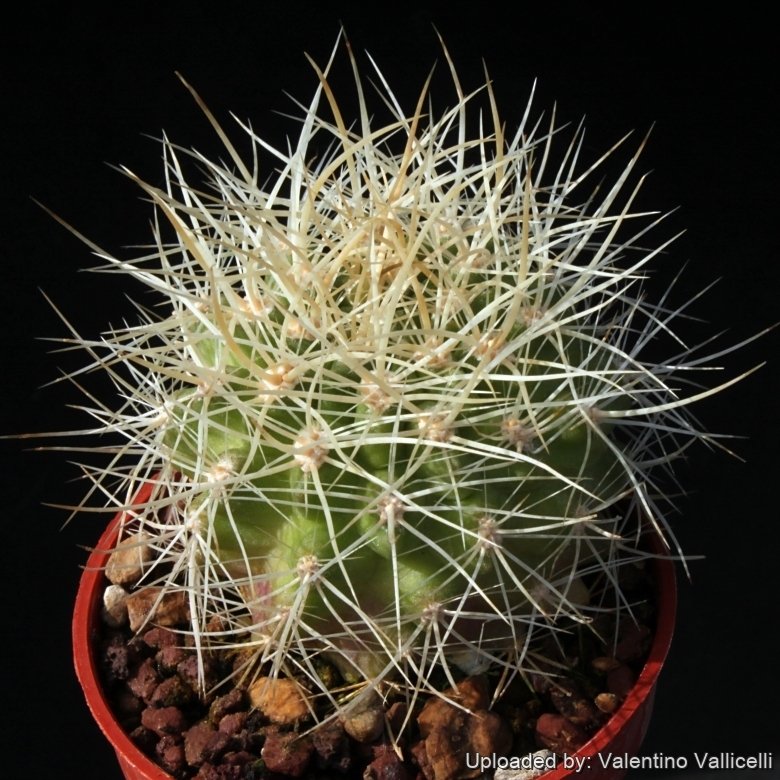
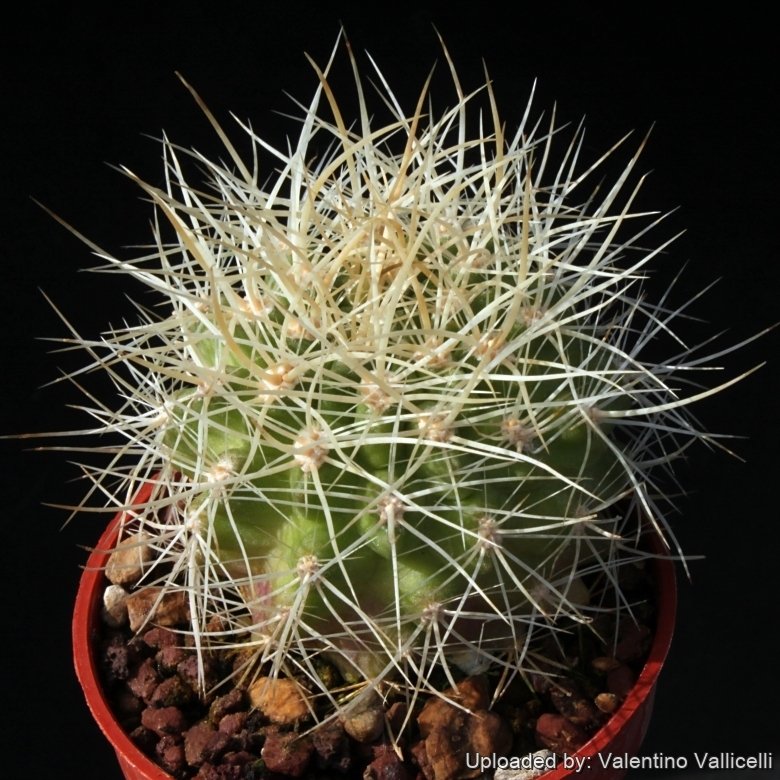
Eriosyce curvispina var. andicola| is one of the innumerable synonyms of the very variable Eriosyce curvispina with long dense whitish or yellowish spines that was indicated by Ritter in its original description from the higher part of the areal of the species, but poorly differentiated and nowadays fully synonymized with Eriosyce curvispina.
Eriosyce curvispina (sensu lato) is one of the most wide-spread of the Eriosyce species. It is also highly variable in appearance has been received numerous, often unnecessary, names. In fact, there are a number of different looking varieties, but only some authorities recognize the different populations as segregate varieties.
Habit: It is a solitary cactus that may occasionally form few branched clunps.
Roots: Fibrous though sometimes developing short napiform root.
Stem: Subglobose or globose, sometime elongate (especially in cultivation), 8-20 cm across, greyish green, often with naked or with few spines at the top.
Ribs: 14-24, noticeably notched with chinlike protrusions.
Roots: Fibrous from a short tap root.
Spines: Long, stiff, white, yellowish to greyish-brown thin to thick, awl shaped. Older ones turn greyish.
Central spines: 4-8,20-30 mm long.
Radial spines. 10-15,10-30 mm.
Flowers: Flowers are about 3-5,5 cm long and broad, broadly funnel-form, yellowish-green, dull-yellow or yellow with reddish-brown midveins or reddish.
Fruits: Somewhat elongate, reddish, fleshy, about 1 cm long splitting open by at the base.
Origin and Habitat
Type locality: Chile: Región V; Los Andes: “Cerro Chivato (between Santiago and
Los Andes)”
Cultivation and Propagation
It is an extremely xerophytic, summer-growing, species, adapted to very dry soils. Despite its provenance it is not particularly difficult to cultivate, but quite susceptible to over-waterings and rot prone if kept in a non-ventilated place.
Growth rate: Slow-growing.
Soil: It requires a very fast draining drying open mineral, sandy-gritty cactus compostso. Provide a very good drainage.
Exposure: It is suited for sunny-brightly exposure, but can tolerate light shade. However it will do its best only with lots of sun and become stressed with inadequate light which could result in poor growth and unnatural shape. It has a good heat tolerance.
Watering: Water regularly in summer, but do not over-water and keep it completely dry during winter. Mature individuals easily rot and die especially after transplanting so be extremely cautious with watering. Keep dry in winter or when night temperatures remain below 10° C. Water it less than average if in bigger pots.
Fertilization: Feed them once during the growing season with a fertilizer specifically formulated for cactus and succulents (high potash fertilizer with a dilute low nitrogen), including all micro nutrients and trace elements diluted to ½ the strength recommended on the label. They thrive in poor soils and need a limited supplies of fertilizer to avoid the plants developing excess vegetation, which is easily attacked by fungal diseases.
Special need: It is suited for airy exposures. Provide very good ventilation. Nearly all problems occur as a result of overwatering and poor ventilation, especially when weather conditions are dull and cool or very humid. They must have very dry atmosphere.
Hardiness: It likes warmth (recommended minimum winter temperature 5° C), but Hardy to at least -5°C (it can probably tolerate freezing temperatures down to -10° C for brief periods) It has a good heat tolerance.
Pests & diseases: These cacti may be attractive to a variety of insects, but plants in good condition should be nearly pest-free, particularly if they are grown in a mineral potting-mix, with good exposure and ventilation. Nonetheless, there are several pests to watch for.
- Red spiders: Red spiders may be effectively rubbed up by misting the plants from above.
- Mealy bugs: Mealy bugs occasionally develop aerial into the new leaves and flowers with disfiguring results, but the worst types develop underground on the roots and are invisible except by their effects.
- Scales, thrips and aphids: These insects are rarely a problem.
- Rot: Rot is only a minor problem if the plants are watered and “aired” correctly. If they are not, fungicides won’t help all that much.
Propagation: Usually propagated from seeds (seldom produces offsets) or graft. The seeds can be sown in pots of fine, well-drained sandy soil, any time during the spring when temperatures are warm. Cover the seeds with a fine layer of grit and water from below with a fungicide to prevent damping off. For the 1-2 weeks cover the pots with a sheet of glass/clear perspex to keep the humidity levels high. Remove the glass and replace it with light shade-cloth and mist once or twice a day for the next two weeks after which most seeds should have germinated. From then on mistings can be reduced to every second and then every third day as the little plants grow. The seedlings should not be disturbed until they are well rooted after which they can be planted separately in small pots. Sometimes it is grafted to avoid root rot problems as plants grafted on an hardy stock are easy to grow and no special skill is required.
Bibliography
Major references and further lectures
-
Edward Anderson “The Cactus family” Timber Press, Incorporated, 2001
-
Nathaniel Lord Britton, Joseph Nelson Rose “Cactaceae: Descriptions and Illustrations of Plants of the Cactus Family” vol. 4 The Carnegie Institution of Washington, Washington 1923
-
James Cullen, Sabina G. Knees, H. Suzanne Cubey “The European Garden Flora Flowering Plants: A Manual for the Identification of Plants Cultivated in Europe, Both Out-of-Doors and Under Glass” Cambridge University Press, 11/Aug/2011
-
David R Hunt; Nigel P Taylor; Graham Charles; International Cactaceae Systematics Group. “The New Cactus Lexicon” dh books, 2006
-
“Succulent Plant Research” Volume 1, David Hunt, Richmond 1994, page. 117.
-
Fred Kattermann “Eriosyce (Cactaceae): The Genus Revised and Amplified” David Hunt, 1994
-
John Borg “Cacti: a gardener’s handbook for their identification and cultivation” Blandford P., 1970
-
“Memorie della Reale Accademia delle Scienze di Torino.” Volume 37, Turin 1833, page. 76, Tab. 16.
Source: Horridocactus andicola, LLIFLE - Encyclopedia of living forms, CC-BY-SA, retrieved 2026-10-25.
From llifle page Pyrrhocactus pamaensis
Description
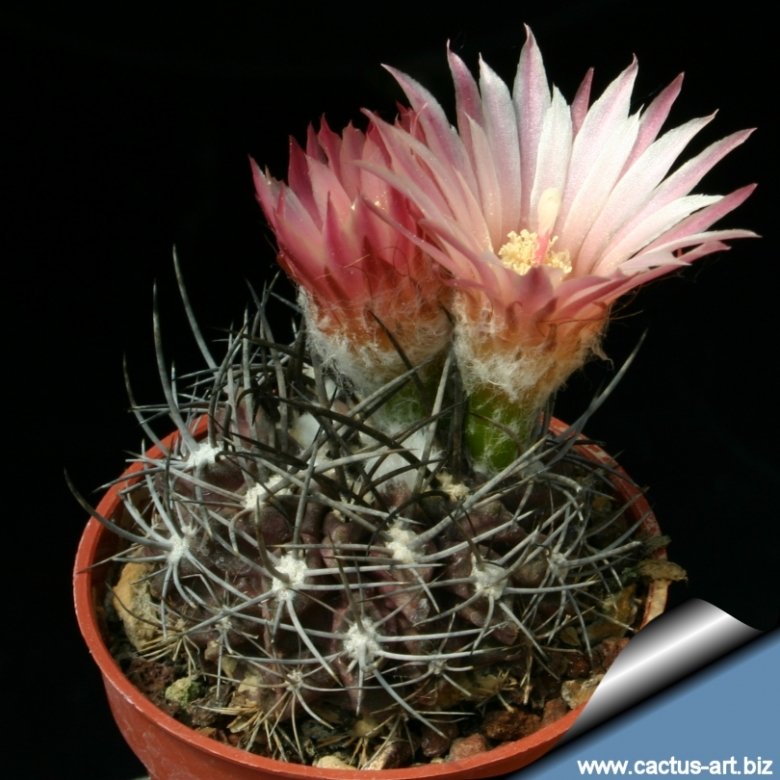
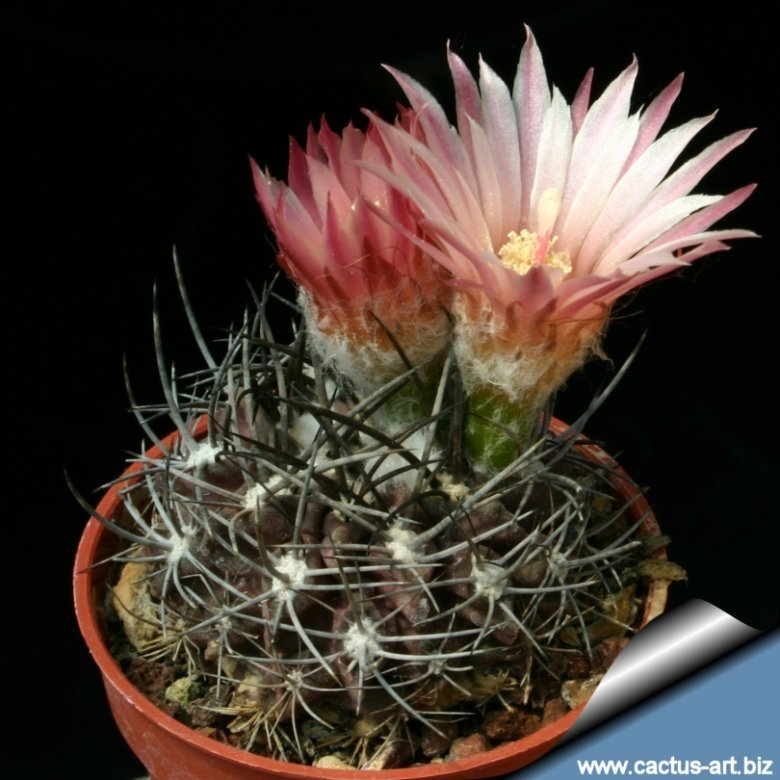
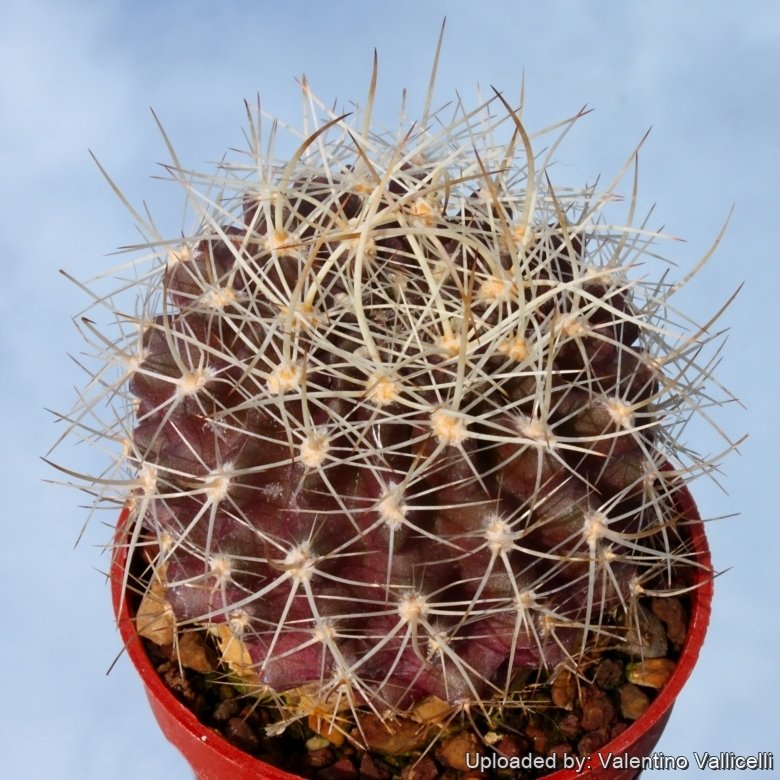
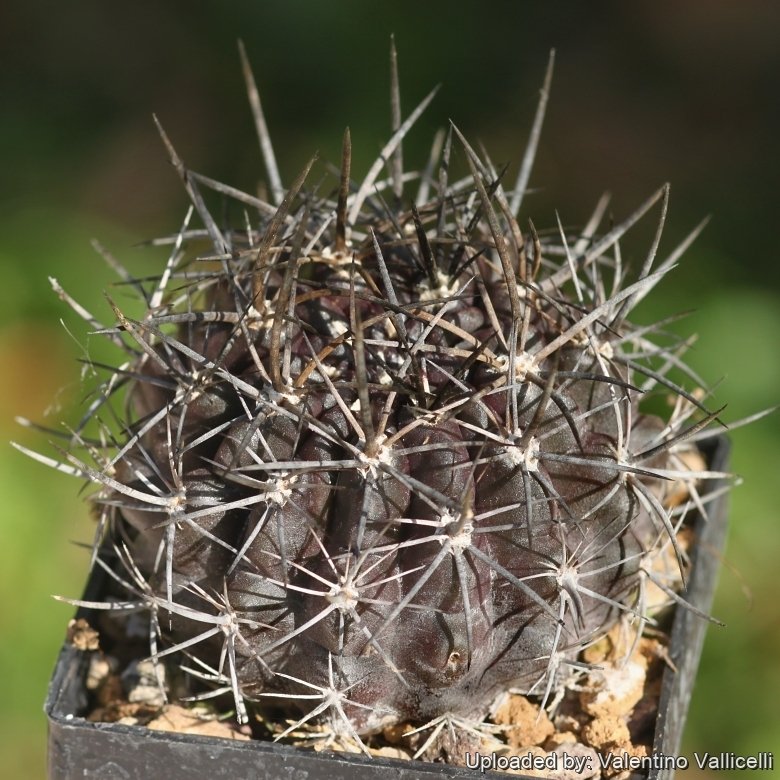
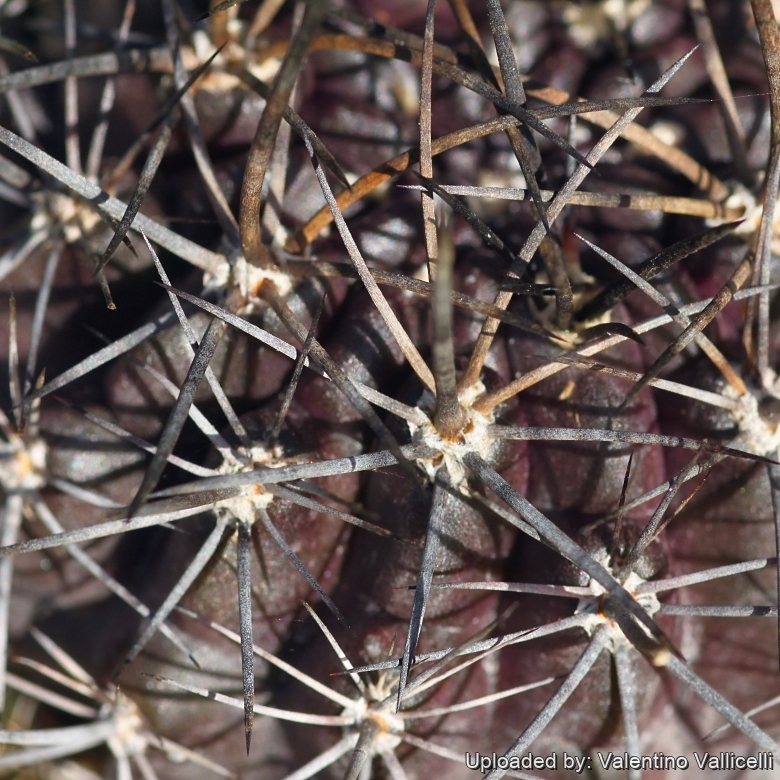
Eriosyce curvispina var. pamaensis| firstly described as Pyrrhocactus pamaensis by F. Ritter is considered none other than a local or morphological form of Eriosyce curvispina, which is one of the most variable taxon in appearance. In fact, there are a number of varieties that are very different-looking, but not all the authorities recognize the different populations as segregate varieties). The var. pamaensis is distinguished by very dark purple-black stems with brownish-black or dull grey spines.
Habit: It is a solitary cactus that may occasionally form few branched clumps.
Roots: Fibrous though sometimes developing short napiform root.
Stem: Subglobose or globose, sometime elongate (especially in cultivation), 8-20 cm across, very dark greyish-green to purple-black, often with naked or with few spines at the top.
Ribs: 14-24, noticeably notched with chinlike protrusions.
Roots: Fibrous from a short tap root.
Spines: Long, stiff, greyish-brown spines with a darker tip, thin to thick, awl shaped. Young spines are almost black, while older ones turn greyish.
Central spines: 4-8,20-30 mm long.
Radial spines: 10-15,10-30 mm.
Flowers: Flowers are about 3-5,5 cm long and broad, broadly funnel-form, yellowish-green, dull-yellow or yellow with reddish-brown midveins or reddish.
Fruits: Somewhat elongate, reddish, fleshy, about 1 cm long splitting open by at the base.
Origin and Habitat
Below Combarbalá, Río Pama gorge, Ovalle East and North-East, 04 Coquimbo, Chile
Altitude: At about 900 meters above sea level.
Cultivation and Propagation
It is an extremely xerophytic, summer-growing, species, adapted to very dry soils. Despite its provenance it is not particularly difficult to cultivate, but quite susceptible to over-waterings and rot prone if kept in a non-ventilated place.
Growth rate: Slow-growing.
Soil: It requires a very fast draining drying open mineral, sandy-gritty cactus composts. Provide a very good drainage.
Exposure: It is suited for sunny-brightly exposure, but can tolerate light shade. However it will do its best only with lots of sun and become stressed with inadequate light which could result in poor growth and unnatural shape. It has a good heat tolerance.
Watering: Water regularly in summer, but do not over-water and keep it completely dry during winter. Mature individuals easily rot and die especially after transplanting so be extremely cautious with watering. Keep dry in winter or when night temperatures remain below 10° C. Water it less than average if in bigger pots.
Fertilization: Feed them once during the growing season with a fertilizer specifically formulated for cactus and succulents (high potash fertilizer with a dilute low nitrogen), including all micro nutrients and trace elements diluted to ½ the strength recommended on the label. They thrive in poor soils and need a limited supplies of fertilizer to avoid the plants developing excess vegetation, which is easily attacked by fungal diseases.
Special need: It is suited for airy exposures. Provide very good ventilation. Nearly all problems occur as a result of overwatering and poor ventilation, especially when weather conditions are dull and cool or very humid. They must have very dry atmosphere.
Hardiness: It likes warmth (recommended minimum winter temperature 5° C), but Hardy to at least -5°C (it can probably tolerate freezing temperatures down to -10° C for brief periods) It has a good heat tolerance.
Pests & diseases: These cacti may be attractive to a variety of insects, but plants in good condition should be nearly pest-free, particularly if they are grown in a mineral potting-mix, with good exposure and ventilation. Nonetheless, there are several pests to watch for.
- Red spiders: Red spiders may be effectively rubbed up by misting the plants from above.
- Mealy bugs: Mealy bugs occasionally develop aerial into the new leaves and flowers with disfiguring results, but the worst types develop underground on the roots and are invisible except by their effects.
- Scales, thrips and aphids: These insects are rarely a problem.
- Rot: Rot is only a minor problem if the plants are watered and “aired” correctly. If they are not, fungicides won’t help all that much.
Propagation: Usually propagated from seeds (seldom produces offsets) or graft. The seeds can be sown in pots of fine, well-drained sandy soil, any time during the spring when temperatures are warm. Cover the seeds with a fine layer of grit and water from below with a fungicide to prevent damping off. For the 1-2 weeks cover the pots with a sheet of glass/clear perspex to keep the humidity levels high. Remove the glass and replace it with light shade-cloth and mist once or twice a day for the next two weeks after which most seeds should have germinated. From then on mistings can be reduced to every second and then every third day as the little plants grow. The seedlings should not be disturbed until they are well rooted after which they can be planted separately in small pots. Sometimes it is grafted to avoid root rot problems as plants grafted on an hardy stock are easy to grow and no special skill is required.
Source: Pyrrhocactus pamaensis, LLIFLE - Encyclopedia of living forms, CC-BY-SA, retrieved 2026-10-25.
From llifle page Pyrrhocactus curvispinus var. combarbalensis
Description
Plants usually solitary. (But nowadays the var. combarbaensis is considered nothing else than a synonym of Eriosyce curvispina which is one of the most variable taxon in appearance. In fact, there are a number of variety so different looking, but not all the authorities recognize the different population as segregate varieties.)
Stem: Globular, up to 15 cm.
Spines: Long stiff greyish-brown spines whit darker tip, young spines are almost black while older one became greyish.
Flowers: Flowers are about 4 cm in diameter.
Origin and Habitat
West of Combarbalá, 04 Coquimbo, Chile.
Altitude: 600 metres above sea level.
Cultivation and Propagation
It is a summer grower species. Easy to cultivate but somewhat rot prone if kept in a non ventilated place. Require a very fast draining drying soil, water regularly in summer, but do not overwater.
Needs a full sun exposure (or light shade) Good heat tolerance. Hardy to at least -5°C ( but probably can tolerate - 10° C for brief periods)
Propagation: Usually propagated from Seeds. (seldom produces offsets)
Bibliography
Major references and further lectures
-
Edward Anderson “The Cactus family” Timber Press, Incorporated, 2001
-
Nathaniel Lord Britton, Joseph Nelson Rose “Cactaceae: Descriptions and Illustrations of Plants of the Cactus Family” vol. 4 The Carnegie Institution of Washington, Washington 1923
-
James Cullen, Sabina G. Knees, H. Suzanne Cubey “The European Garden Flora Flowering Plants: A Manual for the Identification of Plants Cultivated in Europe, Both Out-of-Doors and Under Glass” Cambridge University Press, 11/Aug/2011
-
David R Hunt; Nigel P Taylor; Graham Charles; International Cactaceae Systematics Group. “The New Cactus Lexicon” dh books, 2006
Source: Pyrrhocactus curvispinus var. combarbalensis, LLIFLE - Encyclopedia of living forms, CC-BY-SA, retrieved 2026-10-25.
From llifle page Pyrrhocactus curvispinus var. santiagoensis
Description
Plants are usually solitary. (But nowadays the var. santiagensis is considered none other than a synonym of Eriosyce curvispina, which is one of the most variable taxons in appearance. In fact, there are a number of varieties very different-looking, but not all the authorities recognize the different population as segregate varieties.)
Stem: Globular, up to 15 cm.
Spines: Long, stiff, greyish-brown spines, with darker tips. Young spines are almost black, while older ones turn greyish.
Flowers: Flowers are about 4 cm in diameter.
Origin and Habitat
Chile - Atacama, Coquimbo.
Source: Pyrrhocactus curvispinus var. santiagoensis, LLIFLE - Encyclopedia of living forms, CC-BY-SA, retrieved 2026-10-25.
Cultivars and forms (7)
Gallery