Description
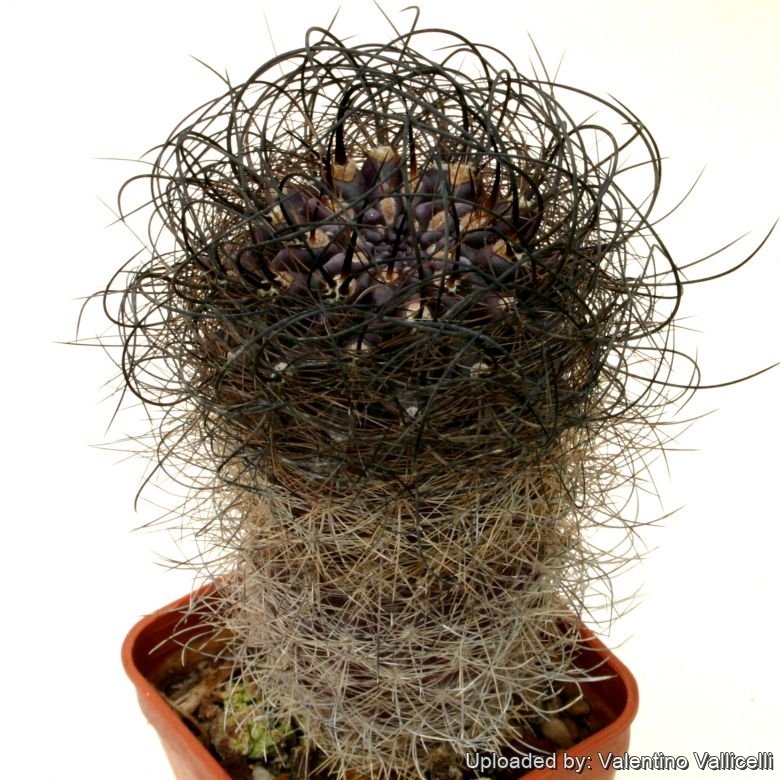
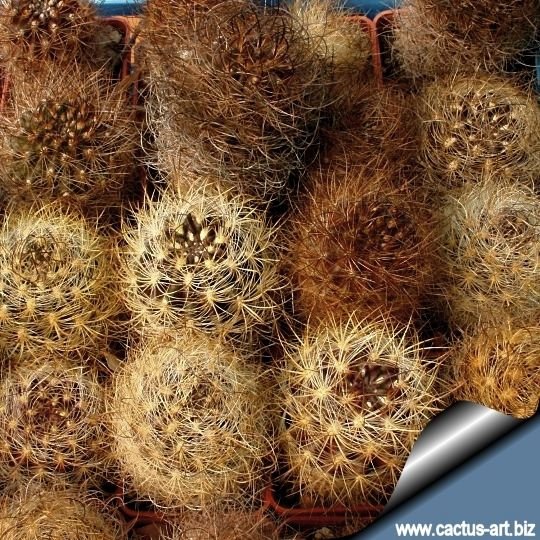
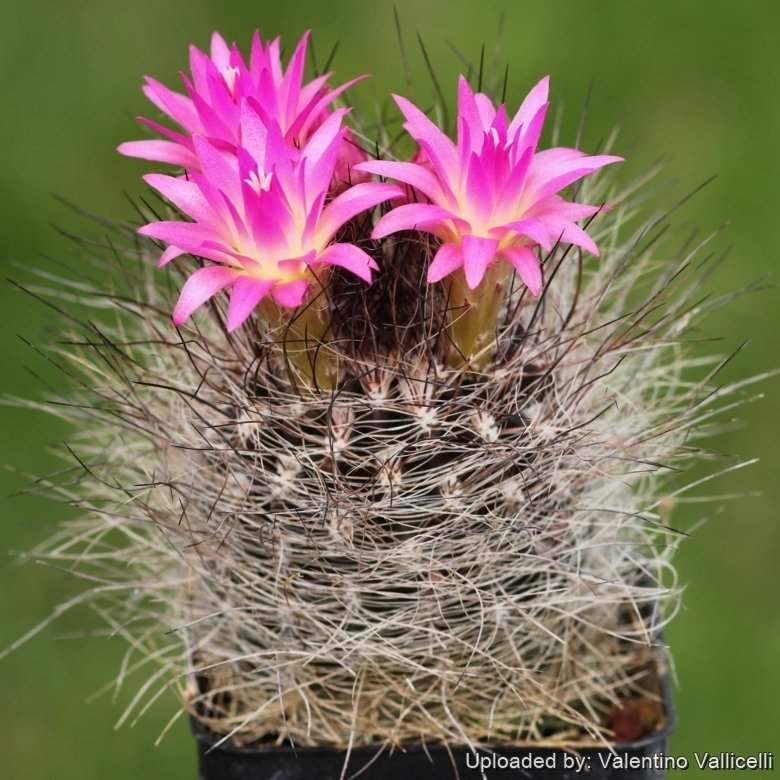
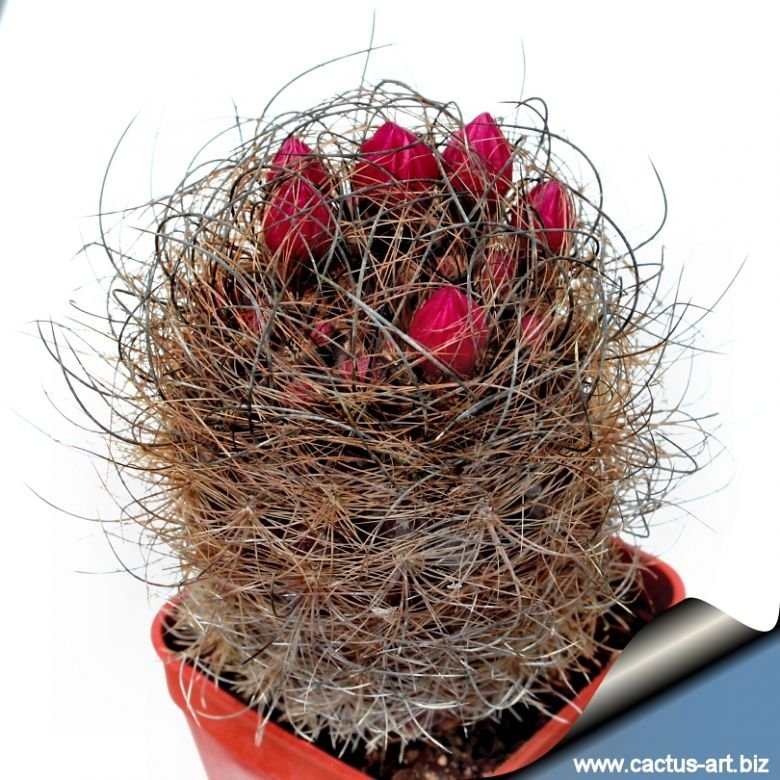
Eriosyce senilis var. multicolor, most often found in cultivation as Neoporteria multicolor, is a solitary cactus with dens covering of bristly, flexible spines, it hybridize easily in habitat and in cultivation too with other species of the genus Eriosyce.
Note: Eriosyce senilis is quite variable and has received numerous unnecessary names of no botanical value, representing no more than local phenotypes: Eriosyce senilis var. multicolor is one of them.
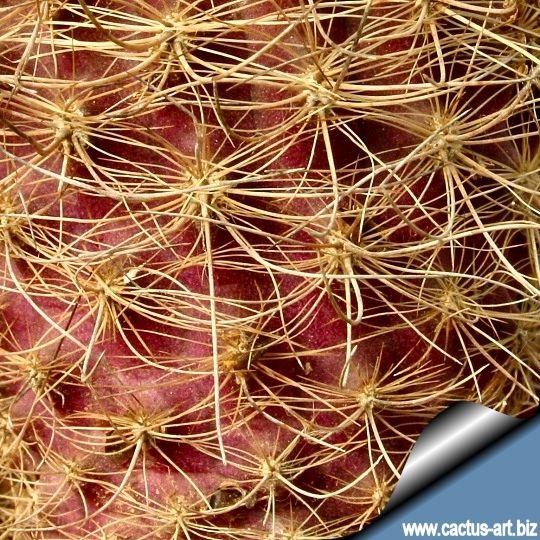
Stems: Purplish and solitary, globose to short columnar, 6-18 cm tall, 5-8 cm in diameter;
Ribs:13 to 21 notched somehow depressed between the areoles.
Roots: Large, tuberose yellowish.
Areoles: Woolly.
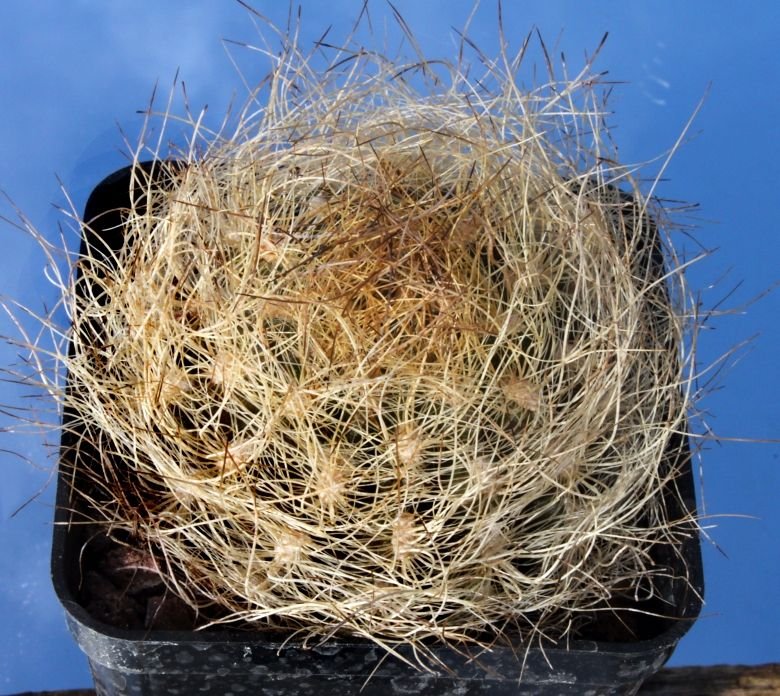
Spines: 15 to 40 radials Very dense, glassy, variable in colour from blond/white, yellow, brown to almost black, with darker tips; straight to strongly curled and tangled, some hairlike soft and flexible, other needle-like and stiff, of variable length, obscuring the plant body and becoming longer with age.
Central spines: About 20, 30-60 mm long.
Radial spines: 15-40 20-60 mm long.
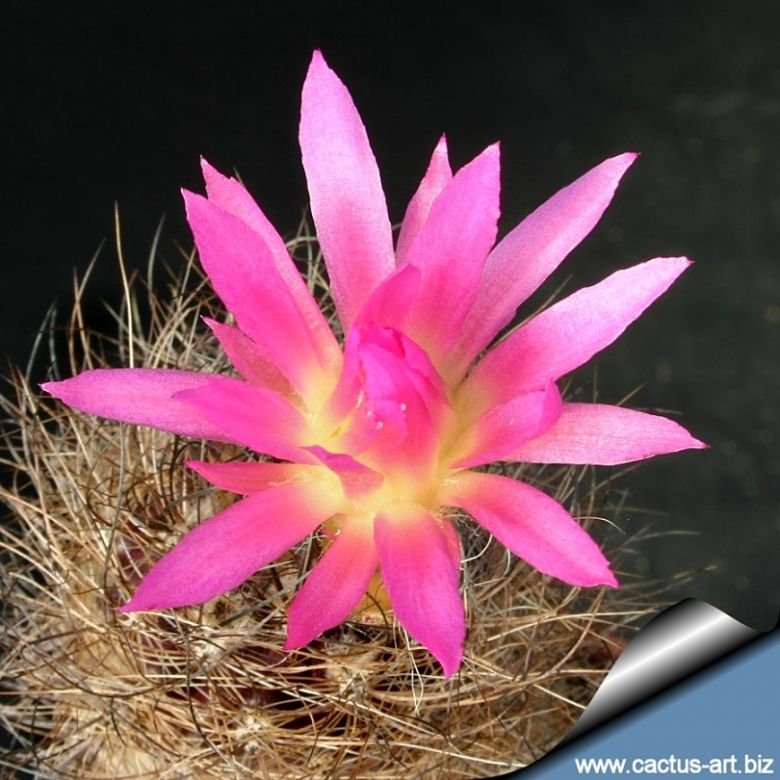
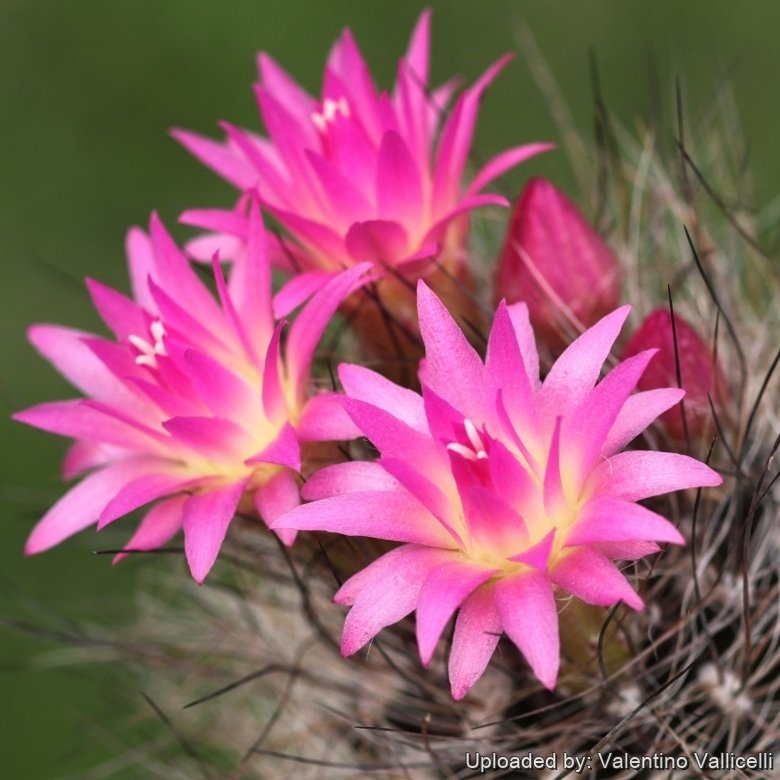
Flowers: 1-5 (or more) cm long and in diameter, borne at plant apex on young areoles, tubular to narrow funnel-form, showing various shades of purple-pink with clearer throat in the spring, 2.5-5 cm, 1-3 cm wide; Floral tube with tufts of white wool.
Fruits: elongate to clavate, reddish opening by basal pores at maturity.
curled and tangled, some hairlike soft and flexible, other needle-like and stiff, of variable length, obscuring the plant body and becoming longer with age.
Origin and Habitat
Endemic to chile (Coquimbo, Valparaíso and Metropolitana regions, from Elqui Valley to the north of Metropolitana).
Altitude: 350-2000 metres above sea level.
Habitat: These plants live among small valleys and traverse to the sea. The species is frequent but not abundant in sclerophyllous forest and thorny scrub on rocky soils, the populations are severely fragmented, and illegal collection is causing a continual decline in the number of mature individuals. Furthermore, land conversion for agriculture and urbanization is degrading the habitat surrounding the species.
Cultivation and Propagation
It is a summer-growing species. Water regularly in summer, but do not over-water (rot prone). It needs good drainage and very a porous potting soil Keep dry in winter. Feed with a high potassium fertilizer in summer.
Need Full sun to bright shade. Frost Tolerance: -4°C.
Propagation:: Seeds (seldom produces offsets)
Bibliography
Major references and further lectures
-
Guerrero, P., Faundez, L., Saldivia, P. & Walter, H.E. 2013. Eriosyce senilis. In: IUCN 2013. “IUCN Red List of Threatened Species.” Version 2013.2. <www.iucnredlist.org>. Downloaded on 01 January 2014.
-
Fred Kattermann “Eriosyce (Cactaceae): The Genus Revised and Amplified” David Hunt, 1994
-
Edward Anderson “The Cactus family” Timber Press, Incorporated, 2001
-
James Cullen, Sabina G. Knees, H. Suzanne Cubey “The European Garden Flora Flowering Plants: A Manual for the Identification of Plants Cultivated in Europe, Both Out-of-Doors and Under Glass” Cambridge University Press, 11/Aug/2011
-
David R Hunt; Nigel P Taylor; Graham Charles; International Cactaceae Systematics Group. “The New Cactus Lexicon” dh books, 2006
Gallery