Publication: Eriosyce (Cactac.) gen. revis. & ampl. (Succ. Pl. Res., 1) 119 (1994)
Description
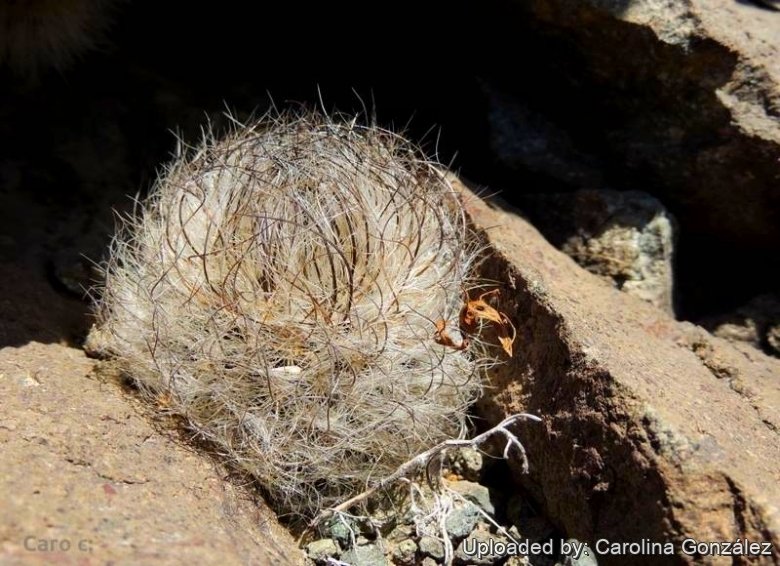
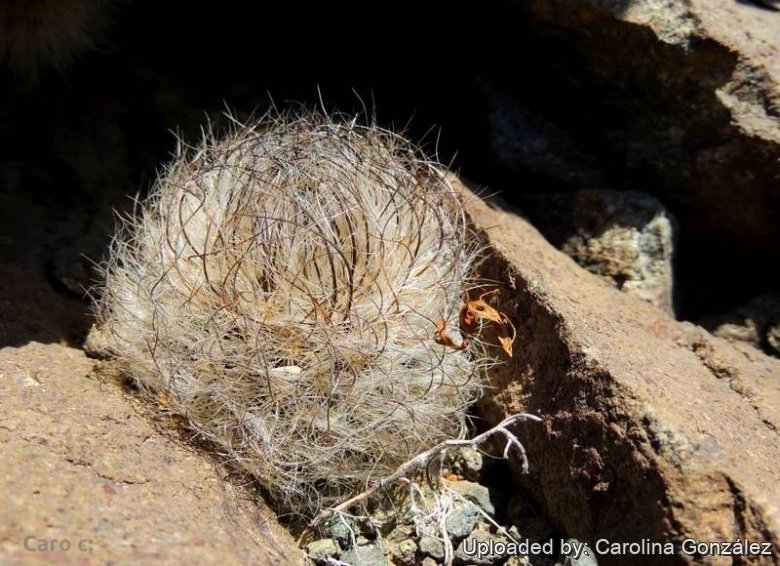
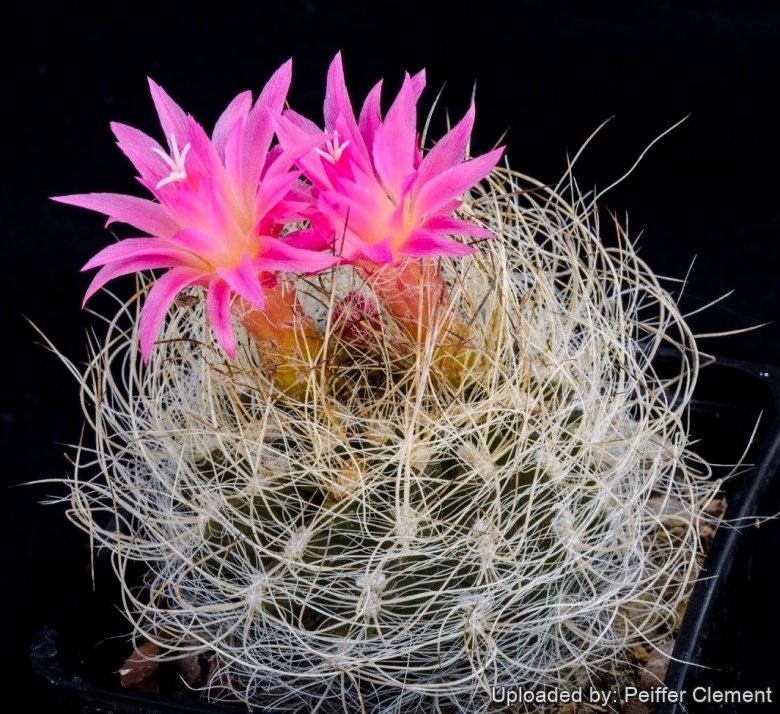
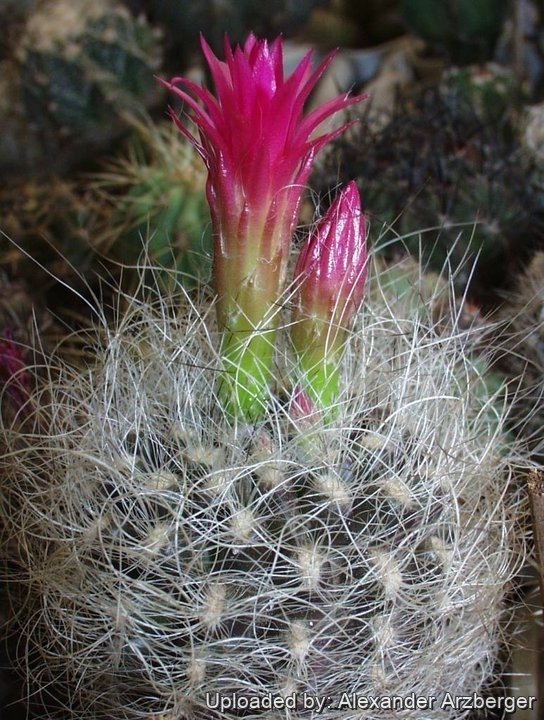
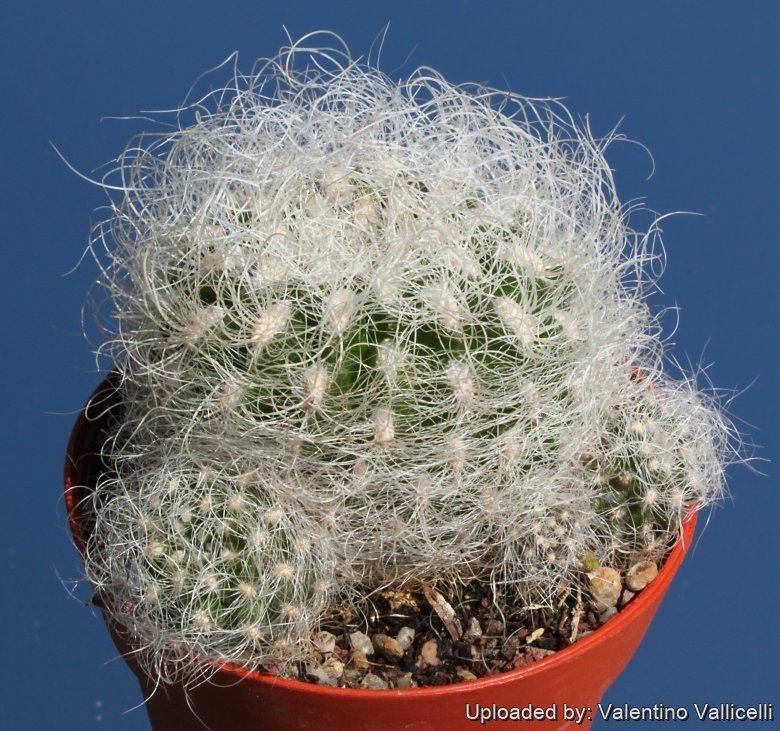
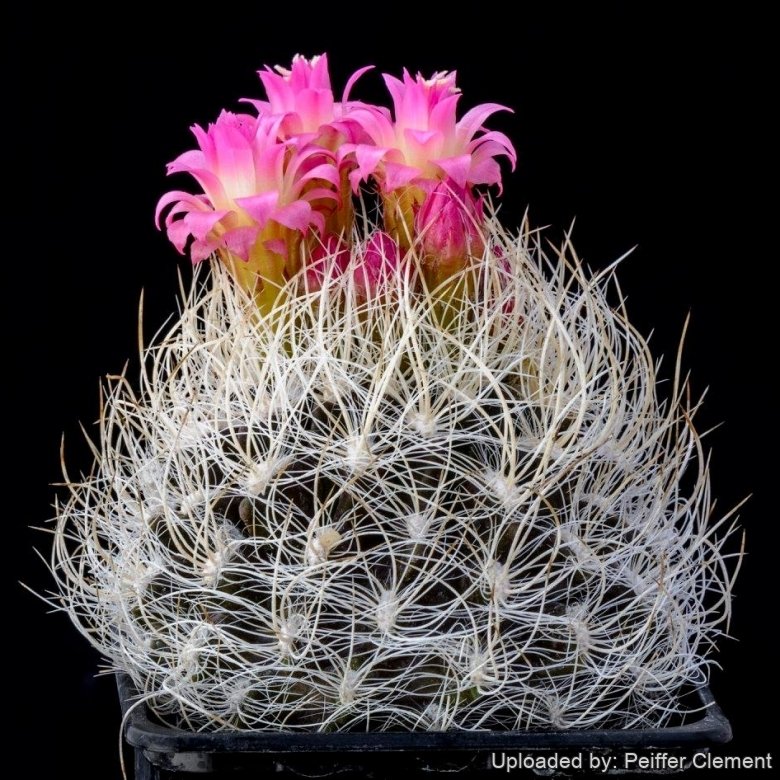
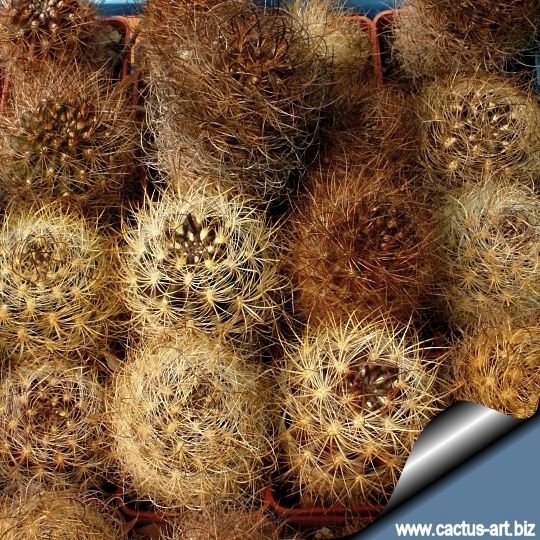
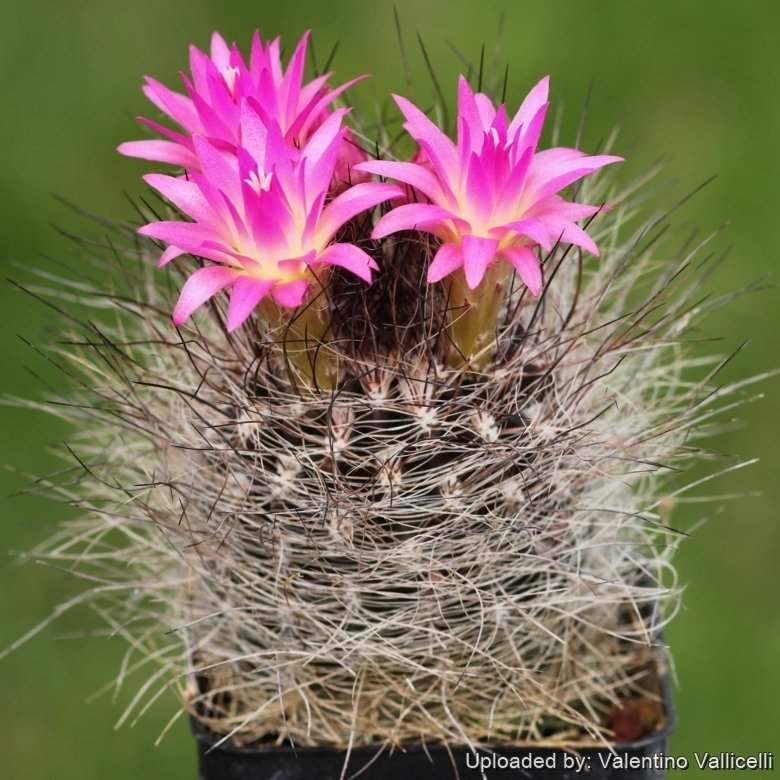
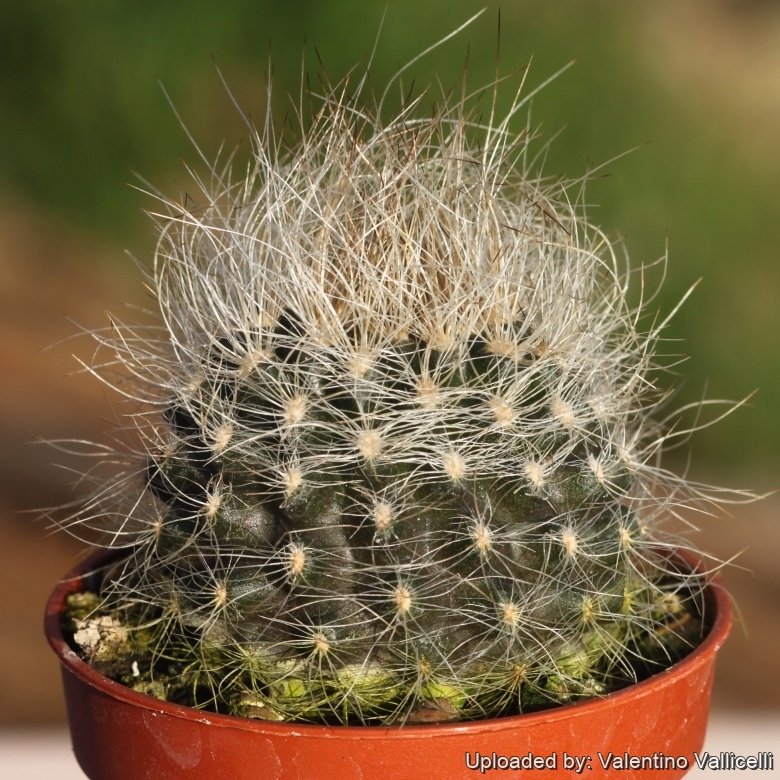
Eriosyce senilis is a solitary cactus with dens covering of bristly spines, it hybridize easily in habitat and in cultivation too with other species of the genus Eriosyce. The ssp. senilis has thin cream-white twisted spines but is quite variable in spination and the plants with different spine colours are often found in cultivation labelled as Eriosyce senilis var. multicolor. Eriosyce senilis is quite variable and has received numerous unnecessary names of no botanical value, representing no more than local phenotypes.
Stems: Purplish and solitary, globose to short columnar, 6-18 cm tall, 5-8 cm in diameter.
Ribs: 13 to 21 notched somehow depressed between the areoles.
Roots: Large, tuberose yellowish.
Areoles: Woolly.
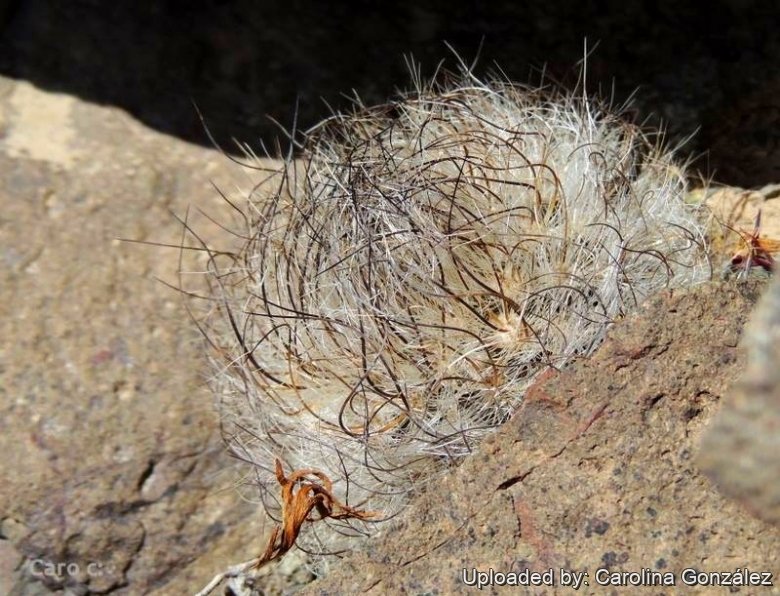
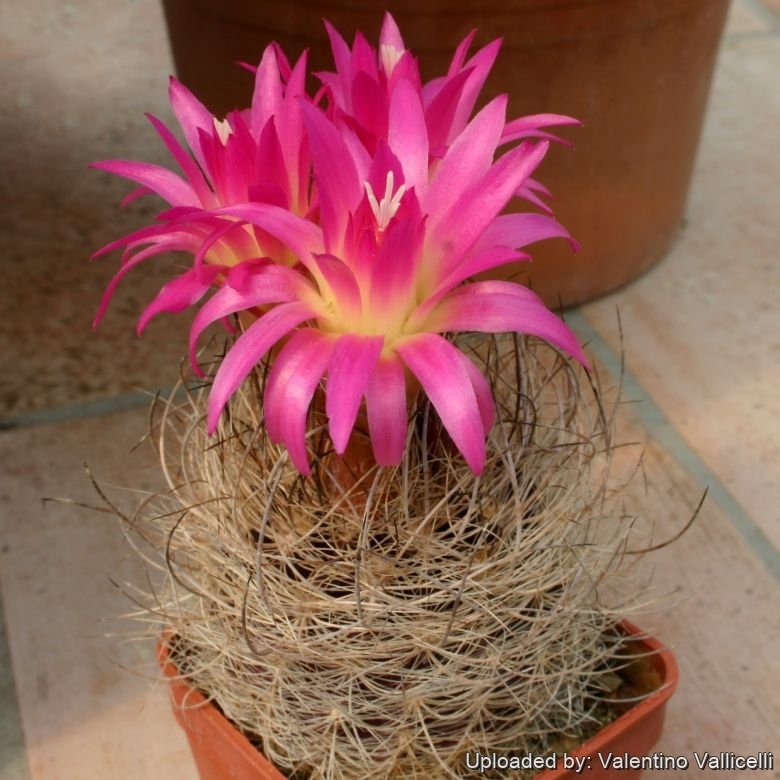
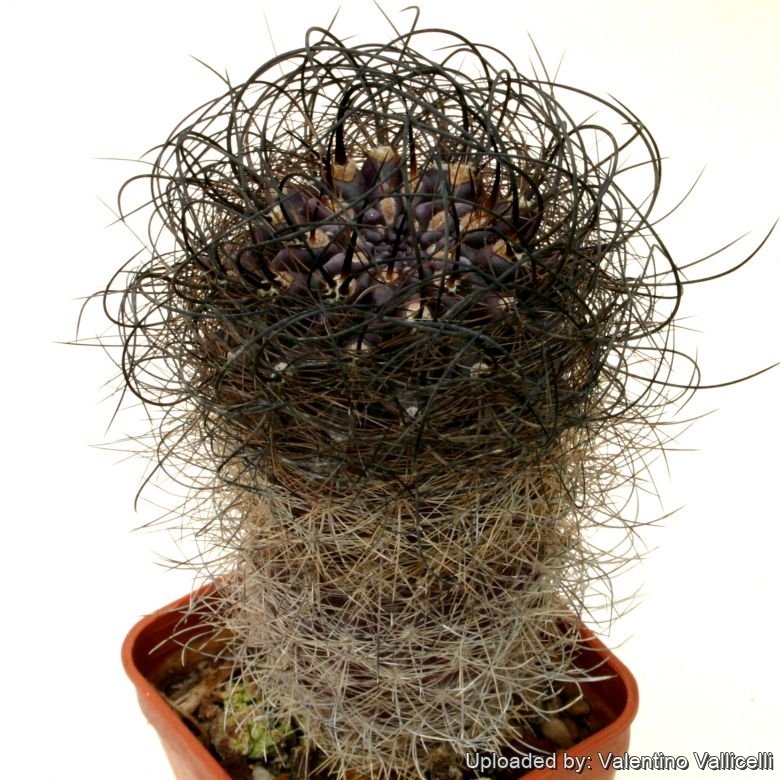
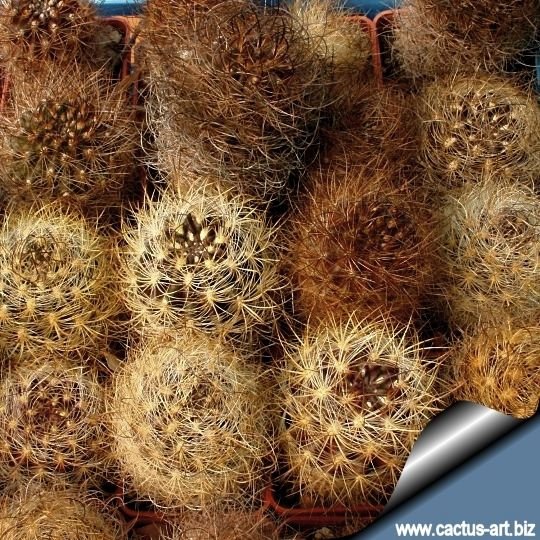
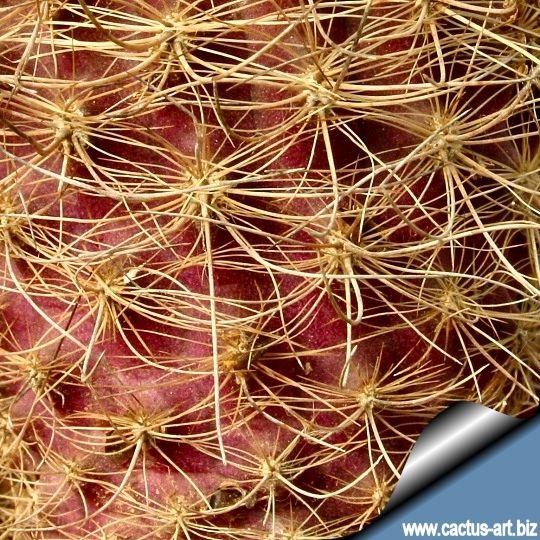
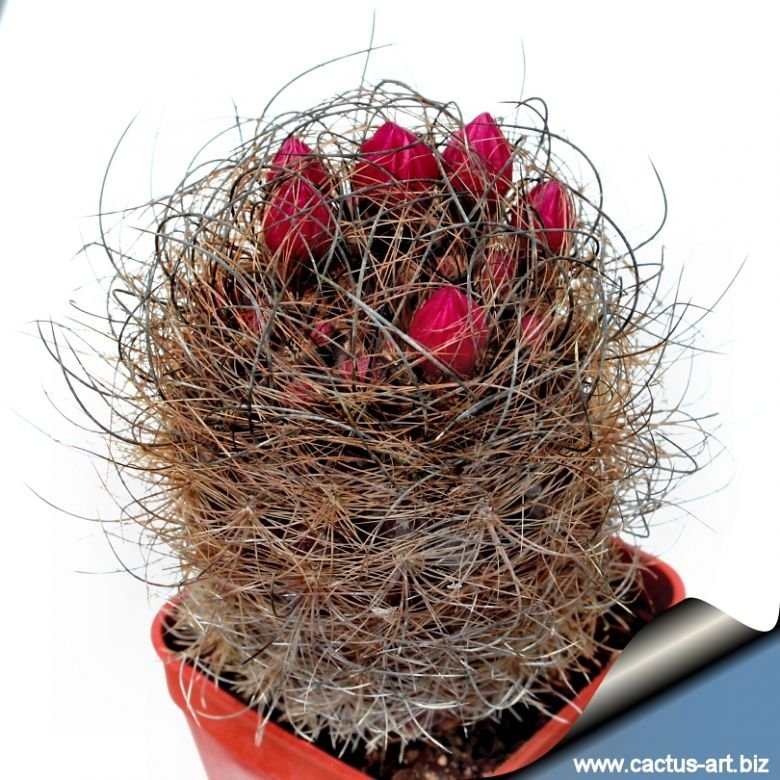
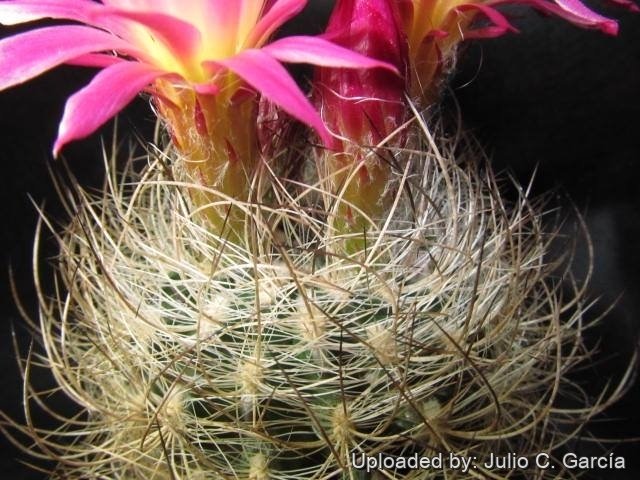
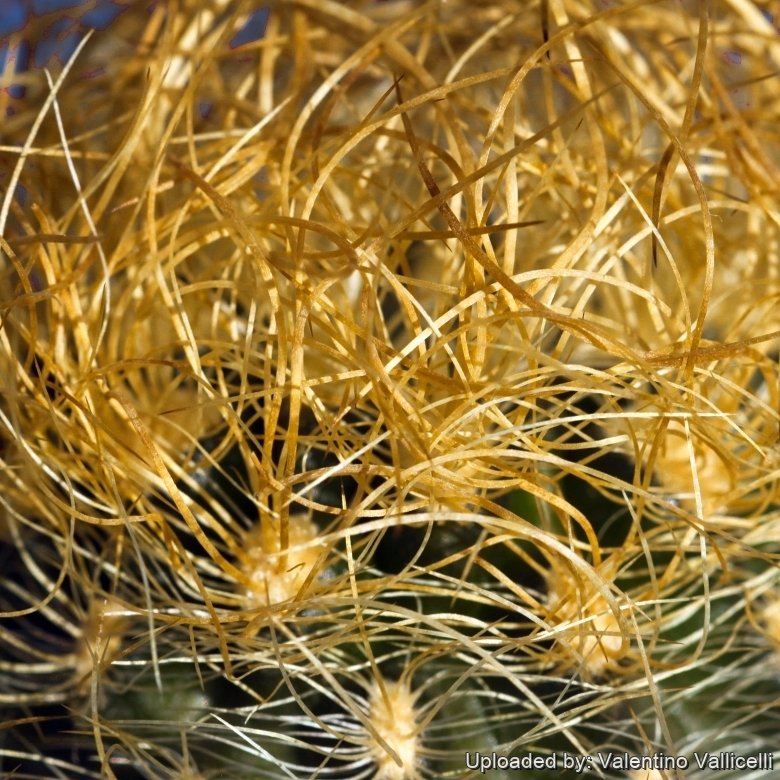
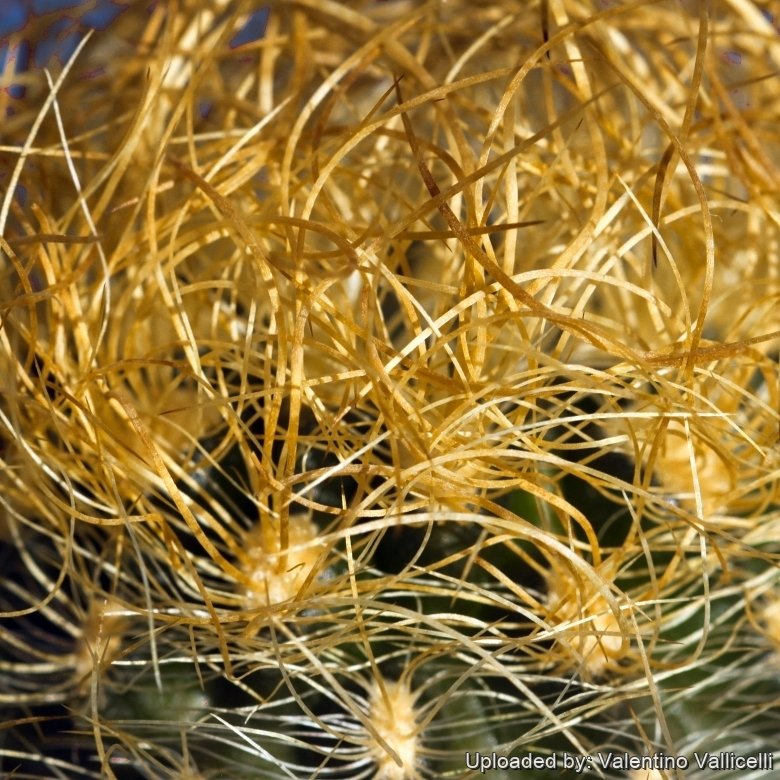
Spines: 15 to 40 radials very dense, glassy, variable in colour from blond/white, yellow, brown to almost black, with darker tips; straight to strongly curled and tangled, some hairlike soft and flexible, other needle-like and stiff, of variable length, obscuring the plant body and becoming longer with age.
Central spines: About 20, 30-60 mm long.
Radial spines: 15-40 20-60 mm long.
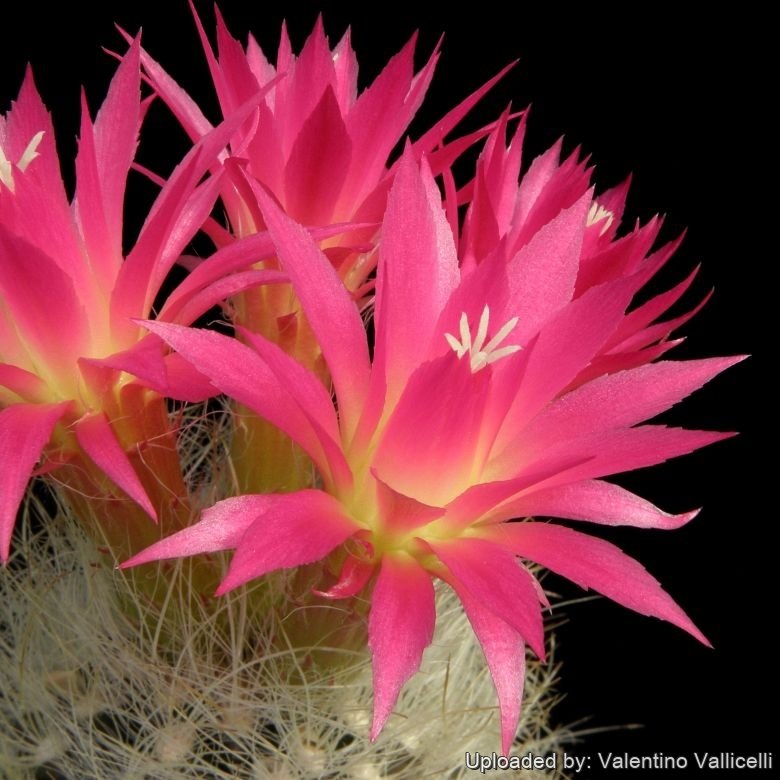
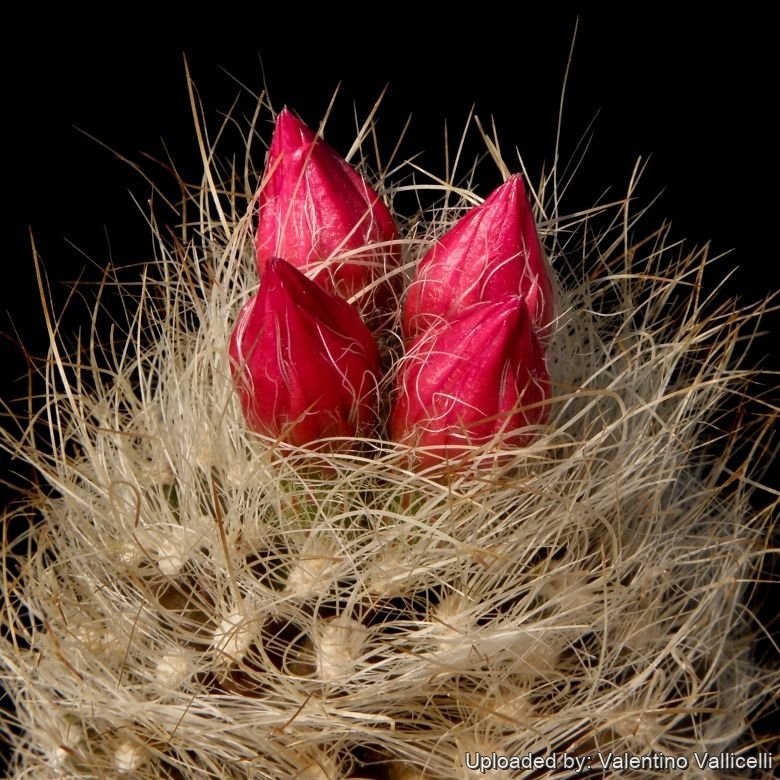
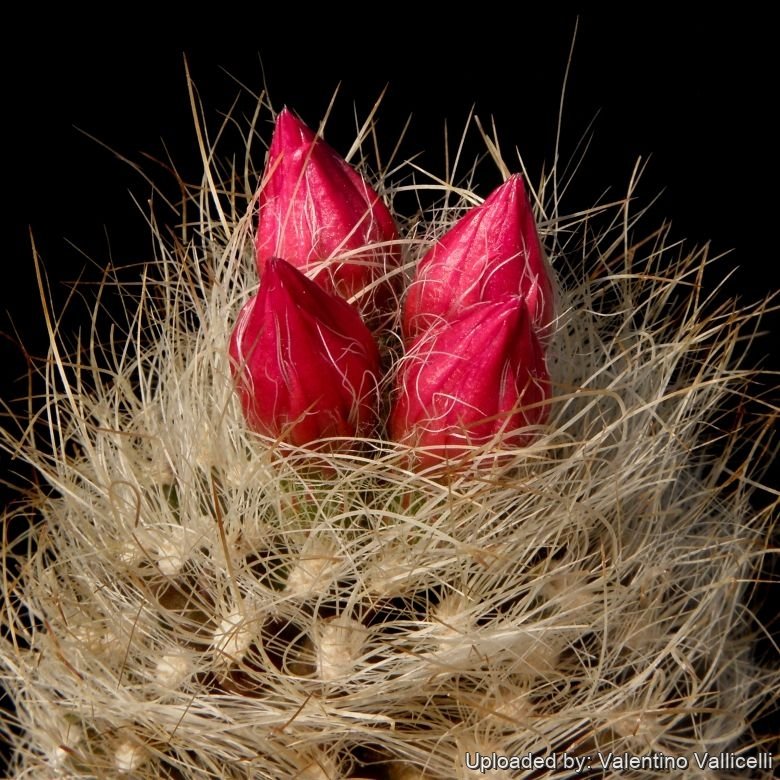
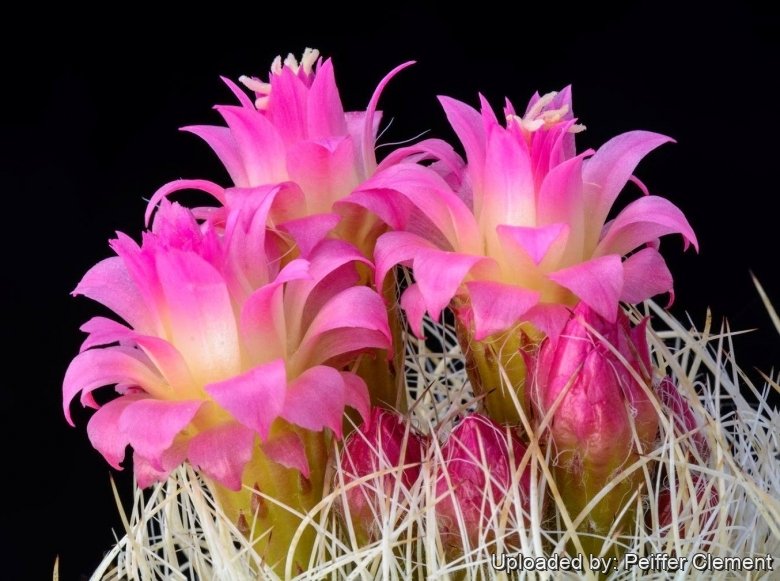
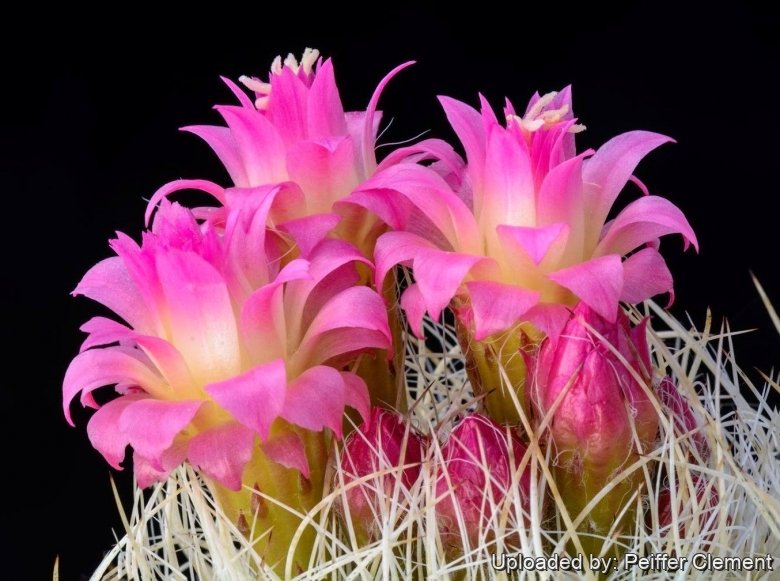
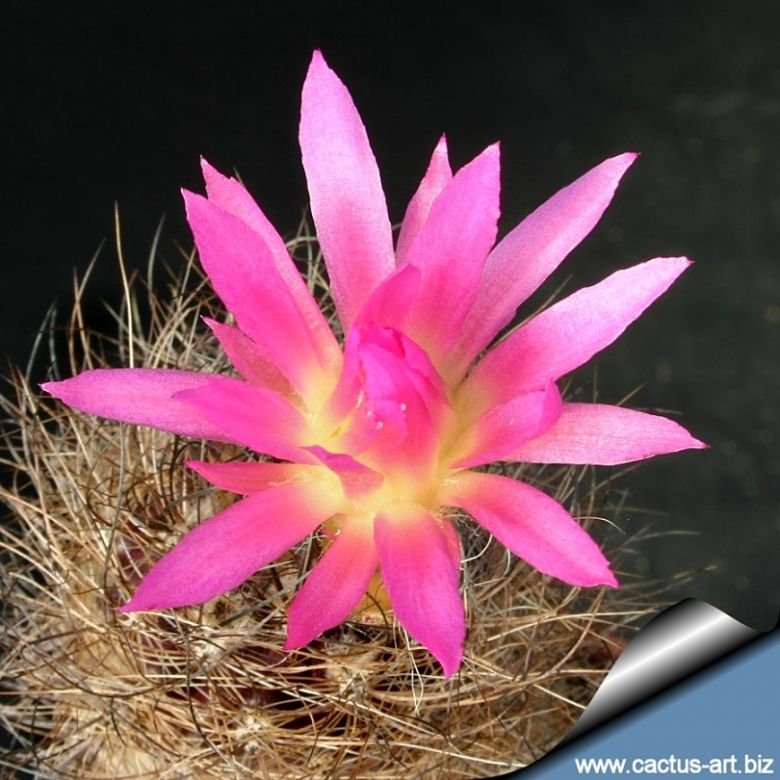
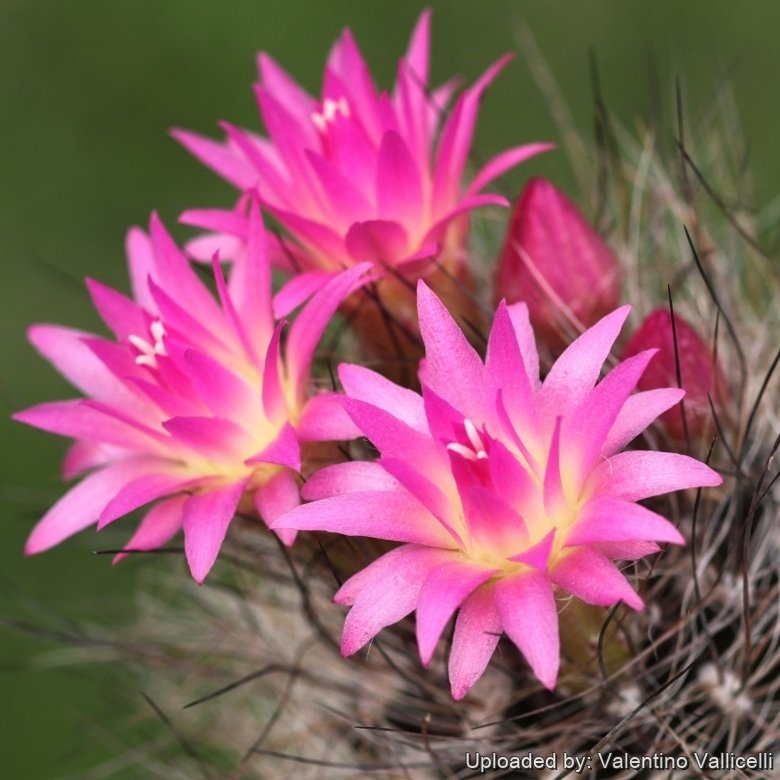
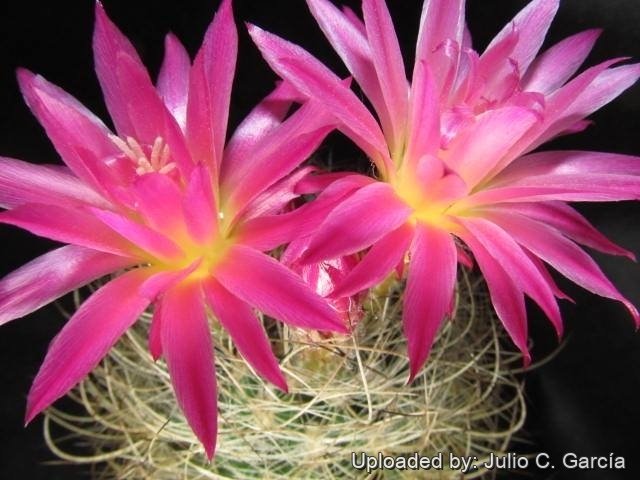
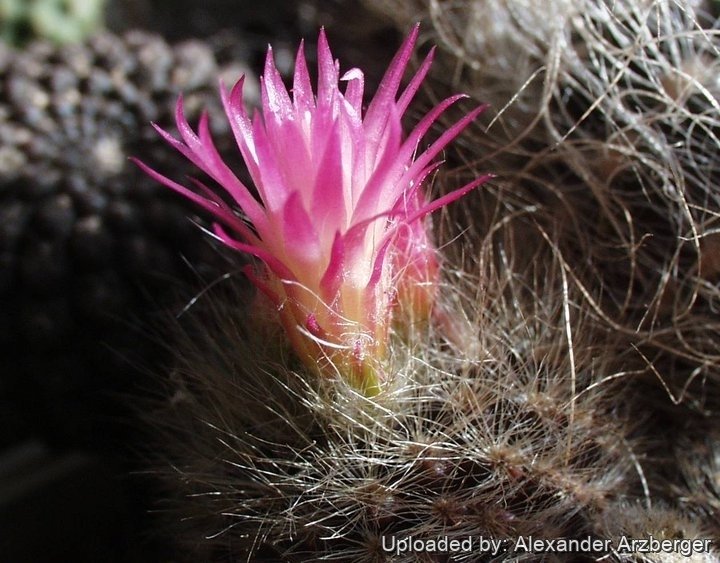
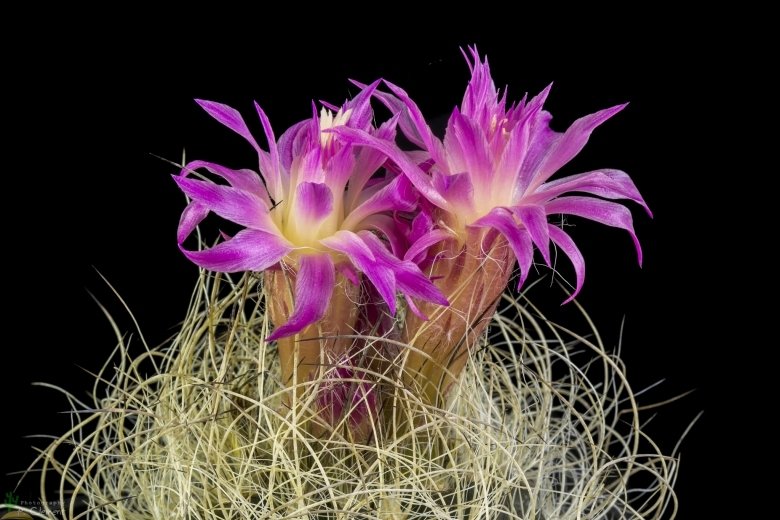
Flowers: 1-5 (or more) cm long and in diameter, borne at plant apex on young areoles, tubular to narrow funnel-form, showing various shades of purple-pink with clearer throat in the spring, 2,5-5 cm, 1-3 cm wide; Floral tube with tufts of white wool.
Fruits: Elongate to clavate, reddish opening by basal pores at maturity.
curled and tangled, some hairlike soft and flexible, other needle-like and stiff, of variable length, obscuring the plant body and becoming longer with age.
Origin and Habitat
Eriosyce senilis is endemic to chile (Coquimbo, Valparaíso and Metropolitana regions, from Elqui Valley to the north of Metropolitana). It has a relatively small range (extent of occurrence =16,000 km2),
Altitude: 350-2000 metres above sea level.
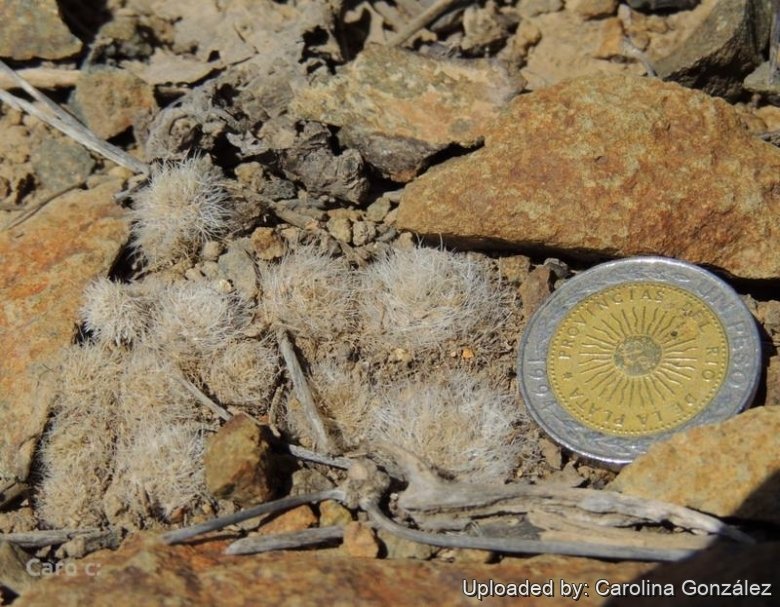
Habitat and Ecology: The species is frequent but not abundant among small valleys and traverse to the sea in sclerophyllous forest and thorny scrub on rocky soils, the populations are severely fragmented, and illegal collection is causing a continual decline in the number of mature individuals. Furthermore, land conversion for agriculture and urbanization is degrading the habitat surrounding the species.
Cultivation and Propagation
It is a summer-growing species. Water regularly in summer, but do not over-water (rot prone). It needs good drainage and very a porous potting soil. Keep dry in winter. Feed with a high potassium fertilizer in summer.
Exposure: Need Full sun to bright shade.
Frost Tolerance: -4°C.
Propagation: Seeds (seldom produces offsets)
Bibliography
Major references and further lectures
-
Guerrero, P., Faundez, L., Saldivia, P. & Walter, H.E. 2013. Eriosyce senilis. In: IUCN 2013. “IUCN Red List of Threatened Species.” Version 2013.2. <www.iucnredlist.org>. Downloaded on 01 January 2014.
-
Fred Kattermann “Eriosyce (Cactaceae): The Genus Revised and Amplified” David Hunt, 1994
-
Edward Anderson “The Cactus family” Timber Press, Incorporated, 2001
-
James Cullen, Sabina G. Knees, H. Suzanne Cubey “The European Garden Flora Flowering Plants: A Manual for the Identification of Plants Cultivated in Europe, Both Out-of-Doors and Under Glass” Cambridge University Press, 11/Aug/2011
-
David R Hunt; Nigel P Taylor; Graham Charles; International Cactaceae Systematics Group. “The New Cactus Lexicon” dh books, 2006
From llifle page Chilenia nidus
Description
Neoporteria nidus a controversial species with its stem wrapped by very long curved spines, soft, grey and not-prickly. Short pink flowers with clearer throat up to 3 cm long manage to work their way through these spines. N. nidus belongs to the Eriosyce senilis complex. This complex comprises a large number of infraspecific taxa (such as: N. nidus, N. multicolor, N. gerocephala and others), differing in the length of the flower, the type of spines and other characters. The taxonomic and geographic boundaries among the segregate species or infraspecific taxa of E. senilis remain nebulous and controversial and it has not been clear whether they are independent species, varieties or the same plants. The length of the flower of N. gerocephala is given as 5 cm, while in the description of N. nidus, the length of the flower up to 3 cm is given as a major differentiating feature, by the other hand the flowers of N. multicolor is given as 5 cm. Among these plants in habitat exist many transitional types, and in no place do pure populations exist sympatrically, and all taxa appear completely interfertile. Up to date most authors have dismissed Neoporteria nidus as perhaps not worthy of even varietal status, but it still has a value for a collector because they identify plants with particular characters.
Stems: Generally simple, somewhat glaucous, short-cylindrical, 5 cm long, 5 to 6 cm in diameter, the top covered by the slender ascending connivent spines.
Ribs: 16 to 18, obtuse, strongly tubercled.
Areoles: Large, circular; spines weak, numerous, sometimes 30 in a cluster, unequal, white, the longest 3 cm long, bulbose at base.
Flowers: Rather slender, 3(-4) cm long, various shades of purple-pink with clearer throat, inner perianth-segments narrow, acute; scales on the flower-tube woolly and setose.
Origin and Habitat
East of Ovalle, Northern Chile at around 1200 metres above sea level.
Source: Chilenia nidus, LLIFLE - Encyclopedia of living forms, CC-BY-SA, retrieved 2026-10-25.
From llifle page Neoporteria multicolor
Description
Eriosyce senilis var. multicolor, most often found in cultivation as Neoporteria multicolor, is a solitary cactus with dens covering of bristly, flexible spines, it hybridize easily in habitat and in cultivation too with other species of the genus Eriosyce.
Note: Eriosyce senilis is quite variable and has received numerous unnecessary names of no botanical value, representing no more than local phenotypes: Eriosyce senilis var. multicolor is one of them.
Stems: Purplish and solitary, globose to short columnar, 6-18 cm tall, 5-8 cm in diameter;
Ribs:13 to 21 notched somehow depressed between the areoles.
Roots: Large, tuberose yellowish.
Areoles: Woolly.
Spines: 15 to 40 radials Very dense, glassy, variable in colour from blond/white, yellow, brown to almost black, with darker tips; straight to strongly curled and tangled, some hairlike soft and flexible, other needle-like and stiff, of variable length, obscuring the plant body and becoming longer with age.
Central spines: About 20, 30-60 mm long.
Radial spines: 15-40 20-60 mm long.
Flowers: 1-5 (or more) cm long and in diameter, borne at plant apex on young areoles, tubular to narrow funnel-form, showing various shades of purple-pink with clearer throat in the spring, 2.5-5 cm, 1-3 cm wide; Floral tube with tufts of white wool.
Fruits: elongate to clavate, reddish opening by basal pores at maturity.
curled and tangled, some hairlike soft and flexible, other needle-like and stiff, of variable length, obscuring the plant body and becoming longer with age.
Origin and Habitat
Endemic to chile (Coquimbo, Valparaíso and Metropolitana regions, from Elqui Valley to the north of Metropolitana).
Altitude: 350-2000 metres above sea level.
Habitat: These plants live among small valleys and traverse to the sea. The species is frequent but not abundant in sclerophyllous forest and thorny scrub on rocky soils, the populations are severely fragmented, and illegal collection is causing a continual decline in the number of mature individuals. Furthermore, land conversion for agriculture and urbanization is degrading the habitat surrounding the species.
Cultivation and Propagation
It is a summer-growing species. Water regularly in summer, but do not over-water (rot prone). It needs good drainage and very a porous potting soil Keep dry in winter. Feed with a high potassium fertilizer in summer.
Need Full sun to bright shade. Frost Tolerance: -4°C.
Propagation:: Seeds (seldom produces offsets)
Source: Neoporteria multicolor, LLIFLE - Encyclopedia of living forms, CC-BY-SA, retrieved 2026-10-25.
From llifle page Neoporteria nidus var. gerocephala
Description
Eriosyce gerocephala, best known as Neoporteria gerocephala is one of the many geographical or morphological forms of Eriosyce senilis distinguished by thin, soft and flexible cream-white spines, but plants with different spine colours are often found in cultivation labelled as Eriosyce senilis var. multicolor.
Note: Eriosyce senilis is quite variable and has received numerous unnecessary names of no botanical value, representing no more than local phenotypes: Eriosyce gerocephala is one of them.
Habit: It is a solitary cactus with dens covering of spines.
Stems: Dark purplish and solitary, globose to short columnar, 6-18 cm tall, 5-8 cm in diameter.
Ribs: 13 to 21 notched somehow depressed between the areoles.
Roots: Large, tuberose yellowish.
Areoles: Woolly.
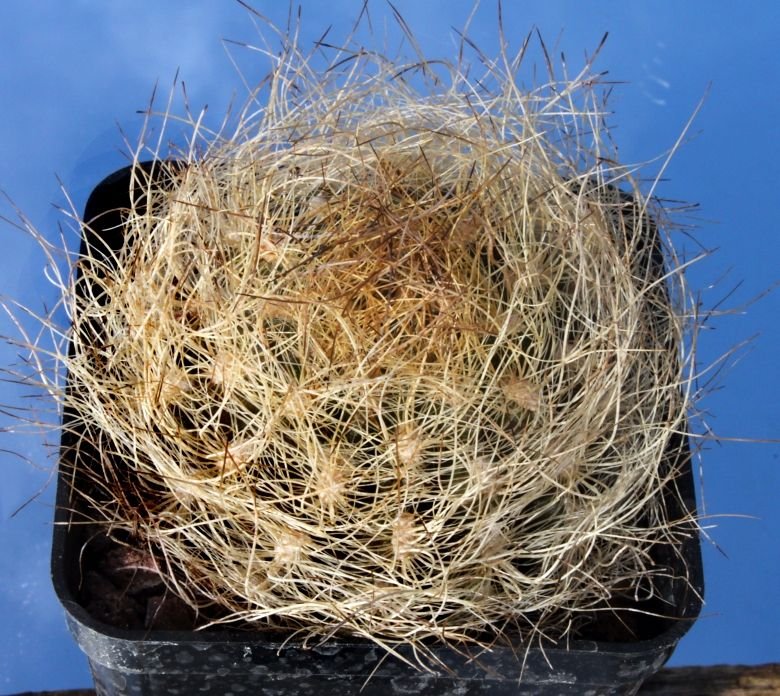
Spines: 15 to 40 radials, very dense, glassy, typically cream-white, straight to curled and tangled, hairlike soft and flexible, of variable length, obscuring the plant body and becoming longer with age.
Central spines: About 20, 30-60 mm long.
Radial spines: 15-40 20-60 mm long.
Flowers: 1-5 (or more) cm long and in diameter, borne at plant apex on young areoles, tubular to narrow funnel-form, showing various shades of purple-pink with clearer throat in the spring, 2.5-5 cm, 1-3 cm wide; Floral tube with tufts of white wool.
Fruits: Elongate to clavate, reddish opening by basal pores at maturity.
curled and tangled, some hairlike soft and flexible, other needle-like and stiff, of variable length, obscuring the plant body and becoming longer with age.
Origin and Habitat
Coquimbo Region IV, Chile.
Altitude: 350-750(-1000) metres above sea level.
Habitat and Ecology: The species is frequent but not abundant among small valleys and traverse to the sea in sclerophyllous forest and thorny scrub on rocky soils, the populations are severely fragmented, and illegal collection is causing a continual decline in the number of mature individuals. Furthermore, land conversion for agriculture and urbanization is degrading the habitat surrounding the species.
Cultivation and Propagation
Eriosyce gerocephala, is xerophytic and adapted to very dry soils. It is particularly rot sensitive, especially after planting. It is quite a challenge to grow it into a large mature specimen.
Growth rate: Slow-growing and very long-lived.
Soils: It likes very porous mineral cactus mix soil, but can become too elongated if compost is too rich.
Repotting: This plant needs plenty of space for its roots, repotting should be done every other year or when the it has outgrown its pot. Use pot with good drainage.
Watering: Needs moderate in summer, but do not overwater (extremely rot prone), keep dry in winter at a minimum temperature of 0°C.
Fertilization: Feed with a high potassium fertilizer in summer.
Hardiness: Reputedly resistant to frost if kept on the dry side prior to, and during, cold weather (hardy to -7 C ° C, or less for short periods), but for safe cultivation it is best to avoid freezing temperatures. It need a very good ventilation.
Exposition: The plant tolerates extremely bright situations. Blasting full sun encourages flowering and heavy spine production.
Pests & diseases: It may be attractive to a variety of insects, but plants in good condition should be nearly pest-free, particularly if they are grown in a mineral potting-mix, with good exposure and ventilation. Nonetheless, there are several pests to watch for:
- Red spiders: Red spiders may be effectively rubbed up by watering the plants from above.
- Mealy bugs: Mealy bugs occasionally develop aerial into the new growth among the wool with disfiguring results, but the worst types develop underground on the roots and are invisible except by their effects.
- Scales: Scales are rarely a problem.
- Rot: This species is not easy and accommodating, often suffer of cryptogamic diseases.
Propagation: Seed or grafting. The seeds germinate with some difficulty and a low rate of success.
Source: Neoporteria nidus var. gerocephala, LLIFLE - Encyclopedia of living forms, CC-BY-SA, retrieved 2026-10-25.
From llifle page Neoporteria nidus var. matancillana
Description
Solitary cacti with with dens covering of spines, it hybridize easily in habitat and in cultivation too with other species of the genus Eriosyce.
Stems: Purplish and solitary, globose to short columnar, 6-18 cm tall, 5-8 cm in diameter;
Ribs:13 to 21 notched somehow depressed between the areoles.
Roots: Large, tuberose yellowish.
Areoles: Woolly.
Spines: 15 to 40 radials Very dense, glassy, variable in colour from blond/white, yellow, brown to almost black, with darker tips; straight to strongly curled and tangled, some hairlike soft and flexible, other needle-like and stiff, of variable length, obscuring the plant body and becoming longer with age.
Central spines: About 20, 30-60 mm long.
Radial spines: 15-40 20-60 mm long.
Flowers: 1-5 (or more) cm long and in diameter, borne at plant apex on young areoles, tubular to narrow funnel-form, showing various shades of purple-pink with clearer throat in the spring, 2.5-5 cm, 1-3 cm wide; Floral tube with tufts of white wool.
Fruits: elongate to clavate, reddish opening by basal pores at maturity.
curled and tangled, some hairlike soft and flexible, other needle-like and stiff, of variable length, obscuring the plant body and becoming longer with age.
Origin and Habitat
Chile (Rio Choapa)
Cultivation and Propagation
It is a summer-growing species. Water regularly in summer, but do not over-water (rot prone). It needs good drainage and very a porous potting soil Keep dry in winter. Feed with a high potassium fertilizer in summer.
Exposure: Need Full sun to bright shade.
Frost Tolerance: -4°C.
Propagation: Seeds (seldom produces offsets)
Source: Neoporteria nidus var. matancillana, LLIFLE - Encyclopedia of living forms, CC-BY-SA, retrieved 2026-10-25.
From llifle page Neoporteria gerocephala f. monstruosa
Description
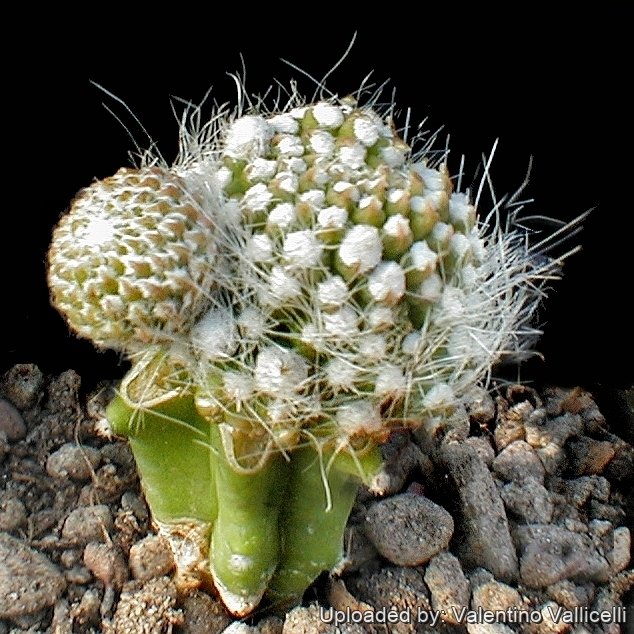
Eriosyce gerocephala f. monstruosa is a monstrous highly branching cactus with very short bristly spines that forms dense clumps. This form reproduces vegetatively and it is possible to find clones with different degrees of monstrosity or deformity.
Habit: It is a small globose highly branching cactus that forms large clumps.
Stems: Globose up to 6 cm tall and wide freely branching and retaining the basic spherical structure with spiralling tubercled ribs.
Areoles: Large, white and felty, they are arranged geometrically and contrast with the stem.
Spines: Very short, thin, white, bristly, spreading.
Leaves: A most peculiar trait of this plant are the vestigial leaves on young areoles. This is an ancestral trait not manifested in the normal plant. This trait is revealed thanks to a mutation that permits this odd cultivar to show the characteristic of bearing leaves, reminding us of an ancient era when its cacti ancestors were normal leafed plants. “Leaves” are very small, green cone-like, on the tubercles tip.
Central spines: Not seen.
Flowers: not seen.
Fruit: Not seen.
Remarks: This is a very distinctive plant even without flowers. It’s very different from the common long and dense spiny form. Maybe we can call it a freak?
Origin and Habitat
Garden origin (Nursery produced hybrid)
Cultivation and Propagation
It is relatively easy to grow on its own roots and quite resistant to cultivation. The only things that can kill this plant are cold and overwatering. Nevertheless, it is appropriate to provide adequate growing conditions in order to obtain compact plant with many flowers.
Soil: Use a an open and free draining mineral compost with little organic matter (peat, humus) that allows therefore roots to breath (as it is rot prone). Outdoors a well-draining rocky or sandy soil is ideal.
Pots: It needs a relatively shallow pot to accommodate its fibrous roots and provide a very good drainage. It may stay in the same pot for many years.
Watering: Needs regular water in summer. Keep rather dry in winter, tends to lose its roots in winter.
Fertilization: Feed with a high potassium fertilizer in summer during the growing season diluted to one-fourth potency and mix into the watering can for application.
Hardiness: Keep dry at 5- 10° C in winter, but can tolerate sporadic light frost if kept on the dry side prior to, and during, cold weather.
Exposition: The plant tolerates very bright situations, if kept too dark they may become overly lush and greener and could be prone to rotting due to over watering. Strong light encourages flowering and heavy wool and spine production, but is likely to suffer from sun scorch or stunted growth if over exposed to direct sunlight during the hottest part of the day in summer.
Pests & diseases: It may be attractive to a variety of insects, but plants in good condition should be nearly pest-free, particularly if they are grown in a mineral potting-mix, with good exposure and ventilation. Nonetheless, watch carefully for any significant decline in health. This may signal a pest problem that should be dealt with quickly in order to prevent scarring, stunting and even death.
- Red spiders: Red spiders may be effectively rubbed up by watering or misting the plants from above.
- Mealy bugs: Mealy bugs occasionally develop aerial into the new growth among the leaves with disfiguring results, but the worst types develop underground on the roots and are invisible except by their effects. Eliminate mealybug infestations by dabbing the critters with cotton swabs dipped in alcohol or by soaking the succulent’s roots in a systemic insecticide.
- Scales: Scales are rarely a problem.
- Rot: This species is particularly easy and accommodating, seldom suffer of cryptogamic diseases. Rot it is only a minor problem with cacti if the plants are watered and “aired” correctly. If they are not, fungicides won’t help all that much.
Propagation: By grafting or cuttings.
Source: Neoporteria gerocephala f. monstruosa, LLIFLE - Encyclopedia of living forms, CC-BY-SA, retrieved 2026-10-25.
From llifle page Neoporteria gerocephala f. aurea
Description
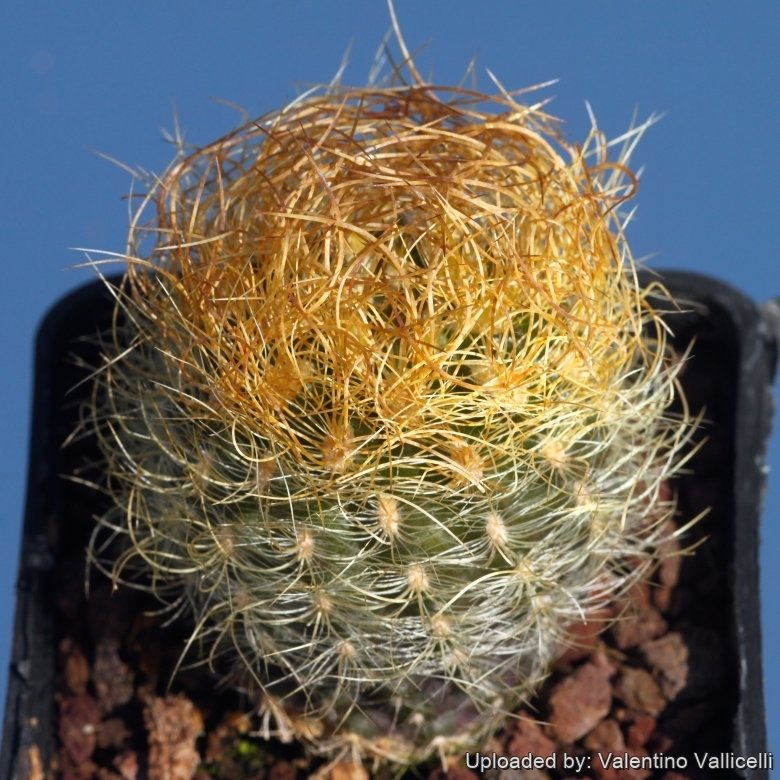
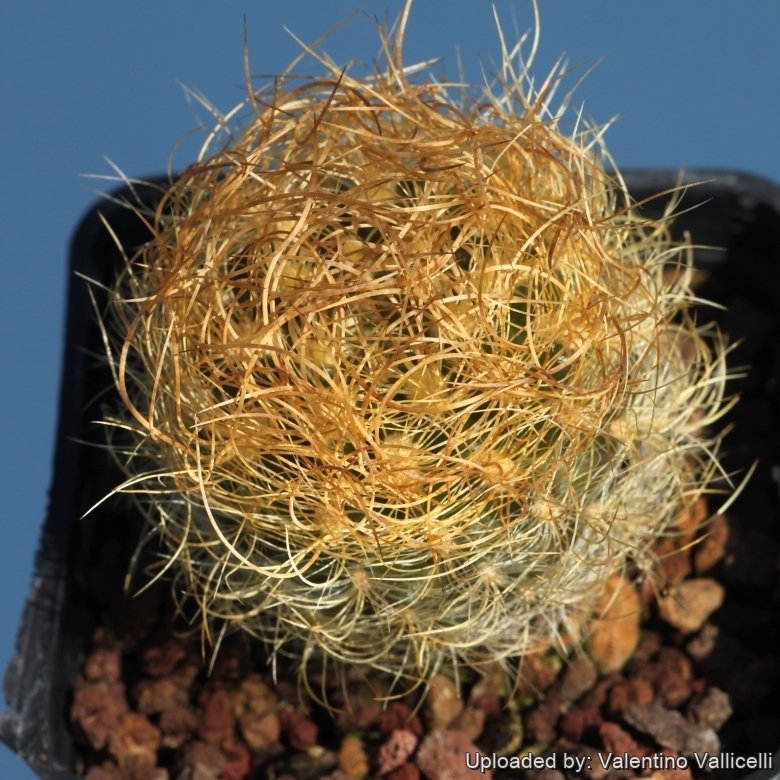
Neoporteria gerocephala f. aurea is a beautiful selected strain easily distinguishable from the standard Neoporteria gerocephala (Eriosyce senilis) for its golden or amber-yellow spines, all the other characteristics clearly show that they are conspecific. Eriosyce senilis is quite variable and has received numerous unnecessary names of no botanical value, representing no more than local phenotypes or cultivars: Neoporteria gerocephala f. aurea is one of them, but it has a value for a collector because they identify plants with particular characters.
Spines: 15 to 40 radials very dense, glassy, from blond/yellow to ammber-yellow, thin, hairlik, curled and tangled, some soft and flexible, obscuring the plant body and becoming longer with age.
Central spines: About 20, 30-60 mm long similar to radials and not easily distinguishable.
Flowers: 1-5 cm long and in diameter, borne at plant apex on young areoles, tubular to narrow funnel-form, showing various shades of purple-pink with clearer throat in the spring.
Fruits: Elongate to clavate, reddish opening by basal pores at maturity.
Origin and Habitat
Garden origin. The natural species comes from Coquimbo Region IV, Chile.
Source: Neoporteria gerocephala f. aurea, LLIFLE - Encyclopedia of living forms, CC-BY-SA, retrieved 2026-10-25.
Cultivars and forms (2)
Subspecies (1)
Varieties (1)
Gallery