Publication: Cact. Succ. J. Gr. Brit. 40(1): 13 (1978)
Description
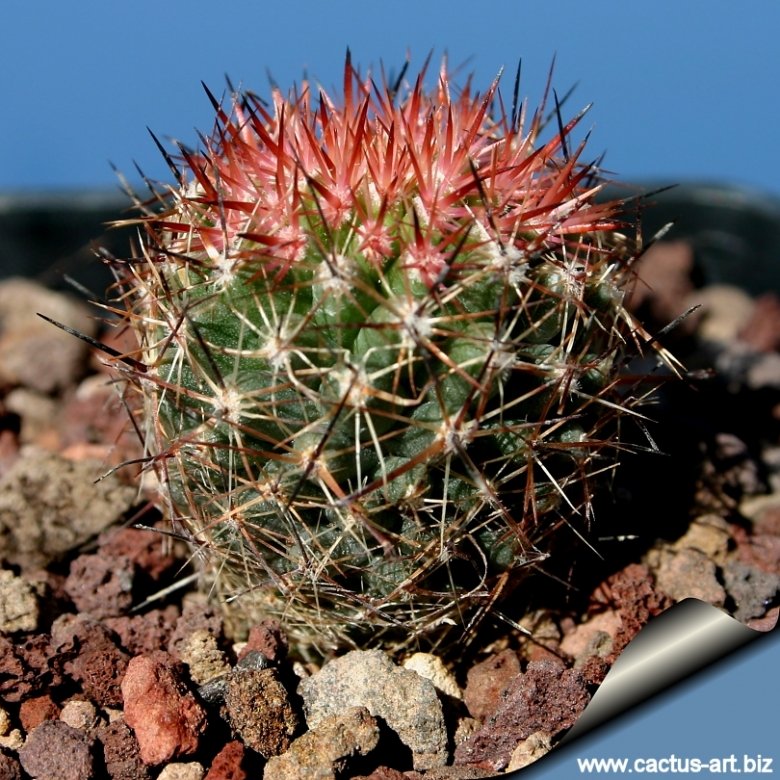
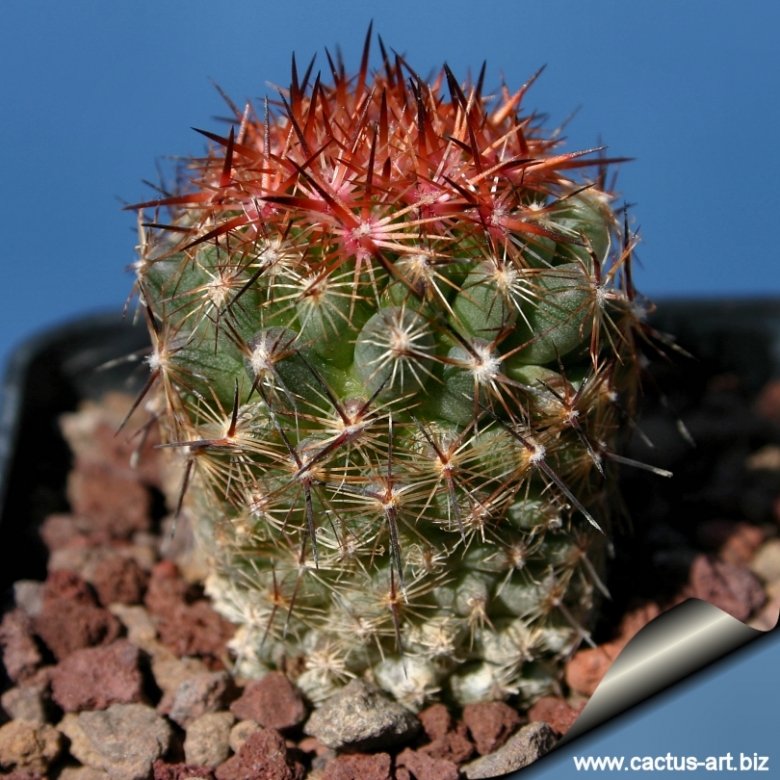
Escobaria vivipara is a small solitary or clumping cactus, some varieties forming colonies of over 200 stems. This species is the most widespread, abundant and variable member of the genus.
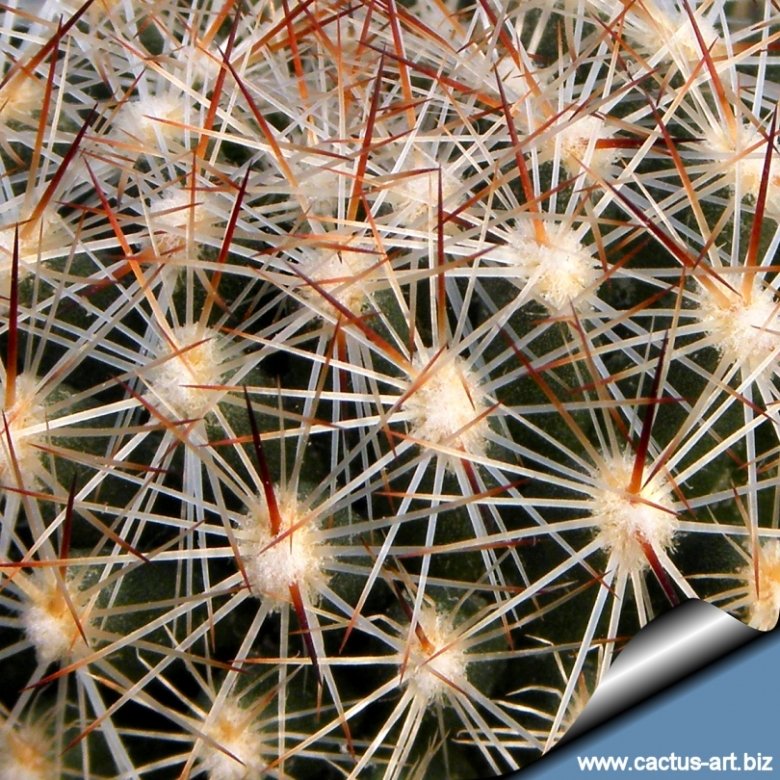
Remarks: The Arizonica variety has small low thick stem, usually single, spines are very dense, red-white, dark red or black.
Origin and Habitat
USA (Arizona, New Mexico, Nevada, Utah)
Habitat: Often found in grassy meadows.
Cultivation and Propagation
It comes from an area of summer rainfall; keep drier in winter (but for outdoors cultivation it is very resistant to wet conditions, too). Needs good drainage. Very cold-resistant, but the frost resistance varies a lot from clone to clone. It can easily be grown outdoors in areas with minimum winter temperatures of -15 -25°. Needs full sun to light shade.
Propagation: Seeds (no dormancy requirement, they germinate best at 25°C) or by offsets (if available), or occasionally grafted.
Bibliography
Major references and further lectures
-
Edward Anderson “The Cactus family” Timber Press, Incorporated, 2001
-
Terry, M., Heil, K. & Corral-Díaz, R. 2013. Escobaria vivipara. The IUCN Red List of Threatened Species. Version 2015.1. <www.iucnredlist.org>. Downloaded on 13 June 2015.
-
James Cullen, Sabina G. Knees, H. Suzanne Cubey “The European Garden Flora Flowering Plants: A Manual for the Identification of Plants Cultivated in Europe, Both Out-of-Doors and Under Glass” Cambridge University Press, 11/Aug/2011
-
David R Hunt; Nigel P Taylor; Graham Charles; International Cactaceae Systematics Group. “The New Cactus Lexicon” dh books, 2006
-
Castetter, E.F., P. Pierce and K.H. Schwerin. “Reassessment of the genus Escobaria.” Cactus and Succulent Journal (US) 47(2):60-70.1975.
-
Leo J. Chance “Cacti and Succulents for Cold Climates: 274 Outstanding Species for Challenging Conditions” Timber Press, 19/giu/2012
-
N. L. Britton, J. N. Rose “The Cactaceae. Descriptions and Illustrations of Plants of the Cactus Family.” Volume 4, The Carnegie Institution of Washington, Washington 1923
-
Flora of North America Editorial Committee. “Flora of North America, volume 4.” Oxford University Press, New York.2003.