Publication: Oesterr. Bot. Z. 98: 78. 1951 as vivipera
Description
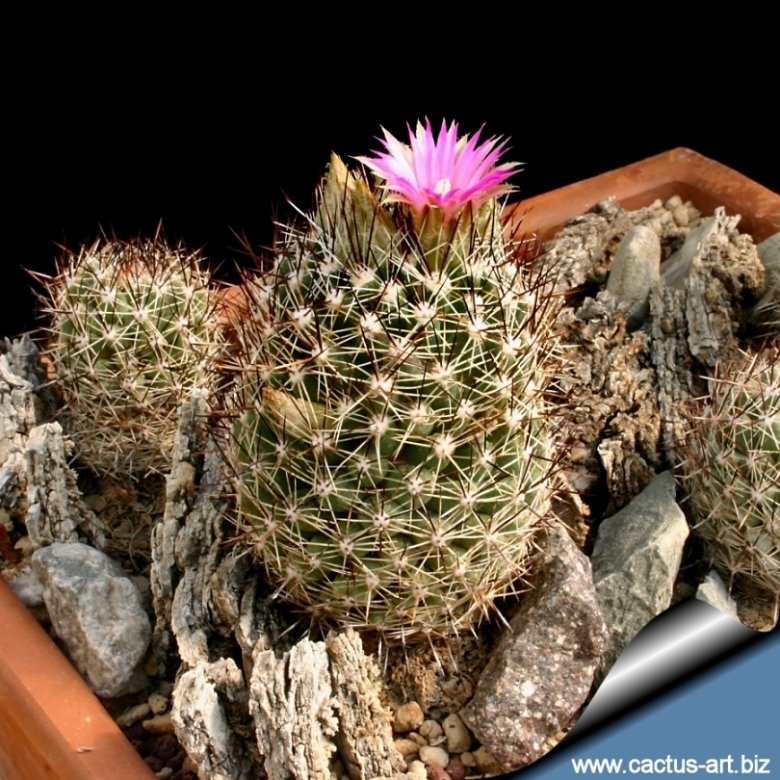
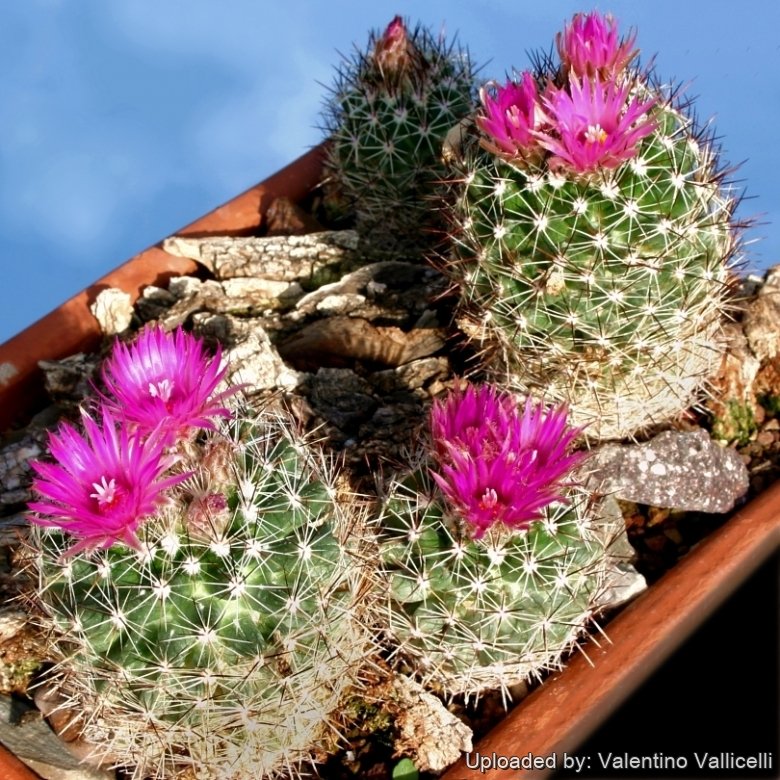
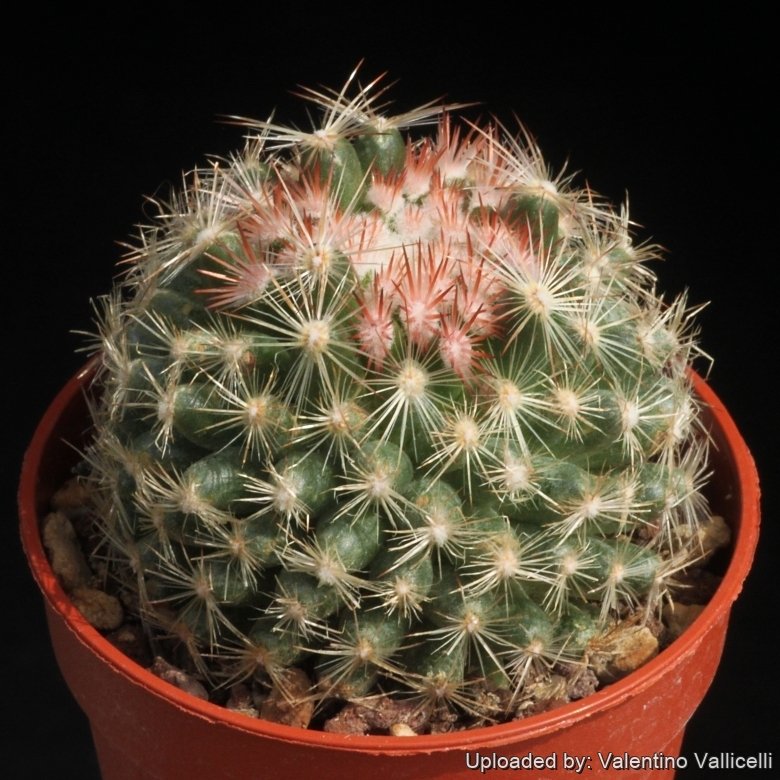
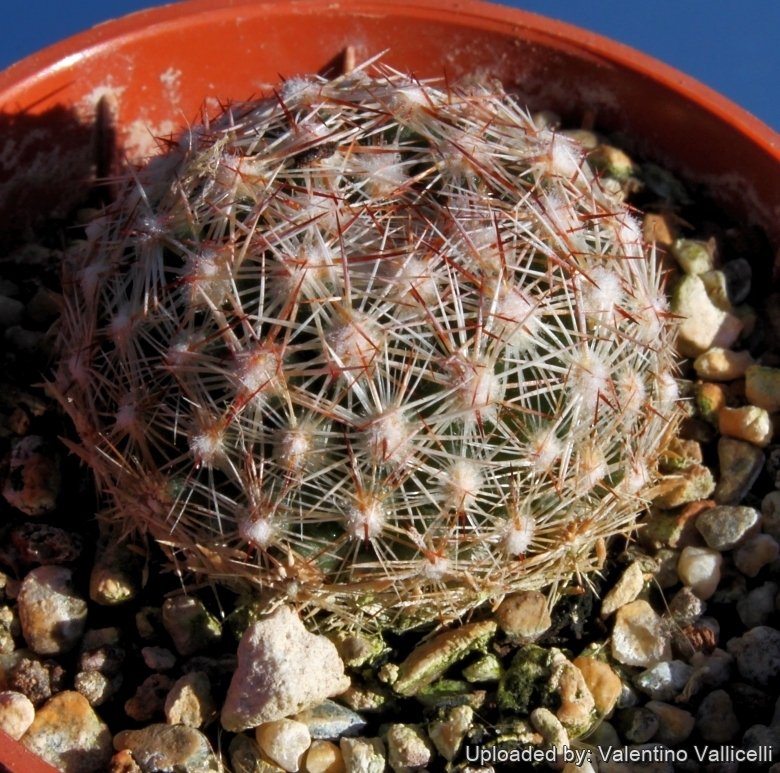
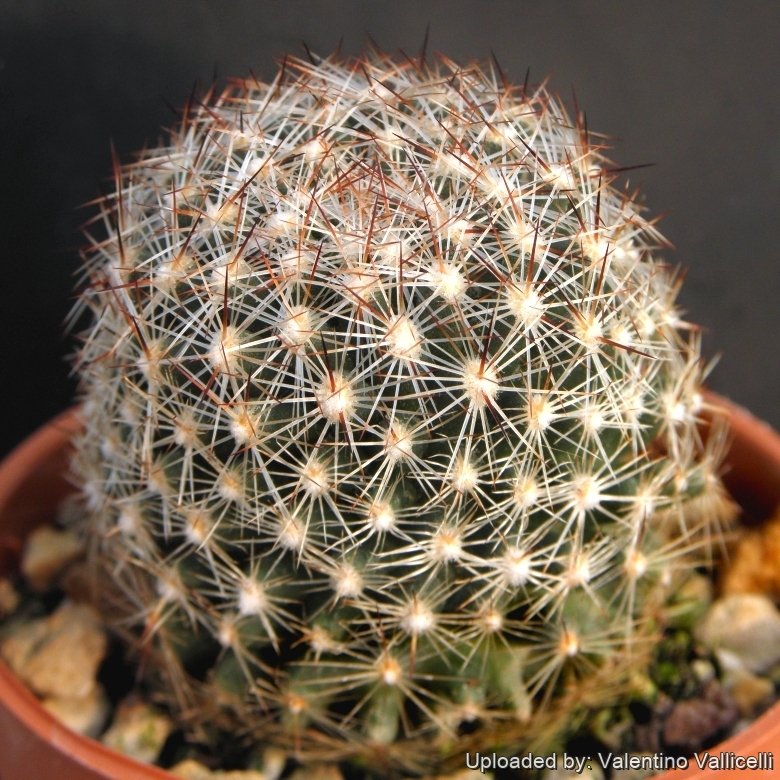
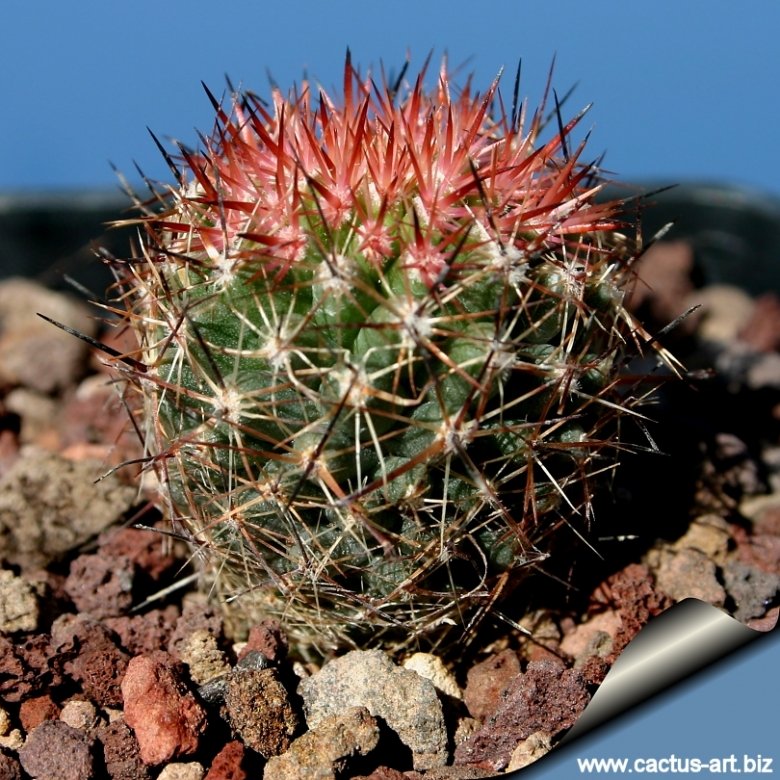
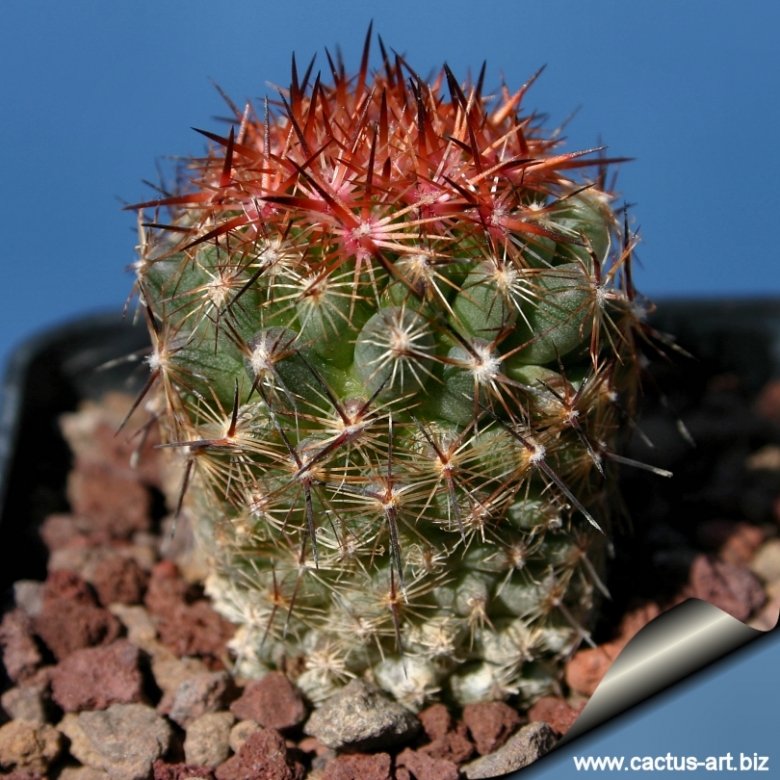
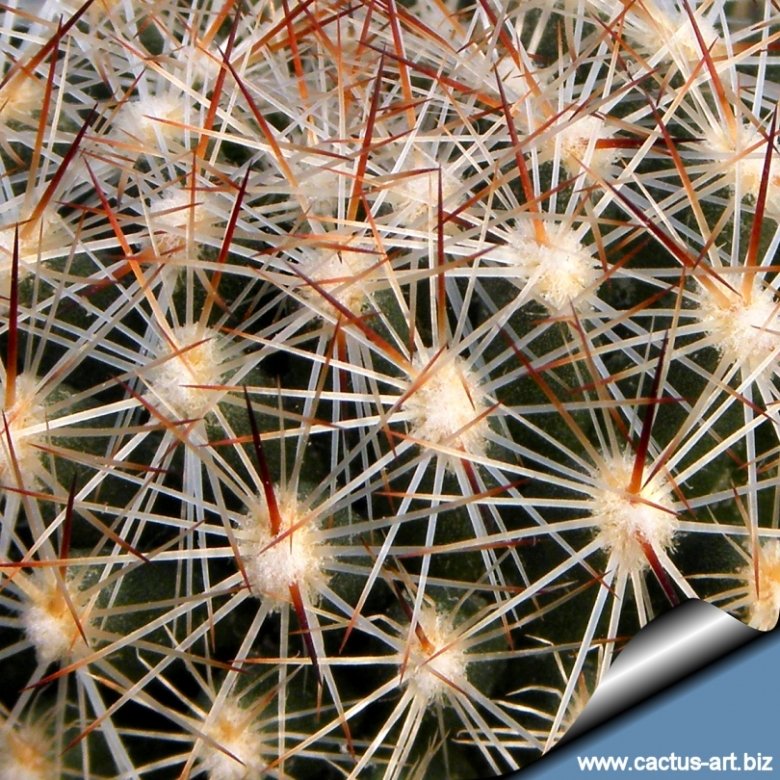
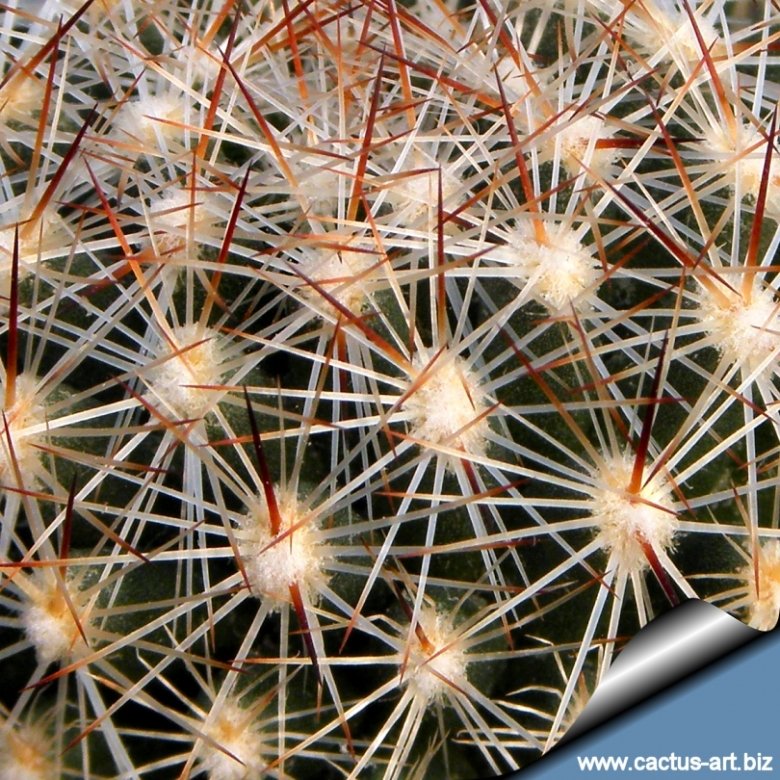
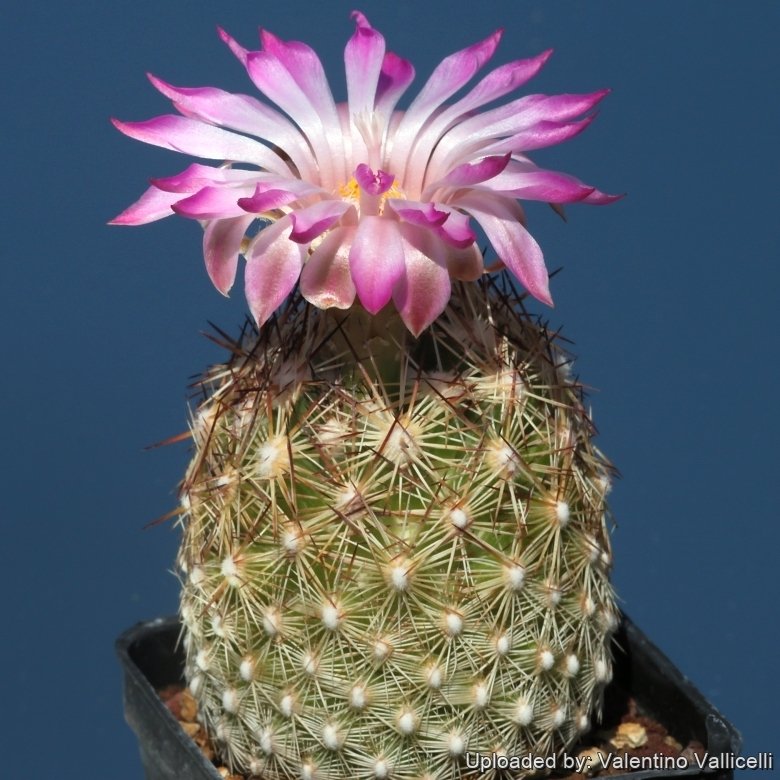
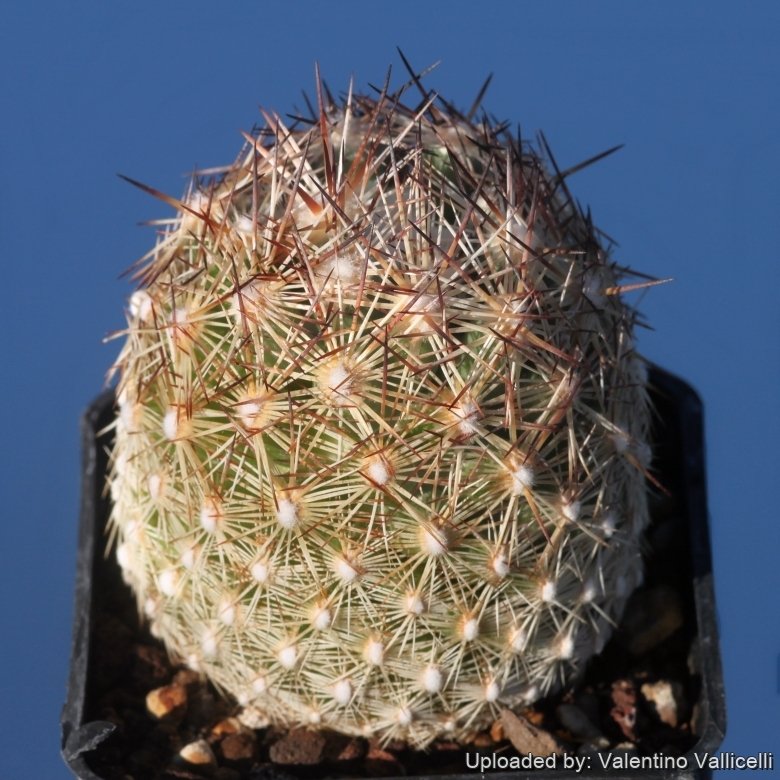
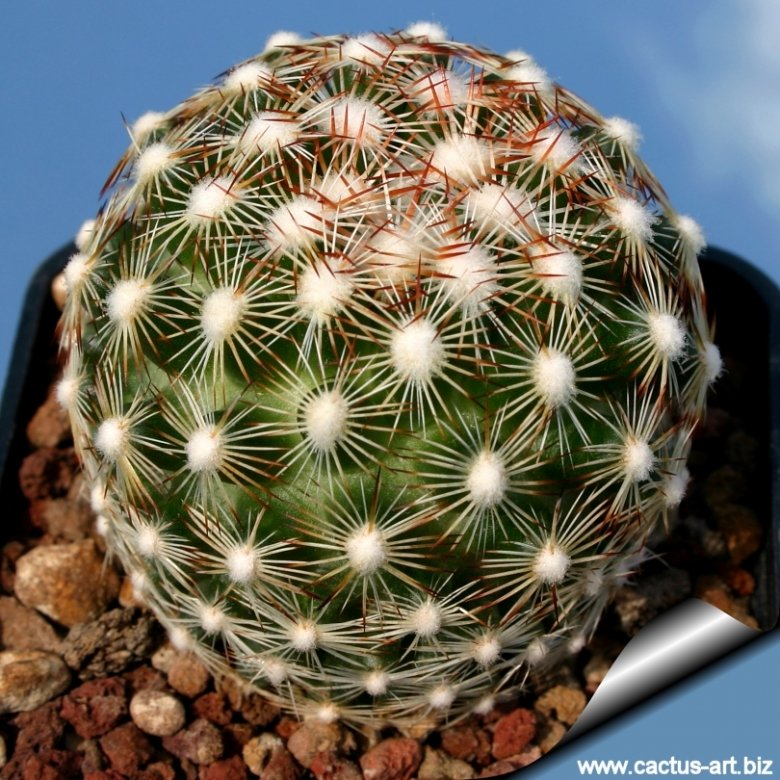
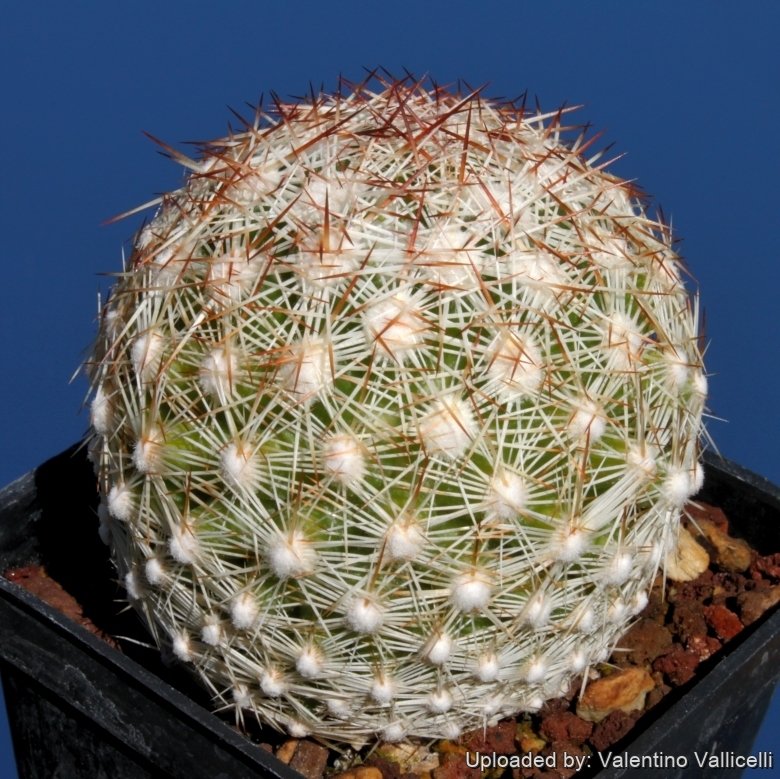
Escobaria vivipara is a small solitary or clumping cactus. Some varieties form colonies of over 200 stems. This species is the most widespread, abundant and variable member of the genus. It is densely covered in a mat of star-shaped arrays of spines.
Stems: Usually more than 1/2 above ground (sometimes deep-seated and flat-topped in winter, in cold climates and/or in immaturity), spheric, ovoid, obovoid, or cylindric with age, 2.5-75 × 3-11 cm tall.
Tubercles: Grooved, 8-25 × 3-8 mm, stiff or ± flaccid; areolar glands absent.
Roots: ± diffuse, less than 1/4 of stem diameter.
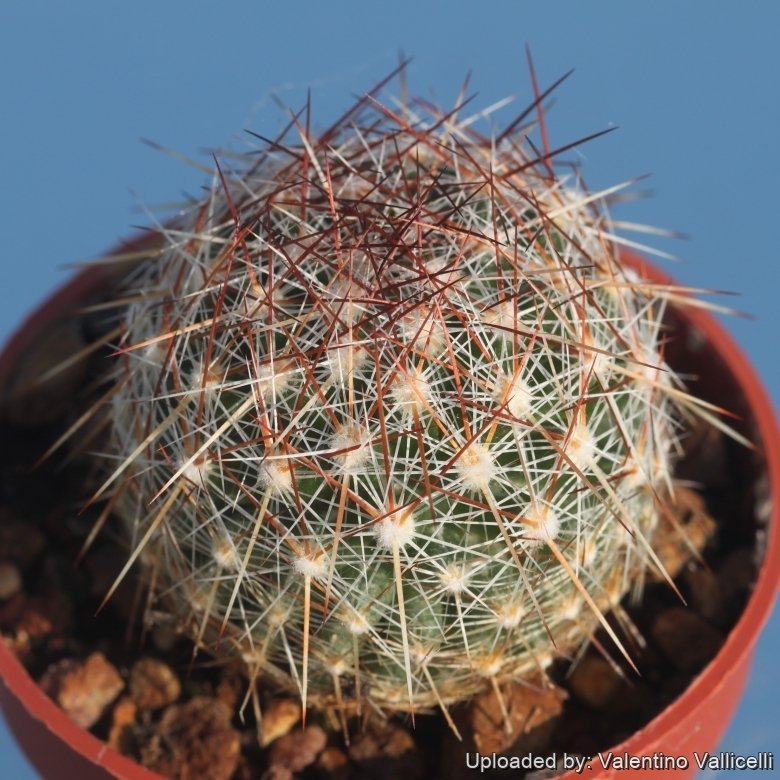
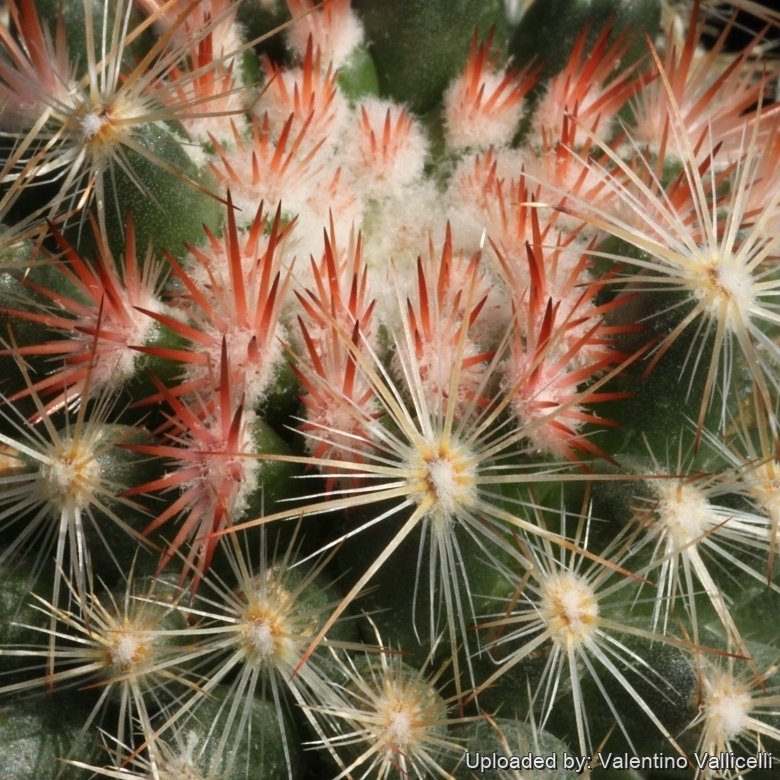
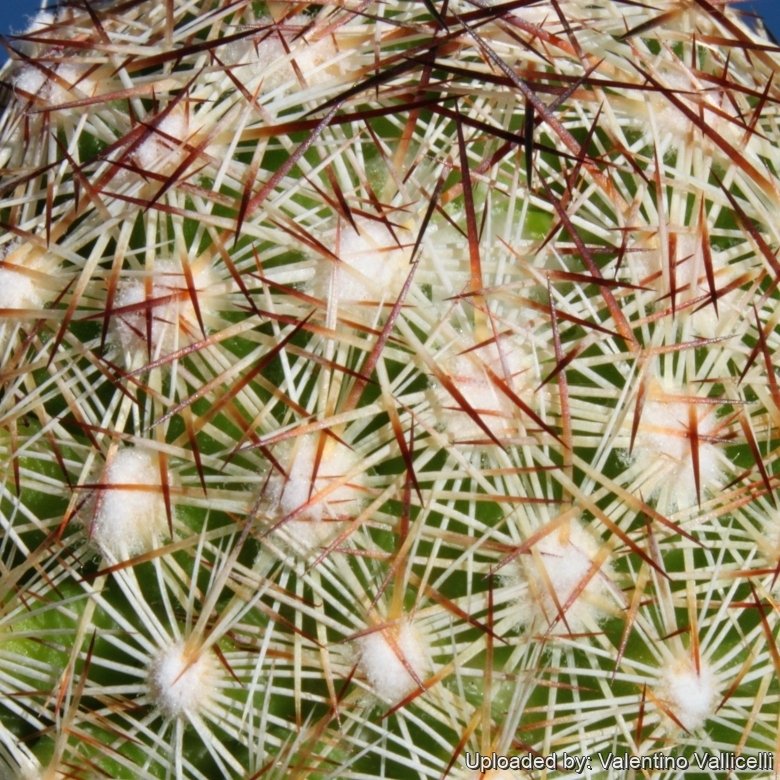
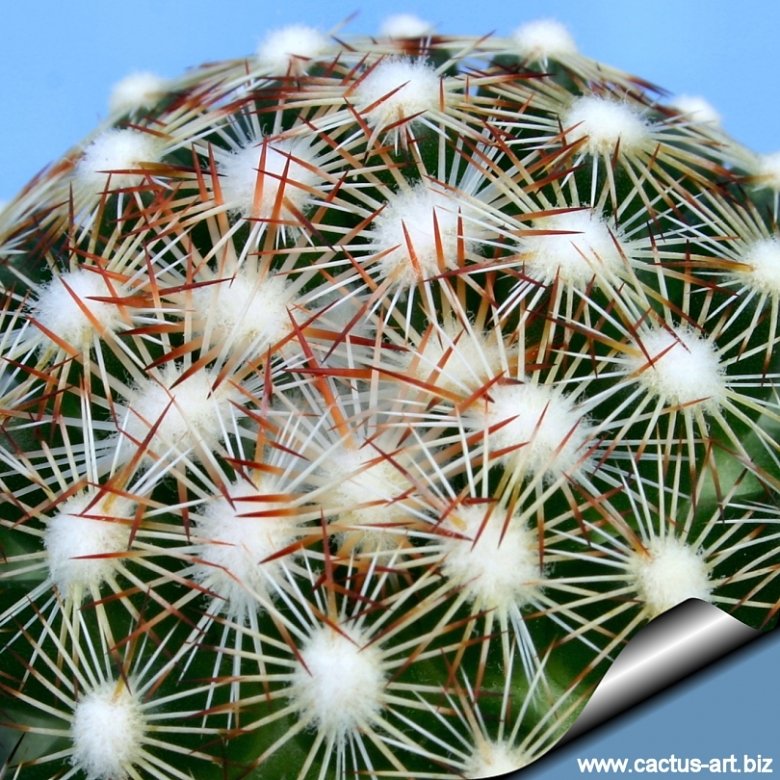
Spines: 11-55 per areole; either bright white, ashy white, pale tan, pale pinkish grey, or reddish brown (rarely straw-yellow), tips dark bright pinkish brown, reddish brown, dark brown, orange-brown, or pinkish orange, purplish gray, pinkish gray, brownish red, sepia dark purplish brown, or stramineous, opaque or vitreous, fading, then blackening with age (dark tips rarely absent).
Radial spines: 10-40 per areole, weakly appressed or tightly appressed, pectinately arranged in subadults of some populations, 7-22 mm long. Subcentral spines are sometimes present.
Central spines: Straight; outer central spines 3-14 per areole; appressed or strongly projecting, in “bird’s-foot” arrangement or radiating like spokes, longest spines 9-25 mm.
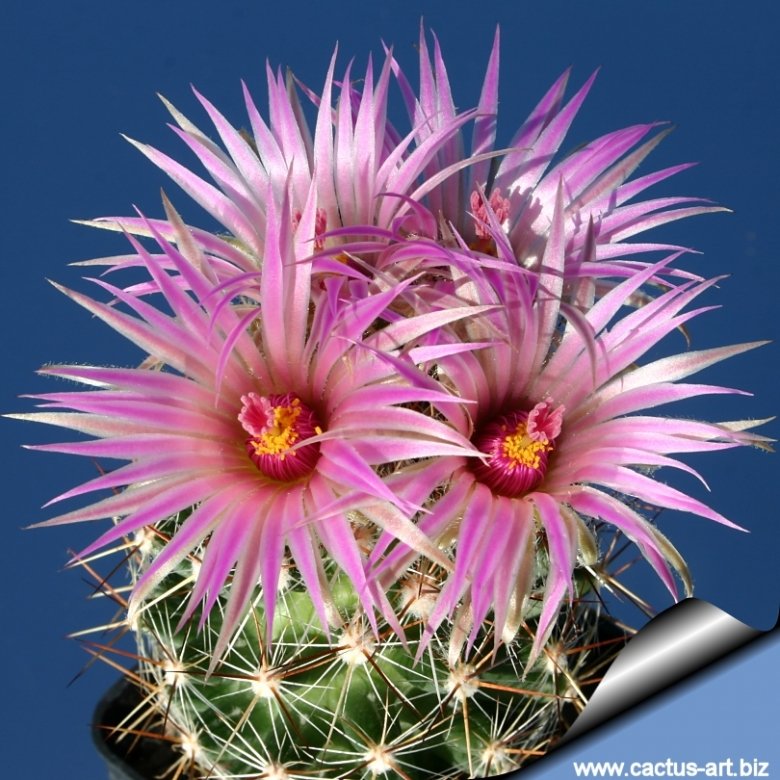
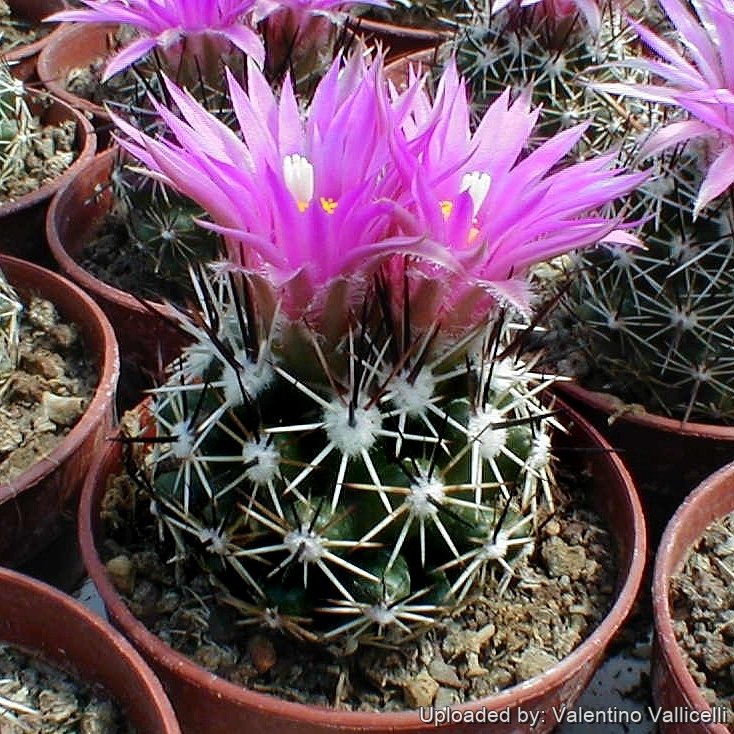
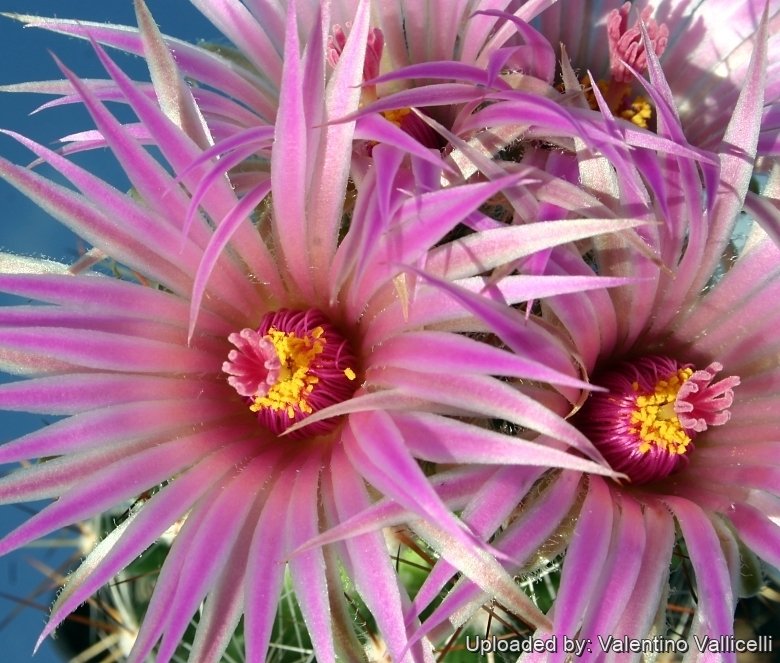
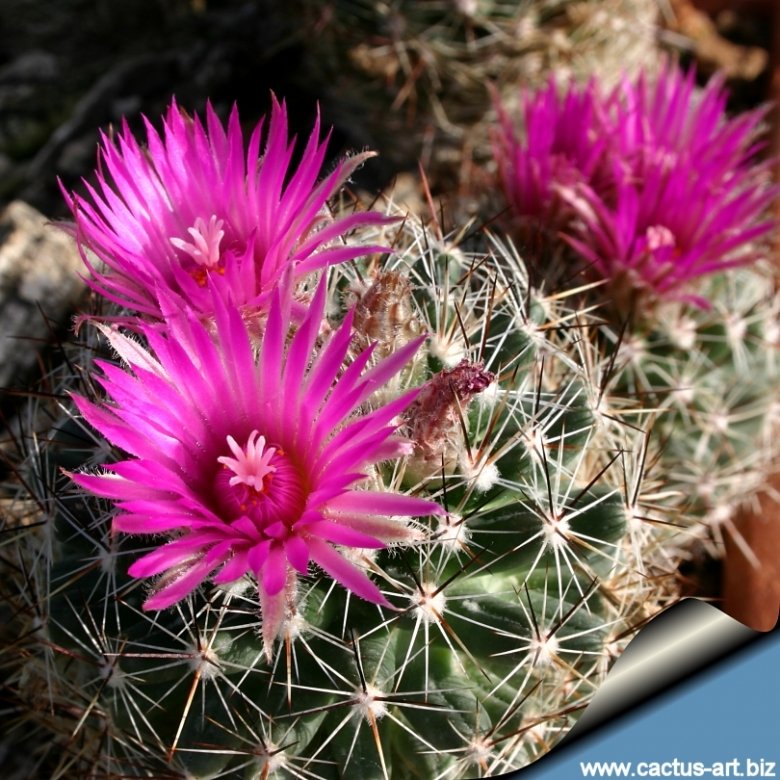
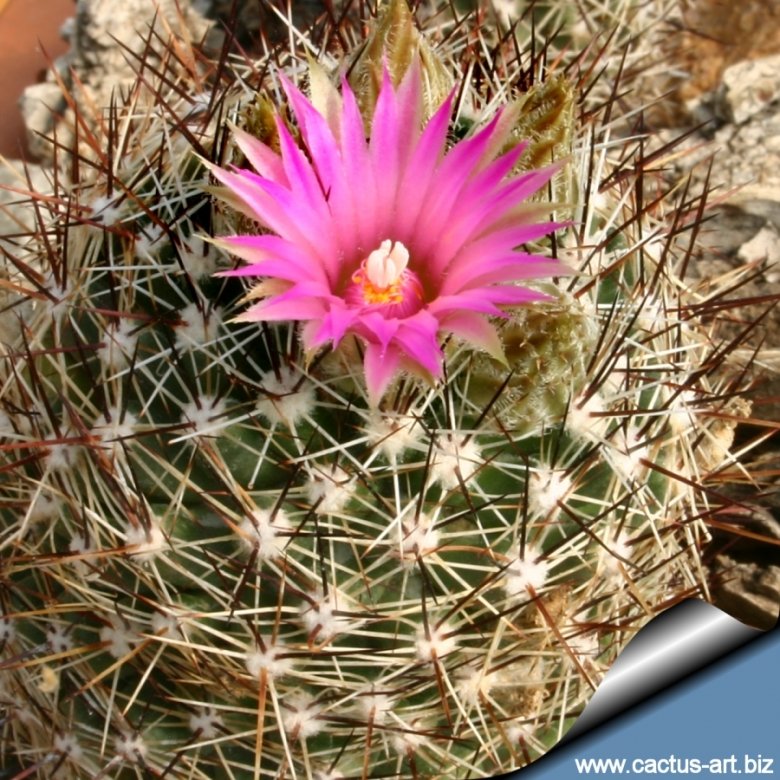
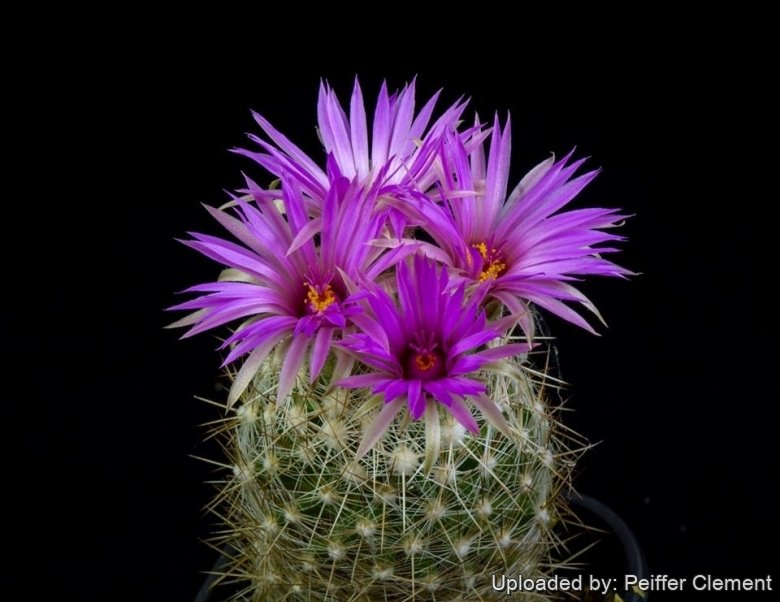
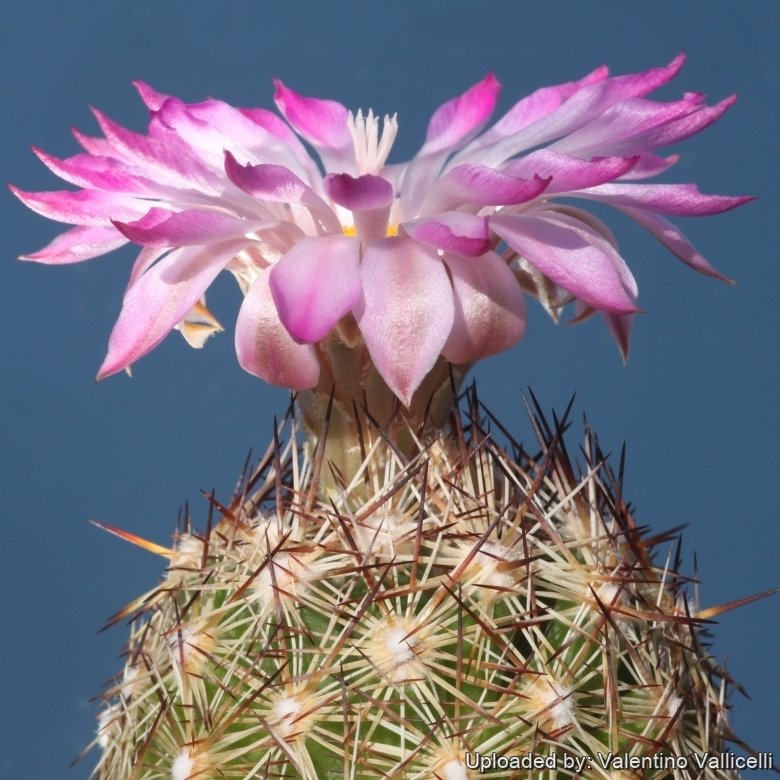
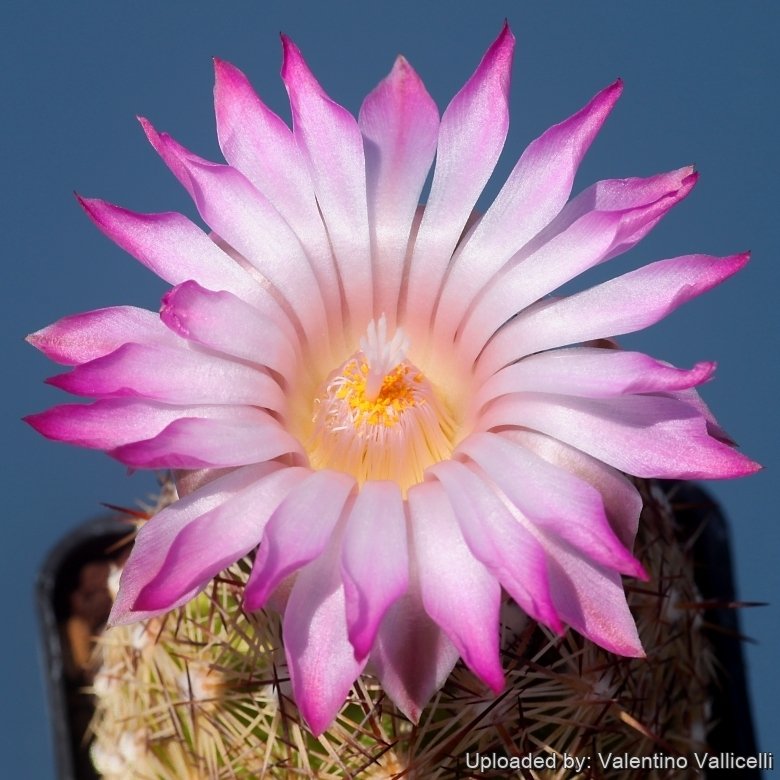
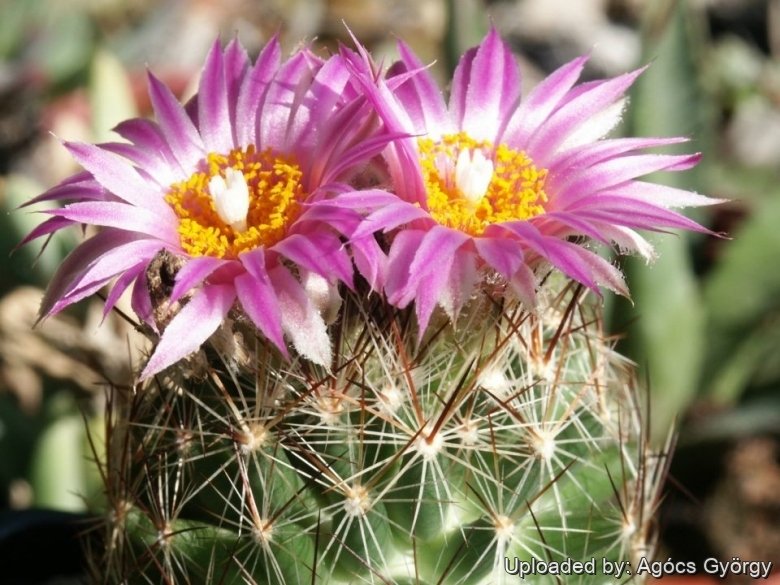
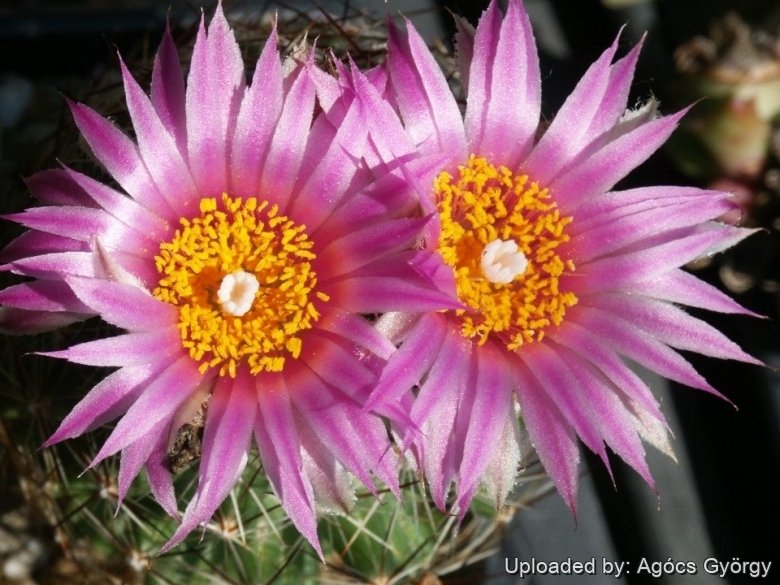
Flowers: Subapical, 20-65(-90?) mm long; outer tepals conspicuously fringed; pale rose-pink to reddish pink or magenta (or rarely yellow or green) , sometimes with darker midstripes, sometimes shading to white or pale green,
Fruits: Green, exposed portions slowly turning dull brownish red, ovoid to obovoid, 12-28 × 7-20 mm, juicy; floral remnant persistent.
Seeds: bright reddish brown, comma-shaped or nearly obovoid, (1-)1.3-2.4(-3) mm.
Blooming season: Spring-late summer; fruiting 2-5 months after flowering.
Origin and Habitat
This widespread species occurs in Canada (Alberta, Manitoba, and Saskatchewan), United States (Arizona, California, Colorado, Idaho, Kansas, Minnesota, Montana, Nebraska, Nevada, New Mexico, North Dakota, Oklahoma, Oregon, South Dakota, Texas, Utah, Wyoming) and in Mexico (states of Chihuahua, Coahuila and Sonora).
Altitude range: It occurs at elevations ranging from 180 meters in var. radiosa to 2,700 meters in var. rosea.
Habitat and Ecology: This cactus occurs in dry valleys, plains and foothills; on open, gentle to steep rocky slopes and flats, with sagebrush or conifer species and grasslands. Different varieties occur in grasslands, woodlands, montane forests, or deserts. Escobaria vivipara has a very wide range, is abundant, and there are no threats.
Cultivation and Propagation
It comes from an area of summer rainfall. Keep drier in winter (but for outdoor cultivation it is very resistant to wet conditions, too). It needs good drainage. Very cold resistant, but the frost resistance varies a lot from clone to clone. It can easily be grown outdoors in areas with minimum winter temperatures of -15 -25° (but northern populations from Canada are resistant to -35 -45°C). It needs full sun to light shade.
Propagation: Seeds (no dormancy requirement, they germinate best at 25°C) or by offsets (if available), or occasionally grafted.
Bibliography
Major references and further lectures
-
Edward Anderson “The Cactus family” Timber Press, Incorporated, 2001
-
Terry, M., Heil, K. & Corral-Díaz, R. 2013. Escobaria vivipara. The IUCN Red List of Threatened Species. Version 2015.1. <www.iucnredlist.org>. Downloaded on 13 June 2015.
-
James Cullen, Sabina G. Knees, H. Suzanne Cubey “The European Garden Flora Flowering Plants: A Manual for the Identification of Plants Cultivated in Europe, Both Out-of-Doors and Under Glass” Cambridge University Press, 11/Aug/2011
-
David R Hunt; Nigel P Taylor; Graham Charles; International Cactaceae Systematics Group. “The New Cactus Lexicon” dh books, 2006
-
Castetter, E.F., P. Pierce and K.H. Schwerin. “Reassessment of the genus Escobaria.” Cactus and Succulent Journal (US) 47(2):60-70.1975.
-
Leo J. Chance “Cacti and Succulents for Cold Climates: 274 Outstanding Species for Challenging Conditions” Timber Press, 19/giu/2012
-
N. L. Britton, J. N. Rose “The Cactaceae. Descriptions and Illustrations of Plants of the Cactus Family.” Volume 4, The Carnegie Institution of Washington, Washington 1923
-
Flora of North America Editorial Committee. “Flora of North America, volume 4.” Oxford University Press, New York.2003.
From llifle page Cactus neomexicanus
Description
Escobaria vivipara is a small solitary or clumping cactus, some varieties forming colonies of over 200 stems. This species is the most widespread, abundant and variable member of the genus.
Remarks: The “neomexicana” variety is hardly distinguished from Escobaria vivipara var. arizonica in having an average higher spine number, and in having the spines nearly always white. It cannot be quantifiably distinguished from occasional similar plants of var. arizonica.
Stem: Usually more than 1/2 above ground ovoid, obovoid, or cylindric with age to 9.5 x 7cm.
Tubercles: Grooved, stiff or ± flaccid12-16.mm long; areolar glands absent.
Radial Spines: 20-30 per areole; white to cremy-white often with pinkish tips hardly distinguishable from centrals.
Central spines: 3-4 per areole, straight, spreading slightly longer than radials.
Flowers: Subapical, rose-pink to reddish pink, violet or magenta with darker midstripes.
Fruits: Green, exposed portions slowly turning dull brownish red, ovoid to obovoid, juicy; floral remnant persistent.
Seeds: Bright reddish brown.
Blooming season: Spring-late summer; fruiting 2-5 months after flowering.
Origin and Habitat
Native to New Mexico and Texas (perhaps a bit into North Chihuahua, Arizona and South Colorado)
Habitat: It is often found in pure populations on limestone.
Cultivation and Propagation
It comes from an area of summer rainfall. Keep drier in winter (but for outdoor cultivation it is very resistant to wet conditions, too). It needs good drainage. Very cold resistant, but the frost resistance varies a lot from clone to clone. It can easily be grown outdoors in areas with minimum winter temperatures of -15 -25°. It needs full sun to light shade.
Propagation: Seeds (no dormancy requirement, they germinate best at 25°C) or by offsets (if available), or occasionally grafted.
Source: Cactus neomexicanus, LLIFLE - Encyclopedia of living forms, CC-BY-SA, retrieved 2026-10-25.
From llifle page Cactus radiosus
Description
Escobaria vivipara var. radiosa is one of the varieties of Escobaria vivipara which is a somewhat variable taxon with several collected forms that were early published as full species or as varieties, but these were too weak botanically to stand, so they are all combined in E. vivipara, and the two plants are not readily distinguishable, if not for the geographical provenance. More likely they are one and the same species.
Distinguishing characteristics of var. radiosa:
Stems: Ovate or cylindrical, about 5 cm high and in diameter sometimes proliferous (with freely asexual propagating shoots), tubercles terete, dark green in 13 oblique rows.
Spines: Relatively dense, obscuring stems to varying degrees.
Radial spines: 20-30(-40) per areole, 1.2-1.9 cm long, white to pink, very unequal.
Central spines: 3-4(-5) per areole, stouter and longer, (8-)15-22 mm long, straight, mostly white basally but tipped with pink, red, or black, upper ones longer, lowest shorter and horizontal.
Flowers: 4-5 cm in expansion and about same diameter when fully open, light violet to dark purple; stigmas obtuse deep velvety purple. The flowers open three days in direct sunshine only and later than most Cactaceae from 12 or 1 till 3 or 4 o’clock The flower buds are formed in the axils of the first tubercles of the season but are immediately pushed aside by a continuous growth of more tubercules, the buds as well as the flowers and fruits are therefore lateral.
Fruits: Green, 1.9- 2.5 cm long.
Seeds: Brown, reticulate.
Taxonomic notes: Coryphantha fragrans Hester is often placed under the synonymy of Escobaria vivipara var. radiosa as it seems to fit more closely that taxon than any other.
Origin and Habitat
Texas (Hood, Wise, Brown, Hamilton, Montague and Young Counties), USA.
Altitude range: Above 180 meters.
Habitat and ecology: Escobaria vivipara var. radiosa grows in grasslands and woodlands, on limestone soils. Blooming from May to June.
Bibliography
Major references and further lectures
-
George Engelmann, Asa Gray “Plantae Lindheimerianae: An Enumeration of F. Lindheimer’s Collection of Texan Plants, with Remarks and Descriptions of New Species, Etc” Freeman and Bolles, 1845
-
Elaine Nowick “Historical Common Names of Great Plains Plants, with Scientific Names Index: Volume II: Scientific Names Index” Lulu.com, 2014
-
Cyrus Longworth Lundell “Flora of Texas”, Volume 2 University Press, Southern Methodist University, 1969
-
Escobaria vivipara var. radiosa in: “SIDA, Botanical Miscellany” Herbarium, Southern Methodist University, 1999
-
Liberty Hyde Bailey, Wilhelm Miller “Cyclopedia of American Horticulture, Comprising Suggestions for Cultivation of Horticultural Plants, Descriptions of the Species of Fruits, Vegetables, Flowers and Ornamental Plants Sold in the United States and Canada, Together with Geographical and Biographical Sketches”, Volume 2, Macmillan, 1909
Source: Cactus radiosus, LLIFLE - Encyclopedia of living forms, CC-BY-SA, retrieved 2026-10-25.
From llifle page Coryphantha alversonii var. exaltissima
Cultivation and Propagation
It comes from an area of summer rainfall. Keep drier in winter (but for outdoor cultivation it is very resistant to wet conditions, too). It needs good drainage. Very cold resistant, but the frost resistance varies a lot from clone to clone. It can easily be grown outdoors in areas with minimum winter temperatures of -15 -20° (. It needs full sun to light shade.
Propagation: Seeds (no dormancy requirement, they germinate best at 25°C) or by offsets (if available), or occasionally grafted.
Source: Coryphantha alversonii var. exaltissima, LLIFLE - Encyclopedia of living forms, CC-BY-SA, retrieved 2026-10-25.
From llifle page Coryphantha arizonica
Description
Escobaria vivipara is a small solitary or clumping cactus, some varieties forming colonies of over 200 stems. This species is the most widespread, abundant and variable member of the genus.
Remarks: The Arizonica variety has small low thick stem, usually single, spines are very dense, red-white, dark red or black.
Origin and Habitat
USA (Arizona, New Mexico, Nevada, Utah)
Habitat: Often found in grassy meadows.
Cultivation and Propagation
It comes from an area of summer rainfall; keep drier in winter (but for outdoors cultivation it is very resistant to wet conditions, too). Needs good drainage. Very cold-resistant, but the frost resistance varies a lot from clone to clone. It can easily be grown outdoors in areas with minimum winter temperatures of -15 -25°. Needs full sun to light shade.
Propagation: Seeds (no dormancy requirement, they germinate best at 25°C) or by offsets (if available), or occasionally grafted.
Source: Coryphantha arizonica, LLIFLE - Encyclopedia of living forms, CC-BY-SA, retrieved 2026-10-25.
From llifle page Coryphantha bisbeeana
Description
Escobaria vivipara var. bisbeana is a small solitary or clumping cactus that form small colonies over time. It is densely covered in a mat of star-shaped arrays of spines.
Stems: Spheric, ovoid, obovoid, or cylindric with age, 2.5-7,5 × 3-11 cm tall.
Tubercles: Grooved, 8-25 × 3-8 mm, stiff or ± flaccid; areolar glands absent.
Roots: Mostly diffuse or moderately enlarged, but less than 1/4 of stem diameter.
Spines: Approx 25-35 radial per areole weakly tightly appressed, pectinately arranged in subadults plant, vitreous bright white with reddish brown, or pinkish orange tips, fading, then blackening with age (dark tips rarely absent). Subcentral spines are sometimes present.
Central spines: Only in adult specimens, straightt; 3-14 per areole; slightly projecting, in “bird’s-foot” arrangement or radiating like spokes, longest spines 9-25 mm.
Flowers: Subapical, 20-65 mm long; pale rose-pink to magenta.
Fruits: Green, exposed portions slowly turning dull brownish red, juicy; floral remnant persistent.
Flowering season: Spring-late summer.
Origin and Habitat
Native to Arizona and New Mexico.
Altitude: Altitude between 1100 and 1600 m.
Habitat: Semi-arid scrubland or grassland filled with desert annuals mostly on low hills or mountain tops. Often both clumps of Coryphantha and Echinocereus rigidissimus grows nearby in the prairie. Often snow-covered in winter can withstand temperatures below freezing for a long period of time!
Cultivation and Propagation
It comes from an area of summer rainfall. Keep drier in winter (but for outdoor cultivation it is very resistant to wet conditions, too). It needs good drainage. Very cold resistant, but the frost resistance varies a lot from clone to clone. It can easily be grown outdoors in areas with minimum winter temperatures of -15 -25°. It needs full sun to light shade.
Propagation: Seeds (no dormancy requirement, they germinate best at 25°C) or by offsets ( if available), or occasionally grafted
Source: Coryphantha bisbeeana, LLIFLE - Encyclopedia of living forms, CC-BY-SA, retrieved 2026-10-25.
From llifle page Escobaria borealis
Description
Escobaria vivipara is a small solitary or clumping cactus, some varieties forming colonies of over 200 stems. This species is the most widespread, abundant and variable member of the genus.
Remarks: The “borealis” variety is a controversial name that has sunk into complete obscurity and considered by some authors synonymous with Escobaria vivipara var. neomexicana. Perhaps the name “borealis” (of the north) was originally intended for the strange very northern vivipara that have very open spination and look somewhat more like Escobaria missouriensis, but this northern form never seem to have acquired a name.
Stem: Usually more than 1/2 above ground ovoid, obovoid, or cylindric with age to 9.5 x 7cm.
Tubercles: Grooved, stiff or ± flaccid 12-16 mm long; areolar glands absent.
Radial Spines: 20-30 per areole; white to cremy-white often with pinkish tips hardly distinguishable from centrals.
Central spines: 3-4 per areole, straight, spreading slightly longer than radials.
Flowers: Subapical, rose-pink to reddish pink, violet or magenta with darker midstripes.
Fruits: Green, exposed portions slowly turning dull brownish red, ovoid to obovoid, juicy; floral remnant persistent.
Seeds: Bright reddish brown.
Blooming season: Spring-late summer; fruiting 2-5 months after flowering.
Origin and Habitat
New Mexico.
Source: Escobaria borealis, LLIFLE - Encyclopedia of living forms, CC-BY-SA, retrieved 2026-10-25.
Cultivars and forms (7)
Gallery