Publication: Cact. Succ. J. Gr. Brit. 40(1): 13 (1978)
Description
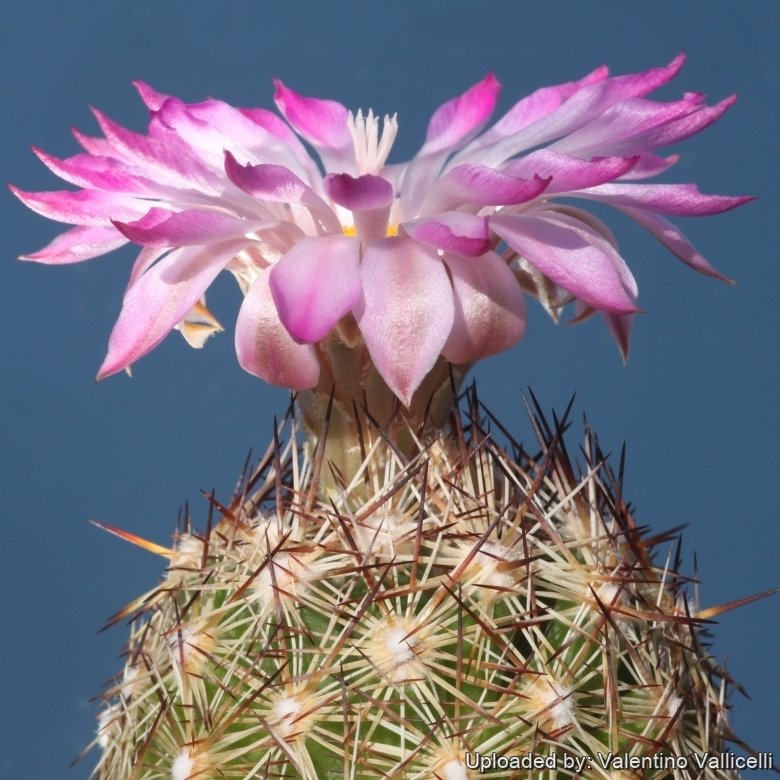
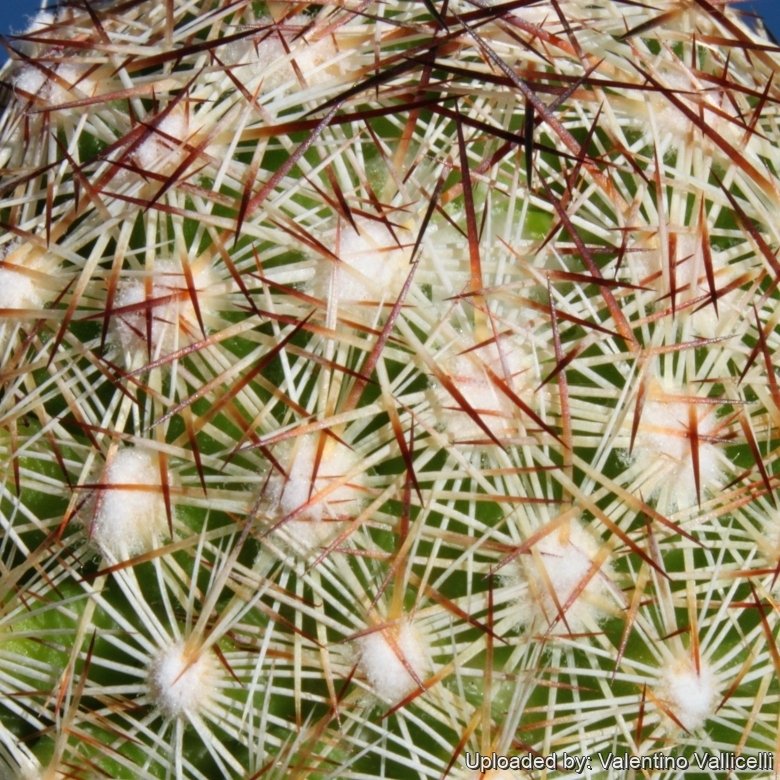
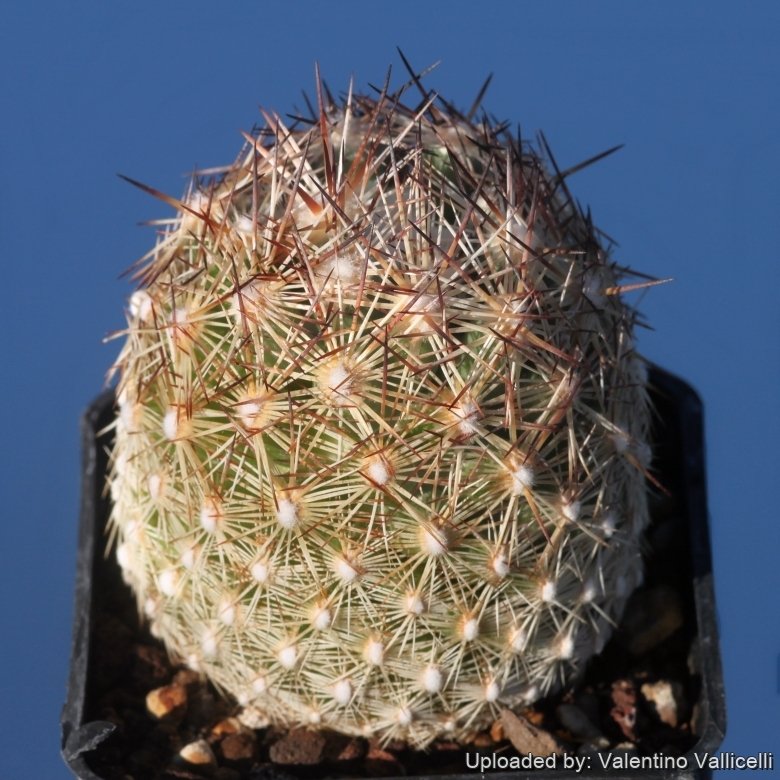
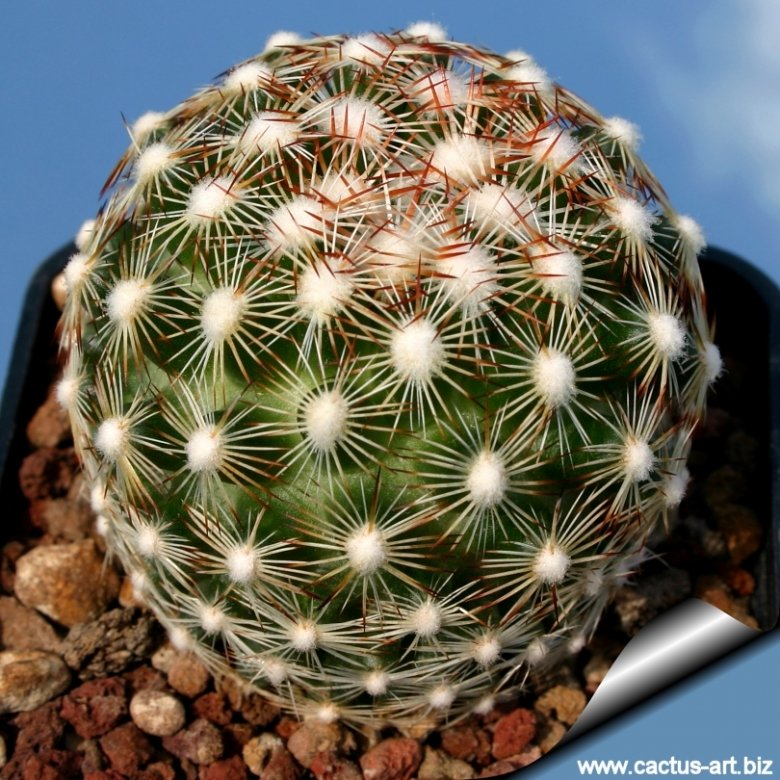
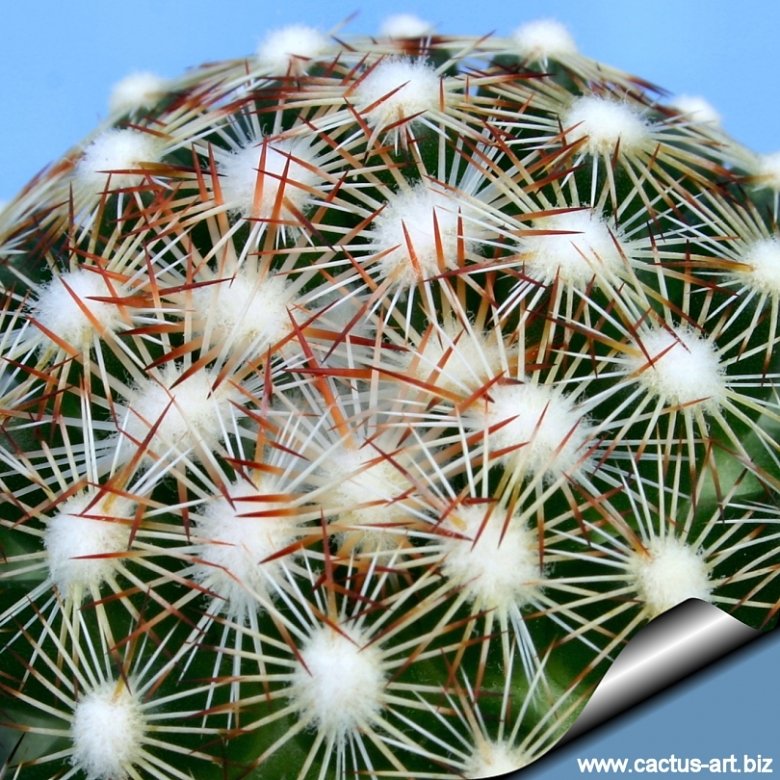
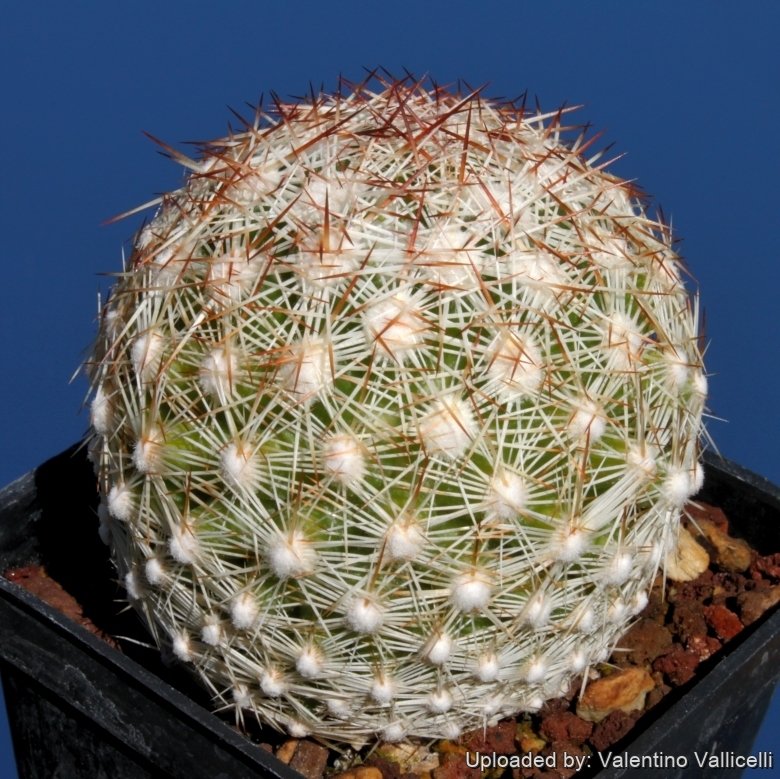
Escobaria vivipara var. bisbeana is a small solitary or clumping cactus that form small colonies over time. It is densely covered in a mat of star-shaped arrays of spines.
Stems: Spheric, ovoid, obovoid, or cylindric with age, 2.5-7,5 × 3-11 cm tall.
Tubercles: Grooved, 8-25 × 3-8 mm, stiff or ± flaccid; areolar glands absent.
Roots: Mostly diffuse or moderately enlarged, but less than 1/4 of stem diameter.
Spines: Approx 25-35 radial per areole weakly tightly appressed, pectinately arranged in subadults plant, vitreous bright white with reddish brown, or pinkish orange tips, fading, then blackening with age (dark tips rarely absent). Subcentral spines are sometimes present.
Central spines: Only in adult specimens, straightt; 3-14 per areole; slightly projecting, in “bird’s-foot” arrangement or radiating like spokes, longest spines 9-25 mm.
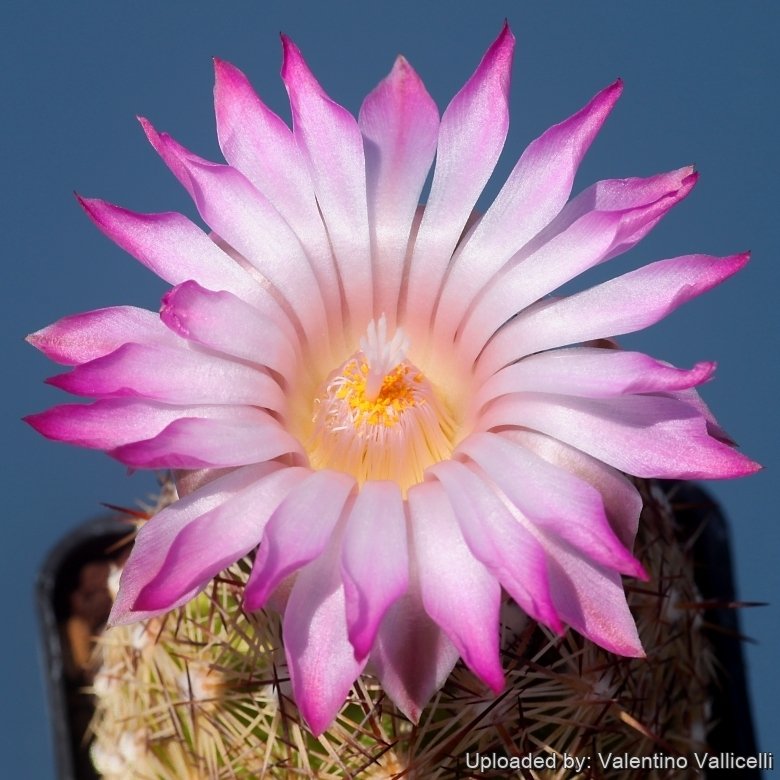
Flowers: Subapical, 20-65 mm long; pale rose-pink to magenta.
Fruits: Green, exposed portions slowly turning dull brownish red, juicy; floral remnant persistent.
Flowering season: Spring-late summer.
Origin and Habitat
Native to Arizona and New Mexico.
Altitude: Altitude between 1100 and 1600 m.
Habitat: Semi-arid scrubland or grassland filled with desert annuals mostly on low hills or mountain tops. Often both clumps of Coryphantha and Echinocereus rigidissimus grows nearby in the prairie. Often snow-covered in winter can withstand temperatures below freezing for a long period of time!
Cultivation and Propagation
It comes from an area of summer rainfall. Keep drier in winter (but for outdoor cultivation it is very resistant to wet conditions, too). It needs good drainage. Very cold resistant, but the frost resistance varies a lot from clone to clone. It can easily be grown outdoors in areas with minimum winter temperatures of -15 -25°. It needs full sun to light shade.
Propagation: Seeds (no dormancy requirement, they germinate best at 25°C) or by offsets ( if available), or occasionally grafted
Bibliography
Major references and further lectures
-
Edward Anderson “The Cactus family” Timber Press, Incorporated, 2001
-
Terry, M., Heil, K. & Corral-Díaz, R. 2013. Escobaria vivipara. The IUCN Red List of Threatened Species. Version 2015.1. <www.iucnredlist.org>. Downloaded on 13 June 2015.
-
James Cullen, Sabina G. Knees, H. Suzanne Cubey “The European Garden Flora Flowering Plants: A Manual for the Identification of Plants Cultivated in Europe, Both Out-of-Doors and Under Glass” Cambridge University Press, 11/Aug/2011
-
David R Hunt; Nigel P Taylor; Graham Charles; International Cactaceae Systematics Group. “The New Cactus Lexicon” dh books, 2006
-
Castetter, E.F., P. Pierce and K.H. Schwerin. “Reassessment of the genus Escobaria.” Cactus and Succulent Journal (US) 47(2):60-70.1975.
-
Leo J. Chance “Cacti and Succulents for Cold Climates: 274 Outstanding Species for Challenging Conditions” Timber Press, 19/giu/2012
-
N. L. Britton, J. N. Rose “The Cactaceae. Descriptions and Illustrations of Plants of the Cactus Family.” Volume 4, The Carnegie Institution of Washington, Washington 1923
-
Flora of North America Editorial Committee. “Flora of North America, volume 4.” Oxford University Press, New York.2003.
Gallery