Publication: Kakteen (H. Krainz) 50-51: CVIIIC: 1972(1973) = neo-mexicana ; also in Rowley in Repert. Pl. Succ. (I.O.S.),24: 6 (1973 publ. 1975).
Description
Escobaria vivipara is a small solitary or clumping cactus, some varieties forming colonies of over 200 stems. This species is the most widespread, abundant and variable member of the genus.
Remarks: The “neomexicana” variety is hardly distinguished from Escobaria vivipara var. arizonica in having an average higher spine number, and in having the spines nearly always white. It cannot be quantifiably distinguished from occasional similar plants of var. arizonica.
Stem: Usually more than 1/2 above ground ovoid, obovoid, or cylindric with age to 9.5 x 7cm.
Tubercles: Grooved, stiff or ± flaccid12-16.mm long; areolar glands absent.
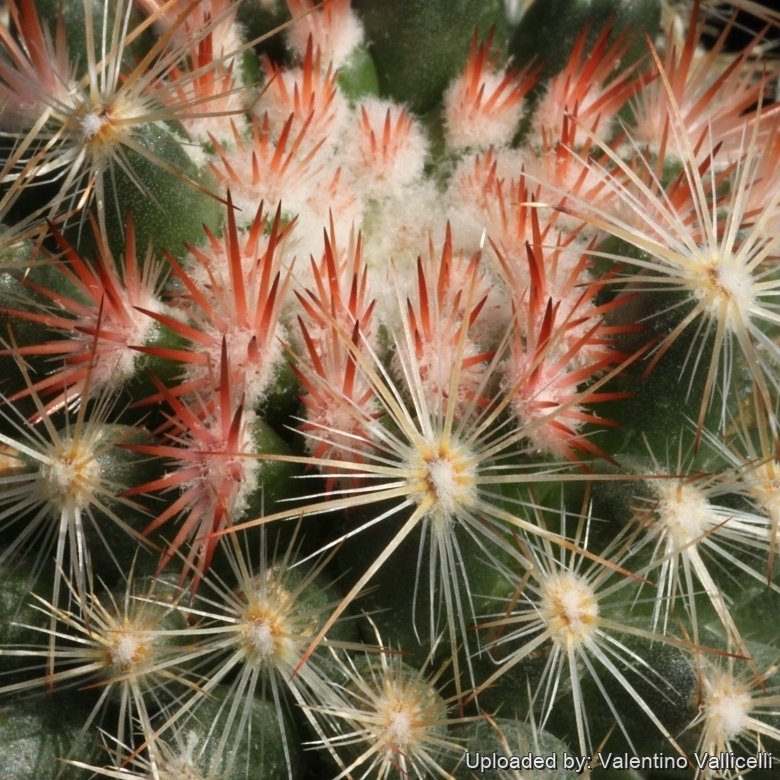
Radial Spines: 20-30 per areole; white to cremy-white often with pinkish tips hardly distinguishable from centrals.
Central spines: 3-4 per areole, straight, spreading slightly longer than radials.
Flowers: Subapical, rose-pink to reddish pink, violet or magenta with darker midstripes.
Fruits: Green, exposed portions slowly turning dull brownish red, ovoid to obovoid, juicy; floral remnant persistent.
Seeds: Bright reddish brown.
Blooming season: Spring-late summer; fruiting 2-5 months after flowering.
Origin and Habitat
Native to New Mexico and Texas (perhaps a bit into North Chihuahua, Arizona and South Colorado)
Habitat: It is often found in pure populations on limestone.
Cultivation and Propagation
It comes from an area of summer rainfall. Keep drier in winter (but for outdoor cultivation it is very resistant to wet conditions, too). It needs good drainage. Very cold resistant, but the frost resistance varies a lot from clone to clone. It can easily be grown outdoors in areas with minimum winter temperatures of -15 -25°. It needs full sun to light shade.
Propagation: Seeds (no dormancy requirement, they germinate best at 25°C) or by offsets (if available), or occasionally grafted.
Gallery