Description
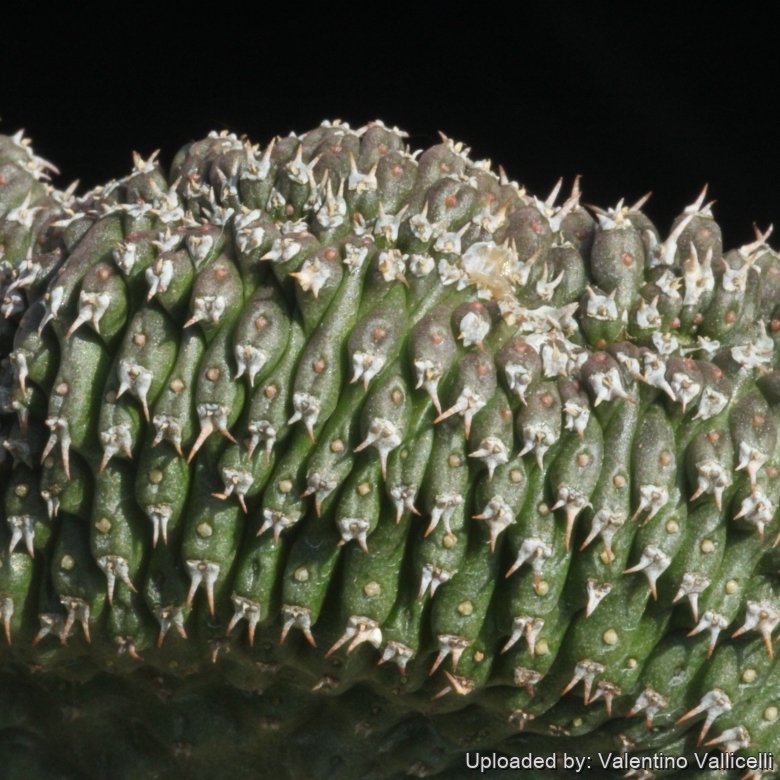
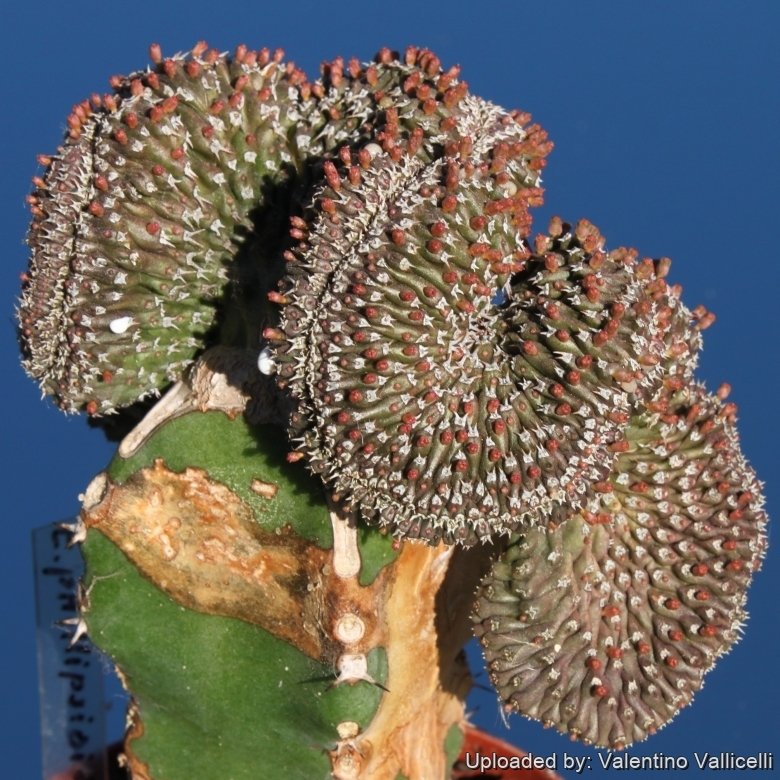
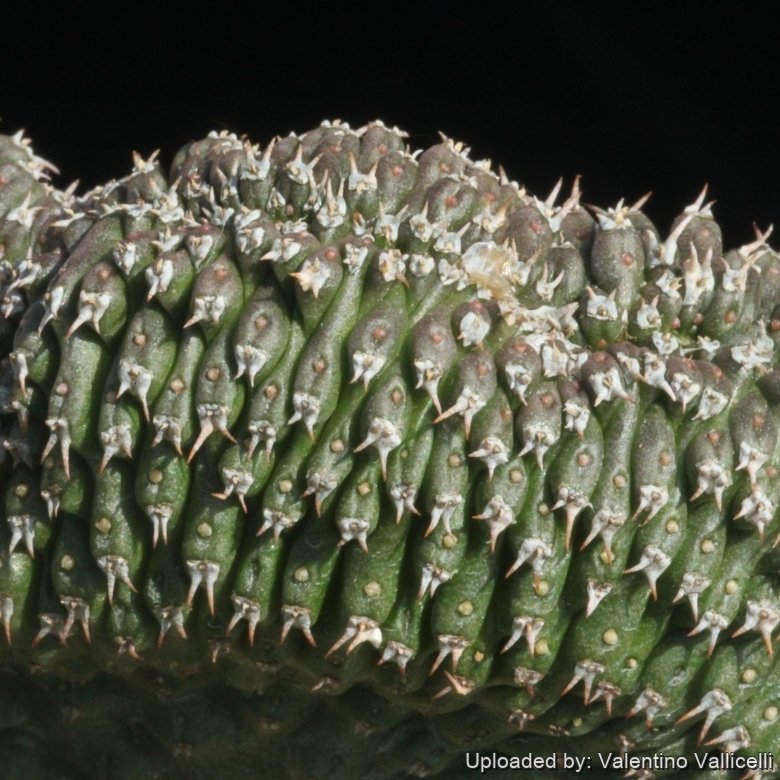
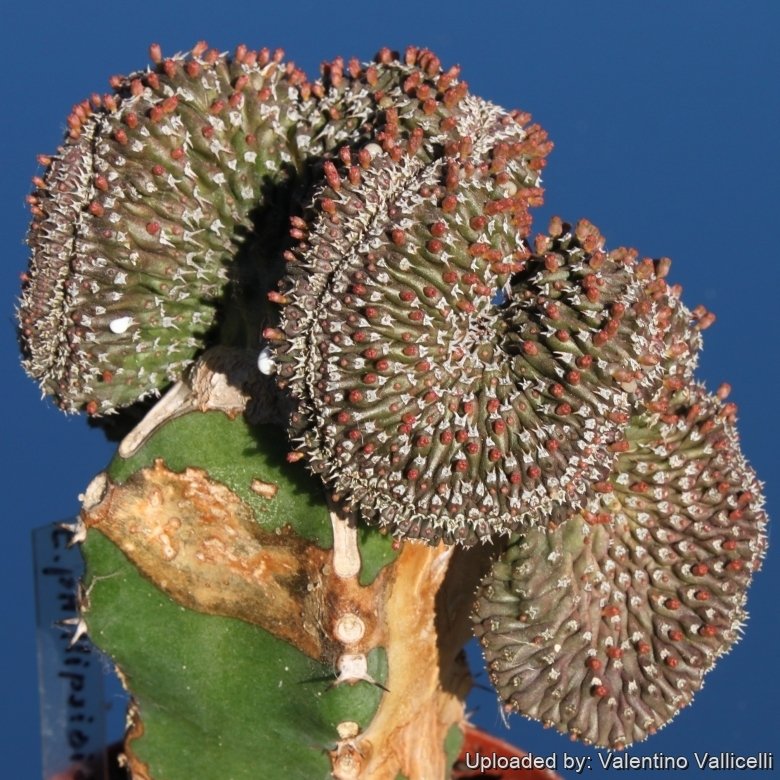
The Euphorbia phillipsioides f. cristata is a nice crested form with intricately undulating fan-shaped branches forming a snaky ridge or crowded cluster. There exist also the standard species, not crested, which is a small spiny succulent about 5-15 cm tall, that forms clumps up to 10 cm in diameter. It branches profusely at soil level.
Stems: Branches finger like erect, 1-2,5 cm in diameter, whith 10-14- groowed ribs, sinuately toothed, with teeth 2-4 mm apart.
Origin and Habitat
Garden origin (Nursery produced cultivar)
Cultivation and Propagation
It need bright light to partial shade for best appearance. It responds well to warmth, with its active growth period in the late spring and summer months. Water thoroughly when soil is dry to the touch during active growing season (more than once a week during hot weather) In the winter months, waterigs should be suspended or restricted to once over the winter. The most common failure in growing this plant is over watering, especially during the winter months. Likes porous soil with adequate drainage.
Propagation: It is propagated by cuttings or graft, and are generally grafted for convenience on Euphorbia canariensis or Euphorbia resinifera.
It is recommend taking Euphorbia cuttings in Spring/Summer when the plant is growing so that they have a better chance of success. They key is heat & good air circulation. These cuttings should be dipped in Hormone powder (but it is not needed) and left for a period of 3-4 weeks to callous. Then pot the cutting and don’t water ( or kept slightly moist) until rooted. These will root just fine, if you can put the pot outside in the summer, or put pot on a heating pad.
Crested growth: Unlike ‘monstrose’ varieties of plants, where the variation from normal growth is due to genetic mutation, crested growth can occur on normal plants. Sometimes it’s due to variances in light intensity, or damage, but generally the causes are unknown. A crested plant may have some areas growing normally, and a cresting plant that looks like a brain, may revert to normal growth for no apparent reason. If you have any of the crested part left you need to remove the normal growth and leave the crested part behind this will need to be done regularly.
Warning: As with all other Euphorbias when a plant get damaged it exudes a thick white milky sap known as latex. This latex is poisonous and particularly dangerous for the eyes, skin and mucous membranes. So pay extreme attention not to get any in your eyes or mouth. Cultivated plants must be handled carefully.