Publication: Nordic J. Bot. 12(4): 413 (1992)
Description
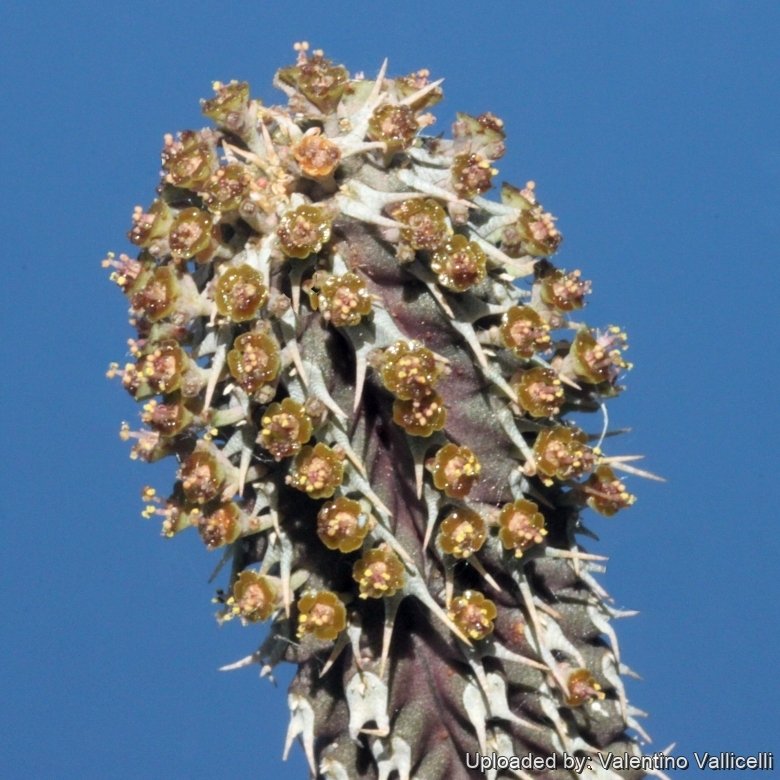
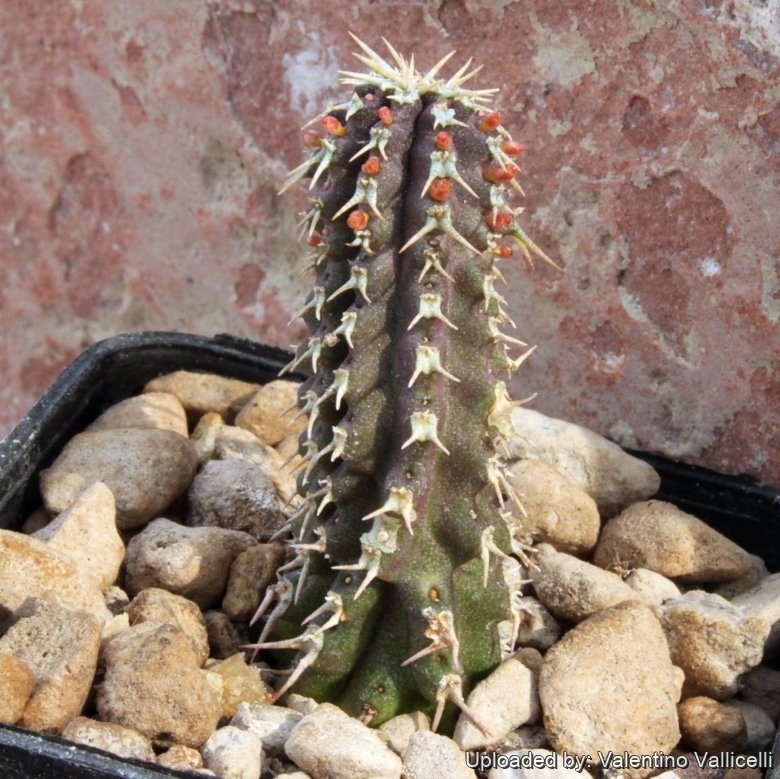
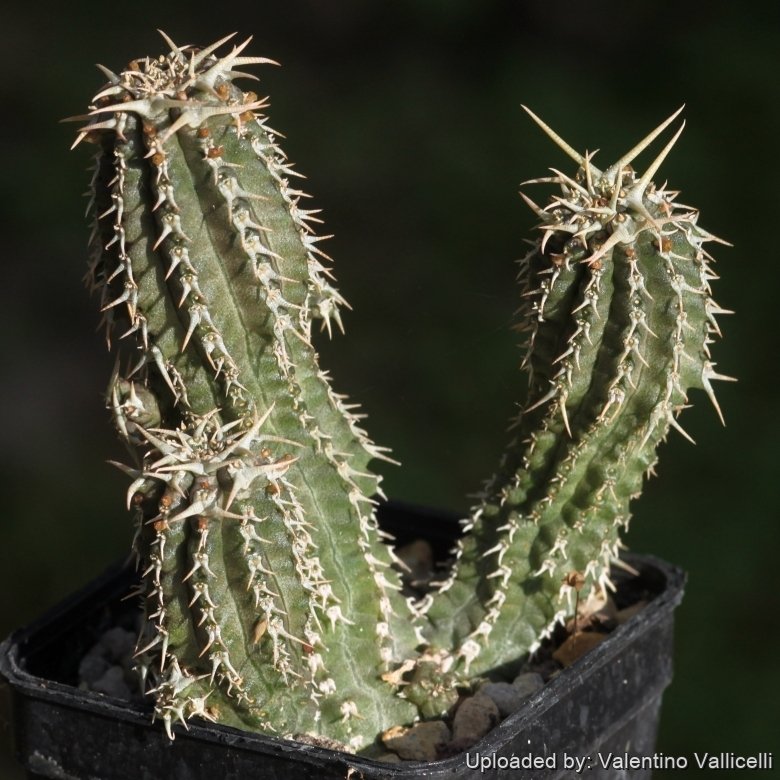
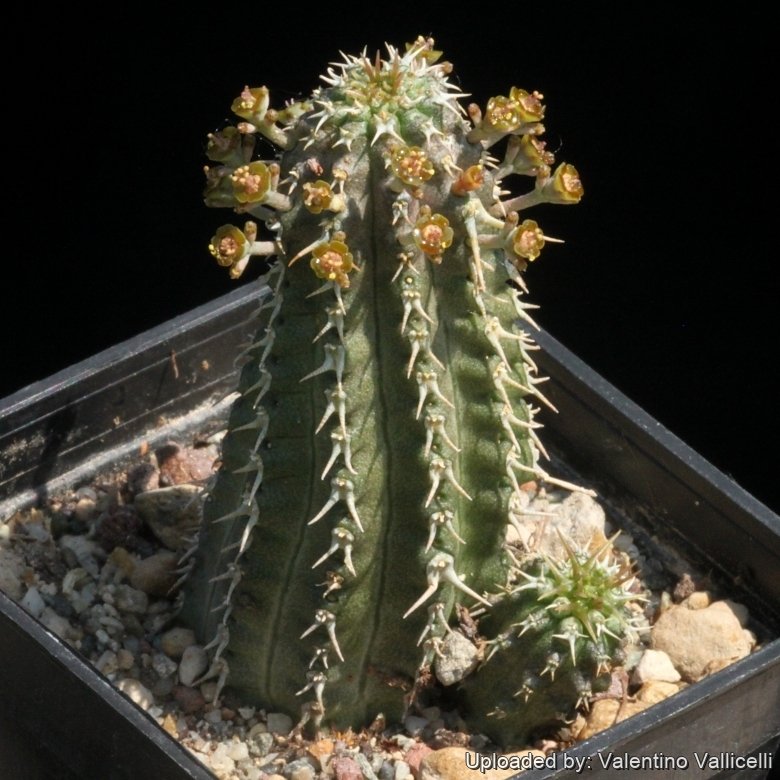
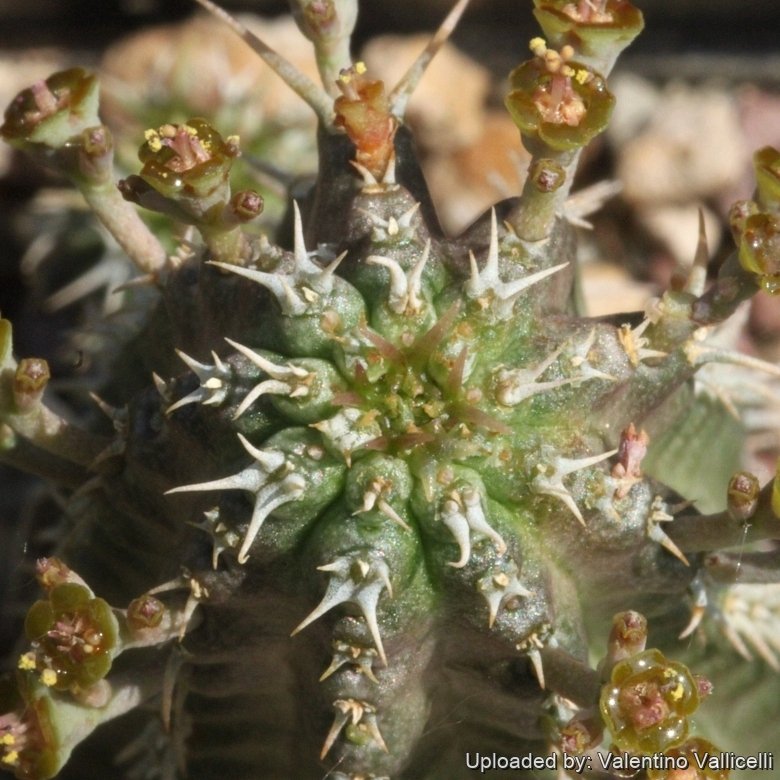
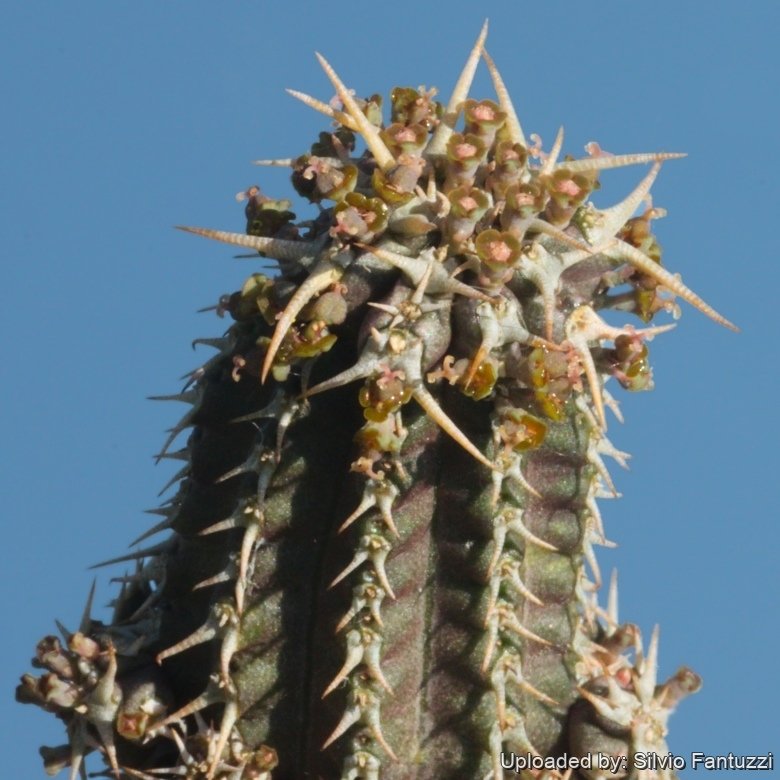
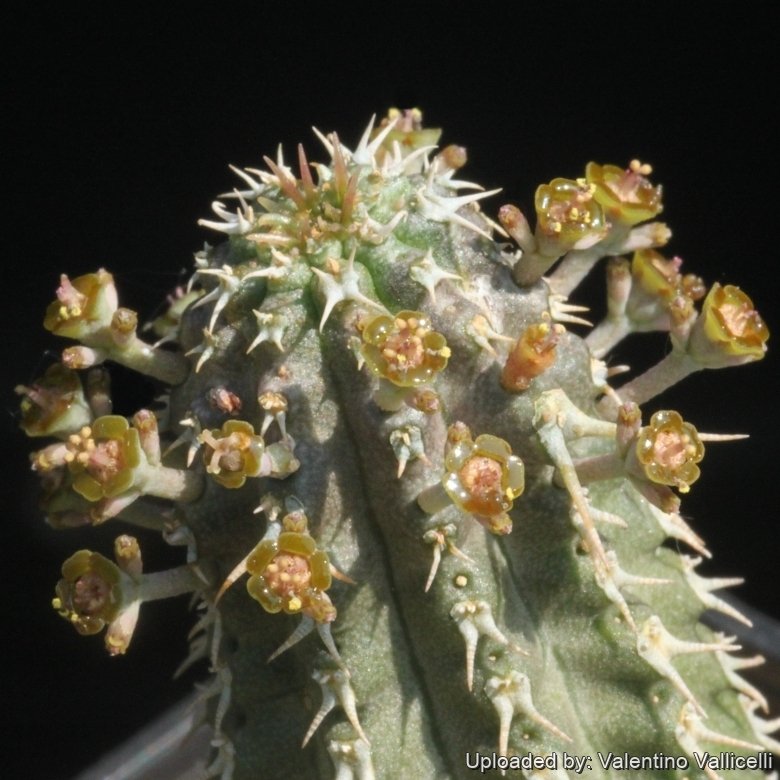
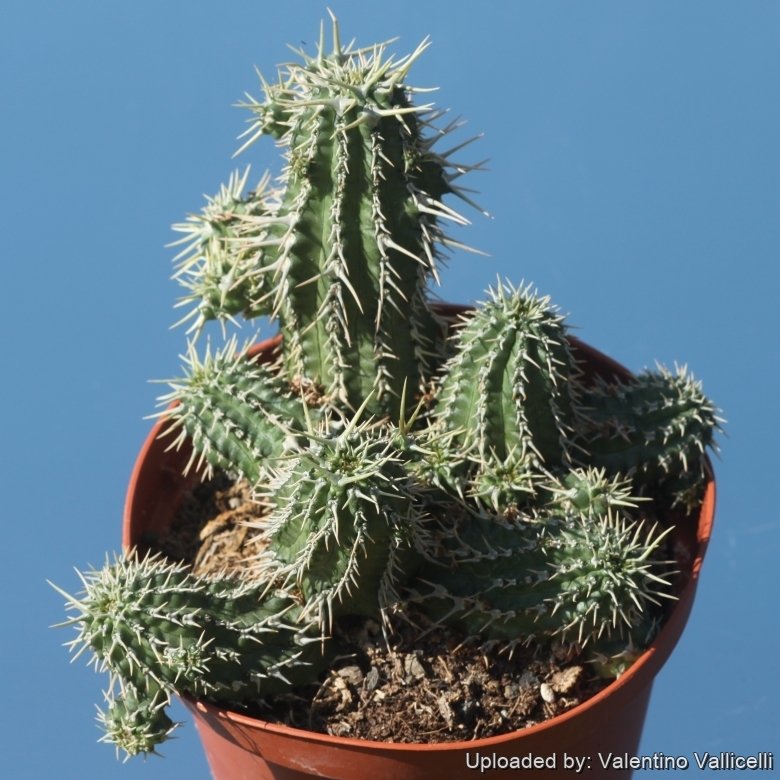
It is a small spiny succulent about 5-15 cm tall, that forms clumps up to 10 cm in diameter. It branches profusely at soil level.
Remarks: Euphorbia phillipsioides, has been identified mistakenly for some time as Euphorbia phillipsiae, which is shown to be conspecific with Euphorbia golisana.
Stems: Branches finger like erect, 1-2,5 cm in diameter, whith 10-14- groowed ribs, sinuately toothed, with teeth 2-4 mm apart.
Origin and Habitat
Somalia
Habitat: Stony, rocky limestone plains, with very sparse Acacia bushland; 1300-1500 m altitude.
Widespread in cultivation.
Cultivation and Propagation
It like a sunny position and does best in a mineral soil. Good drainage is essential. Water sparingly during the summer months and keep quite dry in winter. It can tolerate moderate shade, and a plant that has been growing in shade should be slowly hardened off before placing it in full sun as the plant will be severely scorched if moved too suddenly from shade into sun.
Propagation: Seeds, cuttings or grafting.
Bibliography
Major references and further lectures
-
Urs Eggli “Illustrated Handbook of Succulent Plants: Dicotyledons” Springer, 2002
-
James Cullen, Sabina G. Knees, H. Suzanne Cubey “The European Garden Flora Flowering Plants: A Manual for the Identification of Plants Cultivated in Europe, Both Out-of-Doors and Under Glass” Cambridge University Press, 11/ago/2011
-
Werner Rauh “The Wonderful World of Succulents: Cultivation and Description of Selected Succulent Plants Other Than Cacti” Smithsonian Institution Press, 1984
Cultivars and forms (1)
Forms (1)
Gallery