Description
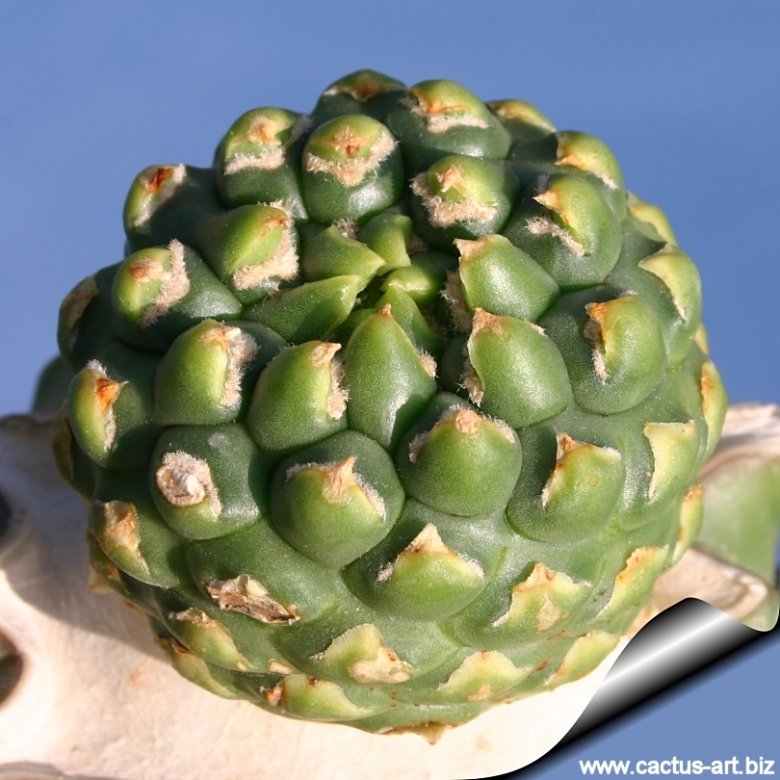
The standard Ferocactus peninsulae f. brevispinus is a solitary fast growing barrel ribbed cactus that differs from the type species in having a much shorter and stocky central spine (not enough to call it hooked!). The strange and very rare cv. Artichoke - Ferocactus peninsulae f. brevispinus cv. Artichoke - has peculiar spine less stems, in which each areole is located at the top of a rounded podarium, and is subtended by a fat triangular vestigial leaf. These podaria are imbricaded and form a nice spiralling pattern on the stem looking like an Obregonia denegrii or a fat green Artichoke.
Stem: Round.
Spines: Absent.
Flower: Not seen
Origin and Habitat
Garden origin (Nursery produced cultivar)
Cultivation and Propagation
It is not too difficult in a greenhouse, although grows quite slowly. It is usually seen as a grafted plant but can grow on its own roots too.
Soil: Use a mineral well permeable soil with little organic matter (peat, humus).
Exposure: They need a good amount of light shade to full sun this help to keep the plants healthy, although slow growth.
Watering: Water sparingly from March till October (weekly during summertime, if the weather is sunny enough), with a little fertilizer added. Less or no water during cold winter months, or when night temperatures remain below 10° to prevent root loss. It is sensitive to overwatering (rot prone).
Fertilization: Feeding may not be necessary at all if the compost is fresh then, feed in summer only if the plant hasn’t been repotted recently. Do not feed the plants from September onwards as this can cause lush growth which can be fatal during the darker cold months.
Hardiness: Keep perfectly dry in winter at temperatures from 5 to 15 degrees centigrade. (but it is relatively cold resistant and hardy to -5° C, or possibly colder for short periods) In the rest period no high atmospheric humidity!! (Temperature Zone: USDA 9-11)
Crested growth: Unlike ‘monstrose’ varieties of plants, where the variation from normal growth is due to genetic mutation, crested growth can occur on normal plants. Sometimes it’s due to variances in light intensity, or damage, but generally the causes are unknown. A crested plant may have some areas growing normally, and a cresting plant that looks like a brain, may revert to normal growth for no apparent reason. If you have any of the crested part left you need to remove the normal growth and leave the crested part behind this will need to be done regularly.
Propagation: Grafting or cuttings. Plants are usually grafted onto column-shaped cacti but proved to be able to produce their own roots if degrafted. Cuttings will take root in a minimum temperature of 20° C (but better in hot weather).
Gallery