Publication: Cactaceae (Britton & Rose) 3: 133, fig. 140. 1922 [12 Oct 1922]
Description
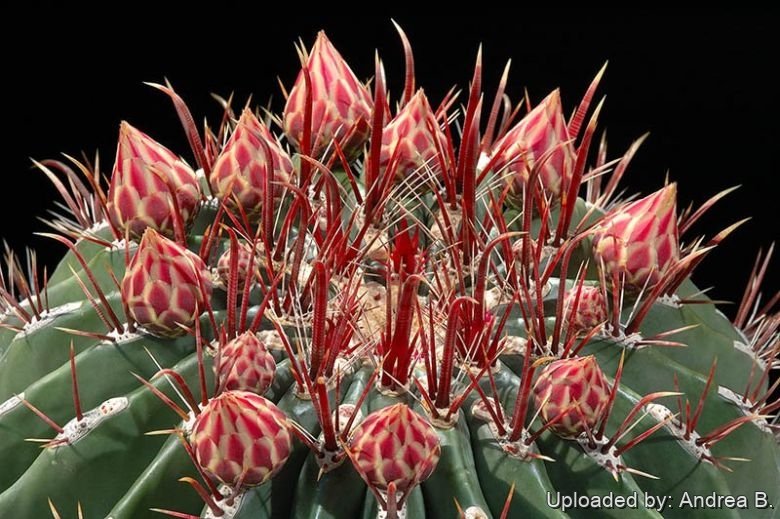
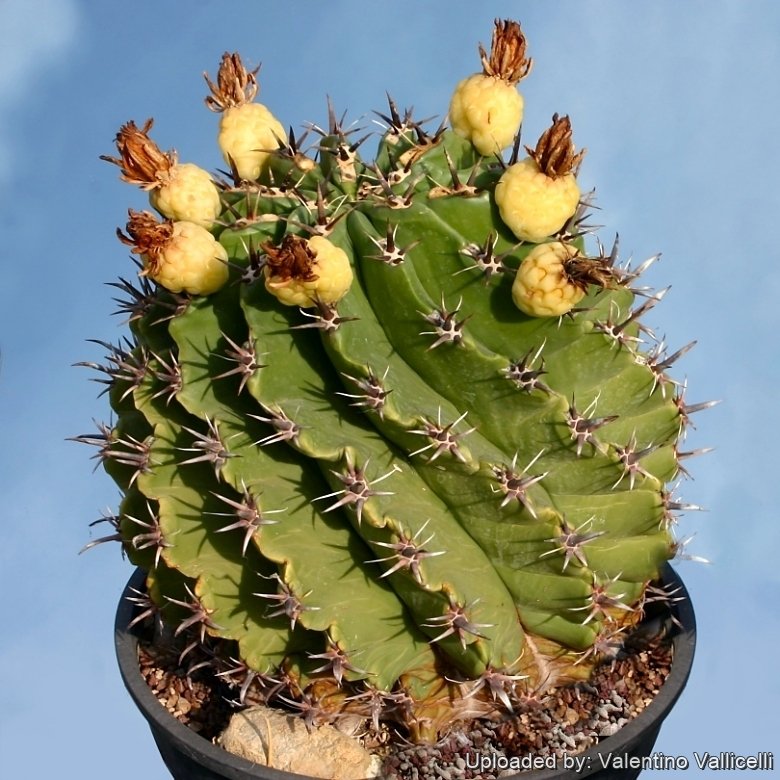
Ferocactus peninsulae is large ribbed barrel cactus with an erect stem becoming cylindric in age and attaining a height of 2,5 metres, which is unusual for the genus. Spines and flowers very similar to those of Ferocactus wislizeni. Cultivated plants can be reliably distinguished from Ferocactus wislizeni var. herrerae only when seeds or details of wild source are available.
Habit: Plants simple.
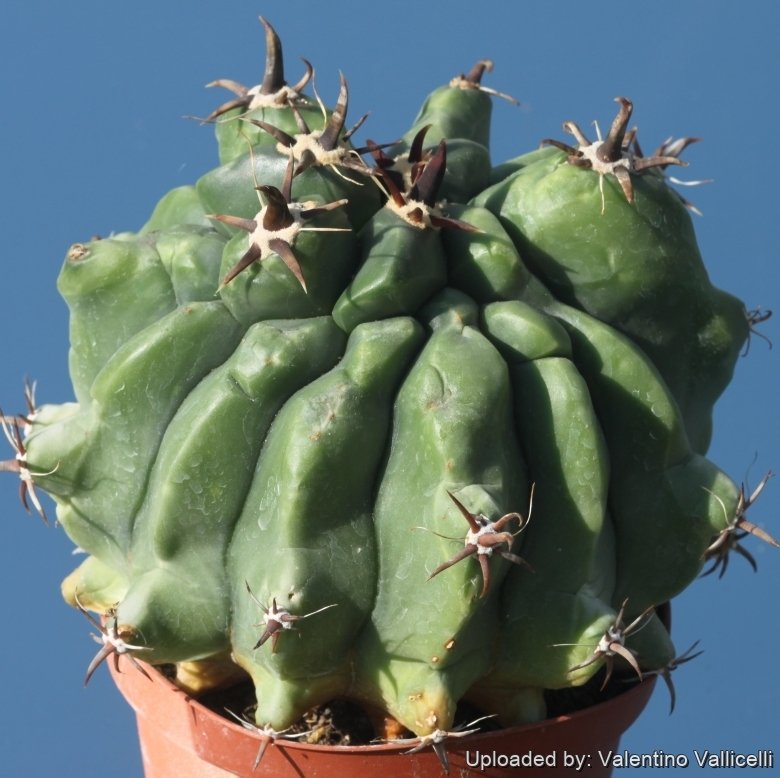
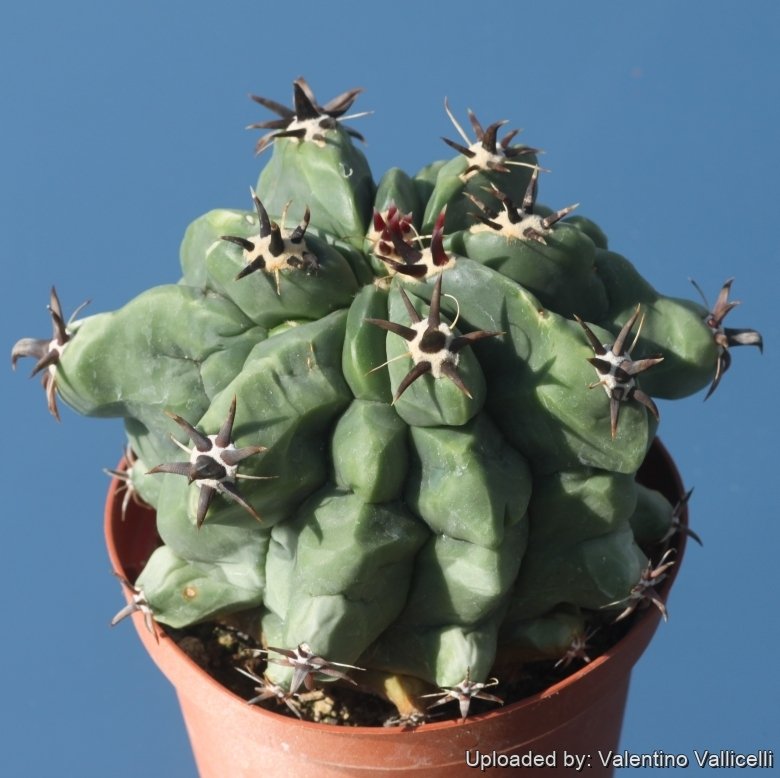
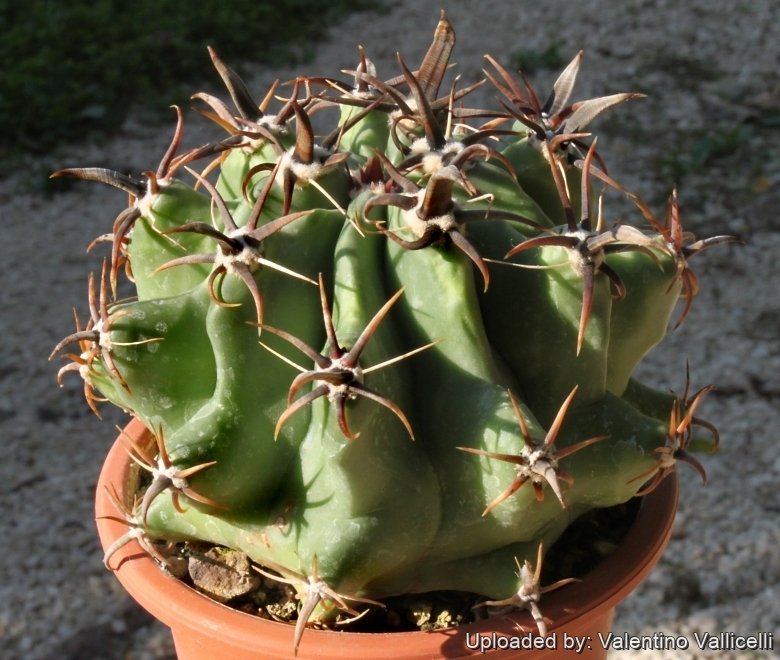
Stem: Unbranched, erect, up to 2,5 meters high (but usually about 70 cm), up to 40 across. Spherical, ovoid, clavate to cylindric to tapering toward the apex dark blue-green.
Ribs: 12 to 20, prominent, acute.
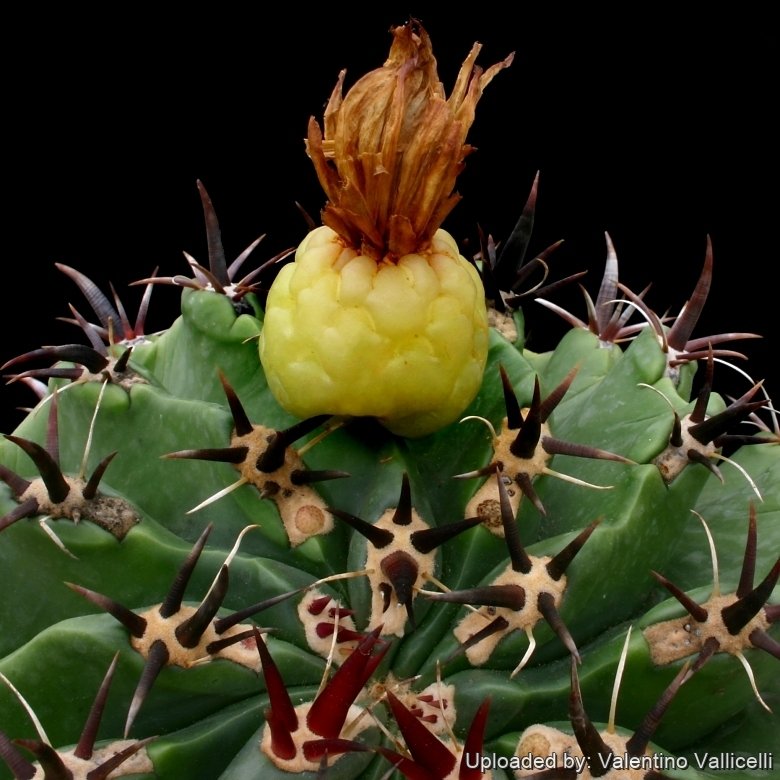
Areoles: Young areoles brown-felted, circular up to 20 mm long, constricted between the flower and the spine-bearing section, 4 cm apart or even less in old plants.
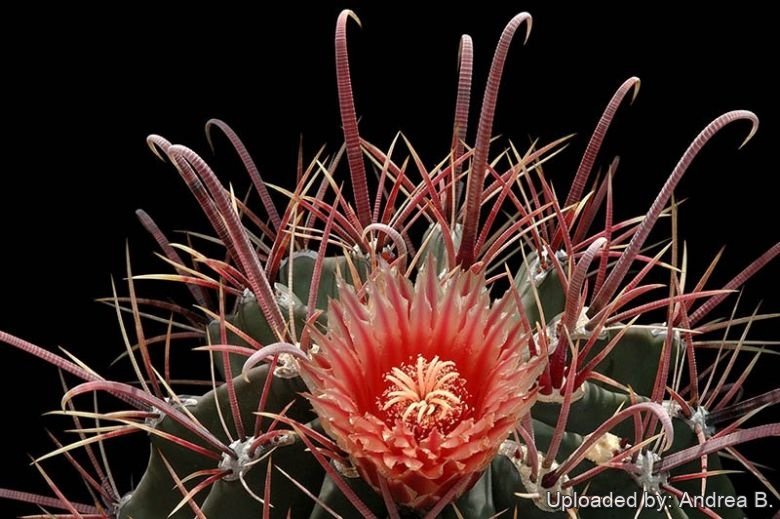
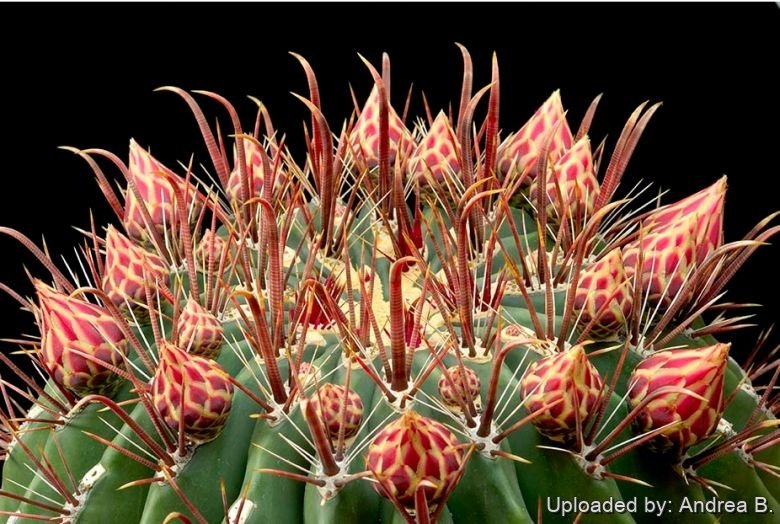
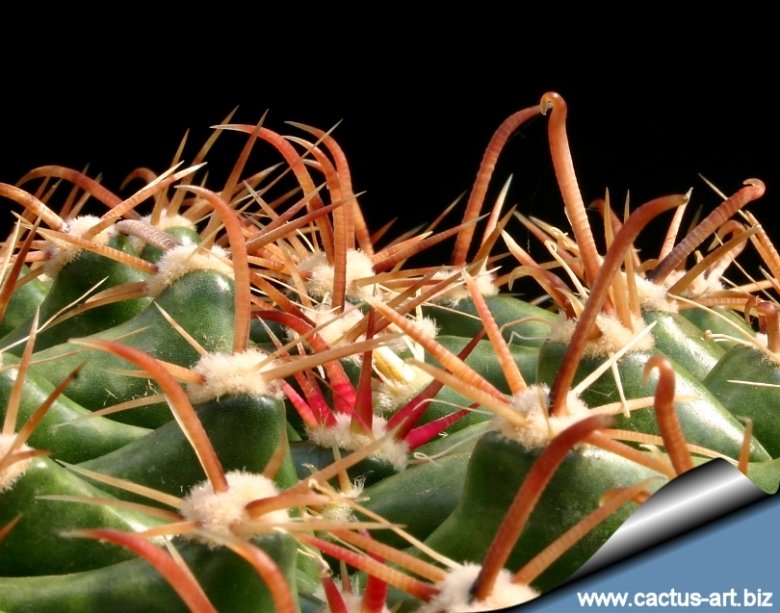
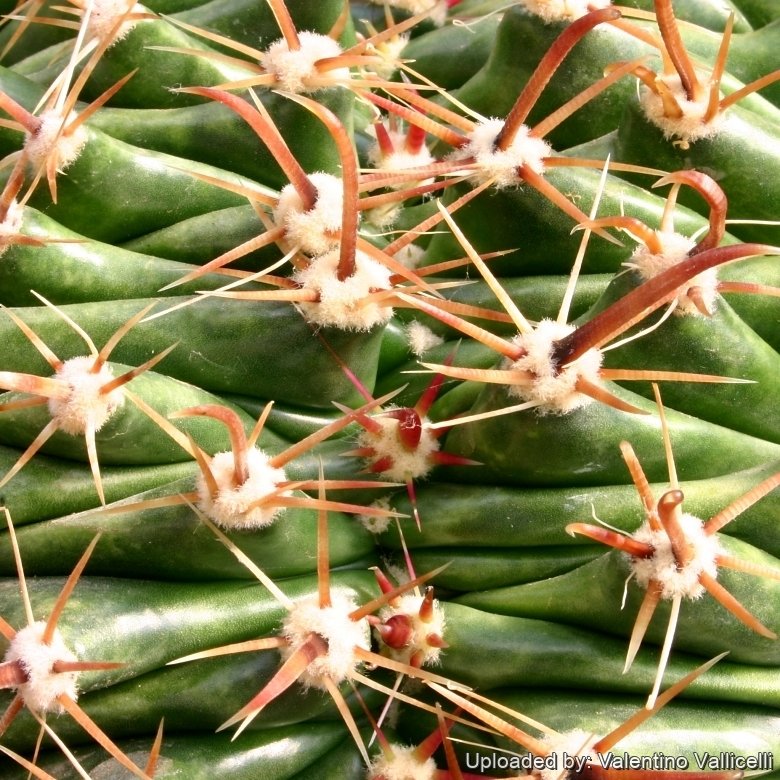
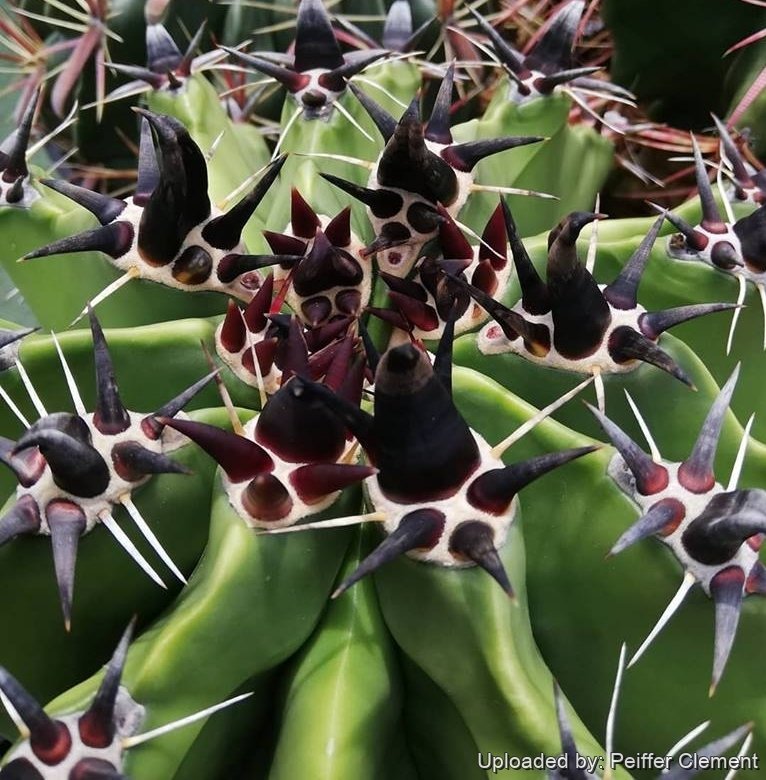
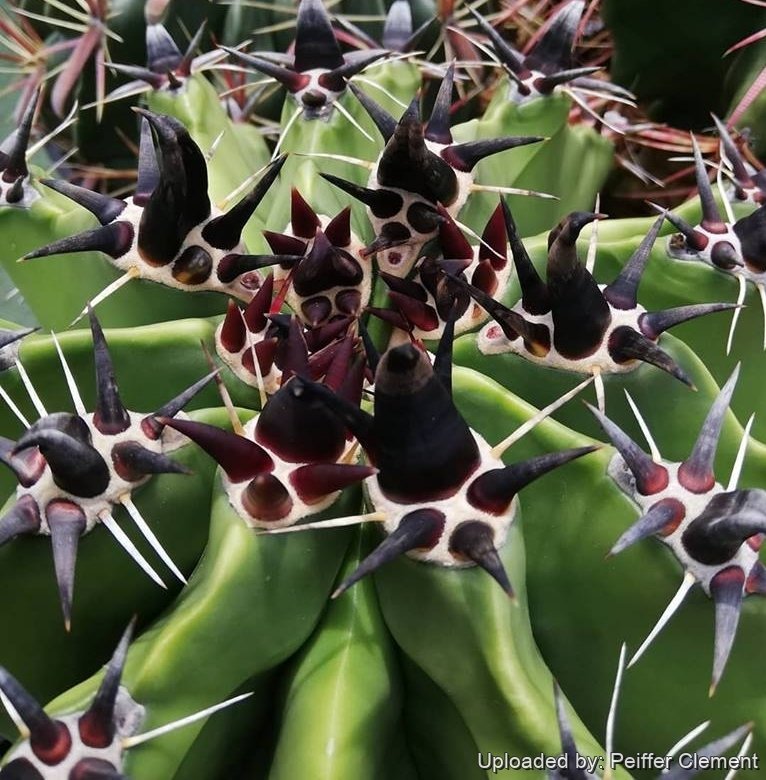
Central spines: 4, forming a cross, reddish with yellow tips, greyish or brown, the lower one flattened, strongly hooked, annulate.
Radial spines: 6-13 (usually more than 10) brownish or white, spreading, variable, straight, slender, terete, more or less annulate, the lower ones stouter and more colored, sometimes twisted and bristle-like.
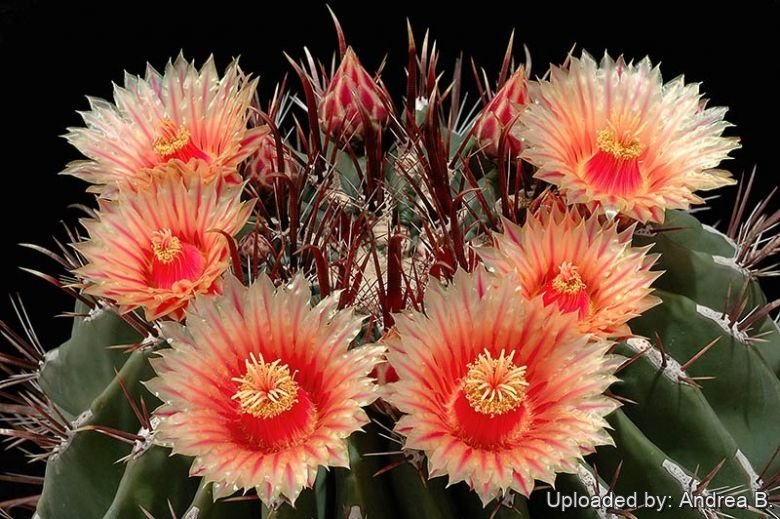
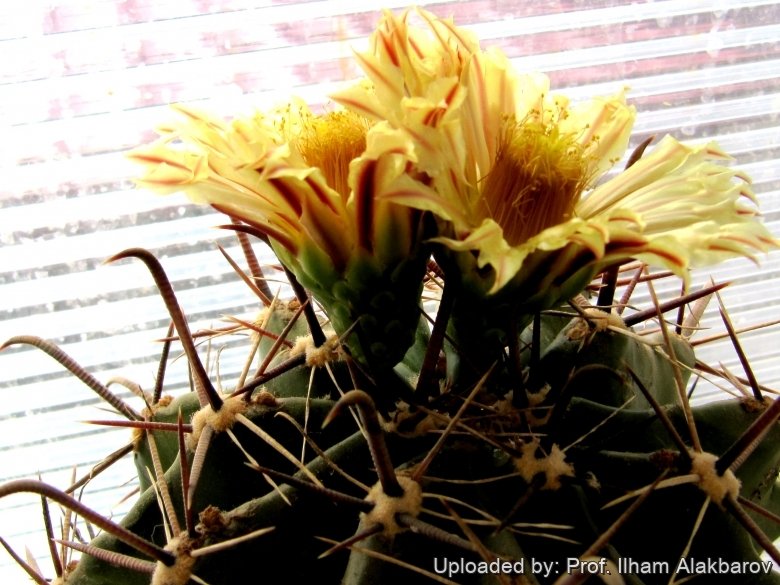
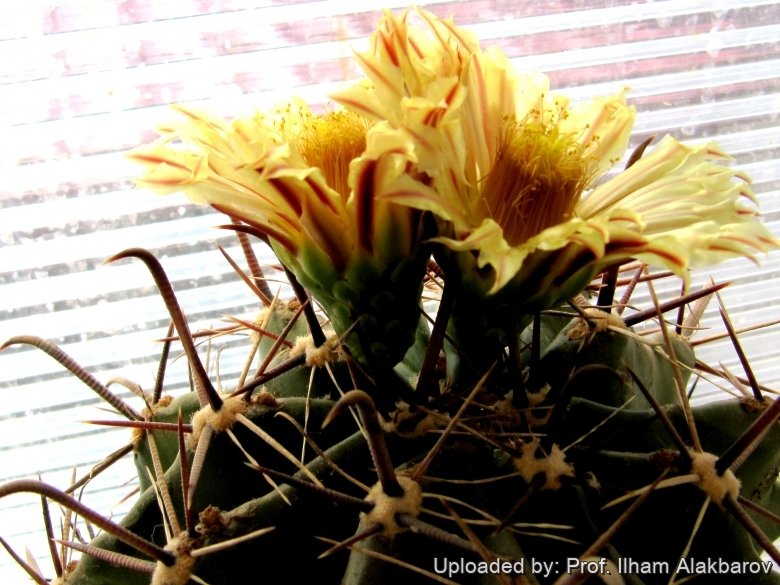
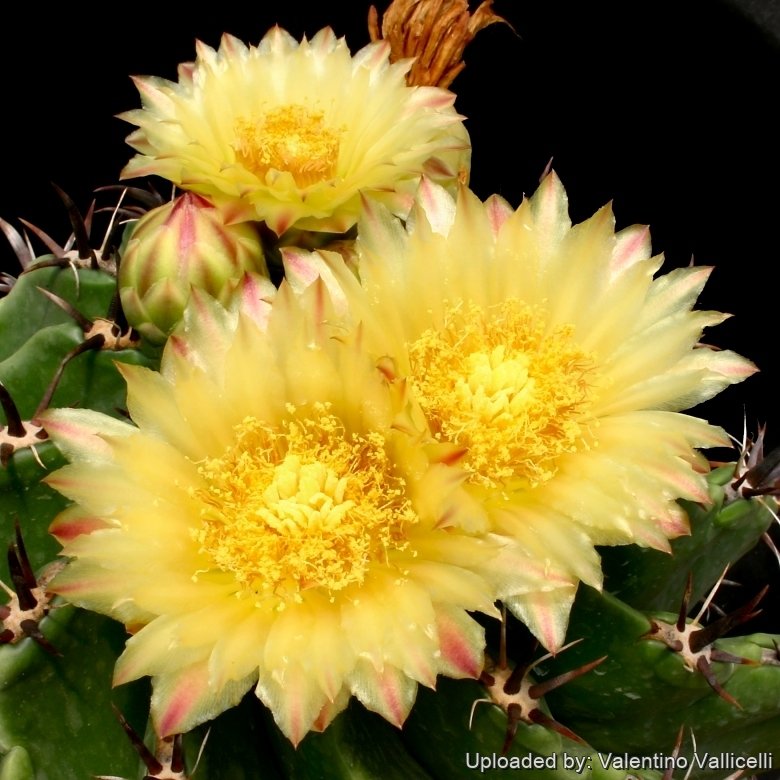
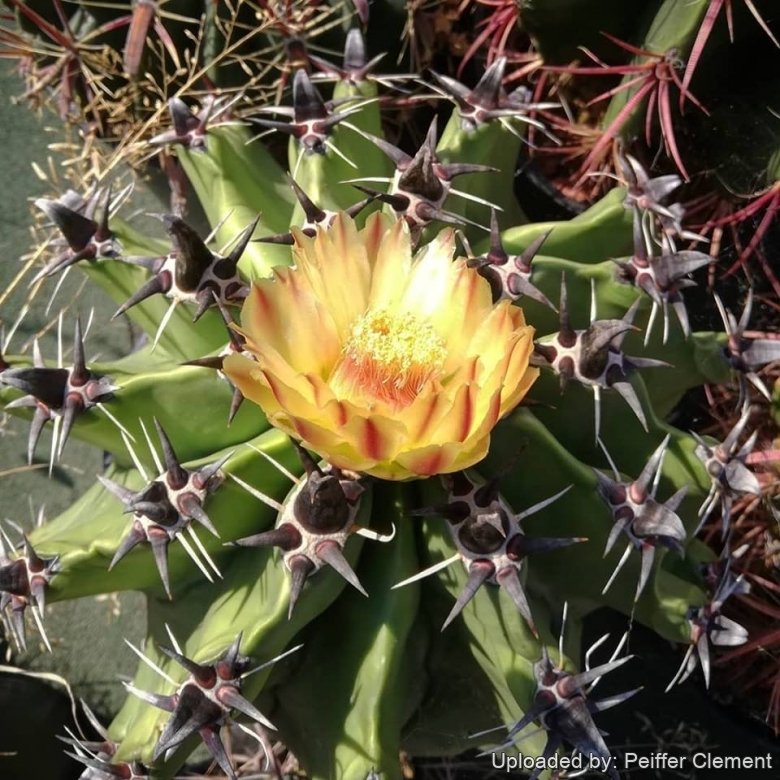
Flowers: Broadly funnelform, 5-6 cm long red to yellow with orange to red midveins.
Blooming season: Spring to autumn.
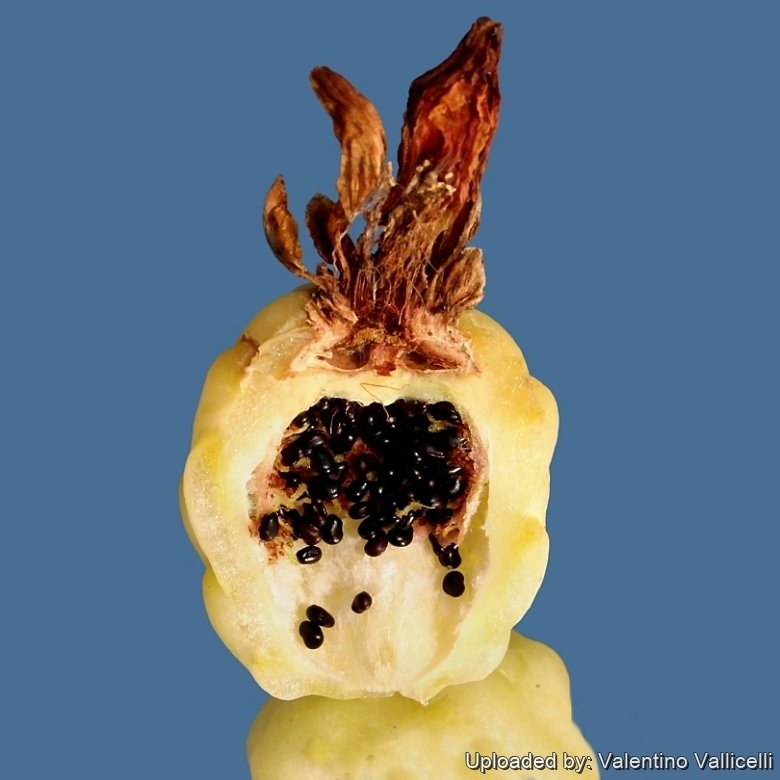
Fruit: Globose, yellowish, 2,5-3,5 cm long, bearing broad rounded scales.
Seeds. Seeds 1,2-2 mm long, brown to black, noticeably reticulate. Ferocactus peninsulae is large ribbed barrel cactus with an erect stem becoming cylindric in age and attaining a height of 2,5 metres, which is unusual for the genus. Spines and flowers very similar to those of Ferocactus wislizeni. Cultivated plants can be reliably distinguished from Ferocactus wislizeni var. herrerae only when seeds or details of wild source are available.
Habit: Plants simple.
Stem: Unbranched, erect, up to 2,5 meters high (but usually about 70 cm), up to 40 across. Spherical, ovoid, clavate to cylindric to tapering toward the apex dark blue-green.
Ribs: 12 to 20, prominent, acute.
Areoles: Young areoles brown-felted, circular up to 20 mm long, constricted between the flower and the spine-bearing section, 4 cm apart or even less in old plants.
Central spines: 4, forming a cross, reddish with yellow tips, greyish or brown, the lower one flattened, strongly hooked, annulate.
Radial spines: 6-13 (usually more than 10) brownish or white, spreading, variable, straight, slender, terete, more or less annulate, the lower ones stouter and more colored, sometimes twisted and bristle-like.
Flowers: Broadly funnelform, 5-6 cm long red to yellow with orange to red midveins.
Blooming season: Spring to autumn.
Fruit: Globose, yellowish, 2,5-3,5 cm long, bearing broad rounded scales.
Seeds: 1,2-2 mm long, brown to black, noticeably reticulate.
Origin and Habitat
Ferocactus peninsulae is the common barrel cactus through the states of Baja California and Baja California Sur, North West Mexico(extent of occurrence over 50,000 km2)
Altitude: From sea level to 450 metres above sea level.
Habitat and Ecology: The species occurs in rocky places, in sandy areas and hillsides together with Mammillaria dioica, Cochemiea setispina, Echinocereus ferreirianus and Lophocereus schottii. The species tends to be more common in the south than the north of the Baja peninsula, however, the population is declining. The main threat is illegal collection. It is also used as fodder for cattle, and there is habitat destruction due to urbanization and creation of artificial grasslands.
Cultivation and Propagation
Ferocactus peninsulae is a summer-growing and pretty easy plant thought slow to start. It makes great potted specimens, and is a great cactus for beginning collectors.
Growth rate: It is a slow growing species. Plant in good conditions will start to bloom when reach the diameter of only 20-25 cm.
Soil: It grows well in a rich, well drained soil such us clay, pumice, lava grit, and only a little peat or leaf-mould, but it isn’t picky about soil.
Repotting: If potted, repot them preferably in the spring, if their roots become cramped. Generally, they should be repotted every other year in order to provide fresh soil. However, this doesn’t necessarily mean they’ll need larger containers. Fill about a quarter of the pot with broken crocks, gravel, etc. to promote good drainage. After repotting, do not water for a week or more. Use pot with good drainage. Eventually, as the plant becomes mature grow it slowly, and adopt a new repotting period, using intervals of every 2 - 3 years. Additionally grow it under drier conditions or with stronger sunlight.
Watering: Water regularly during the summer so long as the plant pot is allowed to drain and not sit in a tray of water (It rots easily, especially if over wet), and also needs to be avoided wetting the body of this plant while it is in sunlight. A wet cactus in the sun light can cause sun burning which can lead to scares or even fungal infections and death.. Let dry between watering. During hot weather you may need to water the plants more frequently so long as the plant is actively growing. From late September watering should be reduced to force the plant to go in to a state of semi dormancy, by October you should be back in to the winter watering regime. If the soil is allowed to be dry for too long root loss could follow but equally the same result would occur if the plants are both wet and cold. From March onward the plant will begin to grow and watering should be increased gradually until late May when the plant should be in full growth
Fertilization: Feed with a high potassium fertilizer in summer. Feeding may not be necessary at all if the compost is fresh then, feed in summer only if the plant hasn’t been repotted recently. Do not feed the plants from September onward as this can cause lush growth which can be fatal during the darker cold months.
Hardiness: When dormant, the plant is slightly cold tolerant (down to nearly -2° C or less), but when left out it is more sensitive to frost. However warmth throughout the year will increase the grower’s success (at minimum temperatures above 5 degrees centigrade during rest season). During the summer it is best to keep the plants outside where the temperature can rise to over 30 C with no harm to the plant. This plants need a period of cool rest in winter to produce flowers abundantly.
Exposure: They do need a lot of light to develop their typical spination, but different clones vary in their tolerance of full sunshine. However some protection in light shade is recommended during the hottest hours in summer. It can tolerate moderate shade, and a plant that has been growing in shade should be slowly hardened off before placing it in full sun as the plant will be severely scorched if moved too suddenly from shade into sun. If kept too dark they may become overly lush and greener and could be prone to rotting due to over watering.
Uses: It is an excellent plant for container growing. It always looks good and stays small. It looks fine in a cold greenhouse and frame.
Traditional uses: Mexicans on the peninsula of Lower California often cut off the spines of this plant and use it as feed for cattle.
Diseases and pests: Watch for infestations of mealybugs, scale insects and spider mite. Rot is only a minor problem with cacti if the plants are watered and “aired” correctly. If they are not, fungicides won’t help all that much.
Propagation: Seeds are the only way of reproducing, remembering that seedlings dislike strong light and dry conditions and need to be repotted frequently. Seed Collecting: Permit fruit to ripen. Fruit must be significantly overripe before harvesting seed; clean and dry seeds.
Bibliography
Major references and further lectures
-
James Cullen, Sabina G. Knees, H. Suzanne Cubey “The European Garden Flora Flowering Plants: A Manual for the Identification of Plants Cultivated in Europe, Both Out-of-Doors and Under Glass” Cambridge University Press, 11/Aug./2011
-
David Hunt, Nigel Taylor “The New Cactus Lexicon” DH Books, 2006
-
Edward F. Anderson “The Cactus Family” Timber Press, 2001
-
Nathaniel Lord Britton, Joseph Nelson Rose “Cactaceae: Descriptions and Illustrations of Plants of the Cactus Family” Volume 3, 1922
-
Jeanette Coyle, Norman C. Roberts “A field guide to the common and interesting plants of Baja California” Natural History Pub. Co., 1975
-
León de la Luz, J.L., Hernández, H.M. & Gómez-Hinostrosa, C. 2013. Ferocactus peninsulae. In: IUCN 2013. “IUCN Red List of Threatened Species.” Version 2013.2. <www.iucnredlist.org>. Downloaded on 06 March 2014.
From llifle page Ferocactus horridus f. brevispinus (Chinned type)
Description
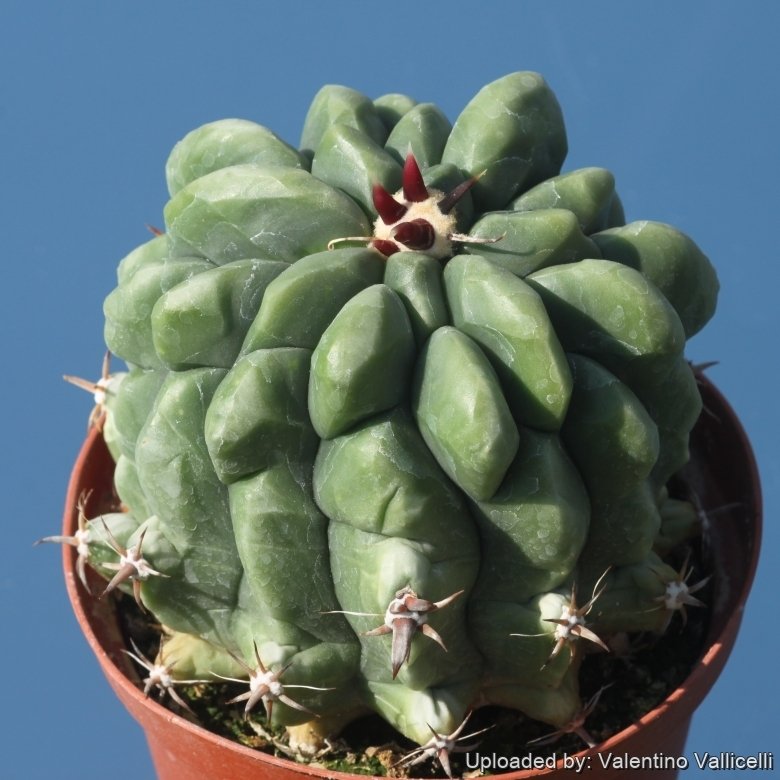
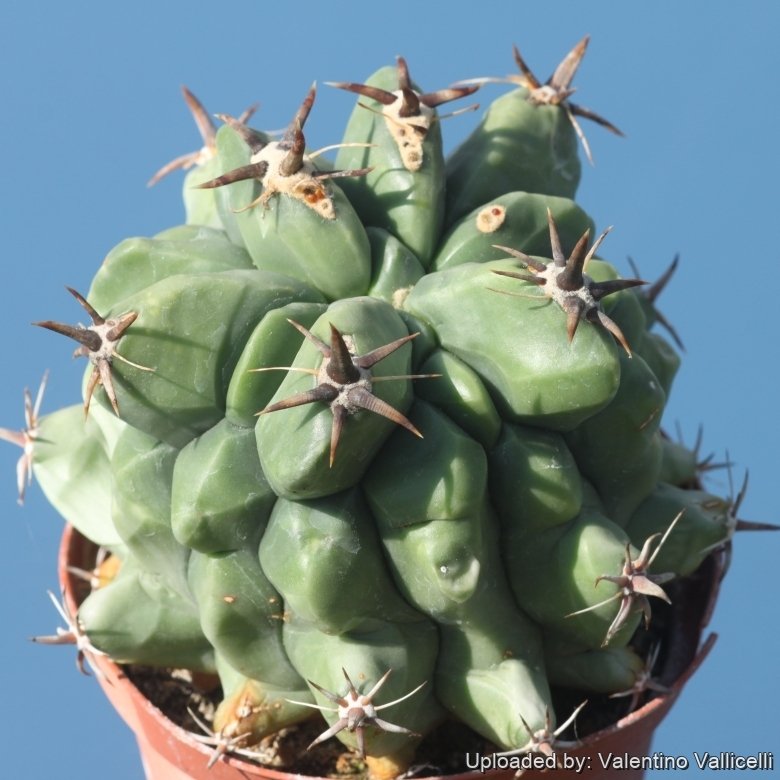
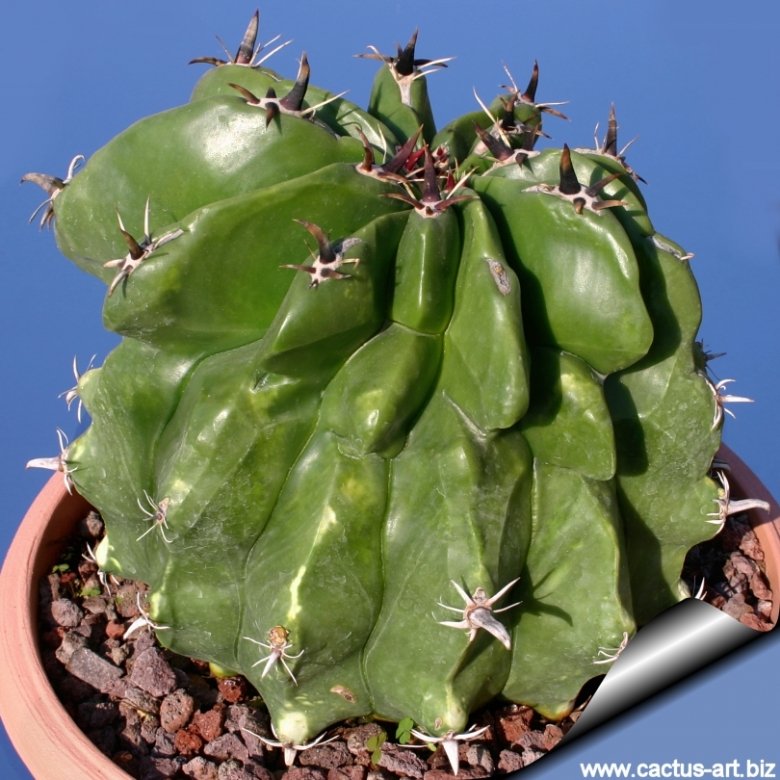
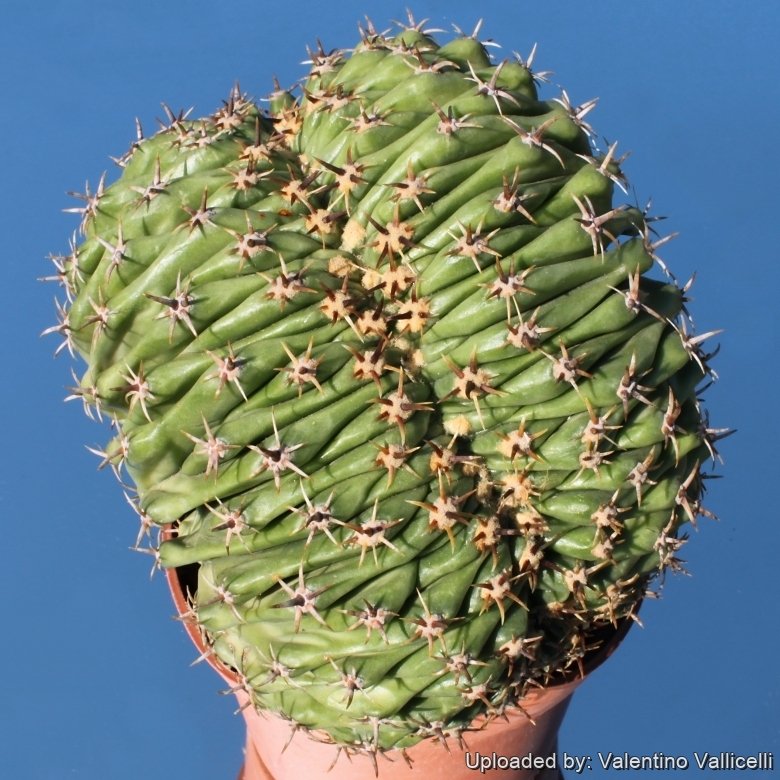
The standard Ferocactus peninsulae f. brevispinus (also known as Ferocactus horridus f. brevispinus) is a solitary fast growing barrel ribbed cactus that differs from the type species in having a much shorter and stocky central spine (not enough to call it hooked!). This plant becomes very nice when a bit older. The strange and very rare “Chinned form” - Ferocactus peninsulae f. brevispinus (Chinned type) - has peculiar chinned ribs, this characteristic is not evident in young specimen, but will appears only in 10 or more years old plant and will progressively enhance as the plant older.
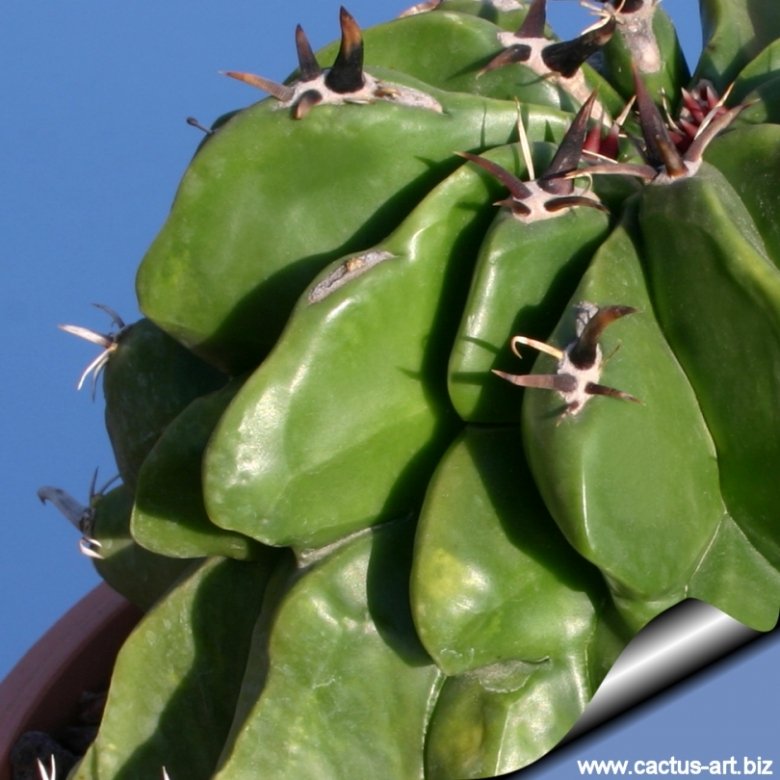
Chinned form: This peculiar variety has both tubercles with spiny areoles and smooth tubercles without areoles, the plants, that are raised from seeds are quite variable both in size and form of tubercles and in ratio of spineless tubercles. The “chins” of juvenile seedling usually bear a spiny areole, but as the plant older the chins start loosing their spines. Sometime, especially in very old specimens, the chins becomes completely naked without areoles, smooth and shining. A large well grown plant is truly an achievement. The plants with mostly spineless tubercles just at a juvenile stage are very rare and highly priced by collectors.
Stem: Round to elongated dark green 25-40 cm in diameter 40-100 tall.
Central spines: Has a very short but strong, recurving brownish-grey, large central spine. Slightly hooked or just with a slight kink at the end. Very dark red to almost black that can take a chalky colour ageing.
Radial spines: 7-10 short, straight but stout
Flower: Orange/Yellow and have orange or red midviens.
Fruits: Lemon yellow.
Seeds: Black. shining.
Origin and Habitat
The Ferocactus horridus came from Mexico (Southern Baja California) but this short spined form is presumably of garden origin (Nursery selected form)
Habitat: Grows in grit on the hill-sides. It gets lots of water in two months and lots of sun all year.
Cultivation and Propagation
It is a summer-growing and pretty easy species thought slow to start. It is suited for any rich, well drained soil such us clay, pumice, lava grit, and only a little peat or leaf-mould. If potted, repot preferably in the spring, if their roots become cramped. Generally, they should be repotted every other year in order to provide fresh soil. However, this doesn’t necessarily mean they’ll need larger containers. Fill about a quarter of the pot with broken crocks, gravel, etc. to promote good drainage. After repotting, do not water for a week or more. Water regularly during the aestival growth cycle (this plant need plenty of water, but do not overwater and let their soil dry out between waterings), and also needs to be avoided wetting the body of this plant while it is in sunlight. A wet cactus in the sun light can cause sun burning which can lead to scares or even fungal infections and death, keep rather dry in winter. No water should ever be allowed to stand around the roots. Feed with a high potassium fertilizer in summer. Exposure: Outside they need a bright exposure, full sun or half shade in summer if the location is exceedingly hot or bright, inside needs bright light, and some direct sun. It can tolerate moderate shade, and a plant that has been growing in shade should be slowly hardened off before placing it in full sun as the plant will be severely scorched if moved too suddenly from shade into sun.
Frost Tolerance: Light frost protection required for safe cultivation, but can tolerate sporadic light frost. This plants need a period of cool rest in winter to produce flowers abundantly.
Diseases and pests: Watch for infestations of mealybug, scale insects and spider mite.
Plant in good conditions will start to bloom when reach the diameter of only 15-18 cm.
Propagation: It can be reproduced exclusively by cuttings. The cuttings will take root in a minimum temperature of 20° C. Cuttings of healthy shoots can be taken in the spring and summer, Cut them with a sharp, sterile knife, leave the cutting in a warm, dry place for a week or weeks (depending on how thick the cutting is) until a callus forms over the wound. Once the callus forms, the cutting may be inserted in a container filled with firmed cactus potting mix topped with a surface layer of coarse grit. They should be placed in the coarse grit only; this prevents the cut end from becoming too wet and allows the roots to penetrate the rich compost underneath, they root easily with no further assistance. Just let them lay on the soil and you have a new start. The cuttings should root in 2 to 8 weeks. It is also possible to reproduce it by seeds but the result is unpredictable.
Source: Ferocactus horridus f. brevispinus (Chinned type), LLIFLE - Encyclopedia of living forms, CC-BY-SA, retrieved 2026-10-25.
From llifle page Ferocactus horridus f. brevispinus cristatus
Description
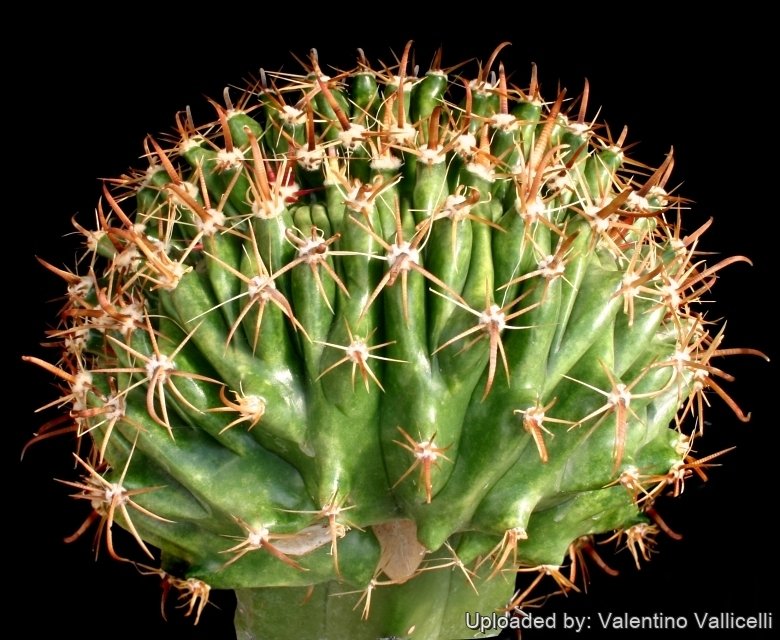
Ferocactus peninsulae f. brevispinus is a solitary fast growing barrel cactus that differs from the type species in having a much shorter but stocky hooked central spine. The crested form Ferocactus peninsulae f. brevispinus cristatus - despite to its beauty - is still very rare and sought after by collectors, for its unique features.
Stem: Fan-shaped, ribbed, stout, dark green up to 25 (or more) cm in width and attaining exceptionally a height of 70 cm.
Central spines: Has a very short but strong, recurving brownish-grey, large central spine. Slightly hooked or just with a slight kink at the end. Very dark red to almost black that can take a chalky colour ageing.
Radial spines: 7-10 short, straight but stout
Flower: Orange/Yellow and have orange or red midviens.
Fruits: Lemon yellow.
Seeds: Black, shining.
Origin and Habitat
Garden origin (Nursery produced cultivar)
Cultivation and Propagation
It is not too difficult in a greenhouse, although grows quite slowly. It is usually seen as a grafted plant but can grow on its own roots too.
Soil: Use a mineral well permeable soil with little organic matter (peat, humus).
Exposure: They need a good amount of light shade to full sun this help to keep the plants healthy, although slow growth.
Watering: Water sparingly from March till October (weekly during summertime, if the weather is sunny enough), with a little fertilizer added. Less or no water during cold winter months, or when night temperatures remain below 10° to prevent root loss. It is sensitive to overwatering (rot prone).
Fertilization: Feeding may not be necessary at all if the compost is fresh then, feed in summer only if the plant hasn’t been repotted recently. Do not feed the plants from September onwards as this can cause lush growth which can be fatal during the darker cold months.
Hardiness: Keep perfectly dry in winter at temperatures from 5 to 15 degrees centigrade. (but it is relatively cold resistant and hardy to -5° C, or possibly colder for short periods) In the rest period no high atmospheric humidity!! (Temperature Zone: USDA 9-11)
Crested growth: Unlike ‘monstrose’ varieties of plants, where the variation from normal growth is due to genetic mutation, crested growth can occur on normal plants. Sometimes it’s due to variances in light intensity, or damage, but generally the causes are unknown. A crested plant may have some areas growing normally, and a cresting plant that looks like a brain, may revert to normal growth for no apparent reason. If you have any of the crested part left you need to remove the normal growth and leave the crested part behind this will need to be done regularly.
Propagation: Grafting or cuttings. Plants are usually grafted onto column-shaped cacti but proved to be able to produce their own roots if degrafted. Cuttings will take root in a minimum temperature of 20° C (but better in hot weather). Cuttings of healthy shoots can be taken in the spring and summer. Cut the stem with a sharp, sterile knife, leave the cutting in a warm, dry place for a week or weeks (depending on how thick the cutting is) until a callus forms over the wound. Once the callus forms, the cutting may be inserted in a container filled with firmed cactus potting mix topped with a surface layer of coarse grit. They should be placed in the coarse grit only; this prevents the cut end from becoming too wet and allows the roots to penetrate the rich compost underneath. The cuttings should root in 2 to 6 weeks. Large crested piece must be placed on the soil surface without burying the plant base down in the soil.
Source: Ferocactus horridus f. brevispinus cristatus, LLIFLE - Encyclopedia of living forms, CC-BY-SA, retrieved 2026-10-25.
From llifle page Ferocactus horridus f. brevispinus
Description
Ferocactus peninsulae f. brevispinus is a solitary fast growing barrel ribbed cactus that differs from the type species in having a much shorter but stocky hooked central spine. This plant becomes very nice when a bit older.
Stem: Round to elongated dark green 25-40 cm in diameter 40-100 tall and attaining exceptionally a height of 2,5 metres, which is unusual for the genus.
Central spines: Has a very short but strong, recurving brownish-grey, large central spine. Slightly hooked or just with a slight kink at the end. Very dark red to almost black that can take a chalky colour ageing.
Radial spines: 7-10 short, straight but stout
Flower: Orange/Yellow and have orange or red midviens.
Fruits: Lemon yellow.
Seeds: Black, shining.
Origin and Habitat
F. horridus came from Mexico (Southern Baja California) but this short spined form is presumably of garden origin (Nursery selected form)
Habitat: Grows in grit on the hill-sides. It gets lots of water in two months and lots of sun all year.
Cultivation and Propagation
It is a summer-growing and pretty easy species thought slow to start. It is suited for any rich, well drained soil such us clay, pumice, lava grit, and only a little peat or leaf-mould. If potted, repot preferably in the spring, if their roots become cramped. Generally, they should be repotted every other year in order to provide fresh soil. However, this doesn’t necessarily mean they’ll need larger containers. Fill about a quarter of the pot with broken crocks, gravel, etc. to promote good drainage. After repotting, do not water for a week or more. Water regularly during the aestival growth cycle (this plant need plenty of water, but do not overwater and let their soil dry out between waterings), and also needs to be avoided wetting the body of this plant while it is in sunlight. A wet cactus in the sun light can cause sun burning which can lead to scars or even fungal infections and death, keep rather dry in winter. No water should ever be allowed to stand around the roots. Feed with a high potassium fertilizer in summer.
Exposure: Outside they need a bright exposure, full sun or half shade in summer if the location is exceedingly hot or bright, inside needs bright light, and some direct sun. It can tolerate moderate shade, and a plant that has been growing in shade should be slowly hardened off before placing it in full sun as the plant will be severely scorched if moved too suddenly from shade into sun.
Frost Tolerance: Light frost protection required for safe cultivation, but can tolerate sporadic light frost. This plants need a period of cool rest in winter to produce flowers abundantly.
Diseases and pests: Watch for infestations of mealybug, scale insects and spider mite.
Plant in good conditions will start to bloom when reach the diameter of only 15-18 cm.
Propagation: Seeds are the only way of reproducing.
Source: Ferocactus horridus f. brevispinus, LLIFLE - Encyclopedia of living forms, CC-BY-SA, retrieved 2026-10-25.
Cultivars and forms (8)
Forms (3)
Cultivars (1)
Gallery