Publication: Cactaceae (Backeberg) 3:, 1959
Description
Frailea pygmaea as the name implies (“pygmaeus” meaning dwarf), is a very small cactus that lives half buried in the ground. Most of the plants in habitat are single headed unless they are damaged.
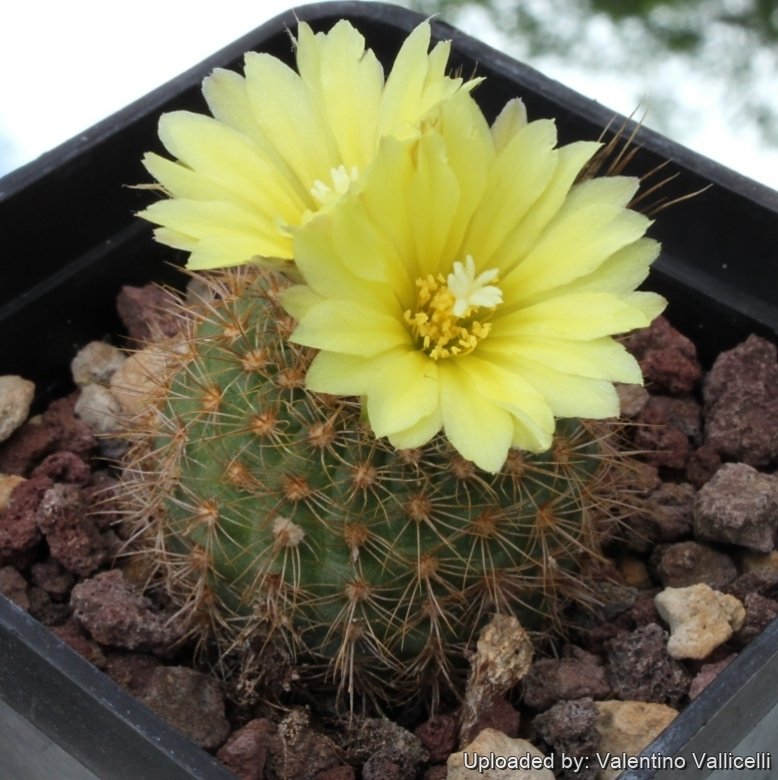
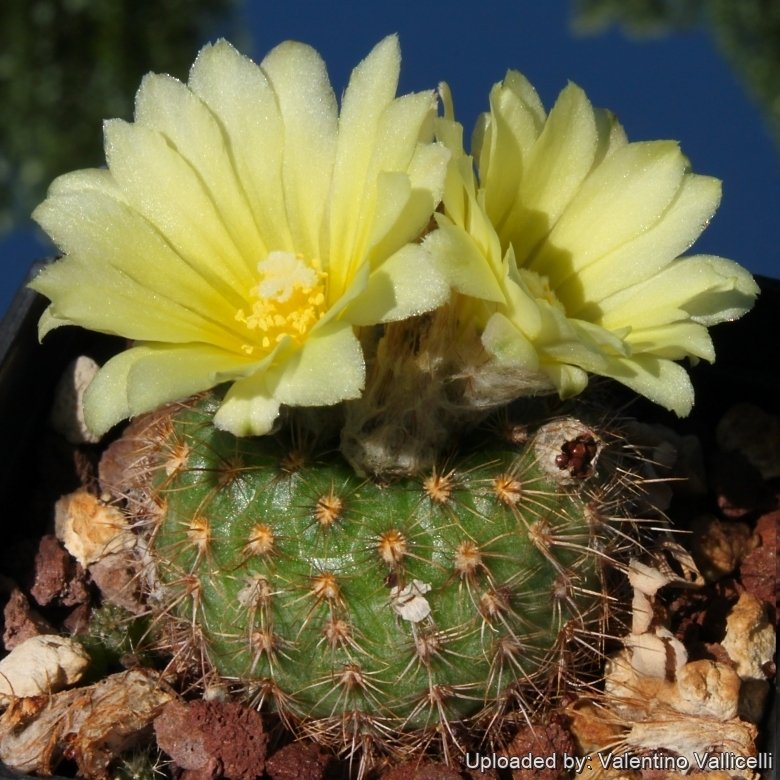
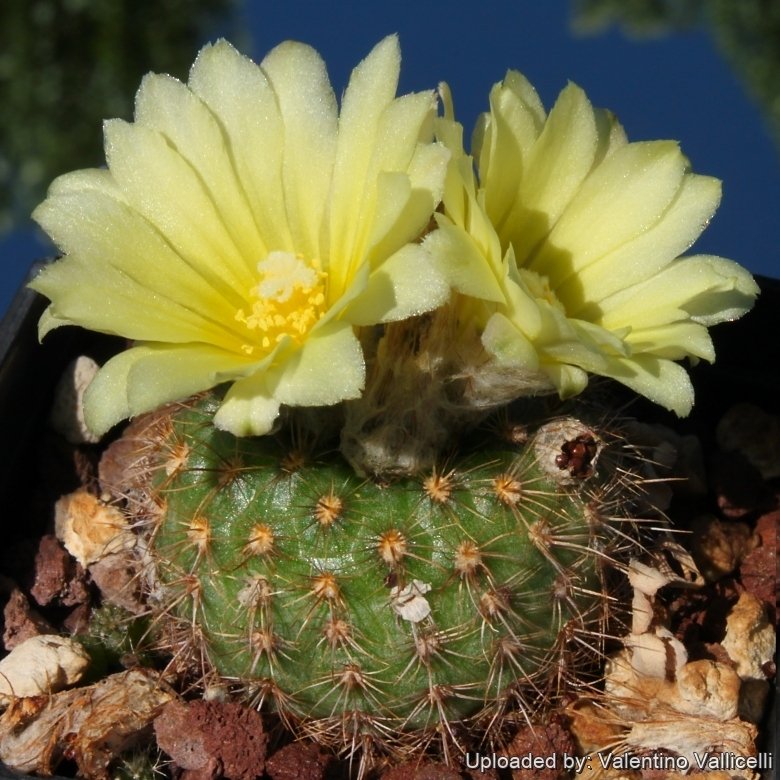
The “dadakii” form is globular, depressed on top, with about 12 ribs. It branches profusely from the base forming soon dense clumps. The spines are all radial, usually 8, brownish passing to white, curved backwards and twisted.
Root: Long tuberose, inversely conical 2-3 cm wide.
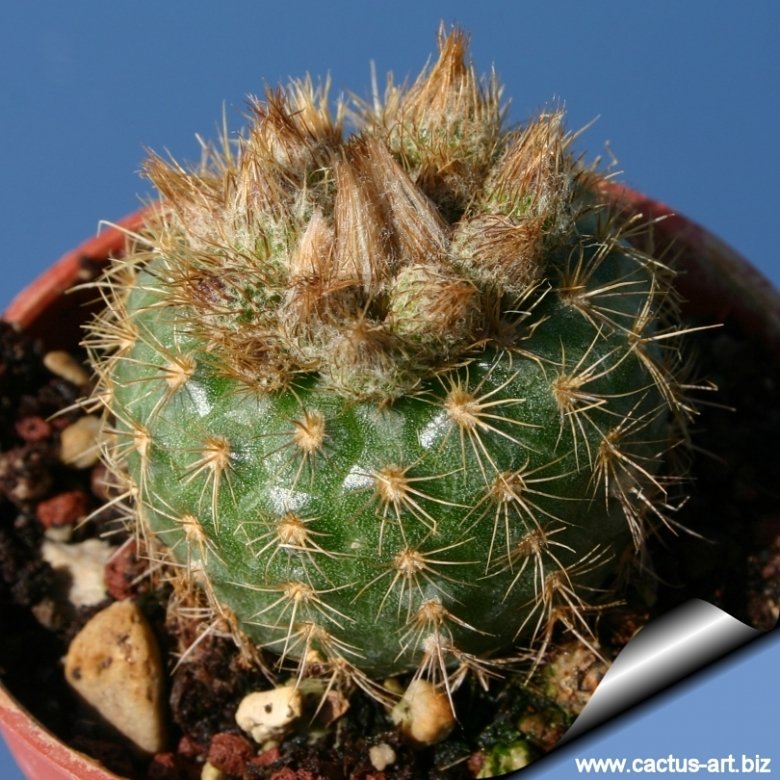
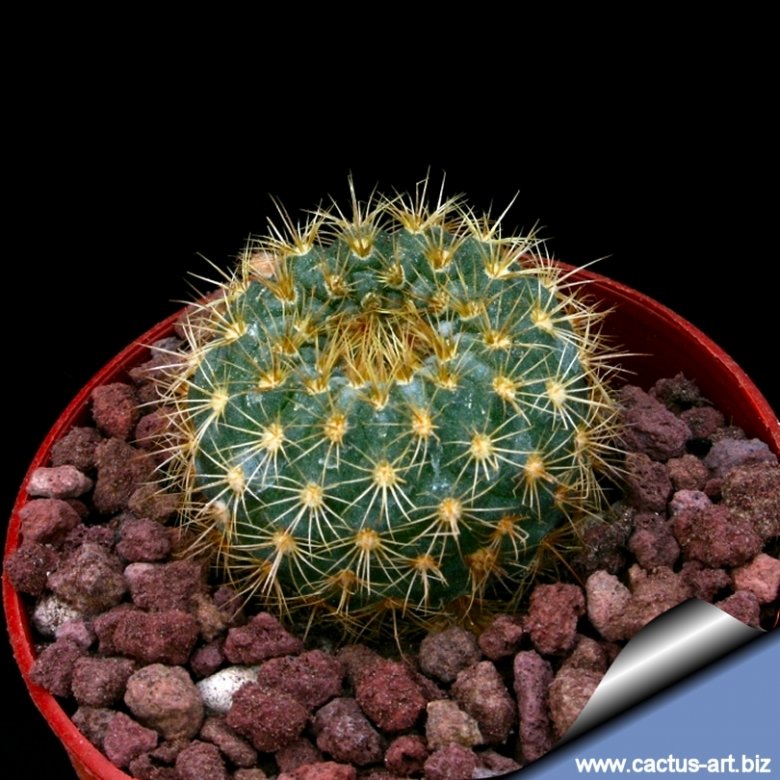
Stem: Typical F. pygmaea has a flattened, light green to dull green body, depressed at the crown, with a turbinate base, 1 to 3 cm in diameter. Some forms have distinctive dark crescent-shaped marks below the areoles.
Ribs: 13-21 ribs, quite flat divided by transverse depression into tiny tubercles (more noticeable when the body is dehydrated).
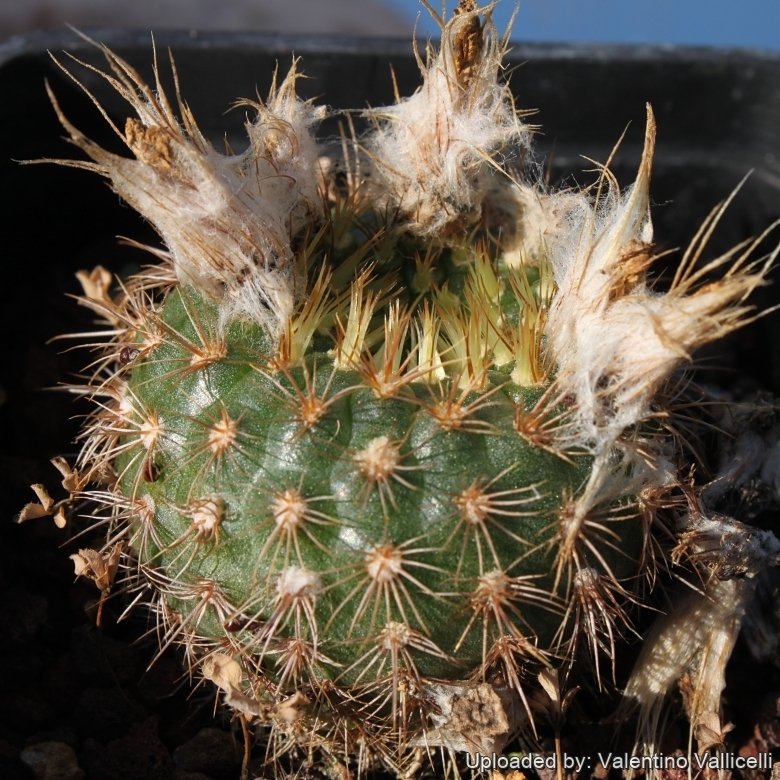
Areoles: At first with witish or slight yellow wool.
Spines: 6 -10 quite fine, short, bristly, setaceous, glassy, white radial spines, 1- 4 mm long, adpressed and rarely also one or two small central spines. They are straight or slightly curved. Some forms have longer white spines that are basally orange yellow in colour while other have yellow spines and wool.
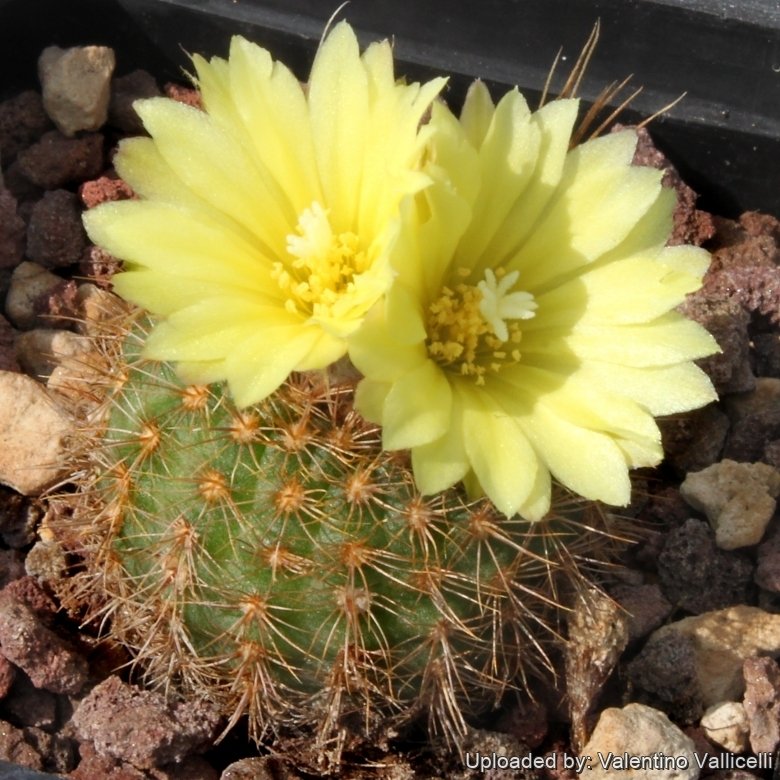
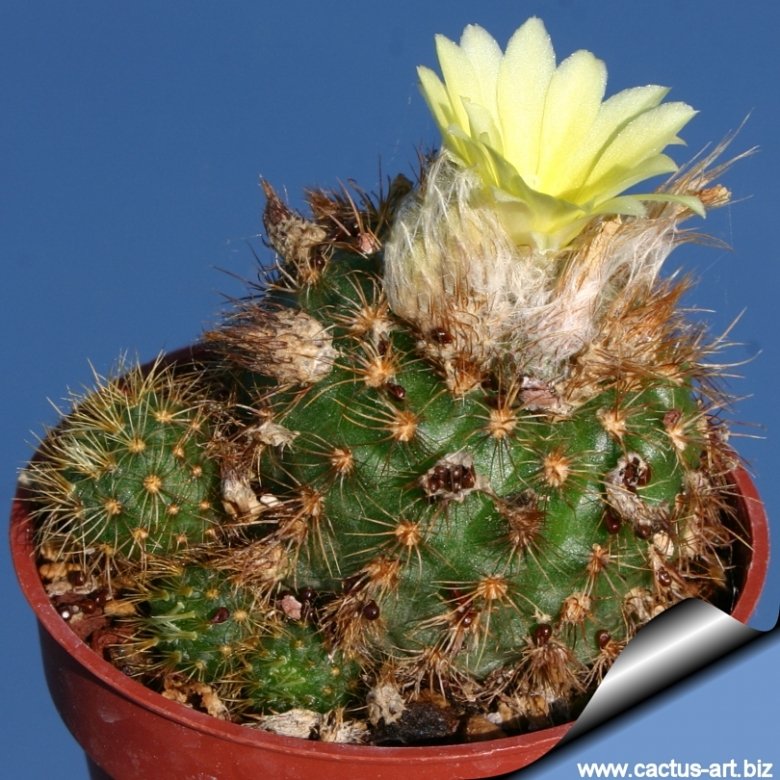
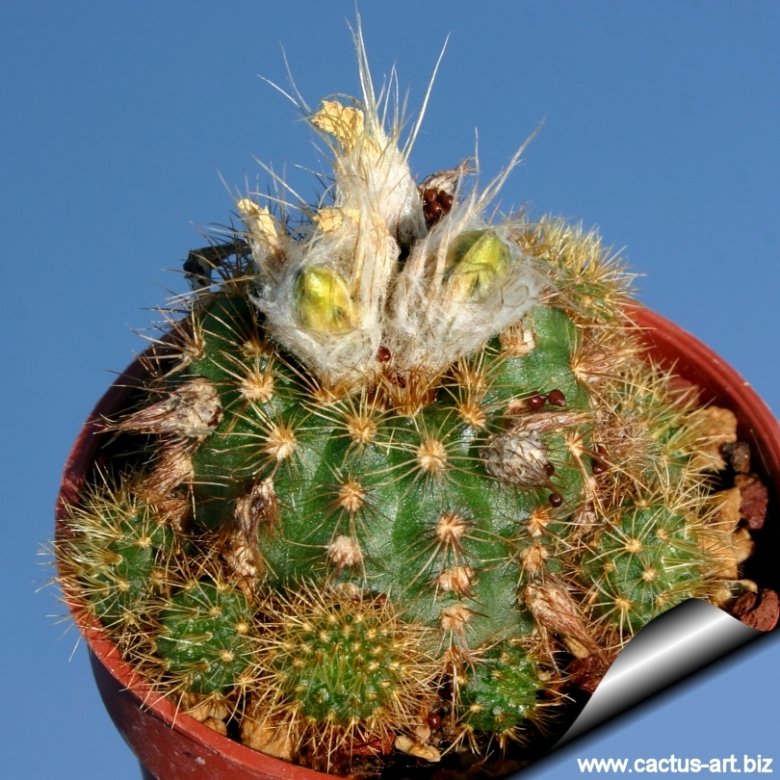
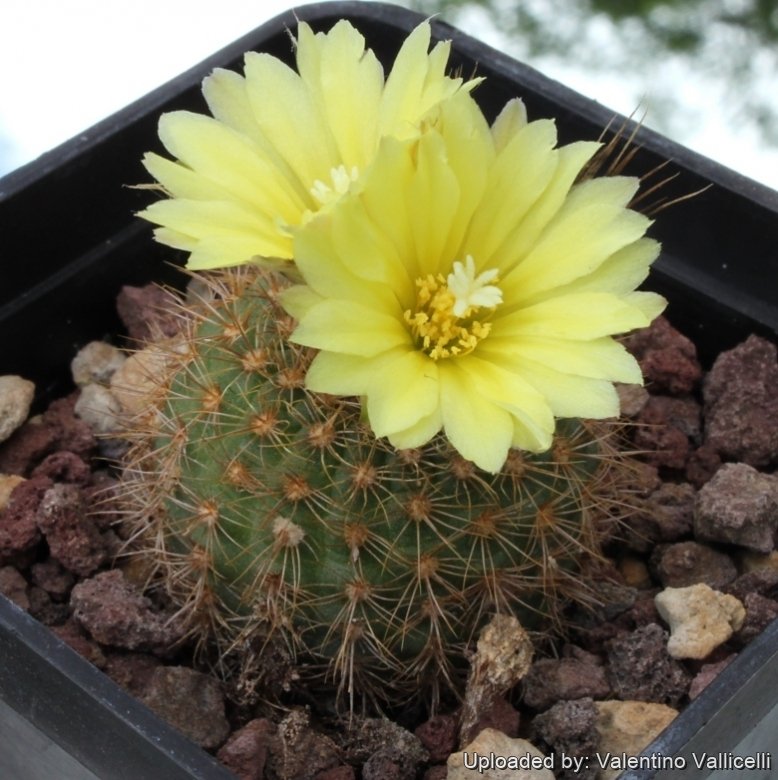
Flowers: Arising from the crown from a very woolly bud, often cleistogamous, 2 to 2.5 cm, up to 3 cm diameter, pale yellow, with dense, whitish to rose-colored pubescence outside. Inner perianth-segments lanceolate, acute, yellow; filaments and style white; stigma-lobes yellowish. But don’t be disappointed when the easily produced buds fail to open. Fraileas are cleistogamous meaning that their flowers produce seed without even opening. Without the need for pollination, hence the buds rarely reach full bloom and remain closed. They will open only in great heat in the hottest, brightest, afternoon sun, if at all.
Blooming season: Hottest part of summer.
Fruit: Dry indehiscent that detach easily, pear-shaped, 1,5 cm tall, 1 cm in diameter, with short matted hairs and with a pointed head of bristles. The fruit wall is thick, membranous, fragile and it opens by a basal pore to release the seeds that are promptly harvested by ants.
Seeds: Elm shaped, 2 mm. long, shining, black with large oblong hilum nearly as long as the body.
Origin and Habitat
Widespread over a wide area in Brazil, Uruguay and Argentina.
Habitat & ecology: Grows often in mountainous region in scattered but numerous populations, and it is often quite common. Usually it is found in the crevices of rocky outcrops, between the pebbles near these outcrops or in grassy, gravelly areas where the thin soil depth minimizes any competition from other plants. It is often found growing together with Frailea gracillima and Frailea castanea. The rain fall are quite frequent and often abundant.
Cultivation and Propagation
Grow them in rich, porous soil and let them dry out between waterings. These plants need a minimum temperature of 5-10° C (but occasionally temperatures of a few degrees below 0° are not dangerous)
Sun Exposure: They enjoy full sun but in a shaded position the plants grow faster, but are not flat shaped.
Characteristically, during the dry season plants retract completely under the ground both in the wild and in cultivation too. This plant is short living (It does not live long - about 10-15 years).
Propagation: With fresh harvested seeds.
Notes
Frailea pygmaea has a wide distribution and is very variable with some forms having heads no wider than one or two centimetres. In accordance with the variability of the species, many names have been created for different forms, some of them correctly published but the majority invalidly and nowadays considered as synonyms.
Bibliography
Major references and further lectures
-
Edward Anderson “The Cactus family” Timber Press, Incorporated, 2001
-
James Cullen, Sabina G. Knees, H. Suzanne Cubey “The European Garden Flora Flowering Plants: A Manual for the Identification of Plants Cultivated in Europe, Both Out-of-Doors and Under Glass” Cambridge University Press, 11/Aug/2011
-
David R Hunt; Nigel P Taylor; Graham Charles; International Cactaceae Systematics Group. “The New Cactus Lexicon” dh books, 2006
-
Marlon C Machado. “Fascinating Frailea, Part 1: General impressions.” Cactus World (BCSS) Volume 25 No. 1 March 2007
-
Marlon C Machado.”Fascinating Frailea, Part 2: Review of the species from Rio Grande do Sul.” Cactus World (BCSS) Volume 25 No. 2 June 2007
-
Larocca, J., Machado, M. & Duarte, W. 2013. Frailea pygmaea. In: IUCN 2013. IUCN Red List of Threatened Species. Version 2013.2. <www.iucnredlist.org>. Downloaded on 15 February 2014.
Gallery