Publication: Cactaceae Syst. Init. 20: 17. 2005 [Nov 2005]
Description
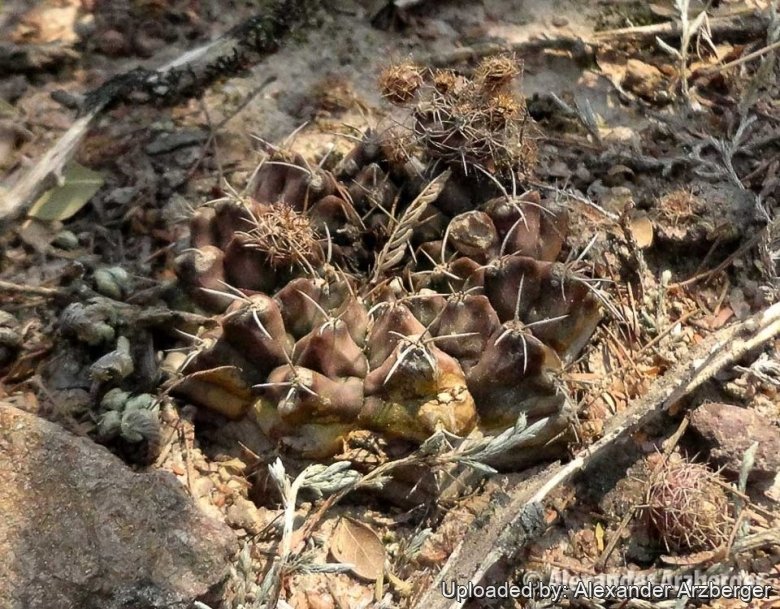
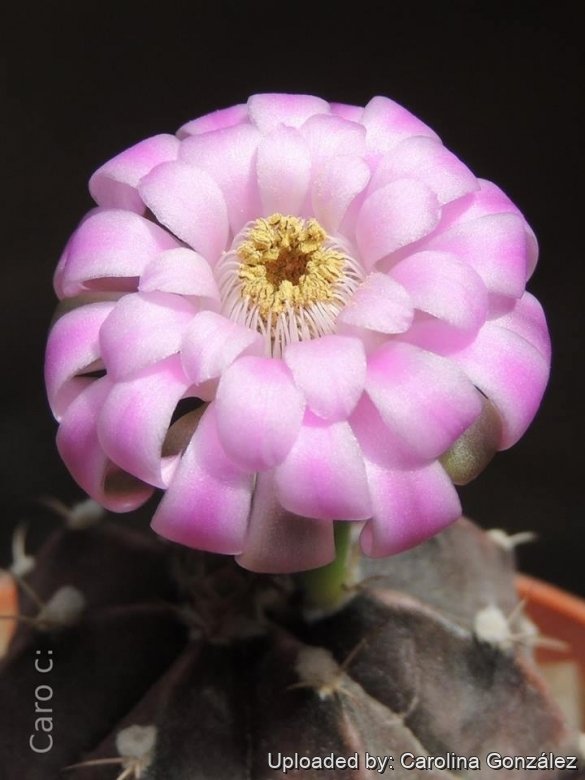
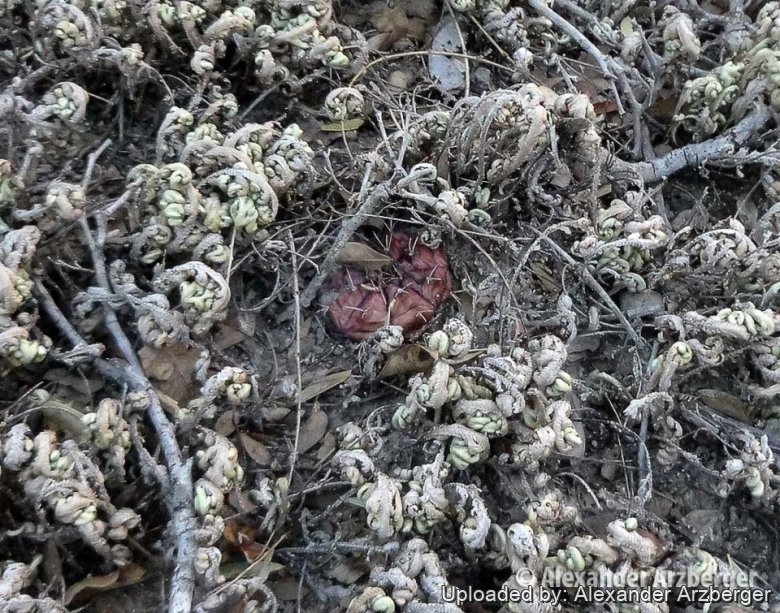
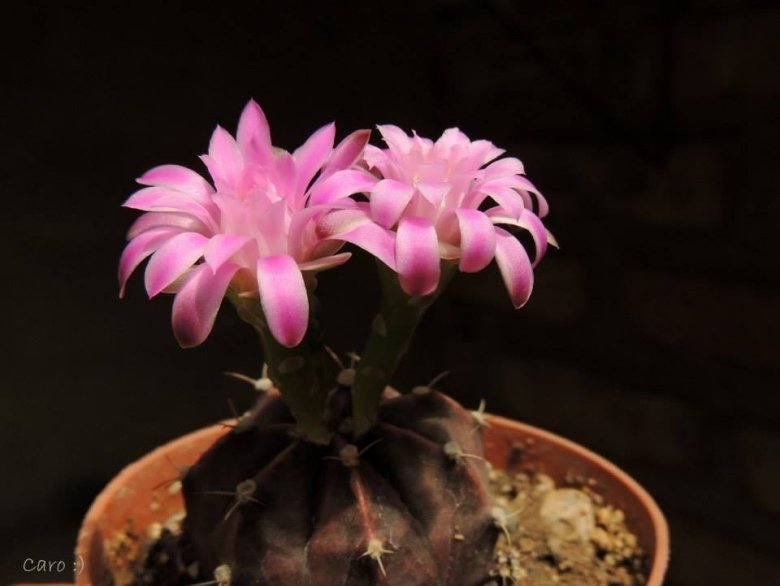
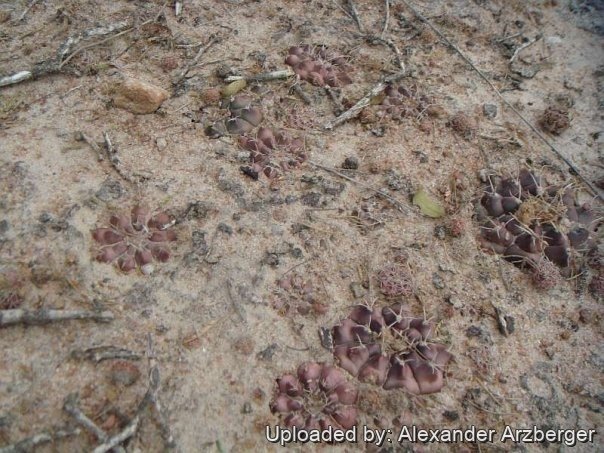
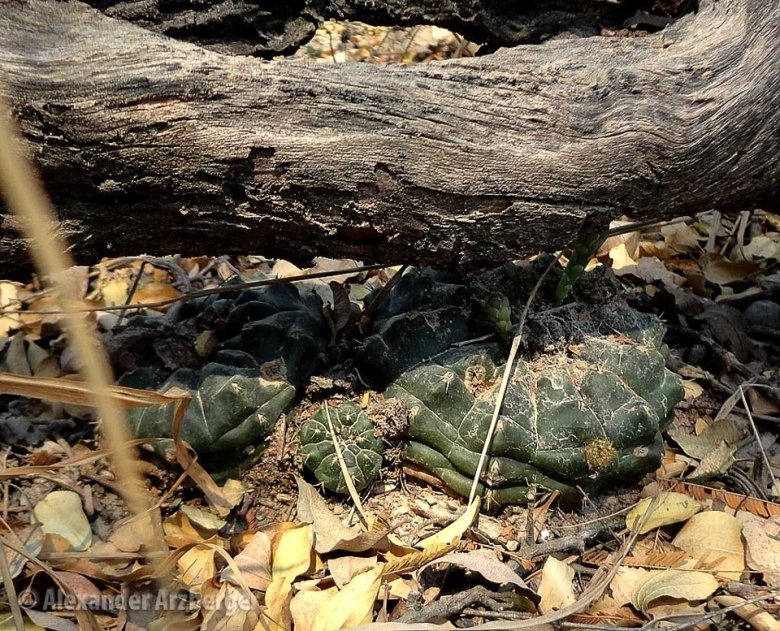
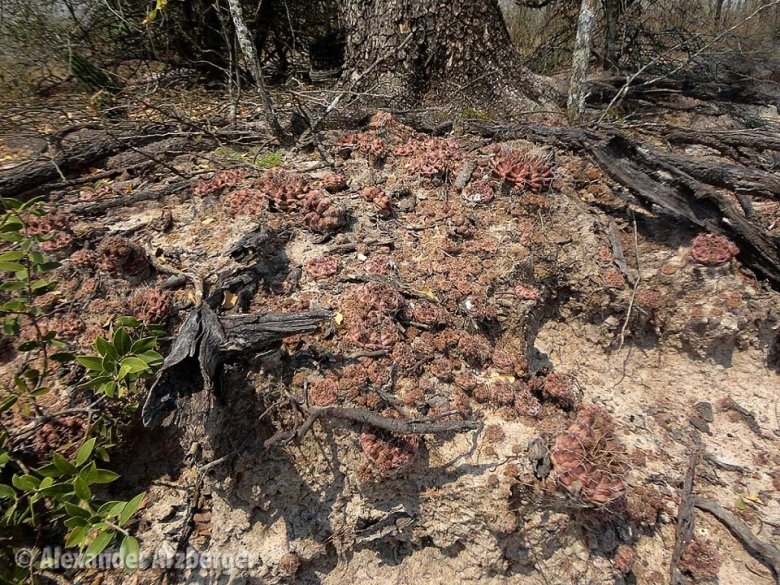
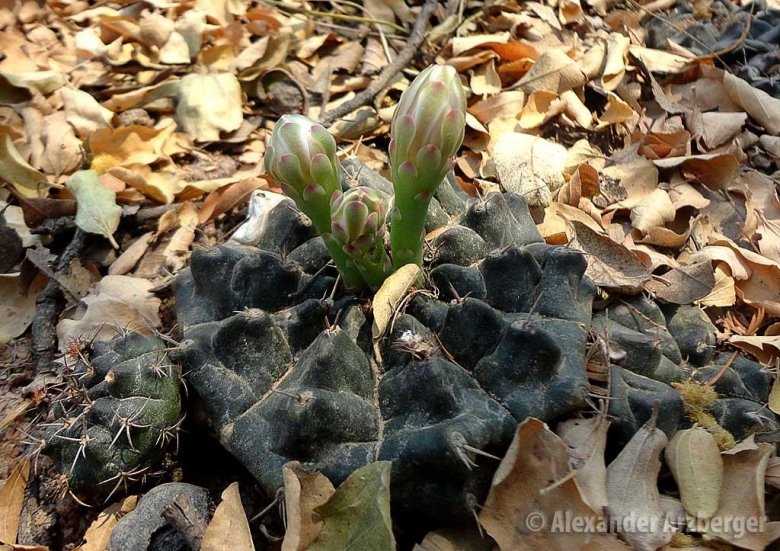
Gymnocalycium anisitsii subs. damsii, firstly described as Echinocactus damsii by K.Schum. In 1903, is a very easy to grow and very free-flowering cactus, it may be solitary or freely offsetting. This is a plump species with somewhat rounded ribs. It is generally included within (as a synonym of) Gymnocalycium anisitsii |, suggesting that there is not really a fundamental difference between the two and there remains a considerable confusion surrounding the true identity of this this plant. Flower colour is variable, typically white but in Bolivia they are usually more coloured, from pale pink to reddish violet. Typically it has shorter spines less than 12 mm long. In its resting state the plant assumes a characteristic deep brown pigmentation, while new growth emerges as a deep green colouration. Gymnocalycium anisitsii subs. damsii will continue to flower and it is not unusual (in Europe) for blooms to be open on these during the Christmas period.
Stem: Simple, spherical-depressed to short cylindrical, up to 10 cm tall, 8-15 cm in diameter, green, pale-green or brownish-green, and highly decorative, often with horizontal clear and dark strips. Like other species of the subgenus Muscosemineum, G. damsii has a high proportion of a red pigment (betalain) in the epidermis.
Ribs: About 10, broad to acute, and more or less notched into chin-shape protrusions or warts.
Spines: All radials, 5-8, straight or slightly tortuous, short, the longest up to 12 mm (or more) long, nearly useless in terms of defence. Young spine are pastel-white or yellowish with a darker tip, later become pale-grey.
Central spines: Usually absent.
Flowers: From the centre, narrow funnelform, about 6 cm long. External perianth segments greenish whit reddish margins, internal perianth segments oblong, white to light pinkish or greenish spreading. Scales on the ovary and flower tube small, scattered.
Blooming season: It produces flowers almost continuously during the year.
Fruits: Oblong, 2,5 cm long, 6 mm in diameter, reddish at maturity.
Remarks: Seems to be a pretty variable plant you might get some other names which are effectively the same plant… and also not sure all plants identified as this are really this.
Origin and Habitat
Bolivia, Paraguay and Brazil.
Altitude range: Mostly between 100 and 800 metres above sea level.
Cultivation and Propagation
Gymnocalycium damsii (syn: anisitsii) is a summer grower species that is easy to cultivate.
Growth rate: It is a relatively rapidly growing and easily flowering species that will make clumps given the best conditions.
Soils: It likes very porous standard cactus mix soil. Prefer a low pH compost, avoid substrata rich in limestone; otherwise growth will stop altogether.
Repotting: This plant needs plenty of space for its roots, repotting should be done every other year or when the it has outgrown its pot. Use pot with good drainage.
Watering: Needs moderate to copious waterings in summer, but do not overwater (Rot prone), keep dry in winter at a minimum temperature of 0°C.
Fertilization: Feed with a high potassium fertilizer in summer.
Hardiness: Reputedly resistant to frost if kept on the dry side prior to, and during, cold weather (hardy to -5 C ° C, or less for short periods).
Exposition: The plant tolerates extremely bright situations but enjoys filtered sunlight or afternoon shade, inside it needs bright light, and some direct sun. Tends to bronze in strong light, which encourages flowering and heavy spine production, but is likely to suffer from sun scorch or stunted growth if over exposed to direct sunlight during the hottest part of the day in summer.
Uses: It is an excellent plant for container growing. It always looks good and stays small. It look fine in a cold greenhouse and frame or outdoor in a rockery.
Pests & diseases: It may be attractive to a variety of insects, but plants in good condition should be nearly pest-free, particularly if they are grown in a mineral potting-mix, with good exposure and ventilation. Nonetheless, there are several pests to watch for:
- Red spiders: Red spiders may be effectively rubbed up by watering the plants from above.
- Mealy bugs: Mealy bugs occasionally develop aerial into the new growth among the wool with disfiguring results, but the worst types develop underground on the roots and are invisible except by their effects.
- Scales: Scales are rarely a problem.
- Rot: This species is particularly easy and accommodating, seldom suffer of cryptogamic diseases. Rot it is only a minor problem with gymnocalyciums if the plants are watered and “aired” correctly. If they are not, fungicides won’t help all that much.
Propagation: Division, direct sow after last frost. Seeds germinate in 7-14 days at 21-27° C in spring, remove gradually the glass cover as soon the plants will be well rooted (ca 1-2 weeks) and keep ventilated, no full sun for young plants! To make a cutting twist off a branch and permit it to dry out a couple of weeks, lay it on the soil and insert the stem end partially into the soil. Try to keep the cutting somewhat upright so that the roots are able to grow downward.
Bibliography
Major references and further lectures
-
Edward Anderson “The Cactus family” Timber Press, Incorporated, 2001
-
James Cullen, Sabina G. Knees, H. Suzanne Cubey “The European Garden Flora Flowering Plants: A Manual for the Identification of Plants Cultivated in Europe, Both Out-of-Doors and Under Glass” Cambridge University Press, 11/Aug/2011
-
David R Hunt; Nigel P Taylor; Graham Charles; International Cactaceae Systematics Group. “The New Cactus Lexicon” dh books, 2006
-
N. L. Britton, J. N. Rose “The Cactaceae. Descriptions and Illustrations of Plants of the Cactus Family.” Volume 4, The Carnegie Institution of Washington, Washington 1923
-
Curt Backeberg “Die Cactaceae: Handbuch der Kakteenkunde” Gustav Fischer Verlag, Stuttgart New York 1982–1985
-
E. W Putnam “GYMNOCALYCIUMS: A Guide for Growers” National Cactus & Succulent Society. Handbook No. 5. 1978
-
Gymnocalycium damsii in: “The National Cactus and Succulent Journal” The Official Journal of the National Cactus & Succulent Society, Volumes 23-26 National Cactus and Succulent Society, 1968
Gallery