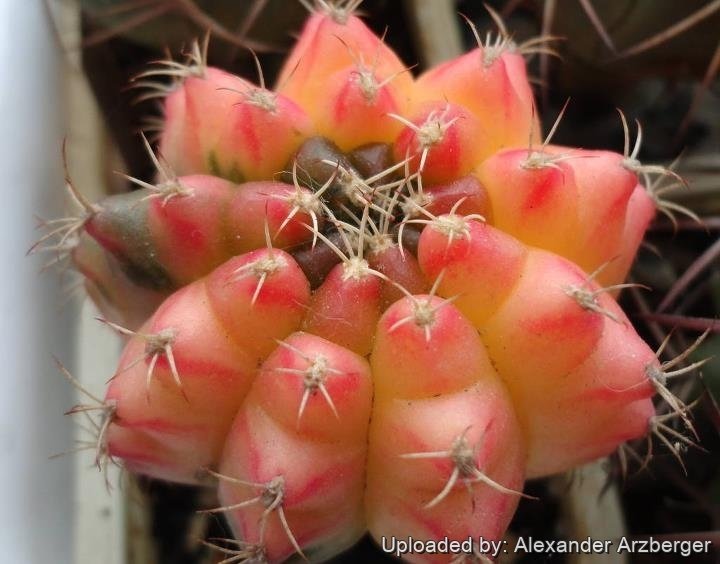
Publication: Cactaceae (Britton & Rose) 3: 159, fig. 168. 1922
Description
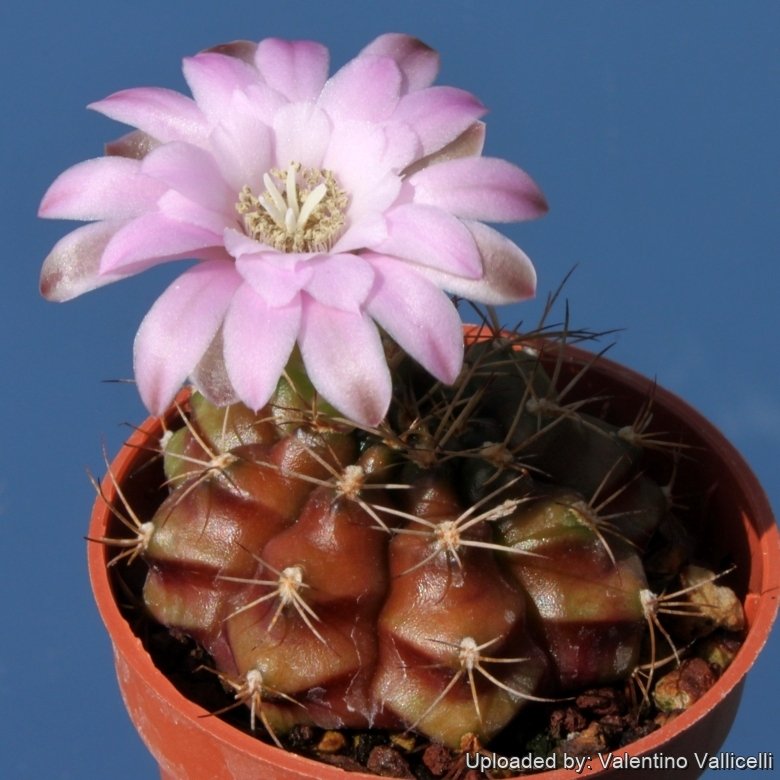
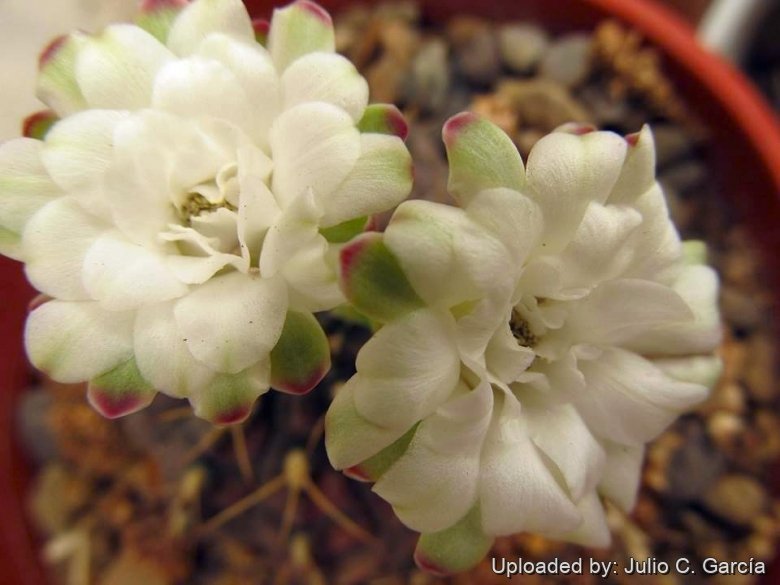
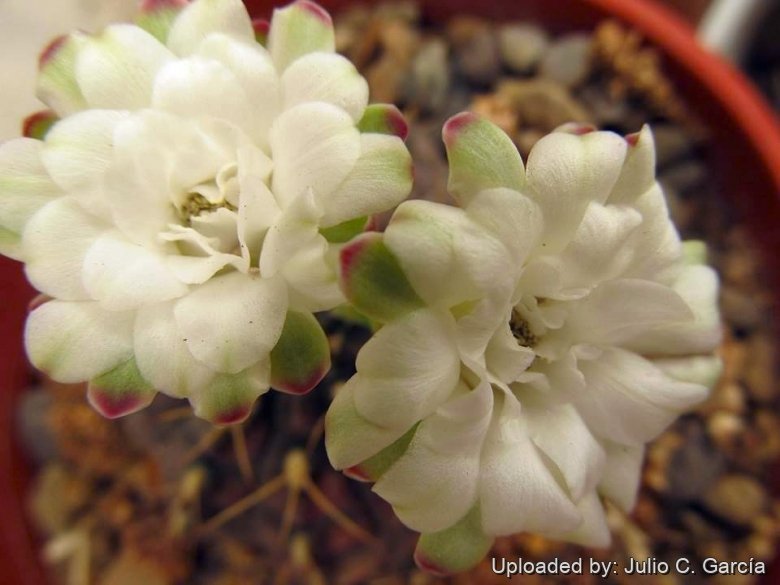
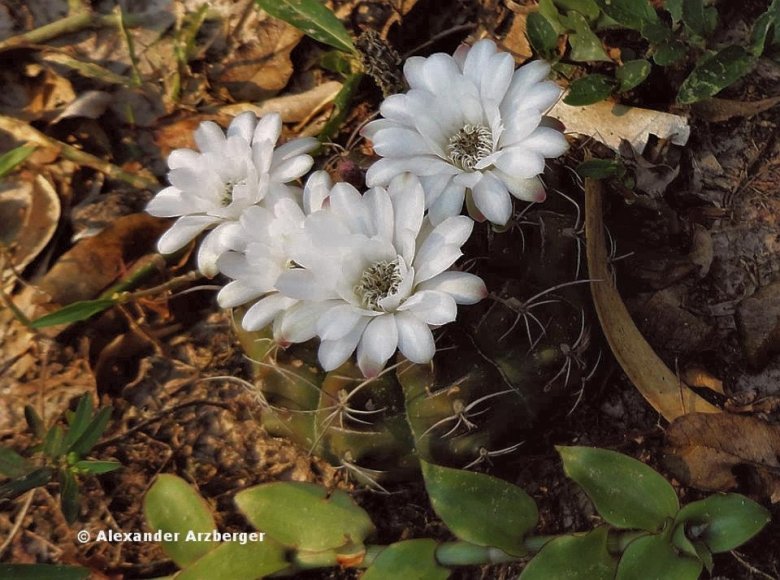
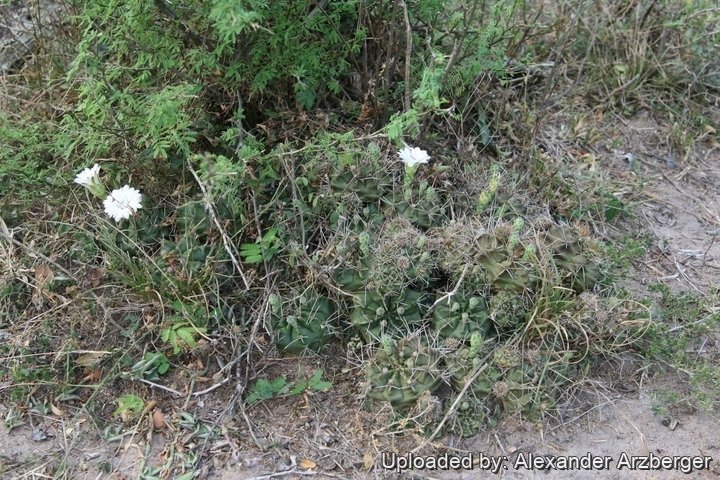
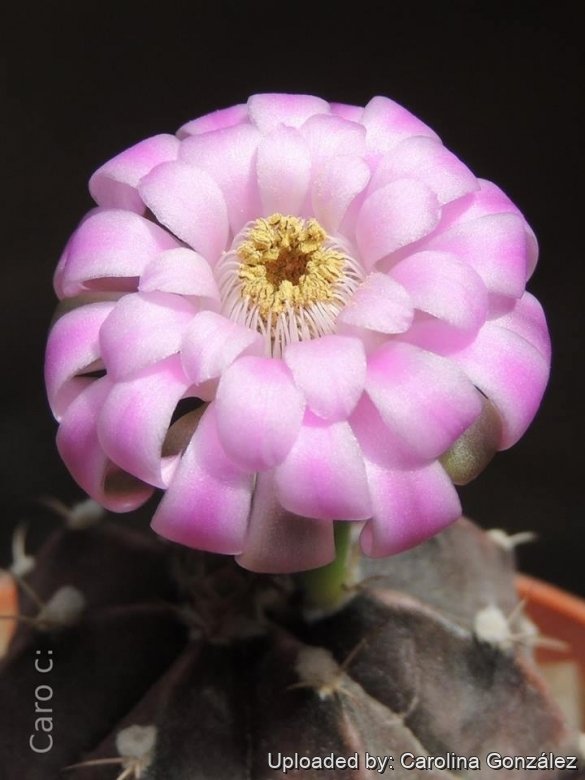
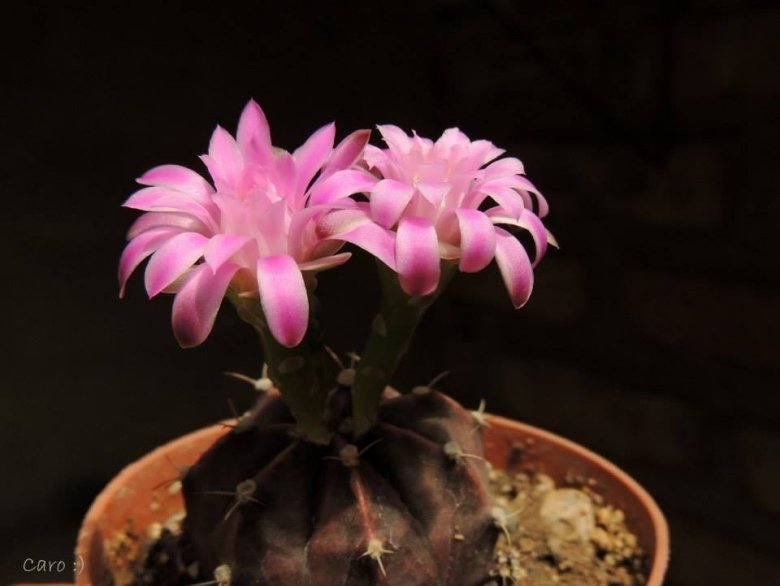
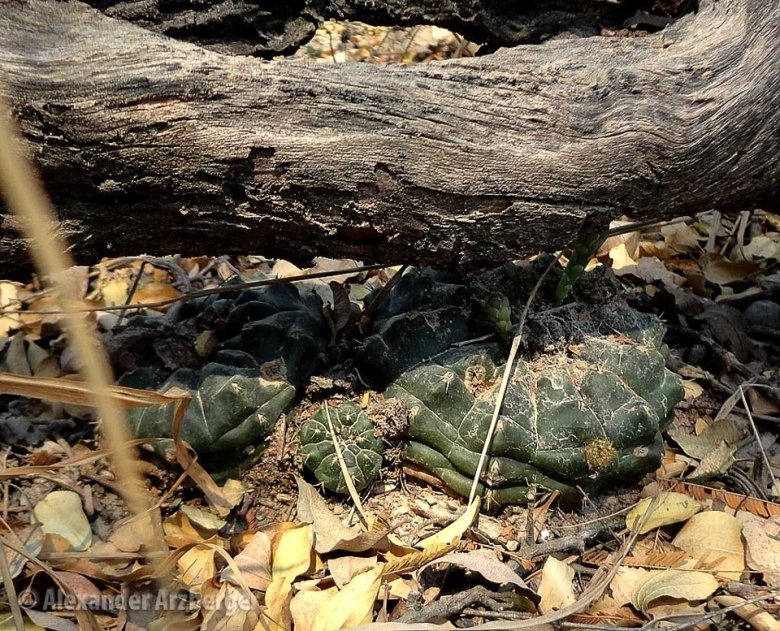
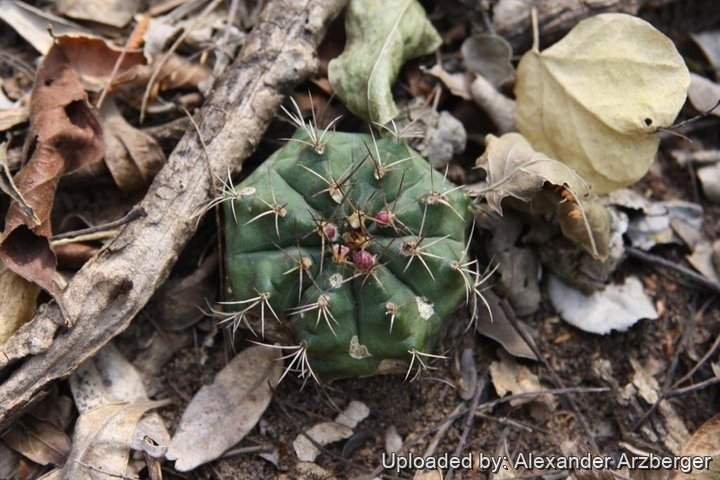
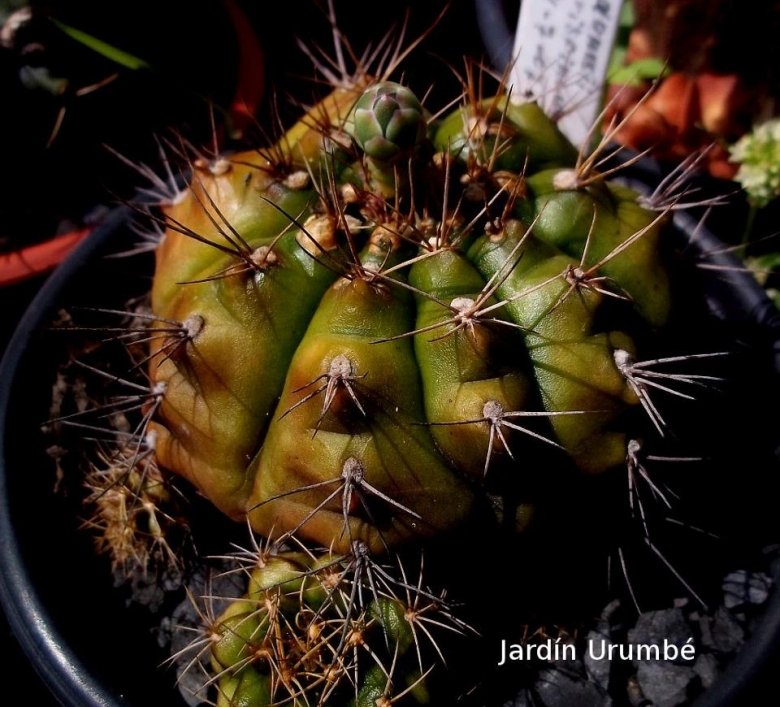
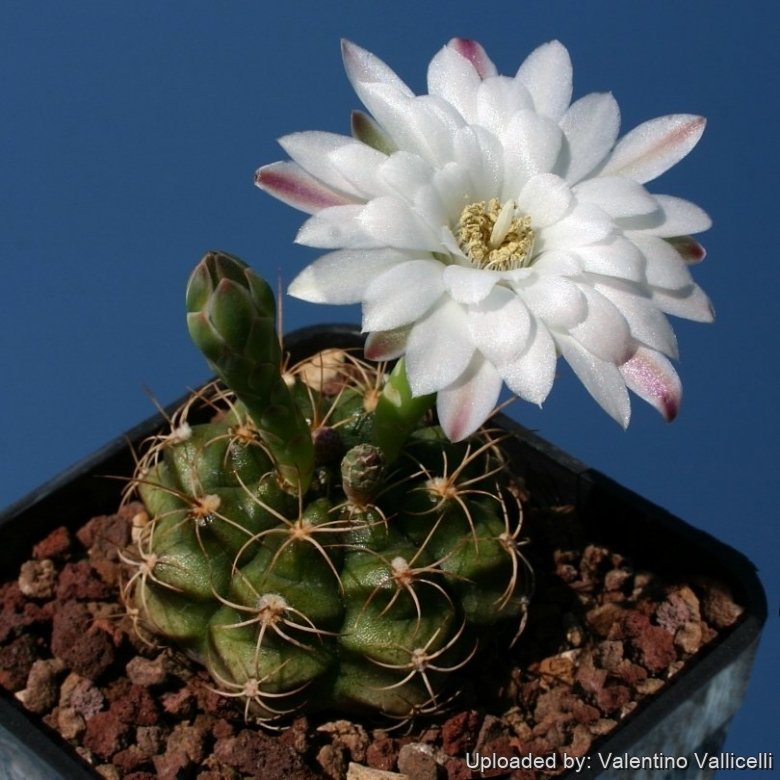
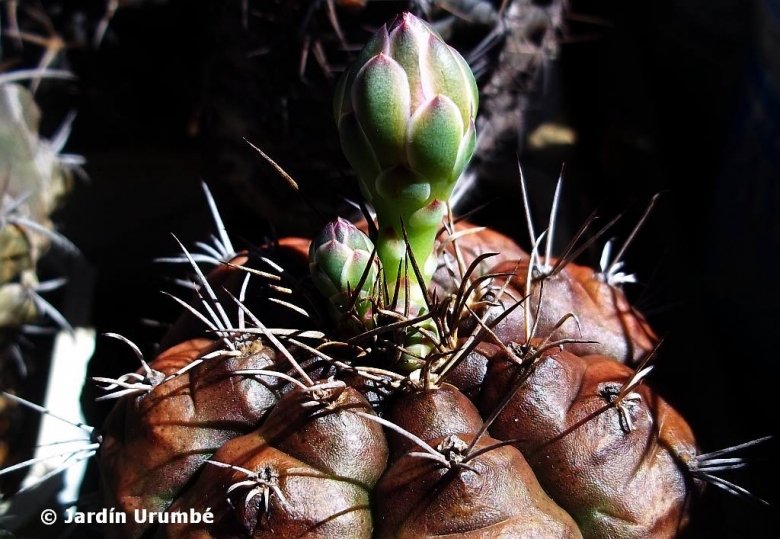
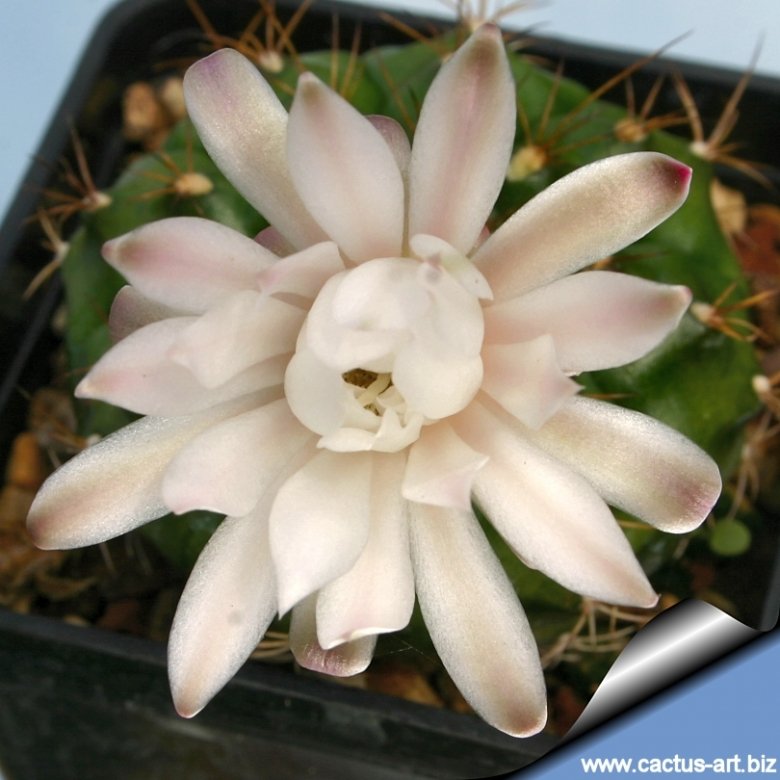
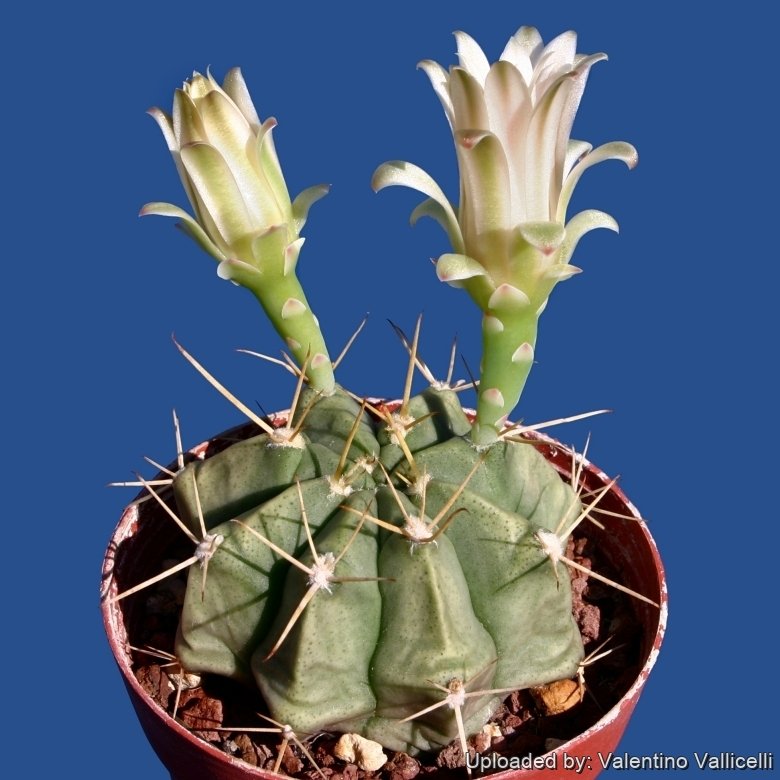
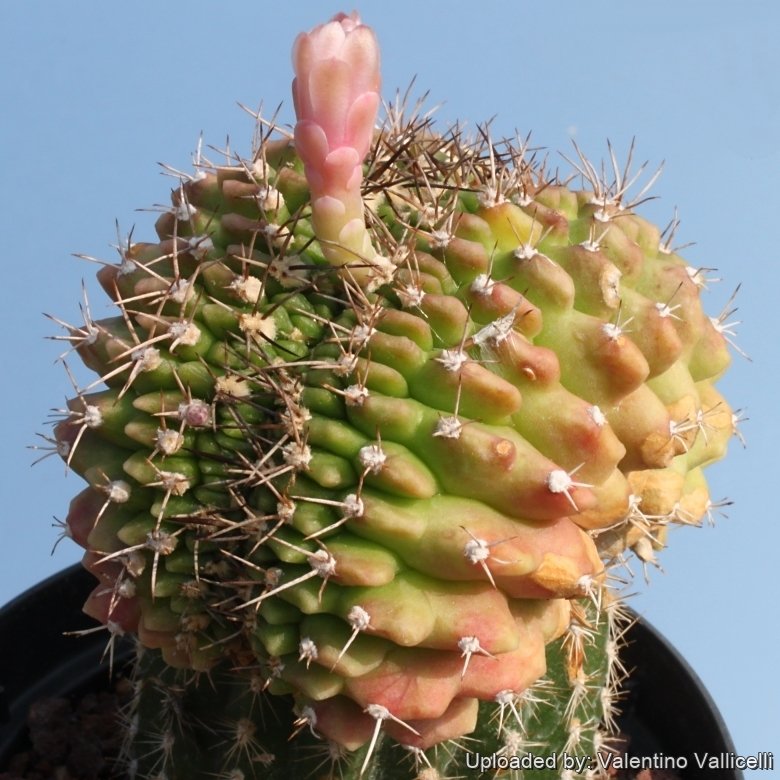
Gymnocalycium anisitsii is a very easy to grow and very free-flowering cactus, it may be solitary or freely offsetting with white flowers (but also pink). Spines 5 to 7, tortuous, up to 6 cm long. It is a very polymorphic species with a large range of variability. Two subspecies are recognized, the nominate form and subsp. multiproliferum.
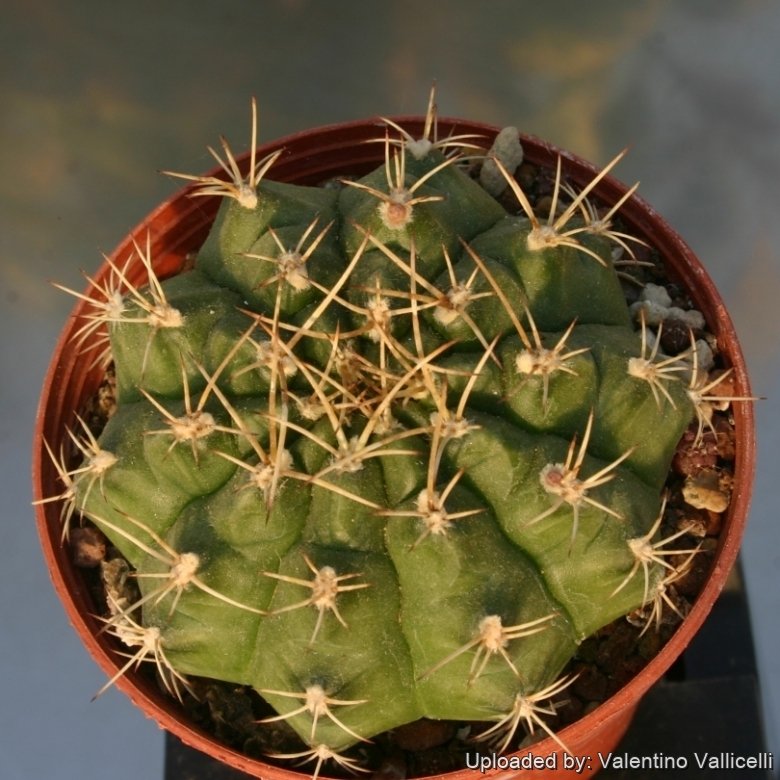
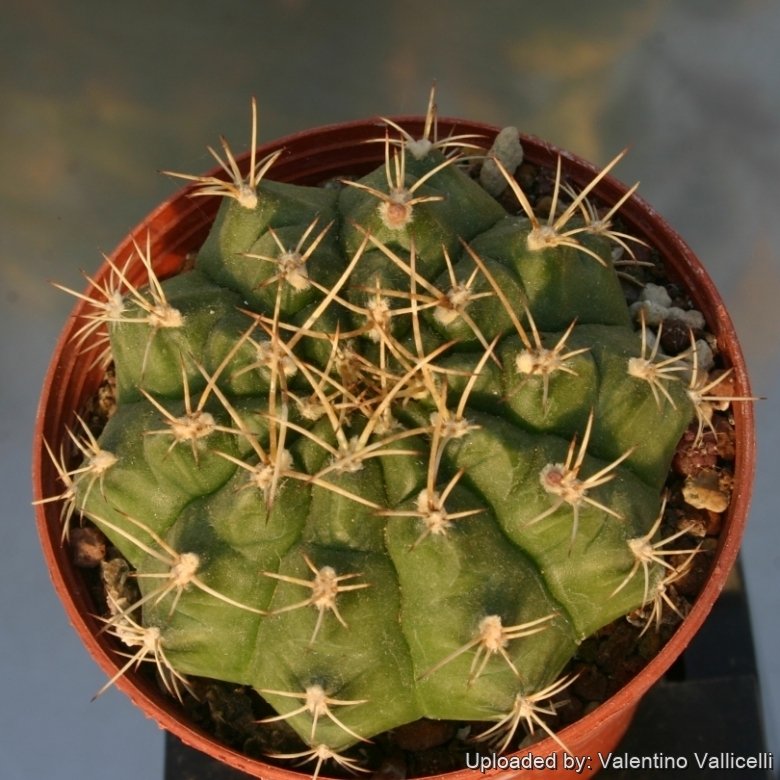
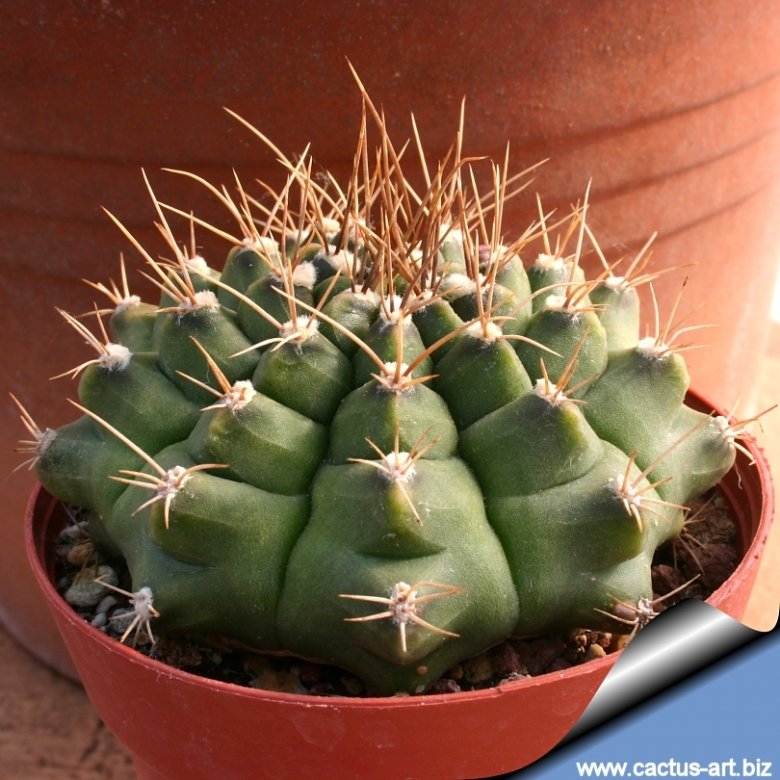
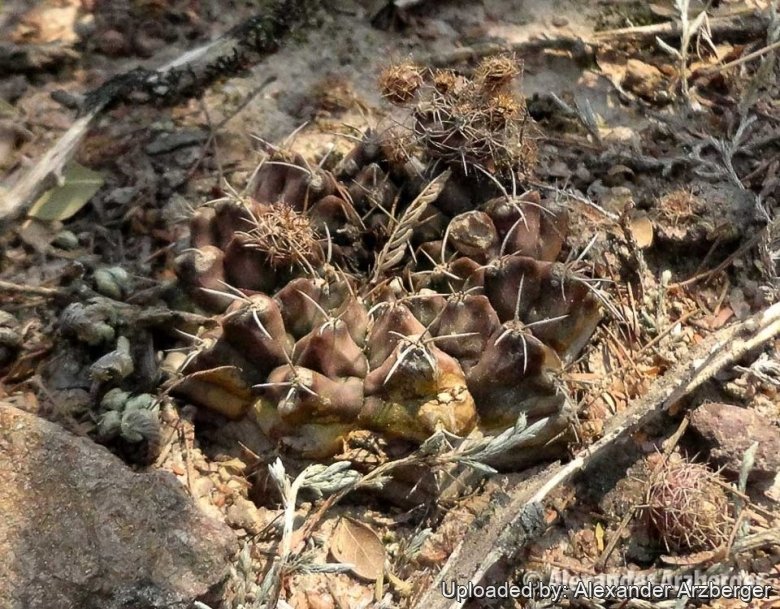
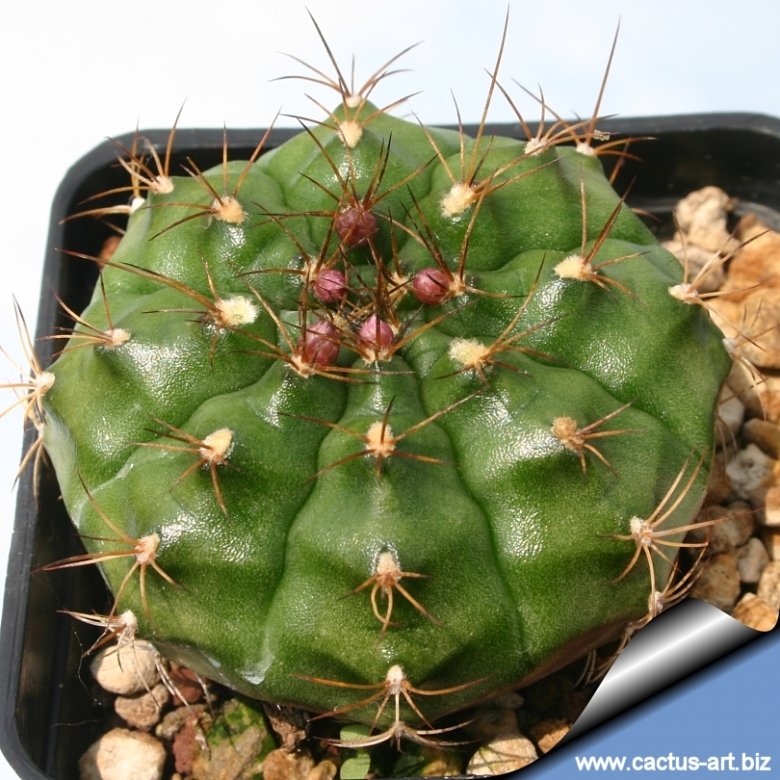
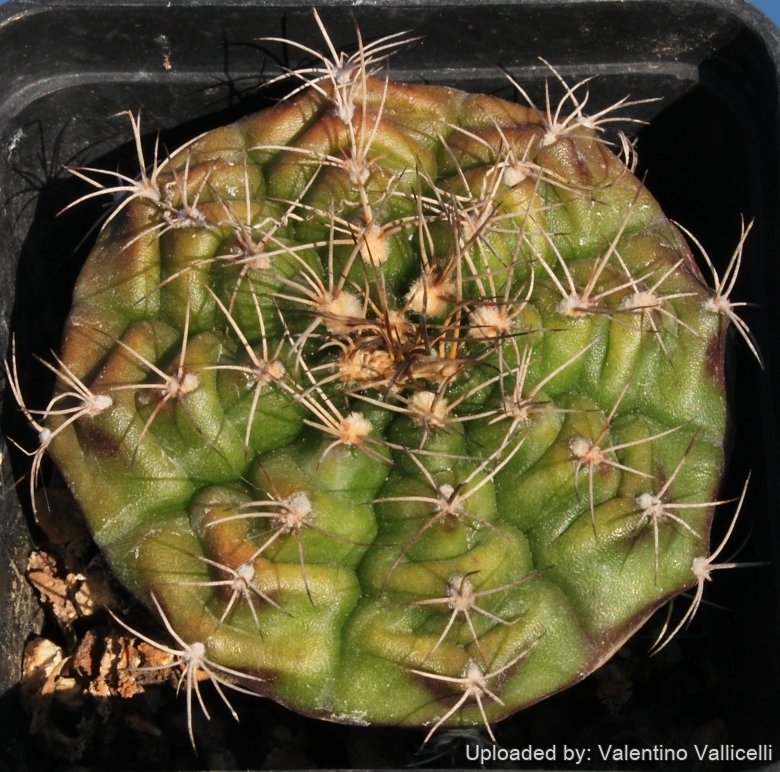
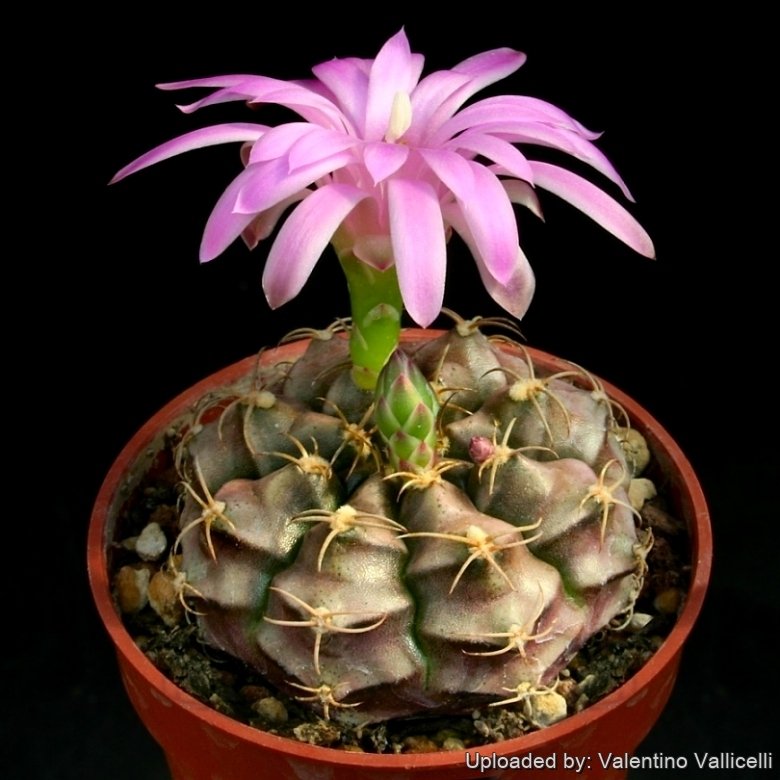
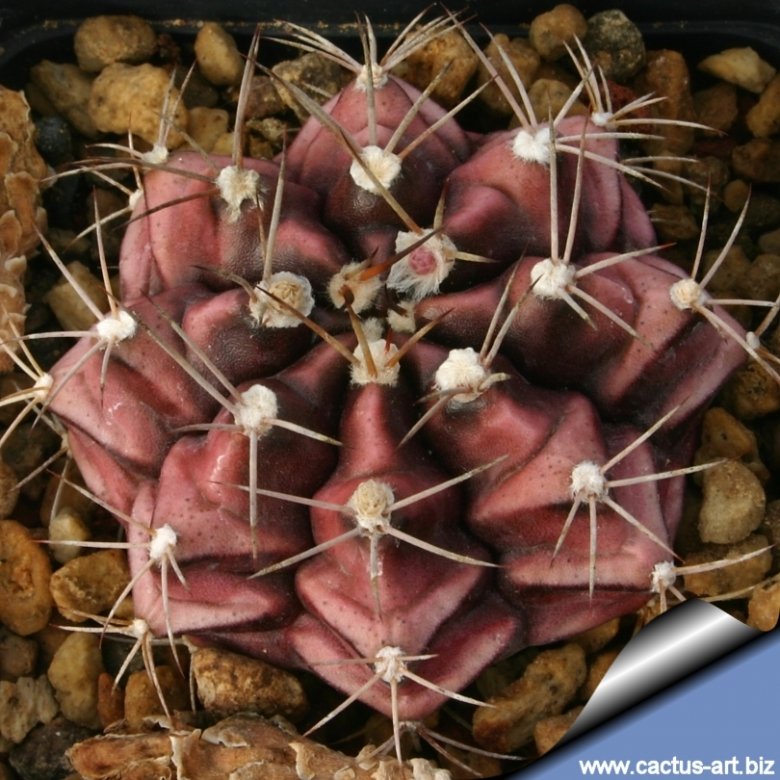
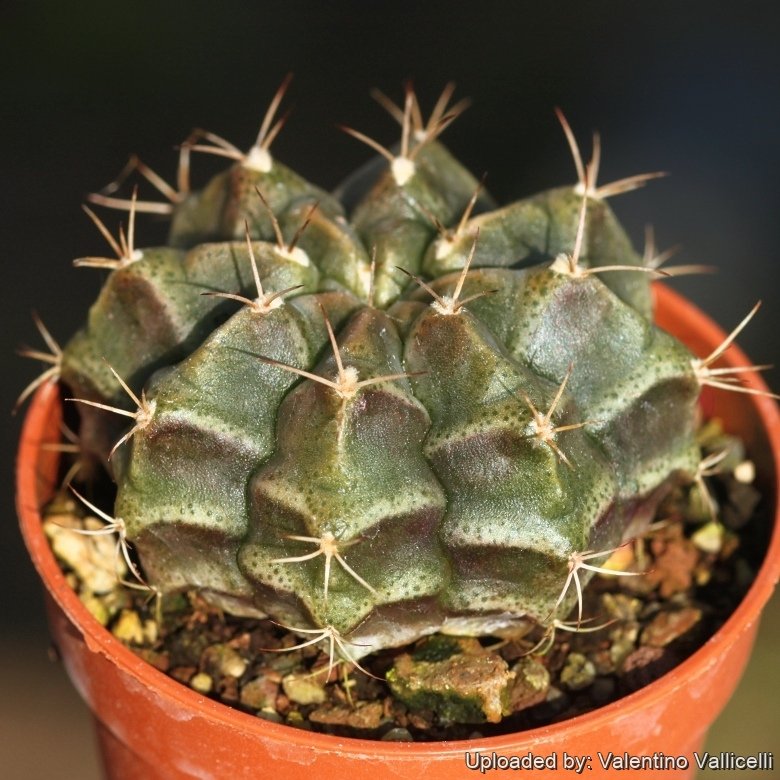
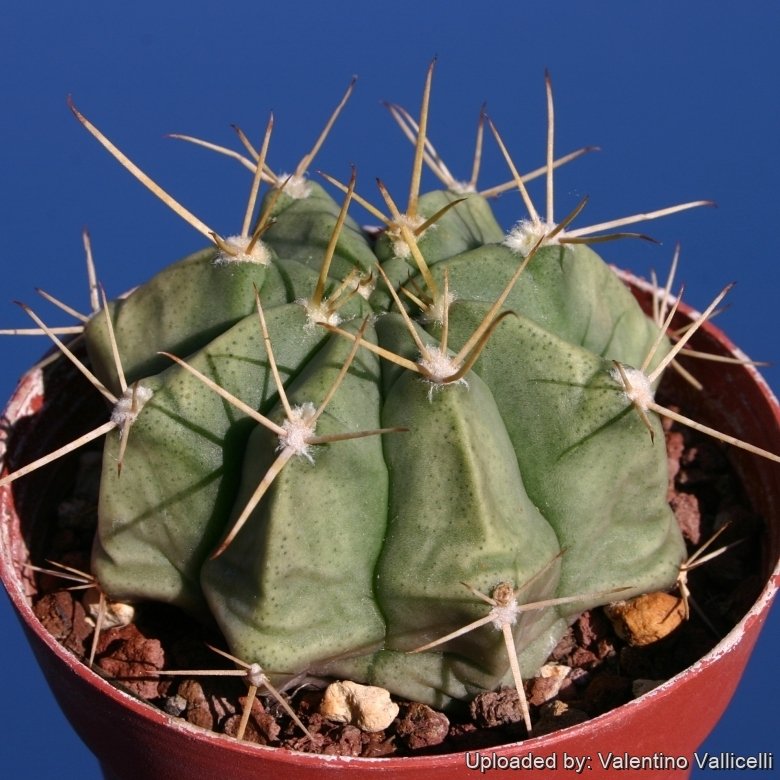
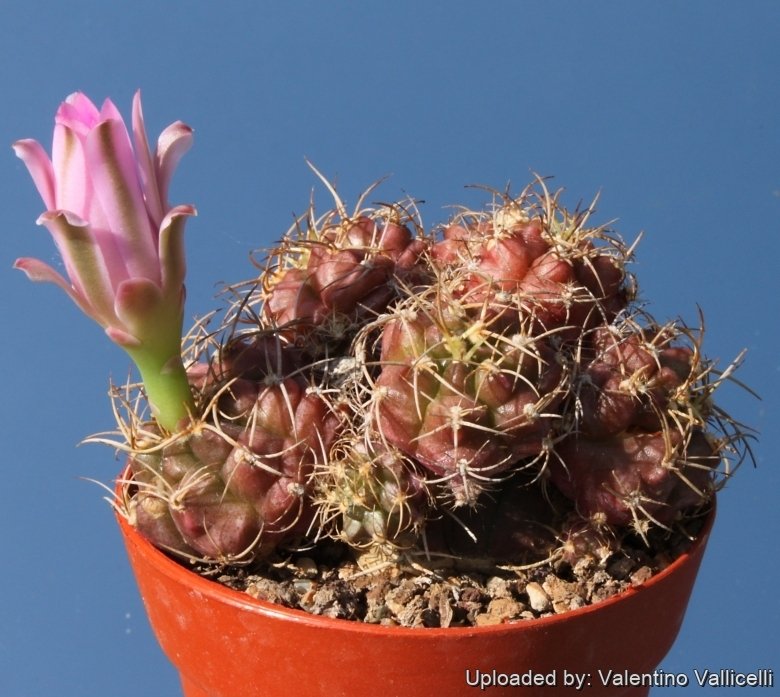
Stem: Spherical-depressed to short cylindrical, 5-8(-10) cm tall, 8-10 cm in diameter, green, pale-green bronzing in full sun, and highly decorative, often with horizontal clear and dark strips.
Ribs: 8-11, acute, and more or less notched into chin-shape protrusions or warts.
Radial spines: 5-7 (rarely to 9), straight or slightly tortuous, 1-6 cm long, subulate, somewhat angled, nearly useless in terms of defence. Young spine are pastel-white, yellowish or brownish with a darker tip, later becoming pale-grey.
Central spines: Usually absent, sometimes one.
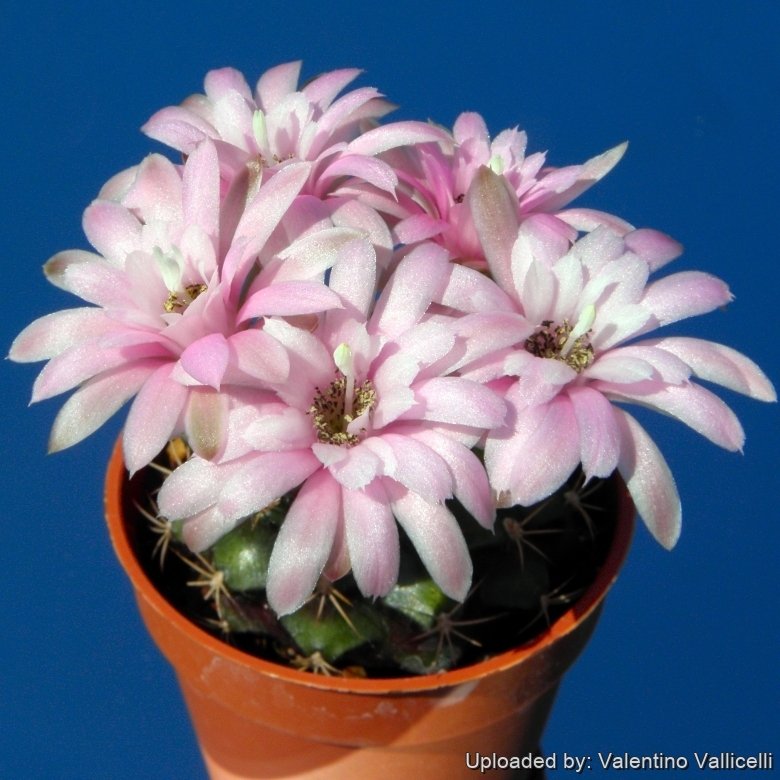
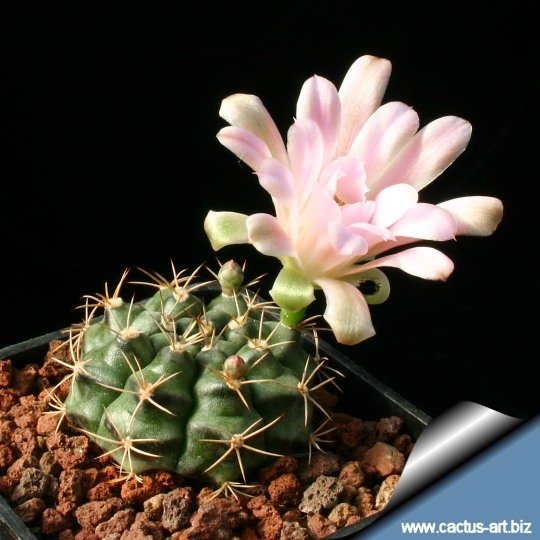
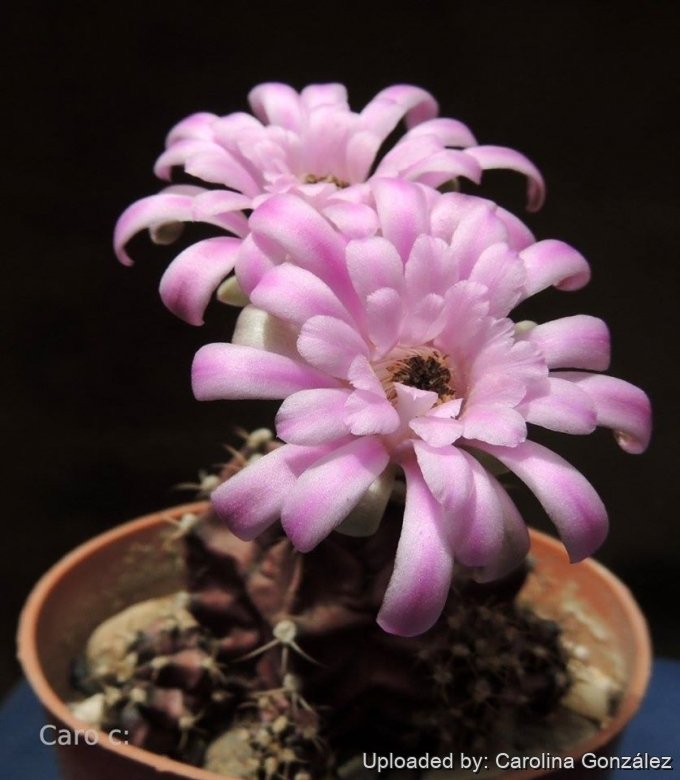
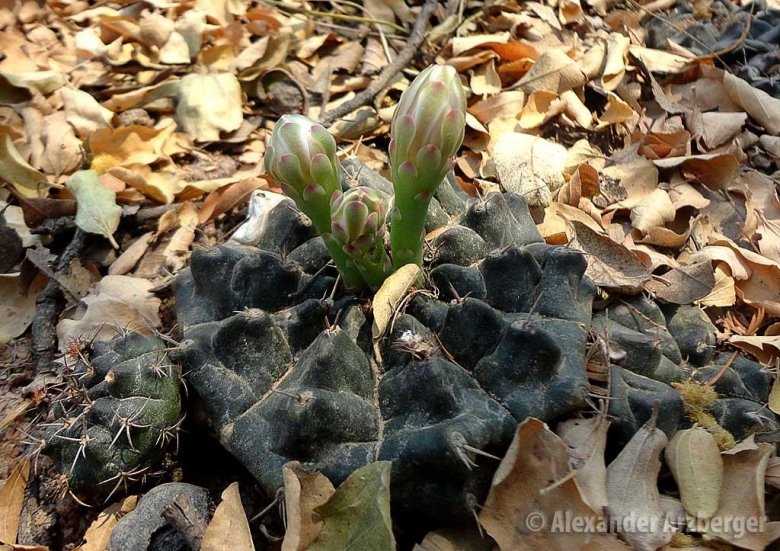
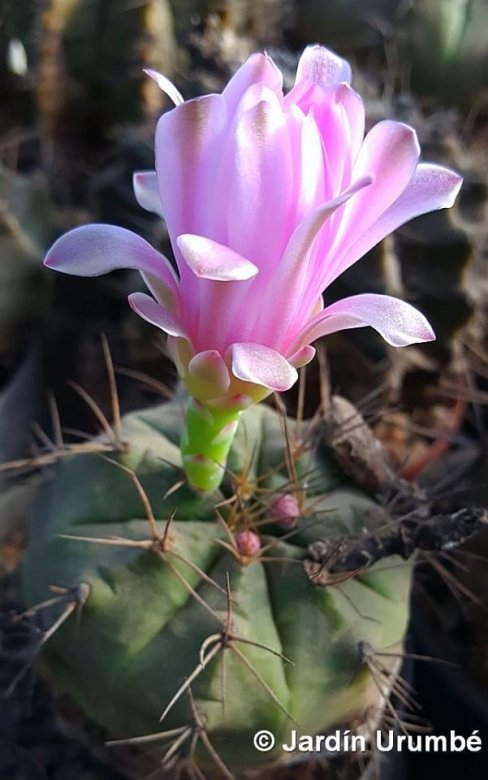
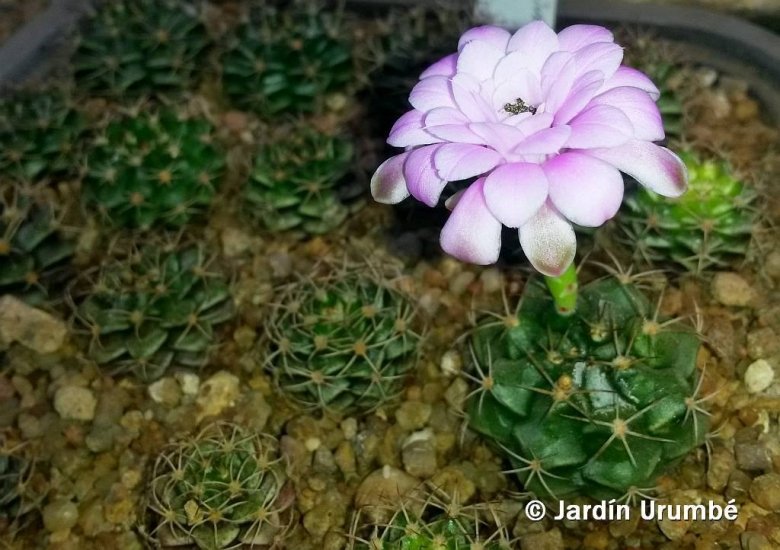
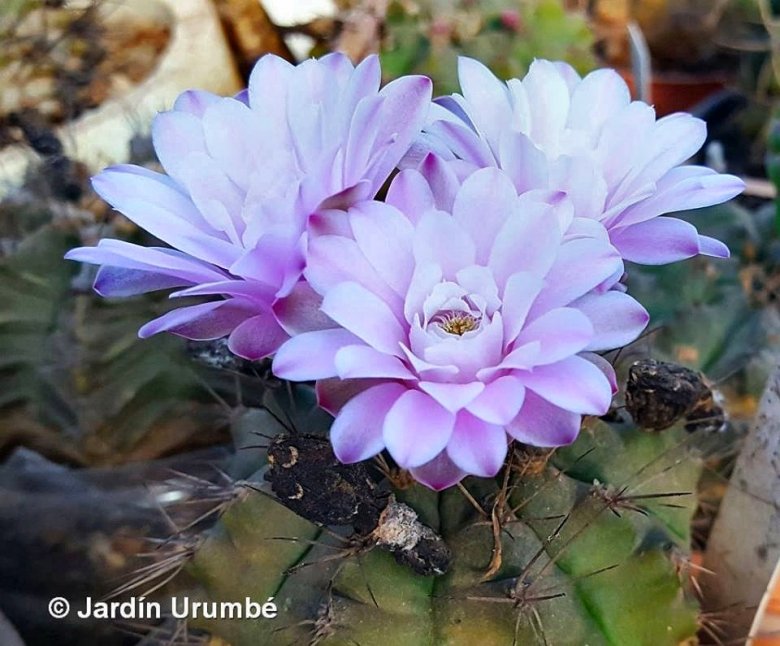
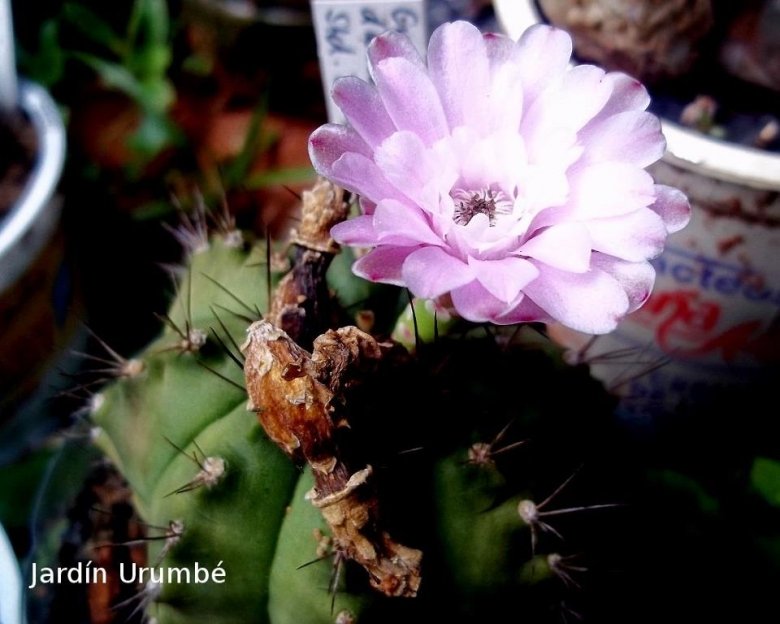
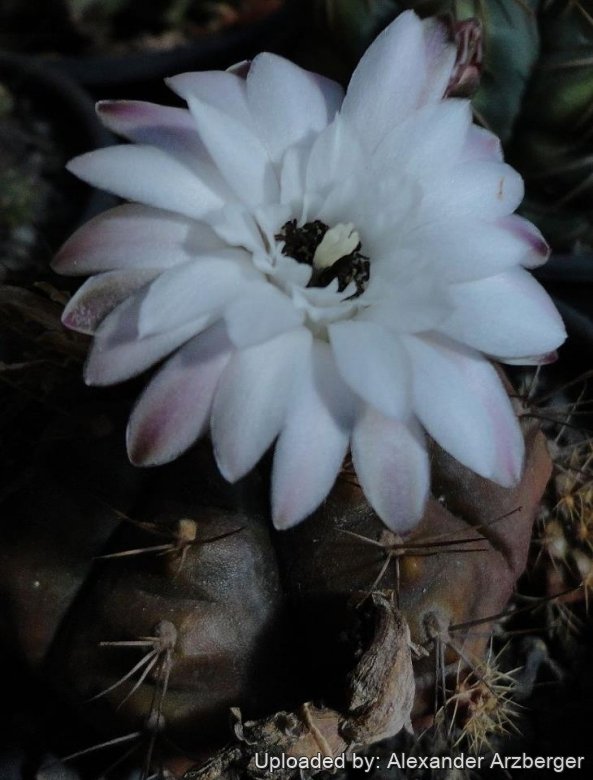
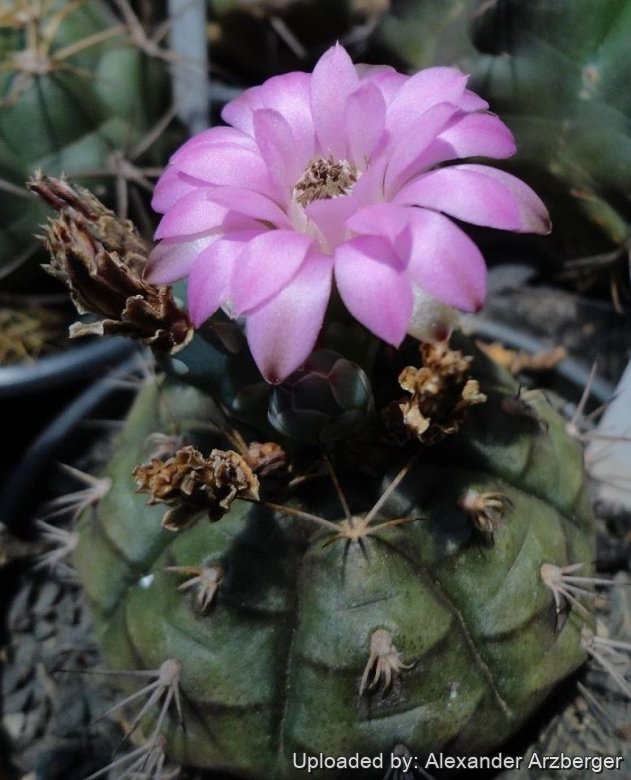
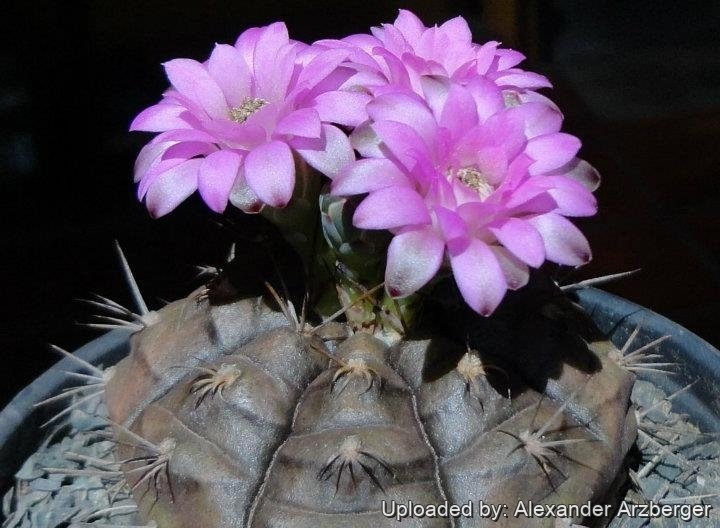
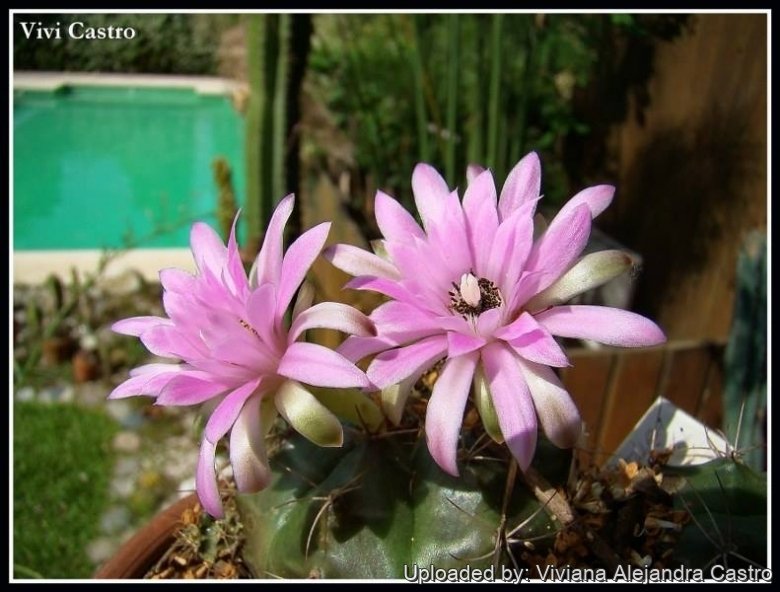
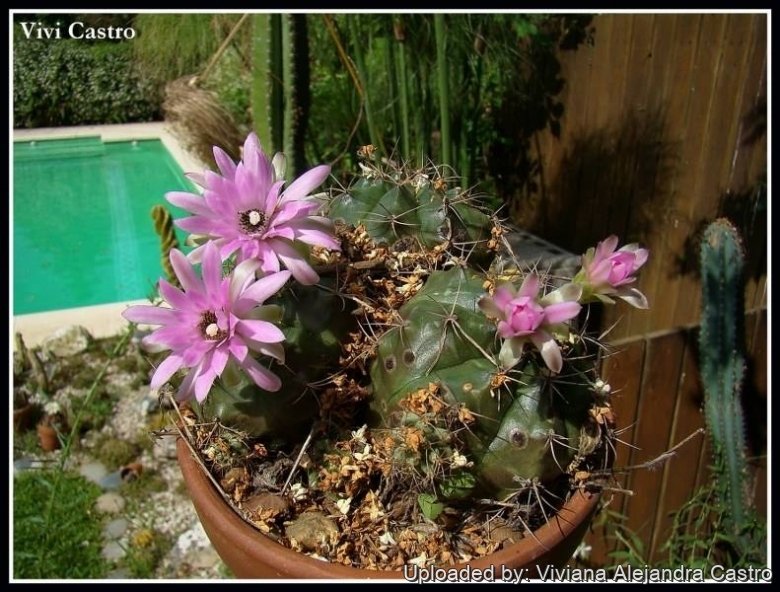
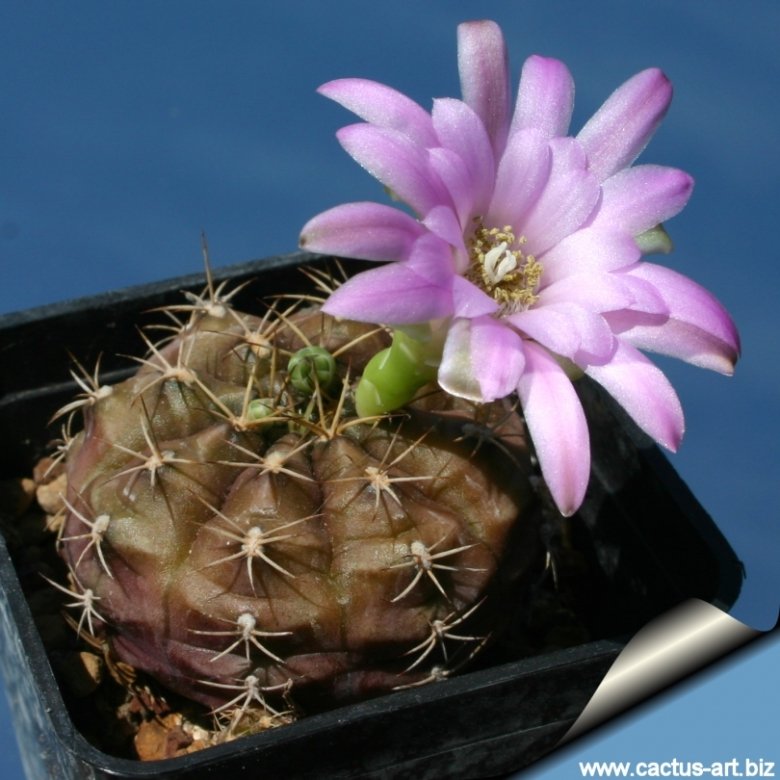
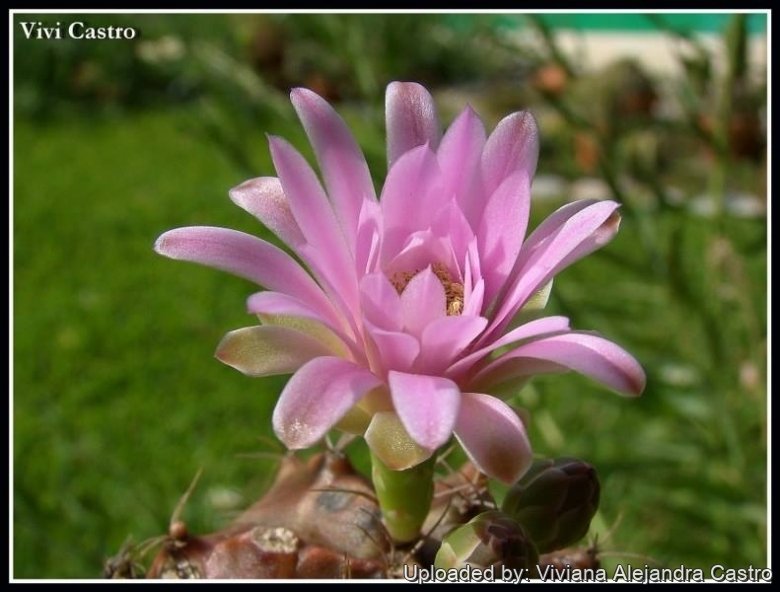
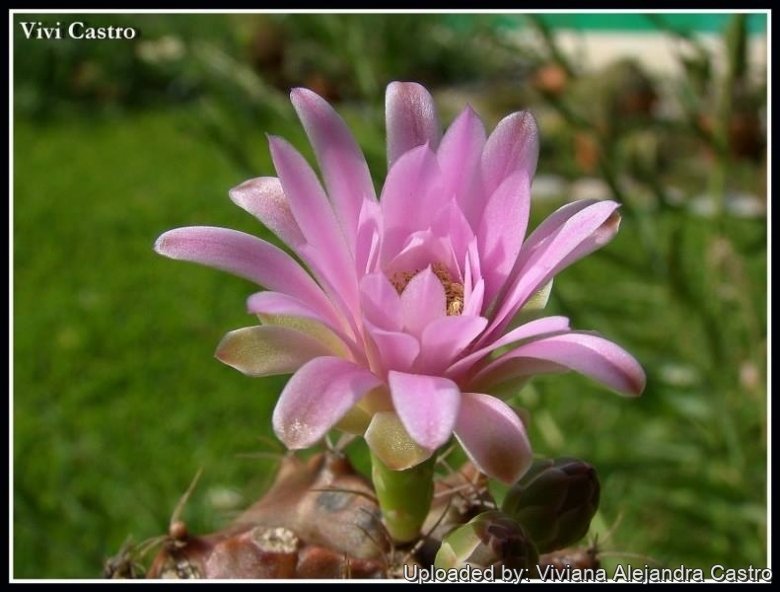
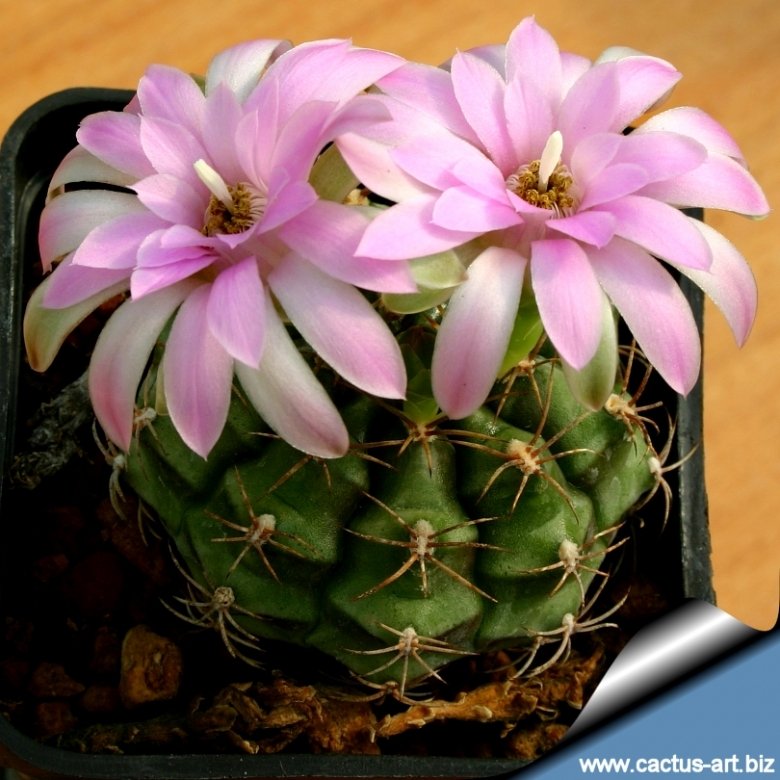
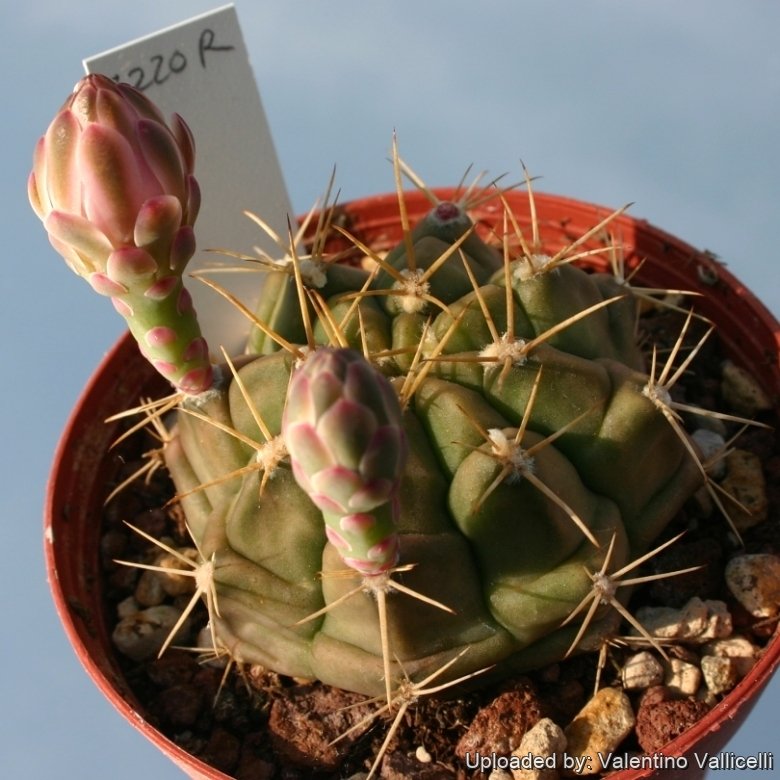
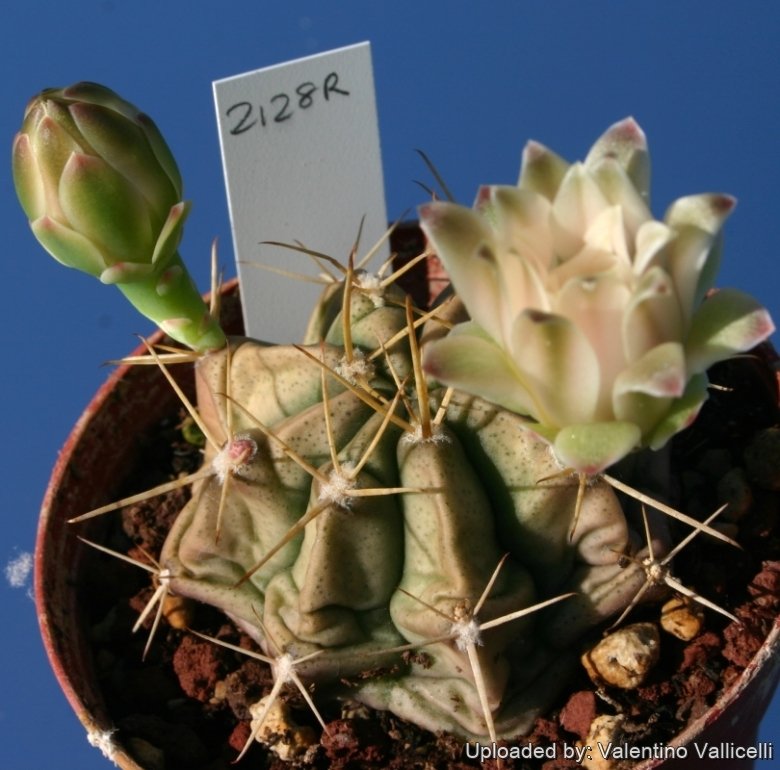
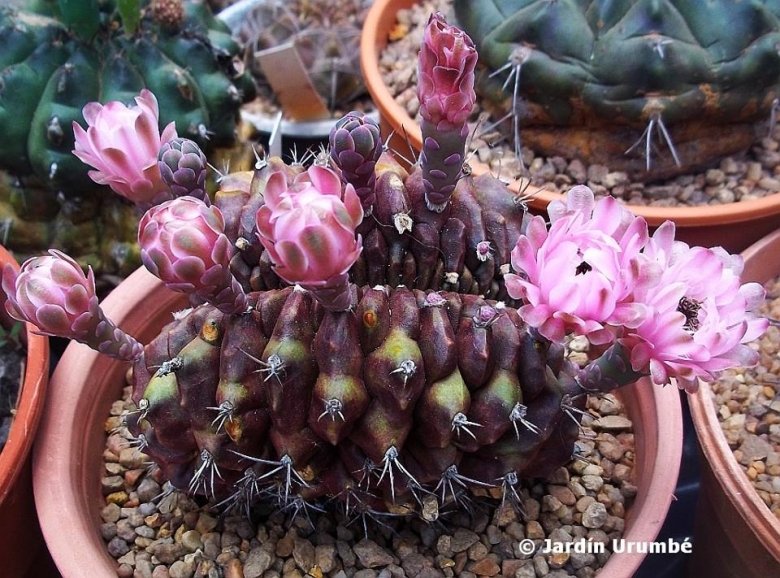
Flowers: From the centre, funnel form, typically greenish white, but also pale pink or bright vivid pink and showy, about4- 6 cm long. Scales and outer perianth-segments broad, greenish margins, internal tepals white, broadly oblong, acute or greenish spreading. Tube thin.
Blooming season: It produces flowers almost continuously during the year.
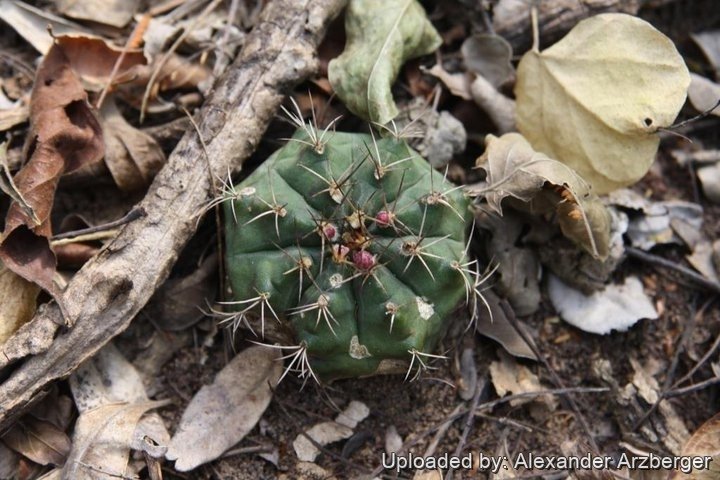
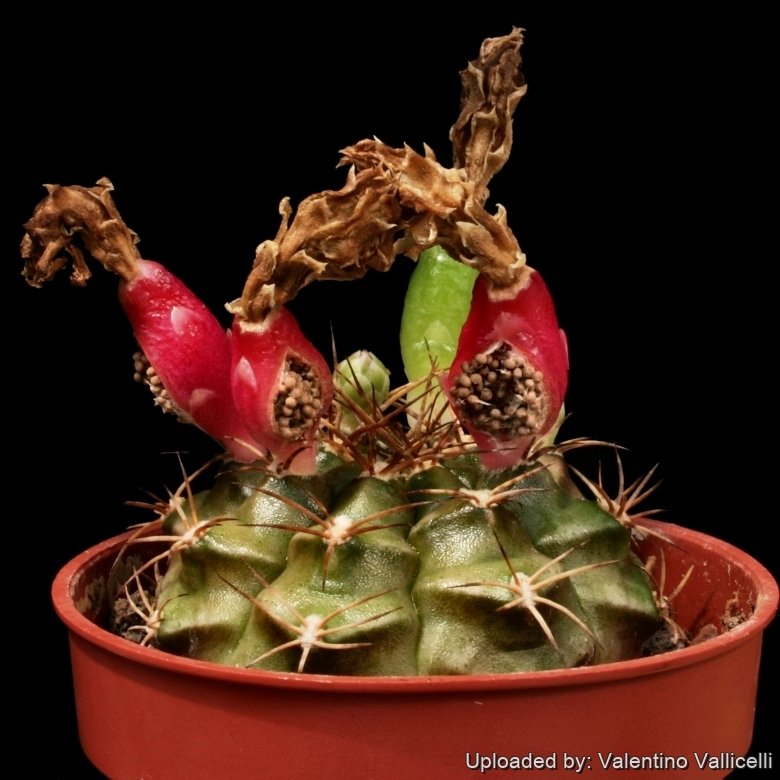
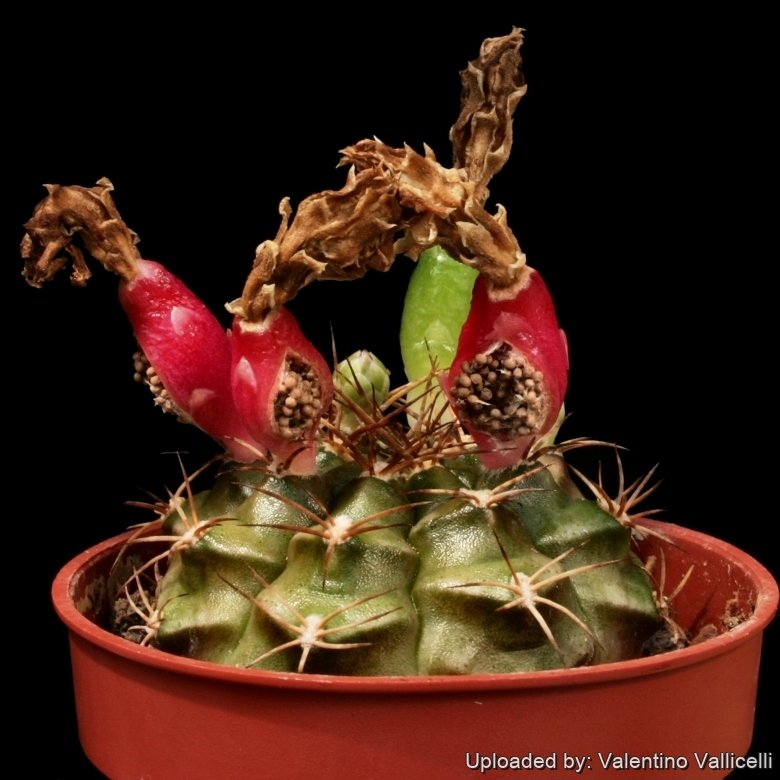
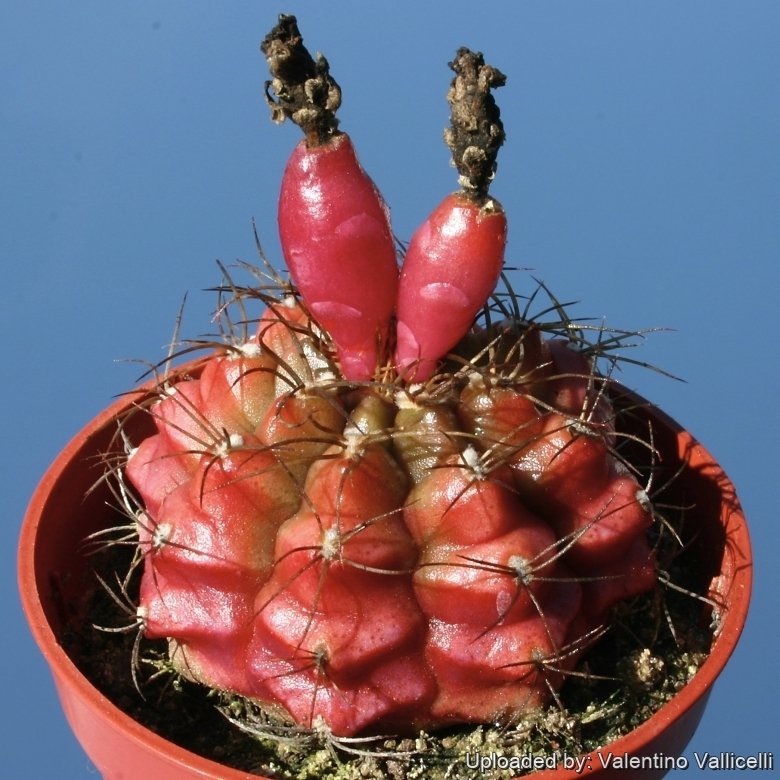
Fruits: Oblong, 2,5 cm long, 6-10 mm in diameter, reddish at maturity.
Seeds: Almost spherical, 1 mm, pale brown, hilum inconspicuous.
Remarks: Seems to be a pretty variable plant you might get some other names which are effectively the same plant… and also not sure all plants identified as this are really this.
Origin and Habitat
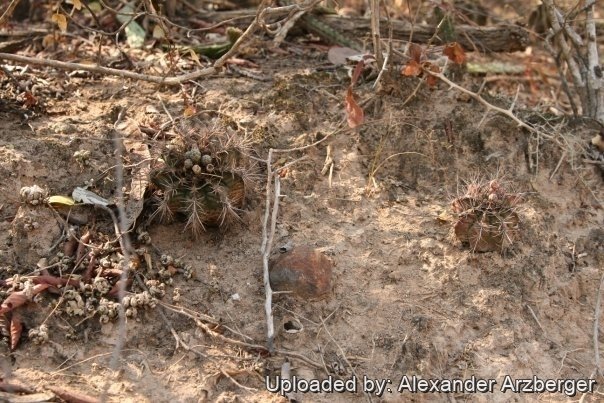
Gymnocalycium anisitsii has a fragmented population spread over a large area in Brazil, Bolivia, Paraguay (extent of occurrence = 25,000 km2).
Altitude: It occurs at elevations of 70-400(-1000?) metres above sea level.
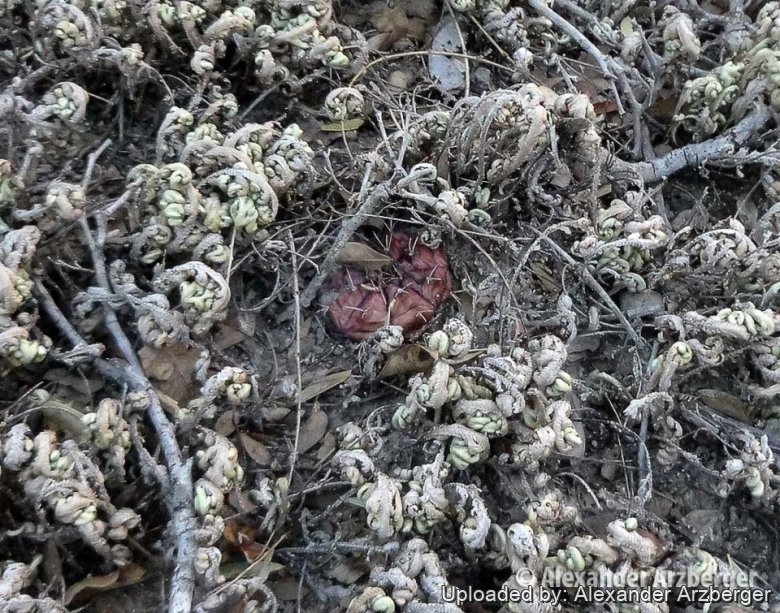
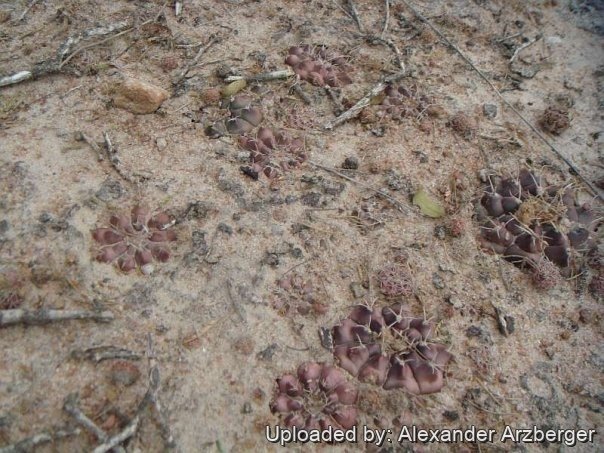
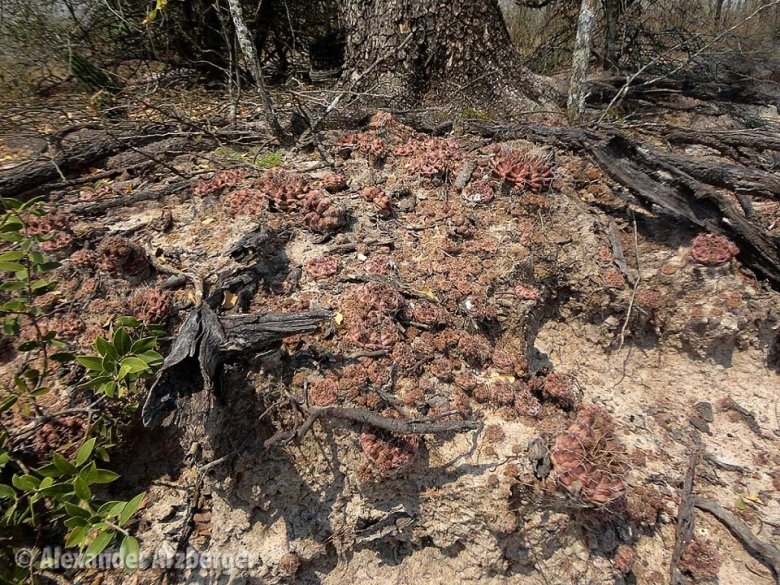
Habitat: It grows in open areas in semi-shade under the protection of low xerophyllous bushes that have no or very few leaves and rarely occurs on rocks in hills and in sandy mountain regions. The light filters through. The soil is usually a rich sandy loam. Rains are frequent during the summer. It often form large groups and is extremely variable. There are no known major threats to this species.
Cultivation and Propagation
Gymnocalycium anisitsii is a summer grower species that is easy to cultivate.
Growth rate: It is a relatively rapidly growing and easily flowering species that will make clumps given the best conditions.
Soils: It likes very porous standard cactus mix soil. Prefer a low pH compost, avoid substrata rich in limestone; otherwise growth will stop altogether.
Repotting: This plant needs plenty of space for its roots, repotting should be done every other year or when the it has outgrown its pot. Use pot with good drainage.
Watering: Needs moderate to copious waterings in summer, but do not overwater (Rot prone), keep dry in winter at a minimum temperature of 0°C.
Fertilization: Feed with a high potassium fertilizer in summer.
Hardiness: Reputedly resistant to frost if kept on the dry side prior to, and during, cold weather (hardy to -5 C ° C, or less for short periods).
Exposition: The plant tolerates extremely bright situations but enjoys filtered sunlight or afternoon shade, inside it needs bright light, and some direct sun. Tends to bronze in strong light, which encourages flowering and heavy spine production, but is likely to suffer from sun scorch or stunted growth if over exposed to direct sunlight during the hottest part of the day in summer.
Uses: It is an excellent plant for container growing. It always looks good and stays small. It look fine in a cold greenhouse and frame or outdoor in a rockery.
Pests & diseases: It may be attractive to a variety of insects, but plants in good condition should be nearly pest-free, particularly if they are grown in a mineral potting-mix, with good exposure and ventilation. Nonetheless, there are several pests to watch for:
- Red spiders: Red spiders may be effectively rubbed up by watering the plants from above.
- Mealy bugs: Mealy bugs occasionally develop aerial into the new growth among the wool with disfiguring results, but the worst types develop underground on the roots and are invisible except by their effects.
- Scales: Scales are rarely a problem.
- Rot: This species is particularly easy and accommodating, seldom suffer of cryptogamic diseases. Rot it is only a minor problem with gymnocalyciums if the plants are watered and “aired” correctly. If they are not, fungicides won’t help all that much.
Propagation: Division, direct sow after last frost. Seeds germinate in 7-14 days at 21-27° C in spring, remove gradually the glass cover as soon the plants will be well rooted (ca 1-2 weeks) and keep ventilated, no full sun for young plants! To make a cutting twist off a branch and permit it to dry out a couple of weeks, lay it on the soil and insert the stem end partially into the soil. Try to keep the cutting somewhat upright so that the roots are able to grow downward.
Bibliography
Major references and further lectures
-
Edward Anderson “The Cactus family” Timber Press, Incorporated, 2001
-
James Cullen, Sabina G. Knees, H. Suzanne Cubey “The European Garden Flora Flowering Plants: A Manual for the Identification of Plants Cultivated in Europe, Both Out-of-Doors and Under Glass” Cambridge University Press, 11/Aug/2011
-
David R Hunt; Nigel P Taylor; Graham Charles; International Cactaceae Systematics Group. “The New Cactus Lexicon” dh books, 2006
-
N. L. Britton, J. N. Rose “The Cactaceae. Descriptions and Illustrations of Plants of the Cactus Family.” Volume 4, The Carnegie Institution of Washington, Washington 1923
-
Curt Backeberg “Die Cactaceae: Handbuch der Kakteenkunde” Gustav Fischer Verlag, Stuttgart New York 1982–1985
-
Pin, A. & Oakley, L. 2013. Gymnocalycium anisitsii. In: IUCN 2013. IUCN Red List of Threatened Species. Version 2013.2. <www.iucnredlist.org>. Downloaded on 17 January 2014.
-
E. W Putnam “GYMNOCALYCIUMS: A Guide for Growers” National Cactus & Succulent Society. Handbook No. 5. 1978
From llifle page Echinocactus damsii
Description
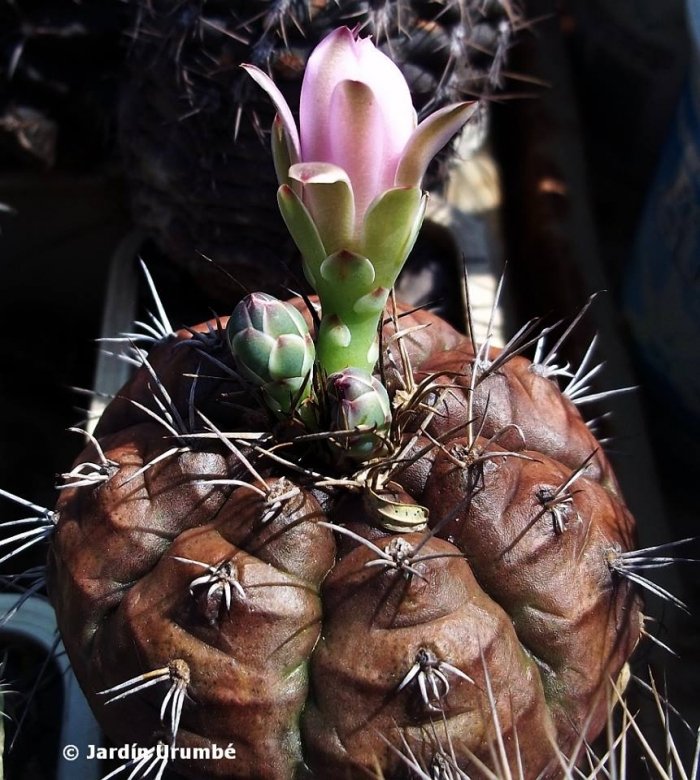
Gymnocalycium anisitsii subs. damsii, firstly described as Echinocactus damsii by K.Schum. In 1903, is a very easy to grow and very free-flowering cactus, it may be solitary or freely offsetting. This is a plump species with somewhat rounded ribs. It is generally included within (as a synonym of) Gymnocalycium anisitsii |, suggesting that there is not really a fundamental difference between the two and there remains a considerable confusion surrounding the true identity of this this plant. Flower colour is variable, typically white but in Bolivia they are usually more coloured, from pale pink to reddish violet. Typically it has shorter spines less than 12 mm long. In its resting state the plant assumes a characteristic deep brown pigmentation, while new growth emerges as a deep green colouration. Gymnocalycium anisitsii subs. damsii will continue to flower and it is not unusual (in Europe) for blooms to be open on these during the Christmas period.
Stem: Simple, spherical-depressed to short cylindrical, up to 10 cm tall, 8-15 cm in diameter, green, pale-green or brownish-green, and highly decorative, often with horizontal clear and dark strips. Like other species of the subgenus Muscosemineum, G. damsii has a high proportion of a red pigment (betalain) in the epidermis.
Ribs: About 10, broad to acute, and more or less notched into chin-shape protrusions or warts.
Spines: All radials, 5-8, straight or slightly tortuous, short, the longest up to 12 mm (or more) long, nearly useless in terms of defence. Young spine are pastel-white or yellowish with a darker tip, later become pale-grey.
Central spines: Usually absent.
Flowers: From the centre, narrow funnelform, about 6 cm long. External perianth segments greenish whit reddish margins, internal perianth segments oblong, white to light pinkish or greenish spreading. Scales on the ovary and flower tube small, scattered.
Blooming season: It produces flowers almost continuously during the year.
Fruits: Oblong, 2,5 cm long, 6 mm in diameter, reddish at maturity.
Remarks: Seems to be a pretty variable plant you might get some other names which are effectively the same plant… and also not sure all plants identified as this are really this.
Origin and Habitat
Bolivia, Paraguay and Brazil.
Altitude range: Mostly between 100 and 800 metres above sea level.
Cultivation and Propagation
Gymnocalycium damsii (syn: anisitsii) is a summer grower species that is easy to cultivate.
Growth rate: It is a relatively rapidly growing and easily flowering species that will make clumps given the best conditions.
Soils: It likes very porous standard cactus mix soil. Prefer a low pH compost, avoid substrata rich in limestone; otherwise growth will stop altogether.
Repotting: This plant needs plenty of space for its roots, repotting should be done every other year or when the it has outgrown its pot. Use pot with good drainage.
Watering: Needs moderate to copious waterings in summer, but do not overwater (Rot prone), keep dry in winter at a minimum temperature of 0°C.
Fertilization: Feed with a high potassium fertilizer in summer.
Hardiness: Reputedly resistant to frost if kept on the dry side prior to, and during, cold weather (hardy to -5 C ° C, or less for short periods).
Exposition: The plant tolerates extremely bright situations but enjoys filtered sunlight or afternoon shade, inside it needs bright light, and some direct sun. Tends to bronze in strong light, which encourages flowering and heavy spine production, but is likely to suffer from sun scorch or stunted growth if over exposed to direct sunlight during the hottest part of the day in summer.
Uses: It is an excellent plant for container growing. It always looks good and stays small. It look fine in a cold greenhouse and frame or outdoor in a rockery.
Pests & diseases: It may be attractive to a variety of insects, but plants in good condition should be nearly pest-free, particularly if they are grown in a mineral potting-mix, with good exposure and ventilation. Nonetheless, there are several pests to watch for:
- Red spiders: Red spiders may be effectively rubbed up by watering the plants from above.
- Mealy bugs: Mealy bugs occasionally develop aerial into the new growth among the wool with disfiguring results, but the worst types develop underground on the roots and are invisible except by their effects.
- Scales: Scales are rarely a problem.
- Rot: This species is particularly easy and accommodating, seldom suffer of cryptogamic diseases. Rot it is only a minor problem with gymnocalyciums if the plants are watered and “aired” correctly. If they are not, fungicides won’t help all that much.
Propagation: Division, direct sow after last frost. Seeds germinate in 7-14 days at 21-27° C in spring, remove gradually the glass cover as soon the plants will be well rooted (ca 1-2 weeks) and keep ventilated, no full sun for young plants! To make a cutting twist off a branch and permit it to dry out a couple of weeks, lay it on the soil and insert the stem end partially into the soil. Try to keep the cutting somewhat upright so that the roots are able to grow downward.
Bibliography
Major references and further lectures
-
Edward Anderson “The Cactus family” Timber Press, Incorporated, 2001
-
James Cullen, Sabina G. Knees, H. Suzanne Cubey “The European Garden Flora Flowering Plants: A Manual for the Identification of Plants Cultivated in Europe, Both Out-of-Doors and Under Glass” Cambridge University Press, 11/Aug/2011
-
David R Hunt; Nigel P Taylor; Graham Charles; International Cactaceae Systematics Group. “The New Cactus Lexicon” dh books, 2006
-
N. L. Britton, J. N. Rose “The Cactaceae. Descriptions and Illustrations of Plants of the Cactus Family.” Volume 4, The Carnegie Institution of Washington, Washington 1923
-
Curt Backeberg “Die Cactaceae: Handbuch der Kakteenkunde” Gustav Fischer Verlag, Stuttgart New York 1982–1985
-
E. W Putnam “GYMNOCALYCIUMS: A Guide for Growers” National Cactus & Succulent Society. Handbook No. 5. 1978
-
Gymnocalycium damsii in: “The National Cactus and Succulent Journal” The Official Journal of the National Cactus & Succulent Society, Volumes 23-26 National Cactus and Succulent Society, 1968
Source: Echinocactus damsii, LLIFLE - Encyclopedia of living forms, CC-BY-SA, retrieved 2026-10-25.
From llifle page Gymnocalycium damsii var. boosii
Description
Gymnocalycium damsii var. boosii (Gymnocalycium damsii ssp. evae var. boosi) is a local or morphological form of the widespread and variable Gymnocalycium damsii. It has longer, thin, flexible and usually twisted spines sometimes up to 6 cm long that make the plant resembling a broom or a besom. The flowers are bright pink or carmine-red (red flowers are quite unique and seldom seen in Gymnocalycium damsii). Seedlings are very nice, the bodies are a chalky pale green (as in Gymnocalycium Griseopallidum in his youth), and the ribs are banded whit lilac brown markings across the areoles especially when young, and these sometimes have crossbands of lighter colours. However the distinguishing characteristics of var. boosii, appear to fall within the natural variation of Gymnocalycium damsii and it should be synonymized with the latter.
Origin and Habitat
South-East of Chocis, Chiquitos Province, Santa Cruz Dept., Bolivia (Western South America, Southern America).
Altitude range: Around 300-600 metres above sea level.
Cultivation and Propagation
Gymnocalycium damsii var. boosii is a summer grower species that is easy to cultivate.
Growth rate: It is a relatively rapidly growing and easily flowering species that will make clumps given the best conditions.
Soils: It likes very porous standard cactus mix soil. Prefer a low pH compost, avoid substrata rich in limestone; otherwise growth will stop altogether.
Repotting: This plant needs plenty of space for its roots, repotting should be done every other year or when the it has outgrown its pot. Use pot with good drainage.
Watering: Needs moderate to copious waterings in summer, but do not overwater (Rot prone), keep dry in winter at a minimum temperature of 0°C.
Fertilization: Feed with a high potassium fertilizer in summer.
Hardiness: Reputedly resistant to frost if kept on the dry side prior to, and during, cold weather (hardy to -5° C, or less for short periods).
Exposition: The plant tolerates extremely bright situations but enjoys filtered sunlight or afternoon shade, inside it needs bright light, and some direct sun. Tends to bronze in strong light, which encourages flowering and heavy spine production, but is likely to suffer from sun scorch or stunted growth if over exposed to direct sunlight during the hottest part of the day in summer.
Uses: It is an excellent plant for container growing. It always looks good and stays small. It look fine in a cold greenhouse and frame or outdoor in a rockery.
Propagation: Division, direct sow after last frost. Seeds germinate in 7-14 days at 21-27° C in spring, remove gradually the glass cover as soon the plants will be well rooted (ca 1-2 weeks) and keep ventilated, no full sun for young plants! To make a cutting twist off a branch and permit it to dry out a couple of weeks, lay it on the soil and insert the stem end partially into the soil. Try to keep the cutting somewhat upright so that the roots are able to grow downward.
Bibliography
Major references and further lectures
- Gymnocalycium damsii (K. Sch.) Br. & R. in: http://www.carciton.cz/kaktusy/clanky11\_3.htm
Source: Gymnocalycium damsii var. boosii, LLIFLE - Encyclopedia of living forms, CC-BY-SA, retrieved 2026-10-25.
From llifle page Gymnocalycium damsii var. centrispinum
Description
Gymnocalycium damsii var. centrispinum was first named in 1963 by Backeberg in reference to the long central spine that distinguish this variety. Backeberg named four varieties of Gymnocalycium damsii (vars. centrispinum, rotundulum, torulosum and tucavocense). All these varieties were invalidly described, but today they are no more accepted because they only represents extreme of variation within the same polymorphic population. For example plants of var. centrispinum from seed often lack central spines whereas some plants of torulosum have them! Also in the var. tucavocense there are plants with and without central spines. This also applies to var. rotundulum, which is distinguished by it round body shape without pronounced ribs, but again plants with round bodies and more or less round ribs are intermingled with plants with acute ribs and are found within populations of the other varieties.
Stem: In culture the colour of the epidermis varies from copper to dark green (depending on sun exposure).
Flowers: Entirely white. A peculiar characteristic of var. centrispinum seems to be the long stylus protruding above the stamens, in all other G. damsii taxa the stylus is shorter and included within the anthers of the upper stamens.
Radial spines: 7.
Central spine: One, needle-like yellowish-brown to brown, about 2 cm long, occasionally up tu 7 cm long in age.
Origin and Habitat
Gymnocalycium damsii var. centrispinum is reported from Bolivia (Western South America), in the vicinity of Roboré.
Habitat and ecology: This species occurs in relatively dense forest areas.
Cultivation and Propagation
Gymnocalycium damsii var. centrispinum is a summer grower species that is easy to cultivate.
Growth rate: It is a relatively rapidly growing and easily flowering species that will make clumps given the best conditions.
Soils: It likes very porous standard cactus mix soil. Prefer a low pH compost, avoid substrata rich in limestone; otherwise growth will stop altogether.
Repotting: This plant needs plenty of space for its roots, repotting should be done every other year or when the it has outgrown its pot. Use pot with good drainage.
Watering: Needs moderate to copious waterings in summer, but do not overwater (Rot prone), keep dry in winter at a minimum temperature of 0°C.
Fertilization: Feed with a high potassium fertilizer in summer.
Hardiness: Reputedly resistant to frost if kept on the dry side prior to, and during, cold weather (hardy to -5 C ° C, or less for short periods).
Exposition: The plant tolerates extremely bright situations but enjoys filtered sunlight or afternoon shade, inside it needs bright light, and some direct sun. Tends to bronze in strong light, which encourages flowering and heavy spine production, but is likely to suffer from sun scorch or stunted growth if over exposed to direct sunlight during the hottest part of the day in summer.
Uses: It is an excellent plant for container growing. It always looks good and stays small. It look fine in a cold greenhouse and frame or outdoor in a rockery.
Pests & diseases: It may be attractive to a variety of insects, but plants in good condition should be nearly pest-free, particularly if they are grown in a mineral potting-mix, with good exposure and ventilation. Nonetheless, there are several pests to watch for:
- Red spiders: Red spiders may be effectively rubbed up by watering the plants from above.
- Mealy bugs: Mealy bugs occasionally develop aerial into the new growth among the wool with disfiguring results, but the worst types develop underground on the roots and are invisible except by their effects.
- Scales: Scales are rarely a problem.
- Rot: This species is particularly easy and accommodating, seldom suffer of cryptogamic diseases. Rot it is only a minor problem with gymnocalyciums if the plants are watered and “aired” correctly. If they are not, fungicides won’t help all that much.
Propagation: Division, direct sow after last frost. Seeds germinate in 7-14 days at 21-27° C in spring, remove gradually the glass cover as soon the plants will be well rooted (ca 1-2 weeks) and keep ventilated, no full sun for young plants! To make a cutting twist off a branch and permit it to dry out a couple of weeks, lay it on the soil and insert the stem end partially into the soil. Try to keep the cutting somewhat upright so that the roots are able to grow downward.
Bibliography
Major references and further lectures
-
E. W Putnam “Gymnocalyciums: Handbook No. 5.” National Cactus And Succulent Society, Smart & Co. (Printers) Ltd., Brackley, Northants. 1978
-
Von G. Frank “Gymnocalycium damsii-Formen aus Ostbolivien” KAKTEEN und andere
-
Sukkulenten 17(8): 155-158, August 1966
-
Volker Schädlich “From Santa Cruz to Puerto Suarez eastward a trip to the Bolivian lowlands until the Brazilian border” 23 - XEROPHILIA • Volume IV, No. 4 (15), December 2015
-
Pilbeam “Gymnocalycium - A collector’s guide”. 1995
Source: Gymnocalycium damsii var. centrispinum, LLIFLE - Encyclopedia of living forms, CC-BY-SA, retrieved 2026-10-25.
From llifle page Gymnocalycium damsii subs. evae
Origin and Habitat
Montes inter San Jose et Santa Ana, solo schistoso ad 900 m supra mare, Bolivia (Western South America, Southern America)
Source: Gymnocalycium damsii subs. evae, LLIFLE - Encyclopedia of living forms, CC-BY-SA, retrieved 2026-10-25.
From llifle page Gymnocalycium damsii var. rotundulum
Description
Gymnocalycium damsii var. rotundulum (Gymnocalycium anisitsii) is a usually solitary colourful cactus common in cultivation, characterized by rounder and scarcely raised tubercles. However it is very similar (if not identical) to the standard G. damsii (G. anisistsii) and it is probably the exact same plant.
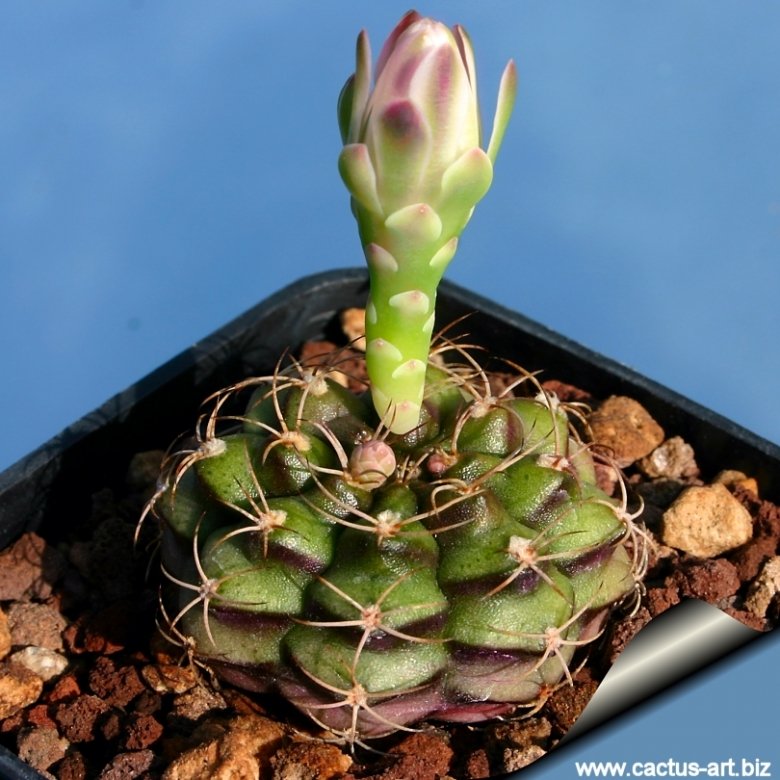
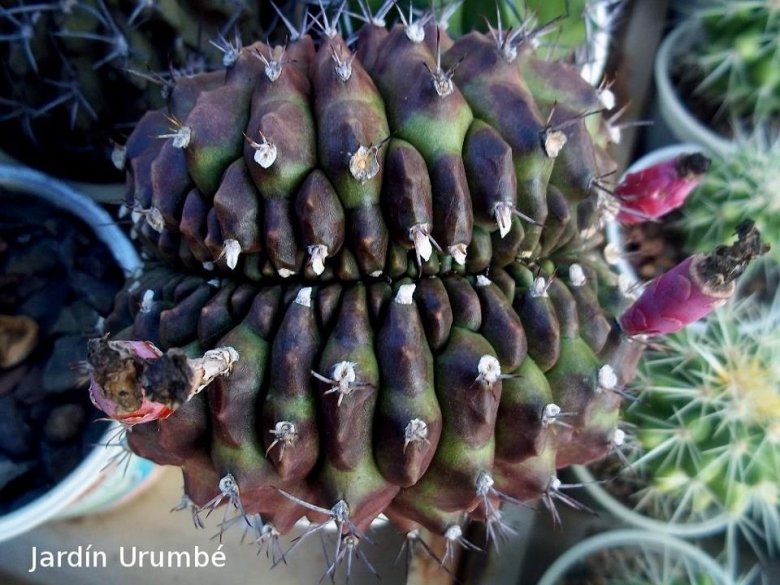
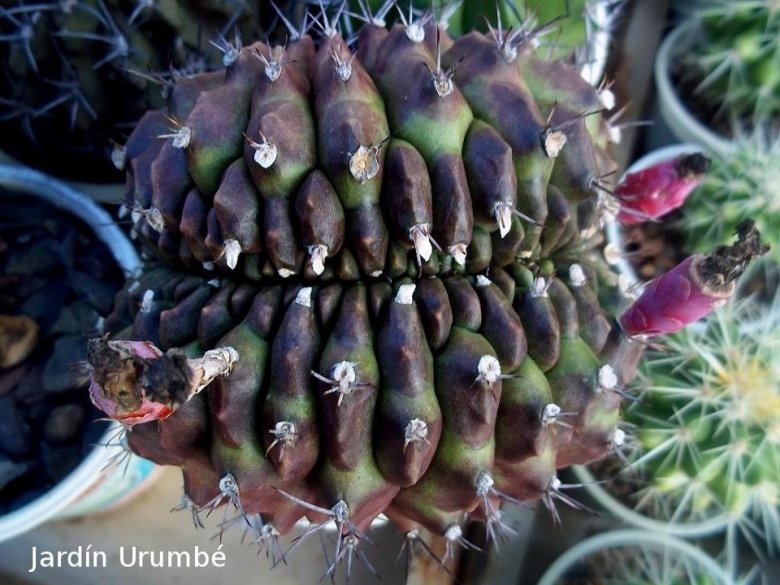
Stem: Up to 10 cm tall, 8-10 cm in diameter colourful and highly decorative, with characteristic horizontal clear and dark strips. The clear areas (above the areoles) are pastel-grey-pink while the dark zone (below the areoles) are deep olive-green to brown-purple.
Spines: Nearly useless in terms of defence.
Remarks: Seems to be a pretty variable plant you might get some other names which are effectively the same plant… and also not sure all plants identified as this are really this.
Origin and Habitat
Bolivia ( and also Brazil & Paraguay) South America.
Habitat: G. damsii (anisitsii) grows in open areas under the protection of low bushes. It often form large groups and is extremely variable.
Cultivation and Propagation
It is a summer grower species that offers no cultivation difficulties. Water regularly in summer (but do not overwater ) Keep this plant almost dry in winter at a minimum temperature of 0°C, prefer relatively rich substrate and low pH compost (if possible not limestone) otherwise growth will stop altogether. Feed with a high potassium fertilizer in summer. It is quite frost resistant if kept dry (hardy to -5° C)
Sun Exposure: Light shade. It may tolerate bright situations but is likely to suffer from sun scorch or stunted growth if over exposed to direct sunlight during the hottest part of the day in summer. This plant needs plenty of space for its roots, repotting should be done every other year or when the it has outgrown its pot. This species is particularly easy and accommodating, seldom suffer of cryptogamic diseases.
Propagation: Direct sow after last frost. (seldom produces offsets)
Bibliography
Major references and further lectures
-
Edward Anderson “The Cactus family” Timber Press, Incorporated, 2001
-
James Cullen, Sabina G. Knees, H. Suzanne Cubey “The European Garden Flora Flowering Plants: A Manual for the Identification of Plants Cultivated in Europe, Both Out-of-Doors and Under Glass” Cambridge University Press, 11/Aug/2011
-
David R Hunt; Nigel P Taylor; Graham Charles; International Cactaceae Systematics Group. “The New Cactus Lexicon” dh books, 2006
-
N. L. Britton, J. N. Rose “The Cactaceae. Descriptions and Illustrations of Plants of the Cactus Family.” Volume 4, The Carnegie Institution of Washington, Washington 1923
-
Curt Backeberg “Die Cactaceae: Handbuch der Kakteenkunde” Gustav Fischer Verlag, Stuttgart New York 1982–1985
-
E. W Putnam “GYMNOCALYCIUMS: A Guide for Growers” National Cactus & Succulent Society. Handbook No. 5. 1978
Source: Gymnocalycium damsii var. rotundulum, LLIFLE - Encyclopedia of living forms, CC-BY-SA, retrieved 2026-10-25.
From llifle page Gymnocalycium damsii var. tucavocense
Description
Gymnocalycium anisitsii var. tucavocense is a beautiful species, of modest size, particularly attractive for its beautiful lilac flowers and flattened multicoloured stems. The var. tucavocense seems to differ in being remarkably prolific in branching and in its very precocious flowering. Tiny seedlings will branch and flower sometimes when only 1.5 cm in diameter
Habit: Solitary or freely offsetting from the areoles. It often form large groups and is extremely variable.
Stem: Up to 10 cm tall , 8-15 cm in diameter colourful and highly decorative, with characteristic horizontal clear and dark strips. The clear areas (above the areoles) are pastel-grey-pink while the dark zone (below the areoles) are Deep olive-green to brown-purple.
Spines: Nearly useless in terms of defence.
Flowers: From the centre, narrow, funnelform, pink about 6 cm long. External tepals greenish whit reddish margins, internal tepals light or bright pink spreading. Scales on the ovary and flower tube small, scattered.
Remarks: Seems to be a pretty variable plant you might get some other names which are effectively the same plant… and also not sure all plants identified as this are really this.
Origin and Habitat
Tucavaca Valley and adjacent areas, Santa Cruz and San Jose, Bolivia.
Altitude: 200-600 metres above sea level.
Habitat: Gymnocalycium damsii var. tucavocense grows in open areas under the protection of low bushes.
Cultivation and Propagation
It is a summer grower species that offers no cultivation difficulties. Water regularly in summer (but do not overwater ) Keep this plant almost dry in winter at a minimum temperature of 0°C, prefer relatively rich substrate and low pH compost (if possible not limestone) otherwise growth will stop altogether. Feed with a high potassium fertilizer in summer. It is quite frost resistant if kept dry (hardy to -5° C) This plant needs plenty of space for its roots, repotting should be done every other year or when the it has outgrown its pot. This species is particularly easy and accommodating, seldom suffer of cryptogamic diseases.
Sun Exposure: Light shade. It may tolerate bright situations but is likely to suffer from sun scorch or stunted growth if over exposed to direct sunlight during the hottest part of the day in summer.
Source: Gymnocalycium damsii var. tucavocense, LLIFLE - Encyclopedia of living forms, CC-BY-SA, retrieved 2026-10-25.
From llifle page Gymnocalycium griseo-pallidum
Description
Gymnocalycium griseo-pallidum is a small cactus barely rising above ground level, solitary or branching basally in cultivation to form clusters. It differs from Gymnocalycium anisitsii for the paler greyish-green, sharply ribbed stem (usually green and reddish-brown in anisitsii) and for the greenish-white flowers.
Roots: Fibrous roots.
Stem: Spherical-depressed to short cylindrical, up to 10 cm tall, 8-15 cm in diameter, pale greyish-green, pale bluish-green, or pale-brownish-green often with subtle horizontal clear strips.
Ribs: About 10-11, acute, obscurely notched into chin-shape protrusions.
Radial spines: 5-8 up to 12 mm (or more) long, straight or slightly tortuous, short, nearly useless in terms of defence. Young spine are pastel-white or yellowish with a darker tip, later become pale-grey.
Central spines: Usually absent.
Flowers: From the centre, narrow, funnelform, about 6 cm long. External tepals greenish whit reddish margins, internal tepals greenish-white often suffused with pink, spreading. Scales on the ovary and flower tube small, pink and scattered.
Blooming season: It produces flowers almost continuously during the year.
Fruits: Oblong, 2,5 cm long, 6 mm in diameter, reddish at maturity.
Origin and Habitat
Santa Cruz (Salinas de San Jose, Cordillera ) Bolivia.
Altitude: 300-400 metres above sea level.
Source: Gymnocalycium griseo-pallidum, LLIFLE - Encyclopedia of living forms, CC-BY-SA, retrieved 2026-10-25.
From llifle page Gymnocalycium damsii f. monstruosum
Description
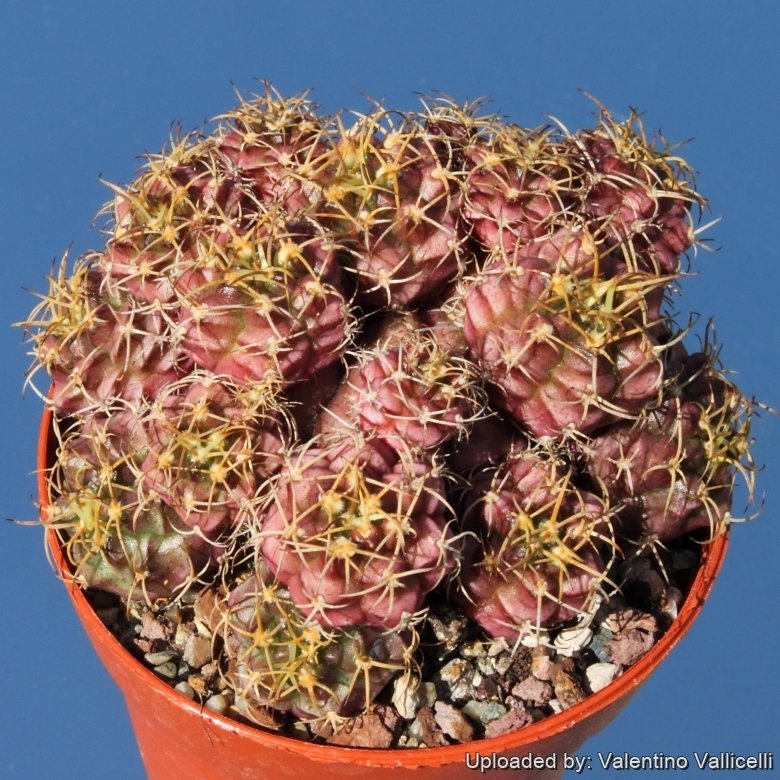
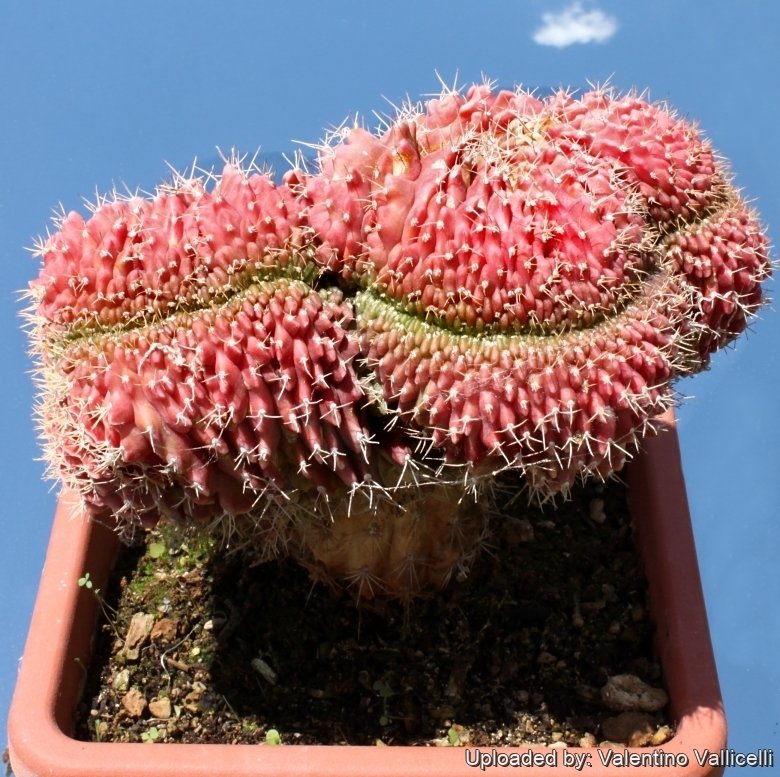
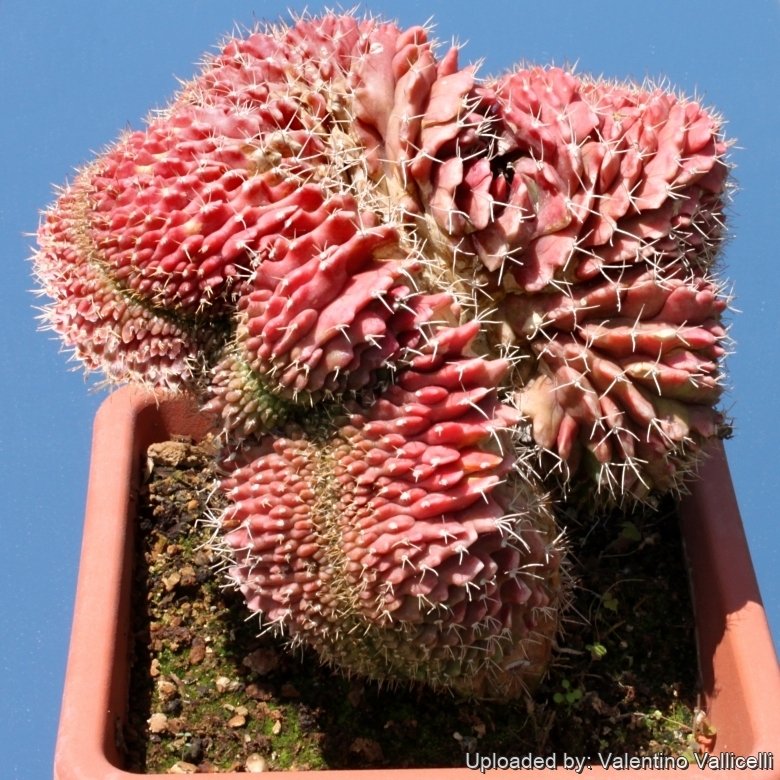
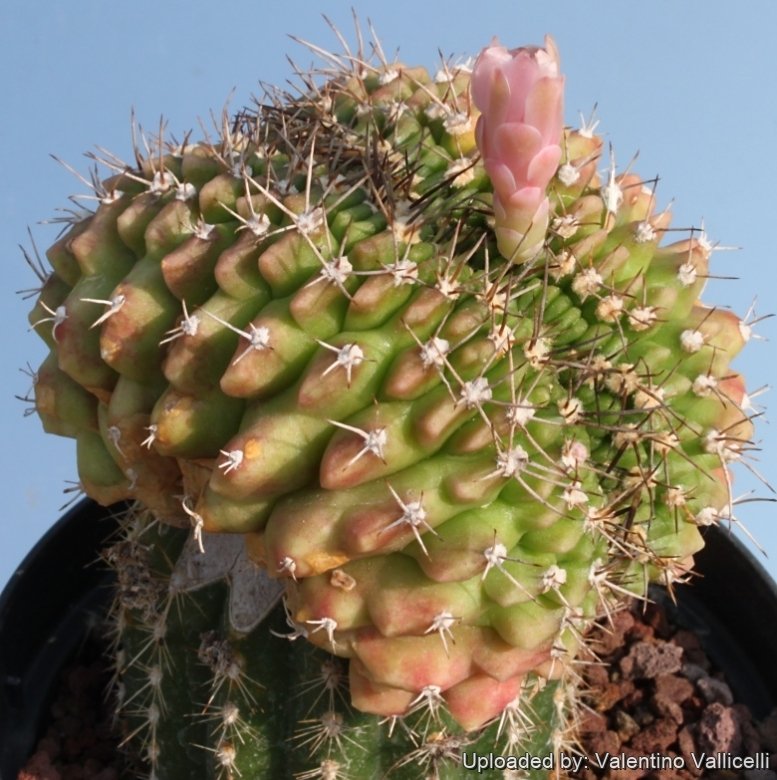
It forms dense clusters about 15-20 cm in diameter, composed of a great number of small pink and red stems, each of them usually less than 3 cm wide.
Spines: 5-6 all radials, brownish-yellow, 5-15 mm long, subulate and somewhat bent.
Flowers: Not known.
Origin and Habitat
Garden origin.
Cultivation and Propagation
It is a summer grower species that is easy to cultivate.
Growth rate: It is a relatively rapidly growing species that will make dense crowded clumps given the best conditions.
Soils: It likes very porous standard cactus mix soil. Prefer a low pH compost, avoid substrata rich in limestone; otherwise growth will stop altogether.
Repotting: This plant needs plenty of space for its roots, repotting should be done every other year or when the it has outgrown its pot. Use pot with good drainage.
Watering: Needs moderate to copious waterings in summer, but do not overwater (Rot prone), keep dry in winter at a minimum temperature of 0°C.
Fertilization: Feed with a high potassium fertilizer in summer.
Hardiness: Reputedly resistant to frost if kept on the dry side prior to, and during, cold weather (hardy to -5 C ° C, or less for short periods).
Exposition: The plant tolerates extremely bright situations but enjoys filtered sunlight or afternoon shade, inside it needs bright light, and some direct sun. Tends to bronze in strong light, which encourages flowering and heavy spine production, but is likely to suffer from sun scorch or stunted growth if over exposed to direct sunlight during the hottest part of the day in summer.
Uses: It is an excellent plant for container growing. It always looks good and stays small. It look fine in a cold greenhouse and frame or outdoor in a rockery.
Pests & diseases: It may be attractive to a variety of insects, but plants in good condition should be nearly pest-free, particularly if they are grown in a mineral potting-mix, with good exposure and ventilation. Nonetheless, there are several pests to watch for:
- Red spiders: Red spiders may be effectively rubbed up by watering the plants from above.
- Mealy bugs: Mealy bugs occasionally develop aerial into the new growth among the wool with disfiguring results, but the worst types develop underground on the roots and are invisible except by their effects.
- Scales: Scales are rarely a problem.
- Rot: This species is particularly easy and accommodating, seldom suffer of cryptogamic diseases. Rot it is only a minor problem with gymnocalyciums if the plants are watered and “aired” correctly. If they are not, fungicides won’t help all that much.
Propagation: Division or grafting. To make a cutting twist off a branch and permit it to dry out a couple of weeks, lay it on the soil and insert the stem end partially into the soil. Try to keep the cutting somewhat upright so that the roots are able to grow downward.
Bibliography
Major references and further lectures
-
Edward Anderson “The Cactus family” Timber Press, Incorporated, 2001
-
James Cullen, Sabina G. Knees, H. Suzanne Cubey “The European Garden Flora Flowering Plants: A Manual for the Identification of Plants Cultivated in Europe, Both Out-of-Doors and Under Glass” Cambridge University Press, 11/Aug/2011
-
David R Hunt; Nigel P Taylor; Graham Charles; International Cactaceae Systematics Group. “The New Cactus Lexicon” dh books, 2006
-
N. L. Britton, J. N. Rose “The Cactaceae. Descriptions and Illustrations of Plants of the Cactus Family.” Volume 4, The Carnegie Institution of Washington, Washington 1923
-
Curt Backeberg “Die Cactaceae: Handbuch der Kakteenkunde” Gustav Fischer Verlag, Stuttgart New York 1982–1985
Source: Gymnocalycium damsii f. monstruosum, LLIFLE - Encyclopedia of living forms, CC-BY-SA, retrieved 2026-10-25.
From llifle page Gymnocalycium damsii var. tucavocense cv. Red Form
Description
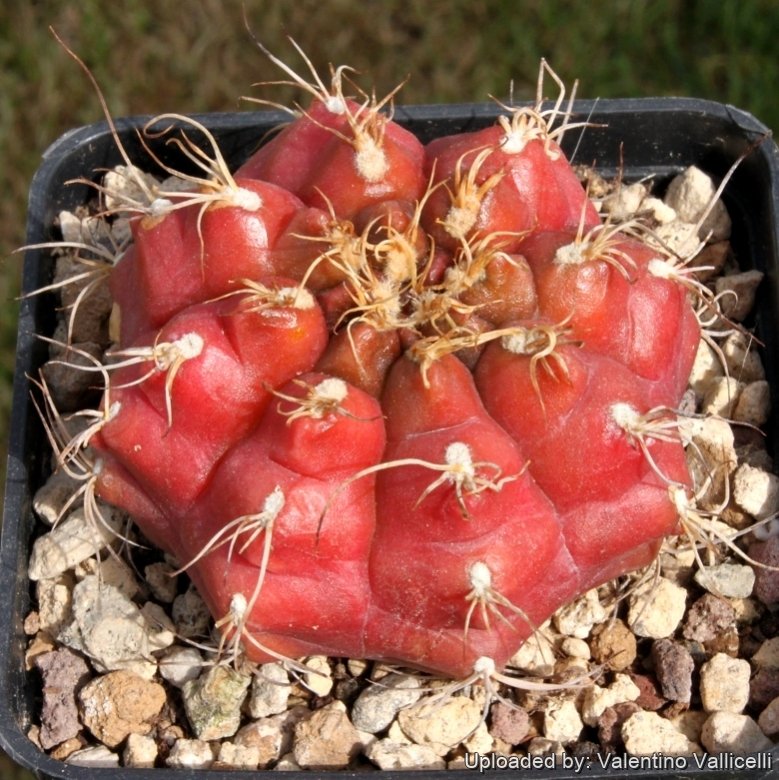
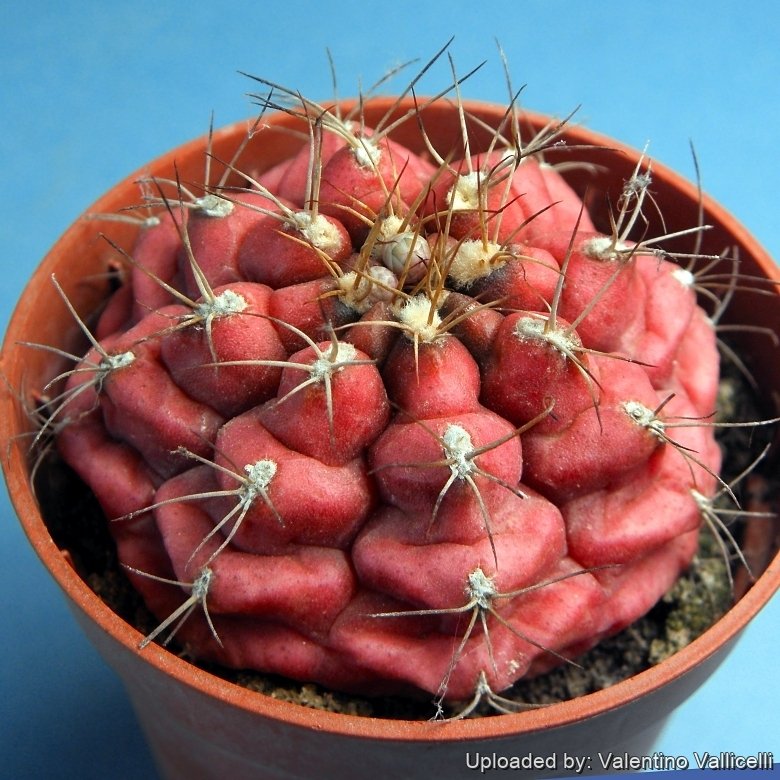
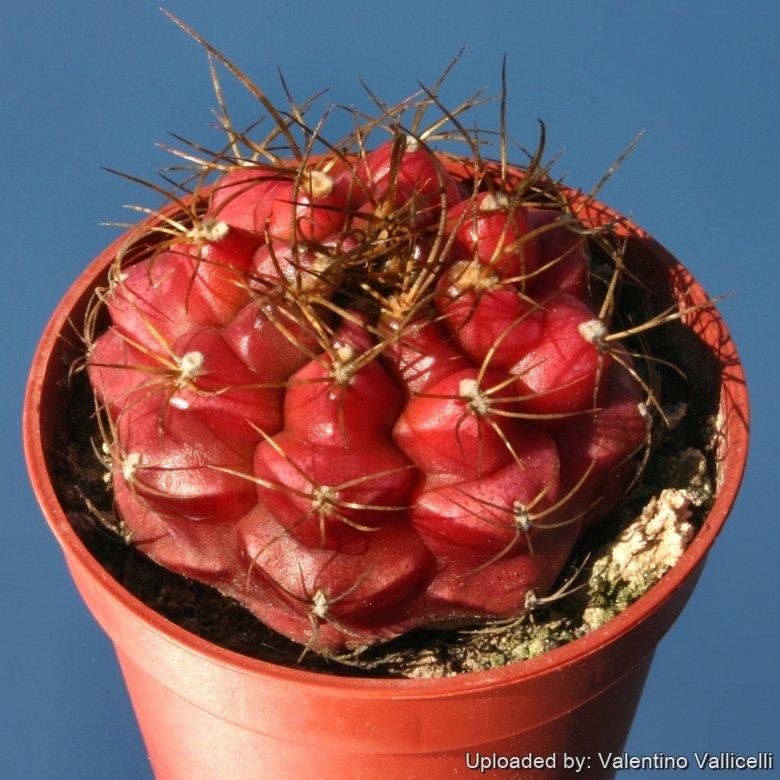
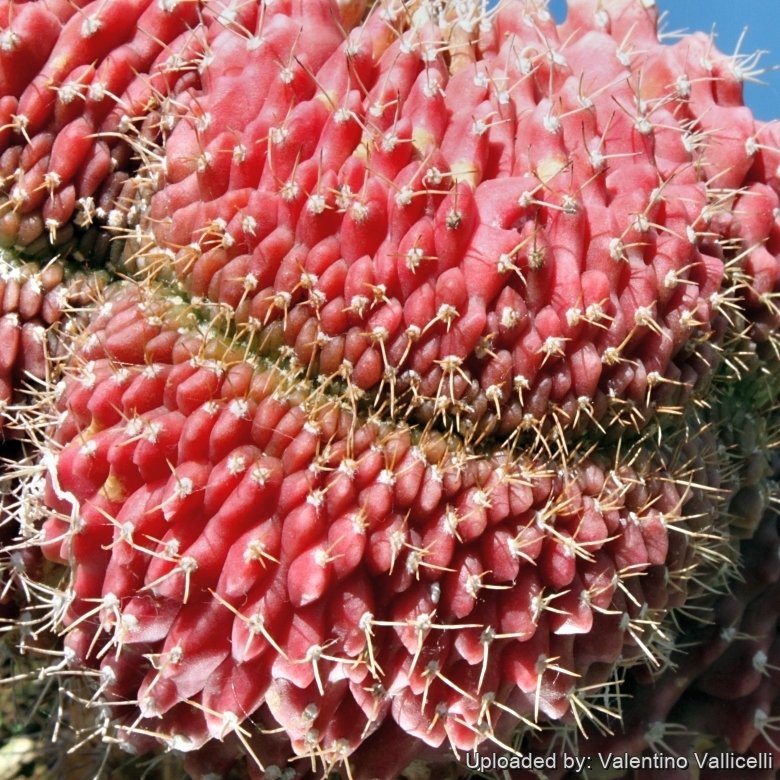
This eye catching garden selection is characterized by an unusual bright red colouring of the body, this colour is due to a reduced production of chlorophyll pigments, nevertheless the plant can normally do photosynthesis and grows normally from seeds.
Stem: Up to 10 cm tall , 8-15 cm in diameter colourful and highly decorative, with characteristic horizontal clear and dark red strips. The clear areas (above the areoles) are pastel-pink while the dark zone (below the areoles) are Deep purple.
Spines: Nearly useless in terms of defence.
Remarks: Seems to be a pretty variable plant. You might get some other names which are effectively the same plant… and also not sure all plants identified as this are really this.
Origin and Habitat
Garden origin (Nursery produced cultivar)
Cultivation and Propagation
Gymnocalycium anisitsii var. tucavocense is a summer grower species that is easy to cultivate.
Growth rate: It is a relatively rapidly growing and easily flowering species that will make clumps given the best conditions.
Soils: It likes very porous standard cactus mix soil. Prefer a low pH compost, avoid substrata rich in limestone; otherwise growth will stop altogether.
Repotting: This plant needs plenty of space for its roots, repotting should be done every other year or when the it has outgrown its pot. Use pot with good drainage.
Watering: Needs moderate to copious waterings in summer, but do not overwater (Rot prone), keep dry in winter at a minimum temperature of 0°C.
Fertilization: Feed with a high potassium fertilizer in summer.
Hardiness: Reputedly resistant to frost if kept on the dry side prior to, and during, cold weather (hardy to -5 C ° C, or less for short periods).
Exposition: The plant tolerates extremely bright situations but enjoys filtered sunlight or afternoon shade, inside it needs bright light, and some direct sun. Tends to bronze in strong light, which encourages flowering and heavy spine production, but is likely to suffer from sun scorch or stunted growth if over exposed to direct sunlight during the hottest part of the day in summer.
Uses: It is an excellent plant for container growing. It always looks good and stays small. It look fine in a cold greenhouse and frame or outdoor in a rockery.
Pests & diseases: It may be attractive to a variety of insects, but plants in good condition should be nearly pest-free, particularly if they are grown in a mineral potting-mix, with good exposure and ventilation. Nonetheless, there are several pests to watch for:
- Red spiders: Red spiders may be effectively rubbed up by watering the plants from above.
- Mealy bugs: Mealy bugs occasionally develop aerial into the new growth among the wool with disfiguring results, but the worst types develop underground on the roots and are invisible except by their effects.
- Scales: Scales are rarely a problem.
- Rot: This species is particularly easy and accommodating, seldom suffer of cryptogamic diseases. Rot it is only a minor problem with gymnocalyciums if the plants are watered and “aired” correctly. If they are not, fungicides won’t help all that much.
Propagation: Division, direct sow after last frost. Seeds germinate in 7-14 days at 21-27° C in spring, remove gradually the glass cover as soon the plants will be well rooted (ca 1-2 weeks) and keep ventilated, no full sun for young plants! To make a cutting twist off a branch and permit it to dry out a couple of weeks, lay it on the soil and insert the stem end partially into the soil. Try to keep the cutting somewhat upright so that the roots are able to grow downward.
Source: Gymnocalycium damsii var. tucavocense cv. Red Form, LLIFLE - Encyclopedia of living forms, CC-BY-SA, retrieved 2026-10-25.
From llifle page Gymnocalycium damsii f. cristatum
Description
The typical Gymnocalycium anisitsii subs. damsii is an easy to grow and very free-flowering cactus, spherical-depressed to short cylindrical, up to 10 cm tall, 8-15 cm in diameter, green, pale-green or brownish-green, and highly decorative, often with horizontal clear and dark strips.
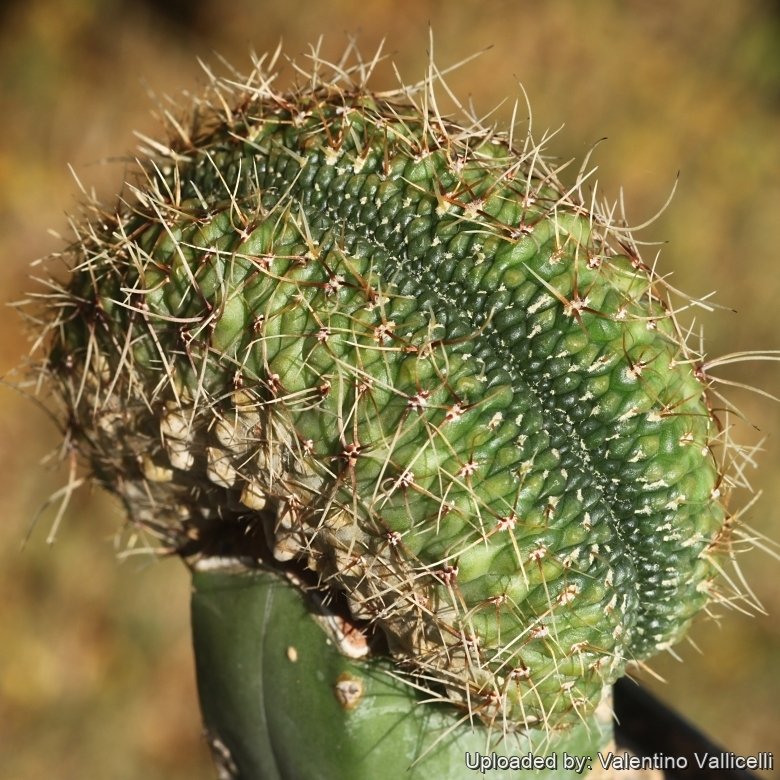
Crested form: The crested form Gymnocalycium anisitsii subs. damsii f. cristatum, only deviate from the standard species for the stem which is fan shaped up to 30 cm (or more) long with age. It is quite variable in colour and shape and different clones are available. In full sun or under stress conditions the plants tend to take a brownish-red tinge.
Ribs: About 10-11, broad to acute, and more or less notched into chin-shape protrusions or warts.
Radial spines: 5-8 up to 12 mm (or more) long, straight or slightly tortuous, short, nearly useless in terms of defence. Young spine are pastel-white or yellowish with a darker tip, later become pale-grey.
Central spines: Usually absent.
Flowers: From the centre, narrow, funnelform, about 6 cm long. External tepals greenish whit reddish margins, internal tepals white to light pinkish or greenish spreading. Scales on the ovary and flower tube small, scattered.
Blooming season: It produces flowers almost continuously during the year.
Fruits: Oblong, 2,5 cm long, 6 mm in diameter, reddish at maturity.
Remarks: Seems to be a pretty variable plant you might get some other names which are effectively the same plant… and also not sure all plants identified as this are really this.
Origin and Habitat
Garden origin. The natural species comes from Bolivia, Paraguay and Brazil.
Cultivation and Propagation
Although regarded as a choice and difficult plant is not too difficult in a greenhouse, although grows quite slowly. It is sometime seen as a grafted plant but grows very well on its own roots too.
Soil: Use mineral well permeable mineral soil with little organic matter (peat, humus). Prefer a low pH compost, otherwise growth will stop altogether.
Exposure: The plant tolerates extremely bright situations but enjoys some shade during the hottest part of the day in summer.
Watering: Water sparingly from March till October (weekly during summertime, if the weather is sunny enough), with a little fertilizer added. Less or no water during cold winter months, or when night temperatures remain below 10° to prevent root loss. It is sensitive to overwatering (rot prone).
Fertilization: Feeding may not be necessary at all if the compost is fresh then, feed in summer only if the plant hasn’t been repotted recently. Do not feed the plants from September onwards as this can cause lush growth which can be fatal during the darker cold months.
Hardiness: Keep perfectly dry in winter at temperatures from 5 to 15 degrees centigrade. (but it is relatively cold resistant and hardy to -5° C, or possibly colder for short periods) In the rest period no high atmospheric humidity!! (Temperature Zone: USDA 9-11)
Crested growth: Unlike ‘monstrose’ varieties of plants, where the variation from normal growth is due to genetic mutation, crested growth can occur on normal plants. Sometimes it’s due to variances in light intensity, or damage, but generally the causes are unknown. A crested plant may have some areas growing normally, and a cresting plant that looks like a brain, may revert to normal growth for no apparent reason. If you have any of the crested part left you need to remove the normal growth and leave the crested part behind this will need to be done regularly.
Propagation: Grafting or cuttings. Plants are usually grafted onto column-shaped cacti but proved to be able to produce their own roots if degrafted. Cuttings will take root in a minimum temperature of 20° C (but better in hot weather). Cuttings of healthy shoots can be taken in the spring and summer. Cut the stem with a sharp, sterile knife, leave the cutting in a warm, dry place for a week or weeks (depending on how thick the cutting is) until a callus forms over the wound. Once the callus forms, the cutting may be inserted in a container filled with firmed cactus potting mix topped with a surface layer of coarse grit. They should be placed in the coarse grit only; this prevents the cut end from becoming too wet and allows the roots to penetrate the rich compost underneath. The cuttings should root in 2 to 6 weeks. Large crested piece must be placed on the soil surface without burying the plant base down in the soil.
Source: Gymnocalycium damsii f. cristatum, LLIFLE - Encyclopedia of living forms, CC-BY-SA, retrieved 2026-10-25.
From llifle page Gymnocalycium damsii f. variegata
Description
The typical Gymnocalycium anisitsii subs. damsii, (best know as Gymnocalycium damsii), is a plump species with somewhat rounded ribs. It is a very free-flowering cactus and may be solitary or freely offsetting.
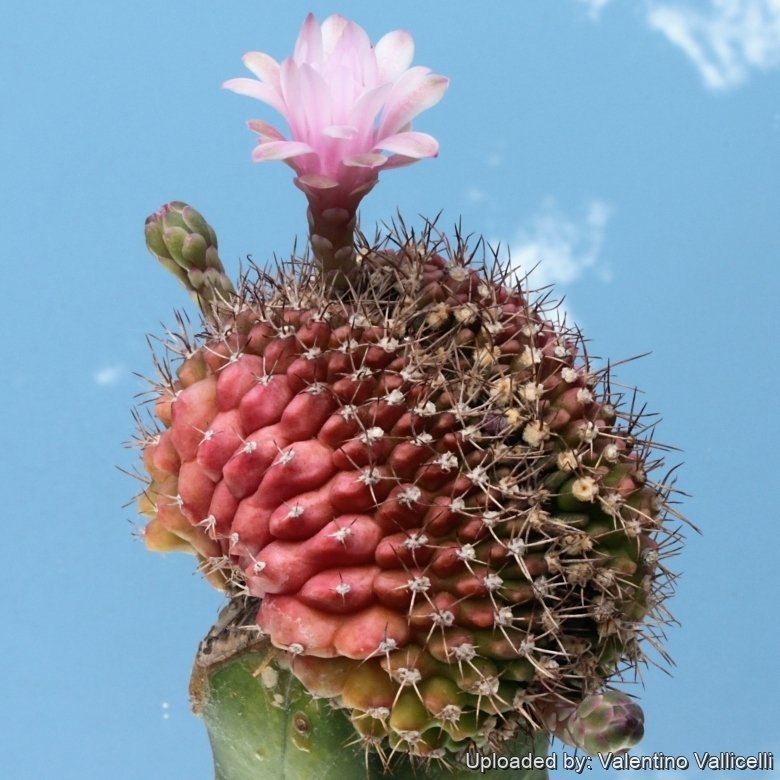
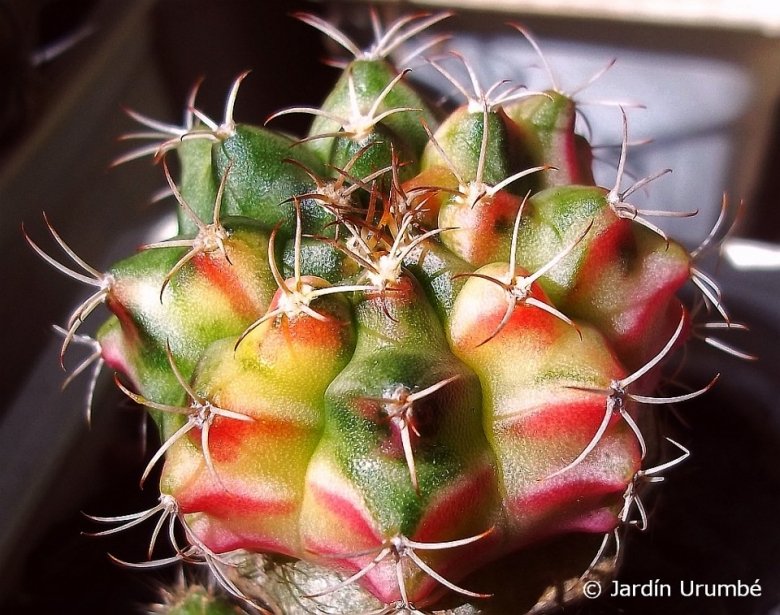
Variegated form: Variegated Gymnocalycium anisitsii subs. damsii are cultivated for their beautiful stem that have sectors, patches or stripes of different colours, yellow, pink, red, purple and green. There are several forms of variegation. The extent and nature of the variegation can vary, and sometimes the plant will return to the green form. In others it is stable and does not change under normal conditions. Flowers are produced only on the crown of mature specimens. Variegated specimens are sometime grafted on stronger species, called the stock, that can be any number of different columnar cactus.
Cultivation and Propagation
Gymnocalyciums are very gratifying plants, their culture is easy and their flowering is abundant if we give them a well drained relatively rich substrate (if possible not limestone). Water regularly in summer (but do not overwater ) keep rather dry in winter, need frequent repottings and a very luminous exposure but avoid direct exposure to the sun rays. This species is particularly easy and accommodating, seldom suffer of cryptogamic diseases. Feed with a high potassium fertilizer in summer. Hardy as low as -5° C (or less) if kept dry.
Special cares for variegated forms: In the summer it is best to avoid direct sun during the hottest hours of the day (but they benefits from morning sun, that helps to produce strong and colourful spines). In case of cultivation in a sunny place it is best to plant with the variegated spot facing north-east, so it gets the least amount of direct sunlight as possible.
Propagation: Usually by Seeds (Seeds should be sown in a well-drained soil mix. Surface sowing is the best; seeds germinate in 14-28 days at 25° C, or from cuttings in spring (let them dry till the ends callous well). Then replant them in fresh cactus soil that is ever so slightly moist, and keep it that way till they root). The grafting is useless (excluded the cultivars completely deprived of chlorophyll), it does not bring anything concrete
Source: Gymnocalycium damsii f. variegata, LLIFLE - Encyclopedia of living forms, CC-BY-SA, retrieved 2026-10-25.
Cultivars and forms (12)
Subspecies (4)
Varieties (3)
Forms (3)
Gallery