Publication: Gymnocalycium 17(1): 559 (abb. 27-34). 2004 [Feb 2004]
Description
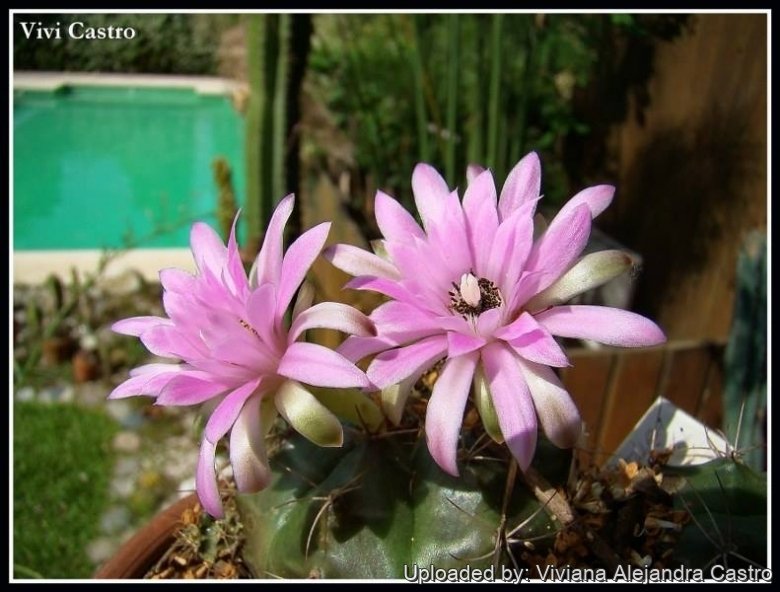
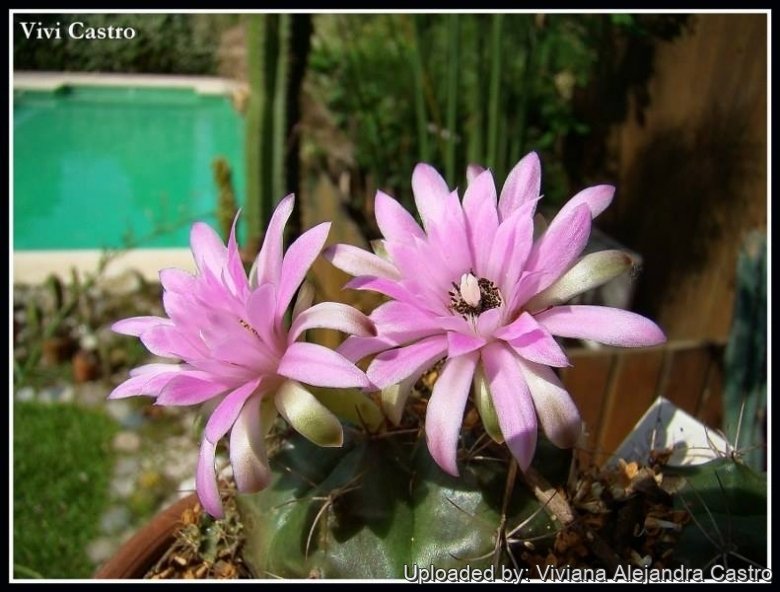
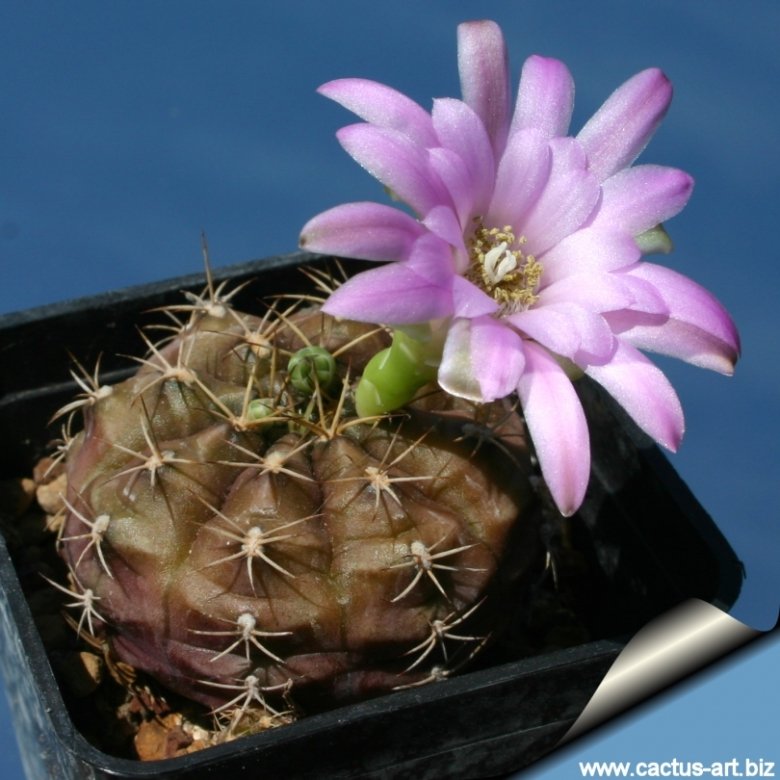
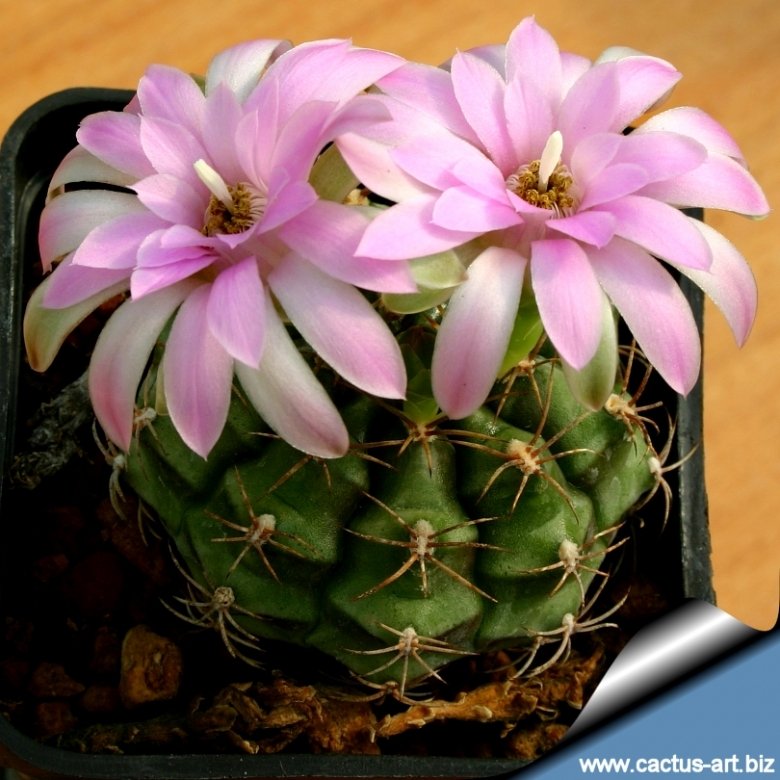
Gymnocalycium anisitsii var. tucavocense is a beautiful species, of modest size, particularly attractive for its beautiful lilac flowers and flattened multicoloured stems. The var. tucavocense seems to differ in being remarkably prolific in branching and in its very precocious flowering. Tiny seedlings will branch and flower sometimes when only 1.5 cm in diameter
Habit: Solitary or freely offsetting from the areoles. It often form large groups and is extremely variable.
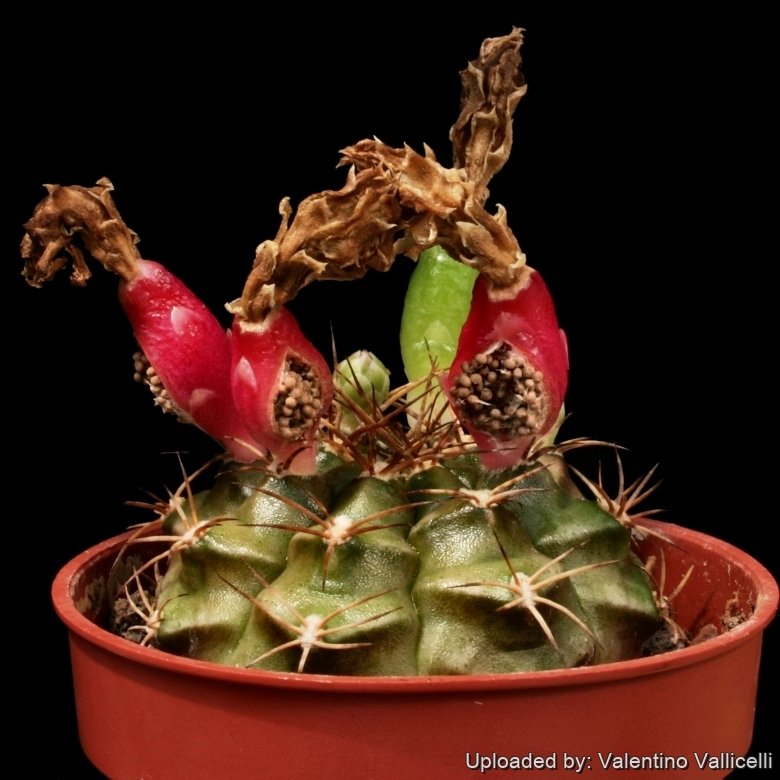
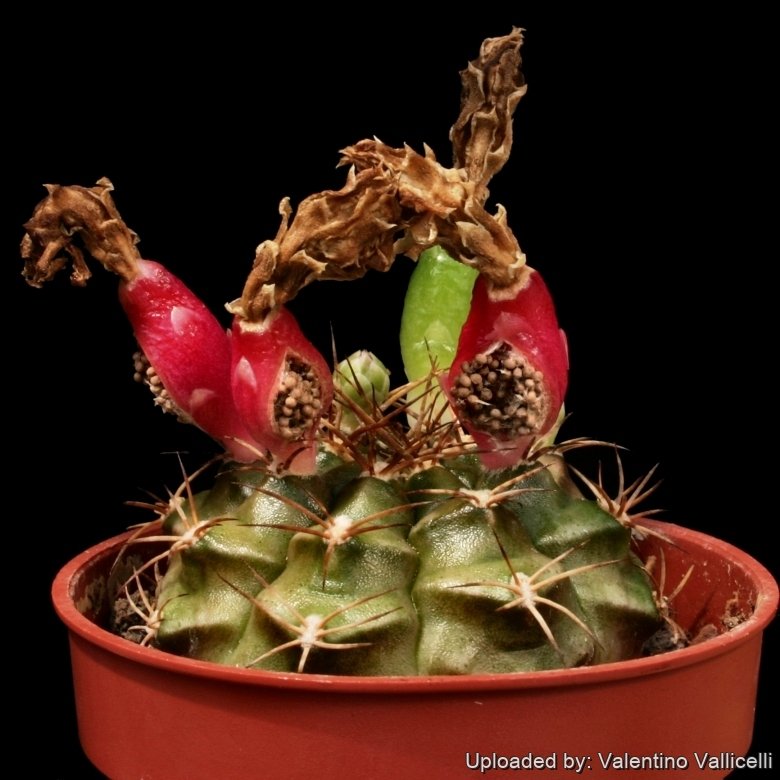
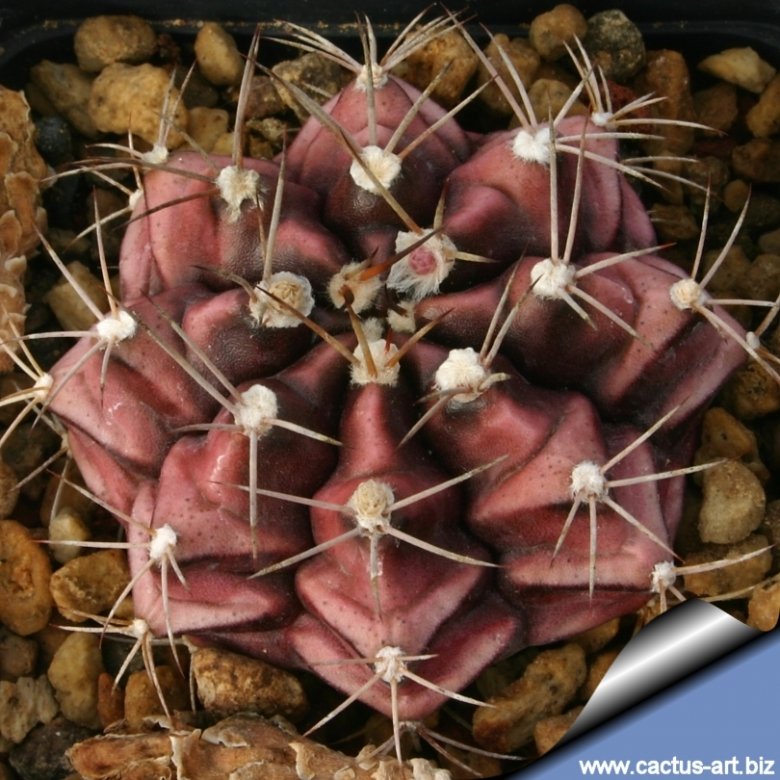
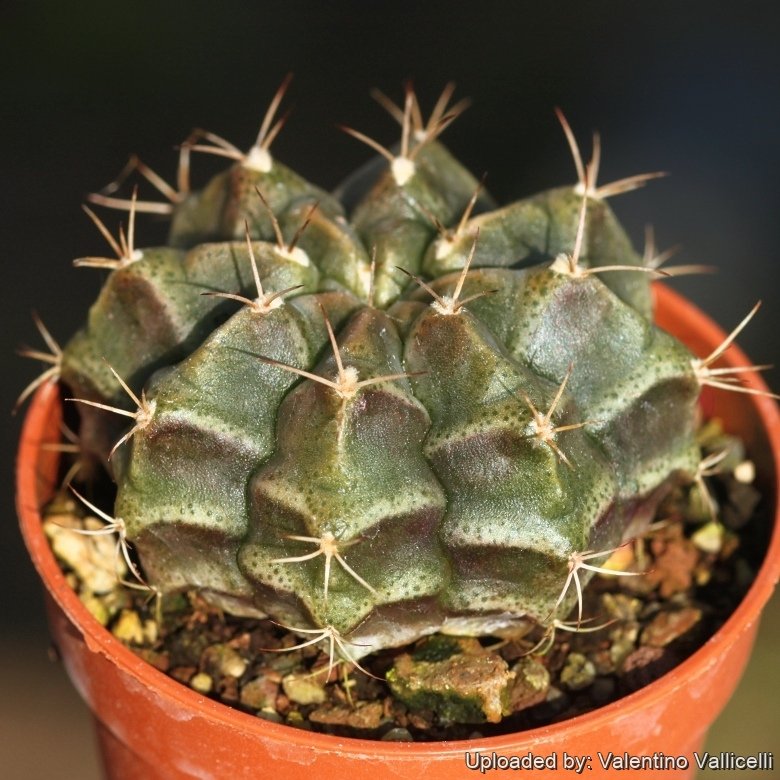
Stem: Up to 10 cm tall , 8-15 cm in diameter colourful and highly decorative, with characteristic horizontal clear and dark strips. The clear areas (above the areoles) are pastel-grey-pink while the dark zone (below the areoles) are Deep olive-green to brown-purple.
Spines: Nearly useless in terms of defence.
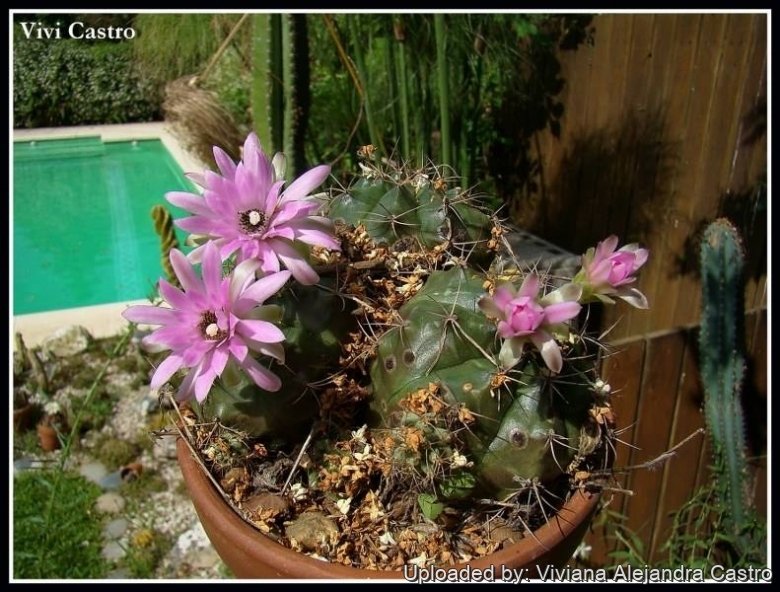
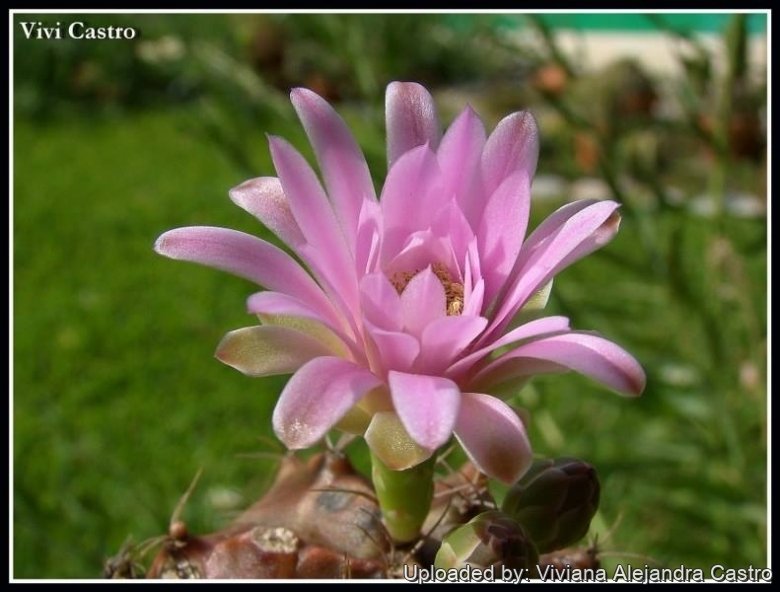
Flowers: From the centre, narrow, funnelform, pink about 6 cm long. External tepals greenish whit reddish margins, internal tepals light or bright pink spreading. Scales on the ovary and flower tube small, scattered.
Remarks: Seems to be a pretty variable plant you might get some other names which are effectively the same plant… and also not sure all plants identified as this are really this.
Origin and Habitat
Tucavaca Valley and adjacent areas, Santa Cruz and San Jose, Bolivia.
Altitude: 200-600 metres above sea level.
Habitat: Gymnocalycium damsii var. tucavocense grows in open areas under the protection of low bushes.
Cultivation and Propagation
It is a summer grower species that offers no cultivation difficulties. Water regularly in summer (but do not overwater ) Keep this plant almost dry in winter at a minimum temperature of 0°C, prefer relatively rich substrate and low pH compost (if possible not limestone) otherwise growth will stop altogether. Feed with a high potassium fertilizer in summer. It is quite frost resistant if kept dry (hardy to -5° C) This plant needs plenty of space for its roots, repotting should be done every other year or when the it has outgrown its pot. This species is particularly easy and accommodating, seldom suffer of cryptogamic diseases.
Sun Exposure: Light shade. It may tolerate bright situations but is likely to suffer from sun scorch or stunted growth if over exposed to direct sunlight during the hottest part of the day in summer.
Bibliography
Major references and further lectures
-
Edward Anderson “The Cactus family” Timber Press, Incorporated, 2001
-
James Cullen, Sabina G. Knees, H. Suzanne Cubey “The European Garden Flora Flowering Plants: A Manual for the Identification of Plants Cultivated in Europe, Both Out-of-Doors and Under Glass” Cambridge University Press, 11/Aug/2011
-
David R Hunt; Nigel P Taylor; Graham Charles; International Cactaceae Systematics Group. “The New Cactus Lexicon” dh books, 2006
-
N. L. Britton, J. N. Rose “The Cactaceae. Descriptions and Illustrations of Plants of the Cactus Family.” Volume 4, The Carnegie Institution of Washington, Washington 1923
-
Curt Backeberg “Die Cactaceae: Handbuch der Kakteenkunde” Gustav Fischer Verlag, Stuttgart New York 1982–1985
-
E. W Putnam “GYMNOCALYCIUMS: A Guide for Growers” National Cactus & Succulent Society. Handbook No. 5. 1978
Gallery