Description
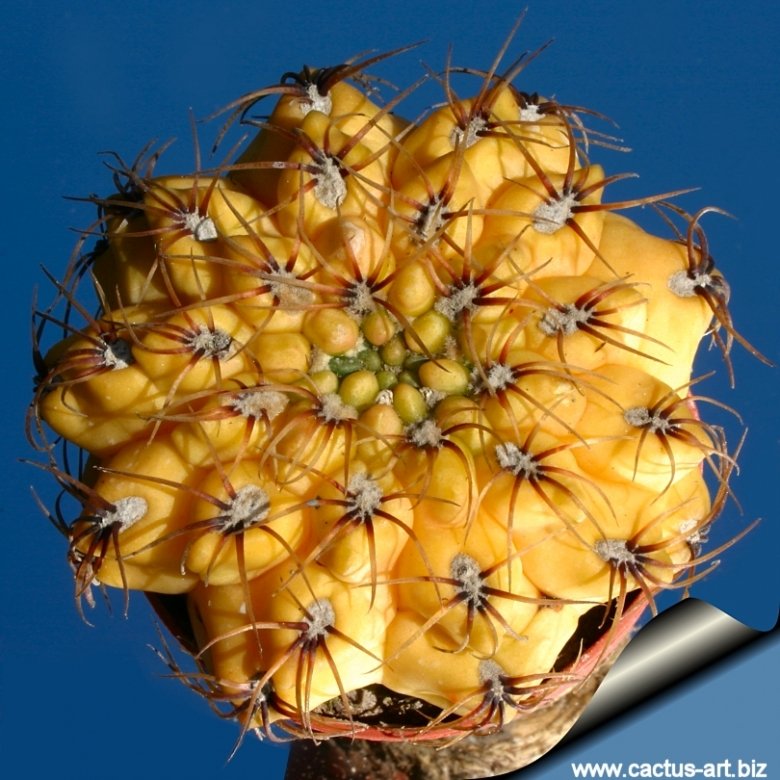
The normal Gymnocalycium baldianum is a small flattened to globose solitary cactus and the yellow form here described only differs from the standard form for the odd yellowish colour of epidermis. The yellow appearance of this Gymnocalycium is more precisely caused by an aberration called “schizochromism”. Here, though, the specific green pigment (chlorophyll) is partially missing, every other pigment is present at normal levels, the dominant green colouration is lost, but will still more than likely have normal other pigments that give the yellow overall appearance of stems. The yellow colour of this plant is transmitted from the parent to the offspring and this plant is reproduced by seeds.
Origin and Habitat
Garden origin (Nursery produced cultivar)
Cultivation and Propagation
Variegated cacti are regarded as choice and difficult in cultivation, but despite that many of them are relatively easy to grow. They are sometime seen as grafted plants, but some forms grow well on their own roots, too. On the contrary, the albinos can survive only if grafted on a strong green base.
Soil: Use mineral well-permeable substratum with little organic matter (peat, humus).
Moisture needs: Water sparingly from March till October and keep perfectly dry in winter.
Fertilization: Feed with a high potassium fertilizer in summer.
Exposure: They cannot tolerate prolonged exposure to direct sun light (especially during the hottest summer days), so grow them in half-shade or under filtered sun.
Frost Tolerance: Overwinter this plants at temperatures from 5 to 15 degrees centigrade. In general these plants are more tender than standard gymnocalyciums and cannot endure freezing temperatures. In the rest period no high atmospheric humidity!!
Propagation: Plants are often grafted onto column-shaped cacti, but the forms with some chlorophyll can be reproduced by seeds or cuttings.
Gallery