Publication: Anales Soc. Ci. Argent. xcix. 135 (1925)
Description
Gymnocalycium baldianum small usually unbranched.
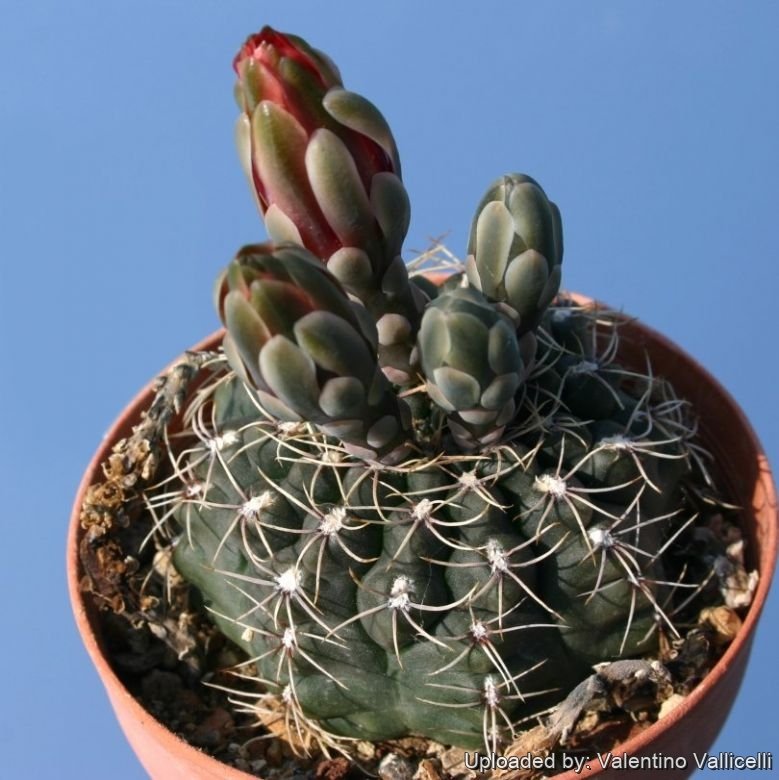
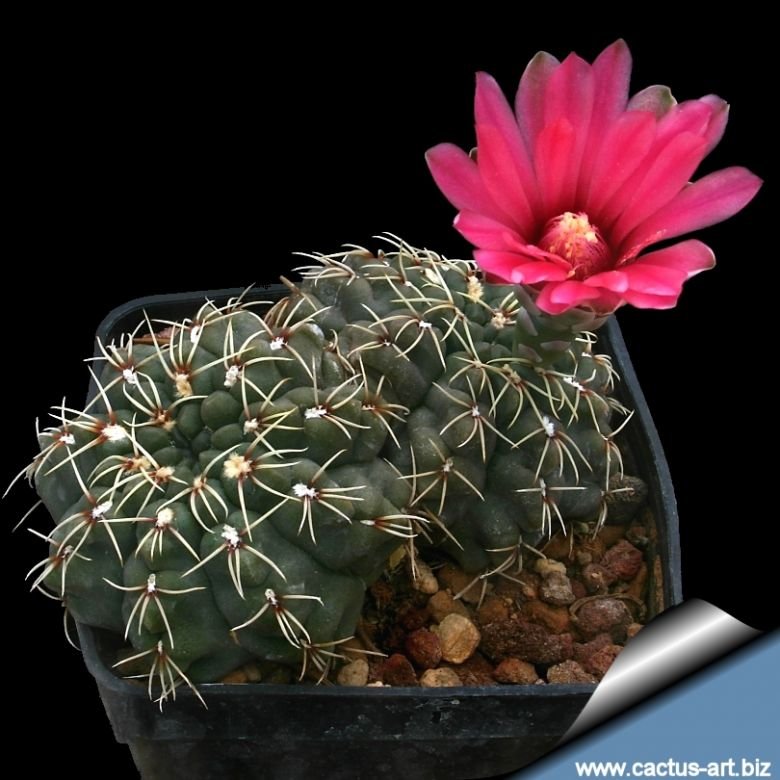
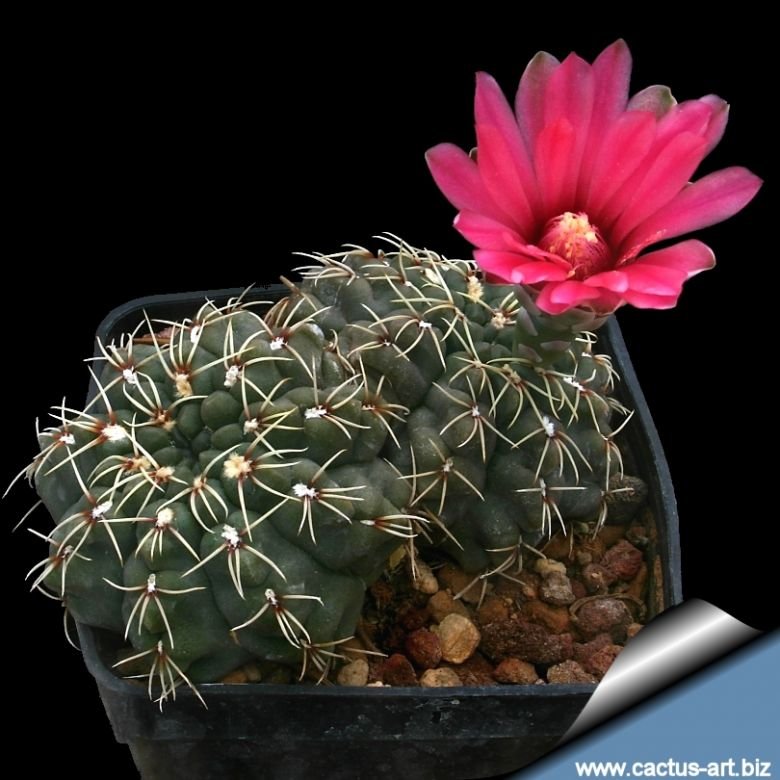
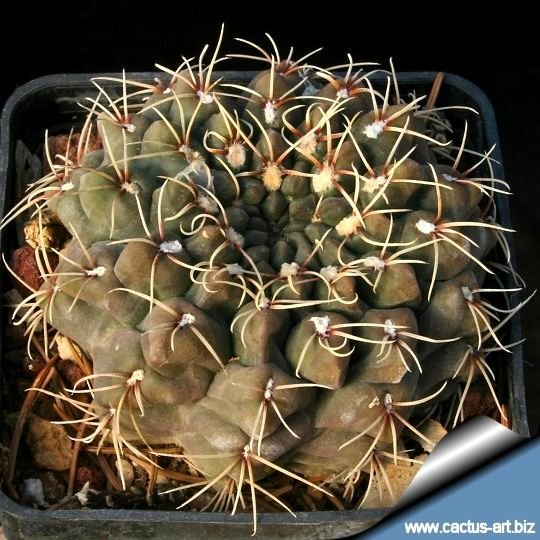
Stem: Flat to globose depressed, up to 13 cm in width, greyish-brown to blue-green (rather variable in colour in cultivation, and in some specimens it is almost blue-black). The 9 to 10 broad ribs are divided by deep grooves into tubercles.
Areoles: Deep-set
Spines: 5 to 7 thin radial spines that are straight or curved toward the stem, short, curved, pale brown or grey, tinged with red at the base.
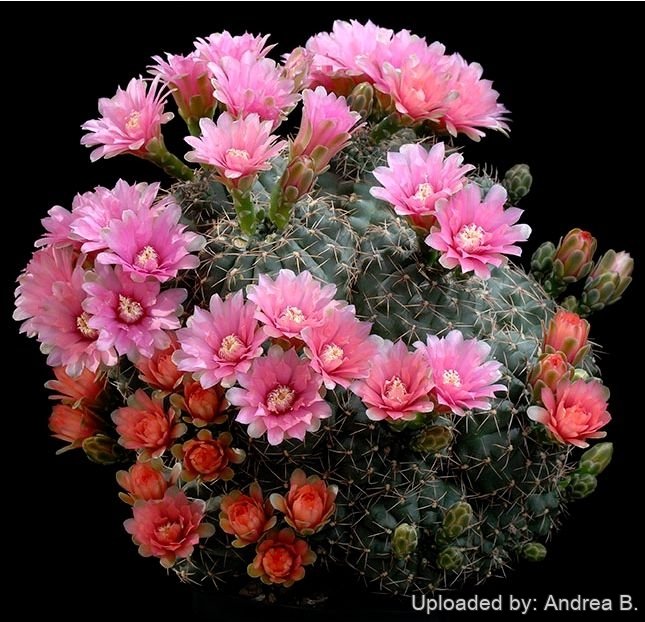
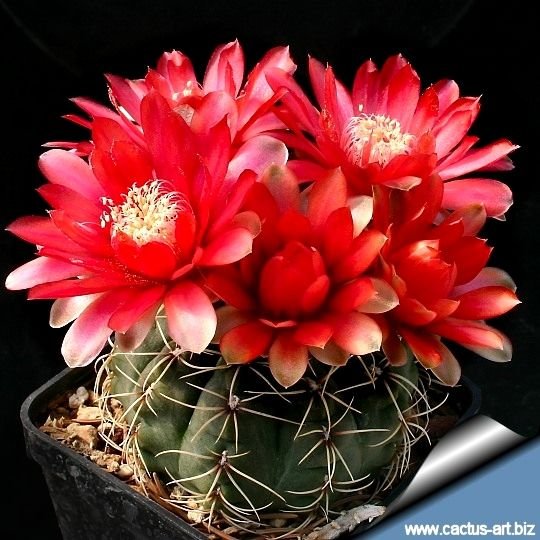
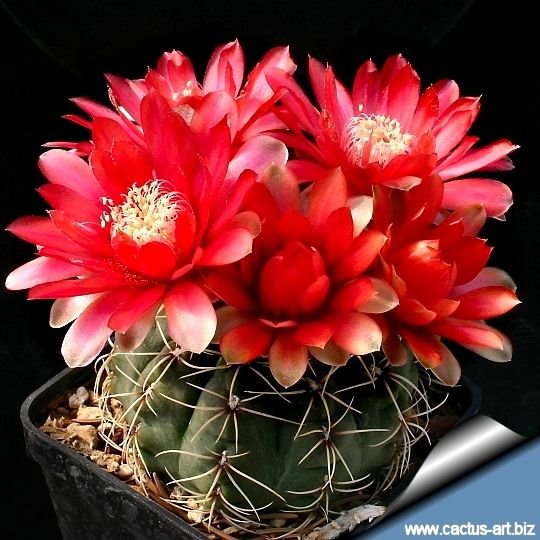
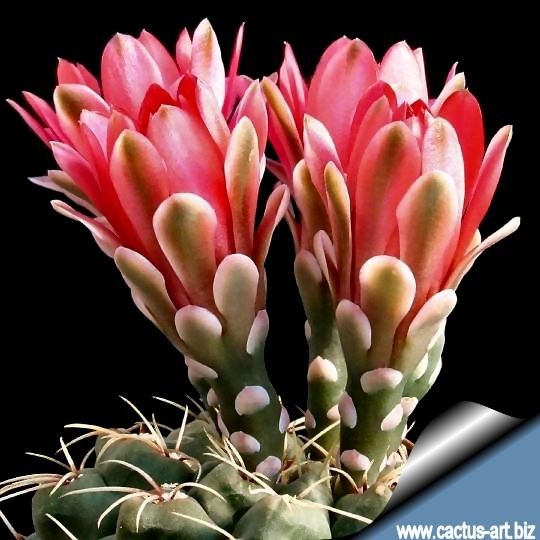
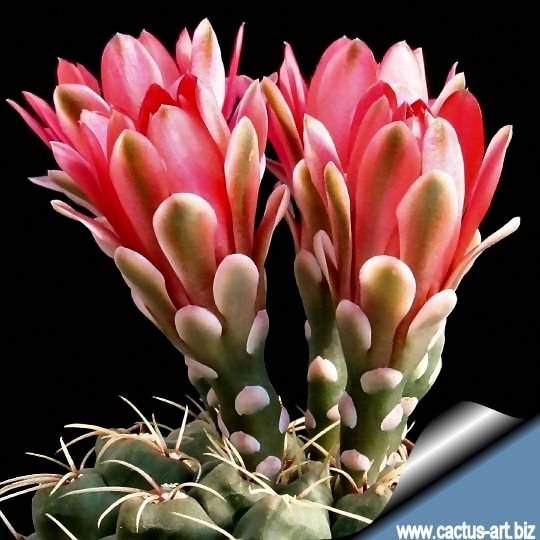
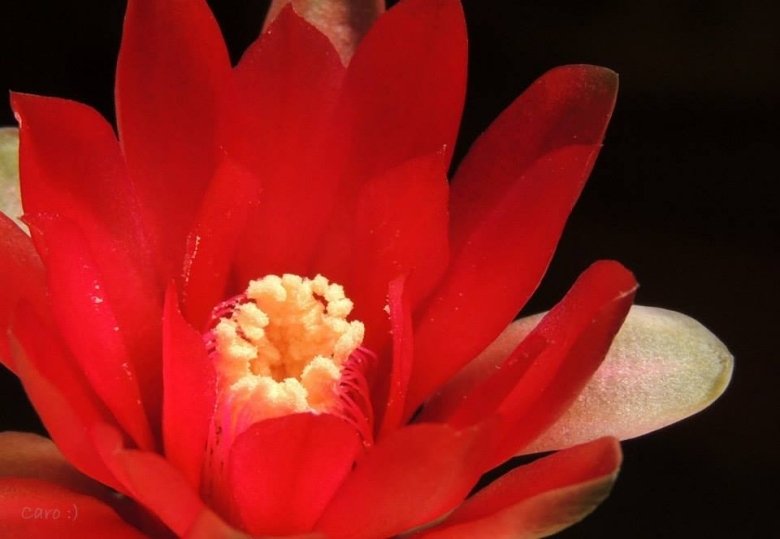
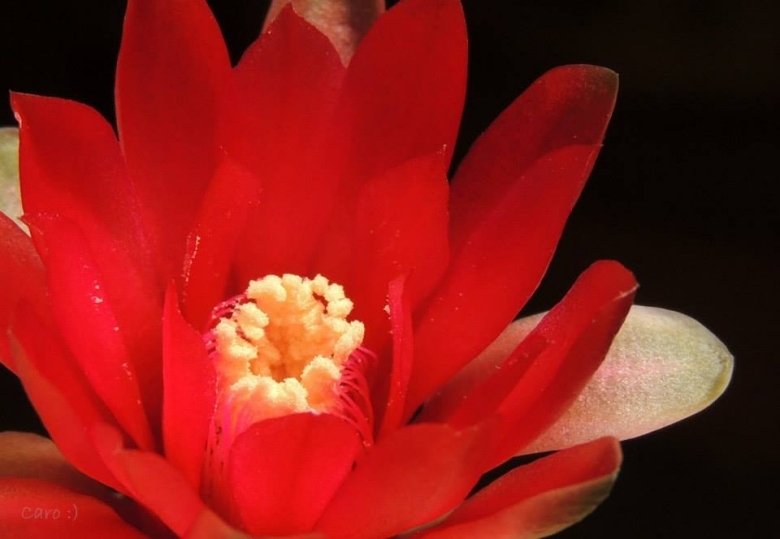
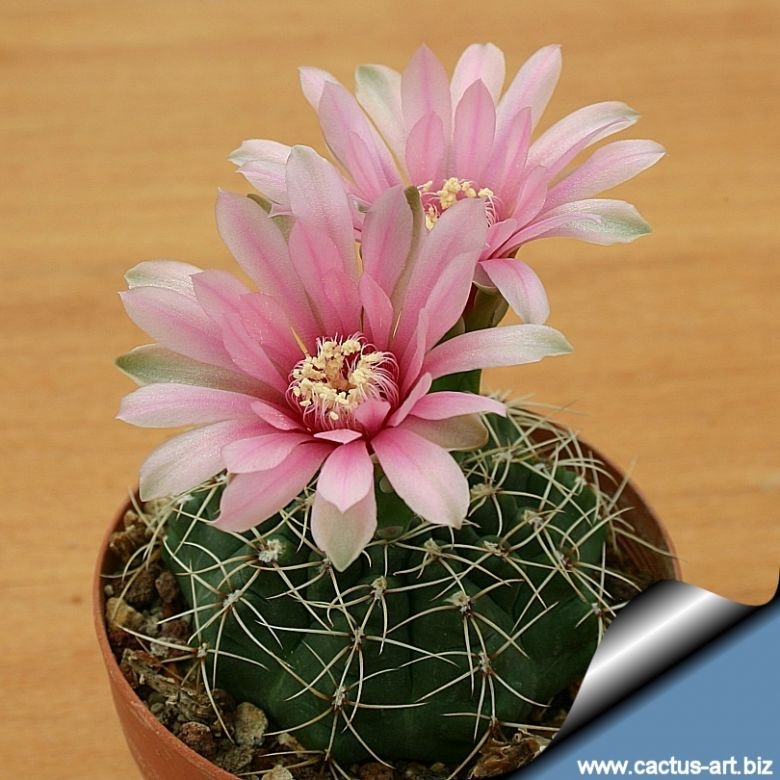
Flowers: on the crown, measuring 3 to 4 cm in length and the same across, open wide in sunlight, and commonly of a most rich purple-red colour, sometimes pinkish-purple (but also white, pink or orange). The stamens are purple, the anthers and the 6 lobed stigma whitish yellow. This plant blooms in early summer when it is only 2.5 cm. It is fast growing and can bloom one year after being sown.
Fruits: The ripened ovary is green, long and dehisces (splits) down its length.
Remarks: The synonym name Gymnocalycium venturianum is very common in collections, and even at cactus nurseries. It is a very variable species in its general appearance. There are also many hybrids with a wide range of flower colours.
Origin and Habitat
Argentina, Catamarca Province (Sierra Ancasti, Sierra Graciana, Sierra de Narvaes, Sierra de Guayamba, Sierra de Manchao and on the mountains east of Andalgalá)
Altitude: It grows at elevations of 500 to 2000 metres above sea level.
Habitat and Ecology: This high-altitude plant is often found among grass. Gymnocalycium baldianum has a relatively restricted range, has a continuous distribution and is not fragmented. Collection is a major threat for the species in parts of it range also fire affects it in some areas.
Cultivation and Propagation
Gymnocalycium baldianum is very easy to grow, these plants offer no cultivation difficulties.
Watering Needs: Moderate to copious in summer, keep dry in winter.
Frost Tolerance: Quite frost resistant if kept dry -10° C (Temperature Zone: USDA 8-10 )
Cultural Practices: Feed with a high potassium fertilizer in summer.
Sun Exposure: Full sun to light shade.
Propagation: Seeds (seldom produces offsets).
Notes
It is one of the hybridparent of: Gymnocalycium × pazoutianum Halda Acta Mus. Richnov., Sect. Nat. 5(4): 164 (1998).
Bibliography
Major references and further lectures
-
Edward F. Anderson “The Cactus Family” Timber Press, 2001
-
Curt Backeberg “Cactus Lexicon” Sterling Publishing Company, Incorporated, 1978
-
David Hunt, Nigel Taylor “The New Cactus Lexicon” DH Books, 2006
-
James Cullen, Sabina G. Knees, H. Suzanne Cubey “The European Garden Flora Flowering Plants: A Manual for the Identification of Plants Cultivated in Europe, Both Out-of-Doors and Under Glass” Cambridge University Press, 11/Aug./2011
-
Perea, M. & Trevisson, M. 2013. Gymnocalycium baldianum. In: IUCN 2013. “IUCN Red List of Threatened Species.” Version 2013.2. <www.iucnredlist.org>. Downloaded on 25 February 2014.
From llifle page Gymnocalycium venturi
Description
Small usually unbranched,
Stem: Flat to globose depressed, up to 13cm in width, greyish-brown to blue-green (rather variable in colour in cultivation, and in some specimens it is almost blue-black). The 9 to 10 broad ribs are divided by deep grooves into tubercles.
Areoles: deep-set
Spines: 5 to 7 thin radial spines that are straight or curved toward the stem, short, curved, pale brown or grey, tinged with red at the base.
Flowers: on the crown, measuring 3 to 4 cm in length and the same across, open wide in sunlight, and commonly of a most rich purple-red colour, sometimes pinkish-purple (but also white, pink or orange). The stamens are purple, the anthers and the 6 lobed stigma whitish yellow. This plant blooms in early summer when it is only 2.5 cm. It is fast growing and can bloom one year after being sown.
Fruits: The ripened ovary is green, long and dehisces (splits) down its length.
Remarks: The synonym name Gymnocalycium venturianum is very common in collections, and even at cactus nurseries. It is a very variable species in its general appearance. There are also many hybrids with a wide range of flower colours.
Origin and Habitat
Argentina (Catamarca Province)
Cultivation and Propagation
Very easy to grow, these plants offer no cultivation difficulties. Watering Needs: Moderate to copious in summer, keep dry in winter.
Frost Tolerance: Quite frost resistant if kept dry -10° C (Temperature Zone: USDA 8-10 )
Cultural Practices: Feed with a high potassium fertilizer in summer.
Sun Exposure: Full sun to light shade
Propagation: Seeds (seldom produces offsets)
Source: Gymnocalycium venturi, LLIFLE - Encyclopedia of living forms, CC-BY-SA, retrieved 2026-10-25.
Cultivars and forms (2)
Forms (1)
Cultivars (1)
Gallery