Publication: Cactaceae (Britton & Rose) 3: 161. 1922 [12 Oct 1922] et: Pfeiff. ex K.Schum. in Gesamtbeschr. Kakt. 411. 1898 (as Monvillei)
Description
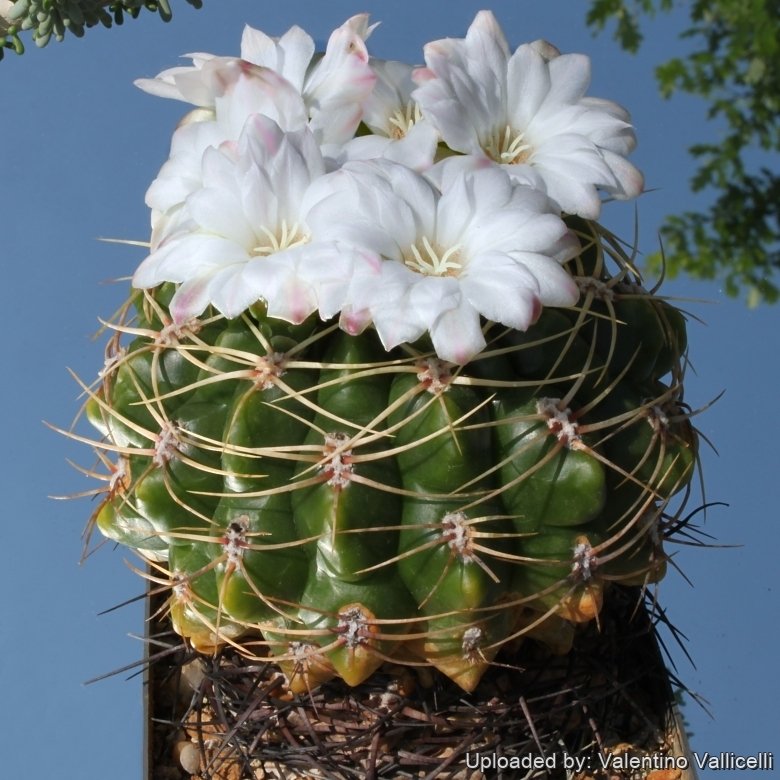
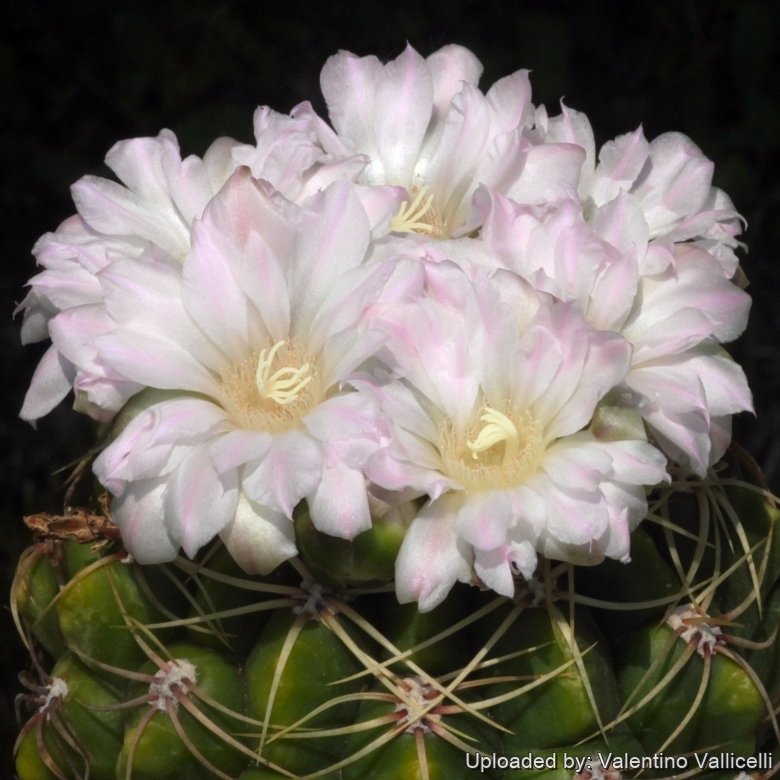
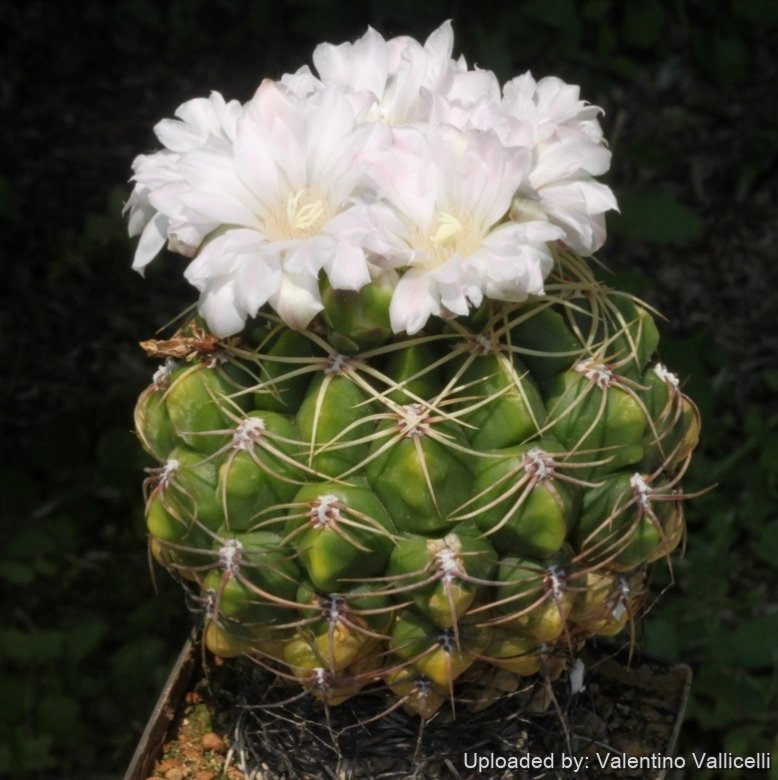
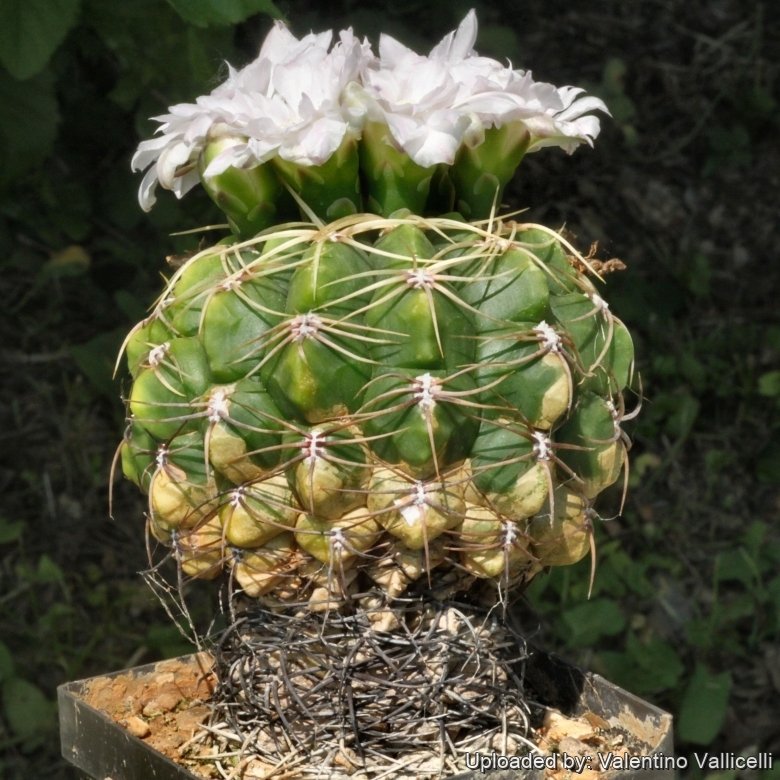
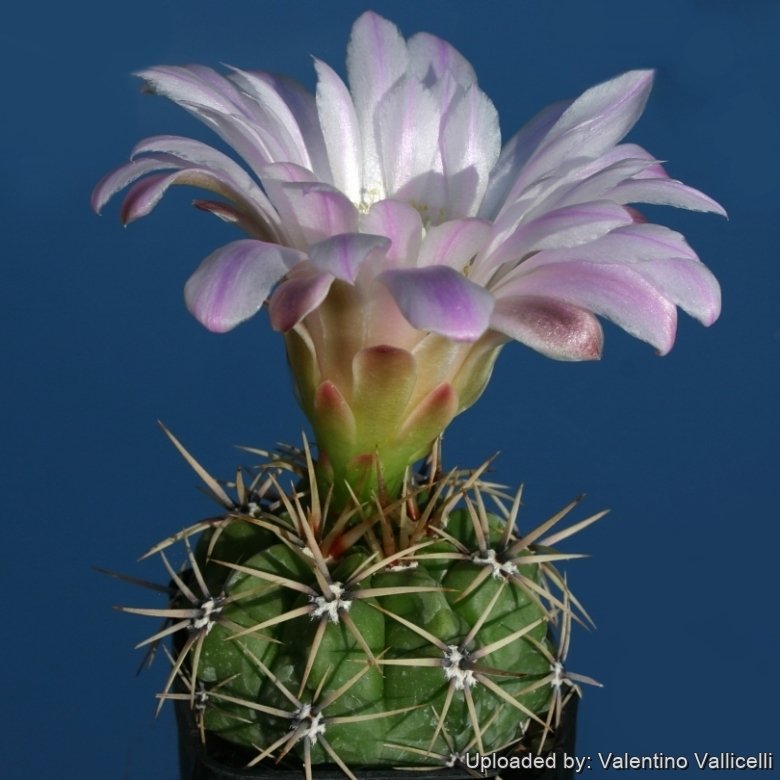
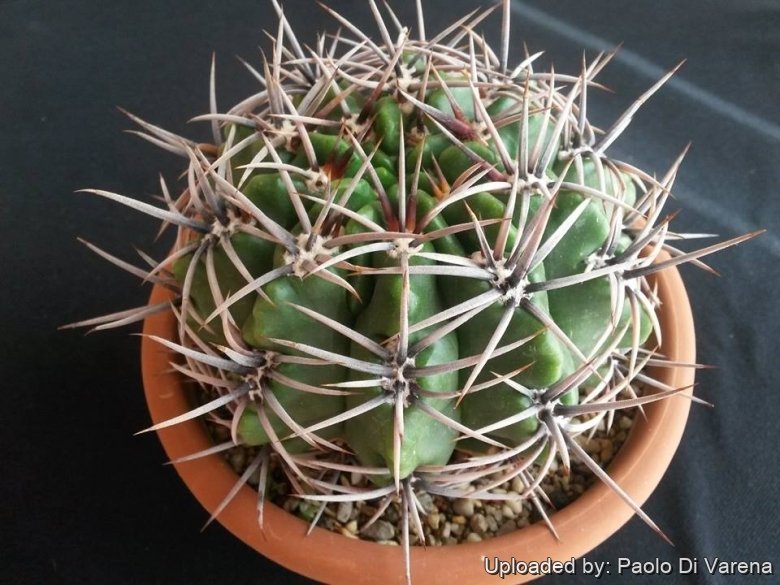
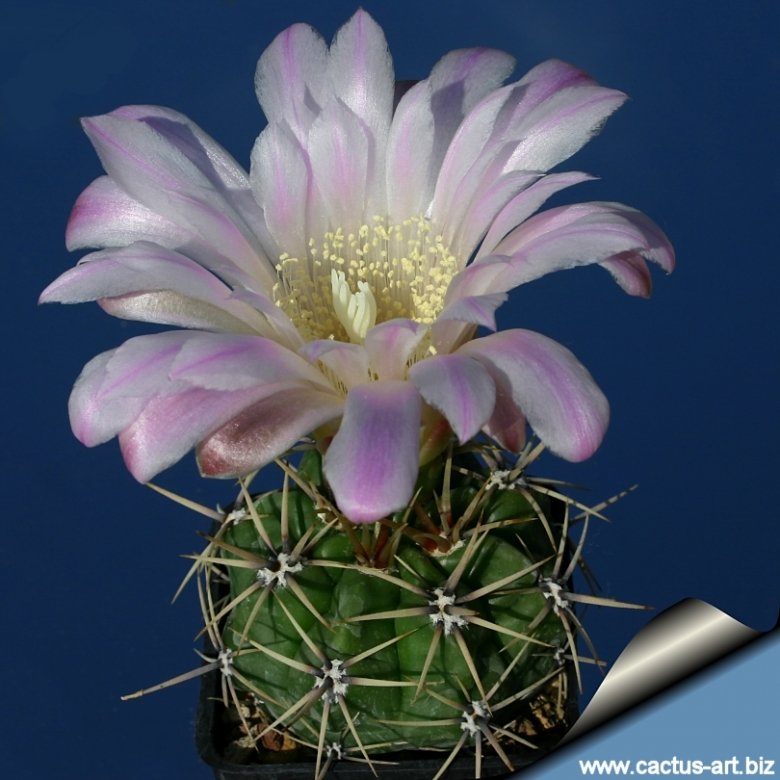
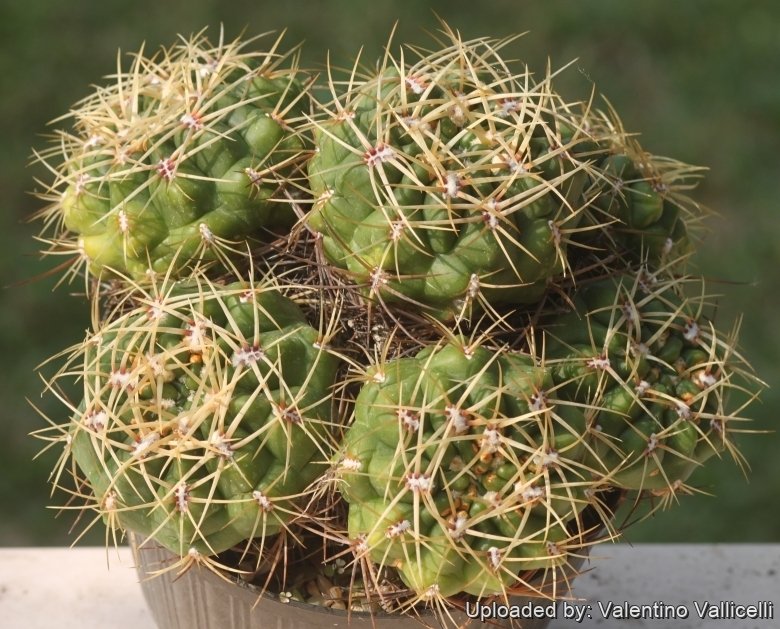
Gymnocalycium monvillei is well-known in cultivation and particularly priced for its pink flowers and characteristic strong spination. It is quite variable and several unnecessary varietal names have appeared in the past.
Habit: Simple or eventually forming large clumps.
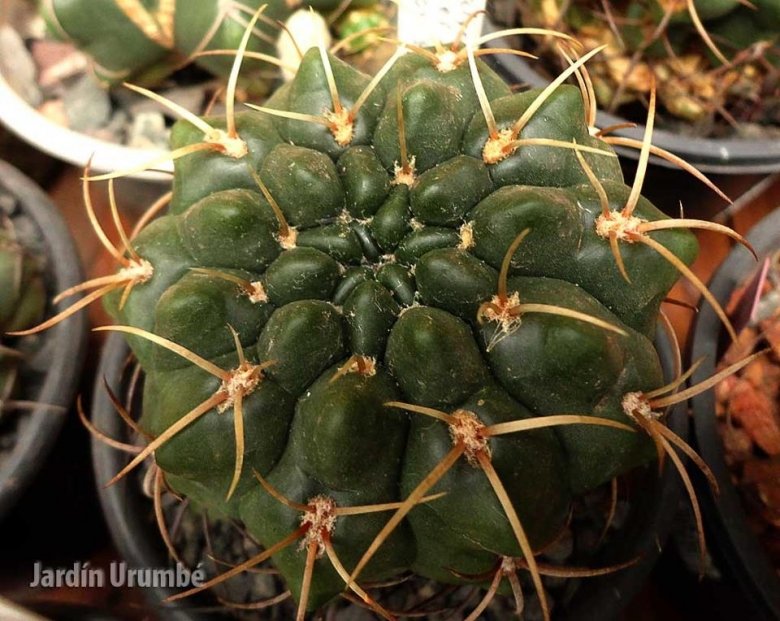
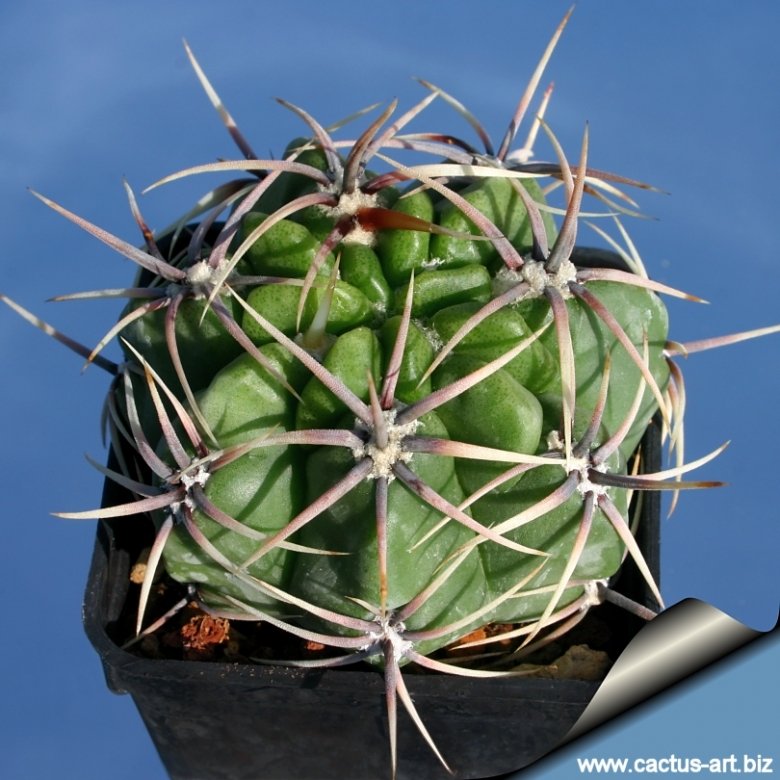
Stem: Flattened or globular, dark-green, grey-green to olive green, up to 20 cm in diameter, up to 8 cm tall. (but in cultivation plants can grow up to 30 cm in diameter)
Ribs: 10-17(-20), broad, obtuse, tuberculate with chin like protrusions, especially above, acute.
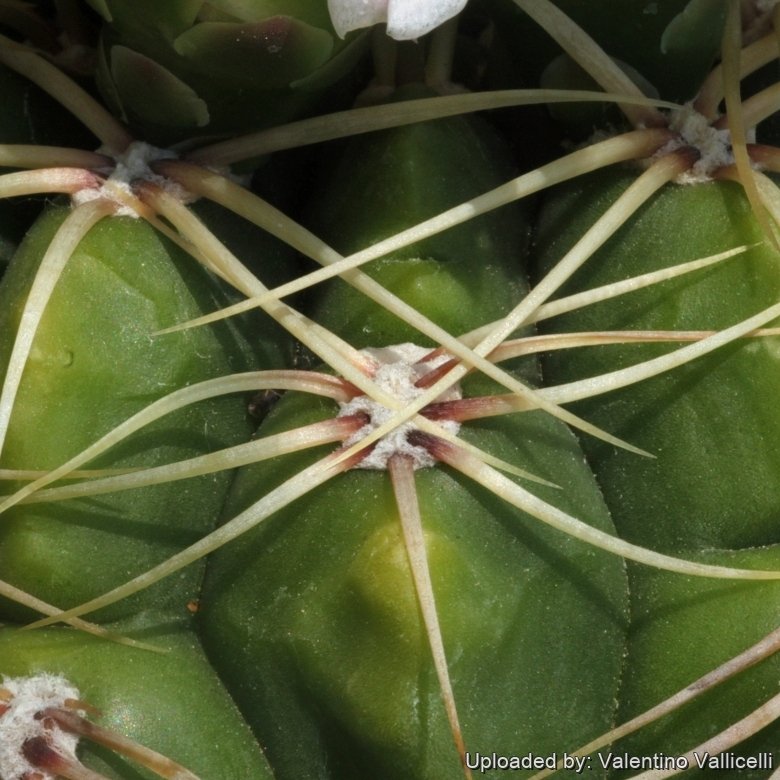
Areoles: Elliptic, 10 mm long.
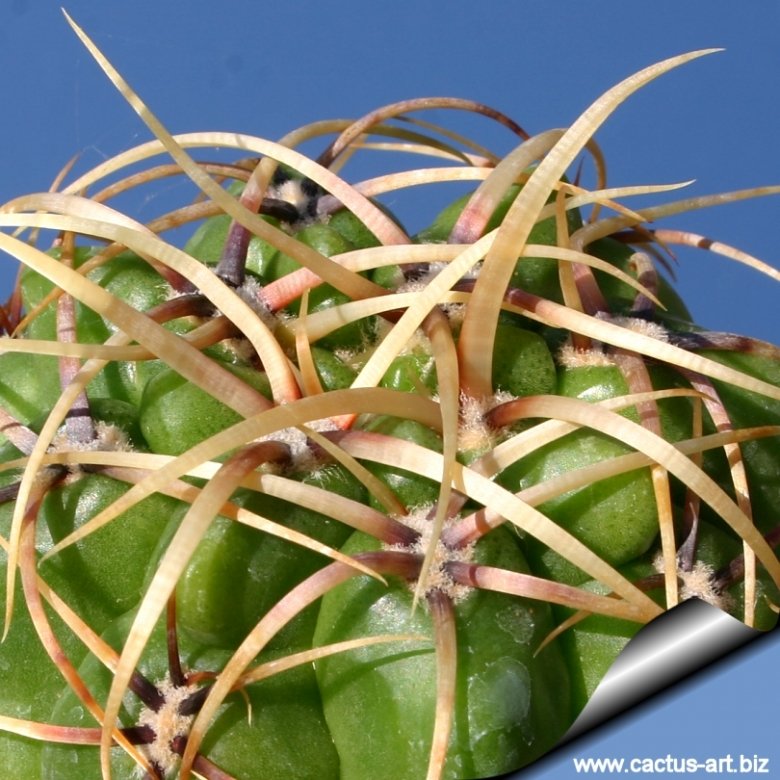
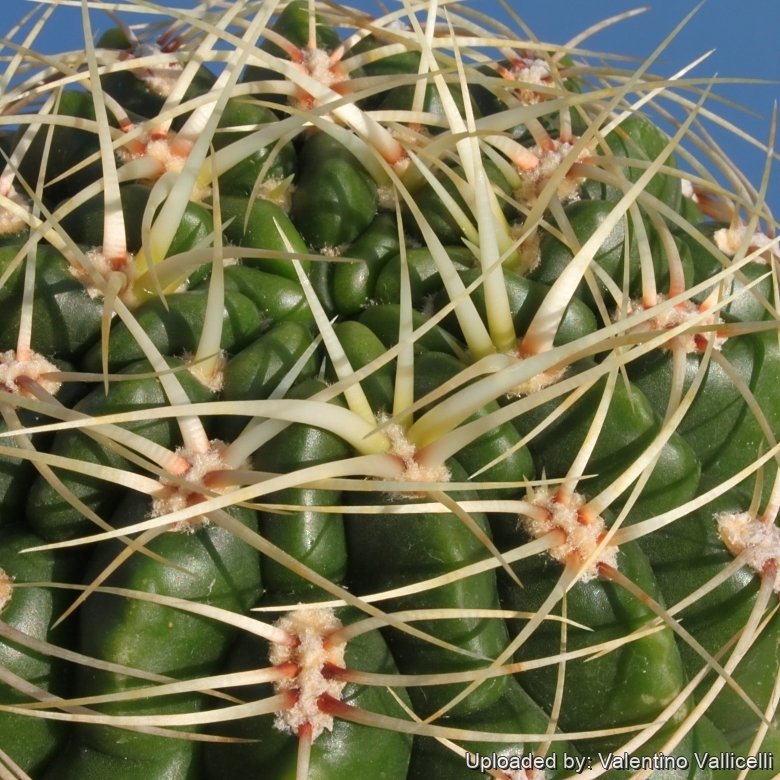
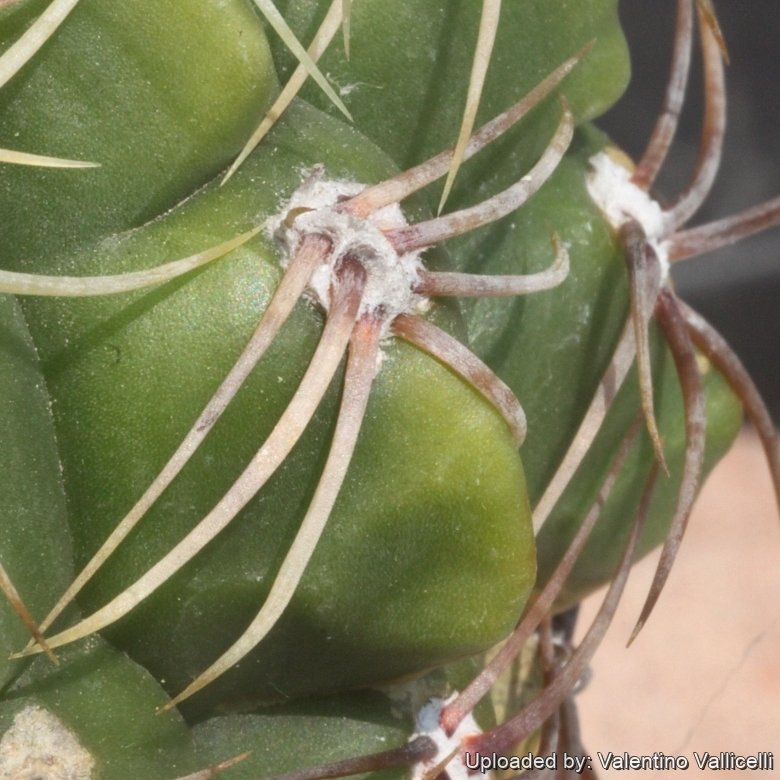
Spines: Stout, thick, slightly curved, yellow with usually reddish bases, often translucent , but also orange, black or reddish.
Radial spines:5-7 up to 12, but usually less in young plants, 3-4 cm long, spreading, somewhat flattened against the body, stout, yellowish or whitish with a reddish tinge at the base, the longest one 3 cm long.
Central spines: Usually absent, or 1 to 4 erected.
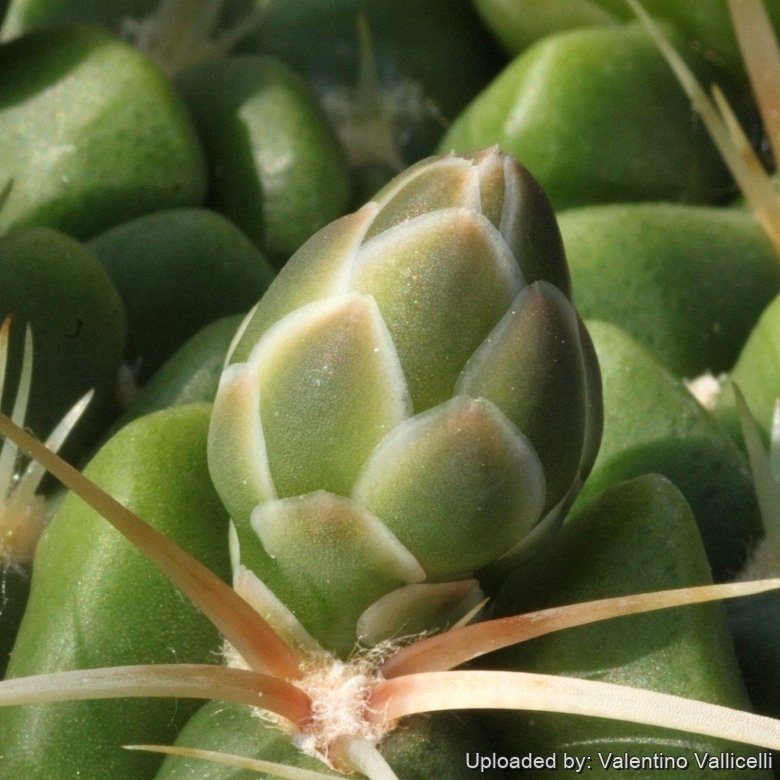
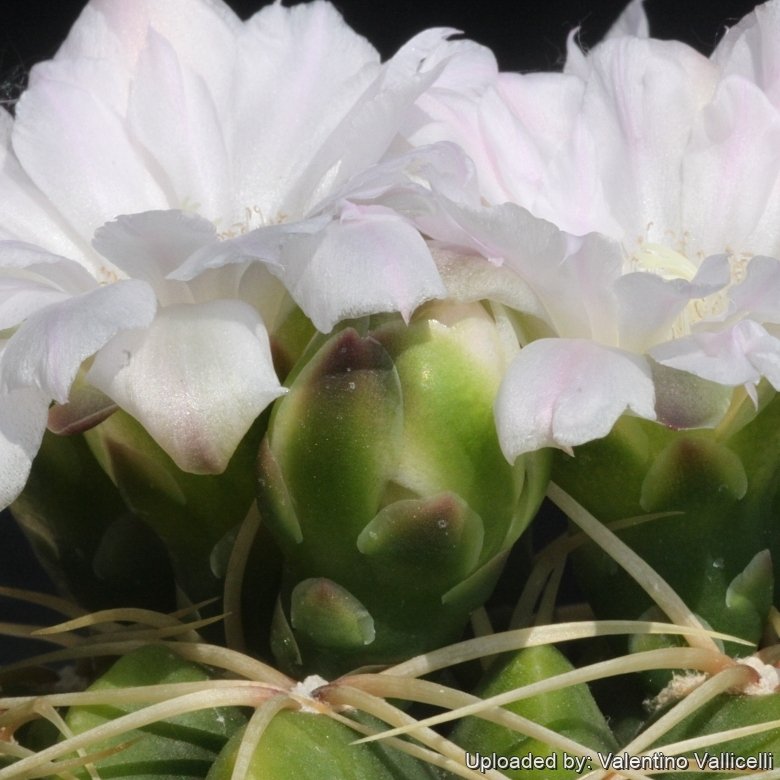
Flower buds: Short ovoid and bullet-shaped, covered with imbricate scales.
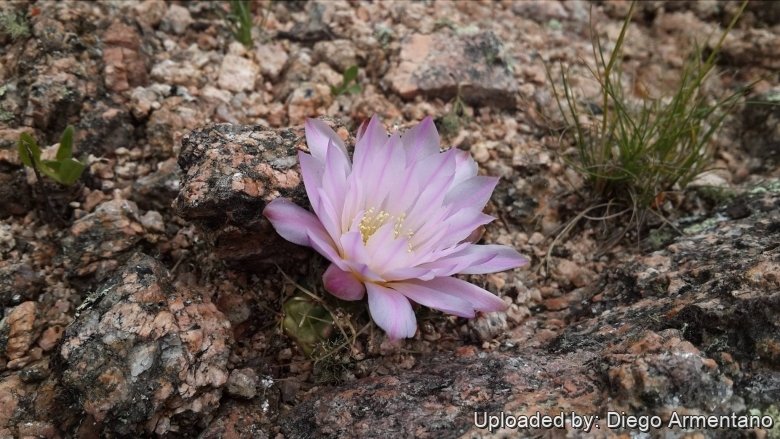
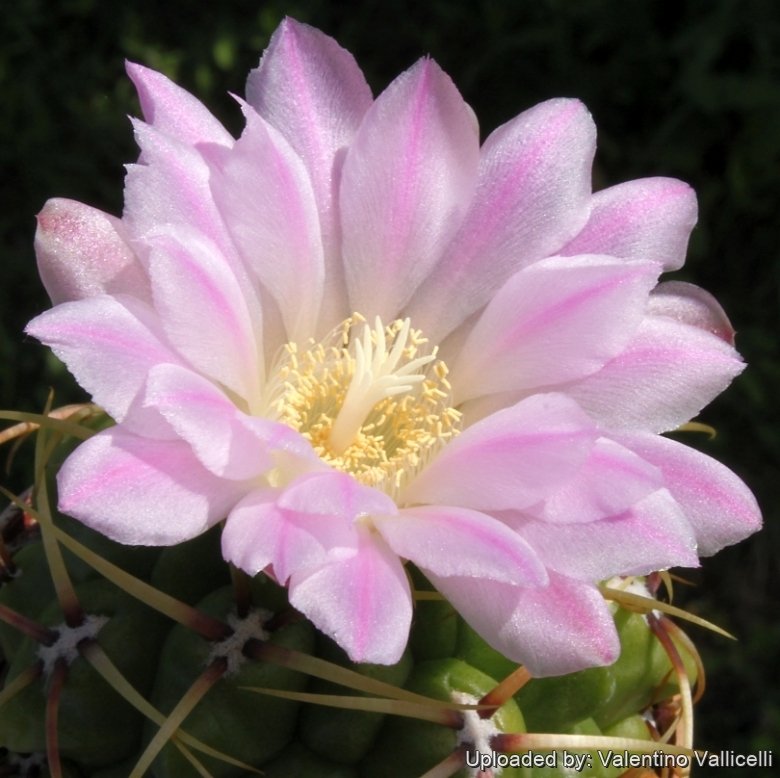
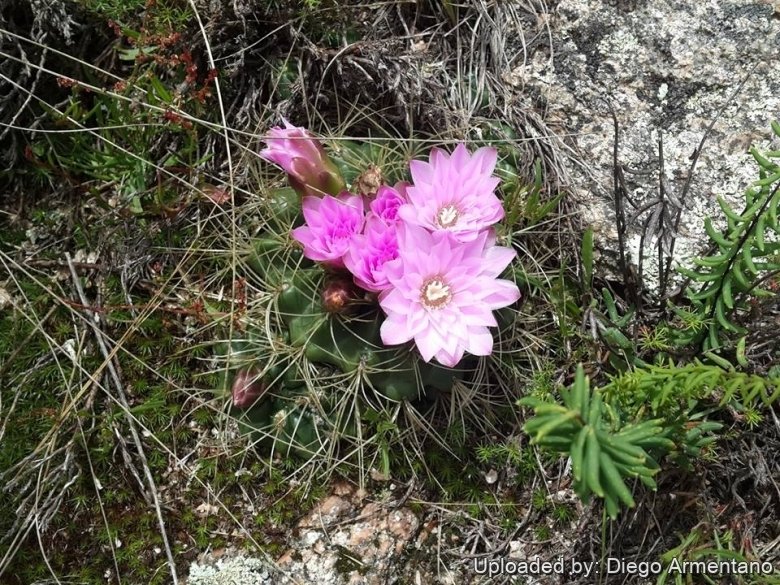
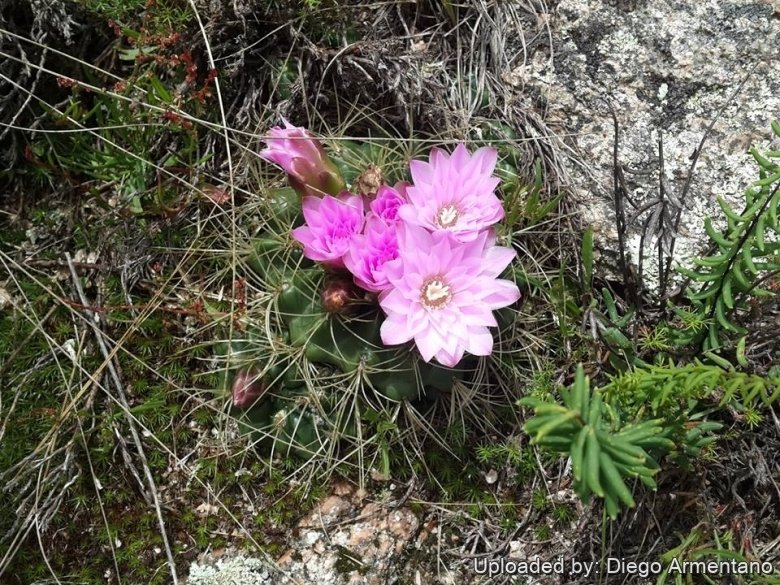
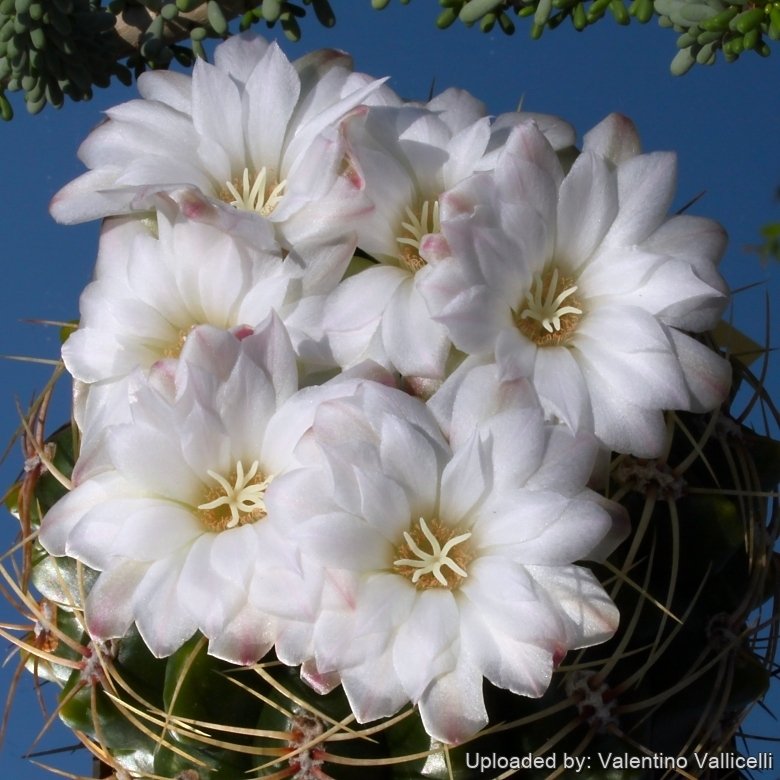
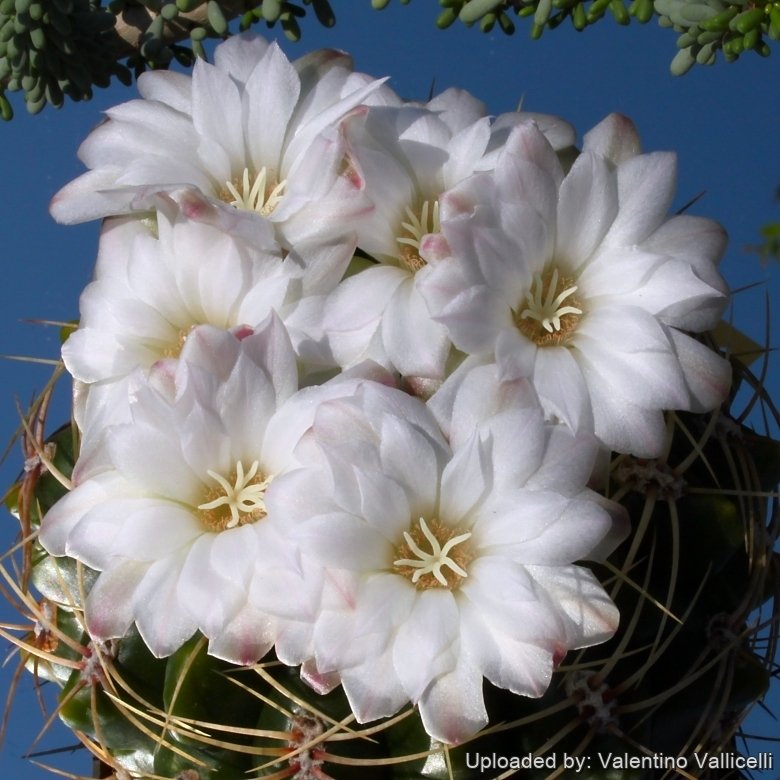
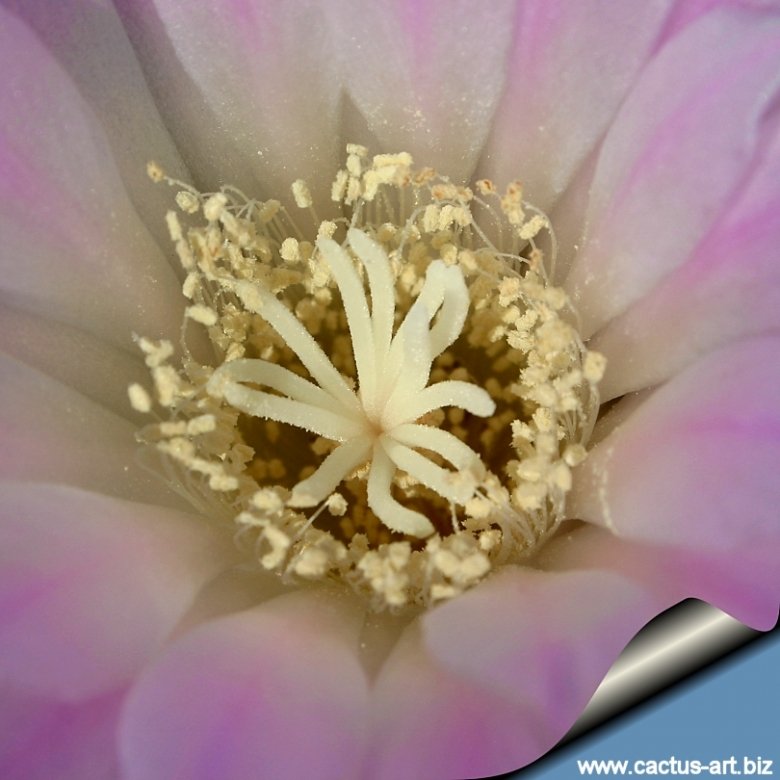
Flowers: Are some of the largest in this genus, often growing larger than the plant!, funnel-shaped 4 to 8 cm long and wide, pink, white flushed with pink or, in some forms, pure white, and often double petaled. Scales on the ovary broad and rounded, their margins scarious.
Blooming season: Summer, It takes 5-6 years from seed before flowers.
Fruits: Green that became yellowish at maturity, globose, up to 2 cm in diameter.
Seeds: Up to 1 mm brownish-red.
Origin and Habitat
Argentina, Córdoba province (Sierras grandes and Chicas de Córdoba) and San louis province. Gymnocalycium monvillei has a relatively wide range and is abundant.
Altitude range. This species occurs at elevations of 500 to 2,700 metres above sea level.
Habitat and Ecology:* The species grows in grasslands. The species is collected locally from the wild but this is not a threat to the species. There are no major threats affecting this species.
Cultivation and Propagation
It is a summer-growing species that offers no cultivation difficulty. Water regularly in summer (but do not over-water). Keep rather dry in winter. Feed with a high potassium fertilizer in summer. Hardy as low as -5° C (or less) if kept dry. Sun Exposure: Light shade.
Propagation: Direct sow after last frost or offsets
Bibliography
Major references and further lectures
-
James Cullen, Sabina G. Knees, H. Suzanne Cubey “The European Garden Flora Flowering Plants: A Manual for the Identification of Plants Cultivated in Europe, Both Out-of-Doors and Under Glass” Cambridge University Press, 11/Aug./2011
-
David Hunt, Nigel Taylor “The New Cactus Lexicon” DH Books, 2006
-
Edward F. Anderson “The Cactus Family” Timber Press, 2001
-
E. W Putnam “Gymnocalyciums: Handbook No. 5.” National Cactus And Succulent Society, Smart & Co. (Printers) Ltd., Brackley, Northants. 1978
-
N.L. Britton, J.N. Rose. “The Cactaceae: Descriptions and illustrations of plants of the cactus family” Volume 3
-
Demaio, P., Lowry, M., Trevisson, M. & Méndez, E. 2013. Gymnocalycium monvillei. The IUCN Red List of Threatened Species 2013: e.T152254A615177. http://dx.doi.org/10.2305/IUCN.UK.2013-1.RLTS.T152254A615177.en. Downloaded on 29 March 2016.
-
Kiesling, R. and Ferrari, O.E. 2009. 100 Cactus Argentinos. Albatros, Buenos Aires.
From llifle page Echinocactus multiflorus
Description
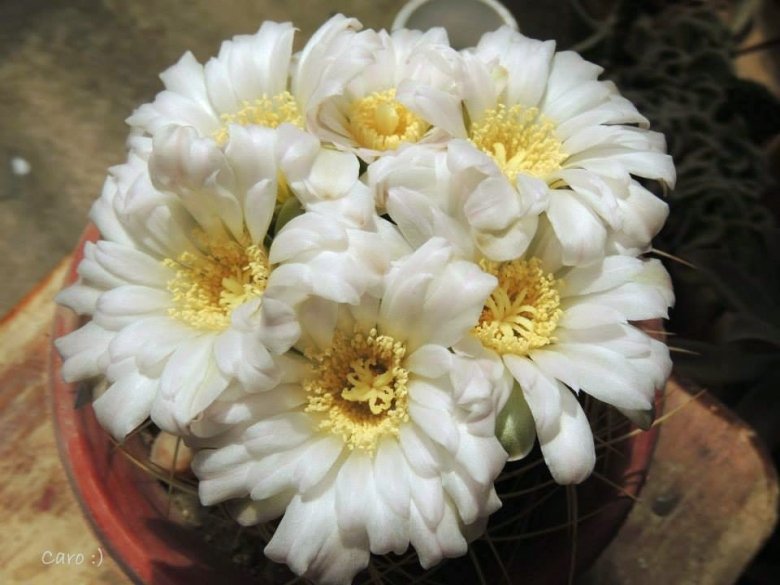
Gymnocalycium multiflorum is a local or morphological form of the variable Gymnocalycium monvillei It is is very well-known in cultivation and distinguished from standard Gymnocalycium monvillei for the very attractive dark bluish body and stout large white blooms (not pink). It obtained its name “multiflorum” (Many flowered) for its showy displays of white flowers, however this species rarely lives up to the promise of its name in cultivation, and blooms with moderation only when mature. Several unnecessary varietal names have appeared in the past.
Similar forms: Gymnocalycium multiflorum v. parisiense and Gymnocalycium multiflorum v. albispinum are both white-spined variants. Gymnocalycium ourselianum is probably another variant and was regarded by Backeberg as synonymous with G. multiflorum.
Habit: Simple or eventually forming large clumps.
Stem: Globular or somewhat depressed or sometimes short columnar, 9 cm high or more, sometimes 12 cm in diameter. The epidermis is light-green or bluish-green.
Ribs: 10 to 15, broad at base, somewhat tubercled, especially above, acute.
Areoles: Elliptic, 10 mm Long.
Spines: 7 to 10, all radial, spreading, somewhat flattened, stout, yellowish or whitish with a reddish tinge at the base, the longest one 3 cm long.
Flower buds: Ovoid, covered with imbricate scales.
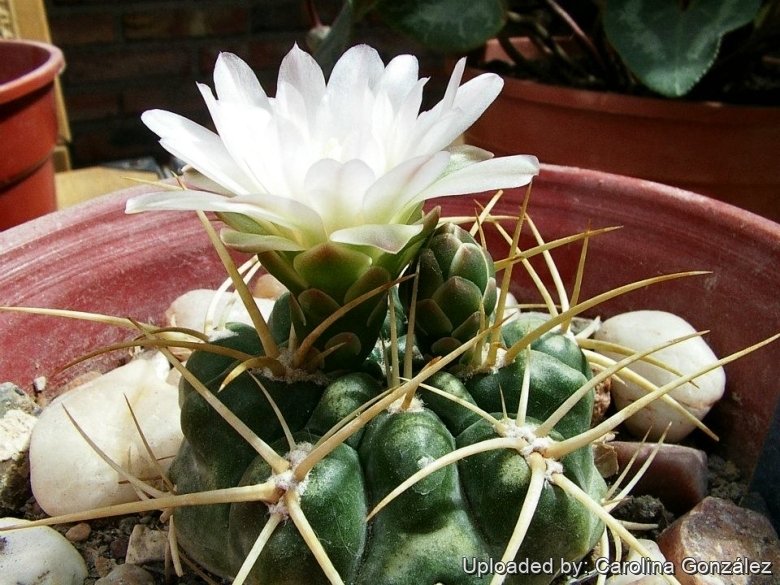
Flowers: Are some of the largest in this genus, often growing larger than the plant, funnel-shaped 3,5 to 8 cm long and wide candid white(or white flushed with pink) and often double petaled, short campanulate. Inner perianth segments oblong, up to 3 cm long, obtuse or acute. Scales on the ovary broad and rounded, their margins scarious.
Origin and Habitat
Argentina, Córdoba.
Bibliography
Major references and further lectures
-
James Cullen, Sabina G. Knees, H. Suzanne Cubey “The European Garden Flora Flowering Plants: A Manual for the Identification of Plants Cultivated in Europe, Both Out-of-Doors and Under Glass” Cambridge University Press, 11/Aug./2011
-
David Hunt, Nigel Taylor “The New Cactus Lexicon” DH Books, 2006
-
Edward F. Anderson “The Cactus Family” Timber Press, 2001
-
E. W Putnam “Gymnocalyciums: Handbook No. 5.” National Cactus And Succulent Society, Smart & Co. (Printers) Ltd., Brackley, Northants. 1978
-
N.L. Britton, J.N. Rose. “The Cactaceae: Descriptions and illustrations of plants of the cactus family” Volume 3
Source: Echinocactus multiflorus, LLIFLE - Encyclopedia of living forms, CC-BY-SA, retrieved 2026-10-25.
From llifle page Echinocactus ourselianus
Notes
Echinocactus ourselianus Monville (SalmDyck, Cact. Hort. Dyck. 1849. 34. 1850) is cited by Schumann as a synonym of Gymnocalycium multiflorum (Hooker) Britton and Rose Now referred to Gymnocalycium monvillei] , but it was never published; the name was attributed to Cels by SalmDyck.
Its variety albispinus (Monatsschr. Kakteenk. 5: 111. 1895) is sometimes met with.
Source: Echinocactus ourselianus, LLIFLE - Encyclopedia of living forms, CC-BY-SA, retrieved 2026-10-25.
From llifle page Gymnocalycium multiflorum f. steineri.
Description
This variation differs from the type by the broom shaped protruding or long intertwined golden-yellow spination.
Origin and Habitat
Argentina, Prov. Cordoba, Sierra Grande, heigth: 1850 m.
Source: Gymnocalycium multiflorum f. steineri., LLIFLE - Encyclopedia of living forms, CC-BY-SA, retrieved 2026-10-25.
From llifle page Gymnocalycium achirasense var. orientale
Description
G. achirasense is a (usually) solitary geophytic cactus.
Stem: Flattened or globular, dark-green, grey-green to olive green, 5-6 cm in diameter up to 5 cm in height, but in cultivation it can become 7-8 cm high (or more) over the years.
Ribs: 12-15
Radial spines: Stout, aggressive, 10 up to 12, but usually fewer in young plants, bent against the body.
Central spines: Usually absent or 1 erected
Flowers: Are some of the largest in this genus, often growing larger than the plant!, 6 up to 7 cm long and broad, whitish, pale pink to lavender, with a darker mid-strip.
Fruits: Green
Seeds: Dark brown.
Origin and Habitat
Argentina Northeast (Córdoba)
Type locality: Argentina, Prov. Cordoba, Alpa Corral, sltitude 850 m.
Cultivation and Propagation
Summer grower, water regularly in summer, keep rather dry in winter. It grows well in full sun or light shade.
Notes
The variety name “orientale” means that it lies in the most eastern part of the habitat.
Source: Gymnocalycium achirasense var. orientale, LLIFLE - Encyclopedia of living forms, CC-BY-SA, retrieved 2026-10-25.
From llifle page Echinocactus multiflorus var. parisiensis
Description
Gymnocalycium multiflorum v. parisiense is a local or morphological form of the variable Gymnocalycium monvillei. It is rarely found in cultivation and distinguisesh from standard Gymnocalycium monvillei for the very attractive dark bluish body, whitish or pale yellowish spines and large white blooms (not pink). It obtained its name “multiflorum” (Many flowered) for its showy displays of white flowers, however this species rarely lives up to the promise of its name in cultivation, and blooms with moderation only when mature.
Similar forms: Gymnocalycium multiflorum v. parisiense and Gymnocalycium multiflorum v. albispinum are both white-spined variants Gymnocalycium multiflorum. Gymnocalycium ourselianum is probably another variant and was regarded by Backeberg as synonymous with G. multiflorum.
Habit: Simple or eventually forming large clumps.
Stem: Globular or somewhat depressed or sometimes short columnar, 9 cm high or more, sometimes 12 cm in diameter. The epidermis is bluish-green.
Ribs: 10 to 15, broad at base, somewhat tubercled, especially above, acute.
Areoles: Elliptic, 10 mm Long.
Spines: 7 to 10, all radial, spreading, somewhat flattened, stout, yellowish or whitish with a reddish tinge at the base, the longest one 3 cm long.
Flower buds: Ovoid, covered with imbricate scales.
Flowers: Are some of the largest in this genus, often growing larger than the plant, funnel-shaped 3,5 to 8 cm long and wide candid white(or white faintly flushed with pink) and often double petaled, short campanulate. Inner perianth segments oblong, up to 3 cm long, obtuse or acute. Scales on the ovary broad and rounded, their margins scarious.
Origin and Habitat
Córdoba and San Luis, Argentina
Source: Echinocactus multiflorus var. parisiensis, LLIFLE - Encyclopedia of living forms, CC-BY-SA, retrieved 2026-10-25.
Cultivars and forms (13)
Subspecies (3)
Varieties (9)
- Gymnocalycium monvillei subs. achirasense var. orientale
- Gymnocalycium monvillei var. coloratum
- Gymnocalycium monvillei var. confusa
- Gymnocalycium monvillei var. echinatum
- Gymnocalycium monvillei var. gertrudae
- Gymnocalycium monvillei var. kainradliae
- Gymnocalycium monvillei var. orientale
- Gymnocalycium monvillei var. safronovii
- Gymnocalycium monvillei var. steineri
Gallery