Publication: Kakteen Südamerika 2: 660. 1980
Description
Gymnocalycium pflanzii var. albipulpa is a naturally occurring variant of Gymnocalycium pflanzii distingushed by it white fruit pulp (not red). It looks very much like the standard Gymnocalycium pflanzii and it is hard to tell apart one from the others if not for the fuit. In accordance with the variability of the species the “albipulpa” variety is invalid and nowadays considered as a synonym.
Habit: Solitary or slowly clustering,
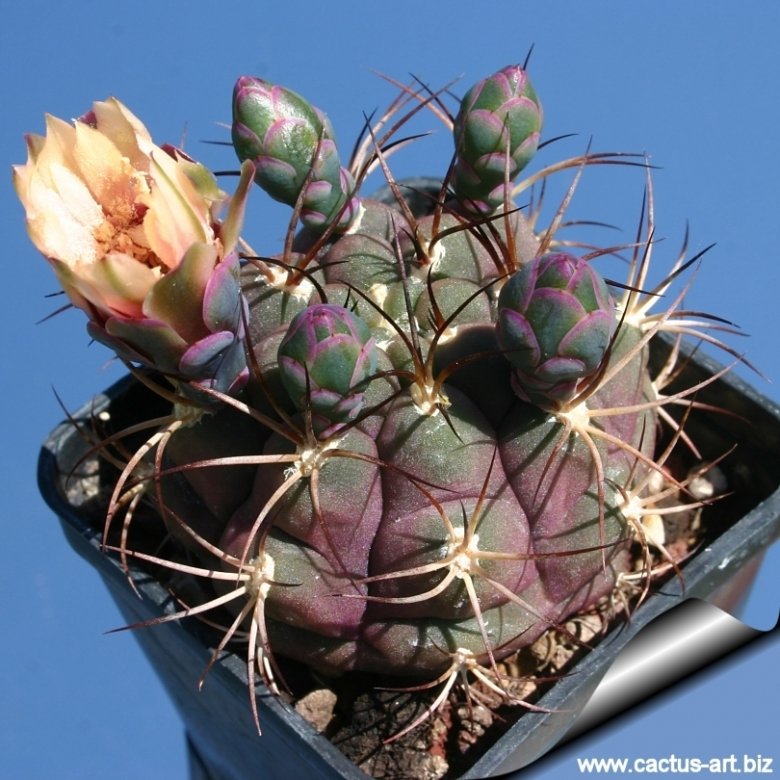
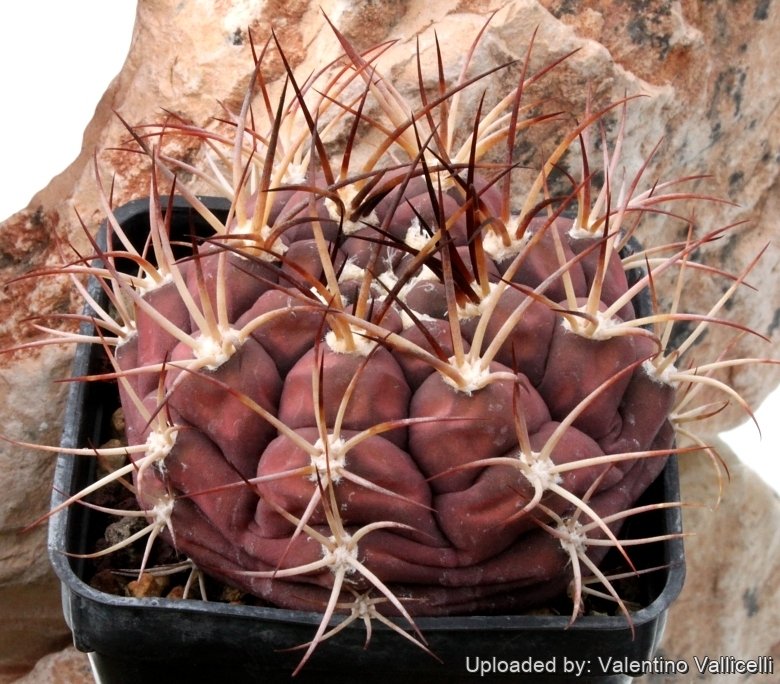
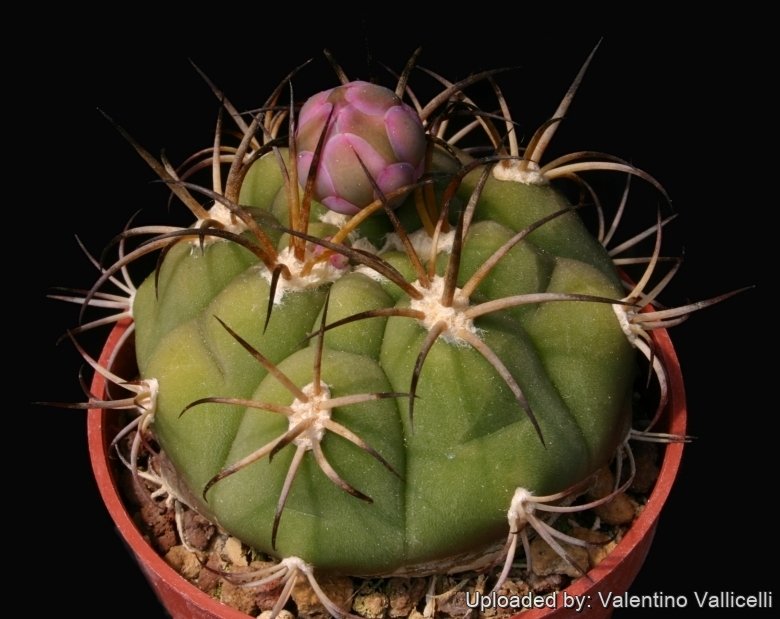
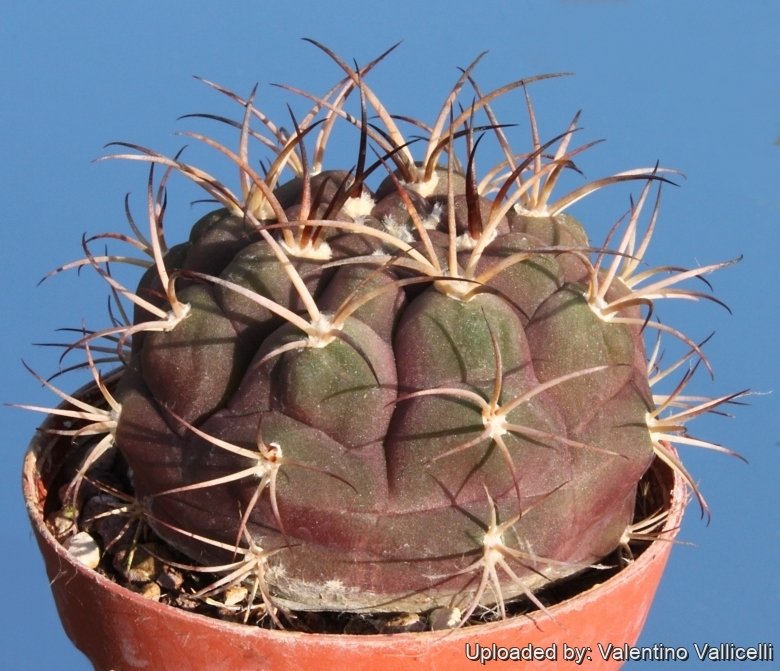
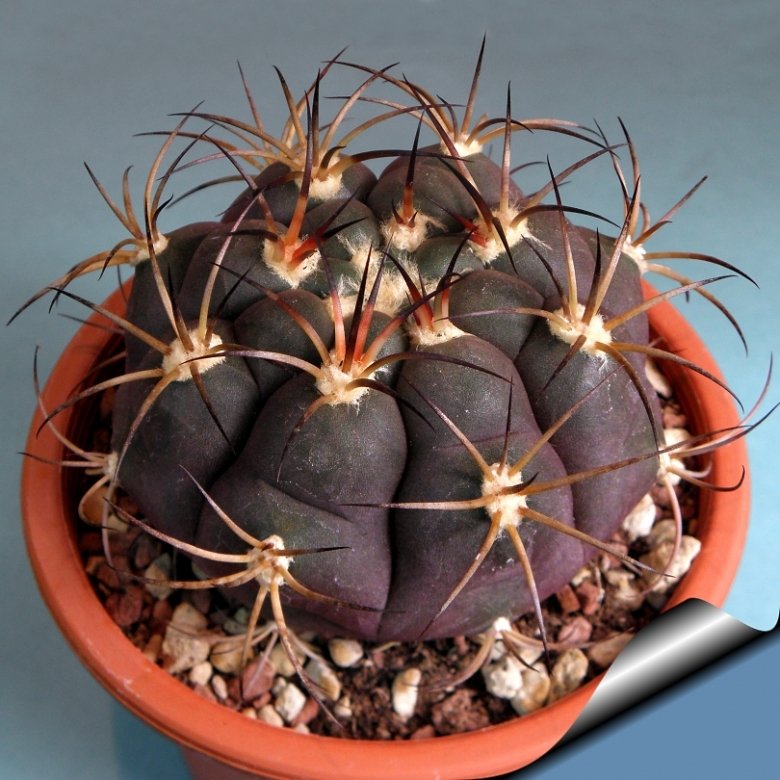
Stem: 10-15 (25) cm in diameter, 10 cm tall, pale green that turns to an orangish purple in full sun. The epidermis has a velvety appearance. The apex is slightly depressed and woolly.
Ribs: 10 to 12 thick, divided into polygonal rounded (not chinned) tubercles, separated by arched furrows.
Roots: Fibrous
Areoles: Large, oval, 10x14mm, yellowish then blackish, dismantling with time.
Spines:Strong, bent, initially blackish with a brown base then becoming grey-pinkish with black point.
Radial spines: 7-9 (5), up to 25mm long.
Central spines: one or two central spines of the same length.
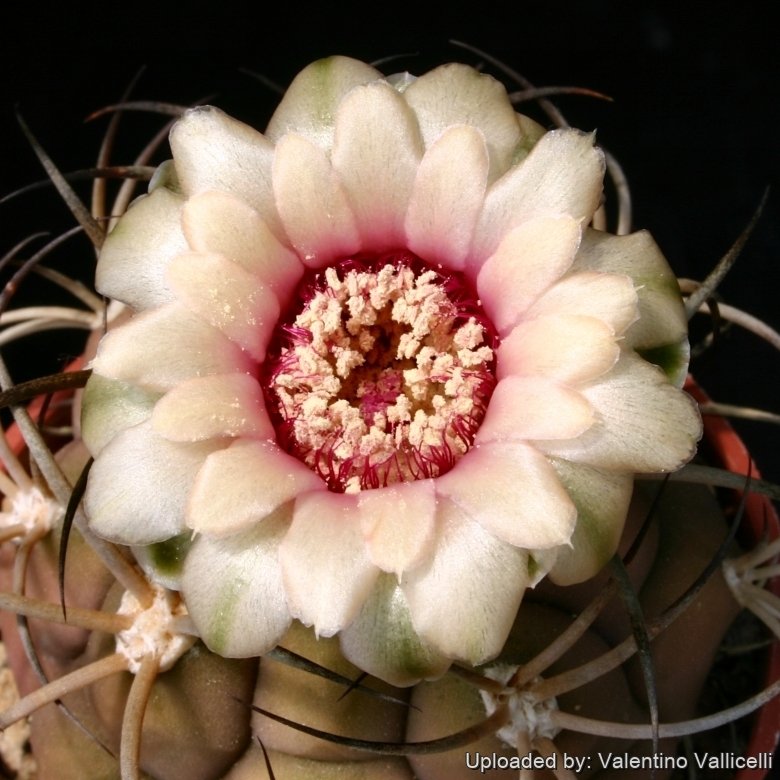
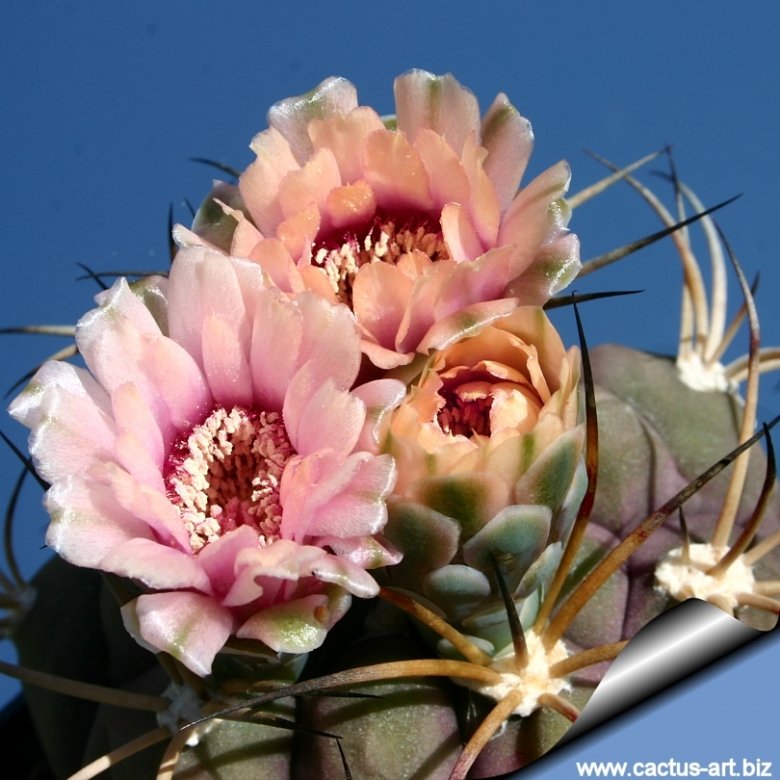
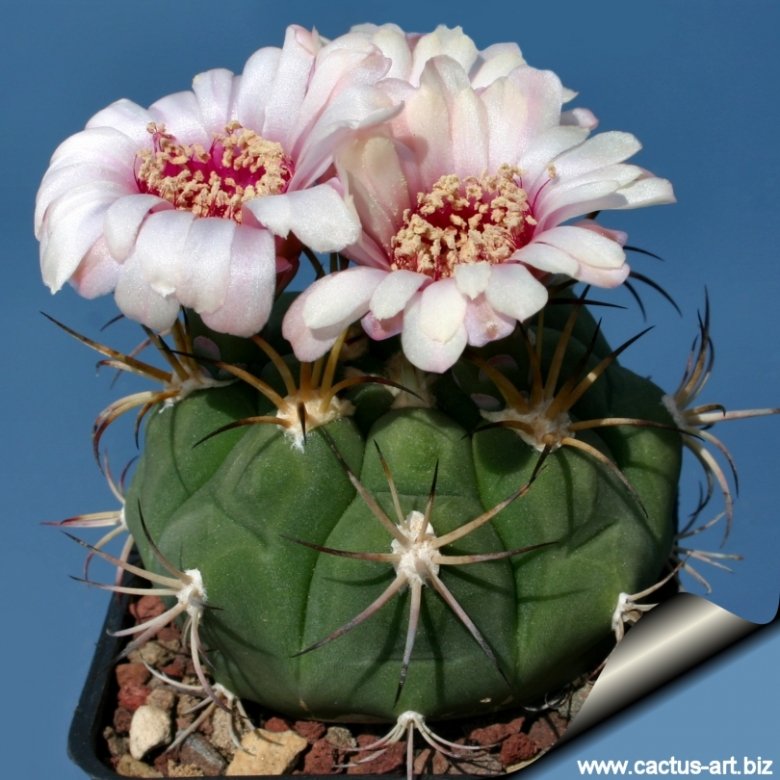
Flowers: Bell-shaped near the apex, diameter and height 45-50 mm. Pericarpell dull green and very short. External tepals are spatulate, slightly bent outward, white with brownish green midribs. The inner tepals are narrower, spatulate and slightly denticulate, white with a carmine-pink, purplish throat. Styles are carmine with carmine pink 10-12 lobes. Pollen is yellow.
Fruit:* Sub-spherical, approximately 2 cm in diameter, becoming greenish white to orange at maturity. Pulp is white (not cherry-red).
Seeds: Microsemineum type, section pirisemineum, very small (0.6 X 0.4 mm), testa reddish, shining and smooth.
Origin and Habitat
South-east of Bolivia (Tarija, Santa Cruz and Cochabamba).
Cultivation and Propagation
Gymnocalycium are very gratifying plants, their culture is easy and their flowering is abundant if we give them a well drained relatively rich substrate (if possible not limestone).
Growth rate: It is a relatively rapidly growing and easily flowering species.
Soils: It likes very porous standard cactus mix soil. Prefer a low pH compost, avoid substrata rich in limestone; otherwise growth will stop altogether.
Repotting: This plant needs plenty of space for its roots, repotting should be done every other year or when the it has outgrown its pot. Use pot with good drainage.
Watering: Needs moderate to copious waterings in summer, but do not overwater (Rot prone), keep dry in winter at a minimum temperature of 0°C.
Fertilization: Feed with a high potassium fertilizer in summer.
Hardiness: Reputedly resistant to frost if kept on the dry side prior to, and during, cold weather (hardy to -12 C ° C, or less for short periods), but for safe cultivation it is best to avoid freezing temperatures.
Exposition: The plant tolerates extremely bright situations but enjoys filtered sunlight or afternoon shade, inside it needs bright light, and some direct sun. Tends to bronze in strong light, which encourages flowering and heavy spine production, but is likely to suffer from sun scorch or stunted growth if over exposed to direct sunlight during the hottest part of the day in summer.
Uses: It is an excellent plant for container growing. It always looks good and stays small. It look fine in a cold greenhouse and frame or outdoor in a rockery.
Pests & diseases: It may be attractive to a variety of insects, but plants in good condition should be nearly pest-free, particularly if they are grown in a mineral potting-mix, with good exposure and ventilation. Nonetheless, there are several pests to watch for:
- Red spiders: Red spiders may be effectively rubbed up by watering the plants from above.
- Mealy bugs: Mealy bugs occasionally develop aerial into the new growth among the wool with disfiguring results, but the worst types develop underground on the roots and are invisible except by their effects.
- Scales: Scales are rarely a problem.
- Rot: This species is particularly easy and accommodating, seldom suffer of cryptogamic diseases. Rot it is only a minor problem with gymnocalyciums if the plants are watered and “aired” correctly. If they are not, fungicides won’t help all that much.
Propagation: Usually by Seeds.. Seeds germinate in 7-14 days at 21-27° C in spring, remove gradually the glass cover as soon the plants will be well rooted (ca 1-2 weeks) and keep ventilated, no full sun for young plants! The grafting is useless (excluded the cultivars deprived of chlorophyll), it does not bring anything concrete.
Bibliography
Major references and further lectures
-
David R Hunt; Nigel P Taylor; Graham Charles; International Cactaceae Systematics Group. “The New Cactus Lexicon” dh books, 2006
-
Edward Anderson “The Cactus family” Timber Press, Incorporated, 2001
-
James Cullen, Sabina G. Knees, H. Suzanne Cubey “The European Garden Flora Flowering Plants: A Manual for the Identification of Plants Cultivated in Europe, Both Out-of-Doors and Under Glass” Cambridge University Press, 11/Aug/2011
Gallery