Publication: Cactaceae (Britton & Rose) 3: 163. 1922 [12 Oct 1922]
Description
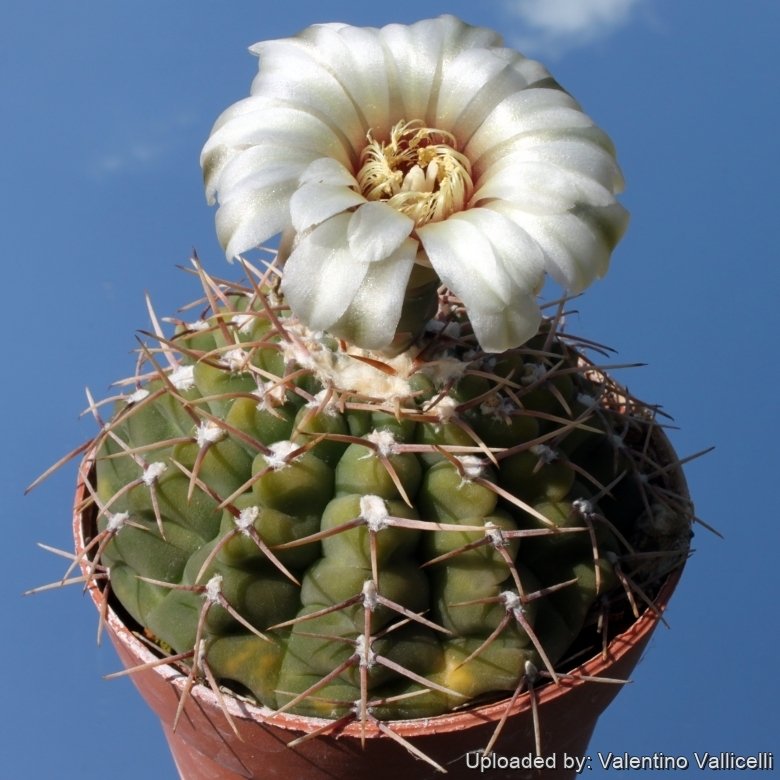
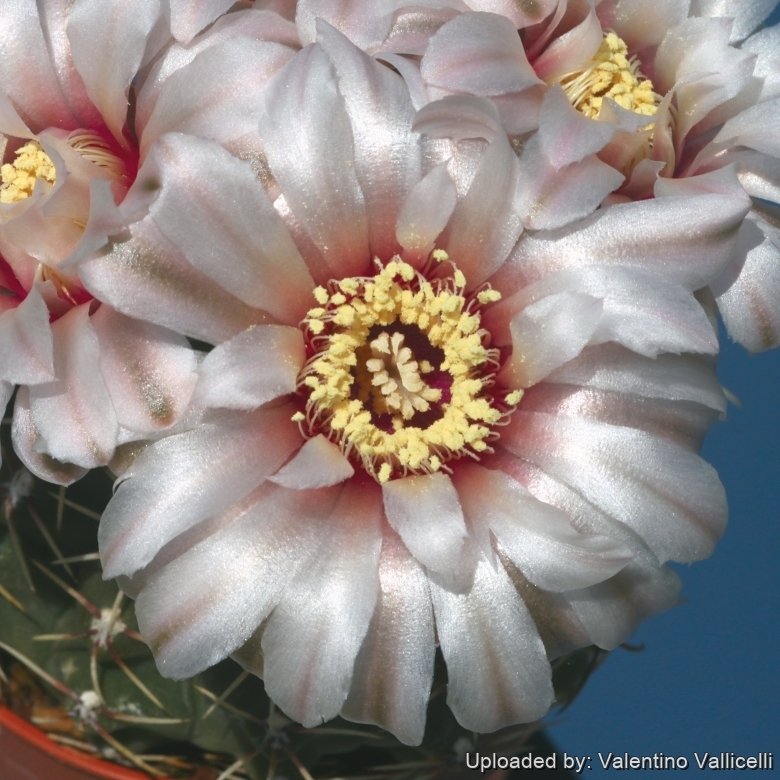
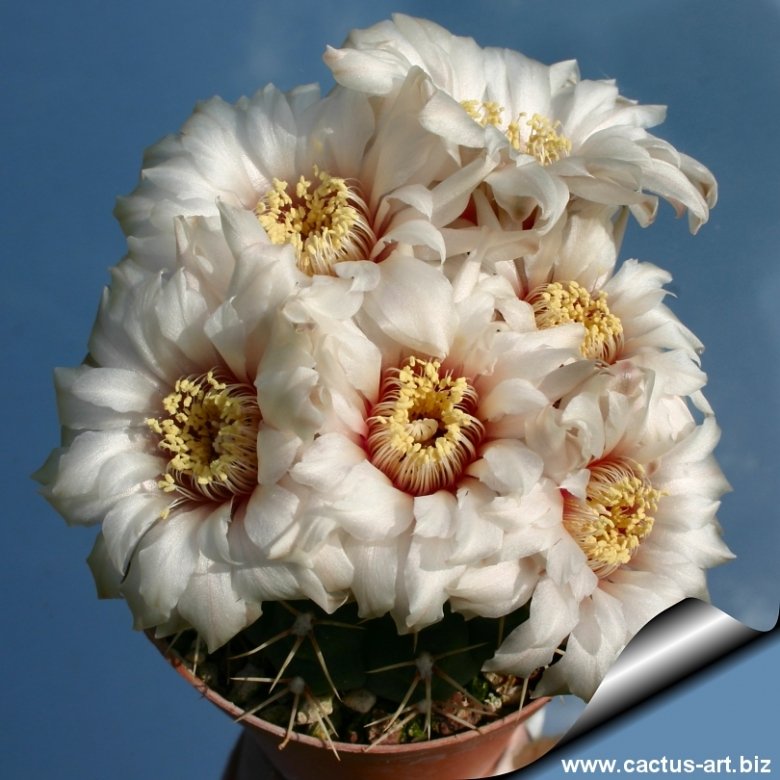
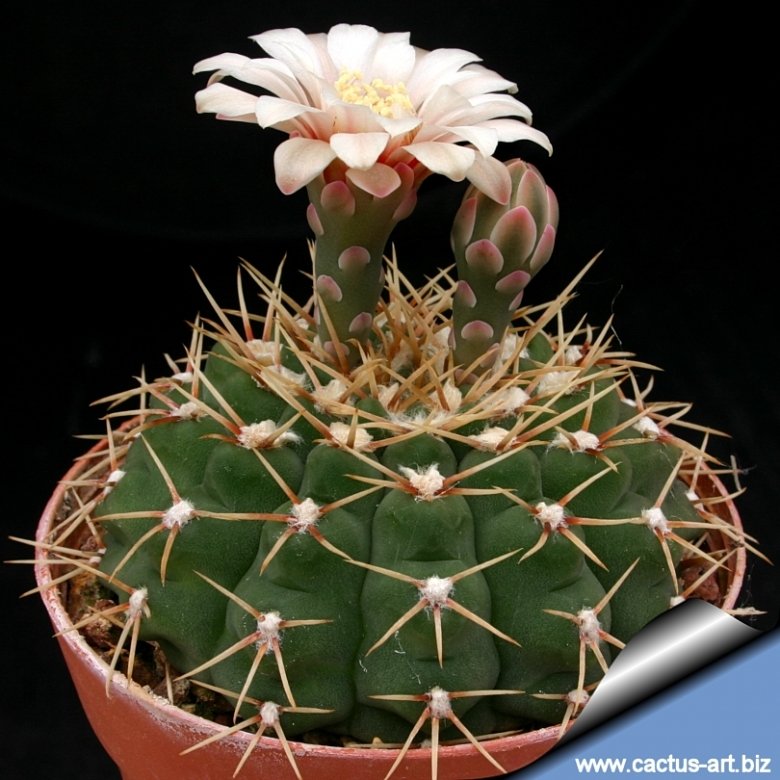
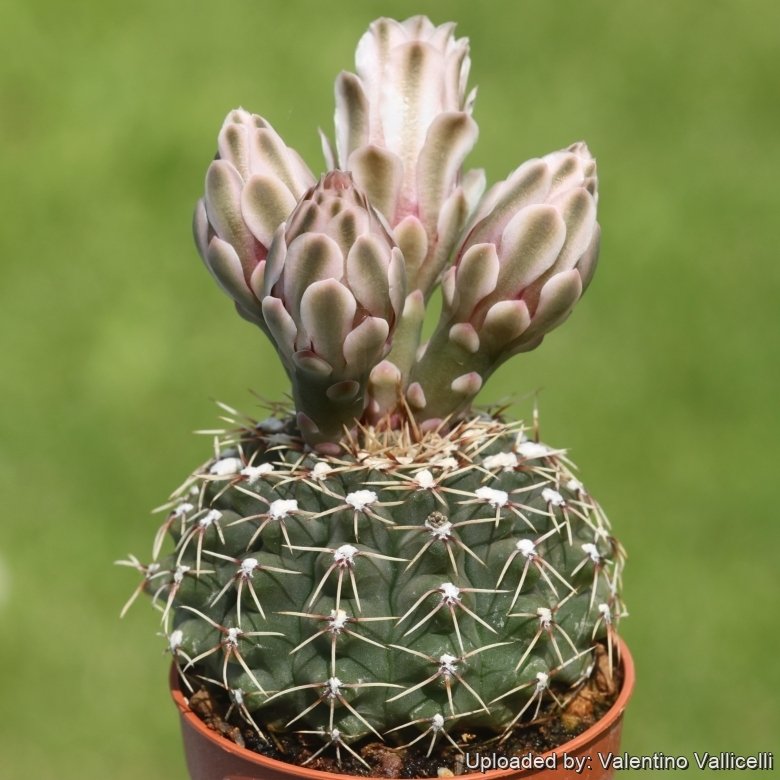
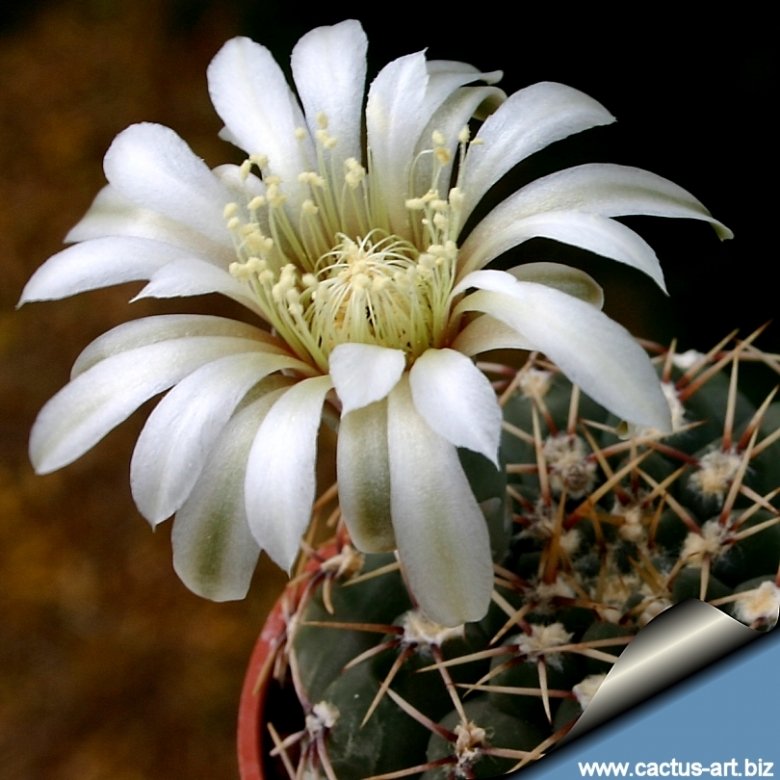
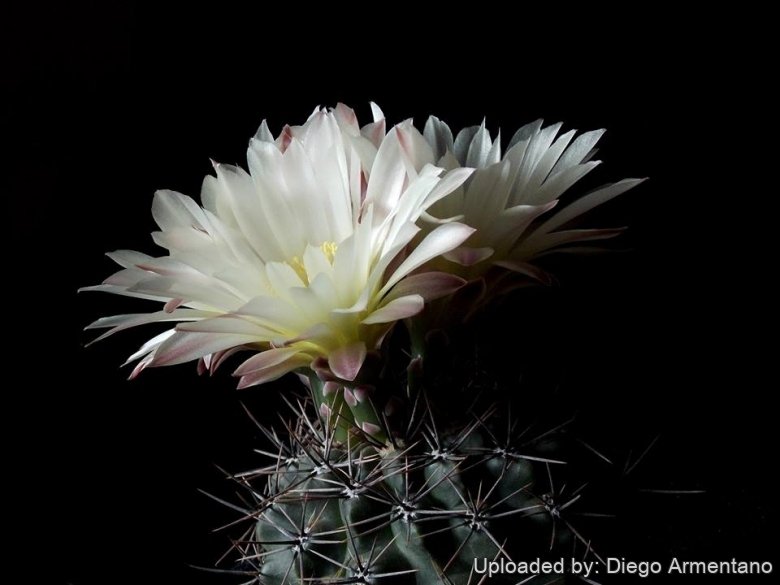
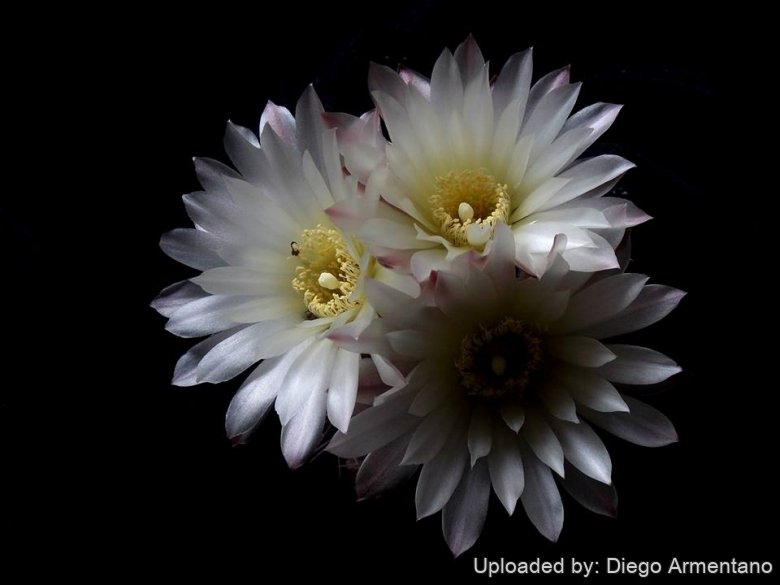
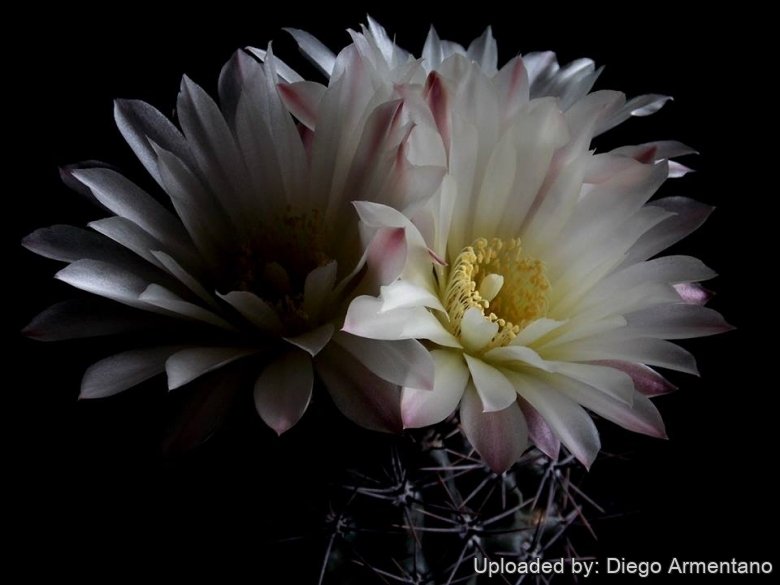
Gymnocalycium platense is a small, usually unbranched, cactus species, depressed, half-hidden in the earth. It will flower when 3-5 cm in diameter. The flowers with long floral tube, open wide in sunlight, and are commonly white with a reddish reddish throat and a hint of dark shading at the tips of the tepals. This is a delightful plant and well worth growing.
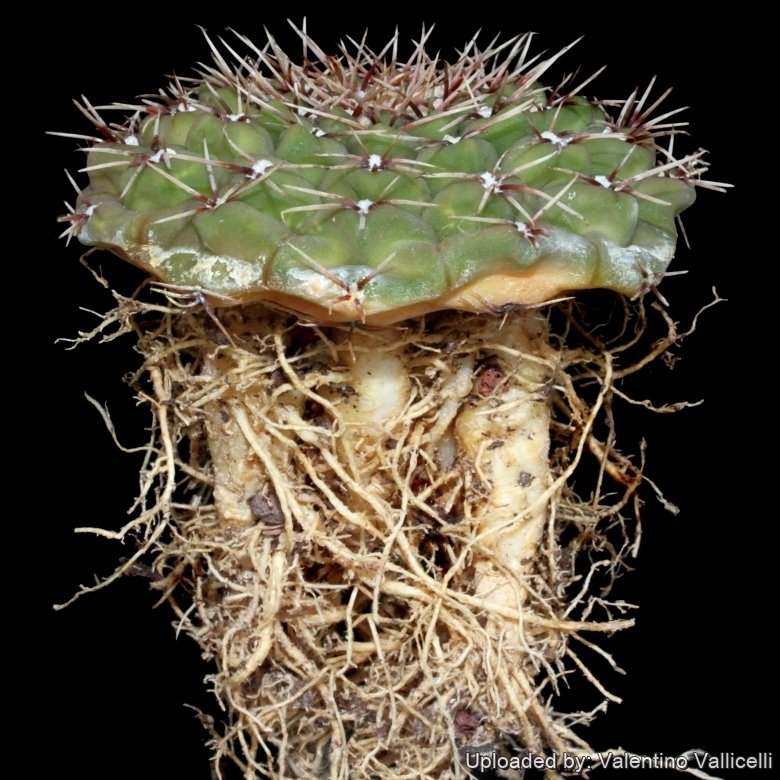
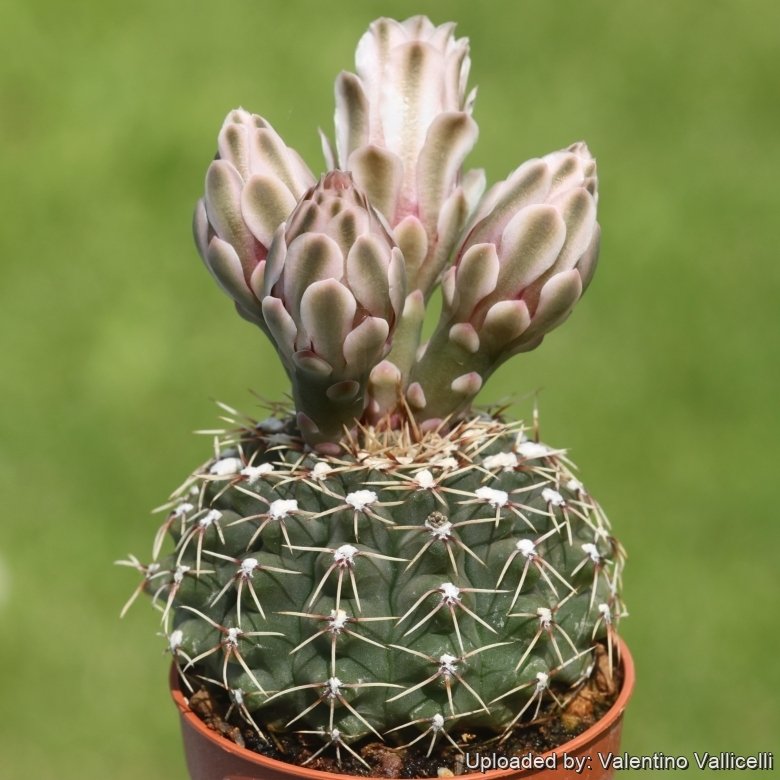
Stem: Solitary, flattened globose to globose, green, dull bluish green, olive green, or purple or bronzed never greyish (rather variable in colour in cultivation depending on growing conditions), 8-10 cm high, 4-10 cm in width.
Ribs: 8-18, usually 13, broad and low, with strong cross-furrows, with distinct rounded tubercles. Tubercles with a horizontal or ascending chin-like projection.
Areoles: Deep-set, when young white-felted.
Radial spines: 3 to 7, thin, needle-like, subulate, rigid, more or less flattened against the stem surface, base swollen pale brown-red, greyish-purple, grey or blackish, with whitish tips, 5-15 mm long.
Central spines: Usually absent.
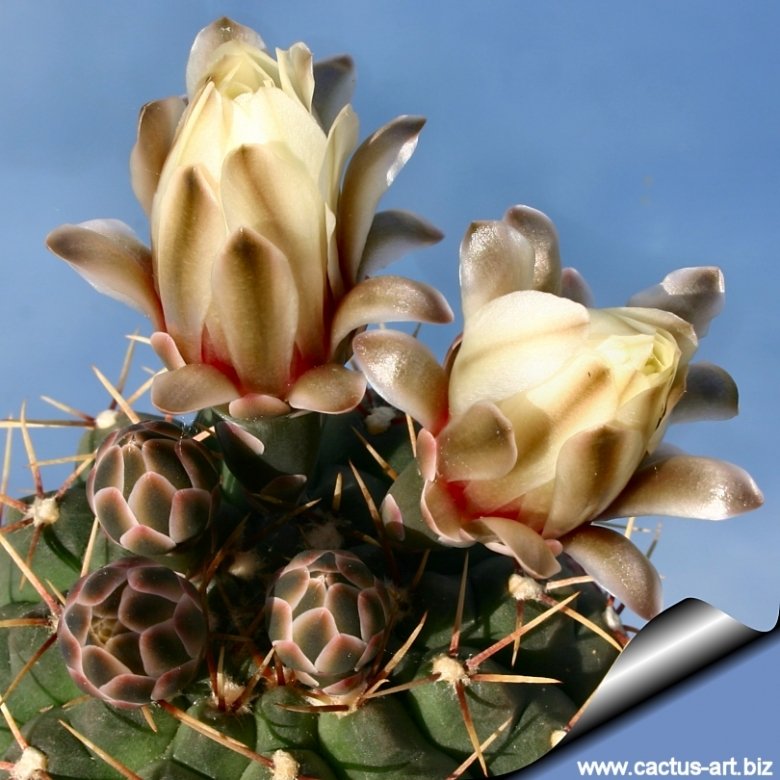
Flowers: Several together on the crown, diurnal, scentless, 3 to 6.5 cm in length and 4-6.5 cm across, openong wide in sunlight. Tube and ovary dull bluish green bearing a few broad, short, rounded scales, these more or less purplish on the edge. Outer perianth-segments white with a broad green or pinkish stripe down the center. Inner perianth segments pure white with a hint of dark shading at the tips of the tepals. Throat broad, white, reddish or purple within. Filaments numerous, scattered over the throat. Style short and thick, 2 cm long, stigma-lobes cream-coloured. Ovary oblong.
Blooming season: This plant blooms in early summer when it is only 3-4 cm.
Fruits: The ripened ovary is pink, almost spherical, 1-2.5 cm long, 1-2 cm in width, and dehisces (splits) down its length.
Seeds: 1.2-1.2 mm, matt black.
Remarks: Gymnocalycium platense is often confused commercially with unrelated species of the Gymnocalycium bodenbenderianum group and Gymnocalycium leptacanthum. Plants sold under this name but having flowers with red throat and glossy brown seeds are probably Gymnocalycium quelianum or a related species.
Origin and Habitat
Argentina (Córdoba and Buenos Aires Province). The original specimens was collected in Prov. Buenos Aires, Ventana, Valle de las Vertientes in 1895 by Spegazzini.
Altitude range: 300-700 metres above sea level.
Habitat and ecology: This plant comes from the arid hills of Pampas (Sierra de la Ventana, Curámalál, Olavarria etc.) mainly in the cracks of the rocks.
Cultivation and Propagation
Gymnocalycium platense is very easy to grow, these plants offer no cultivation difficulties.
Watering Needs: Moderate to copious in summer, keep dry in winter.
Frost Tolerance: Quite frost resistant if kept dry -10° C (Temperature Zone: USDA 8-10 )
Cultural Practices: Feed with a high potassium fertilizer in summer.
Sun Exposure: Full sun to light shade
Propagation: Seeds (seldom produces offsets)
Notes
This species is strictly relate with Gymnocalycium stellatum and Gymnocalycium baldianum and it is very similar (if not the same) to Gymnocalycium quehlianum.
Bibliography
Major references and further lectures
-
Edward Anderson “The Cactus family” Timber Press, Incorporated, 2001
-
James Cullen, Sabina G. Knees, H. Suzanne Cubey “The European Garden Flora Flowering Plants: A Manual for the Identification of Plants Cultivated in Europe, Both Out-of-Doors and Under Glass” Cambridge University Press, 11/Aug/2011
-
David R Hunt; Nigel P Taylor; Graham Charles; International Cactaceae Systematics Group. “The New Cactus Lexicon” dh books, 2006
-
N. L. Britton, J. N. Rose “The Cactaceae. Descriptions and Illustrations of Plants of the Cactus Family.” Volume 4, The Carnegie Institution of Washington, Washington 1923
-
Curt Backeberg “Die Cactaceae: Handbuch der Kakteenkunde” Gustav Fischer Verlag, Stuttgart New York 1982–1985
From llifle page Echinocactus gibbosus var. ventanicola
Description
This subspecies differs from the type species by a larger number of spines: 9-14 radial spines arranged in 3-6 pairs, occasionally with an additional poorly developed pair in the upper part of the areola. Central spines 1-5, straight, weakly developed in young specimens, about 2.5 cm long on mature plants. However the distinguishing characteristics of Gymnocalycium platense var. ventanicola, appear to fall within the natural variation of Gymnocalycium platense and most authors have dismissed ventanicola as perhaps not worthy of even varietal status, but it still has a value for a collector because they identify plants with particular characters.
Similar species: It is close to Gymnocalycium gibbosum (DC) Pfeiff which is distinguished by its olive green or slightly purple spherical stem, thinner spines, and rather large flowers with smaller receptacles.
Origin and Habitat
This taxon is relatively common in rocky areas and exposed parts in the higher parts of the Sierra de la Ventana, Buenos Aires, Argentina.
Cultivation and Propagation
Gymnocalycium platense var. ventanicola is very easy to grow, these plants offer no cultivation difficulties.
Watering Needs: Moderate to copious in summer, keep dry in winter.
Frost Tolerance: Quite frost resistant if kept dry -10° C (Temperature Zone: USDA 8-10).
Cultural Practices: Feed with a high potassium fertilizer in summer.
Sun Exposure: Full sun to light shade.
Propagation: Seeds (seldom produces offsets).
Bibliography
Major references and further lectures
- Till H., Armerhauser H., Till W. “Neourdnung der Gattung Gymnocalycium – Teil II.” Gymnocalycium 21 (Sonderheft). P 815-838 (2008)
Source: Echinocactus gibbosus var. ventanicola, LLIFLE - Encyclopedia of living forms, CC-BY-SA, retrieved 2026-10-25.
Cultivars and forms (1)
Varieties (1)
Gallery