Publication: Haworthia Revisited 167 (1999)
Description
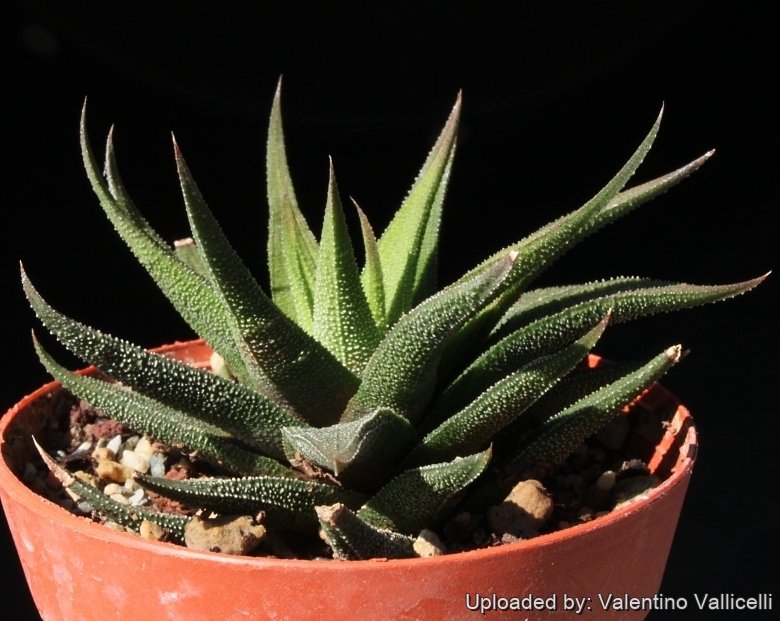
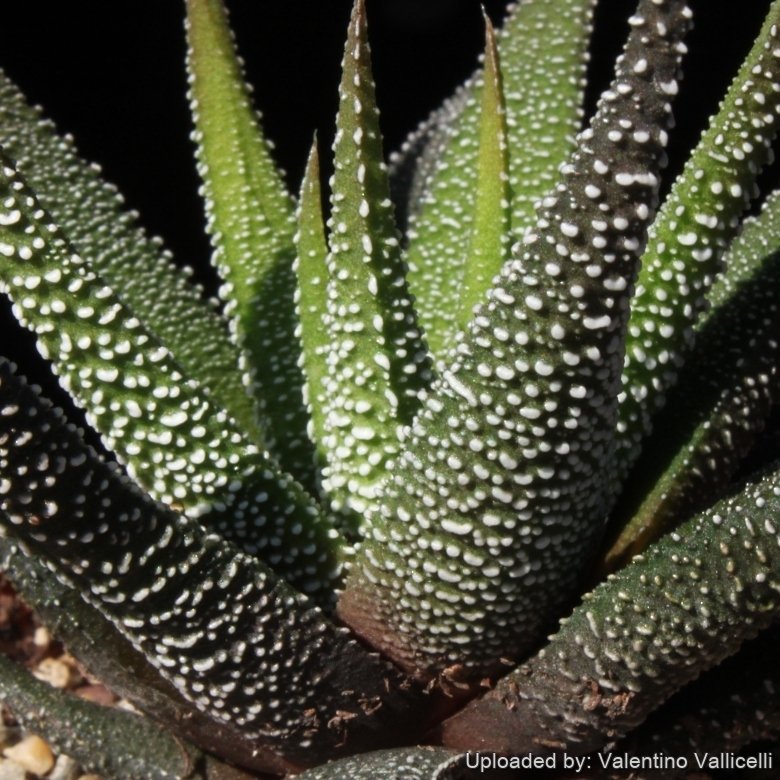
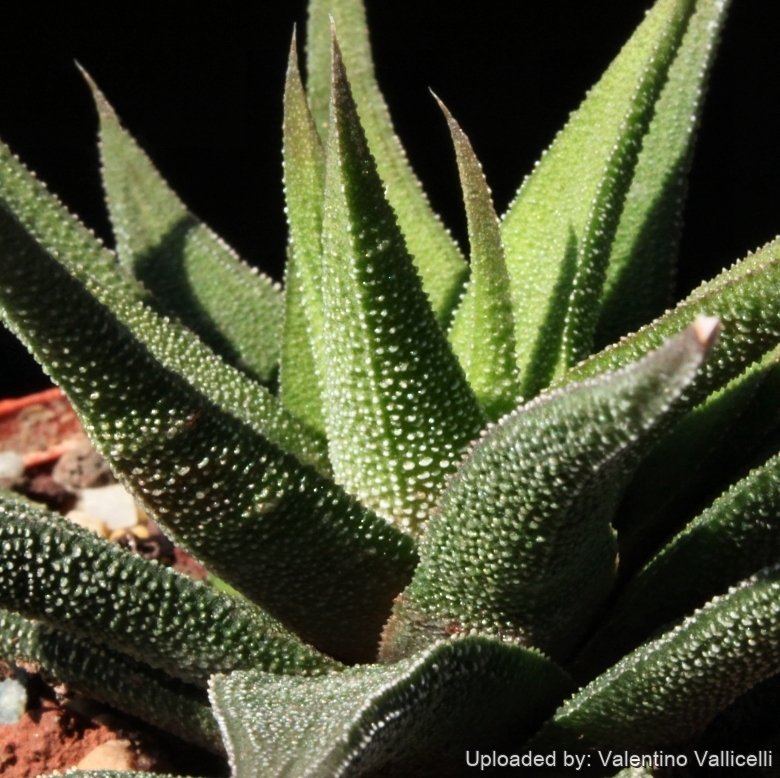
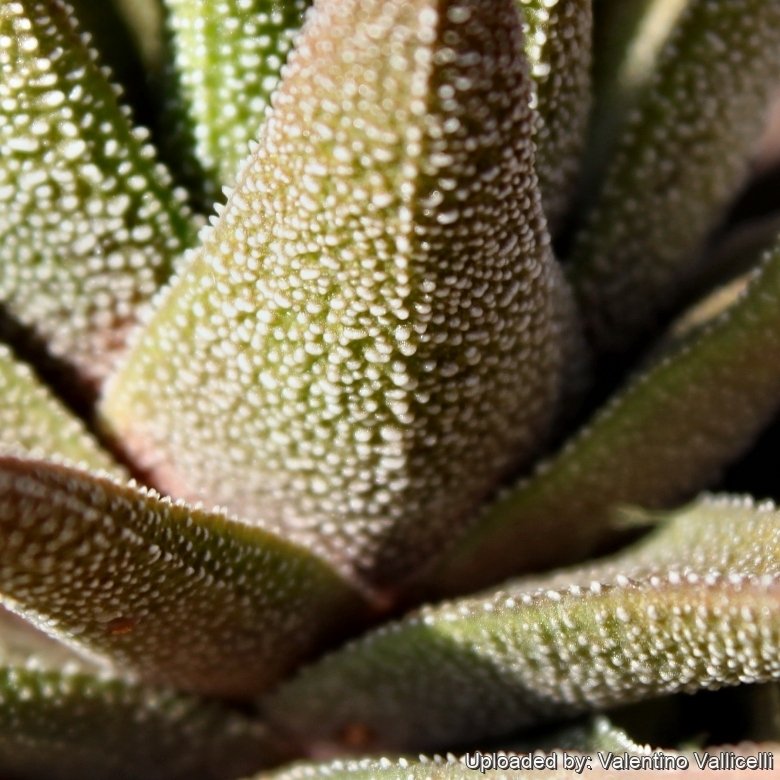
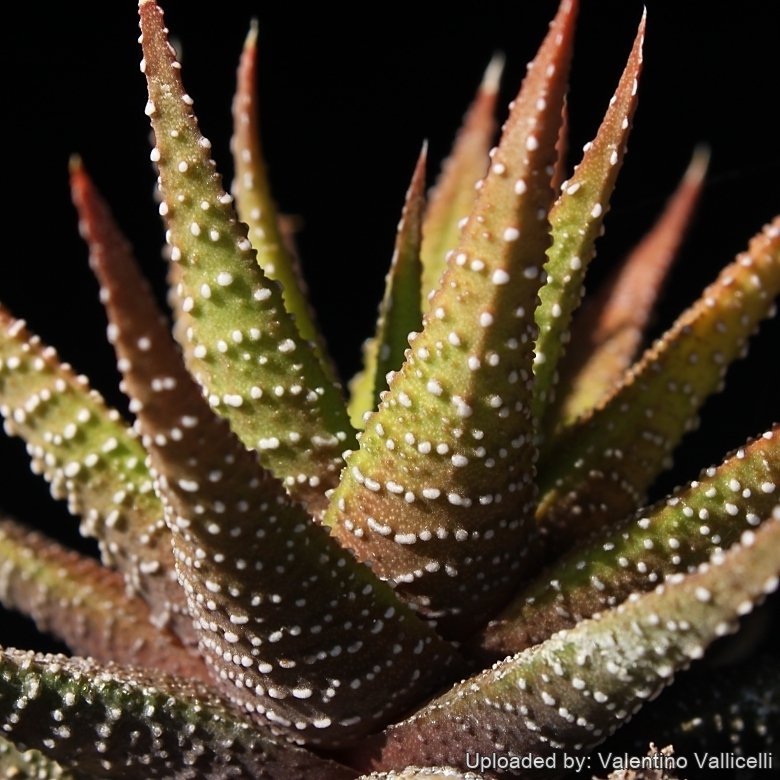
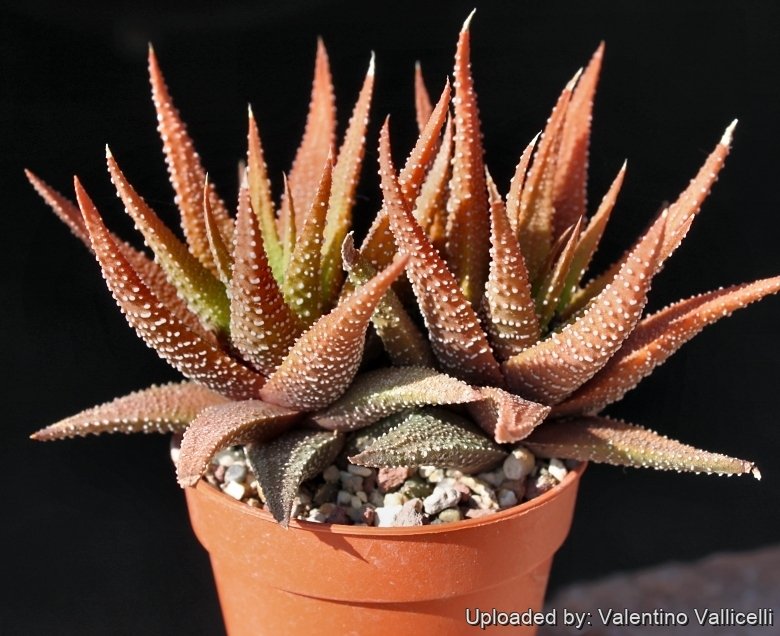
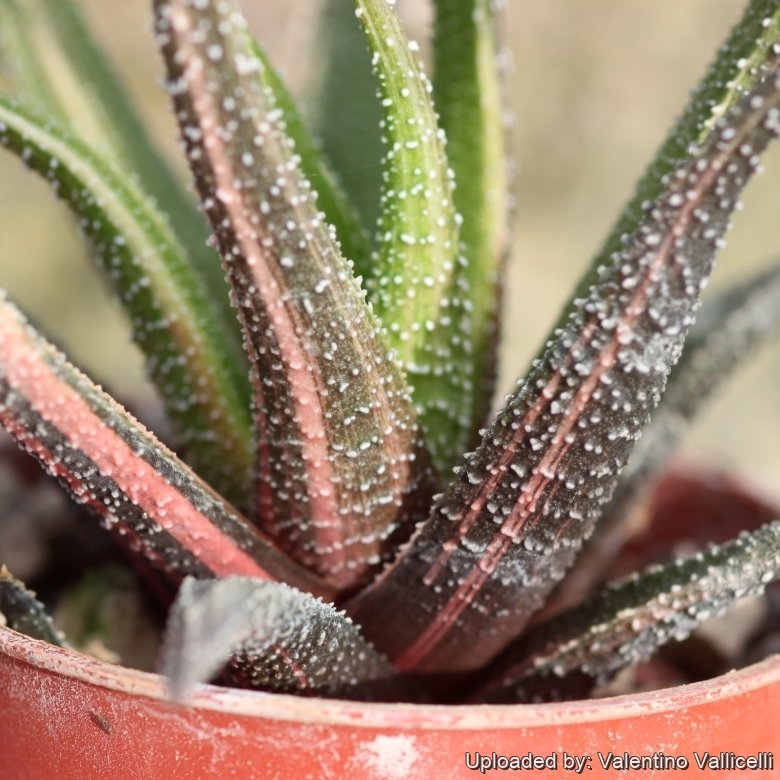
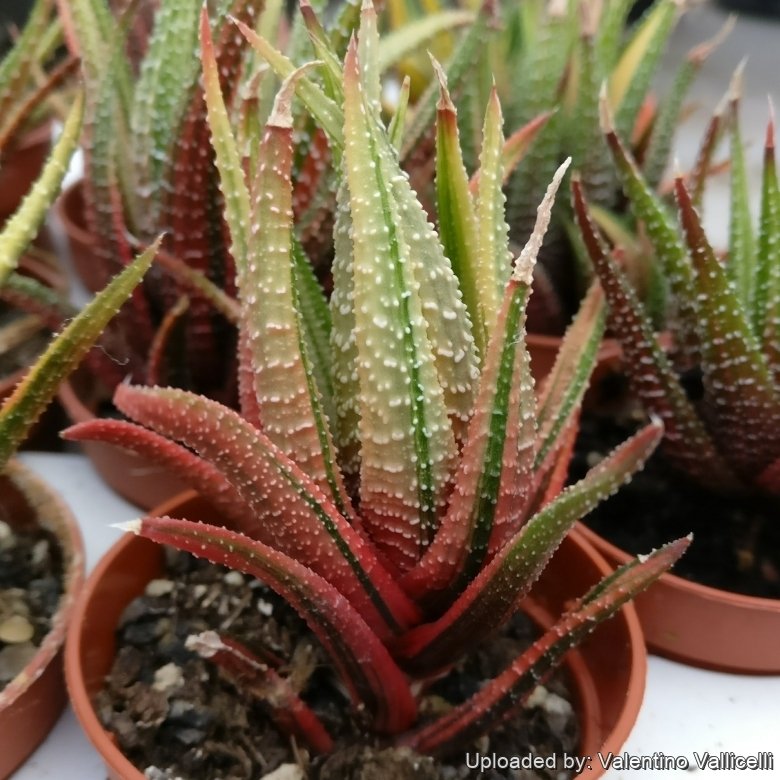
H. attenuata var. radula differentiates from Haworthia attenuata because of smaller and more numerous tubercles whereas H. attenuata has fewer and larger tubercles. Moreover the leaves are more scabrid rather than tuberculate. It has also more slender and longer leaves. The many tubercles give the plant a silvery appereance.
Stem: Acaulescent.
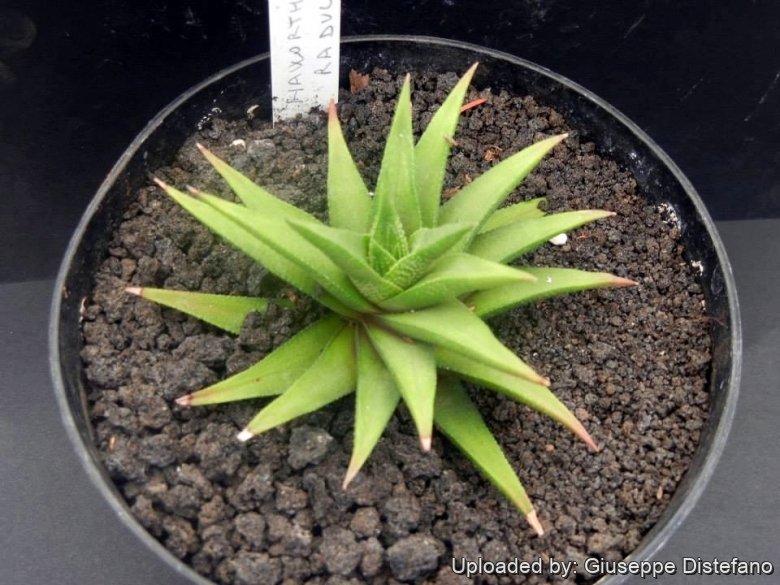
Rosette: Flatly close to the soil up to 15 cm in diameter, forming clumps.
Leaves: About 7,5-8 cm long and 2 cm wide at base, erect, radiating, attenuate (tapering), green to brownish, very densely covered all over with minute white tubercles on both sides which are pretty much of the same size.
Inflorescence: Sparsely branched, lax, 24-30 cm tall.
Flowers: White with reddish-brown veins, flower-tube obcapitate. Tepals revolute.
Blooming season: November-December.
Origin and Habitat
It is known only from a small area around Hankey (Humansdorp), in the Eastern Cape Province where it grows together with Haworthia attenuata, Haworthia gracilis, Gasteria pulchra and Aloe humilis. Unfortunately the small area where these plants grows has been almost destroyed due to agricultural activity (The 5 miles strip along the road, where the population used to grow was cleaned by the bulldozer… and left unexploited).
Cultivation and Propagation
It is an easy plant that usually does not give many problems in cultivation. Needs light shade to filtered sun, but will redden with more light exposure. Regular water in summer, keep dryer in winter, needs good drainage It grows much better outdoors in spring and summer, it is also perfect for the bright windowsill. Grow it in light, fertile, well drained, moderate soils, with a slightly acidic pH (5-6). Avoid any frost.
Maintenance: Removal of old flower stalks; It is a suckering species, and one plant can eventually cover a large area. Divide the crowded clumps periodically. During the winter months, the plants should be grown cool to initiate flower development (about 5-10°C )
Propagation: Suckers, division of older plants.
From llifle page Aloe rugosa
Description
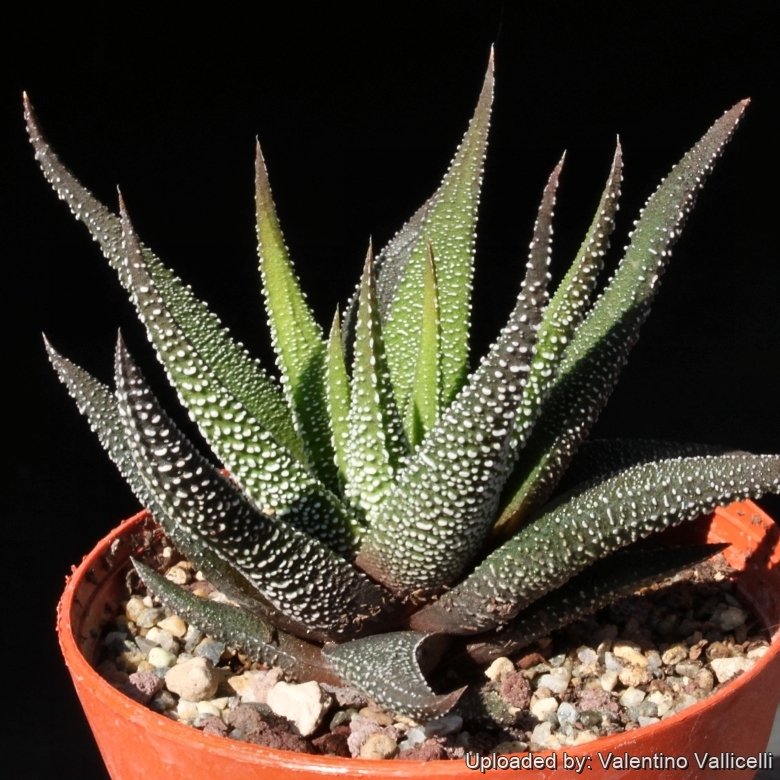
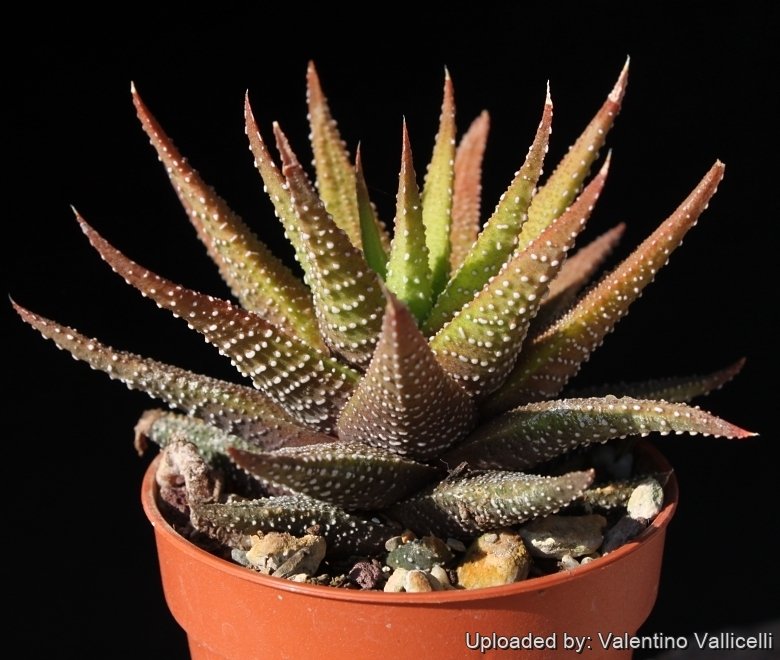
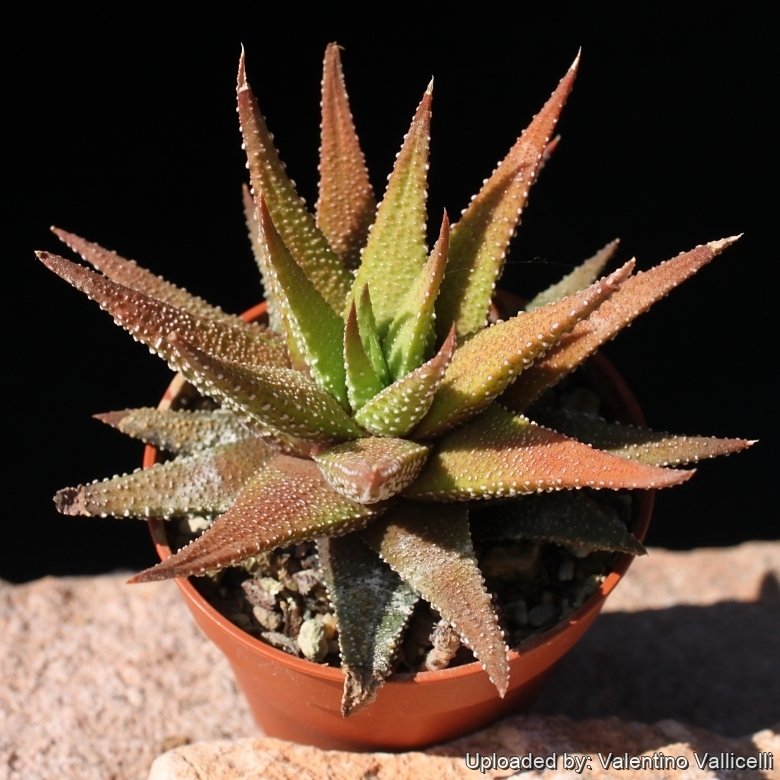
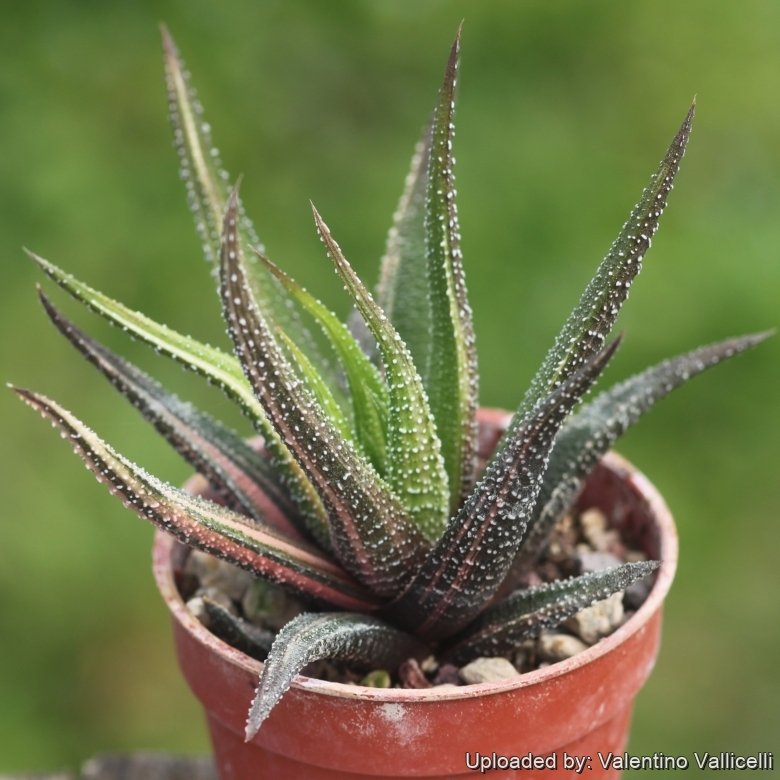
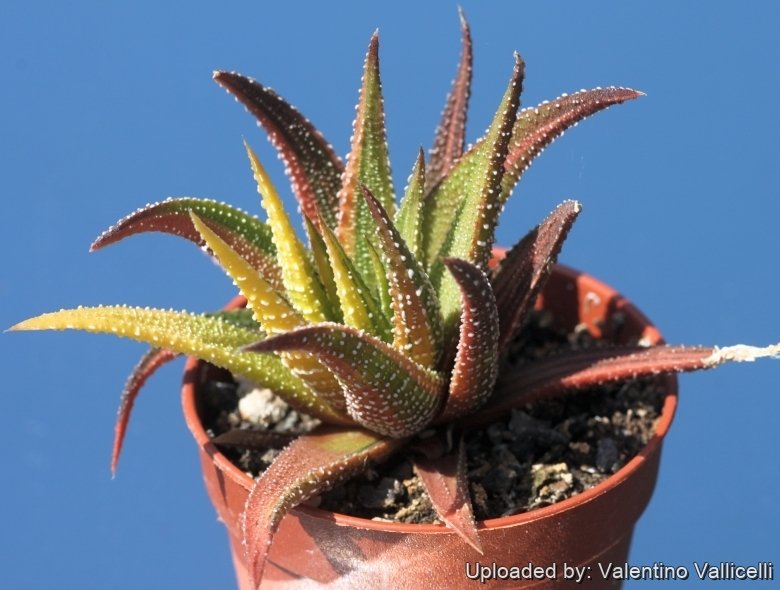
This plant is considered a garden hybrid (possibly Haworthia attenuata x Haworthia attenuata var. radula) it distinguish by the prominent white, shining tubercles arranged in more or less regular lengthwise rows on the narrow, tapering leaves.
Stem: Acaulescent.
Rosette: 10-15 cm across, forming clumps.
Leaves: About 7,5-8 cm long and 2 cm wide at base, erect, radiating, attenuate (tapering), green to brownish, covered all over with smsll white tubercles which are pretty much of the same size and forming more or less regular lengthwise rows.
Inflorescence: Sparsely branched, lax, 20-40 cm tall.
Flowers: White with reddish-brown veins, flower-tube obcapitate. Tepals revolute.
Blooming season: November-December.
Origin and Habitat
Cultivated hybrid.
Cultivation and Propagation
It is an easy plant that usually does not give many problems in cultivation.
Exposure: Needs light shade to filtered sun, but will redden with more light exposure.
Watering: Regular water in summer, keep dryer in winter, needs good drainage It grows much better outdoors in spring and summer, it is also perfect for the bright windowsill.
Potting medium: Grow it in light, fertile, well drained, moderate soils, with a slightly acidic pH (5-6).
Hardiness: Avoid any frost. During the winter months, the plants should be grown cool to initiate flower development (about 5-10°C )
Maintenance: Removal of old flower stalks; It is a suckering species, and one plant can eventually cover a large area. Divide the crowded clumps periodically.
Propagation: Suckers, division of older plants.
Source: Aloe rugosa, LLIFLE - Encyclopedia of living forms, CC-BY-SA, retrieved 2026-10-25.
From llifle page Haworthia radula f. variegata
Description
Haworthia attenuata var. radula differentiates from Haworthia attenuata because of smaller and more numerous tubercles whereas H. attenuata has fewer and larger tubercles. Moreover the leaves are more scabrid rather than tuberculate. It has also more slender and longer leaves. The many tubercles give the plant a silvery appereance.
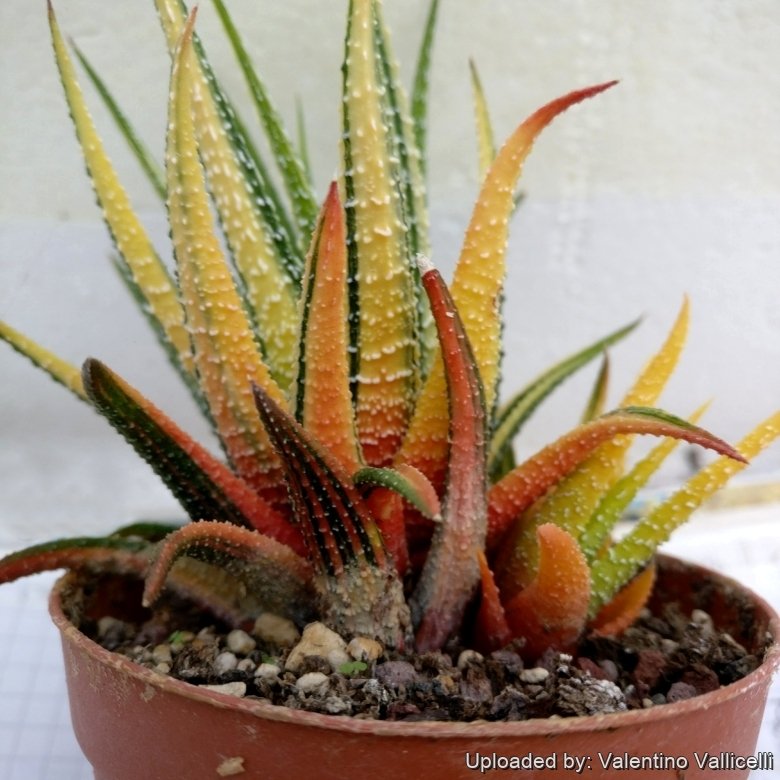
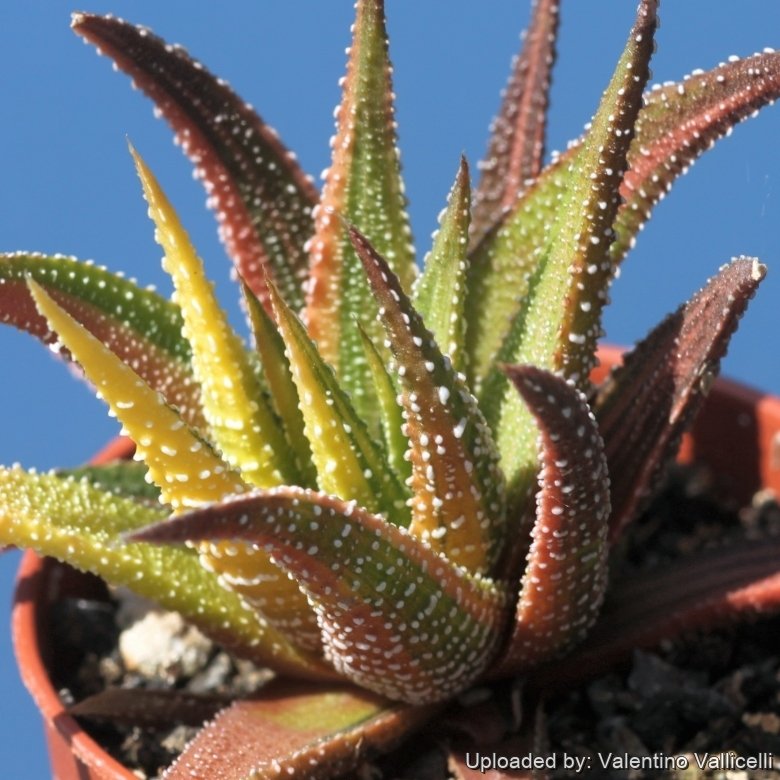
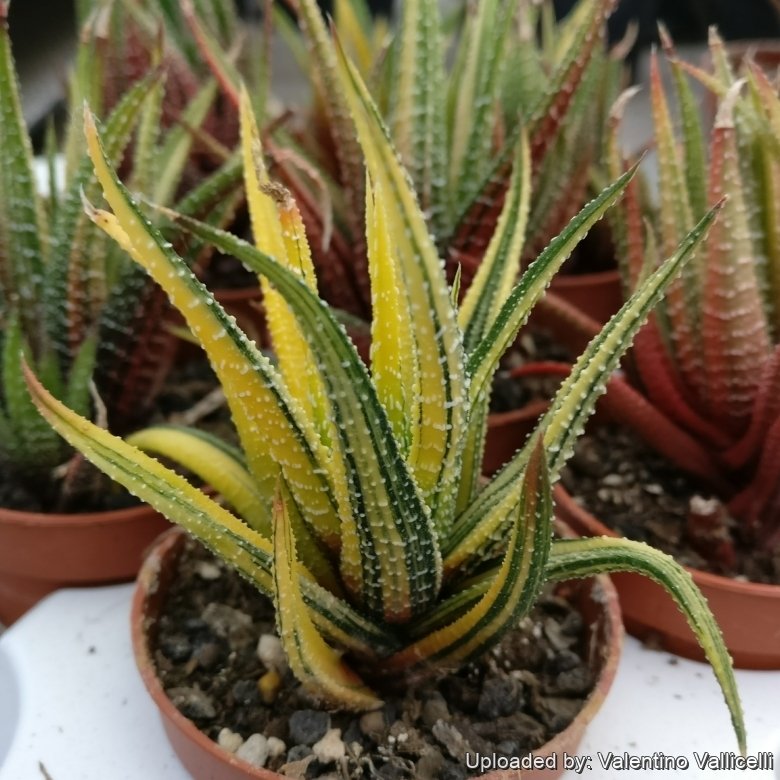
Variegated form (f. variegata): The plants are identical in shape to the standard species but have leaves variably striped with yellow or pink. There are several slightly different variegated clones.
Stem: Acaulescent.
Rosette: Flatly close to the soil up to 15 cm in diameter, forming clumps.
Leaves: About 7,5-8 cm long and 2 cm wide at base, erect, radiating, attenuate (tapering), green to brownish, variably striped with yellow or pink, very densely covered all over with minute white tubercles on both sides which are pretty much of the same size.
Inflorescence: Sparsely branched, lax, 24-30 cm tall.
Flowers: White with reddish-brown veins, flower-tube obcapitate. Tepals revolute.
Blooming season: November-December.
Origin and Habitat
Garden origin (Nursery produced cultivar).
Cultivation and Propagation
It is an easy plant that usually does not give many problems in cultivation. Needs light shade to filtered sun, but will redden with more light exposure. Regular water in summer, keep dryer in winter, needs good drainage It grows much better outdoors in spring and summer, it is also perfect for the bright windowsill. Grow it in light, fertile, well drained, moderate soils, with a slightly acidic pH (5-6). Avoid any frost.
Maintenance: Removal of old flower stalks; It is a suckering species, and one plant can eventually cover a large area. Divide the crowded clumps periodically. During the winter months, the plants should be grown cool to initiate flower development (about 5-10°C)
Propagation: Suckers, division of older plants.
Source: Haworthia radula f. variegata, LLIFLE - Encyclopedia of living forms, CC-BY-SA, retrieved 2026-10-25.
Gallery