Publication: Stapelieae (White & Sloane) ed. 2 1937 (nom. inval. , Art. 37.1)
Description
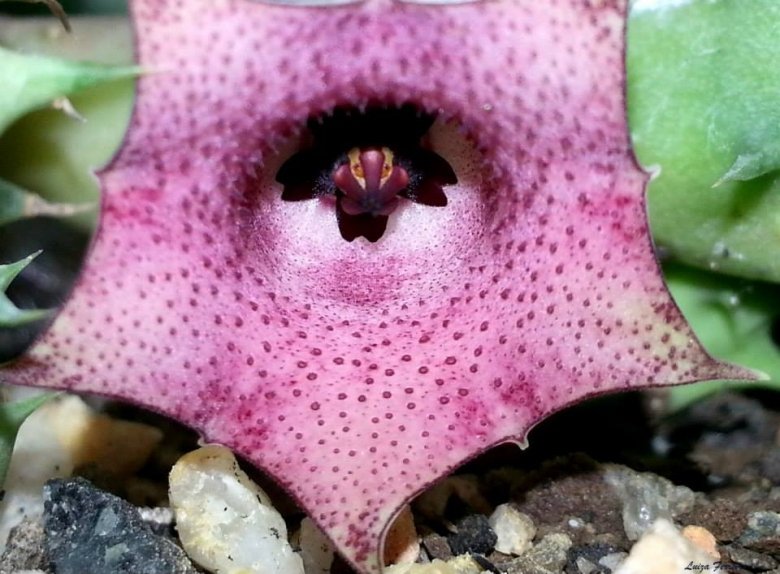
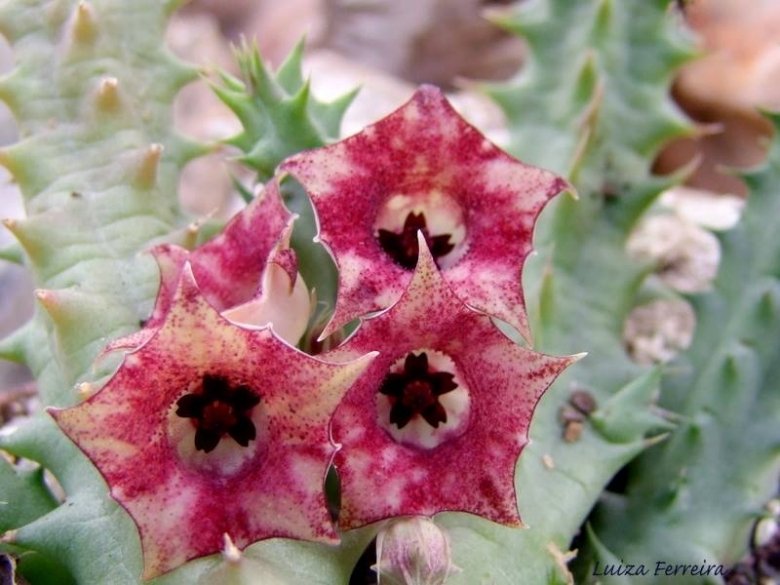
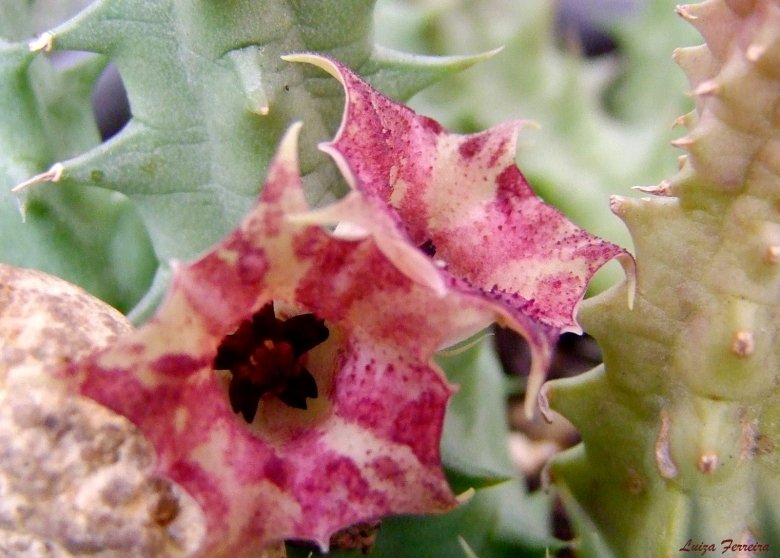
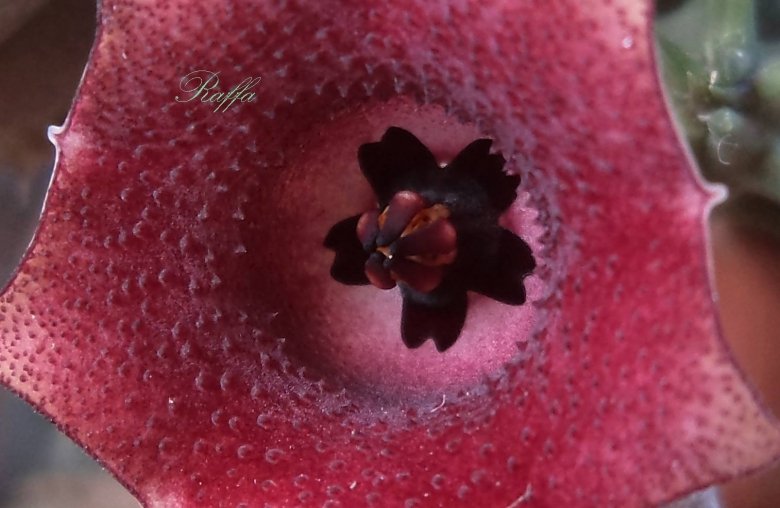
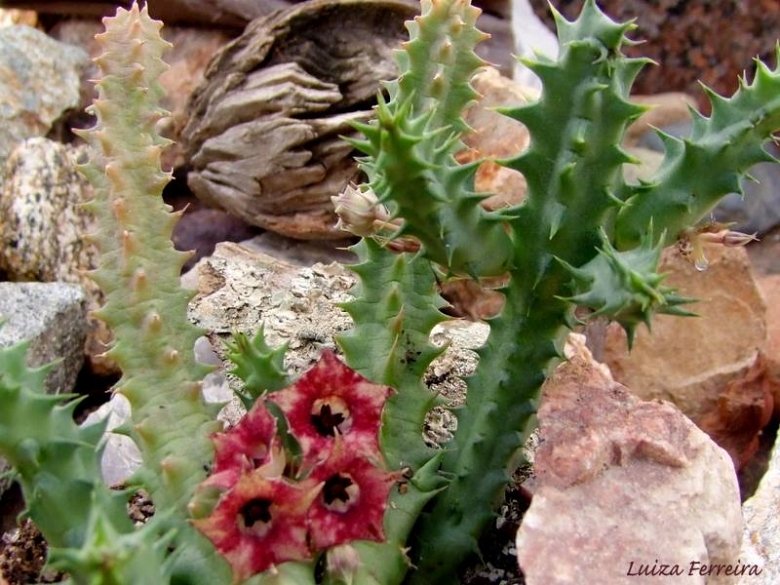
The Dragon Flower, Huernia macrocarpa var. cerasina, is a controversial form of the very variable Huernia macrocarpa, named for its faded cherry-red flowers (from Latin cerasum = cherry). A.C.White & B.Sloane 1937, mentioned the v. cerasina, without effectively publishing it, as there was no Latin diagnosis and no type designated, so botanically speaking this varietal name is invalid. Moreover the specimens still offered by growers as var. cerasina are not readily distinguishable from other pale cherry-red flowered Huernia macrocarpa, if not for the label.
Origin and Habitat
Unknown.
Cultivation and Propagation
Not difficult to grow. Huernia require moderately watering through the growing season but enjoy plenty of water and some fertiliser in hot weather, this helps them to flower freely. Water more sparingly in winter according to temperatures. But, as with most asclepiads, it is unwise to leave them wet in cold weather.
Frost Tolerance: It is usually recommended to overwinter them in warm conditions (at 10 deg) but despite the African origin they seem to grow well and flower without the extra heat which one might have thought necessary and occasional temperature near 0 deg. are tolerated if kept dry.
Potting medium: Since roots are quite shallow, use a cactus mix or add extra perlite or pumice to regular soil potting soil. A gritty, very free-draining compost is suitable, and clay pots help the plants to dry out between watering.
Pest and diseases: Huernia species vary in their susceptibility to rotting, but are generally fairly easy to grow, especially if kept pest-free. They are very susceptible to stem and root mealy bugs, and damage from these may well initiate fungal attack. If you do have problems with a stem or with basal rotting, you can reliably isolate the healthy parts, dry them off, and re-root them in moist compost.
Propagation: Easiest with stem cuttings. Allow cuttings to dry a day before planting. Stems must be laid (Not buried) on gritty compost and will then root from the underside of the stems. It can also be increased from seeds sowing in spring in moist, sandy peat moss. Barely cover seeds. Seeds germinate quickly.
Bibliography
Major refrerences and further lectures
-
A.C.White & B.Sloane “Stapelieae” ( White & Sloane) ed. 2 3: 855 Abbey San Encino Press, 1937
-
James Cullen, Sabina G. Knees, H. Suzanne Cubey “The European Garden Flora Flowering Plants: A Manual for the Identification of Plants Cultivated in Europe, Both Out-of-Doors and Under Glass” Cambridge University Press, 11/ago/2011
-
Focke Albers, Ulrich Meve “Illustrated Handbook of Succulent Plants: Asclepiadaceae” Volume 4 Springer, 2002
-
American Horticultural Society “The American Horticultural Society encyclopedia of garden plants” Macmillan, 30/November/1989
-
Wikipedia contributors. “Huernia macrocarpa.” Wikipedia, The Free Encyclopedia. Wikipedia, The Free Encyclopedia, 24 Oct. 2014. Web. 23 Jan. 2015.
Gallery