Publication: nom. inval.
Description
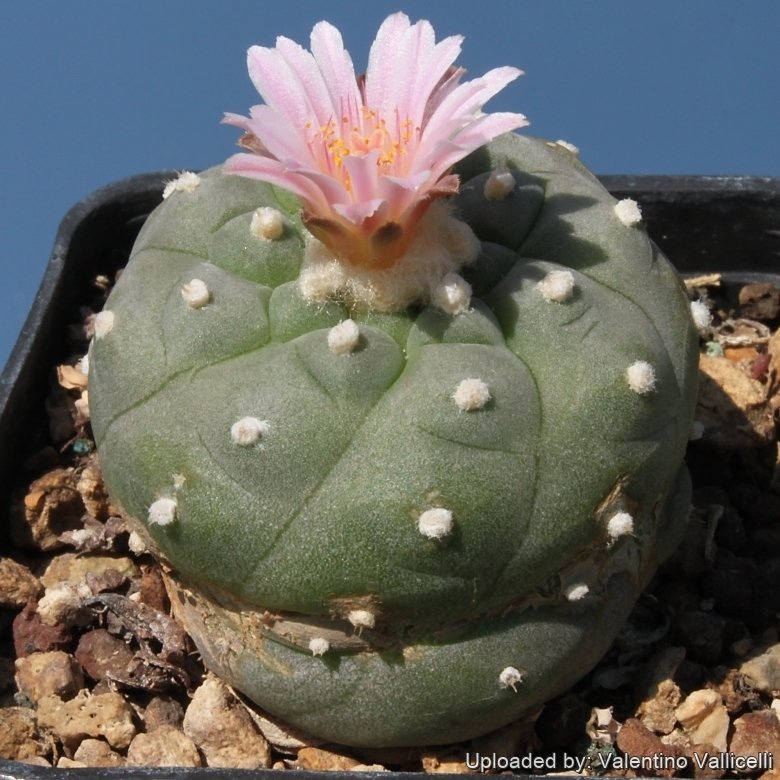
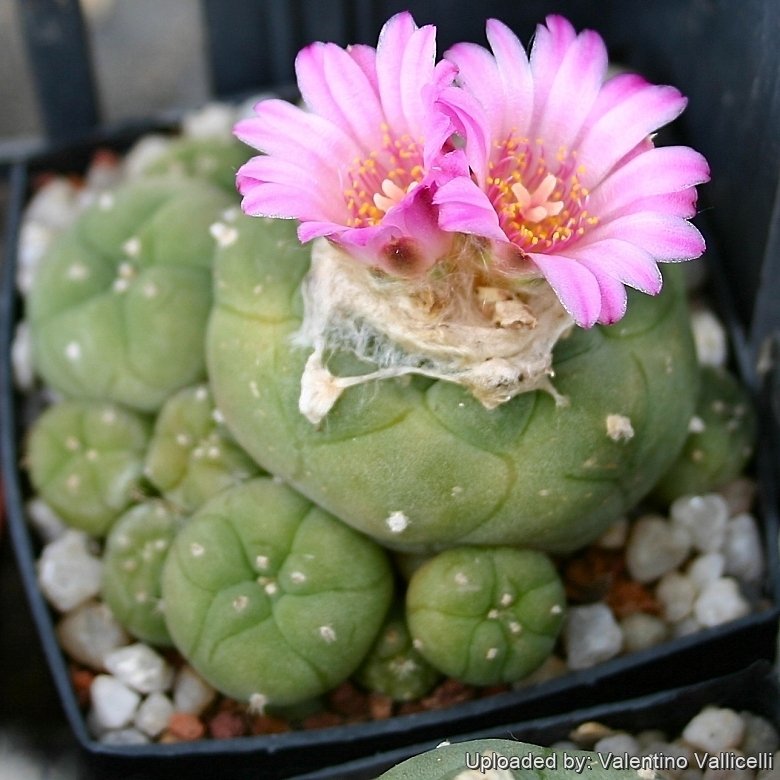
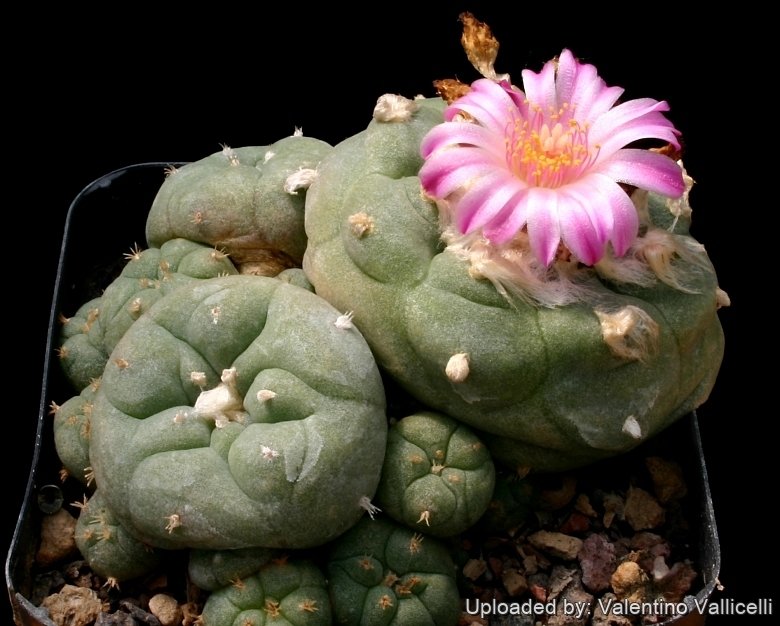
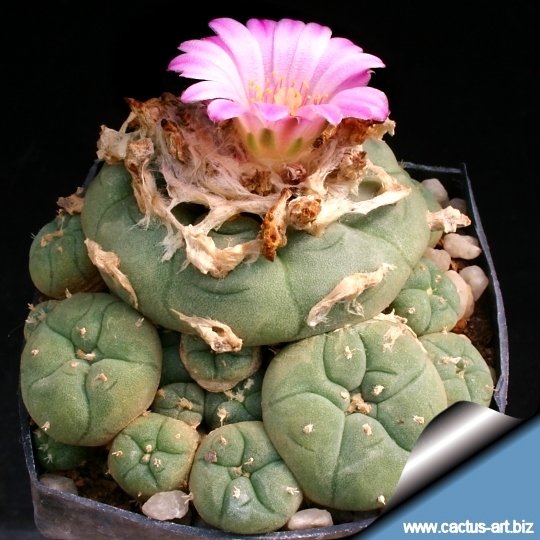
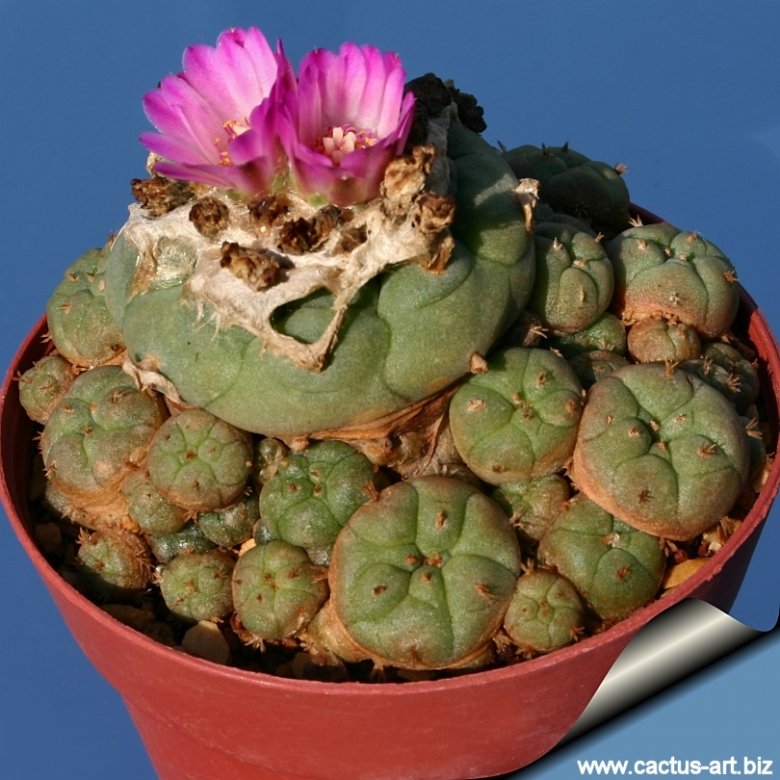
Lophophora jourdaniana is a clumping flattened cactus. Slowly forms small clumps up to 15cm in diameter.
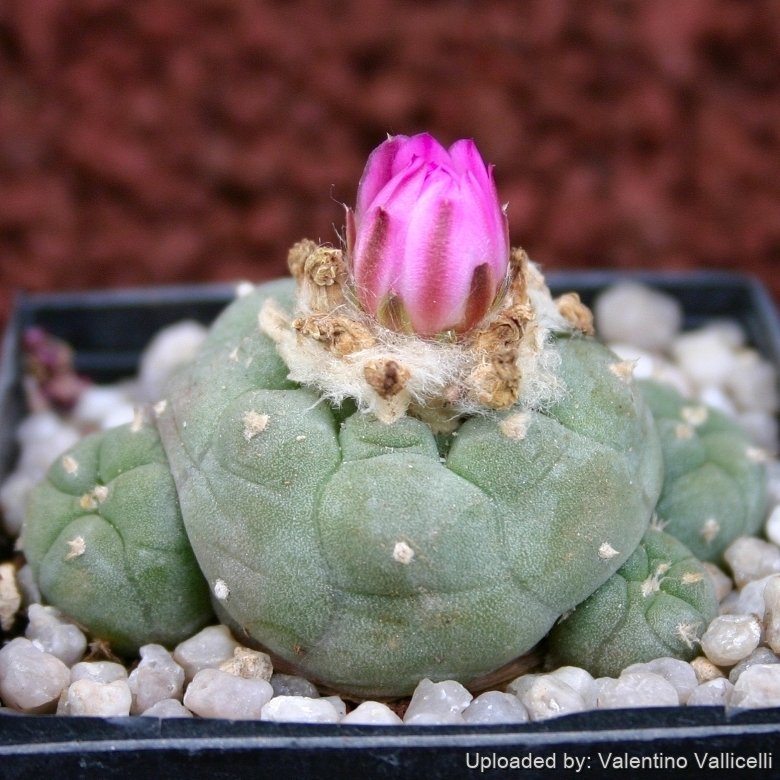
Stem: Glaucous green (but more darker green than L. williamsii) are up to 4 cm tall, 5 cm in diameter, with a woolly top.
Ribs: 5 to 9 (or more).
Areoles: With some bunches of greyish hairs, up to 1 cm long.
Spines: Small short, thin and long persisting on young areoles.
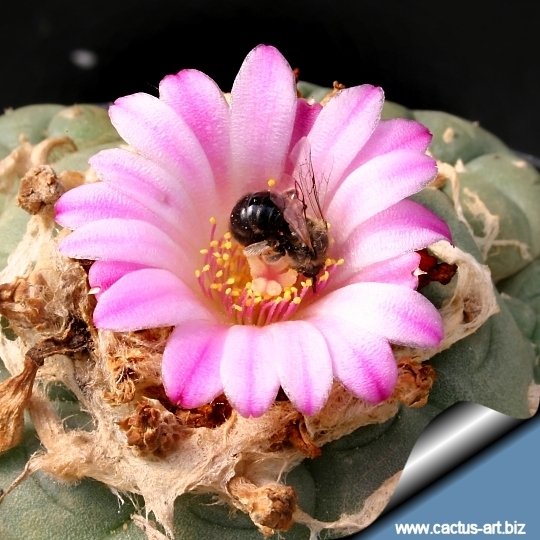
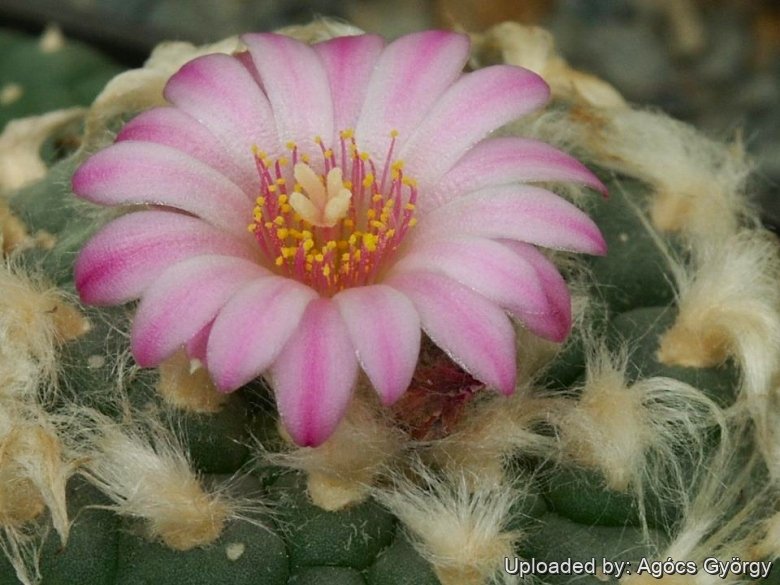
Flowers: 2,5-3,5 cm in diameter that emerge from the mass of hairs in the center of the plant. Perianth, pistil, and filaments rose-violet; The stamens are thigmotropic.
Origin and Habitat
Unknown (Perhaps it is a nursery produced cultivar)
Cultivation and Propagation
Slow growing. Because of the tap root they are very rot prone, so use highly gritty compost with much drainage. Requires half shade to part sun. Watering: waterings should be rather infrequent to keep the plant compact and not to become excessively elongated and unnatural in appearance, watering it properly is often difficult because this plant tends to crack open or rot if over-watered. The fact that the plant retracts into the soil and assume a grey-green colouring between watering, is perfectly natural and doesn’t cause any damage. Overwintering: Keep completely dry and cool in winter (An unheated greenhouse would be perfect) or when night temperatures remain below 10° C, it can survive low temperatures (appr. -7°C) for a short period. Assure a good ventilation.
Propagation: Easy to propagate from cuttings or grafting.
Notes
Some people suppose Lophophora jourdaniana may perhaps be an hybrid between Lophophora williamsii and Lophophora fricii.
Furthermore L. jourdaniana is called Lophophora williamsii var. jourdaniana by some other people. These same people labels Lophophora fricii as Lophophora williamsii var. fricii. This is incorrect because Lophophora fricii is not a variation of Lophophora williamsii, and also the breading of the two different species seems impossible, in fact the flowers are frequently cleistogame. It is not possible to fertilize Lophophora jourdaniana with the pollen of Lophophora williamsii, nor with the pollen of Lophophora diffusa and Lophophora fricii. Some websites say this species contain some mescaline, but at a much lower content than williamsii, some other say it don’t contain the alkaloid at all, because this plant is more related to diffusa than williamsii.
Gallery