Publication: Mammillaria Postscripts 6: 9 (1997), nom. nov. (Replaced synonym:Cactaceae Mammillaria ignota Repp.)
Description
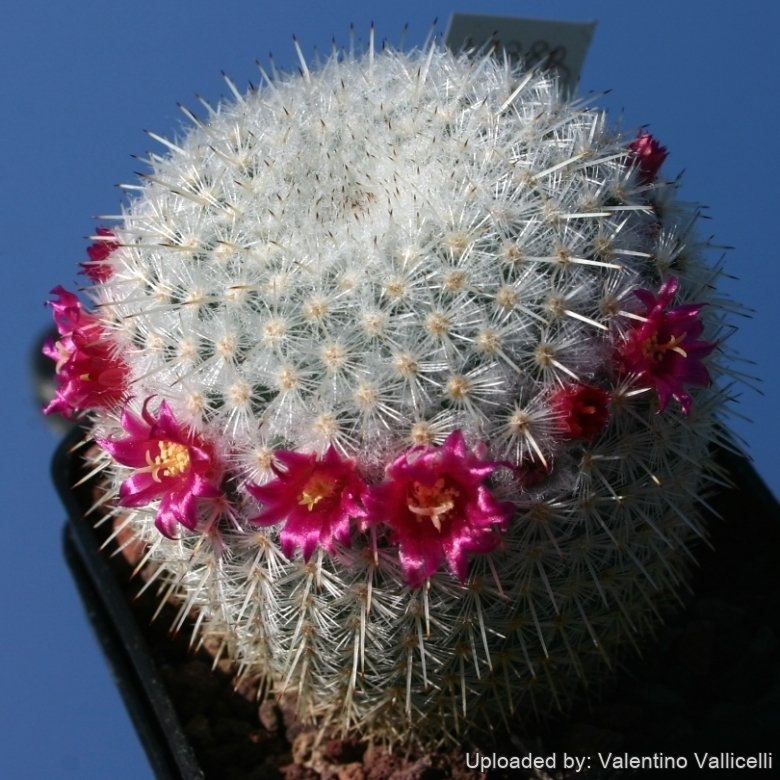
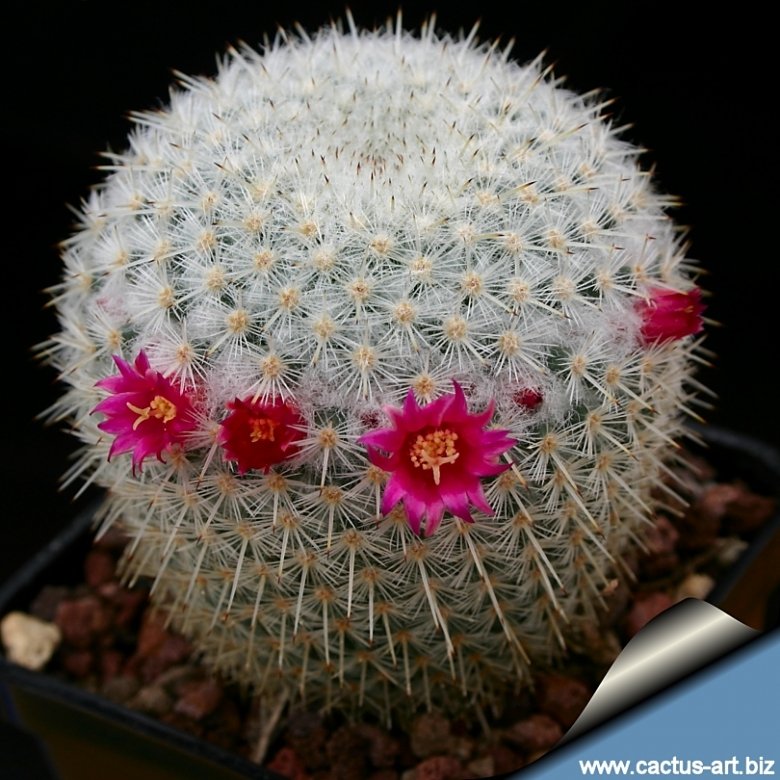
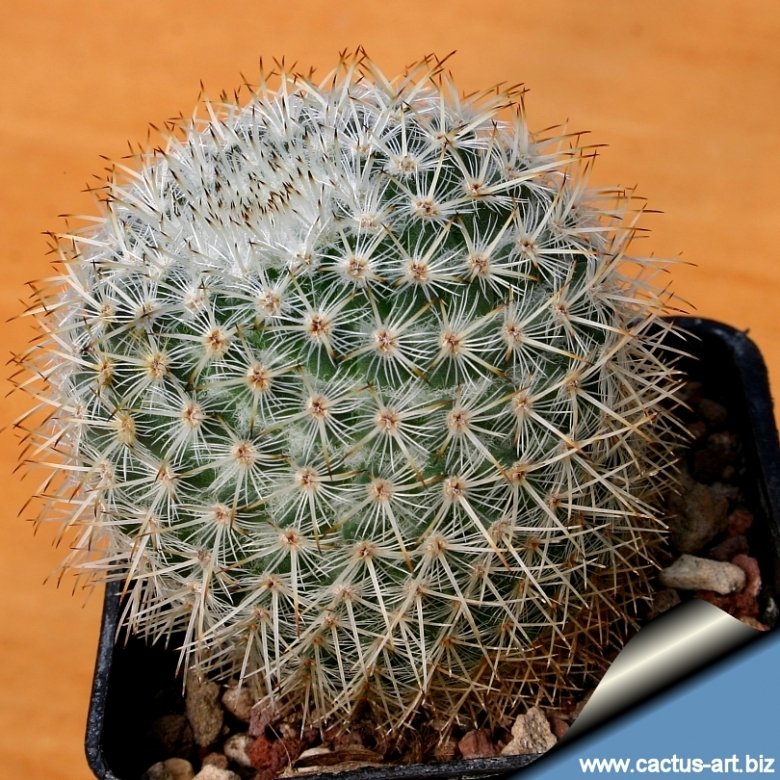
Mammillaria albilanata subs. oaxacana is a usually solitary cactus species, with flat stems. It protects itself from the sun by an extremely dense profusion of white spines and wool so that the epidermis is almost completely concealed.
Taxonomy note: Mammillaria albilanata subs. oaxacana is a new name proposed by Hunt (1997) which replaces M. ignota Repp. (1987), that is a homonym of another previously published name (M. ignota Lawrence in Loudon, 1841).
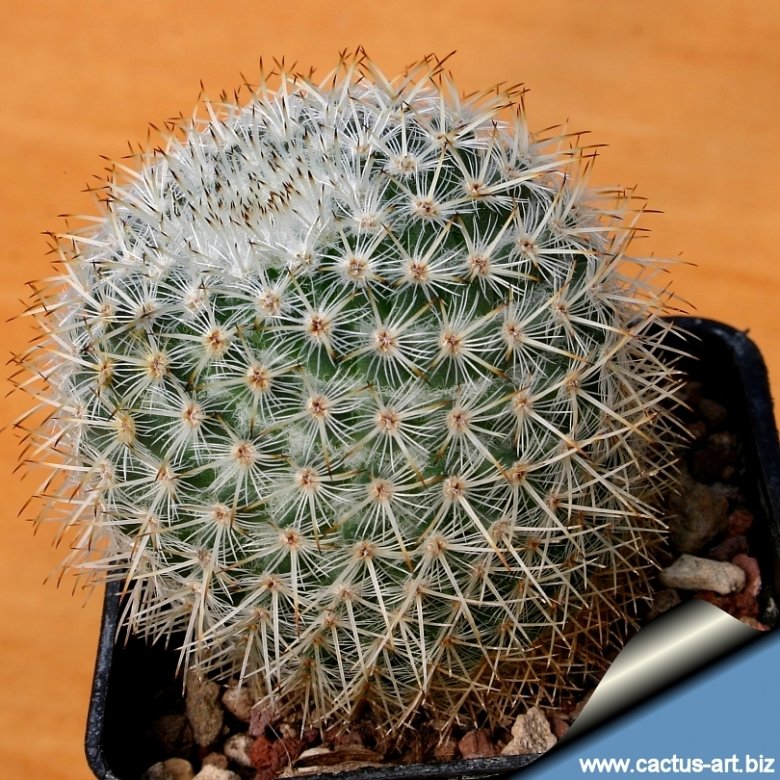
Stem: Simple, depressed globose to cylindrical, sunken apically, covered with spines and white wool, 3–7 cm high and 4–10 cm in diameter. With latex.
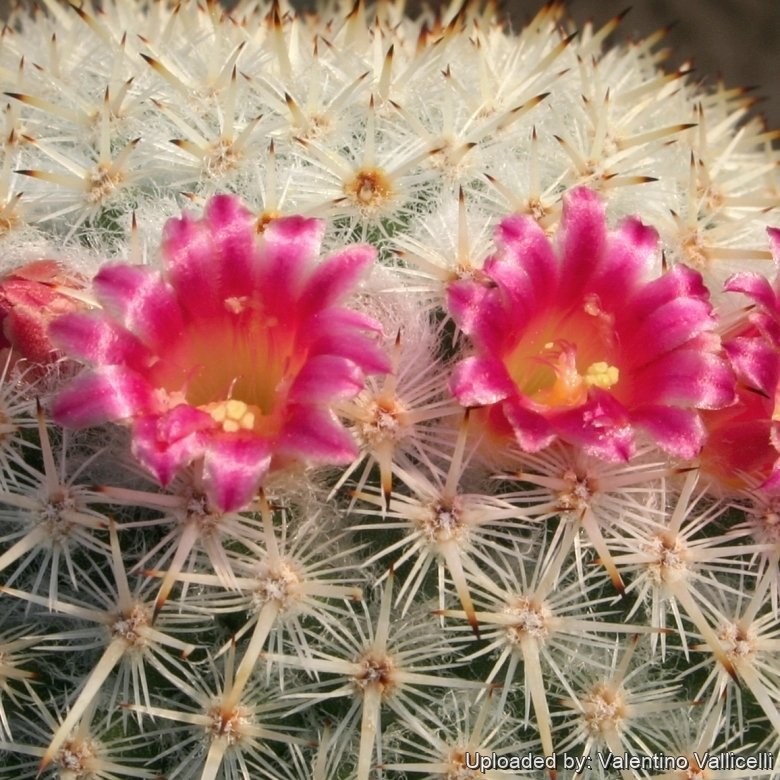
Tubercles: Tubercles are spirally arranged, short-conical to conical, firm, 8 - 10 mm long and 4-5 mm in diameter at base. Axil with abundant white wool.
Roots: Fibrous.
Radial spines: 20-22 (-27), needle-like, somewhat bristly, glassy white to white, smooth, straight, somewhat radiating, horizontal, 4 mm long.
Central spines: 1- 4(-6), mostly 4, needle-like, firmer than the radials, ascending,divergent, straight , rigid, non-uncinate, the lowest is the longest, 4-7 mm long, glassy white, white to yellowish with short brown tips.
Flowers: Funnel shaped carmine-pink, cherry red to pink, 12-18 mm long, stigmas greenish.
Blooming season: From early March to June.
Fruits: Red, ripens 6-8 months after flowering, 10-20 mm long and 3-4 mm in diameter.
Phenology: Flowering between February and May. Fruiting between May and July.
Origin and Habitat
Mammillaria albilanata subs. oaxacana is endemic of the Tehuacán-Cuicatlán Valley in the state of Oaxaca (Cuicatlán, Huajuapan, Nochixtlán, Teotitlán departments), Mexico.
Altitude range: 800-2550 metres above sea level.
Habitat and ecology: This species grows on limestone rocks, in humus soil between spare overgrowth in tropical deciduous forest, xerophilous scrub, oak )Quercus) forest, and secondary vegetation together with Ferocactus macrodiscus.
Cultivation and Propagation
Water regularly in summer, but do not over-water (Rot prone). Use a pot with good drainage and a very porous potting media. Keep dry in winter. Feed with a high potassium fertilizer in summer. It is quite frost resistant if kept dry, hardy as low as -5° C (some reports give it hardy to -12°C). Outside full sun or afternoon shade, inside it needs bright light, and some direct sun.
Propagation: Sow directly after last frost.
Bibliography
Major references and further lectures
-
Kakteen und andere Sukkulenten, Volume 56, 2005
-
Salvador Arias Montes, Susana Gama-López, L. Ulises Guzmán-Cruz “Flora del valle de Tehuacán-Cuicatlán: Cactaceae Juss”, Part 95, Universidad Nacional Autónoma de México, Instituto de Biología, 2012