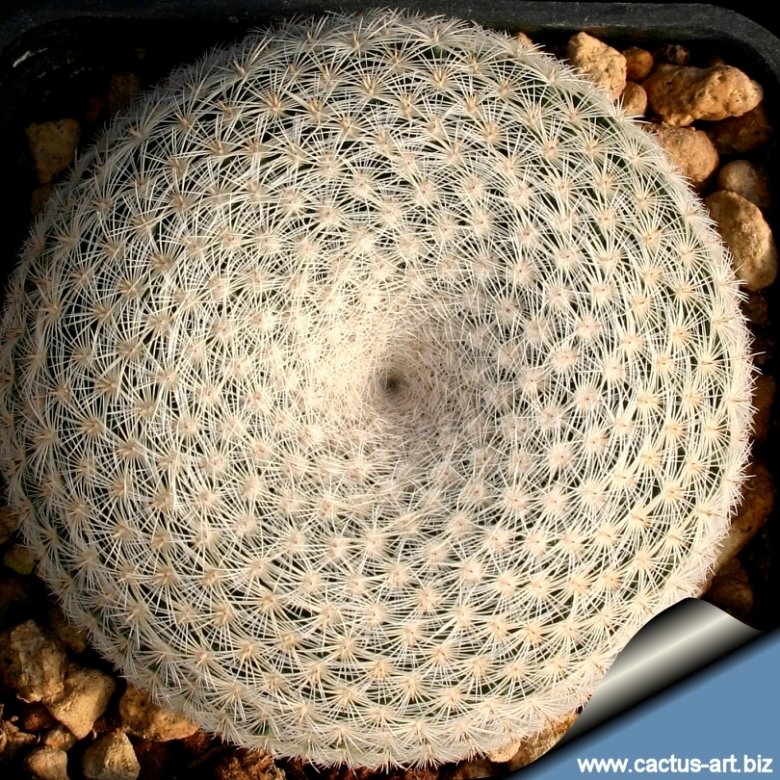
Publication: same as M. microthele var. superfina Schwarz Cat.: Mottram, 91
Description
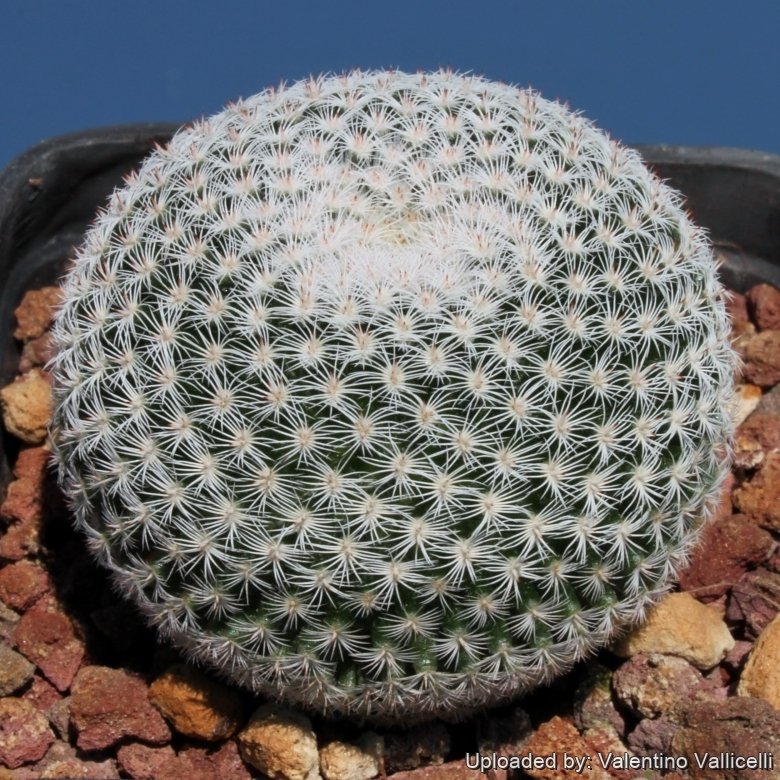
Slow-growing flattened plants, clumping with tight, short white spines, form low mounds in time
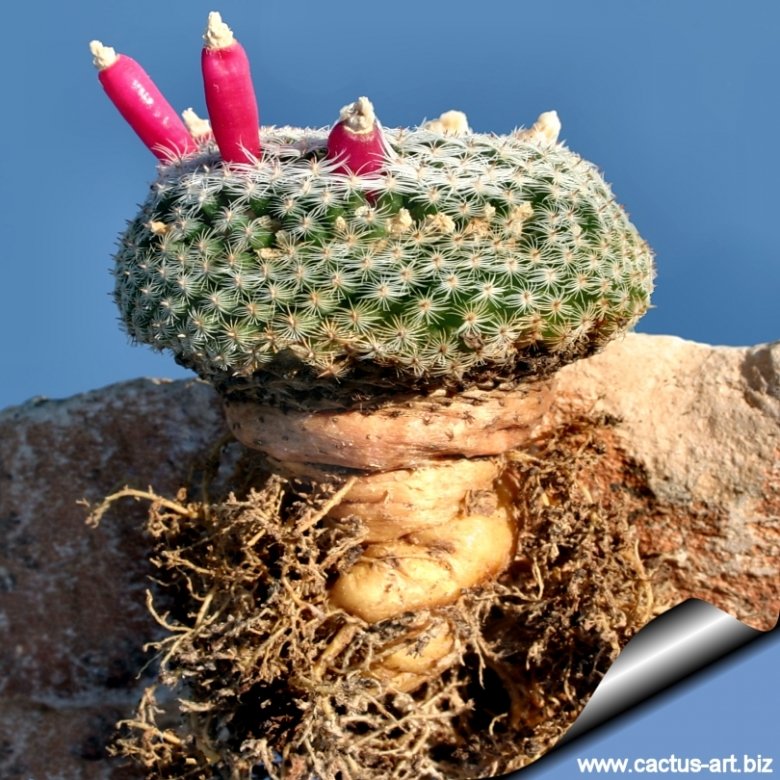
Stems: Almost discoidal to globose, apically depressed, dividing dichotomously, each stem are up to 6 cm in diameter.
Radial spines: 22 - 24 tiny, white and bristle-like that almost obscure the stem.
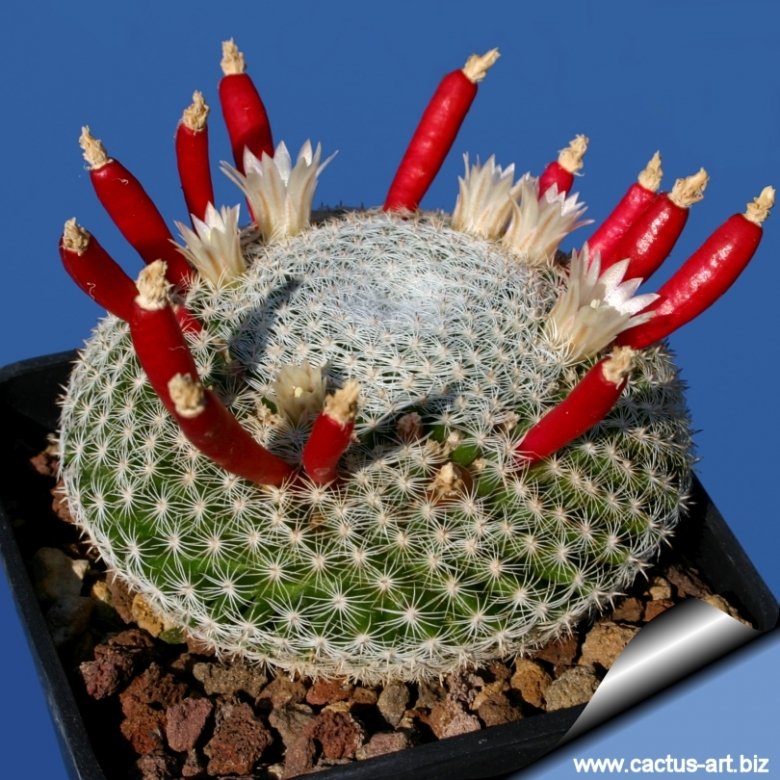
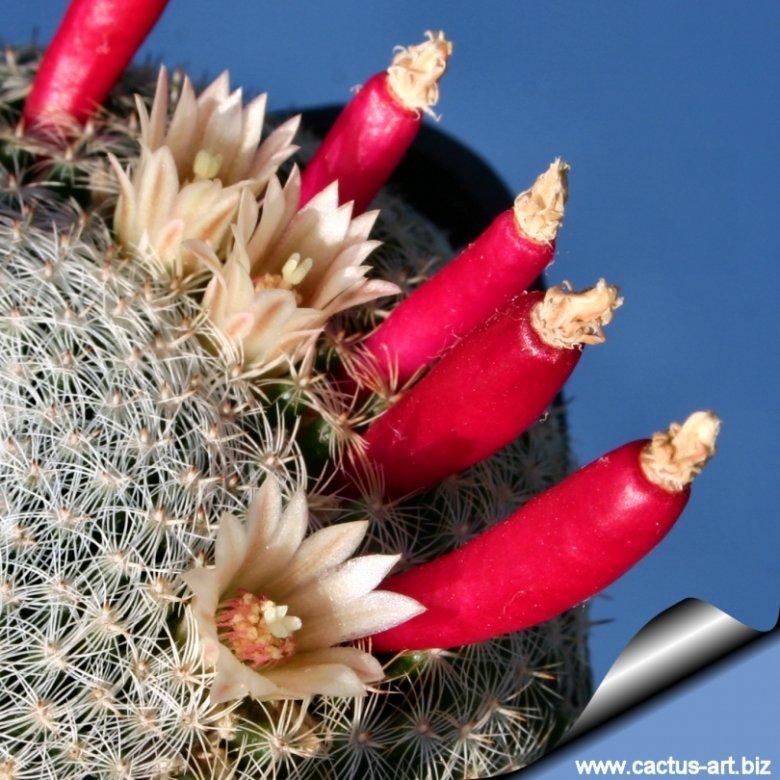
Flowers: Rings of small (5 mm) nearly pure white (Or with light pink midstipe ) are produced in spring over a several weeks period
Remarks: The so called “superfina” is a particular nice selected form with very small tubercles and spines.
Origin and Habitat
Mexico (Coahuila, San Luis Potosi, Tamaulipas).
Habitat: It is usually found in limestone slopes among shrubs of Agave lechuguilla and Hechtia glomerata. Altitude 1.000 - 2.200 m.
Cultivation and Propagation
Mammillaria formosa subs. microthele var. superfina is a slow growing species.
Soil: Use pot with good drainage and a very porous mineral-based potting mix.
Watering: Keep dry in winter. Pot plants are quite wet-sensitively. Care must be taken with watering (Rot prone) and needs good drainage. Water sparingly during the growing season, keep very dry in winter.
Fertilization: Feed with a high potassium fertilizer in summer.
Hardiness: Usually it is recommended to overwinter this plant in a bright and warm greenhouse with at least 8-10° C , but it proved to be quite frost resistant (if kept dry it hardy as low as -10° C)
Exposure: Outside full sun or afternoon shade, inside needs bright light, and some direct sun.
Propagation: Direct sow after last frost, cuttings (if available).
Notes
This is one of the Mammillaria commonly called “Owl Eye Cactus”, known for dichotomous branching (forking or dividing into two parts). Although dichotomous branching is not a common occurrence in cacti in general, it happens for some reason in this particular species. What is interesting about this cactus is that it began as a single head, one head became two, and so on. Other Owl Eye Cactus among others comprise Mammillaria karwnskiana, Mammillaria formosa, Mammillaria microthele and Mammillaria crucigera.
Bibliography
Major references and further lectures
-
David Hunt, Nigel Taylor “The New Cactus Lexicon” DH Books, 2006
-
John Pilbeam (1999) “Mammillaria The Cactus File Handbook” Nuffield Press.
-
Nathaniel Lord Britton, Joseph Nelson Rose “Cactaceae: Descriptions and Illustrations of Plants of the Cactus Family” vol. 4 The Carnegie Institution of Washington, Washington 1923
-
Stuart Max Walters “The European Garden Flora: Dicotyledons (Part I)” Cambridge University Press, 1989
-
Edward F. Anderson “The Cactus Family” Timber Press, 2001
-
Fitz Maurice, B, Fitz Maurice, W.A., Hernández, H.M., Sotomayor, M. & Smith, M. 2013. Mammillaria formosa. In: IUCN 2013. “IUCN Red List of Threatened Species.” Version 2013.2. <www.iucnredlist.org>. Downloaded on 01 January 2014.
Gallery