Publication: Bull. Acad. Roy. Sci. Bruxelles v. (1838) 497 [et: Allg. Gartenzeitung (Otto & Dietrich) 12: 186. 1844 ]
Description
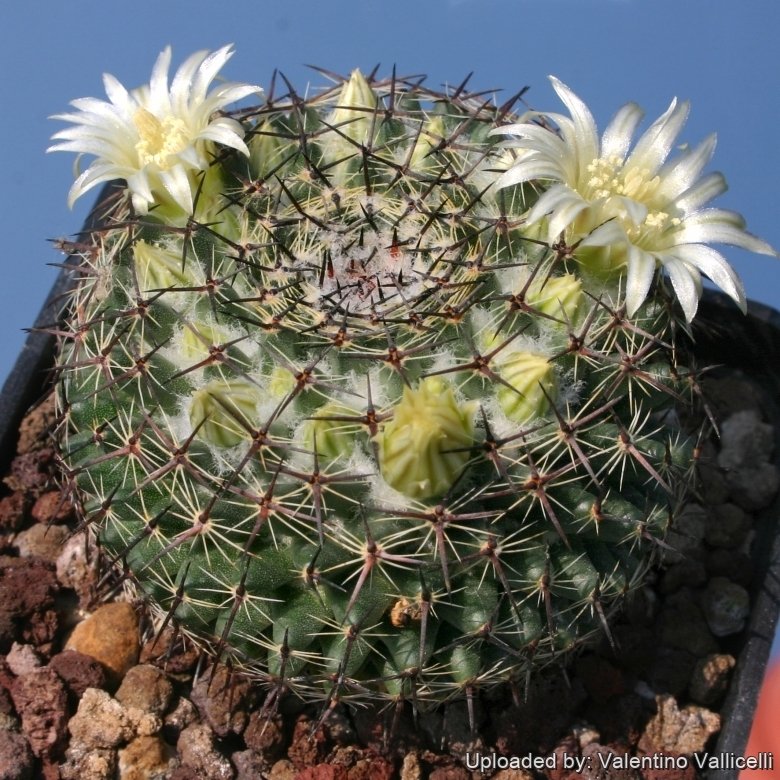
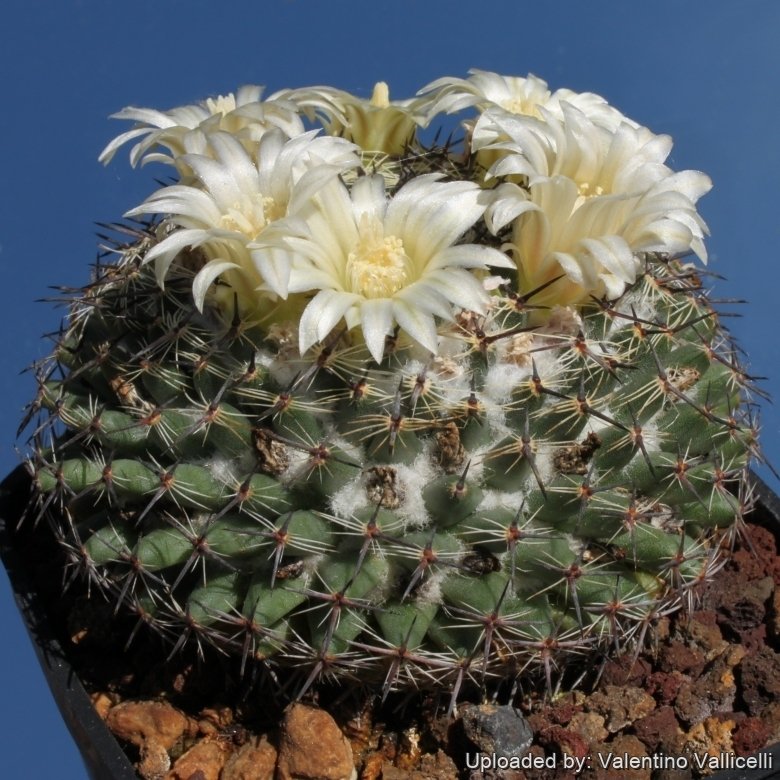
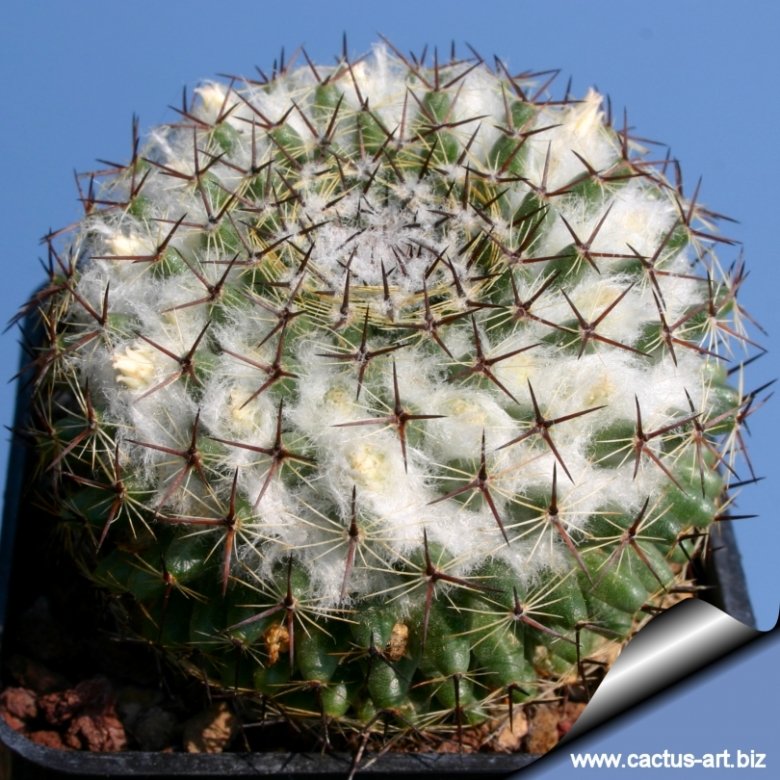
Mammillaria formosa is a solitary cactus, that ramifies dichotomously with age (occasionally branches also by basal shoots). Given enough time, it will form mounds. Old plants with lots of branching are treasures. This plant variation is huge, the spine length, the wool covering and appearance varies from clone to clone. This species currently comprises four subspecies, the nominate form, subsp. chionocephala (J.A.Purpus) D.R.Hunt, microthele (Muehlenpf.) D.R.Hunt and pseudocrucigera (R.T.Craig) D.R.Hunt. Some people consider Mammillaria formosa subs. chionocephala and Mammillaria formosa subs. microthele to be good species.
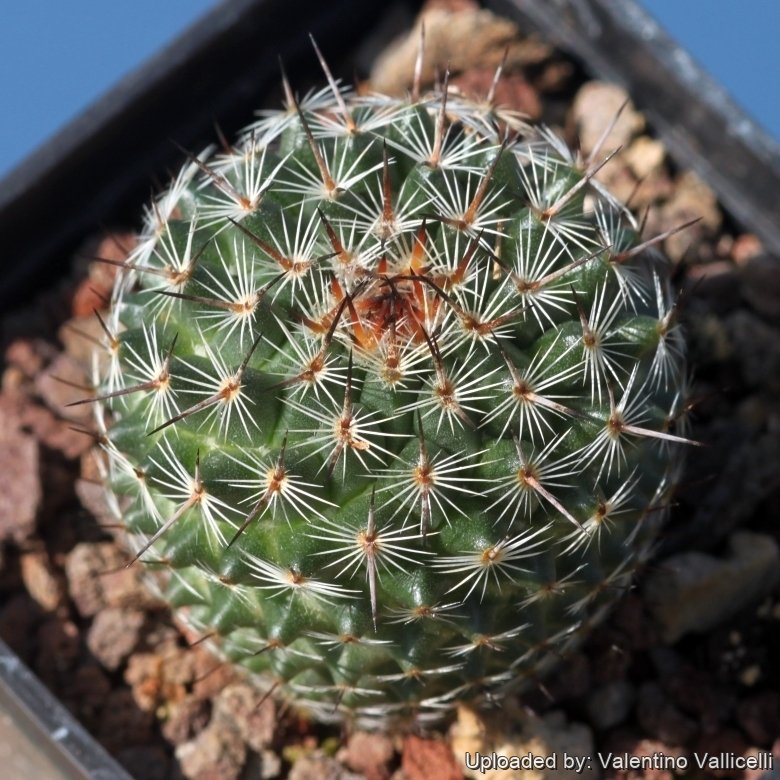
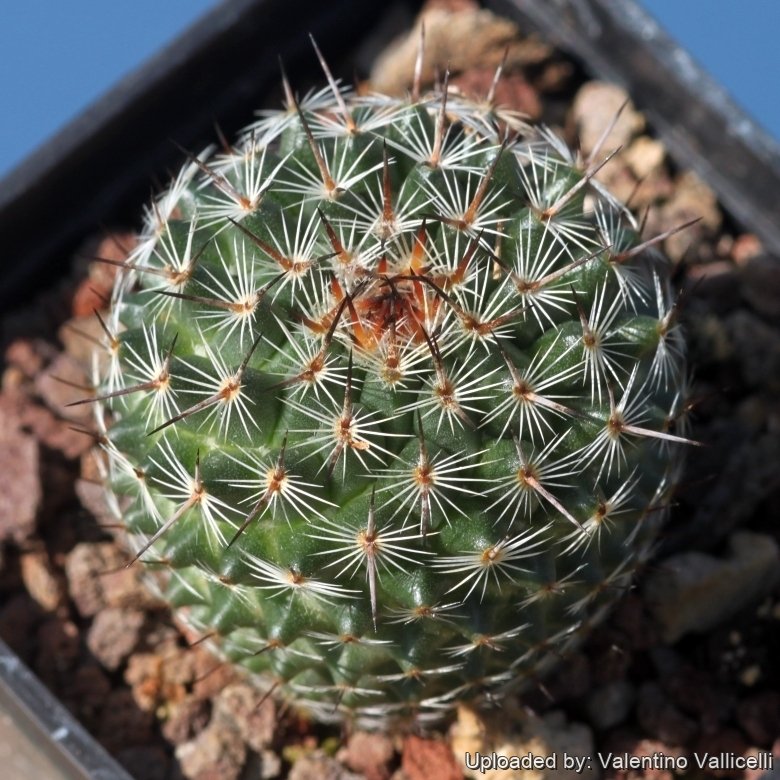
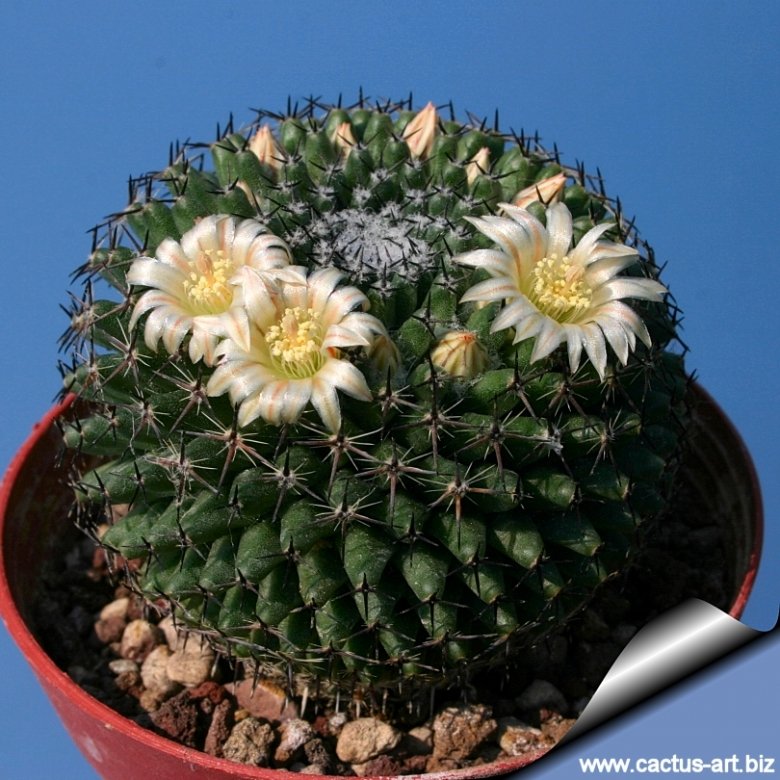
Stem: Symmetrically globose at first, later cylindrical, with a depressed apex, 5 - 20 cm high, up to 10 (or more) cm in diameter. Light green,and may, with age, become rubberized at its base.
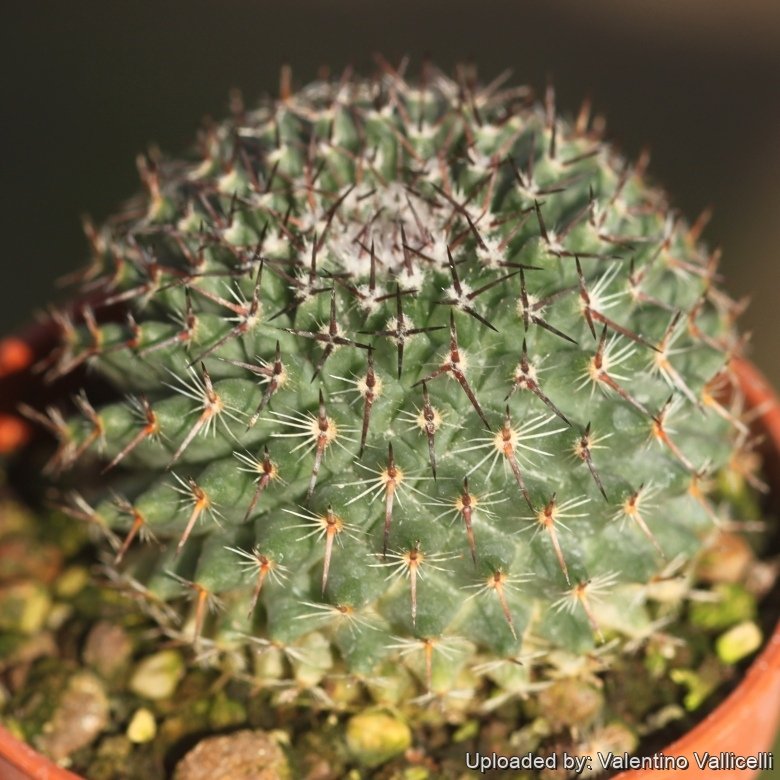
Tubercles: Crowded, pyramidal, with latex, arranged in numerous, very close-set spirals. The Axil is woolly with white wool especially in the floriferous portion.
Areoles: Oval and woolly when young.
Roots: Fibrous.
Radial spines: 20 - 22, sometimes absent, thin, needle- or bristle-like, sometimes flattened, somewhat horizontal radiating and arranged laterally on each side of the tubercle, white, 3 - 6 mm long.
Central spines: 4 - 7, usually 6, pinkish to brown with darker tips, to 8 mm long.
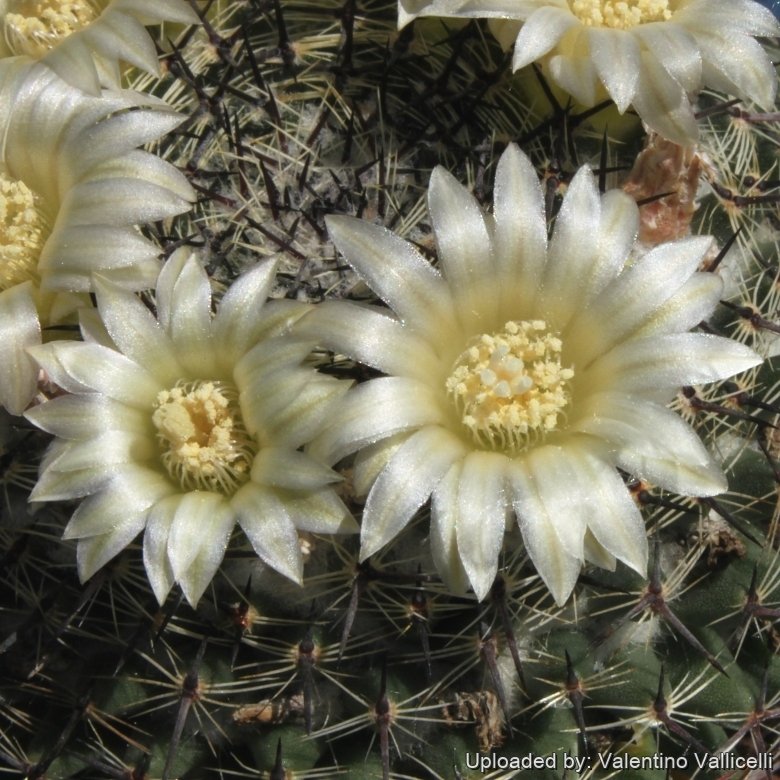
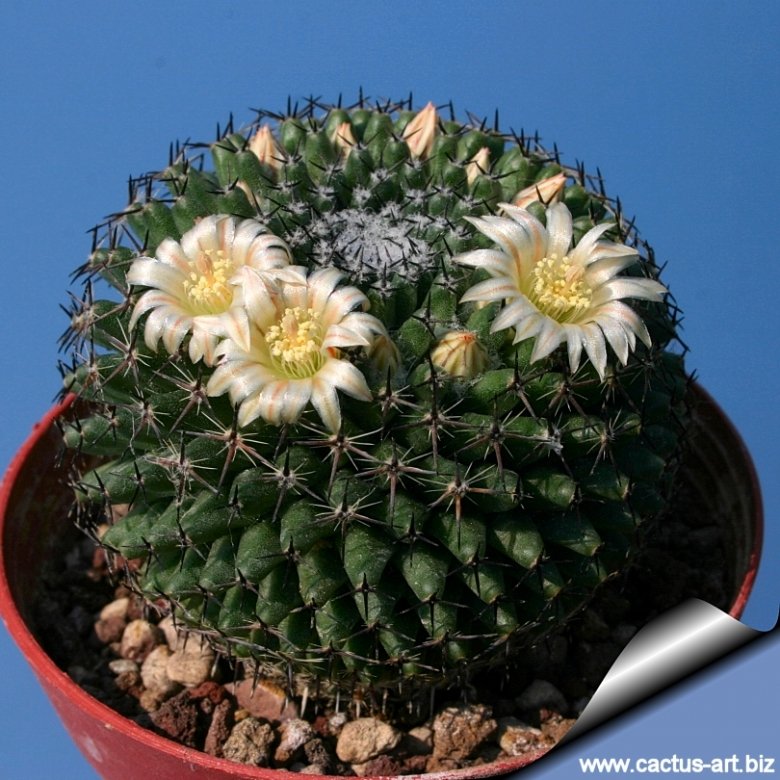
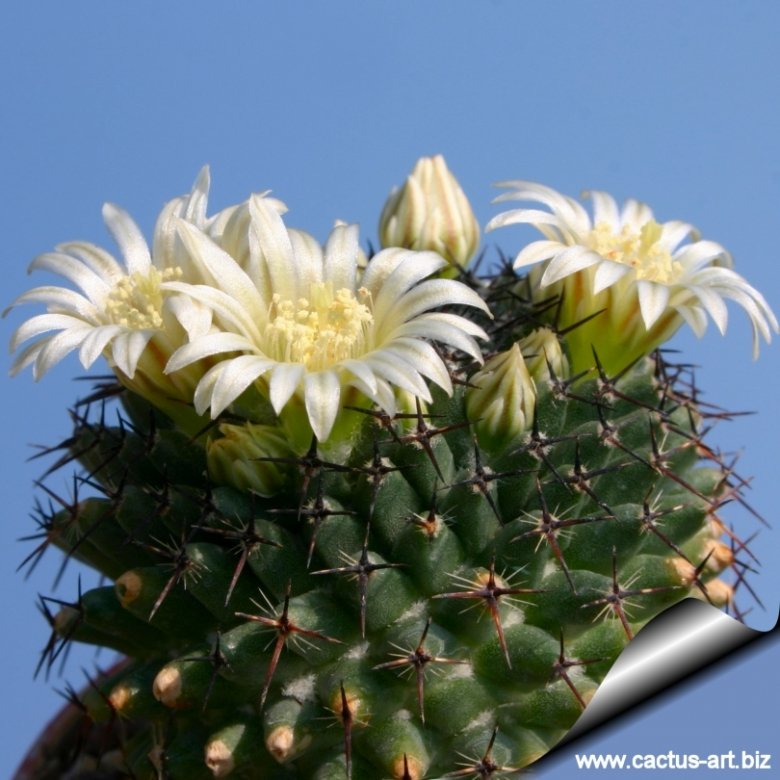
Flowesr: Diurnal, funnel-form, dull white to light pink about 10 - 15 cm in diameter. Blooms adorn the crown of the plant, usually in a ring, in the growth of the previous year.
Blooming seson: Spring to summer.
Fruits: Attractively deep dull pinkish-red coloured .Club-shaped.
Seeds: Light brown.
Remarks: This is one of the Mammillaria commonly called “Owl Eye Cactus”, known for dichotomous branching (forking or dividing into two parts). Although dichotomous branching is not a common occurrence in cacti in general, it happens for some reason in this particular species. What is interesting about this cactus is that it began as a single head, and it has now divided twice, forming what will be four separate branches. When the division process started, it was obvious that four heads would appear, but I don’t think the one head divided quadruply. Most probably, one head became two, and then those two immediately divided.
Other Owl Eye Cactus among others compriseMammillaria karwnskiana, Mammillaria microthele, Mammillaria tlalocii and Mammillaria perbella.
Origin and Habitat
Mammillaria formosa is a very widespread and abundant in Mexico in the states of Coahuila, Aguascalientes, Guanajuato, Zacatecas, Tamaulipas, Nuevo Leon and San Luis Potosi.
Altitude: 960-2350 metres above sea level.
Habitat and Ecology: This cactus grows under bushes in xerophytic shrubland, on hills and plains together with Echinocereus pectinatus, Echinocereus stramineus, Mammillaria pilispina, Mammillaria aureilanata, Ariocarpus kotschoubeyanus, Leuchtenbergia principis, Neolloydia matehualensis, Lophophora williamsii, Turbinicarpus klinkerianus, Coryphantha radians, Thelocactus hexaedrophorus,Echinocactus platyacanthus, Ferocactus latispinus, Ferocactus stainesii, Ferocactus histrix, Myrtillocactus geometrizans, Opuntia rastrera, Opuntia imbricacta, Agave lechuguilla, and Agave salmiana. Overgrazing of the habitat by goats is the only threat, but this is not having any real impact on the species. Mammillaria formosa is a very widespread and abundant species with no major threats, but there are some concerns about subspecies pseudocrucigera, which appears to be scarcer than the others.
Cultivation and Propagation
It is easy to cultivate and make interesting specimens for any collection, and over time (in 12-15 years) it will form enormous colonies up to 50 cm or more in diameter! It grows by dichotomously dividing, and also by producing offsets, and doesn’t require any special treatment, except for the need for frequent transplanting, in order to manage its exuberance. It needs as much light as possible without burning the plant, to keep the stems compact. Provide a well-drained soil mix. Water well and then allow to dry thoroughly before watering again during the growing season. It doesn’t like much, if any, winter water, but can survive short exposures to freezing temperatures (-4° C.) if properly hardened off and kept dry.
Propagation: It is best propagated from seed. Seed readily germinates at 20°-22°C, or by offsets if available. The white wool between the areoles makes this species a pleasure to look at and grow, but the diversity among individual specimens is considerable and the best plants have abundant white axillary wool. Hence, it is worth raising a batch of seedlings and selecting one or two that have the most wool.
Notes
At a first glance some forms of Mammillaria formosa may be confused with Mammillaria sempervivi, but it is not so difficult to distinguish, especially when in flower. Mammillaria sempervivi has very few radial spines and they soon drop off, leaving just 1 or 2 central spines. The flowers also are quite definitely yellow. Mammillaria formosa and its various forms, usually have persistent radial spines, usually 2 to 6 central spines, and pale pink to white flowers. The only plant that differs is Mammillaria sempervivi, often stated to be a form of Mammillaria sempervivi, but this has pink striped flowers, though its spines are more like the proper sempervivi. Pilbeam says that ssp. pseudocrucigera is the link between formosa and sempervivi.
Bibliography
Major references and further lectures
-
Fitz Maurice, B, Fitz Maurice, W.A., Hernández, H.M., Sotomayor, M. & Smith, M. 2013. Mammillaria formosa. The IUCN Red List of Threatened Species. Version 2014.3. <www.iucnredlist.org>. Downloaded on 30 April 2015.
-
David Hunt, Nigel Taylor “The New Cactus Lexicon” DH Books, 2006
-
John Pilbeam (1999) “Mammillaria The Cactus File Handbook” Nuffield Press.
-
Nathaniel Lord Britton, Joseph Nelson Rose “Cactaceae: Descriptions and Illustrations of Plants of the Cactus Family” vol. 4 The Carnegie Institution of Washington, Washington 1923
-
Edward F. Anderson “The Cactus Family” Timber Press, 2001
-
James Cullen, Sabina G. Knees, H. Suzanne Cubey “The European Garden Flora Flowering Plants: A Manual for the Identification of Plants Cultivated in Europe, Both Out-of-Doors and Under Glass”Cambridge University Press, 11/ago/2011
-
John Pilbeam (1999) “Mammillaria The Cactus File Handbook” Nuffield Press.
Cultivars and forms (5)
Gallery