Publication: Cactaceae Syst. Init. 20: 21. 2005 [Nov 2005]
Description
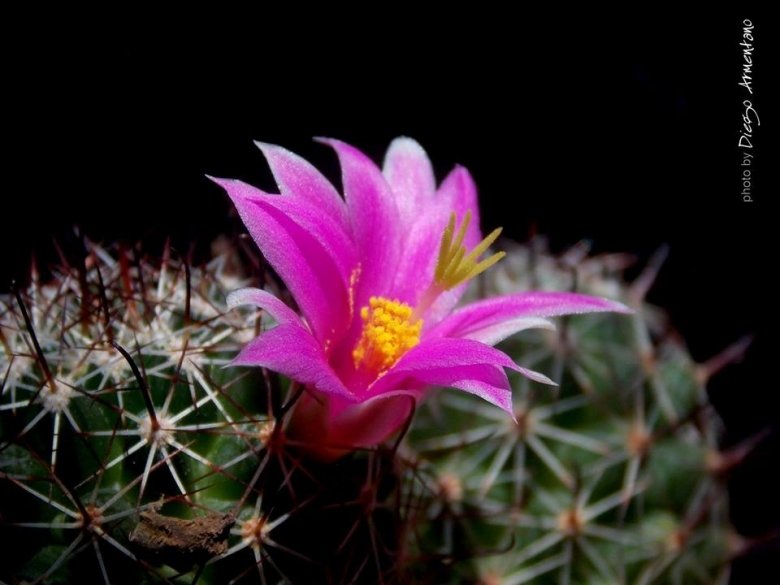
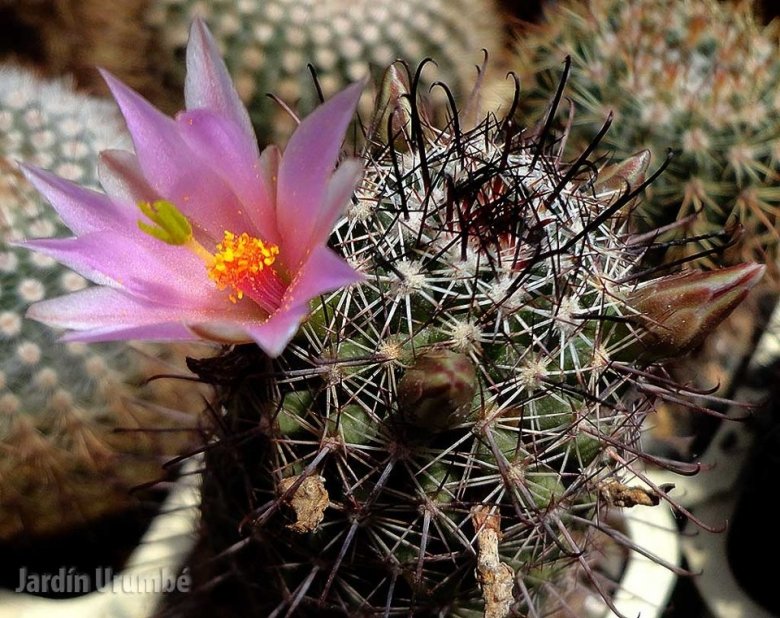
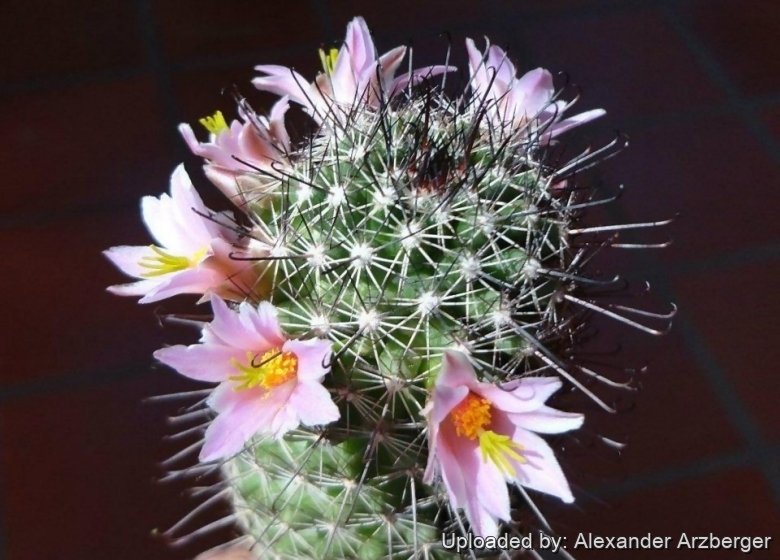
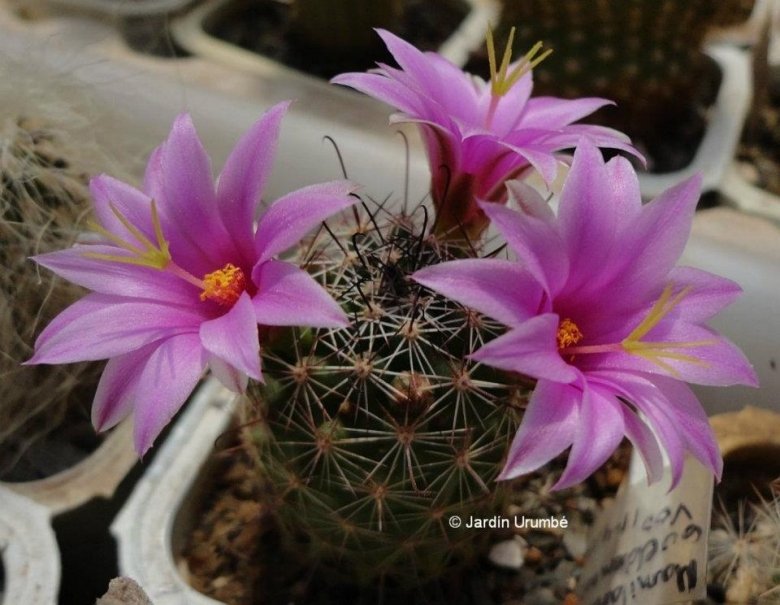
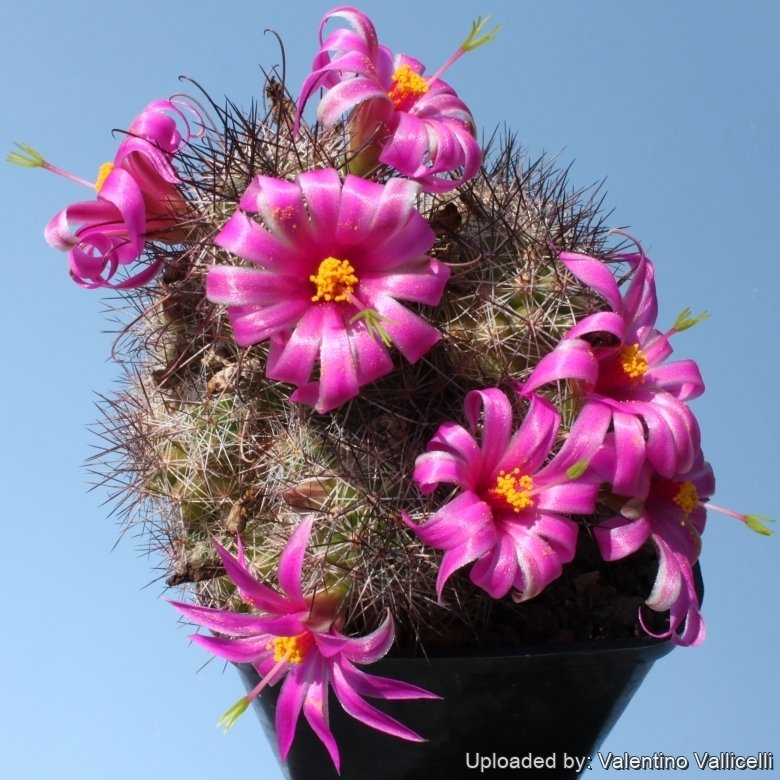
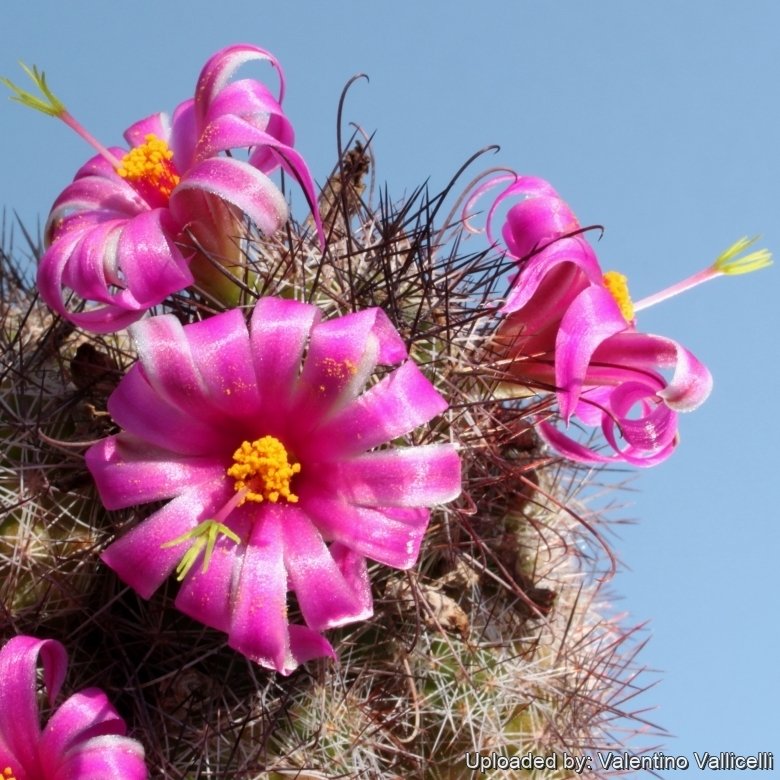
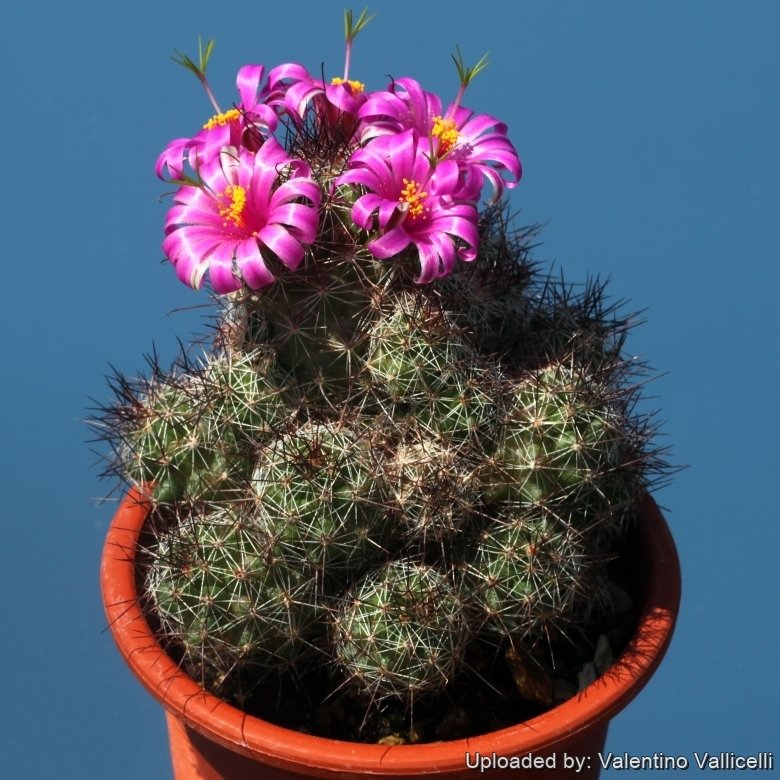
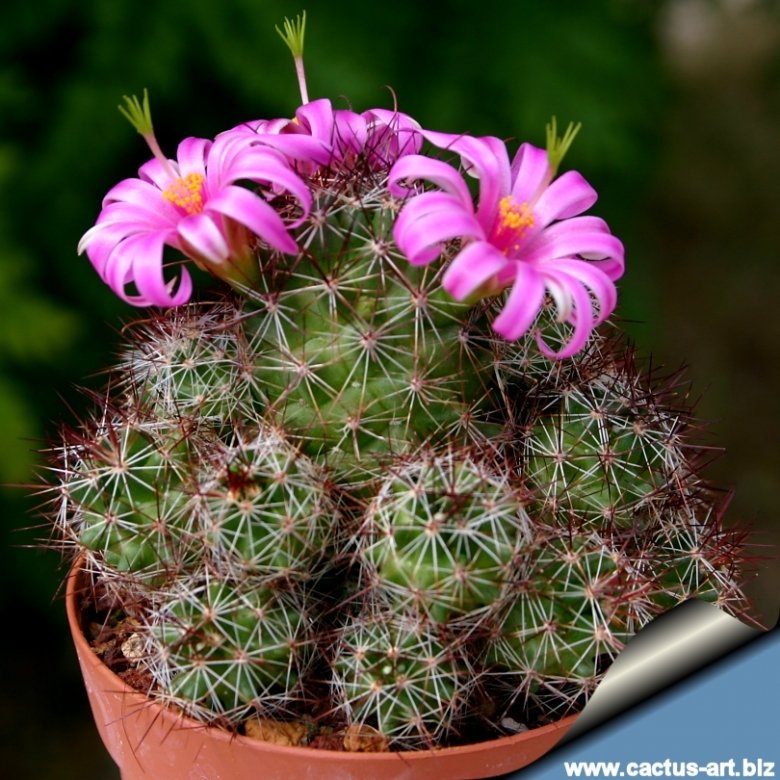
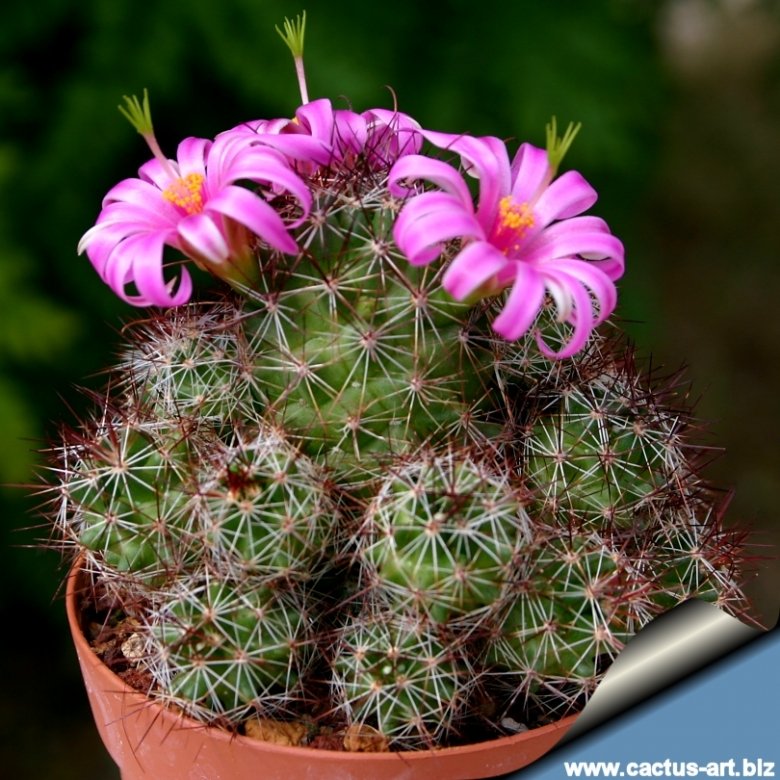
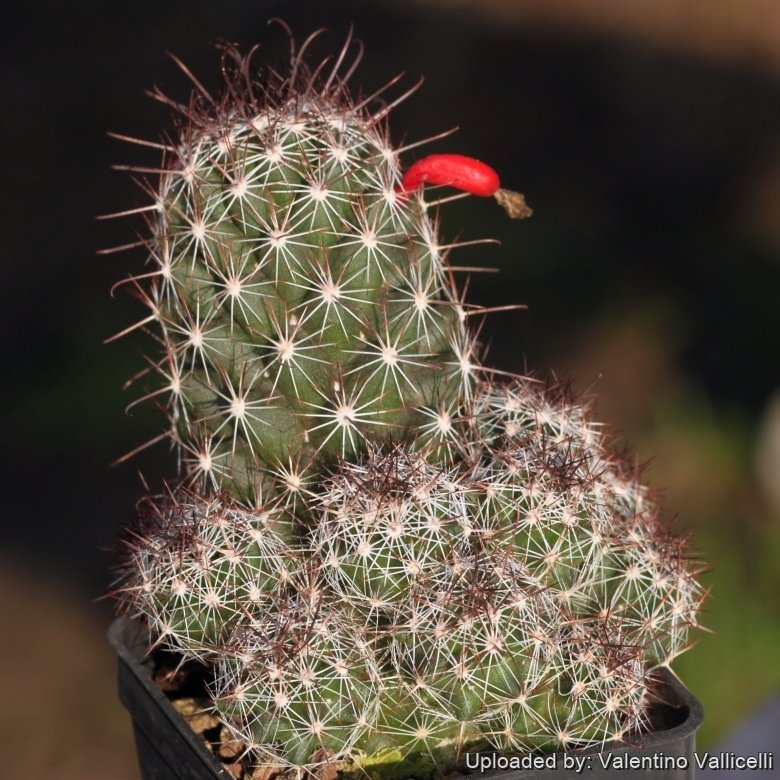
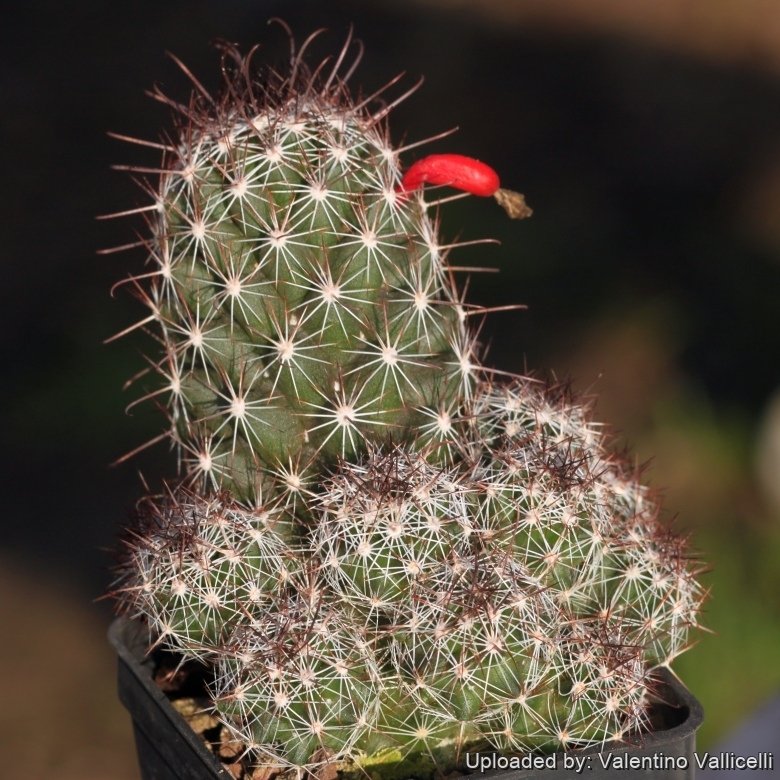
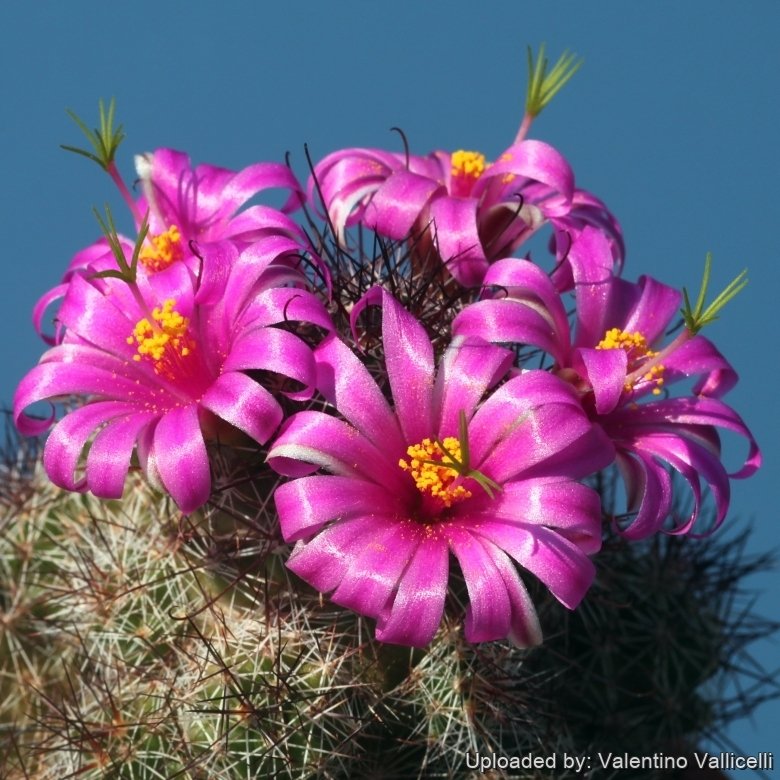
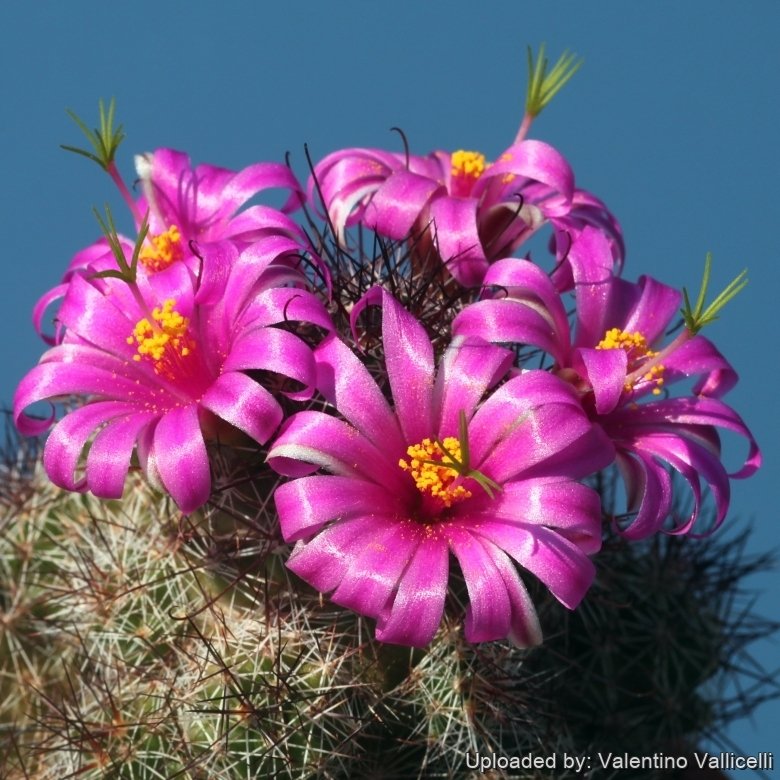
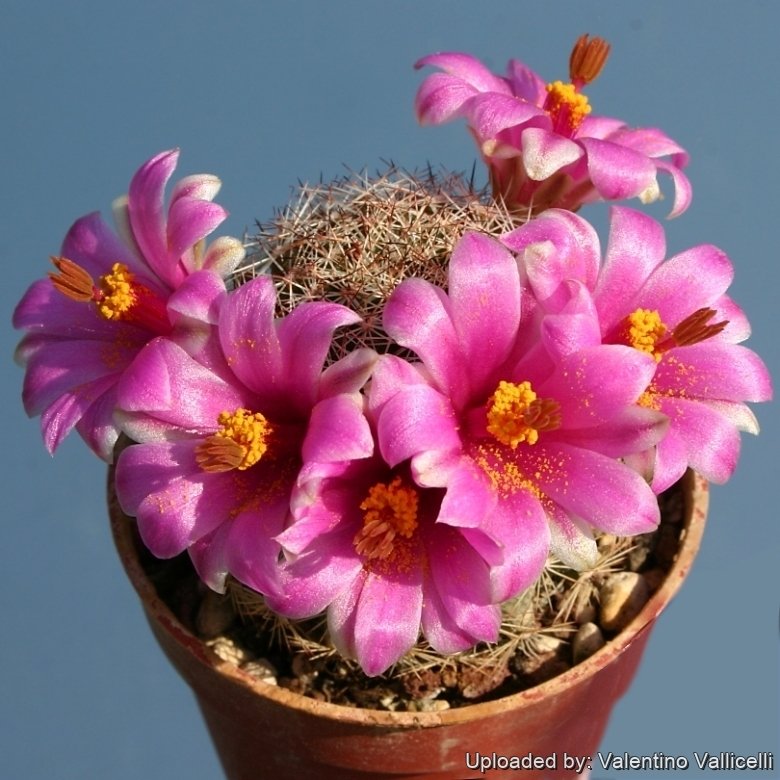
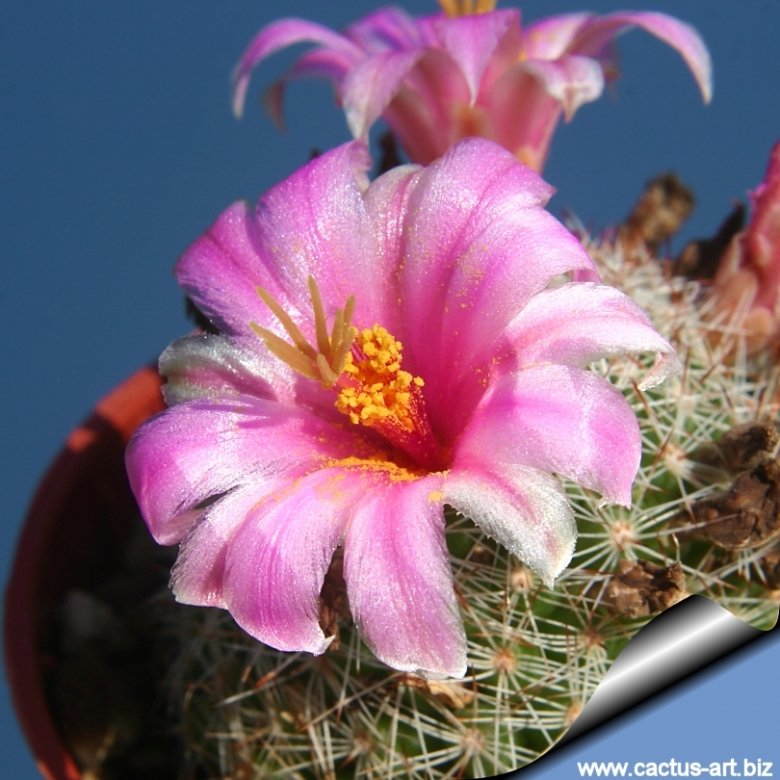
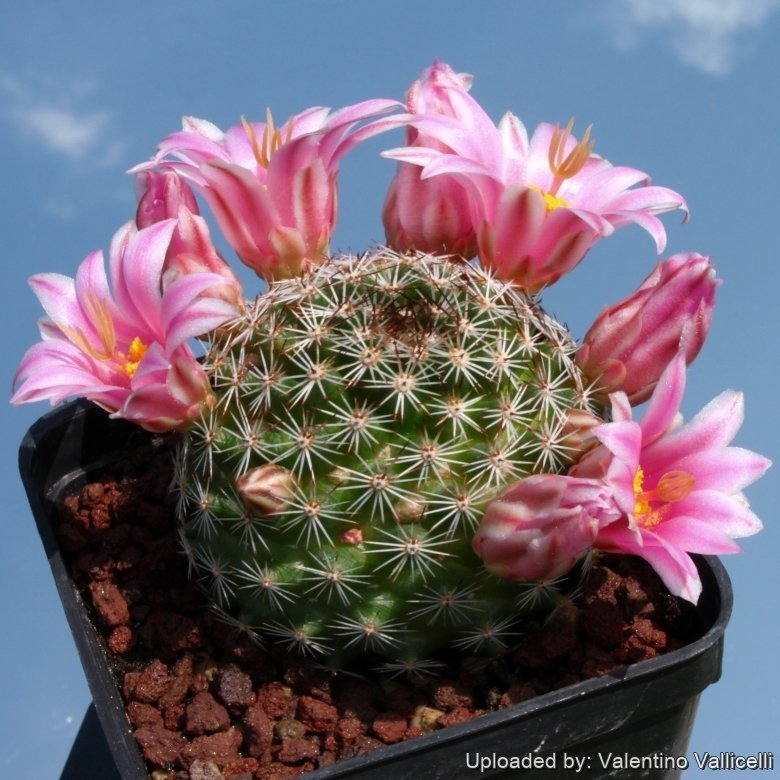
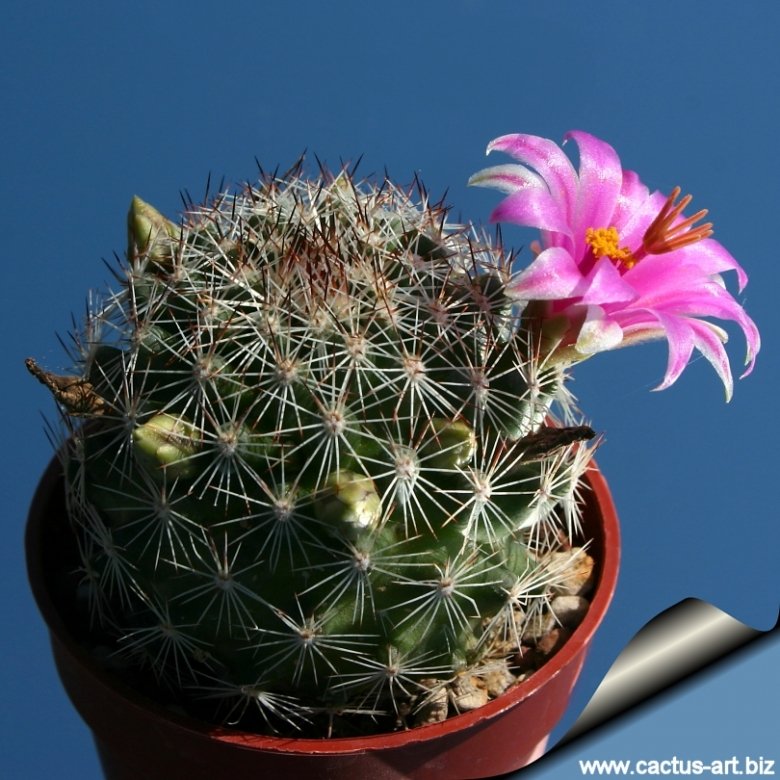
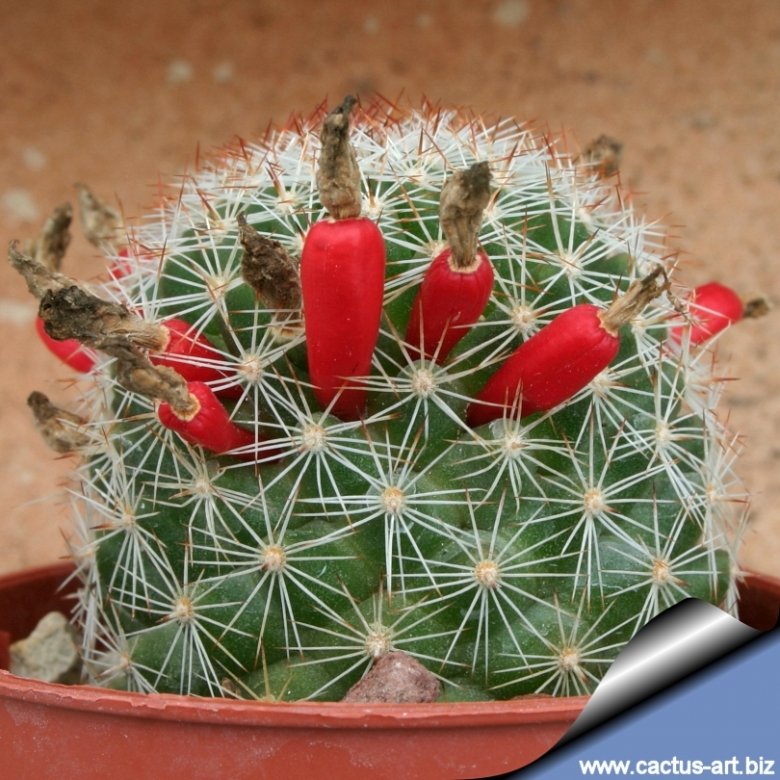
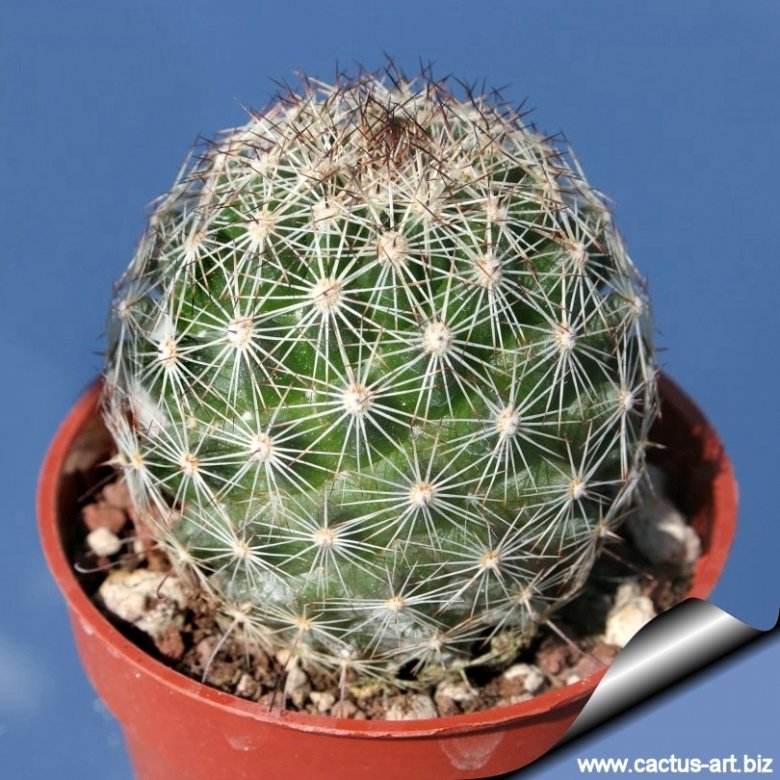
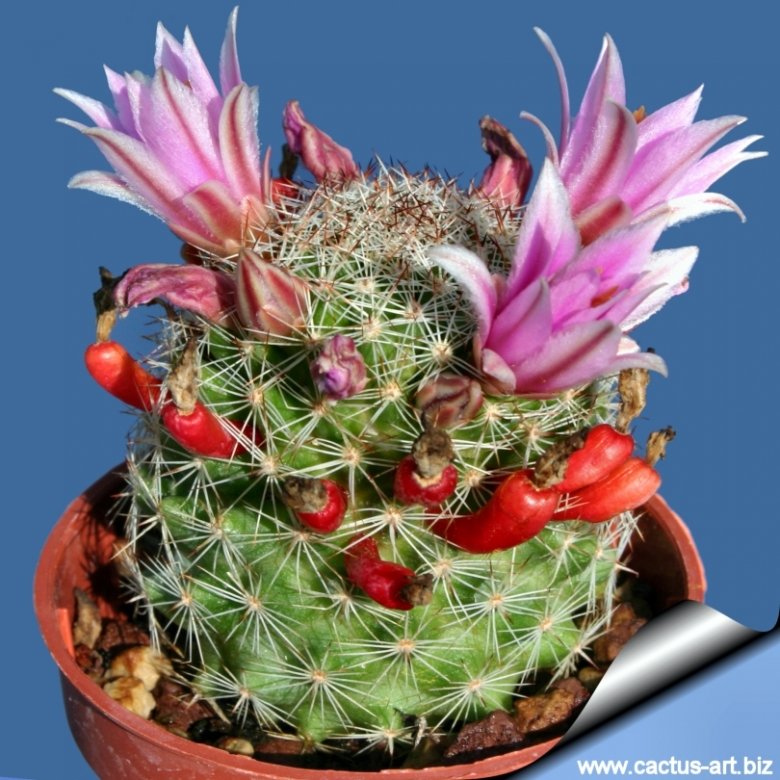
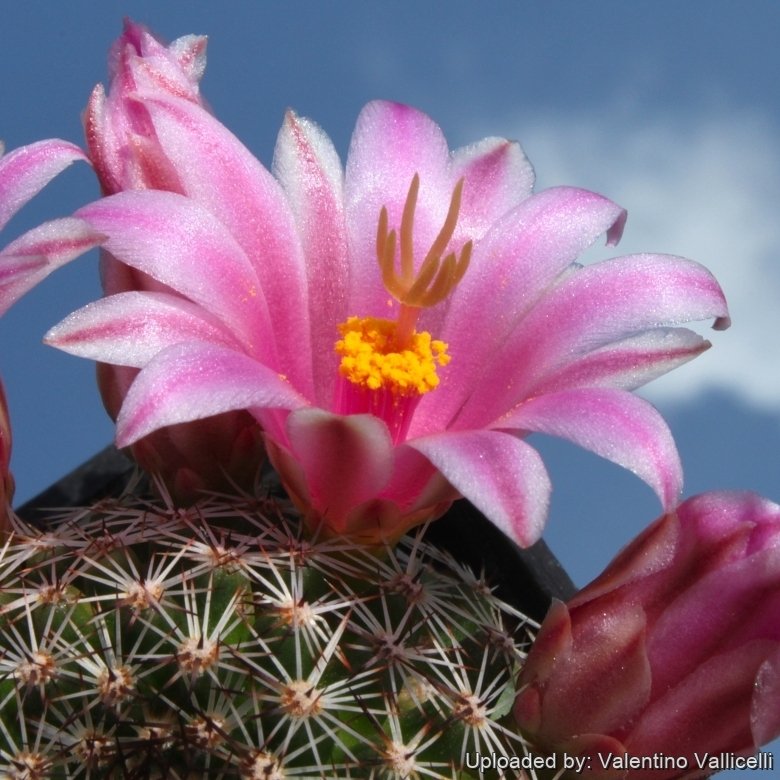
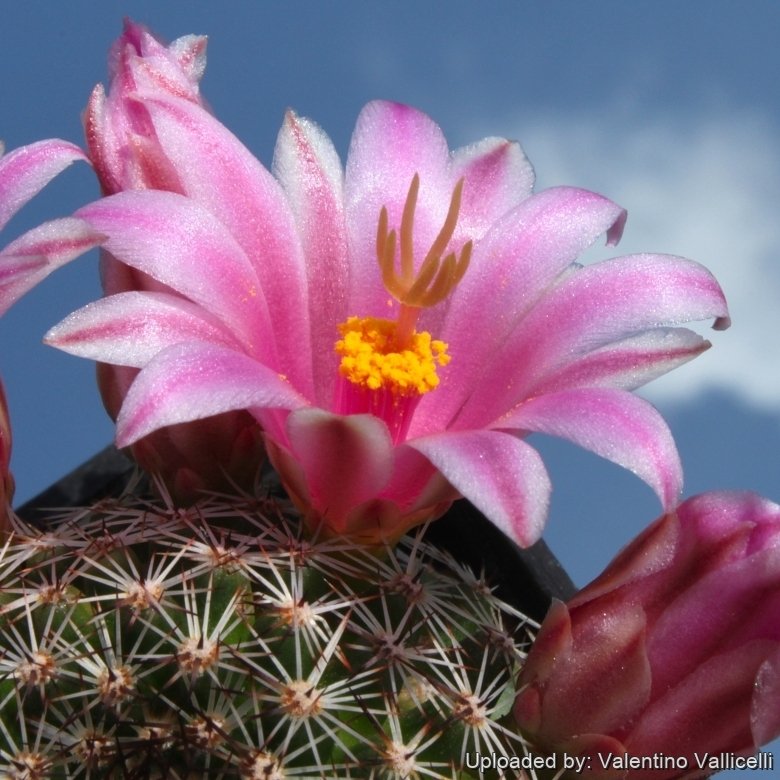
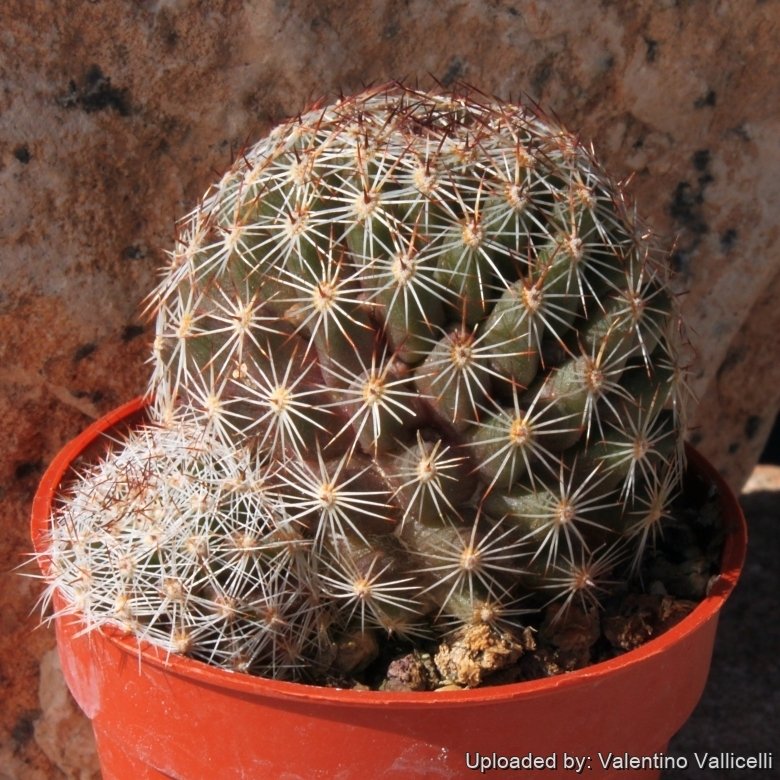
Mammillaria sheldonii (Mammillaria grahamii subs. sheldonii)is a small cylindrical cactus simple or with several heads from base of the plant, with white radial spines and dark brown hooked centrals. The flowers are pink with darker midviens and typically with green stigmas. It is undoubtedly a variable species, which has given rise to several names now ascribed to synonymy.
Derivation of specific name: This member of the Cactaceae family was given this name in honour of Charles Sheldon (1867–1928), US-American naturalist, once owner of a successful mining business in Mexico.
Habit: It makes a cluster of basal stems.
Stem: Spherical to slender-cylindrical, dull green, often becoming reddish, 3-6 cm wide, 8-15(-25) cm tall (or more in cultivation).
Tubercles: Cylindrical to conical, four-sided at base, carinate, dull green, 8-9 mm. long, 5-6 mm. wide, without latex, axils without wool but with an occasional few bristles. Tubercule arrangement: 8 - 13
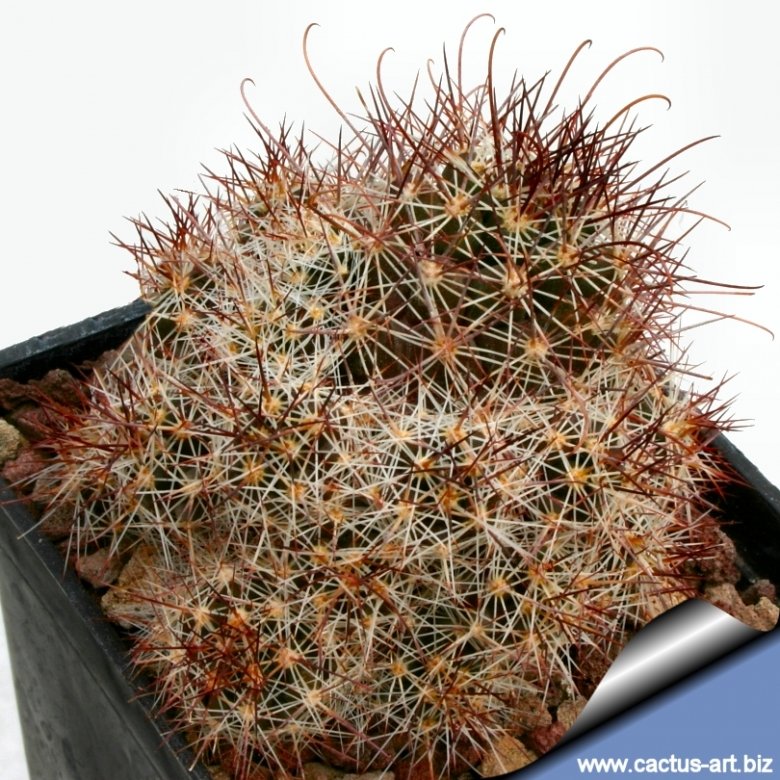
Radial spines: The number of radial spines mostly 12-15, bat varies from as low as 9 (Mammillaria alamensis) to as many as 24, needle-like, about 6 to 8 mm long, white, tipped reddish brown with purplish tips,.
Central spines: 1 to 5 (0 in M. alamensis), dark reddish brown to purplish, the upper part dark blackish brown. 1 to 4 upper ones (if porrect) straight, 8-9 mm long a little stouter and darker, the lower one (or two) elongated and either straight or hooked with upturned hook at end, 1 to 15.cm long.
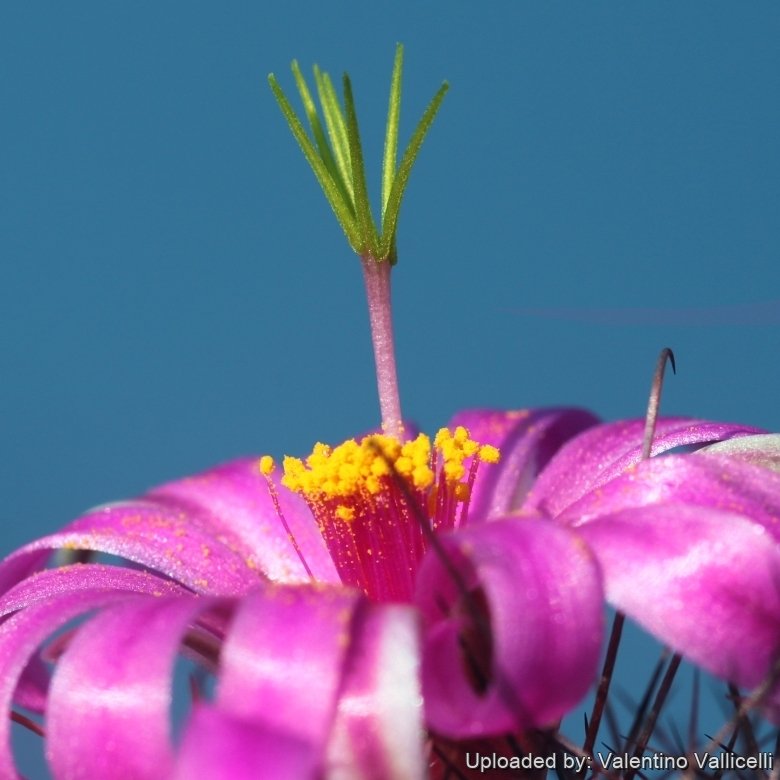
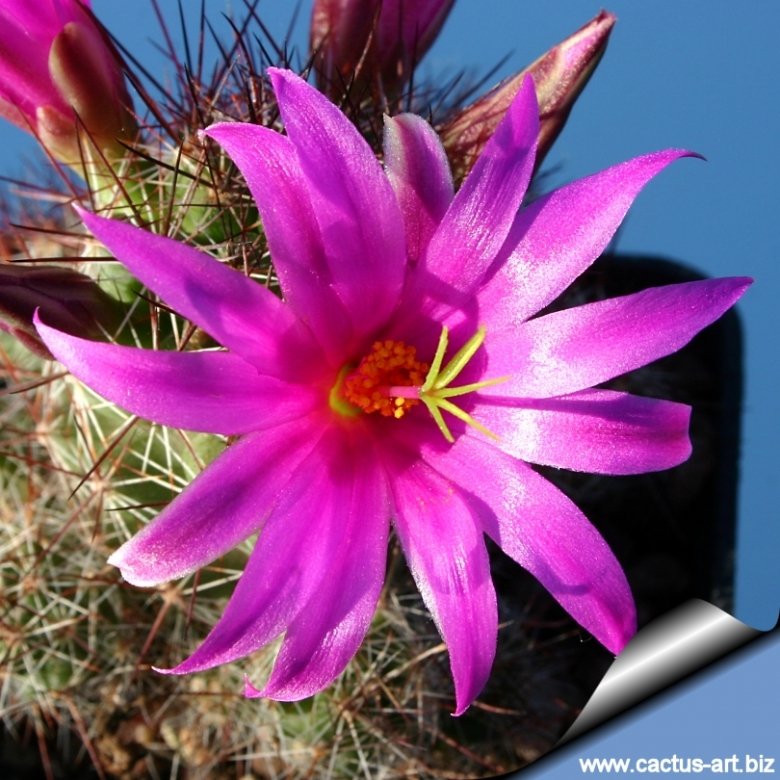
Flowers: Large, wide funnel-form, diurnal, inodorous, light purplish-pink with a pinkish brown midstripe and paler margins, about 2 cm. high, 2-3 cm in diameter (up to 3,5 in M. alamensis). Outer perianth segments linear-lanceolate, olive-green at base, brownish green with pinkish green margins above, acute, ciliate. Inner perianth segments about 10, broad, acute, pink to purplish with white margins, to 7 mm wide. Filaments and style light purple. Stigmas-lobes 6 mostly olive green (Orange in Mammillaria pseudoalamensis) at times purple-pink.
Blooming season: Spring ( March-April), and flowers remain open for about three or four days.
Fruits: Club shaped, pale scarlet 25-30 mm long. Edible.
Seeds: Globose, slightly constricted above base, about 1 mm long, glossy-black and slightly pitted.
Origin and Habitat
Sonora (Lower Sonoran Zone, from vicinity of Puerto Libertad to Hermosillo, Guaymas, and the Yaqui Valley), and Chihuahua
Habitat and ecology: Mammillaria sheldoniidwells in gravelly slopes, hillsides, and plains.
Cultivation and Propagation
Mammillaria sheldonii is a large-flowered mammillaria which is sometimes difficult to cultivate. This plant blooms easily and needs lots of light. Use a pot with good drainage and a very porous mineral-based potting mix. Potted plants are quite wet-sensitive, especially in light of its small root system. Water sparingly during the growing season, let soil dry in between to prevent root rot, keep very dry in winter. Feed with a high potassium fertilizer in summer.
Usually it is recommended to over-winter this plant in a bright and warm greenhouse with at least 8-10° C, but it has proven to be quite frost resistant (if kept dry it is hardy as low as -7° C). A resting period in winter and strong light are necessary so that it can flower properly.
Propagation: Through seeds and cuttings.
Bibliography
Major references and further lectures
-
Edward Anderson “The Cactus family” Timber Press, Incorporated, 2001
-
Forrest Shreve, Ira Loren Wiggins “Vegetation and Flora of the Sonoran Desert”, Volume 1 Stanford University Press, 1964
-
James Cullen, Sabina G. Knees, H. Suzanne Cubey “The European Garden Flora Flowering Plants: A Manual for the Identification of Plants Cultivated in Europe, Both Out-of-Doors and Under Glass” Cambridge University Press, 11/Aug/2011
-
David R Hunt; Nigel P Taylor; Graham Charles; International Cactaceae Systematics Group. “The New Cactus Lexicon” dh books, 2006
-
John Pilbeam “Mammillaria: the cactus file handbook” Cirio Publishing Services Ltd Dec/30,/1999
-
Nathaniel Lord Britton, Joseph Nelson Rose “Cactaceae: Descriptions and Illustrations of Plants of the Cactus Family” vol. 4 The Carnegie Institution of Washington, Washington 1923
-
Hernández, H.M., Gómez-Hinostrosa, C. and Goettsch, B. “Checklist of Chihuahuan Desert Cactaceae.” Harvard Papers in Botany 9(1): 51-68. 2004
-
Paredes, R., Van Devender, T.R. and Felger, R.S. “Cactáceas de Sonora, México: su diversidad, uso y conservación.” Arizona-Tucson Desert Museum Press, Tucson. 2000
-
Heil, K., Terry, M. & Corral-Díaz, R. 2013. Mammillaria grahamii. The IUCN Red List of Threatened Species 2013: e.T152723A670512. http://dx.doi.org/10.2305/IUCN.UK.2013-1.RLTS.T152723A670512.en. Downloaded on 21 April 2016.
-
Urs Eggli, Leonard E. Newton “Etymological Dictionary of Succulent Plant Names.” Springer, Berlin/Heidelberg 2010
From llifle page Chilita alamensis
Description
Mammillaria sheldonii is undoubtedly a variable species, which has given rise to several names now ascribed to synonymy. Mammillaria alamensis is nothing else than a variant recognisable for the absence of central spines, fewer radial spines (as low as 9) and larger flowers with distinctive orange stigma lobes. The otherwise identical Mammillaria pseudoalamensis instead has green stigma lobes.
Habit: It makes a cluster of basal stems.
Stem: Spherical to slender-cylindrical, dull green, often becoming reddish, 3-4 cm wide, 4-8 cm tall (or more in cultivation)
Tubercles: Cylindrical four-sided basally, carinate, without latex, axils without wool but with an occasional few bristles. Tubercle arrangement 8-13.
Radial spines: M. alamensis usually has fewer radial spines than Mammillaria sheldonii (as low as 9), white, tipped brown, needle-like, about 6 mm long.
Central spines: Absent or occasionally one in Mammillaraia alamensis and Mammillaraia pseudoalamensis ( 1 to 4 in M. sheldonii), if present elongated and either straight or hooked, about 9 mm long long, brownish, the upper part dark blackish brown.
Flowers: Large up to 3,5, wide funnel-form, diurnal, inodorous, light purplish-pink with a pinkish brown midstripe and paler margins. Stigmas are green (dull orange in M. pseudoalamensis)
Blooming season: Spring, and flowers remain open for about three or four days.
Fruits: Berry-like, club shaped, pale scarlet about 20-25 mm long.
Seeds: Black, round, finely dotted..
Taxonomy notes. Mammillaria pseudoalamensis crops up in commercial listings now and again, but almost invariably turns out to be Mammillaria sheldonii, with a greater radial spines count then Craig called for it M. alamensis ( 9 ) and usually more than the one central described. Reppenhagean favours the name, bur without justifying it in any way. It also surfaced under a Lau collection number (LAU 1401) and it remains to be seen if once again we have a M. sheldonii. If the required spine-count were found in plants resulting from these collections, we would still have merely an extension to the range of variability of M. sheldonii or even Mammillaria mazatlanensis.
Origin and Habitat
Sierra de Alamos, Alamos, Sonora, Mexico.
Altitude range: 50-2000 metres above sea level.
Habitat and ecology: Mammillaria alamensis grows in gravelly slopes, hillsides, and plains. Accompanying cactus species can be: Mammillaria sonorensis, Ferocactus wislizenii, Opuntia leptocaulis, Opuntia cholla, Stenocereus thurberi, Pachycereus pecten-aboriginum, and Lophocereus schottii.
Cultivation and Propagation
Mammillaria alamensis is an easy species in cultivation, recommended for any collection that needs lots of light with ample airflow.
Growth rate: It is a small growing, but easily flowering species. It takes several years to offset, but once it starts it can fill a 25 cm pot in just a few years given the best conditions.
Soils: It likes very porous standard cactus mix soil with little organic matter (peat, humus).
Repotting: Repotting every 2-3 years. It will need a pot with sufficient depth to allow the tap root. As it is especially prone to rot under-pot in a smaller container filled with very porous compost. Use pot with good drainage.
Watering: Water regularly in summer, but do not overwater (very wet-sensitively, especially in light of its succulent root system). Its roots are easily lost in pots that stay damp for any length of time. Keep dry with ample airflow in winter. In the rest period no high atmospheric humidity!! Care must be taken with watering as they tends to become swollen and untidy in growth habit if given too much water and shade.
Fertilization: During the growing season enrich the soil using a fertilizer rich in potassium and phosphorous, but poor in nitrogen, because this chemical element doesn’t help the development of succulent plants, making them too soft and full of water.
Hardiness: Reputedly sensitive to frost , but less so if kept on the dry side prior to, and during, cold weather (hardy to -5° C for short periods, but some reports give it hardy to -12°C). However some warmth throughout the year will increase the grower’s success (minimum 5° to 8°C during rest season).
Exposition: Outside bright sun, filtered sunlight or afternoon shade, inside it needs bright light, and some direct sun. Subject to sunburn if exposed to direct sun for too long. Tends to bronze in strong light, which encourages flowering and heavy wool and spine production.
Uses: It is an excellent plant for container growing. It always looks good and stays small. It look fine in a cold greenhouse and frame.
Pests & diseases: It may be attractive to a variety of insects, but plants in good condition should be nearly pest-free, particularly if they are grown in a mineral potting-mix, with good exposure and ventilation. Nonetheless, there are several pests to watch for:
- Red spiders: Sensitive to red spider mite. Overhead watering is helpful in controlling mites.
- Mealy bugs: Occasionally mealy bugs they develop aerial into the new growth among the wool with disfiguring results, but the worst types develop underground on the roots and are invisible except by their effects.
- Scales: Scales are rarely a problem.
- Rot: Rot it is only a minor problem with cacti if the plants are watered and “aired” correctly. If they are not, fungicides won’t help all that much.
Propagation: Direct sow after last frost or (rarely) cuttings. Seeds germinate in 7-14 days at 21-27° C in spring, remove the glass cover gradually as the plants develops and keep ventilated, no full sun for young plants! The seedlings should not be disturbed until they are well rooted, after which they can be planted separately in small pots. Cuttings: wait until the offsets that appear at the base of old clustered specimens are 1/3 the size of the parent and then detach and plant. Cuttings will take root in a minimum temperature of 20° C (but better in hot weather). Cuttings of healthy shoots can be taken in the spring and summer. Cut the stem with a sharp, sterile knife, leave the cutting in a warm, dry place for a week or weeks (depending on how thick the cutting is) until a callus forms over the wound. Once the callus forms, the cutting may be inserted in a container filled with firmed cactus potting mix topped with a surface layer of coarse grit. They should be placed in the coarse grit only; this prevents the cut end from becoming too wet and allows the roots to penetrate the rich compost underneath. The cuttings should root in 2 to 6 weeks.
Bibliography
Major references and further lectures:
-
David Hunt, Nigel Taylor “The New Cactus Lexicon” DH Books, 2006
-
John Pilbeam (1999) “Mammillaria The Cactus File Handbook” Nuffield Press.
-
Edward F. Anderson “The Cactus Family” Timber Press, 2001
-
Nagysurányi Miklós “A nagy virágú Mamiliáriákrót” KAKTUSZKEDVELO
-
SZAKKÖR TÁJÉKOZTATÓJA 75/4 p 104-107
Source: Chilita alamensis, LLIFLE - Encyclopedia of living forms, CC-BY-SA, retrieved 2026-10-25.
From llifle page Chilita gueldemanniana
Description
Mammillaria gueldemanniana is clumping mammillaria species that becomes shrublike by putting out numerous basal shoots. It is generally included within (as a synonym of) Mammillaria sheldonii, suggesting that there is not really a fundamental difference between the two (aside from bigger flowers for M. gueldemanniana, not many differences), and hard to name accurately without knowing where they come from, and there remains a considerable confusion surrounding the true identity of this this plant.
Stem: Strongly clumping, globular at first, becoming cylindrical to columnar, somewhat sunken apex, stems light grey-green, spines nearly obscuring the stem, 10-20 cm high and 3-5 cm in diameter.
Roots: Fibrous.
Sap: Without latex.
Tubercles: Cylindrical, closely set, soft to rather firm and fleshy, rounded toward the apex and quadrangular, wide and glabrous at the base, keeled ventrally, 7-12 mm long and 5-8 mm wide. Axil mostly naked.
Radial spine: 12-22, slender, straight, needle like to bristle like, smooth, spread out horizontally, whitish with brown tip about 5 mm long.
Central spines: 1 to 4, mostly 1, needle like, one hooked (occasionally straight), smooth, brown to black, 2-14 mm long (short about 2 mm long in var. gueldemanniana and 10 or more mm long in var. guirocombensis).
Flowers: Funnelform to broad funnelform, 18–25 mm long and 16–35 mm in diameter, carmine pink with a crimson throat. (The flowers are bigger and open wider in var. guirocombensis)
Fruits: Club-shaped, scarlet-red, small 10-25 mm long and 4-7 mm wide.
Seeds: Spherical, black, 1 mm long and 0,8 mm wide, ventral hilum. Selfsterile.
Phenology: It blooms several times a year in summer. The fruit ripens about one year after flowering.
Origin and Habitat
Mexico, Chihuahua near Batopitas; Sonora near Navajoa amd Alamos; Sinaloa near El ranchito.
Altitude range: 200-1300 metres above sea level.
Habitat and ecology: Mammillaria gueldemanniana green valleys, in sandy soil with a bit of humus. The variety guirocombensis has been found over a much larger area in southern Sonora, the northeast corner of Sinaloa, the southwest corner of Chihuahua and on the slopes of the western Sierra Madre, at higher altitudes.
Cultivation and Propagation
This plant is not famous for being easy to cultivate, but in good conditions with excellent ventilation, it grows without difficulty. It is especially sensitive to over-watering. So careful watering and an open mineral potting soil are a must. Avoid the use of peat or other humus sources in the potting mixture. Don’t add limestone to the potting mix, which must be moderately acidic. It can be sensitive to frost (but some population are resistant to -10° C). It requires maximum sun exposure to reach its full potential, and to achieve success in flowering. A winter rest that allows the plant to shrivel (perhaps losing up to 25% of its summer height) will encourage flowering and long time survival. Be careful to encourage slow growth.
Propagation: Seeds or offsets.
Bibliography
Major references and further lectures
-
Franck Martin “Mammillaria gueldemanniana” <http://www.mammillarias.net/wordpress\_uk/synomys-description-result/?searchstring=gueldemanniana&lg=uk\>
-
Mariella Pizzetti “Simon & Schuster’s Guide to cacti and succulents”; U.S. editor, Stanley Schuler; photographs by Giuseppe Mazza; translated by Cynthia Munro.
Source: Chilita gueldemanniana, LLIFLE - Encyclopedia of living forms, CC-BY-SA, retrieved 2026-10-25.
From llifle page Chilita swingleri
Description
Mammillaria swinglei is a basally branching cactus that forms tight clumps. It is now often considered a synonym of Mammillaria sheldonii to which it don’t shows significant differences.
Stems: 10-25 cm tall, 3-5 cm in diameter, dull green, often becoming reddish. Without latex.
Tubercles: Cylindrical four-sided basally, keeled 7-10 mm long , 5-7 mm in diameter; axils without wool, but sometimes with a few more or less setose bristles. Tubercule arrangement: 8-13.
Central spines: 1-4 brown needle-like ascending, dark brown or black, the lowest one elongated (up to 1.5 cm. long), hooked at apex or sometimes straight;
Radials: 11-18 obscuring the tubercles, 7-14 mm long, needle-like rather stout, spreading, dull white with dark tips.
Flowers: Wide funnel-form purplish pink (White and yellow varieties are mentioned) inodorous 3 cm in diameter. Outer perianth-segments greenish or sometimes pinkish; margins somewhat scarious; inner perianth-segments narrowly oblong, nearly white with a brown stripe down center; style pink, twice as long as the pink filaments; stigma-lobes 8, linear, pointed, green.
Blooming season: April, In cultivation the flowers remain open for several days (at least three).
Fruits: Pale scarlet, clavate, 14-18 mm long.
Seeds: 1 mm in diameter, constricted below, black with a large elliptic basal hilum.
Origin and Habitat
Sonora, Mexico Altitude up to 1.200 m.
Cultivation and Propagation
This plant blooms easily and needs lots of light. Use pot with good drainage and a very porous mineral-based potting mix. Pot plants are quite wet-sensitively, especially in light of its small root system. Water sparingly during the growing season, let soil dry in between to prevent root rot, keep very dry in winter. Feed with a high potassium fertilizer in summer.
Usually it is recommended to overwinter this plant in a bright and warm greenhouse with at least 8-10° C , but it proved to be quite frost resistant (if kept dry it hardy as low as -7° C) A resting period in winter and strong light are necessary so that it can flower properly. Plants will offset readily, and dense clumps can be produced in a very few years.
Propagation: Through seeds and cuttings.
Source: Chilita swingleri, LLIFLE - Encyclopedia of living forms, CC-BY-SA, retrieved 2026-10-25.
From llifle page Mammillaria pseudoalamensis
Description
Mammillaria sheldonii is undoubtedly a variable species, which has given rise to several names now ascribed to synonymy. Mammillaria pseudoalamensis | is nothing else than a variant recognisable for the absence of central spines, and larger flowers with distinctive orange stigma lobes. The otherwise identical Mammillaraia alamensis instead has green stigma lobes.
Habit: It makes a cluster of basal stems.
Stem: Spherical to slender-cylindrical, dull green, often becoming reddish, 3-6 cm wide, 8-15 cm tall (or more in cultivation)
Tubercles: Cylindrical four-sided basally, carinate, without latex, axils without wool but with an occasional few bristles. Tubercle arrangement 8-13.
Radial spines: The number of radial spines varies from as low as 9 (M. alamensis) to as many as 24, white, tipped brown, needle-like, about 6 to 8 mm long.
Central spines: 1 to 4 ( 0 in M. alamensis), the lower one elongated and either straight or hooked, 1 to 15.cm long, brownish, the upper part dark blackish brown.
Flowers: Large, wide funnel-form, diurnal, inodorous, light purplish-pink with a pinkish brown midstripe and paler margins, about 20 cm in diameter (up to 3,5 in M. alamensis). Stigmas are green (dull orange in M. pseudoalamensis)
Blooming season: Spring, and flowers remain open for about three or four days.
Fruits: Club shaped, pale scarlet 25-30 mm long.
Seeds: black.
Origin and Habitat
West of Alamos, Sonora, Mexico.
Cultivation and Propagation
This plant blooms easily and needs lots of light. Use a pot with good drainage and a very porous mineral-based potting mix. Potted plants are quite wet-sensitive, especially in light of its small root system. Water sparingly during the growing season, let soil dry in between to prevent root rot, keep very dry in winter. Feed with a high potassium fertilizer in summer.
Usually it is recommended to over-winter this plant in a bright and warm greenhouse with at least 8-10° C , but it has proven to be quite frost resistant (if kept dry it is hardy as low as -7° C). A resting period in winter and strong light are necessary so that it can flower properly. Plants will offset readily, and dense clumps can be produced in a very few years.
Propagation: Through seeds and cuttings.
Source: Mammillaria pseudoalamensis, LLIFLE - Encyclopedia of living forms, CC-BY-SA, retrieved 2026-10-25.
Gallery