Publication: Proc. Amer. Acad. Arts 3: 261. 1856 Syn. Cact. 5
Description
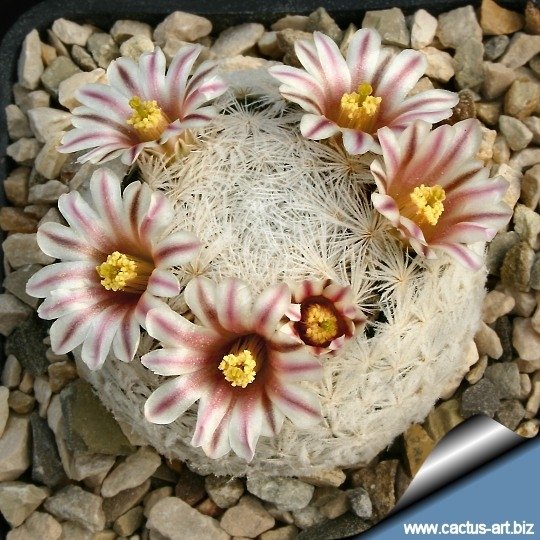
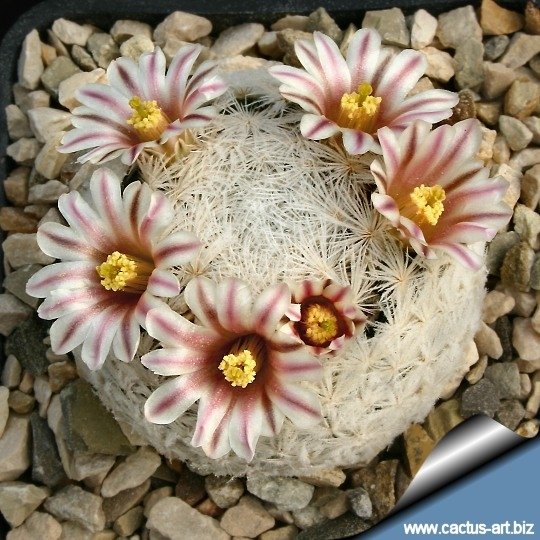
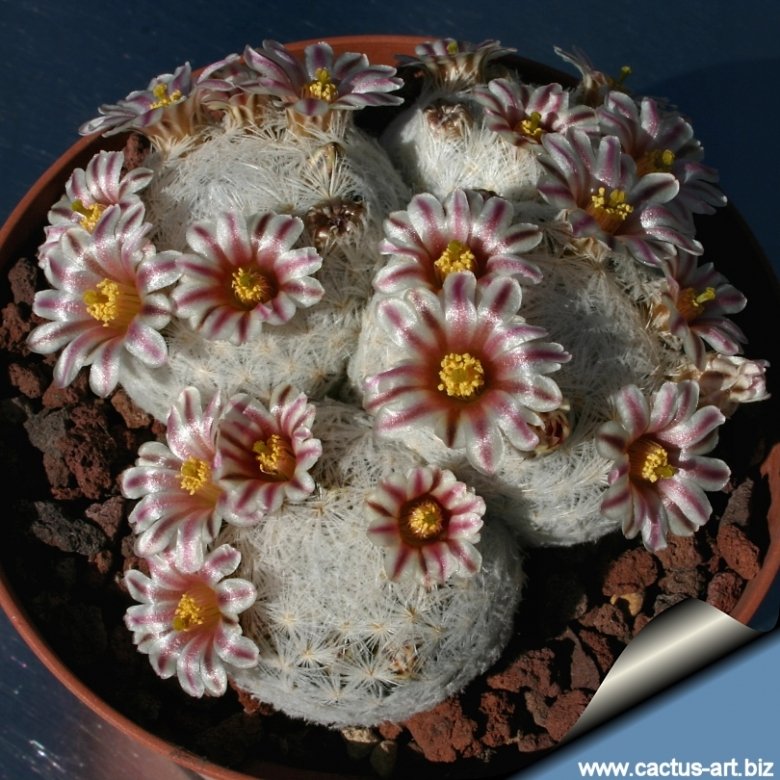
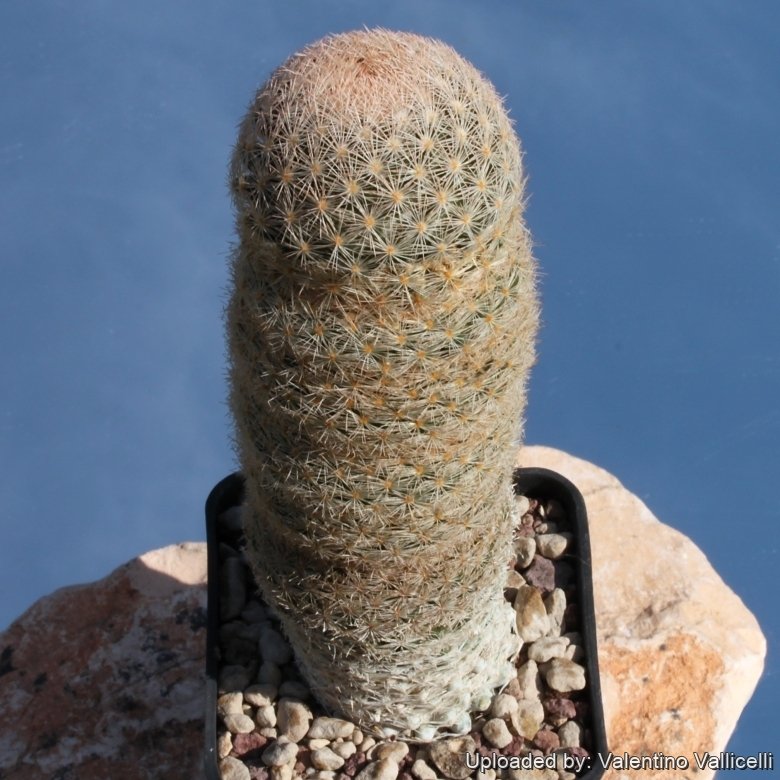
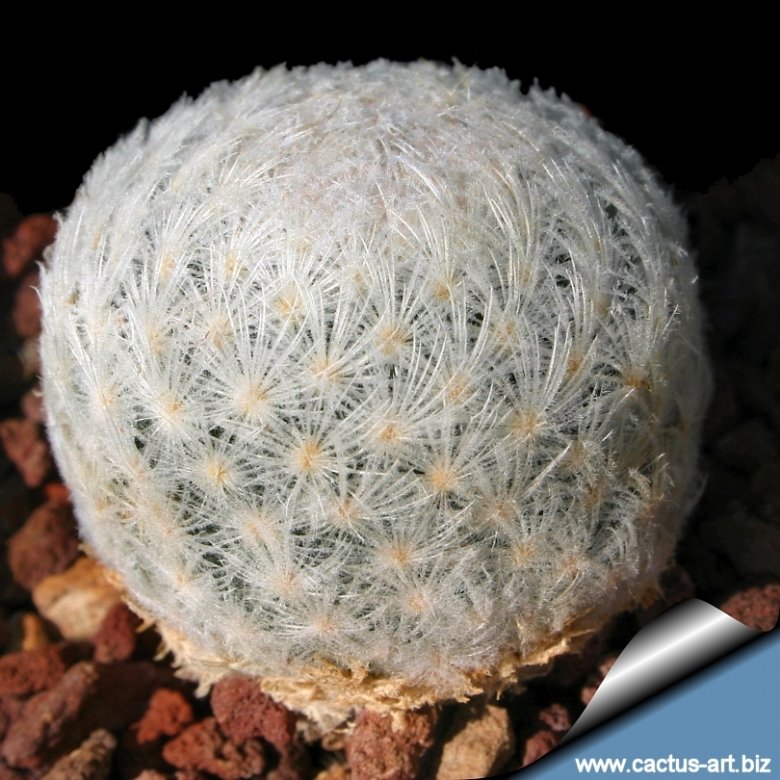
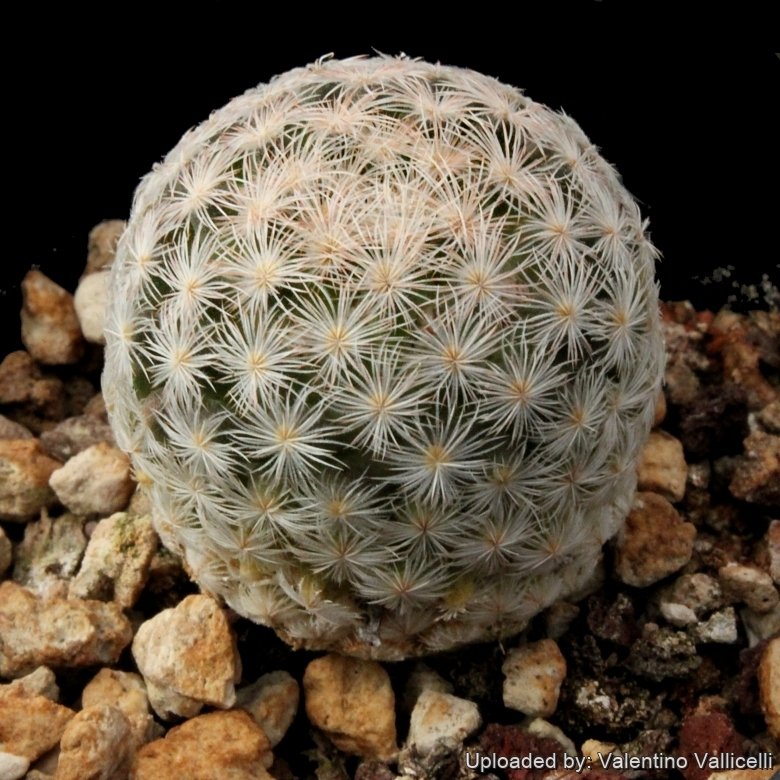
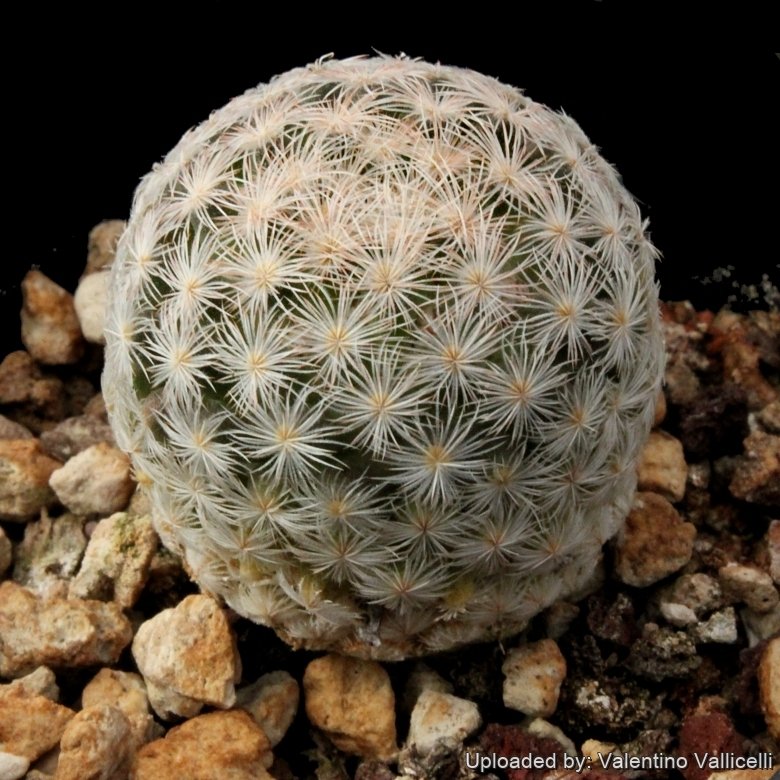
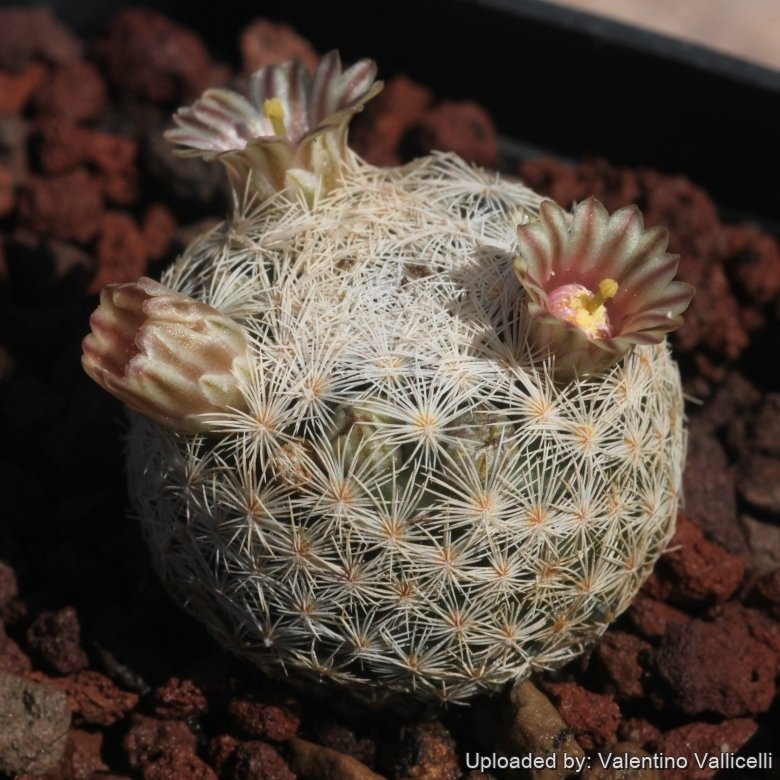
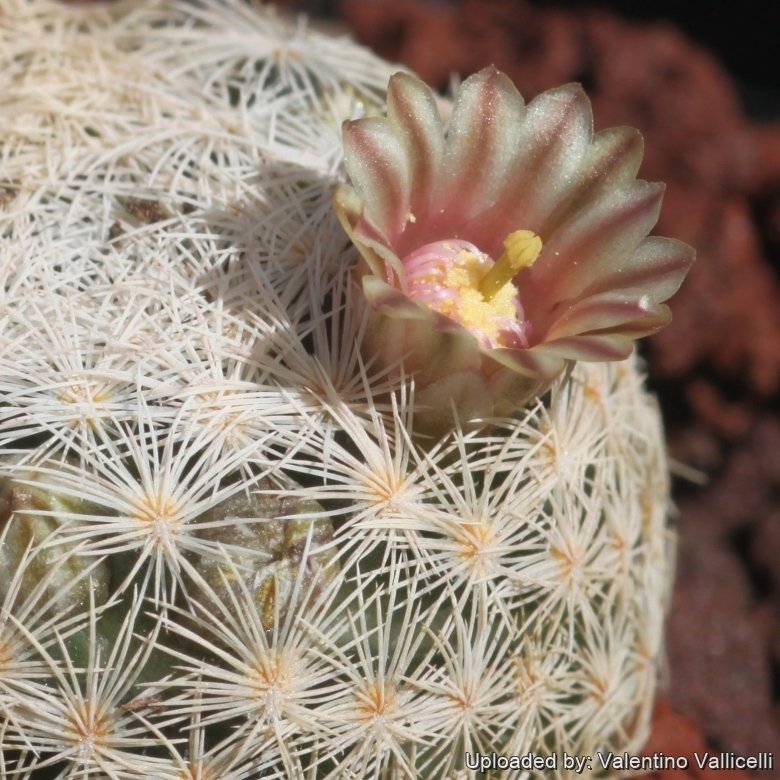
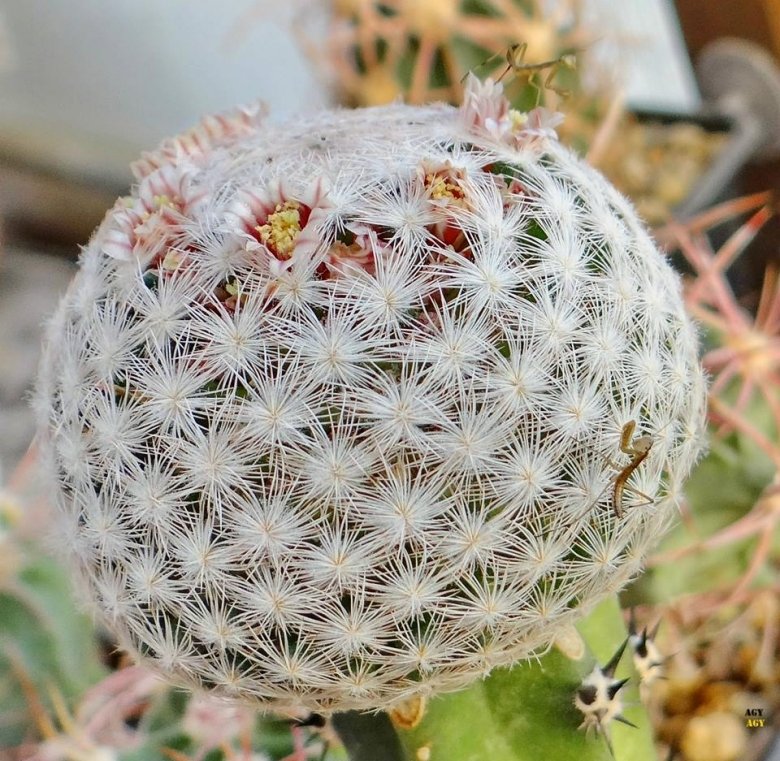
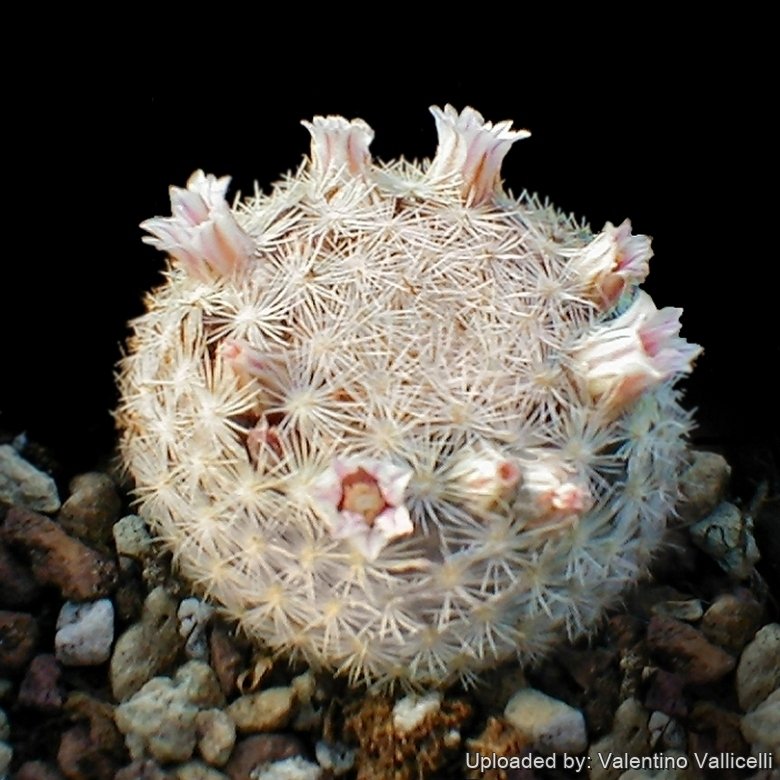
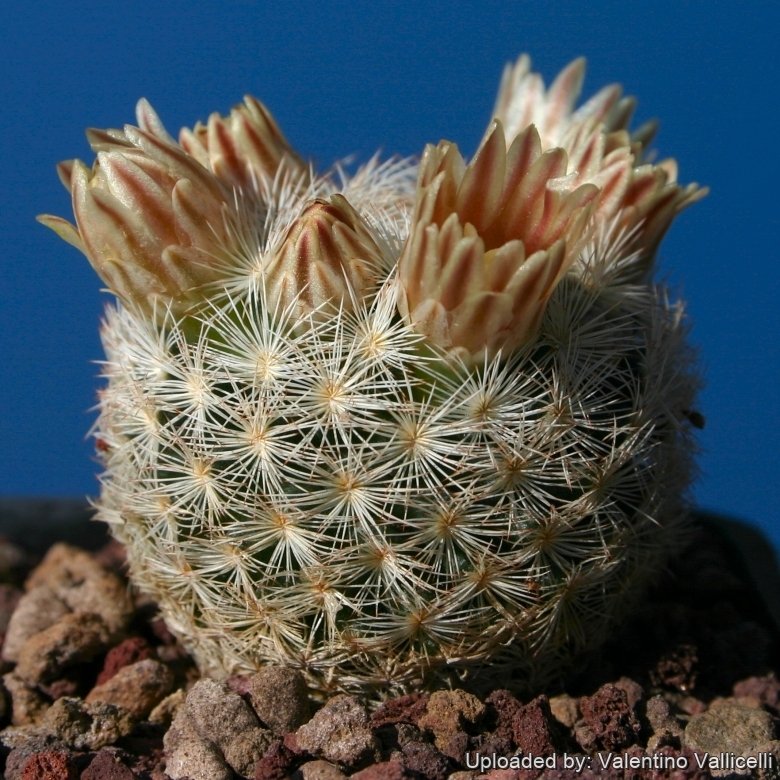
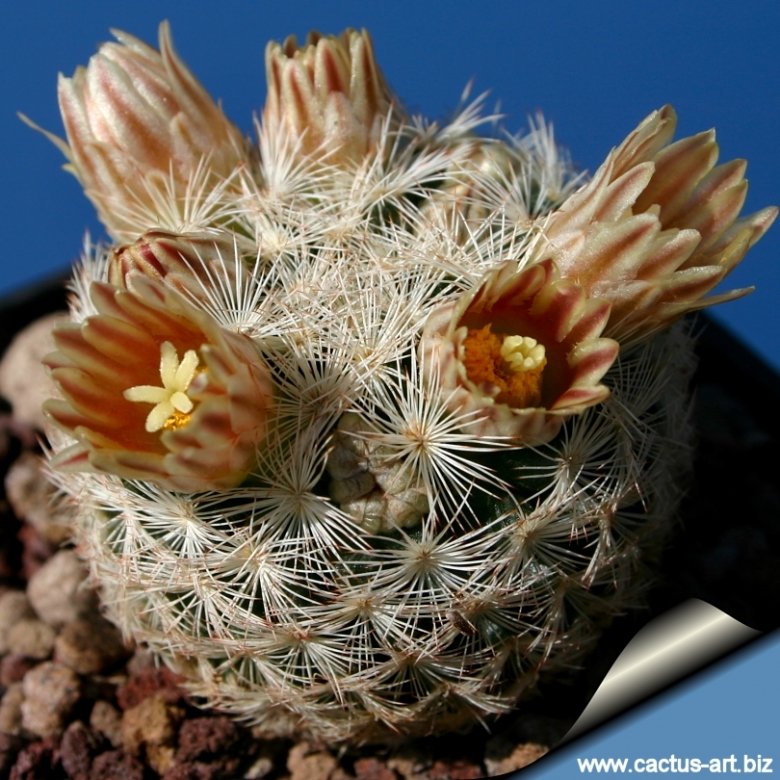
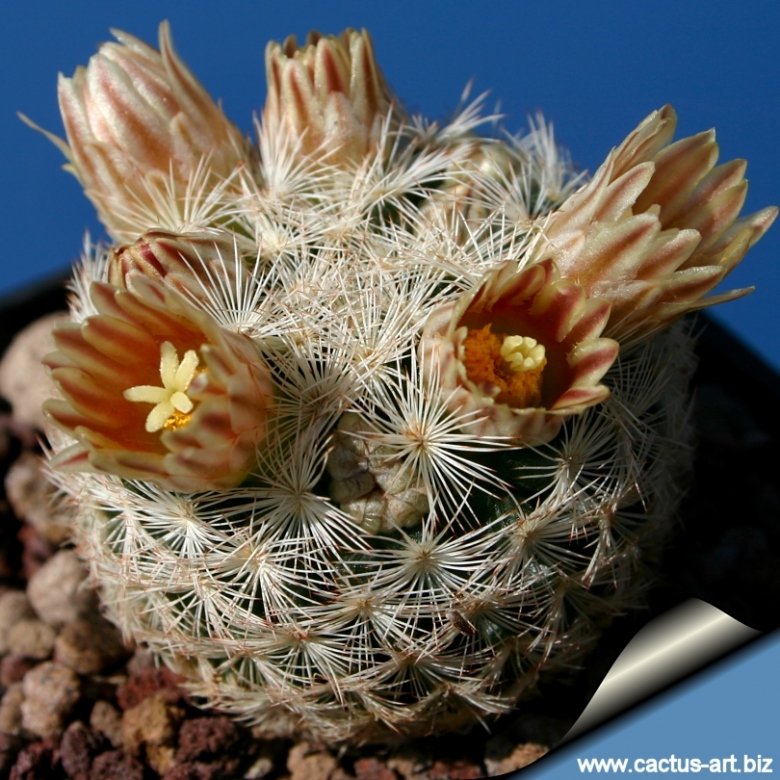
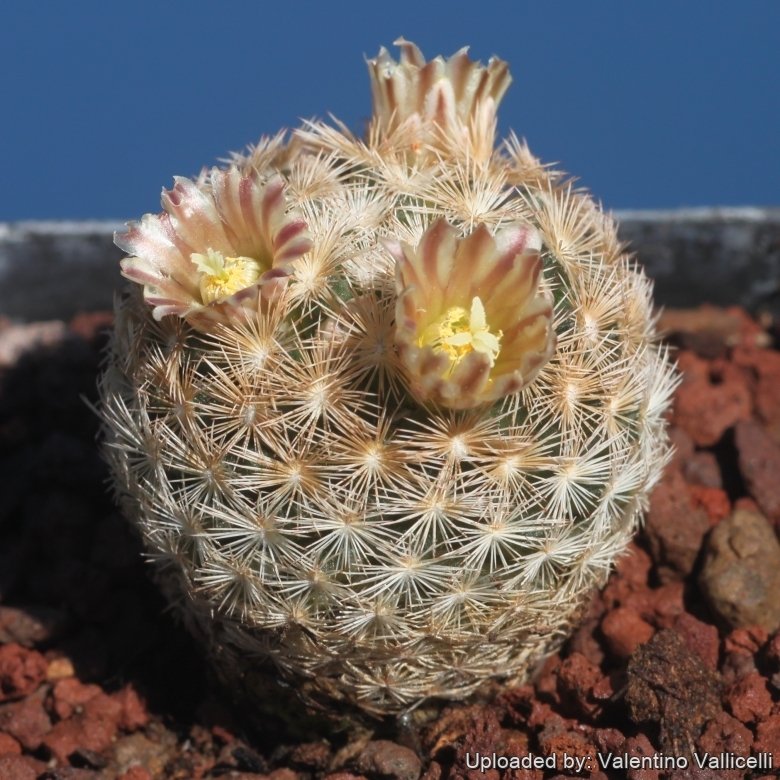
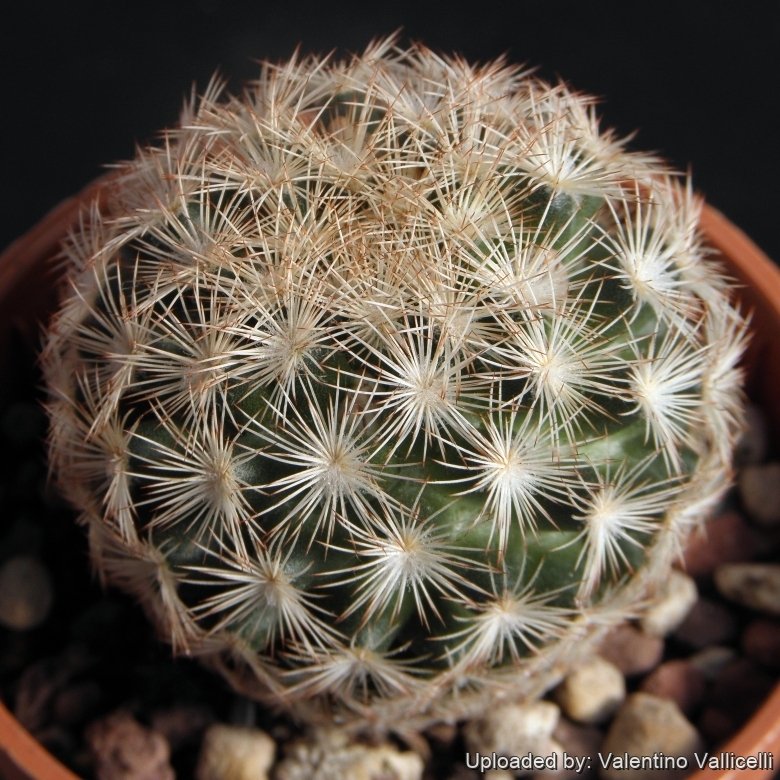
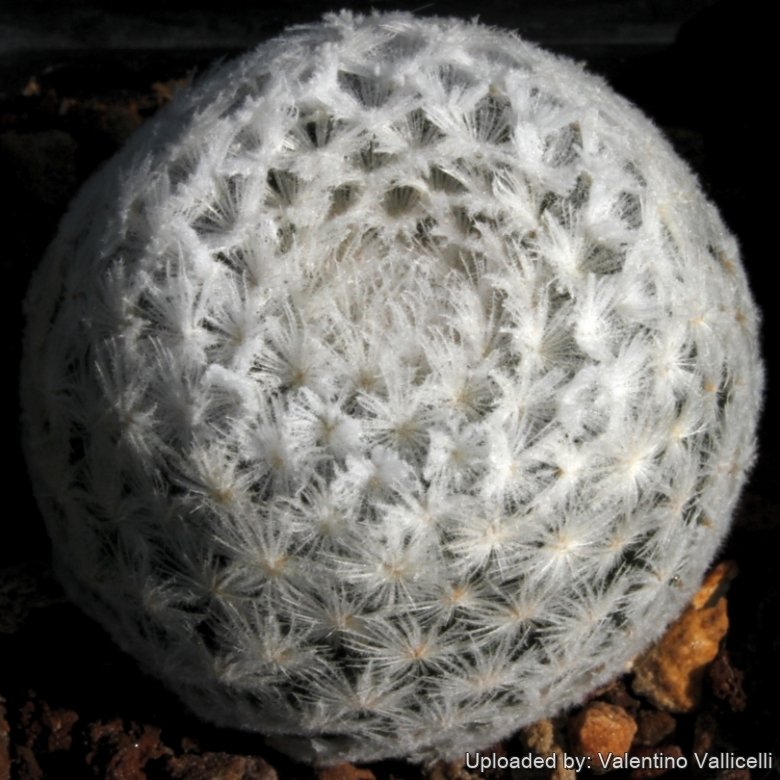
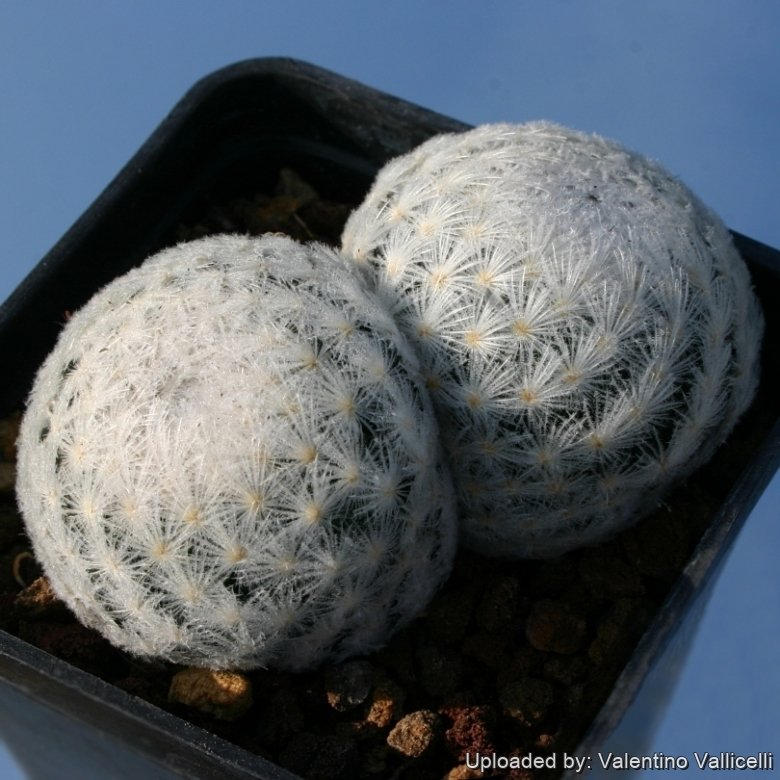
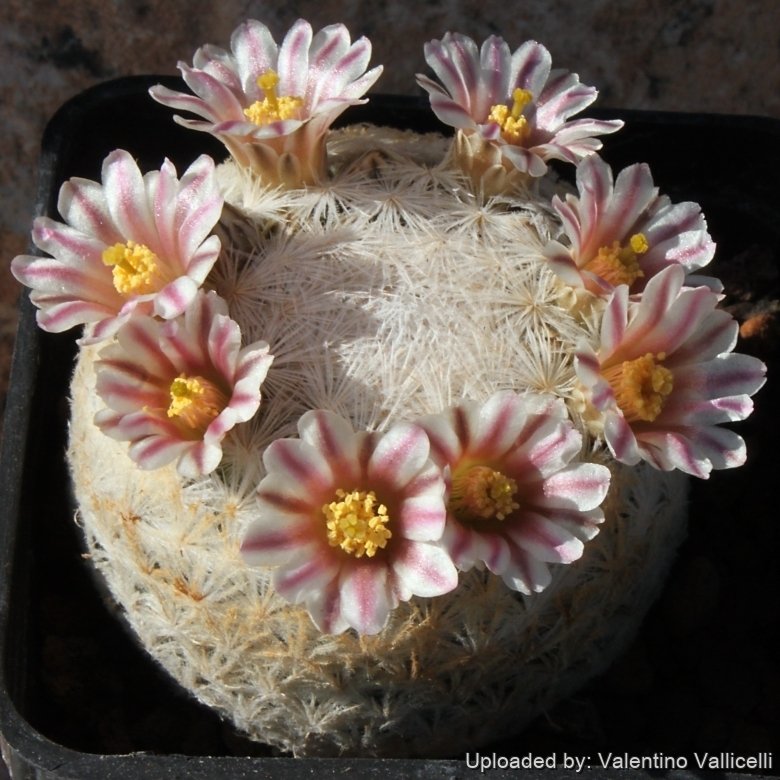
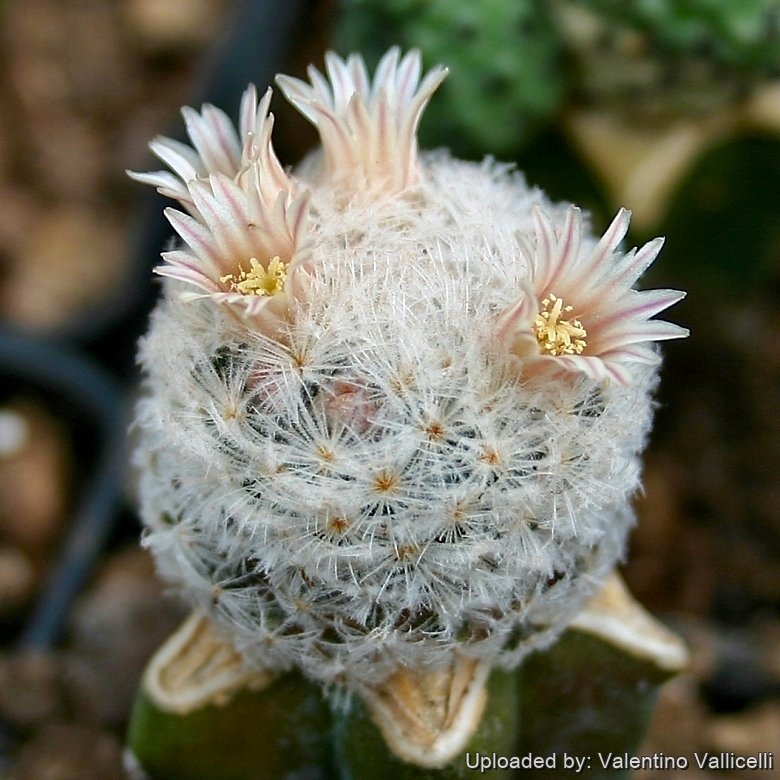
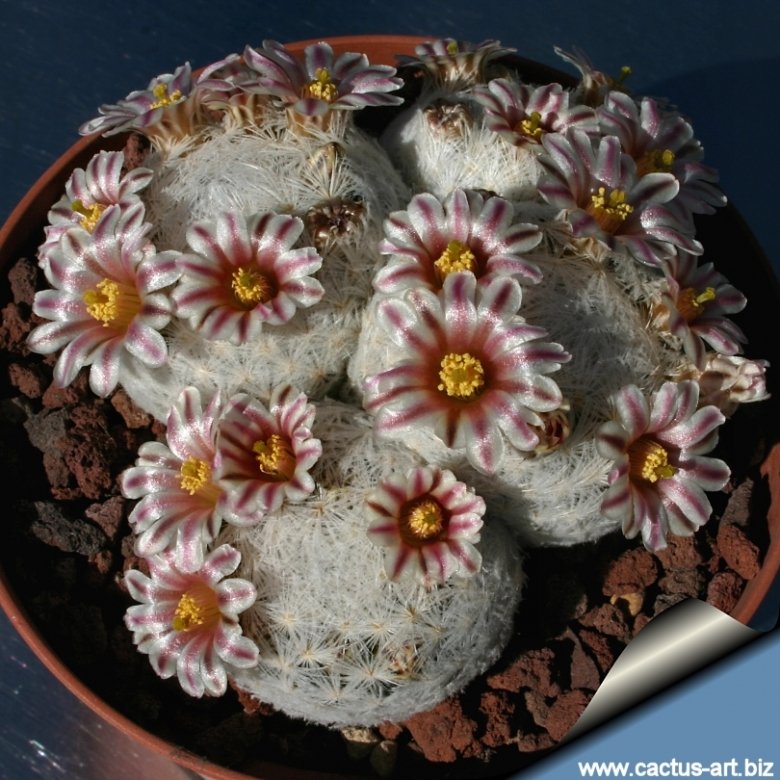
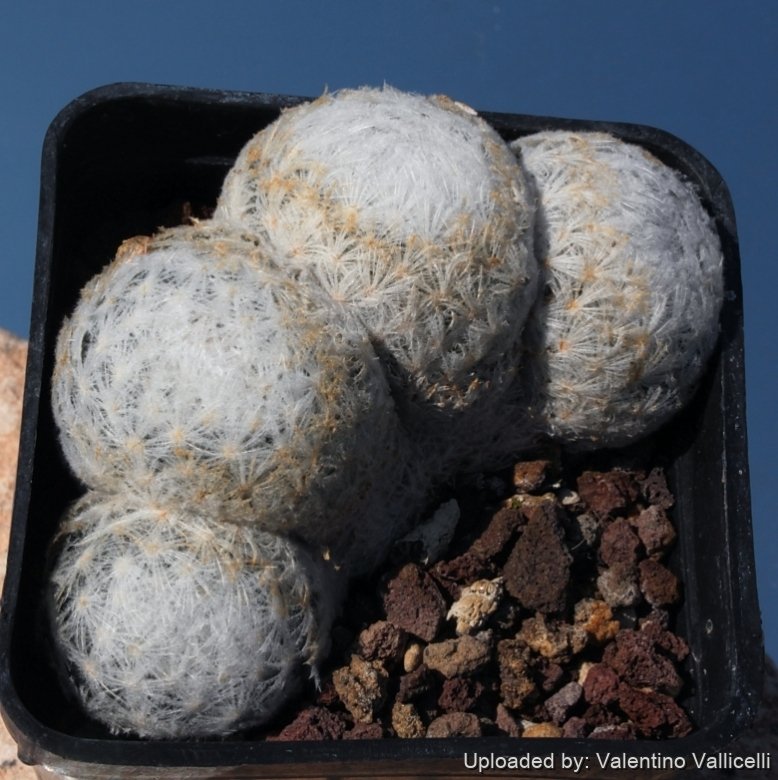
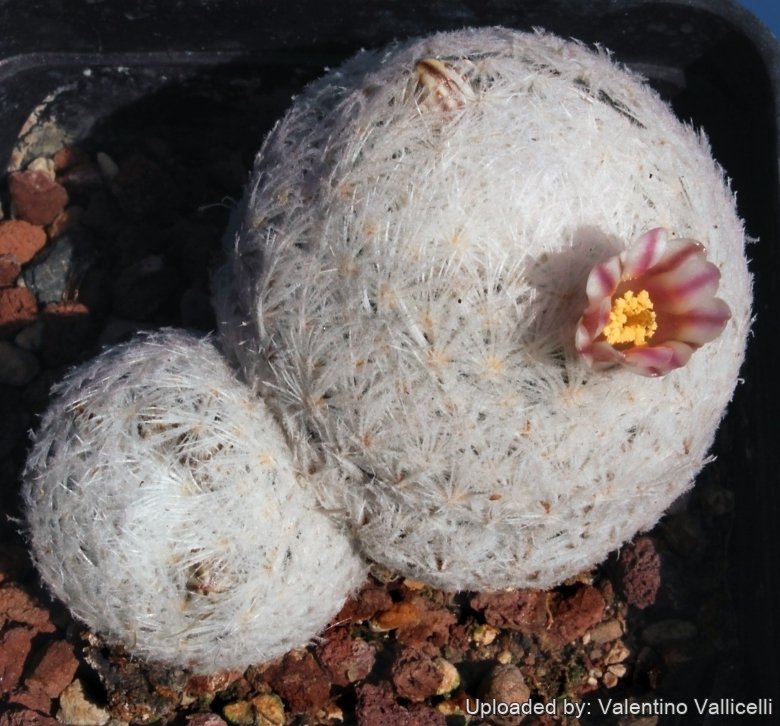
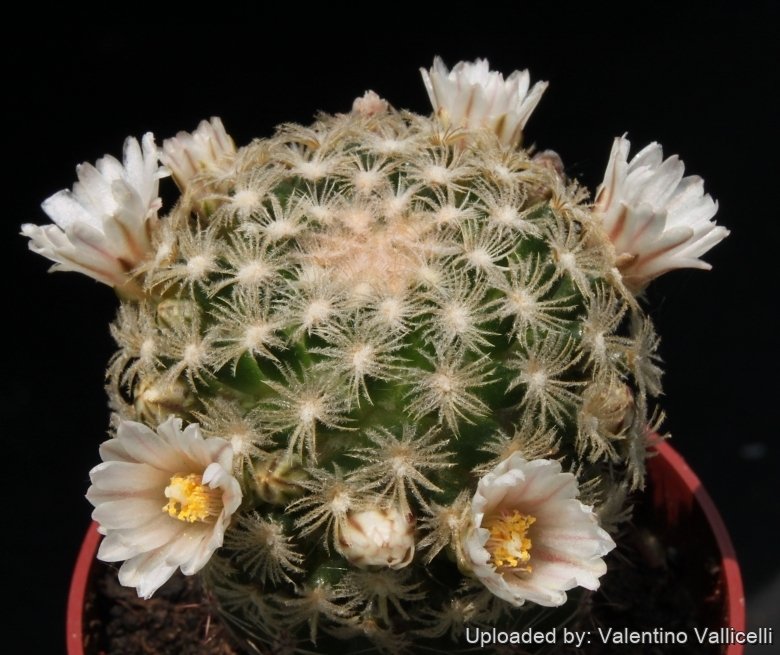
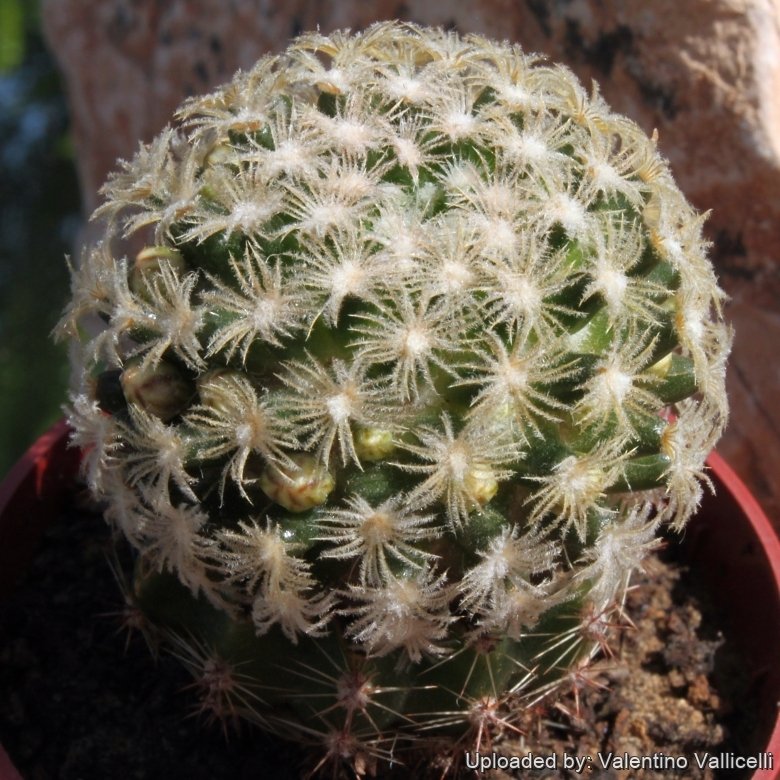
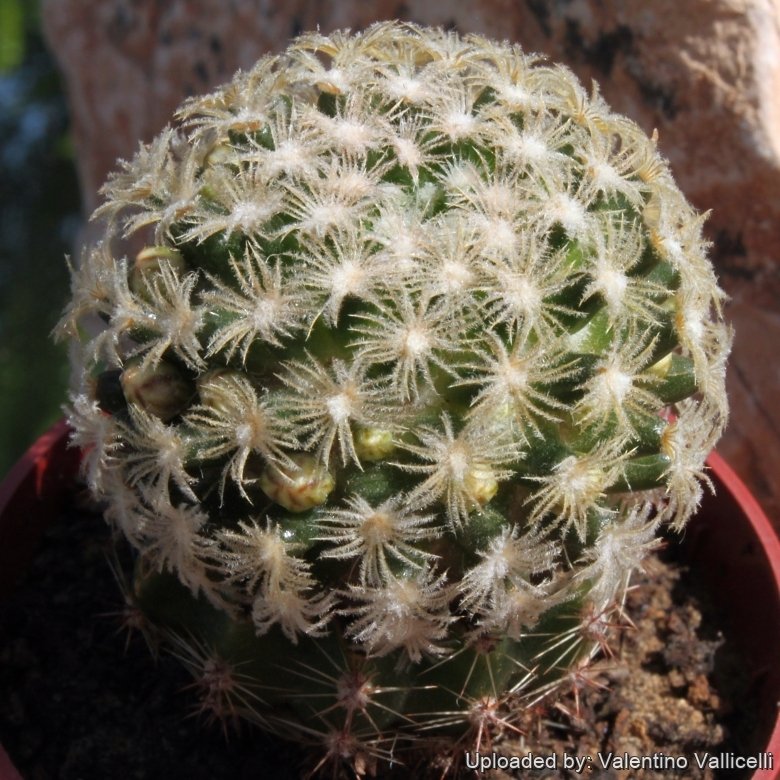
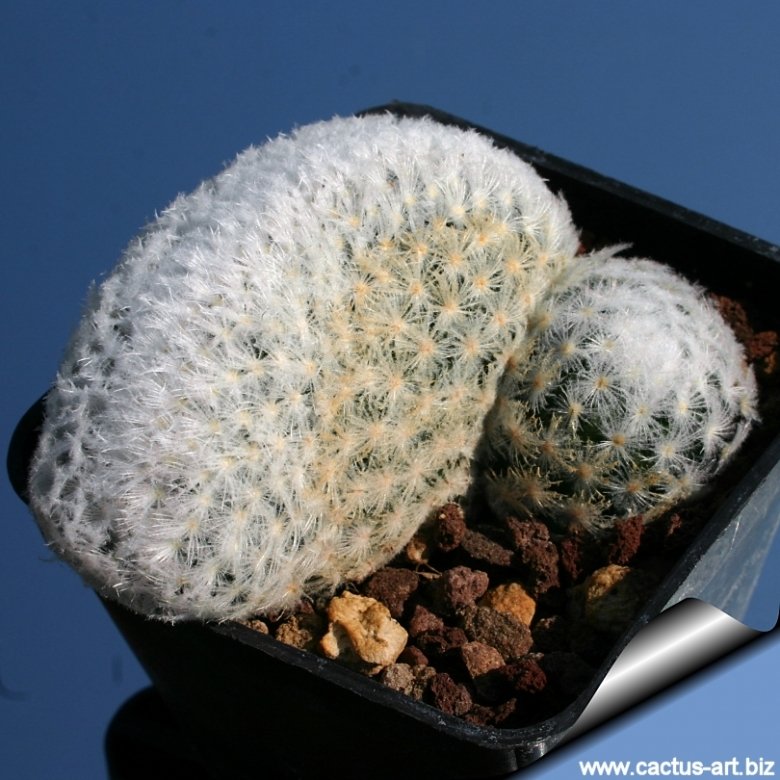
Mammillaria lasiacantha a tiny usually unbranched or slowly clustering cactus, deep-seated in substrate and inconspicuous. Adults of M. lasiacantha usually have glabrous spines, but in some populations all plants may retain plumose spines at maturity.
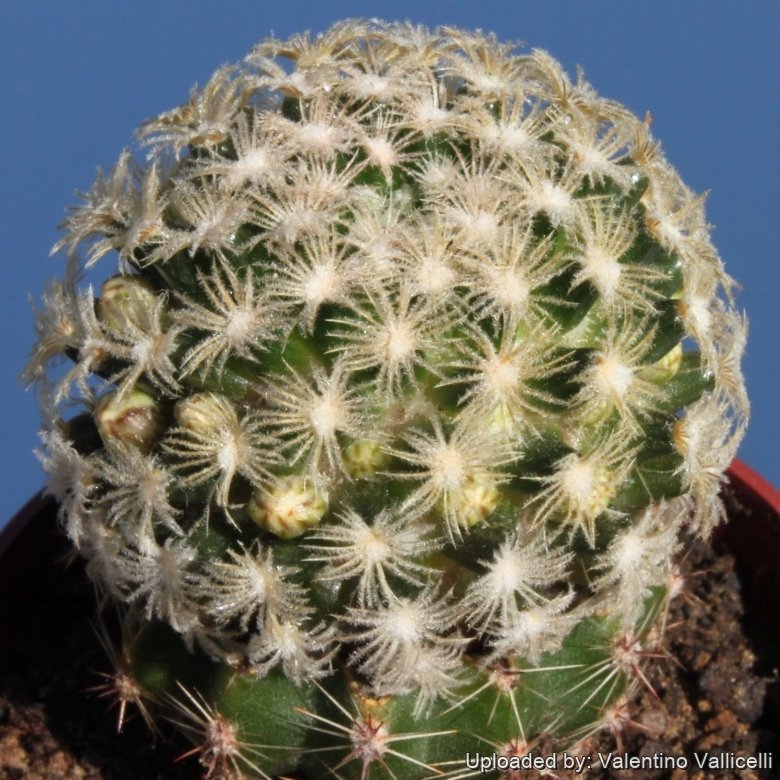
Stems: Depressed-spheric to short cylindric, 1-3.5cm wide × 1,5-7 cm tall. axils bare.
Roots: Diffuse not enlarged.
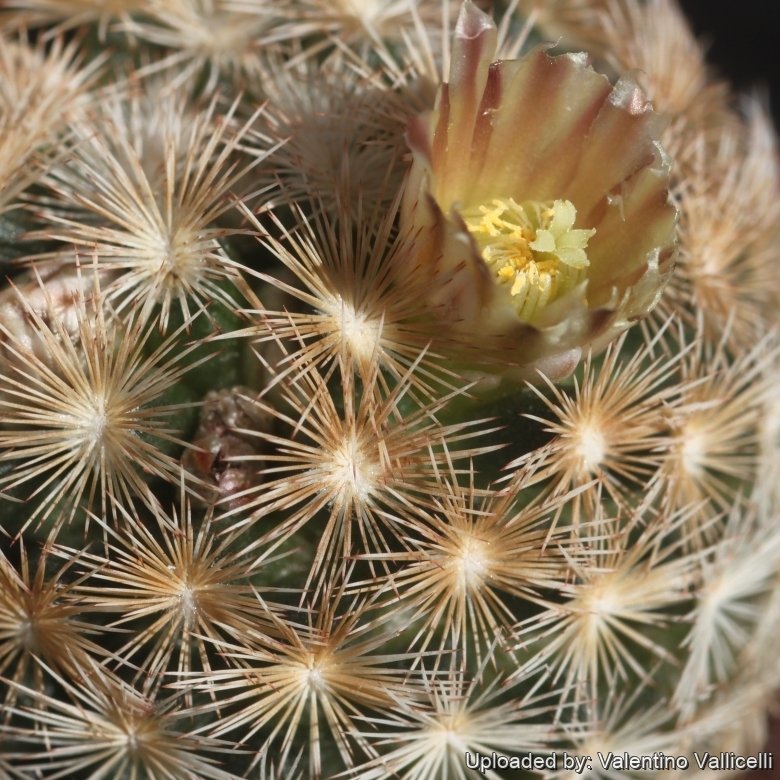
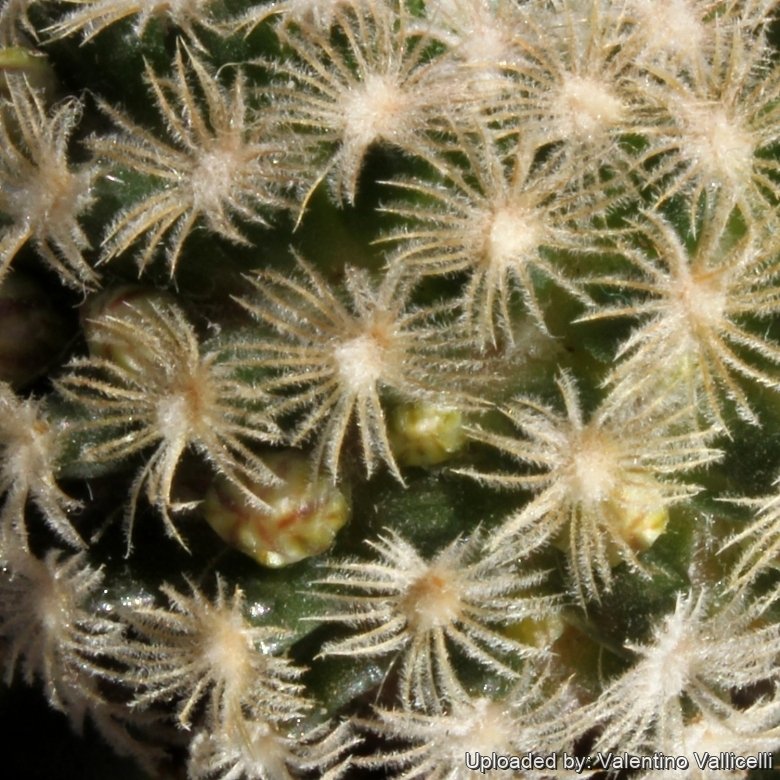
Spines: 40-80 per areole, in several series but all equally thin, mostly appressed, white or very pale pink, often minutely tipped pinkish brown, innocuous, bristlelike, 0,5-6 mm, glabrous to plumose, all interpreted as radial, innermost spines shortest; No central spines.
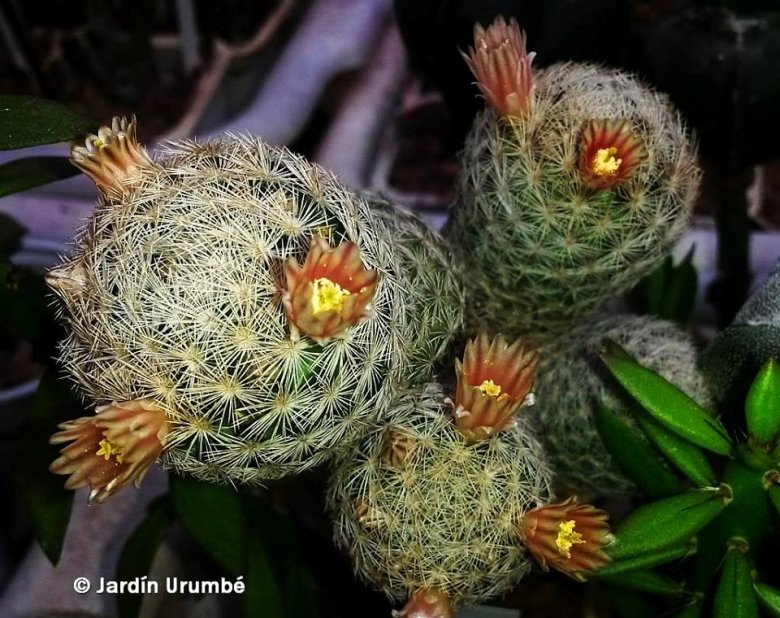
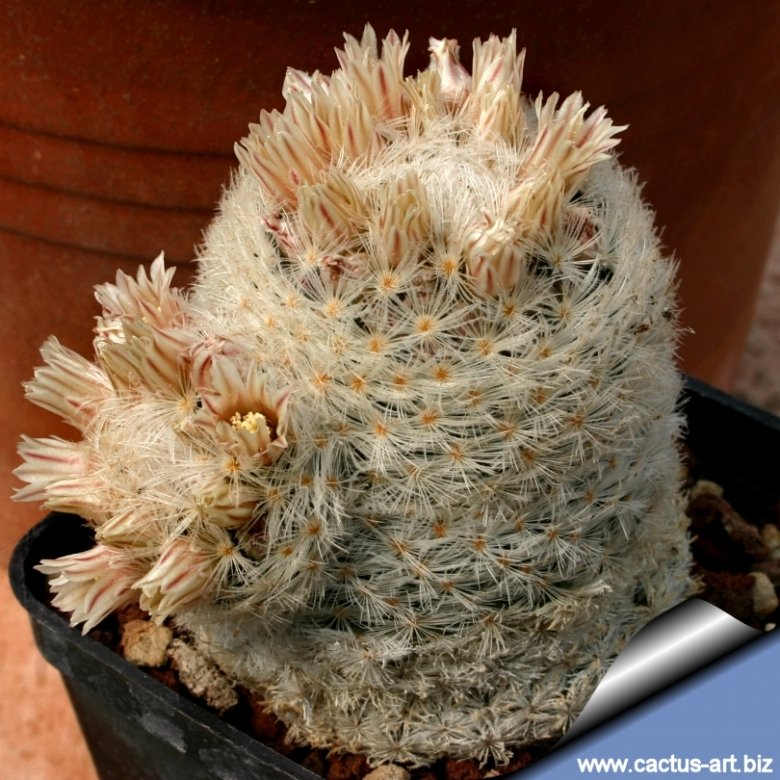
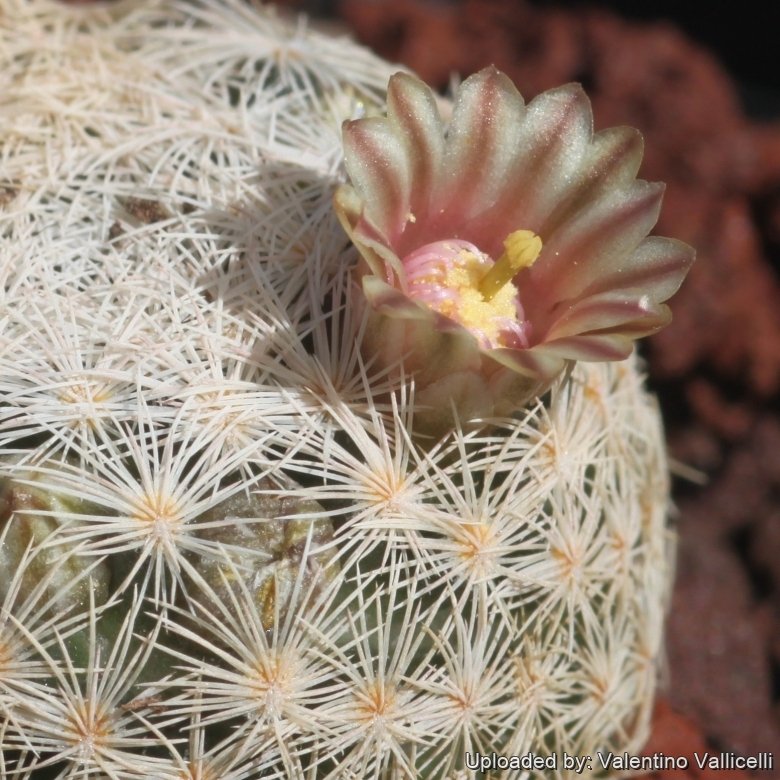
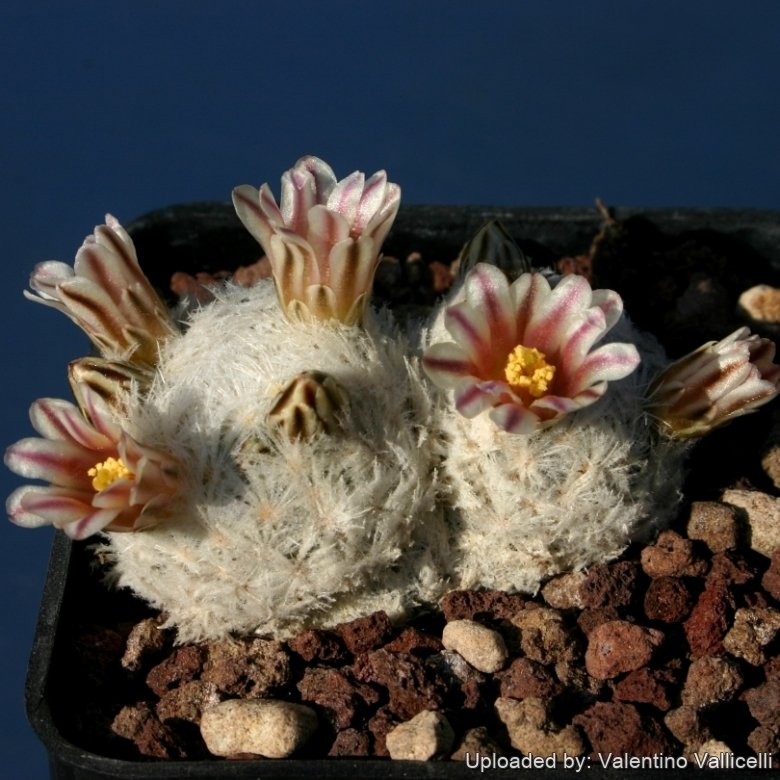
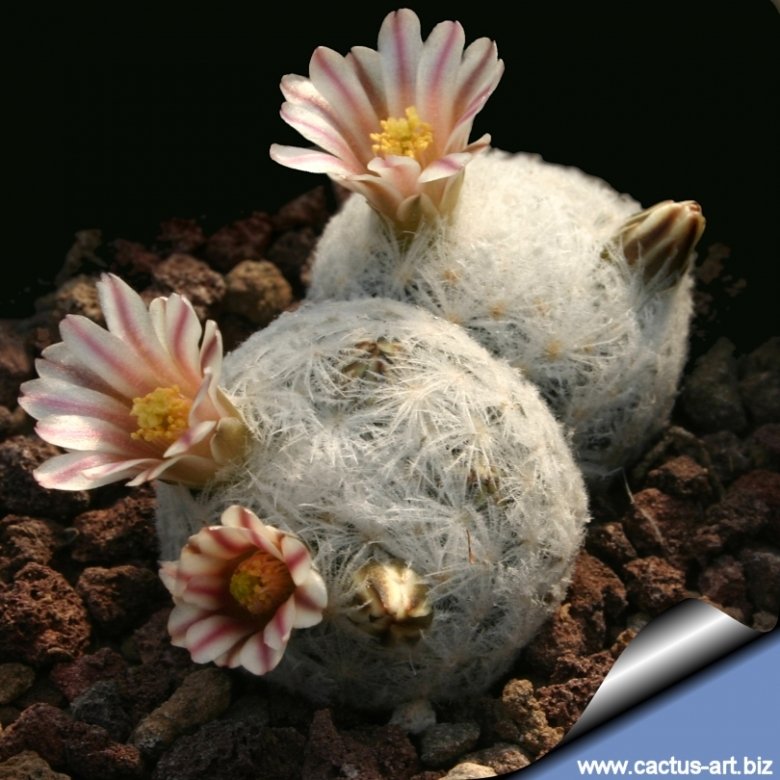
Flowers: 1-2,5 cm; white or cream, usually with sharply defined midstripes of green, yellow, tan, pink, pale purple, or reddish, blooming from January to March.
Fruits: Scarlet, cylindric or clavate, 10-25 mm long with floral remnant persistent ripening in June August.
Origin and Habitat
USA (Texas, New Mexico), Mexico (Chihuahua, Coahuila, Durango, Nuevo León, San Luis Potosí, Sonora, Zacatecas).
Habitat: Chihuahuan desert scrub with Agave lechuguilla, rocky hills, gravelly slopes, usually on limestone. 500-2100 m.
Cultivation and Propagation
This plant has not the fame to be easy to cultivate, but in good conditions with very careful application of water and excellent ventilation, it grows without difficulty. Be careful to encourage slow growth, but if you succeed in growing a colony of stems, then the results will repay all the growing efforts.
Growing rate: It is a slow growing species that will make clumps given the best conditions, but rewards the patient grower with a beautiful displays of flowers since from an early age.
Soil: Requires excellent drainage provided by a very permeable open cactus soil (With not less than 50% grit content). Avoid the use of peat or other humus sources in the potting mixture.
Repotting: Repot every 2-3 years. Use small sized pots.
Feeding: During the beautiful season enrich the soil using a fertilizer rich in potassium and phosphorous, but poor in nitrogen, because this chemical element doesn’t help the development of succulent plants, making them too soft and full of water.
Watering: Water should be carefully applied and only when the soil is dry to the touch, as this cliff-dwelling species is very prone to root rot. Allow soil to drain thoroughly before watering again. Additionally, water should not be applied from above, as the feathery spines will retain water and add to rotting problems, but in good conditions with excellent ventilation, in bright light, it usually grows without particular difficulty. Do not water in the winter.
Light: Outside full sun or afternoon shade, inside it needs bright light, and some direct sun. Direct sun encourages flowering and heavy spine production.
Hardiness: Protect from frost. But it’s hardy to -5°C if kept dry. A winter rest that allows the plant to shrivel (perhaps losing up to 25% of its summer height) will encourage flowering and long time survival.
Pests & diseases: It may be attractive to a variety of insects, but plants in good condition should be nearly pest-free, particularly if they are grown in a mineral potting-mix, with good exposure and ventilation. Nonetheless, there are several pests to watch for:
- Red spiders: Red spiders may be effectively rubbed up by misting the vulnerable plants every day
- Mealy bugs: occasionally they develop aerial into the new growth among the wool with disfiguring results, but the worst types develop underground on the roots and are invisible except by their effects.
- Scales: Scales are rarely a problem.
- Rot: it is only a minor problem with cacti if the plants are watered and “aired” correctly. If they are not, fungicides won’t help all that much.
Propagation: Direct sow after last frost or (rarely) cuttings. Seeds germinate in 7-14 days at 21-27° C in spring, remove gradually the glass cover as soon the plants will be well rooted (ca 1-2 weeks) and keep ventilated, no full sun for young plants!
Bibliography
Major references and further lectures
-
David Hunt, Nigel Taylor “The New Cactus Lexicon” DH Books, 2006 ISBN 0953813444, 9780953813445
-
John Pilbeam (1999) “Mammillaria The Cactus File Handbook” Nuffield Press. ISBN 10: 0952830280
Nathaniel Lord Britton, Joseph Nelson Rose “Cactaceae: Descriptions and Illustrations of Plants of the Cactus Family” Courier Dover Publications, 1963
-
Edward F. Anderson “The Cactus Family” Timber Press, 2001
-
James Cullen, Sabina G. Knees, H. Suzanne Cubey “The European Garden Flora Flowering Plants: A Manual for the Identification of Plants Cultivated in Europe, Both Out-of-Doors and Under Glass”Cambridge University Press, 11/ago/2011
From llifle page Cactus lasiacanthus var. denudatus
Description
Mammillaria lasiacantha is another very variable species usually unbranched or slowly clustering, deep-seated in substrate and inconspicuous. The variety “denudata” distinguishes from the common Mammillaria lasiacantha for its always glabrous spines. For all other characteristics it is comparable to the standard from. In other populations of Mammillaria lasiacantha the plants may retain plumose spines at maturity.
Stems: Depressed-spheric to short cylindric, 1-3,5 cm wide × 1,5-7 cm tall. Axils bare.
Roots: Diffuse not enlarged.
Spines: 40-80 per areole, in several series but all equally thin, mostly appressed, white or very pale pink, often minutely tipped pinkish brown, innocuous, bristlelike, 0,5-6 mm, glabrous to plumose, all interpreted as radial, innermost spines shortest; No central spines.
Flowers: 1-2,5 cm; white or cream, usually with sharply defined midstripes of green, yellow, tan, pink, pale purple, or reddish, blooming from January to March.
Fruits: Scarlet, cylindric or clavate, 10-25 mm long with floral remnant persistent ripening in June August.
Origin and Habitat
Big Bend National Park (Brewster County), Texas, USA.
Source: Cactus lasiacanthus var. denudatus, LLIFLE - Encyclopedia of living forms, CC-BY-SA, retrieved 2026-10-25.
From llifle page Mammillaria neobertrandiana
Description
This plant has not the fame to be easy to cultivate, but in good conditions with excellent ventilation, it grows without difficulty. It is especially sensitive to overwatering. So careful watering and an open mineral potting soil are a must. Avoid the use of peat or other humus sources in the potting mixture. Don’t add limestone to the potting mix which must be moderately acidic. Can be sensitive to frost (but if dry they are resistant to -5° C). Requires maximum sun exposure to reach its full potential and to achieve success in flowering. A winter rest that allows the plant to shrivel (perhaps losing up to 25% of its summer height) will encourage flowering and long time survival. Be careful to encourage slow growth. Provide very good ventilation.
Propagation: Direct sow after last frost. (it usually doesn’t produces offsets).
Origin and Habitat
Lerdo, Durango
Source: Mammillaria neobertrandiana, LLIFLE - Encyclopedia of living forms, CC-BY-SA, retrieved 2026-10-25.
From llifle page Escobariopsis lasiacantha subs. wohlschlageri
Description
Plants are usually unbranched or slowly clustering, deep-seated in substrate, and inconspicuous.
Stems: Flat-globular , 1 to 3 cm high, 2.5 - 6 cm in diameter. The axil is naked.
Roots: Diffuse, not enlarged.
Radial spines: 26 - 36, glassy white, brown tipped, 2 - 6 mm long.
Central spines: Absent.
Flowers: 18 - 20 mm long, 16 - 18 mm in diameter, white or cream, usually with sharply defined midstripes of tan-pink or brown,
Blooming season: From January to March
Fruits: Scarlet, cylindrical or clavate, 10-25 mm long, with floral remnant persistent, ripening in June August.
Origin and Habitat
Zacatecas, Mexico.
Altitude: 2100-2400 metres above sea level.
Source: Escobariopsis lasiacantha subs. wohlschlageri, LLIFLE - Encyclopedia of living forms, CC-BY-SA, retrieved 2026-10-25.
From llifle page Mammillaria sp. SB500 Cuatrocienagas, Coahuila, Mexico
Description
Mammillaria lasiacantha are usually unbranched or slowly clustering, deep-seated in substrate and inconspicuous.
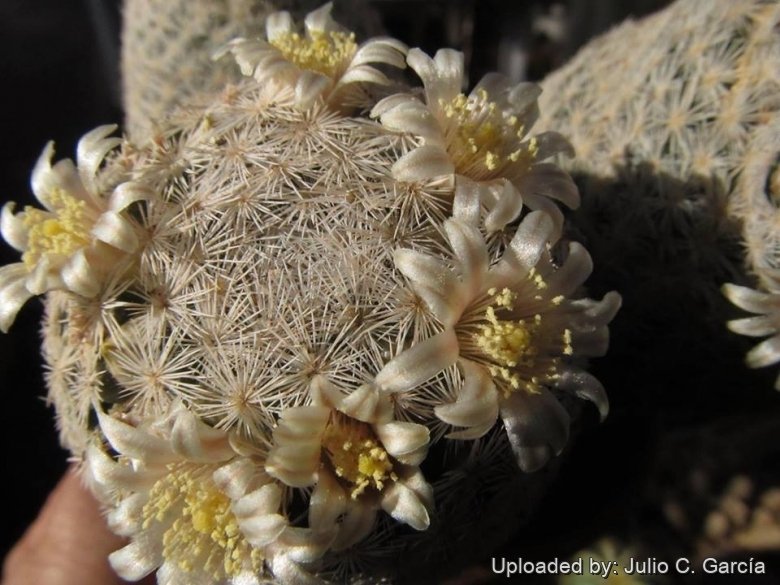
Field number: SB500 Cuatrocienagas, Coahuila, Mexico: Adults of Mammillaria lasiacantha usually have glabrous spines, but in the SB500 population all plants may retain plumose spines at maturity, moreover the stem are very small.
Stems: Depressed-spheric to short cylindric, 1-3,5 cm wide and tall. Axils bare.
Roots: Diffuse not enlarged.
Spines: 40-80 per areole, in several series but all equally thin, mostly appressed, white or very pale pink, often minutely tipped pinkish brown, innocuous, bristlelike, 0,5-6 mm, plumose, all interpreted as radial, innermost spines shortest. No central spines.
Flowers: 1-2,5 cm tall an in diameter, white or cream, usually with sharply defined midstripes of green, yellow, tan, pink, pale purple, or reddish, blooming from January to March
Fruits: Scarlet, cylindric or clavate, 10-25 mm long with floral remnant persistent ripening in June August.
Origin and Habitat
Cuatrocienagas, Coahuila, Mexico
Source: Mammillaria sp. SB500 Cuatrocienagas, Coahuila, Mexico, LLIFLE - Encyclopedia of living forms, CC-BY-SA, retrieved 2026-10-25.
From llifle page Mammillaria roemeri
Description
This is a small solitary or clustered species, that grows almost buried in the soil, it has a characteristic feathered appearance.
Stem: Without latex, flattened, globose, sunken apically, solitary or clumping, 10 - 20 mm high and to 35 mm in diameter.
Roots: Large taproot up to 10 cm long.
Tubercles: Conical, somewhat soft, dark green to brownish green, 3 - 4 mm long, 2 - 3 mm in diameter. The axil is naked
Radial spine: 25 - 32, radiating, straight or curved, feathery , glassy white, 1.5 - 2.3 mm long, soft.
Central spine: None.
Flower: Funnelform, 13 - 15 mm long and wide, whitish to cream- colored with green flush. Inner petals with pink midveins on the sepals. Stigmas are yellow. The placement of the flowers is very different from typical lasiacanthae species, in which the bud emerges from axils very close to the apex, of the plant. Mammillaria roemeri presents its flowers from older areoles, mid way down the body of the plant, in the fashion of Mammillaria crucigera or huitzlipochtlii, although it must be emphasised there is no suggestion of kinship between it and these.
Blooming season: In habitat it flowers between November and January, but in cultivation (Europe) its bloom appear in April.
Fruit: Green, 3 - 4 mm long and 3 mm wide.
Seed: Black, spherical, 1.1 mm long and 0.95 mm in diameter.
Remarks: It is probably only a neotonic (juvenile form which remains so) form of Mammillaria lasiacantha rather than a good species, or a subspecies or simply an aberrant form of one of the Mammillaria lasiancantha group species.. The two plants looks different, but clearly related.
Origin and Habitat
Zacatecas, Mexico.
Habitat: It grows on limestone slabs and fine gravel.
Bibliography
Mitt. Arbeitskreises Mammillarienfr. 26(2): 96-101. 2002
Source: Mammillaria roemeri, LLIFLE - Encyclopedia of living forms, CC-BY-SA, retrieved 2026-10-25.
From llifle page Mammillaria sp. f. cristata SB500 Cuatrocienagas, Coahuila, Mexico
Description
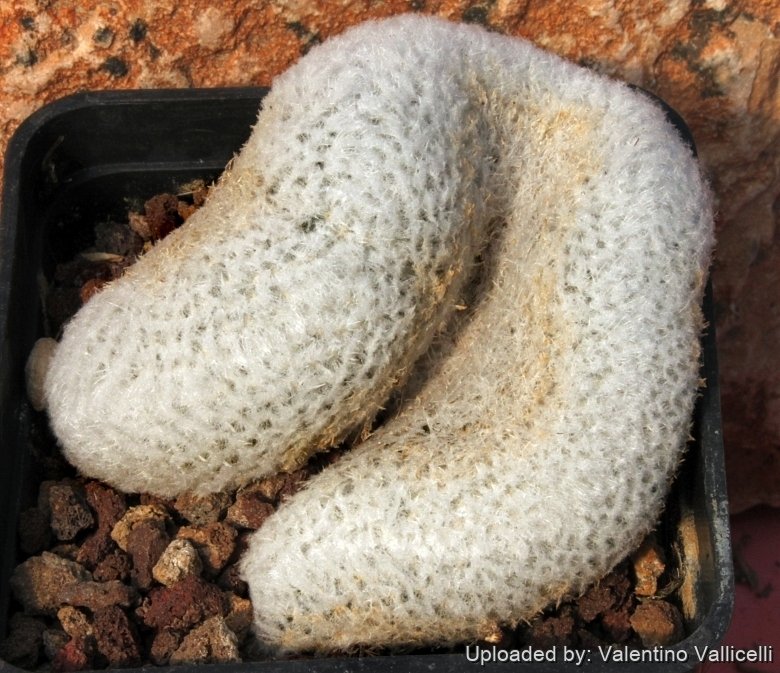
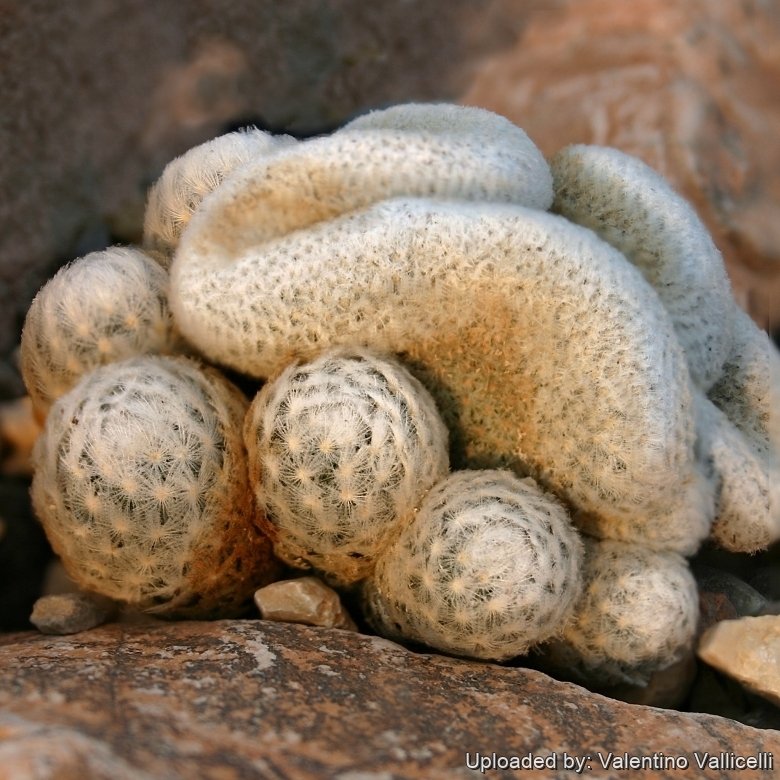
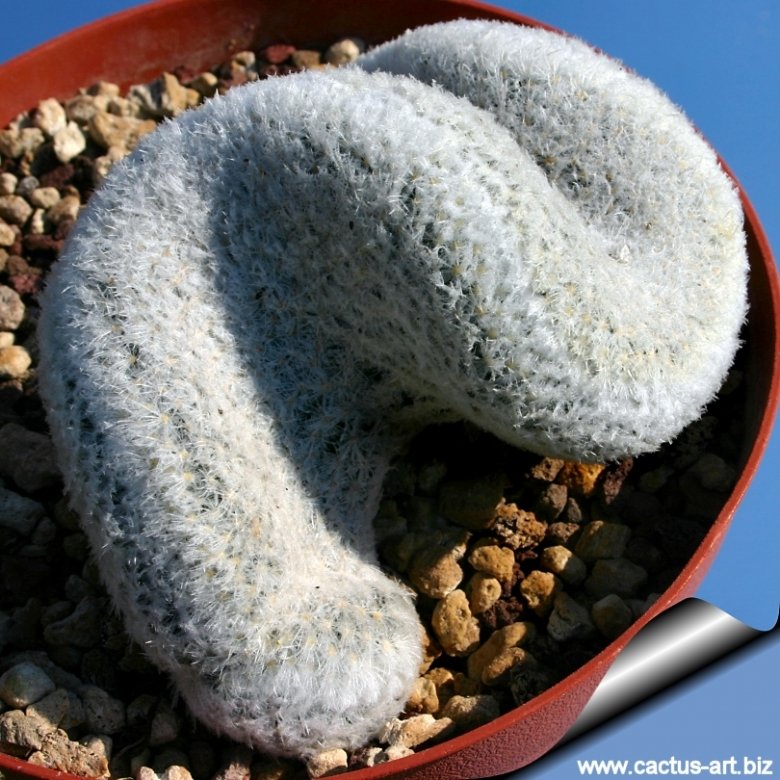
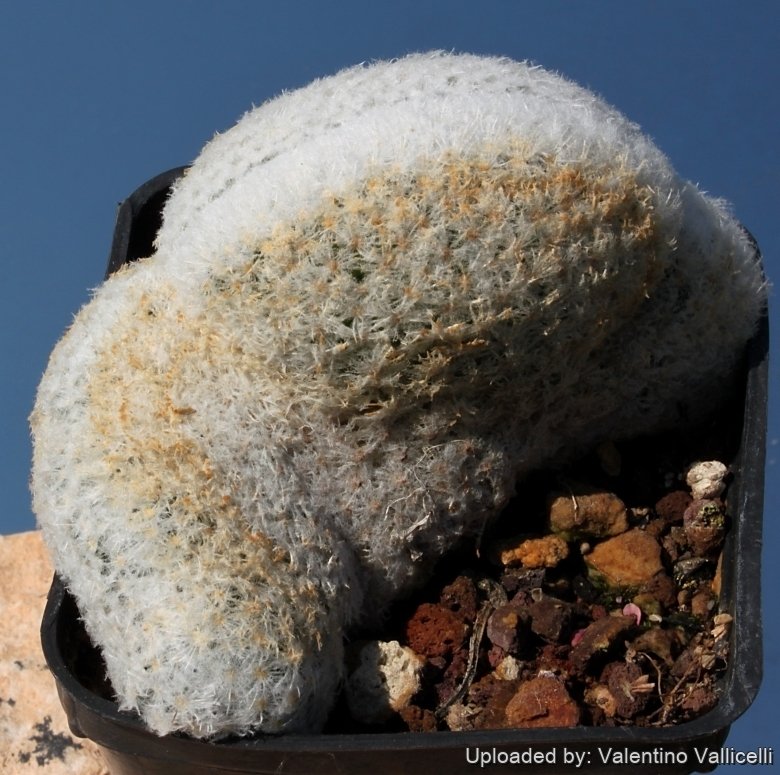
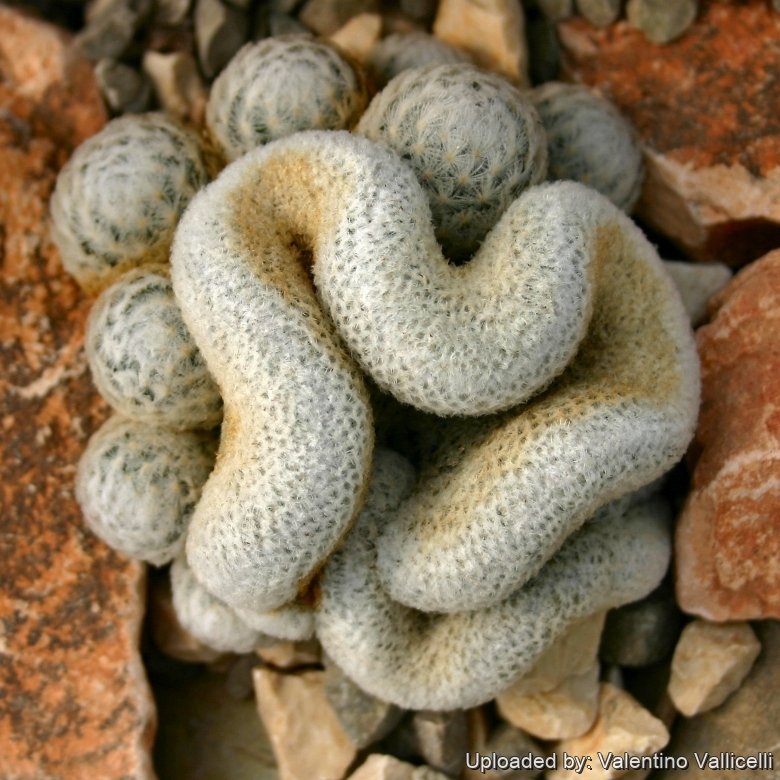
The Mammillaria sp. SB500 Cuatrocienagas, Coahuila, Mexico is a tiny form of Mammillaria lasiacantha that may retain plumose spines at maturity. The crested form - despite to its beauty - is still very rare and sought after by collectors, for its unique features.
Habit: It is a small low growing crested cactus that will slowly forms tangled groups up to 20 cm in diameter.
Stems: Fan-shaped about 3,5 thick,. Axils bare.
Roots: Diffuse not enlarged.
Spines: 40-80 per areole, in several series but all equally thin, mostly appressed, white or very pale pink, often minutely tipped pinkish brown, innocuous, bristlelike, 0,5-6 mm, plumose, all interpreted as radial, innermost spines shortest. No central spines.
Flowers: 1-2,5 cm tall an in diameter, white or cream, usually with sharply defined midstripes of green, yellow, tan, pink, pale purple, or reddish, blooming from January to March
Fruits: Scarlet, cylindric or clavate, 10-25 mm long with floral remnant persistent ripening in June August.
Origin and Habitat
Garden origin.
Cultivation and Propagation
This plant has not the fame to be easy to cultivate, but in good conditions with excellent ventilation, it grows without difficulty. It is sometime seen as a grafted plant but grows very well on its own roots too.
Soil: Use mineral well permeable mineral soil with little organic matter (peat, humus).
Exposure: They need a good amount of light shade to full sun this help to keep the plants healthy, although slow growth.
Watering: Water sparingly from March till October (weekly during summertime, if the weather is sunny enough) , with a little fertilizer added. Less or no water during cold winter months, or when night temperatures remain below 10° to prevent root loss. It is sensitive to overwatering (rot prone).
Fertilization: Feeding may not be necessary at all if the compost is fresh then, feed in summer only if the plant hasn’t been repotted recently. Do not feed the plants from September onwards as this can cause lush growth which can be fatal during the darker cold months.
Hardiness: Keep perfectly dry in winter at temperatures from 5 to 15 degrees centigrade. (but it is relatively cold resistant and hardy to -5° C, or possibly colder for short periods) In the rest period no high atmospheric humidity!! (Temperature Zone: USDA 9-11)
Crested growth: Unlike ‘monstrose’ varieties of plants, where the variation from normal growth is due to genetic mutation, crested growth can occur on normal plants. Sometimes it’s due to variances in light intensity, or damage, but generally the causes are unknown. A crested plant may have some areas growing normally, and a cresting plant that looks like a brain, may revert to normal growth for no apparent reason. If you have any of the crested part left you need to remove the normal growth and leave the crested part behind this will need to be done regularly.
Propagation: Grafting or cuttings. Plants are usually grafted onto column-shaped cacti but proved to be able to produce their own roots if degrafted. Cuttings will take root in a minimum temperature of 20° C (but better in hot weather). Cuttings of healthy shoots can be taken in the spring and summer. Cut the stem with a sharp, sterile knife, leave the cutting in a warm, dry place for a week or weeks (depending on how thick the cutting is) until a callus forms over the wound. Once the callus forms, the cutting may be inserted in a container filled with firmed cactus potting mix topped with a surface layer of coarse grit. They should be placed in the coarse grit only; this prevents the cut end from becoming too wet and allows the roots to penetrate the rich compost underneath. The cuttings should root in 2 to 6 weeks. Large crested piece must be placed on the soil surface without burying the plant base down in the soil.
Source: Mammillaria sp. f. cristata SB500 Cuatrocienagas, Coahuila, Mexico, LLIFLE - Encyclopedia of living forms, CC-BY-SA, retrieved 2026-10-25.
Cultivars and forms (7)
Varieties (1)
Gallery