Publication: Nat. Pflanzenfam. [Engler & Prantl] xxi. 633 (1925)
Description
Mammillaria rekoi is a small cactus, that in cultivation starts clustering at about 3 to 5 years old from seed. (while in its natural environment it is simple and rarely branches). Pilbeam (1999) and Hunt et al. (2006) accept two subspecies, namely M. rekoi subsp. rekoi and M. rekoi subsp. aureispina (A.B.Lau) D.R.Hunt. There is also a third subspecies leptacantha (A.B.Lau) D.R.Hunt.
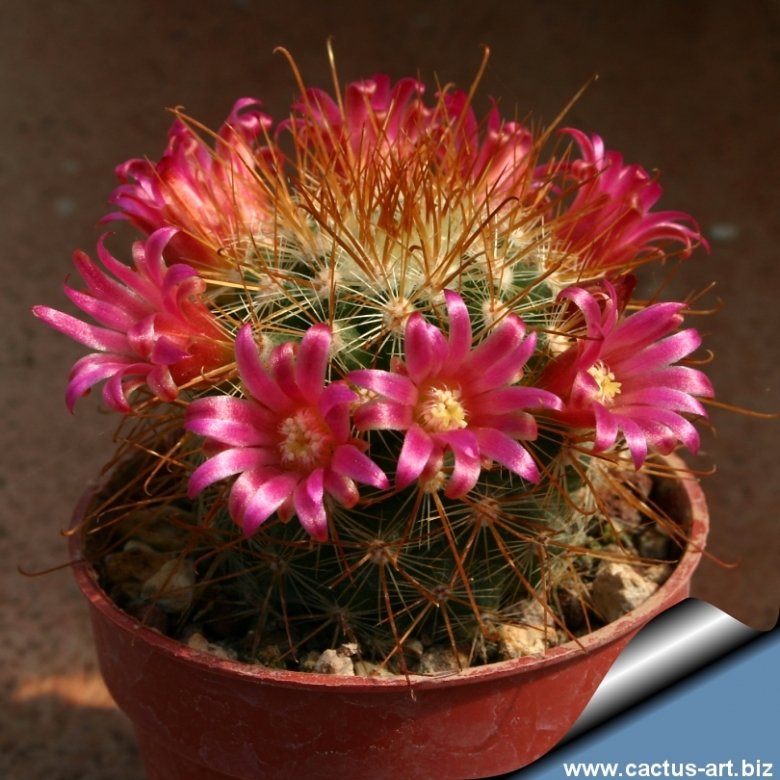
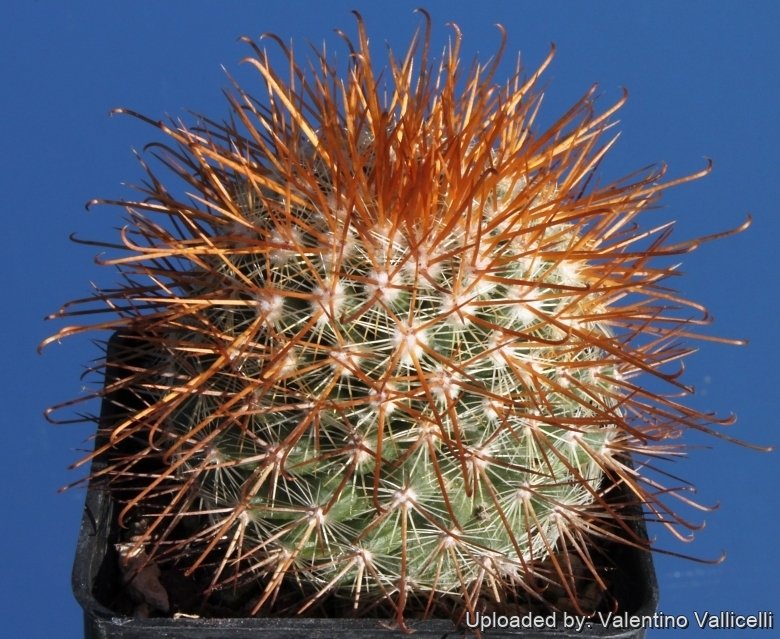
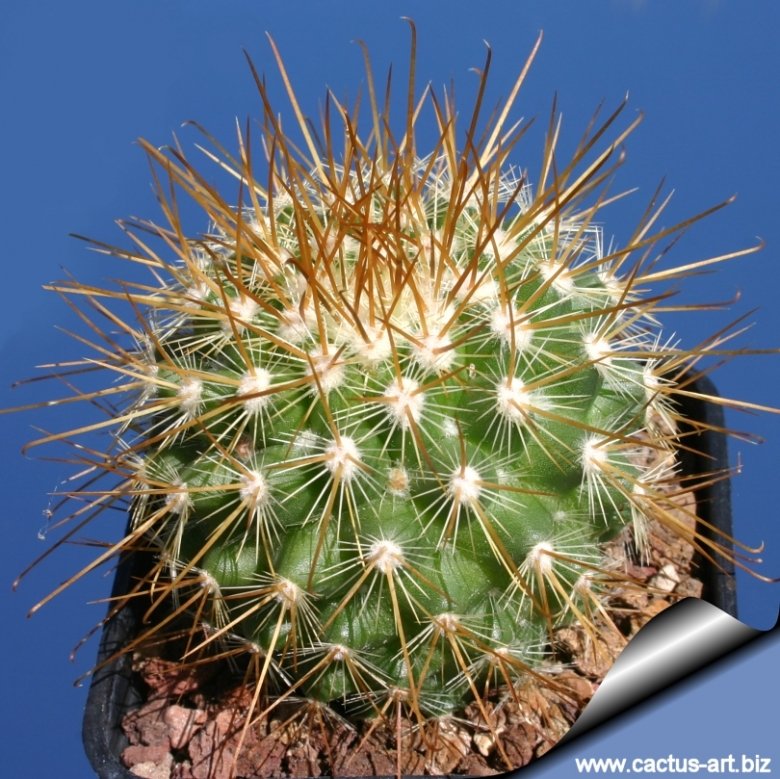
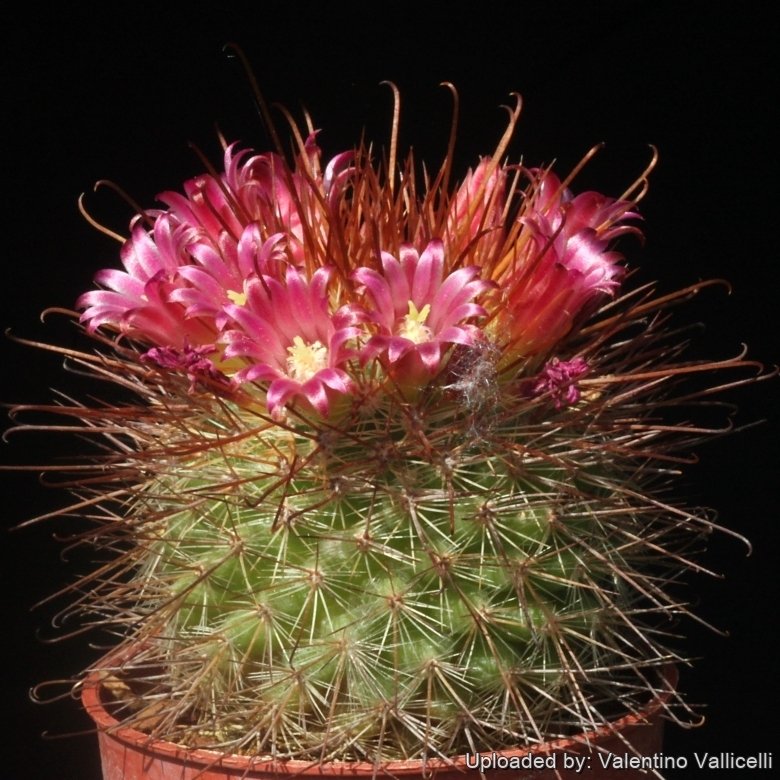
Stems: Globose to short cylindrical, green, 12-15 cm high, 5 - 6 cm in diameter. Sometimes with latex.
Tubercles: Conical to cylindrical. (Tubercle arrangement: 8-13 ) Axil with short white wool and white bristles.
Areoles: Woolly when young.
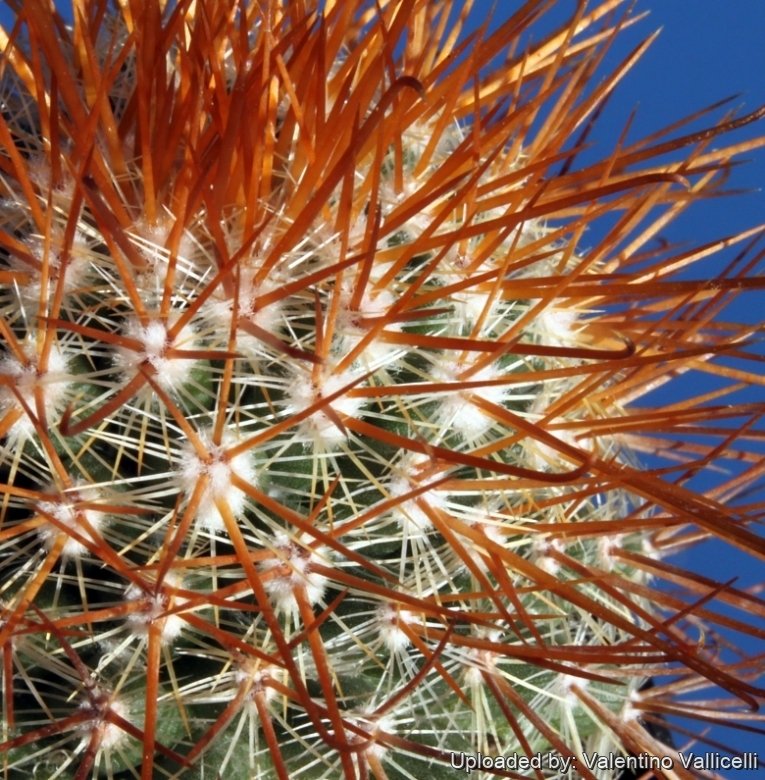
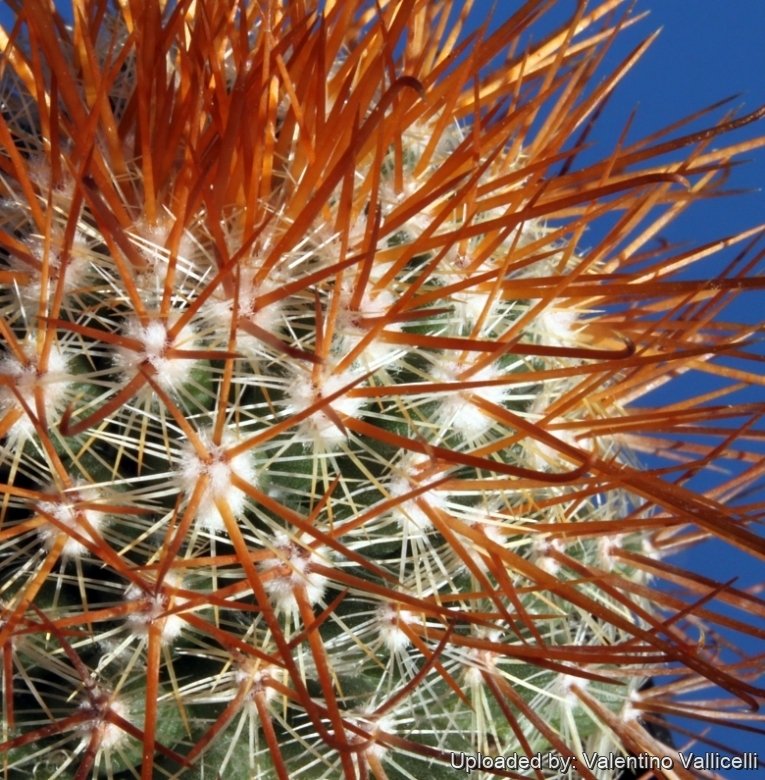
Radial spines: About 20(-30), radiating, finely bristly, needle-like, white to golden yellow, 4 - 6 mm long.
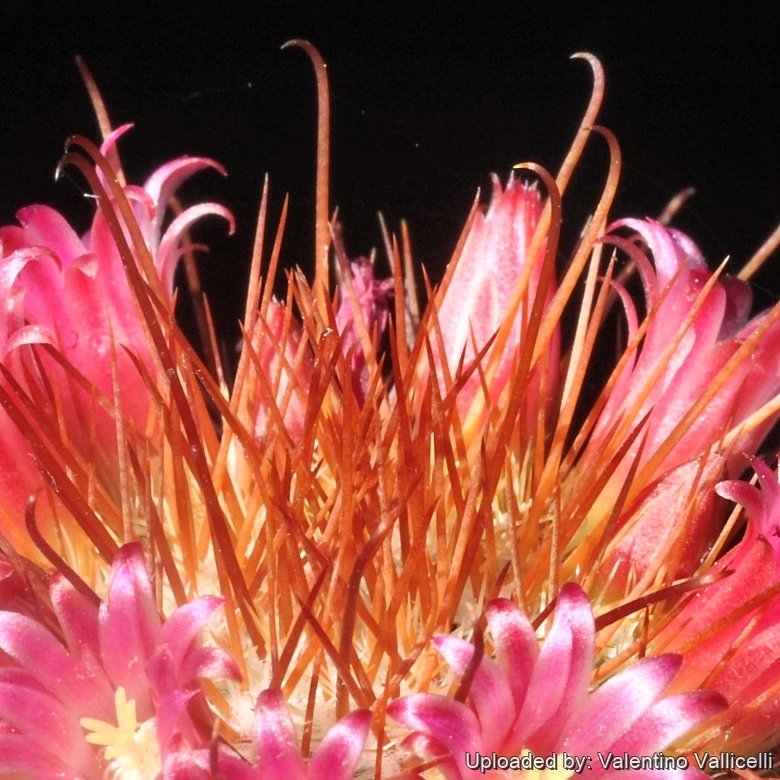
Central spines: 4(-7), much stouter than the radials, yellow, amber or brown, hooked or sometimes straight, 10 - 15 mm long, the lower one sometimes strongly hooked.
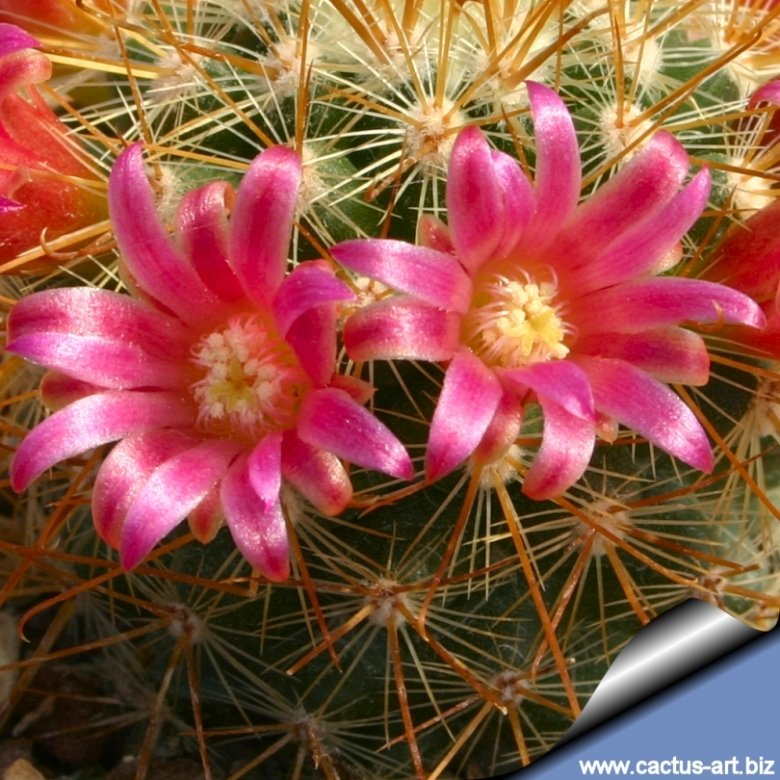
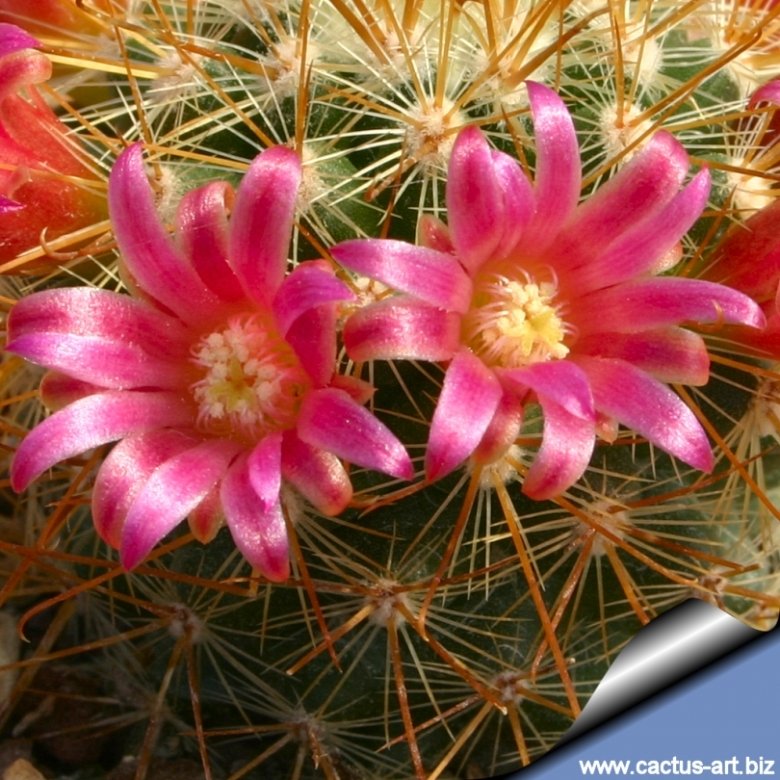
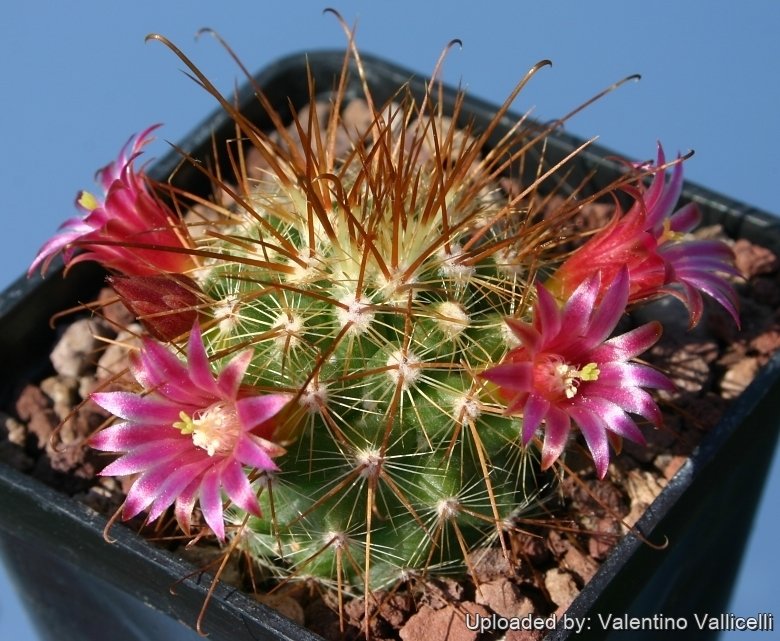
Flowers: Deep purple pink to pink, with darker midribs, up to 15 mm long, stigmas greenish. The petals flare back at the ends, rather than opening widely.
Blooming season: Spring.
Fruits: Red.
Seeds: Brown.
Origin and Habitat
Mammillaria rekoi is a widespread and relatively abundant species endemic to the central and northern Oaxaca, Mexico.
Altitude range: It grows at elevations of 700 to 3,000 metres above sea level.
Habitat and Ecology: This cactus grows in oak forest on limestone cliffs, basalt and clay soils. The species appears to be relatively abundant. There are no specific threats to the species although the habitat where it occurs is being degraded by human activities.
Cultivation and Propagation
Mammillaria rekoi requires excellent drainage provided by porous cactus soil. Easily clustering, it’s an easy bloomer.
Growth rate: Most plants will offset readily, and clumps can be produced in a few years.
Repotting: We suggest repotting every 2-3 years.
Fertilization: During the beautiful season enrich the soil using a fertilizer rich in potassium and phosphorous, but poor in nitrogen, because this chemical element doesn’t help the development of succulent plants, making them too soft and full of water.
Exposure: It prefers bright light and ample airflow. Outside full sun or afternoon shade, inside it needs bright light, and some direct sun.
Moisture: Water the soil abundantly when it is dry to the touch. Allow soil to drain thoroughly before watering again. Do not water much in the winter (rot prone). Overwintering: Protect from frost. But it’s hardy to -5°C if kept dry.
Propagation: Division, direct sow after last frost.
Bibliography
Major references and further lectures
-
John Pilbeam (1999) “Mammillaria The Cactus File Handbook” Nuffield Press.
-
Edward F. Anderson “The Cactus Family” Timber Press, 2001
-
Hernández, H.M. & Arias, S. 2013. Mammillaria rekoi. The IUCN Red List of Threatened Species. Version 2014.3. <www.iucnredlist.org>. Downloaded on 20 May 2015.
From llifle page Mammillaria mitlensis
Origin and Habitat
Oaxaca (Mexico, Northern America)
Source: Mammillaria mitlensis, LLIFLE - Encyclopedia of living forms, CC-BY-SA, retrieved 2026-10-25.
From llifle page Mammillaria pullihamata
Description
Mammillaria pullihamata is a provisional name (nom. inval.) published without Latin description by Backeberg Mammillaria rekoiSN’>13403], but has always strongly hooked central spines (while in M. rekoi sometimes the central spines may be straight).
Habit: Solitary or cespitose in cultivation Mammillaria pullihamata starts clustering at about 3 to 5 years old from seed. (while in its natural environment it is simple and rarely branches).
Stems: Globose to short cylindrical, green, 12-15 cm high, 5-6 cm in diameter. Sometimes with latex.
Tubercles: Conical to cylindrical. (Tubercle arrangement: 8-13) Axil with short white wool and white bristles.
Areoles: Woolly when young.
Radial spines: About 20(-30), radiating, finely bristly, needle-like, white to golden yellow, 4 - 6 mm long.
Central spines: 4(-7), much stouter than the radials, yellow, amber or brown, hooked or sometimes straight, 10 - 15 mm long, the lower one sometimes strongly hooked.
Flowers: Deep purple pink to pink, with darker midribs, up to 15 mm long, stigmas greenish. The petals flare back at the ends, rather than opening widely.
Blooming season: Spring.
Fruits: Red.
Seeds: Brown.
Origin and Habitat
Portillo Nejapa, Oaxaca (Mexico, Northern America)
Altitude range: 1100-1500 metres above sea level.
Habitat and ecology: It is often found growing together with Nyctocereus chontalensis.
Cultivation and Propagation
It requires excellent drainage provided by porous cactus soil. We suggest repotting every 2-3 years. Prefers bright light and ample airflow. Outside full sun or afternoon shade, inside it needs bright light, and some direct sun. Water the soil abundantly when it is dry to the touch. Allow soil to drain thoroughly before watering again. Do not water much in the winter (Rot prone). Protect from frost. But it’s hardy to -5°C if kept dry. During the beautiful season enrich the soil using a fertilizer rich in potassium and phosphorous, but poor in nitrogen, because this chemical element doesn’t help the development of succulent plants, making them too soft and full of water. Easily clustering, it’s an easy bloomer. Most plants will offset readily, and clumps can be produced in a few years.
Propagation: Division, direct sow after last frost.
Bibliography
Major references and further lectures
-
John Pilbeam (1999) “Mammillaria The Cactus File Handbook” Nuffield Press.
-
Edward F. Anderson “The Cactus Family” Timber Press, 2001
Source: Mammillaria pullihamata, LLIFLE - Encyclopedia of living forms, CC-BY-SA, retrieved 2026-10-25.
From llifle page Mammillaria sanjuanensis
Origin and Habitat
San Juan de Estado, Oaxaca (Mexico, Northern America)
Source: Mammillaria sanjuanensis, LLIFLE - Encyclopedia of living forms, CC-BY-SA, retrieved 2026-10-25.
Cultivars and forms (4)
Gallery