Publication: Cactaceae (Britton & Rose) 3: 102, fig. 109. 1922
Description
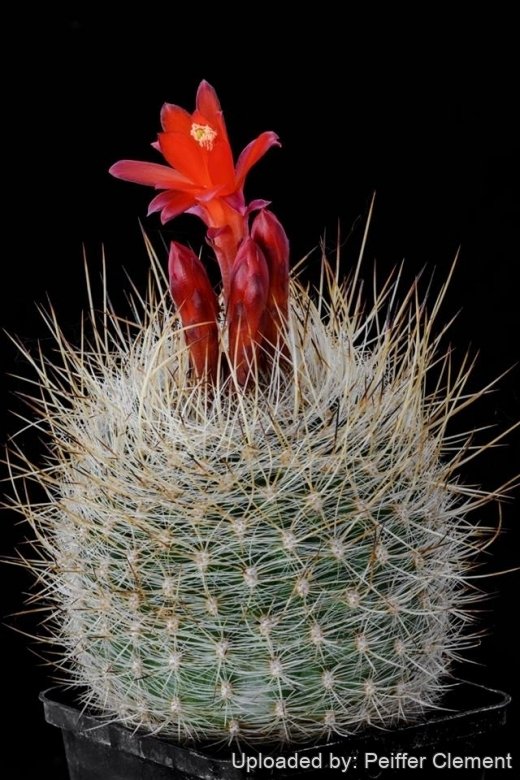
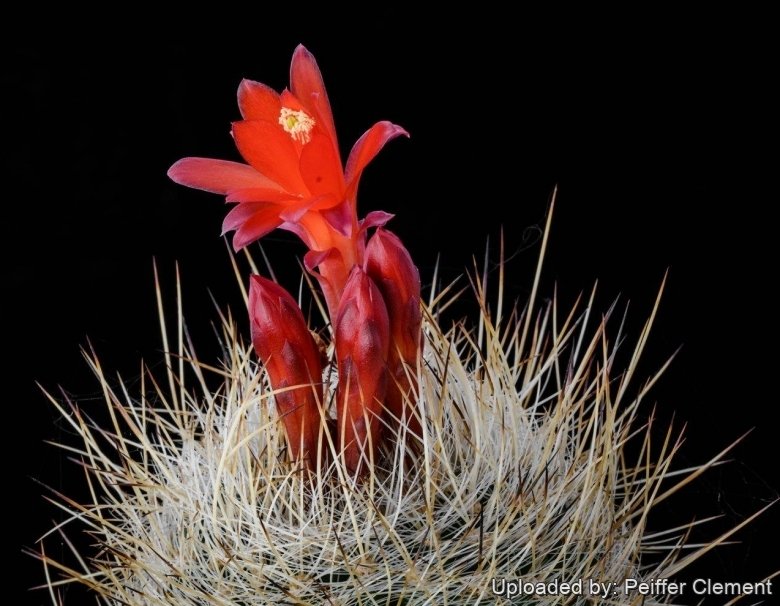
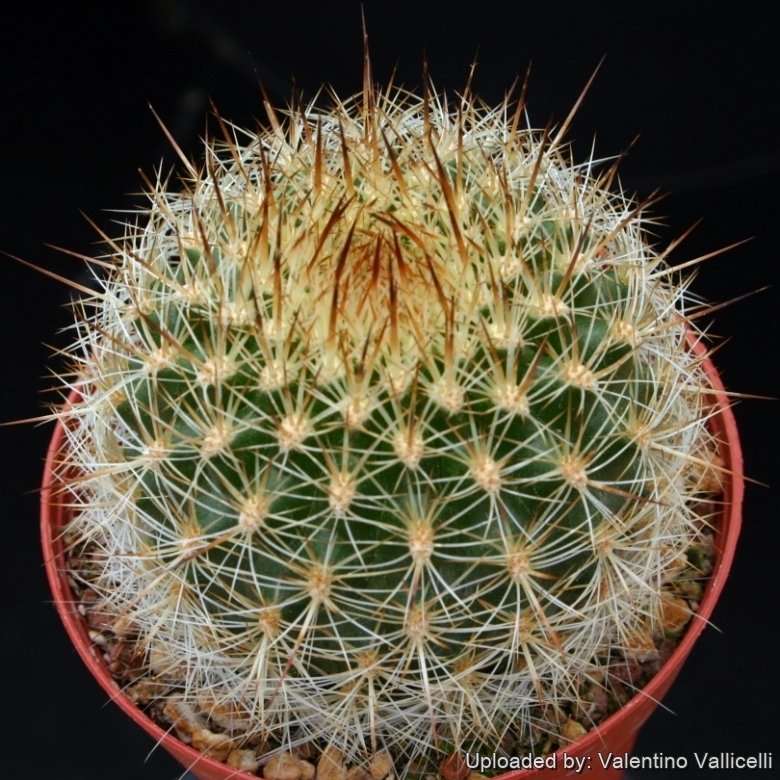
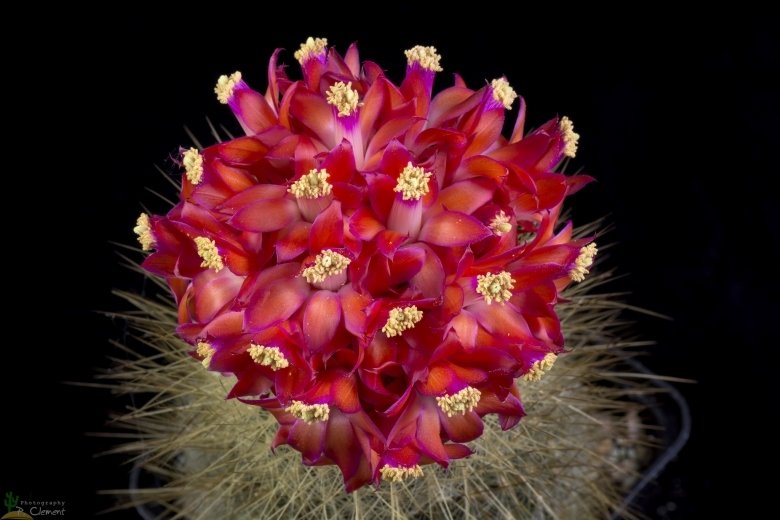
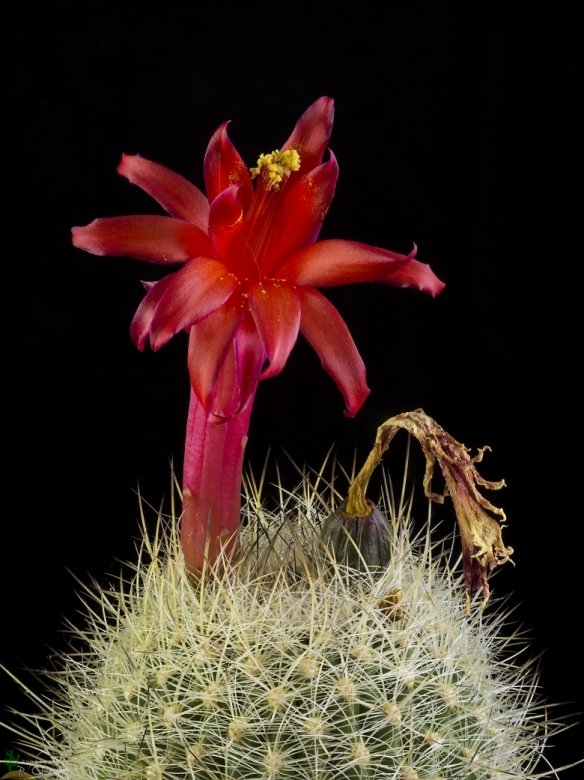
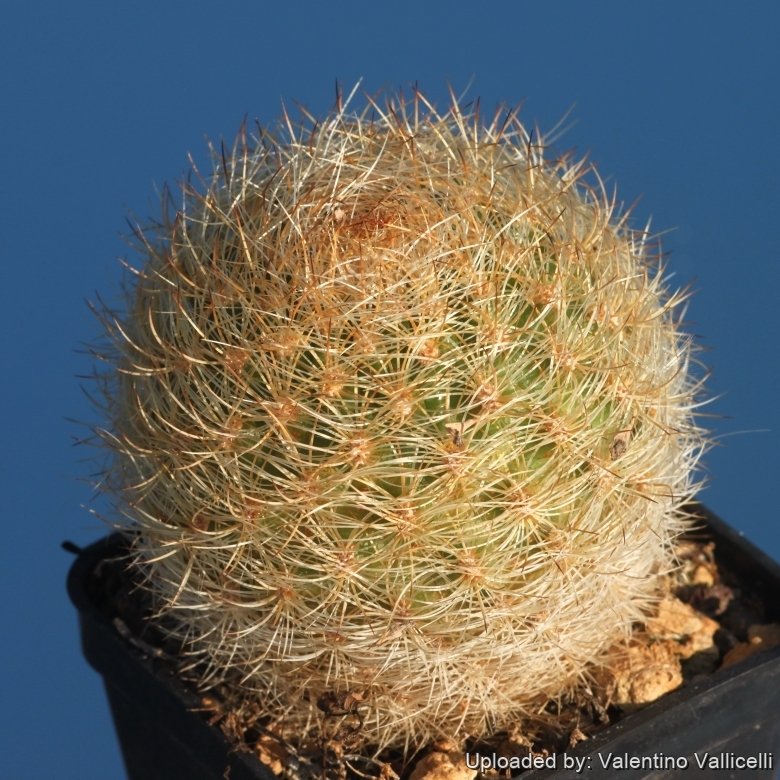
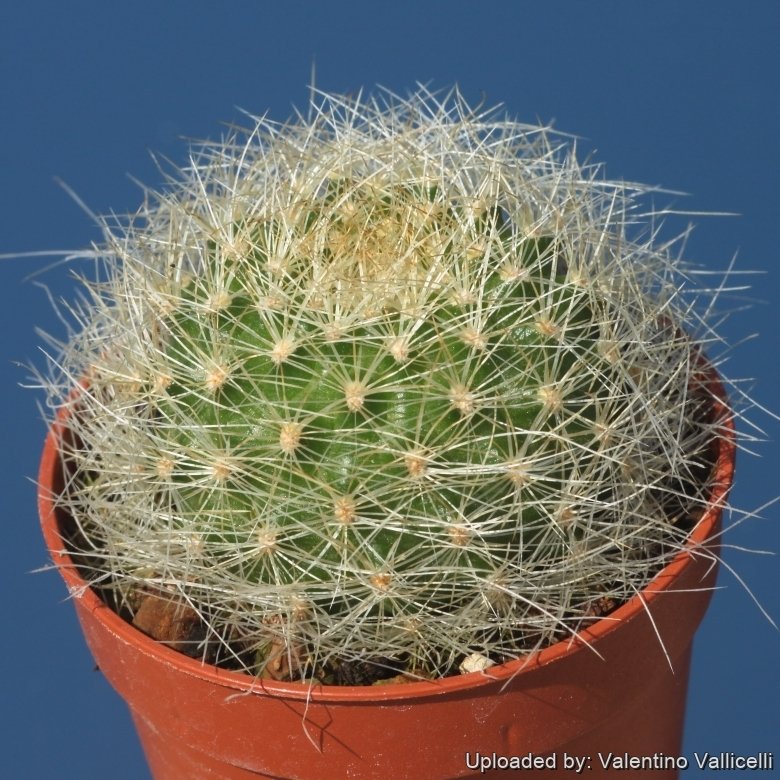
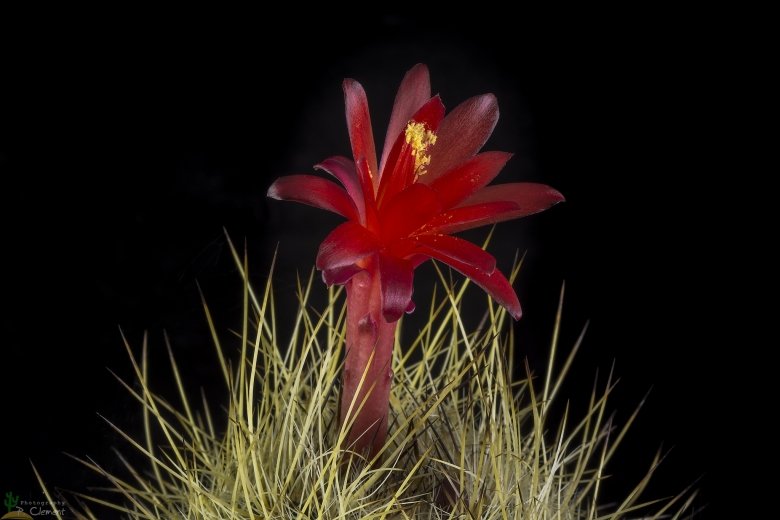
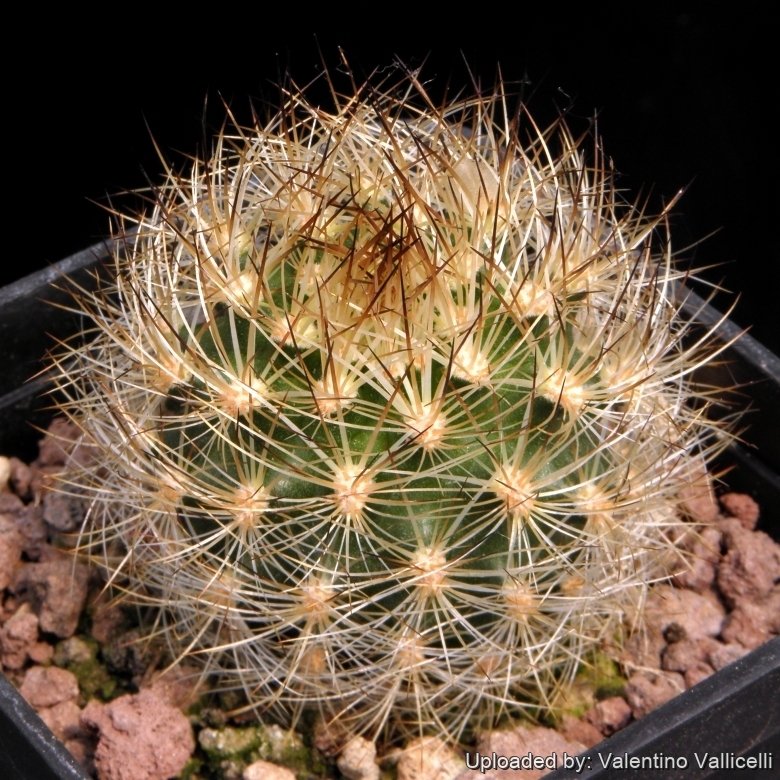
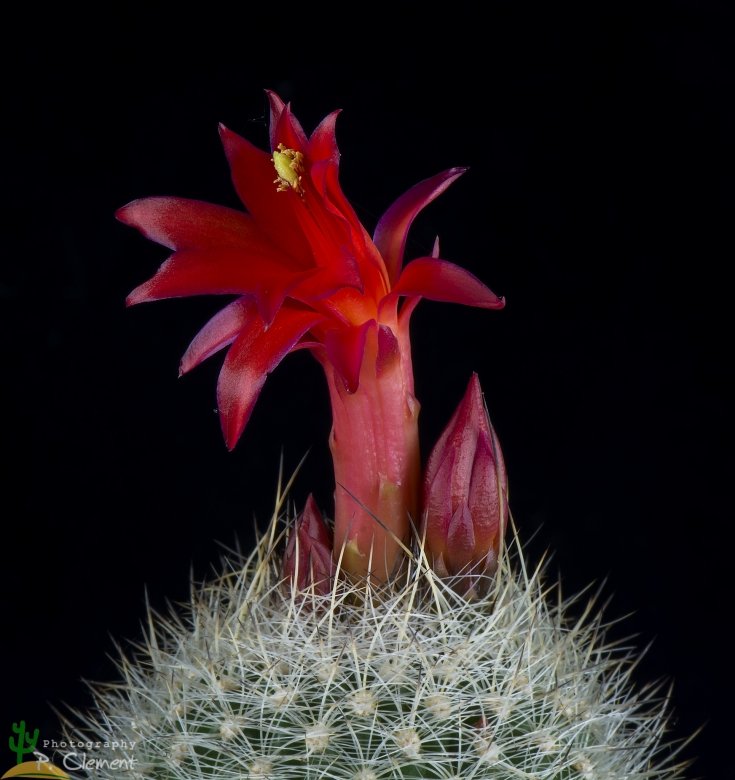
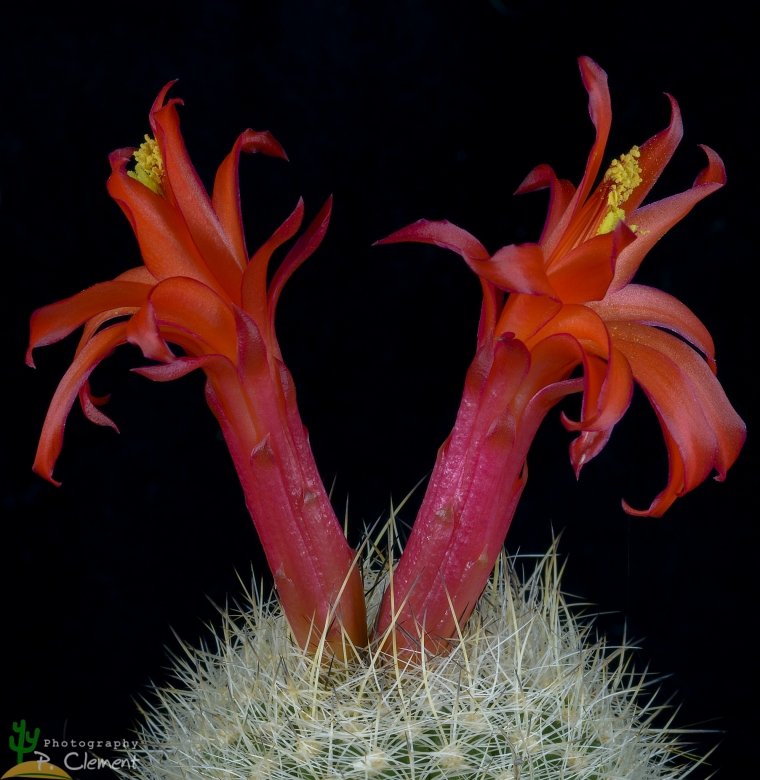
Matucana haynei is a globe-shaped cactus densely covered by white-greyish, hair-like spines. The purple, tubular flowers project beyond the spines and present a most attractive appearance at flowering time. It is polymorphic in the wild and divided into several subspecies and forms varying in spine size, colour and density, as well as in growth habit and flowers colour.
Stem: Generally single but occasionally many-stemmed, globular to broad cylindrical, 8-10(-20) cm in diameter, up to 30 cm high, green, densely covered and almost invisible under the numerous spines.
Ribs: (14-)25-30, tuberculate.
Areoles: Set closely together, with an abundance of wool when young, but without any when old.
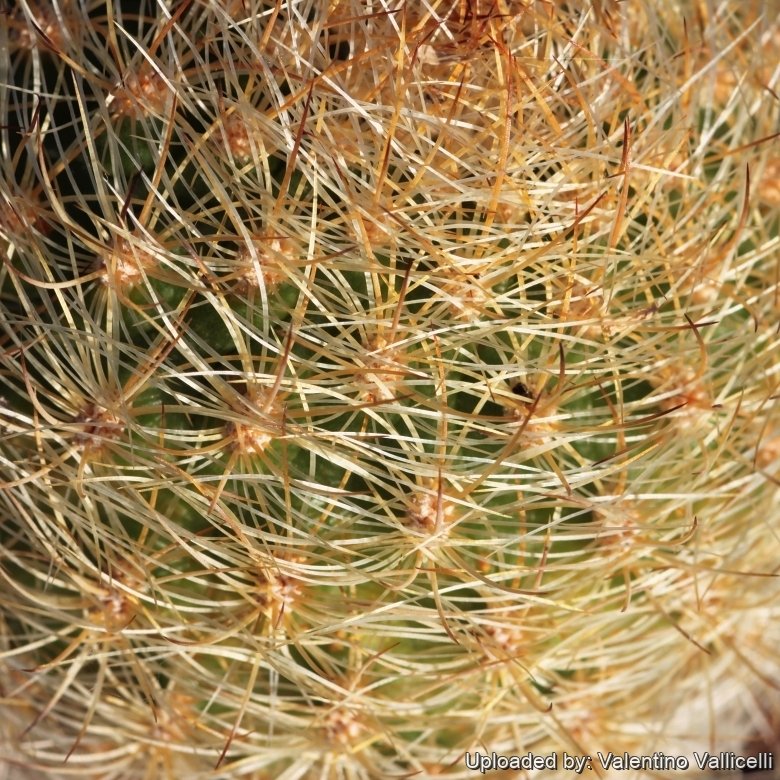
Spines: Variable, white to pale brown, grey with age.
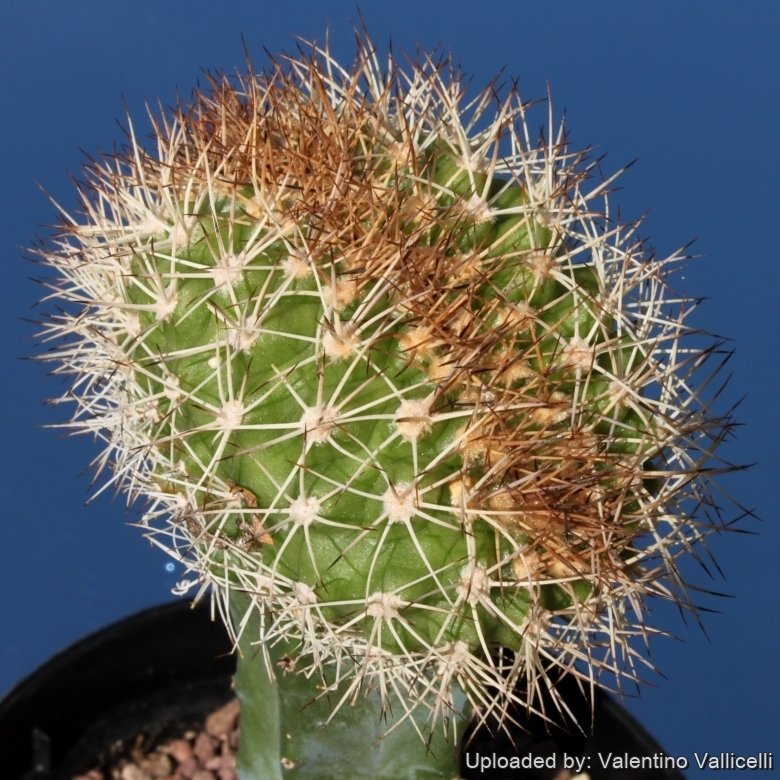
Central spines: 1 to 20 stouter, pungent, usually (1-)2-3,5(-7) cm long, dark-tipped, developed only on plants of flowering-size, usually white to grey with dark or blackish tips.
Radial spines: Numerous ( 14 to 45) 8-40 mm long weak, bristly, glassy white to yellowish brown.
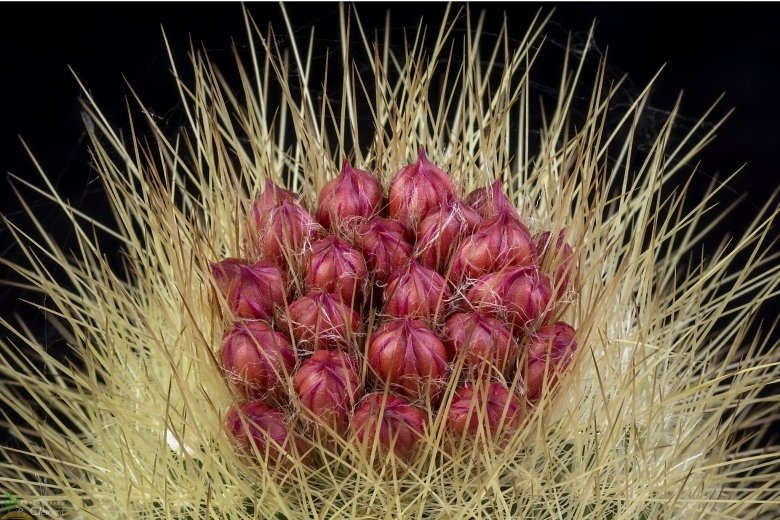
Flowers: Apical, (4-)6-7(-9) cm long , to 4 cm in diameter, bilaterally symmetrical to nearly regular, limb scarcely oblique, with a long slender tube; scales on ovary and tube few, small, ovate, naked in their axil. The segments acute, scarlet to salmon to purplish crimson. Anthers yellow. Stigma-lobes green.
Fruit: Small, spherical to club shaped reddish-green.
Origin and Habitat
It is widespread on the western slope of the Andes in northern Peru (from La Libertad to Arequipa)
Altitude: 2400-4100 m asl.
Cultivation and Propagation
Matucana haynei is a summer-growing species of relatively easy cultivation. This plant is adapted to dry soils and is quite susceptible to over-watering if kept in a non ventilated place.
Growth rate: Matucanas grow slowly in their natural habitats, but in greenhouses they grow more quickly.
Soil: Grow it in a rich, open, sandy-gritty cactus compost. It needs good drainage and a deep pot to accommodate its tap root.
Repotting: Repot in the spring when the roots become cramped. Generally, these plants should be re-potted every other year, in order to provide fresh soil. However, this doesn’t necessarily mean they’ll need larger containers. After repotting, do not water for a week or more.
Exposure: It is suited for sunny-brightly exposure, but can tolerate light shade. However it will do its best only with lots of sun and become stressed with inadequate light which could result in poor growth and unnatural shape. Direct sun is also beneficial in order to get a good spine coloration.
Watering: Water sparingly and keep it completely dry during winter. Mature individuals easily rot and die especially after transplanting so be extremely cautious with watering. Keep dry in winter or when night temperatures remain below 10° C. Water it less than average if in bigger pots.
Fertilization: Feed them once during the growing season with a fertilizer specifically formulated for cactus and succulents (high potash fertilizer with a dilute low nitrogen), including all micro nutrients and trace elements diluted to ½ the strength recommended on the label. They thrive in poor soils and need a limited supplies of fertilizer to avoid the plants developing excess vegetation, which is easily attacked by fungal diseases.
Special need: It is suited for airy exposures. Provide very good ventilation. Nearly all problems occur as a result of overwatering and poor ventilation, especially when weather conditions are dull and cool or very humid. They must have very dry atmosphere.
Hardiness: It likes warmth (recommended minimum winter temperature 5° C) But plants kept perfectly dry but may to survive a light frost.
Pests & diseases: These cacti may be attractive to a variety of insects, but plants in good condition should be nearly pest-free, particularly if they are grown in a mineral potting-mix, with good exposure and ventilation. Nonetheless, there are several pests to watch for:
- Red spiders: Red spiders may be effectively rubbed up by misting the plants from above.
- Mealy bugs: Mealy bugs occasionally develop aerial into the new leaves and flowers with disfiguring results, but the worst types develop underground on the roots and are invisible except by their effects.
- Scales, thrips and aphids: These insects are rarely a problem.
- Rot: Rot is only a minor problem if the plants are watered and “aired” correctly. If they are not, fungicides won’t help all that much.
Propagation: Usually propagated from seeds (seldom produces offsets). The seeds can be sown in pots of fine, well-drained sandy soil, any time during the spring when temperatures are warm. Cover the seeds with a fine layer of grit and water from below with a fungicide to prevent damping off. For the 1-2 weeks cover the pots with a sheet of glass/clear perspex to keep the humidity levels high. Remove the glass and replace it with light shade-cloth and mist once or twice a day for the next two weeks after which most seeds should have germinated. From then on mistings can be reduced to every second and then every third day as the little plants grow. The seedlings should not be disturbed until they are well rooted after which they can be planted separately in small pots.
Bibliography
Major references and further lectures
-
Edward Anderson “The Cactus family” Timber Press, Incorporated, 2001
-
Nathaniel Lord Britton, Joseph Nelson Rose “Cactaceae: Descriptions and Illustrations of Plants of the Cactus Family” vol. 4 The Carnegie Institution of Washington, Washington 1923
-
James Cullen, Sabina G. Knees, H. Suzanne Cubey “The European Garden Flora Flowering Plants: A Manual for the Identification of Plants Cultivated in Europe, Both Out-of-Doors and Under Glass” Cambridge University Press, 11/Aug/2011
-
David R Hunt; Nigel P Taylor; Graham Charles; International Cactaceae Systematics Group. “The New Cactus Lexicon” dh books.
From llifle page Borzicactus variabilis
Description
Matucana variabilis is one of the geographical form of the widespread and morphologically variable Matucana haynei. Many of its morphological and geographical variant was early classified as different independent species, but nowadays all this plant are considered part of a multiform species, where each form is linked to others by populations of plants with intermediate characteristics. Matucana variabilis is clearly part of the Matucana haynei group. It has thin variable spines (cream to amber coloured) suggesting the epithet.
Stem: Globular or slightly cylindrical approx 8 cm tall
Spines: Very numerous that cover completely the epidermis,.
Radial spines: 20-25 (or more) bristly flexible, short, white, creaminess-yellow or amber coloured with a darker tips.
Central spines: 1-10 creamish, yellowish to orange-pink, stouter and acicular.
Flowers: Glossy pink and white tubular and zigomorphyc.
Blooming season: Throughout late Spring or early Summer often in several flushes over a long period.
Origin and Habitat
Ancash province, Peru.
Altitude: 2200-4000 metres above sea level.
Cultivation and Propagation
It is a summer-growing species of relatively easy cultivation. This plant is adapted to dry soils and is quite susceptible to over-watering if kept in a non ventilated place.
Growth rate: Matucanas grow slowly in their natural habitats, but in greenhouses they grow more quickly.
Soil: Grow it in a rich, open, sandy-gritty cactus compost. It needs good drainage and a deep pot to accommodate its tap root.
Repotting: Repot in the spring when the roots become cramped. Generally, these plants should be re-potted every other year, in order to provide fresh soil. However, this doesn’t necessarily mean they’ll need larger containers. After repotting, do not water for a week or more.
Exposure: It is suited for sunny-brightly exposure, but can tolerate light shade. However it will do its best only with lots of sun and become stressed with inadequate light which could result in poor growth and unnatural shape. Direct sun is also beneficial in order to get a good spine coloration.
Watering: Water sparingly and keep it completely dry during winter. Mature individuals easily rot and die especially after transplanting so be extremely cautious with watering. Keep dry in winter or when night temperatures remain below 10° C. Water it less than average if in bigger pots.
Fertilization: Feed them once during the growing season with a fertilizer specifically formulated for cactus and succulents (high potash fertilizer with a dilute low nitrogen), including all micro nutrients and trace elements diluted to ½ the strength recommended on the label. They thrive in poor soils and need a limited supplies of fertilizer to avoid the plants developing excess vegetation, which is easily attacked by fungal diseases.
Special need: It is suited for airy exposures. Provide very good ventilation. Nearly all problems occur as a result of overwatering and poor ventilation, especially when weather conditions are dull and cool or very humid. They must have very dry atmosphere.
Hardiness: It likes warmth (recommended minimum winter temperature 5° C) But plants kept perfectly dry but may to survive a light frost.
Pests & diseases: These cacti may be attractive to a variety of insects, but plants in good condition should be nearly pest-free, particularly if they are grown in a mineral potting-mix, with good exposure and ventilation. Nonetheless, there are several pests to watch for:
- Red spiders: Red spiders may be effectively rubbed up by misting the plants from above.
- Mealy bugs: Mealy bugs occasionally develop aerial into the new leaves and flowers with disfiguring results, but the worst types develop underground on the roots and are invisible except by their effects.
- Scales, thrips and aphids: These insects are rarely a problem.
- Rot: Rot is only a minor problem if the plants are watered and “aired” correctly. If they are not, fungicides won’t help all that much.
Propagation: Usually propagated from seeds (seldom produces offsets). The seeds can be sown in pots of fine, well-drained sandy soil, any time during the spring when temperatures are warm. Cover the seeds with a fine layer of grit and water from below with a fungicide to prevent damping off. For the 1-2 weeks cover the pots with a sheet of glass/clear perspex to keep the humidity levels high. Remove the glass and replace it with light shade-cloth and mist once or twice a day for the next two weeks after which most seeds should have germinated. From then on mistings can be reduced to every second and then every third day as the little plants grow. The seedlings should not be disturbed until they are well rooted after which they can be planted separately in small pots.
Source: Borzicactus variabilis, LLIFLE - Encyclopedia of living forms, CC-BY-SA, retrieved 2026-10-25.
From llifle page Matucana crinifera
Description
Matucana crinifera is a globe-shaped cactus densely covered by yellowish-white, hair-like spines and showy blossoms, white at the bottom red on top. This taxon is referred by most authors as one of the several forms of the polymorphic Matucana haynei. However some other authors disagree and place this plant in Matucana comacephala (Matucana haynei subs. myriacantha). It is mostly single but occasionally many-stemmed with age.
Stem: Globular to cylindrical, 7-10 cm in diameter, up to 30 cm high, green, densely covered and almost invisible under the numerous spines.
Ribs: Up to 26, strongly tuberculate up to 6 mm hight.
Areoles: Set closely together, light brown, about 5 mm long and 3-5 mm wide 3 to 5 mm apart with an abundance of wool when young, but without any when old.
Radial spines: 15 to 25 setaceous up to5 cm long, white to yellowish or even brown or blackish.
Flowers: 5 to 7 cm long, tubular and slightly zygomorphic, yellowish orange, red to crimson or magenta at the end of the petals and white below. Floral tube 3-4 cm long and 5 mm thick. Filaments basally white and reddish toward the tips. The style is orange to golden yellow , with 5 pale green to golden yellow stigma lobes.
Fruits: Spherical, about 8 mm in diameter, greenish-brown when ripe.
Seeds: 1,2 mm wide, dark and rough textured.
Origin and Habitat
Machac, Ancash, Peru
Altitude: 2500-3550 m asl.
Habitat: Grows on granite rocks in crevices on the east slopes just above Machac.
Bibliography
Major references and further lectures
-
Edward Anderson “The Cactus family” Timber Press, Incorporated, 2001
-
Nathaniel Lord Britton, Joseph Nelson Rose “Cactaceae: Descriptions and Illustrations of Plants of the Cactus Family” vol. 4 The Carnegie Institution of Washington, Washington 1923
-
James Cullen, Sabina G. Knees, H. Suzanne Cubey “The European Garden Flora Flowering Plants: A Manual for the Identification of Plants Cultivated in Europe, Both Out-of-Doors and Under Glass” Cambridge University Press, 11/Aug/2011
-
David R Hunt; Nigel P Taylor; Graham Charles; International Cactaceae Systematics Group. “The New Cactus Lexicon” dh books, 2006 ISBN 0953813444, 9780953813445
-
Hans Hecht “Cacti & succulents” Sterling Pub. Co., 1997
-
Erik Haustein “Der Kosmos-Kakteenführer: Bestimmung, Pflege, Vermehrung. Über 490 Kakteenarten” Franckh-Kosmos, 1998
-
William Taylor Marshall “Succulent Plants” Or., Sawyer’s, 1945
Source: Matucana crinifera, LLIFLE - Encyclopedia of living forms, CC-BY-SA, retrieved 2026-10-25.
From llifle page Matucana multicolor
Description
Matucana multicolor is one of the local or morphological form of Matucana haynei that varies a lot from one valley to another. Matucana multicolor are typical highland Matucanas distinguished by a dense multicoloured spination. The radial spines vary from stout to fine bristles, similarly for the central spines. The colour of the central spines ranges from amber, to black-brown, to black-violet, or nearly white. However the distinguishing characteristics of Matucana multicolor, appear to fall within the natural variation of Matucana haynei and most authors have dismissed multicolor as perhaps not worthy of even varietal status, but it still has a value for a collector because they identify plants with particular characters.
Derivation of specific name: multicolor = “multicoloured”, for the variable colour of the spines of the species.
Stems: Fairly large, globular to cylindrical, up to 15(or 20) cm in diameter and 30 (to 40) cm in height. In habitat M. multicolor may forms solitary stems, but more often tends to form clumps. Whether this is a natural form or caused through injury of the growing tip by animals is it not clear. In the valleys Matucanas often grow much longer, hanging from the rocks, like a curved pipe.
Ribs: About 14.
Spines: Very variable, multicoloured.
Radial spines: Numerous, interlaced, pectinated, up to 2 cm long, very variable, from stout to fine bristles and range from whitish-grey to pure white.
Central spines: 2 to 4 longer and more robust up to 7 cm long, variable from, amber yellow, to honey or nearly white, tip black-brown, black-violet, or black purple.
Flowers: Apical 5 (to 7) cm long, red carmine.
Fruits: Up to 1.5 cm length.
Origin and Habitat
Nazca-Puquio road (Andes, south of Peru) at about 4,100 meters above sea level. Matucana multicolor grows at the most southerly and also the highest location for matucana.
Habitat and ecology: Matucana multicolor grows together with Oreocereus hendriksenianus and Oreocereus hendriksenianus v. densilanatus.
Cultivation and Propagation
Matucana multicolor is a summer-growing species of relatively easy cultivation. This plant is adapted to dry soils and is quite susceptible to over-watering if kept in a non ventilated place.
Growth rate: Matucanas grow slowly in their natural habitats, but in greenhouses they grow more quickly.
Soil: Grow it in a rich, open, sandy-gritty cactus compost. It needs good drainage and a deep pot to accommodate its tap root.
Repotting: Repot in the spring when the roots become cramped. Generally, these plants should be re-potted every other year, in order to provide fresh soil. However, this doesn’t necessarily mean they’ll need larger containers. After repotting, do not water for a week or more.
Exposure: It is suited for sunny-brightly exposure, but can tolerate light shade. However it will do its best only with lots of sun and become stressed with inadequate light which could result in poor growth and unnatural shape. Direct sun is also beneficial in order to get a good spine colouration.
Watering: Water sparingly and keep it completely dry during winter. Mature individuals easily rot and die especially after transplanting so be extremely cautious with watering. Keep dry in winter or when night temperatures remain below 10° C. Water it less than average if in bigger pots.
Fertilization: Feed them once during the growing season with a fertilizer specifically formulated for cactus and succulents (high potash fertilizer with a dilute low nitrogen), including all micro nutrients and trace elements diluted to ½ the strength recommended on the label. They thrive in poor soils and need a limited supplies of fertilizer to avoid the plants developing excess vegetation, which is easily attacked by fungal diseases.
Special need: It is suited for airy exposures. Provide very good ventilation. Nearly all problems occur as a result of overwatering and poor ventilation, especially when weather conditions are dull and cool or very humid. They must have very dry atmosphere.
Hardiness: It likes warmth (recommended minimum winter temperature 5° C) But plants kept perfectly dry but may to survive a light frost.
Pests & diseases: These cacti may be attractive to a variety of insects, but plants in good condition should be nearly pest-free, particularly if they are grown in a mineral potting-mix, with good exposure and ventilation. Nonetheless, there are several pests to watch for:
- Red spiders: Red spiders may be effectively rubbed up by misting the plants from above.
- Mealy bugs: Mealy bugs occasionally develop aerial into the new leaves and flowers with disfiguring results, but the worst types develop underground on the roots and are invisible except by their effects.
- Scales, thrips and aphids: These insects are rarely a problem.
- Rot: Rot is only a minor problem if the plants are watered and “aired” correctly. If they are not, fungicides won’t help all that much.
Propagation: Usually propagated from seeds (seldom produces offsets). The seeds can be sown in pots of fine, well-drained sandy soil, any time during the spring when temperatures are warm. Cover the seeds with a fine layer of grit and water from below with a fungicide to prevent damping off. For the 1-2 weeks cover the pots with a sheet of glass/clear perspex to keep the humidity levels high. Remove the glass and replace it with light shade-cloth and mist once or twice a day for the next two weeks after which most seeds should have germinated. From then on mistings can be reduced to every second and then every third day as the little plants grow. The seedlings should not be disturbed until they are well rooted after which they can be planted separately in small pots.
Bibliography
Major references and further lectures
-
Hans Hecht “Cacti & succulents” Sterling Pub. Co., 1997
-
Alain Beullens “Matucana” web: http://cactusquipique.free.fr/docs/livrets/matucana.pdf
-
Joël Lodé. “Matucana haynei (multicolor) 1683” Edisud. Aix, 1996. web: https://www.cactuspro.com/biblio\_fichiers/pdf/Lode/LodeC-Floribunda-Myrtillocactus\_O.pdf
-
A. Ellinger “Southern Peru ‘85” in: The Chileans, Volume 13 Number 43
Source: Matucana multicolor, LLIFLE - Encyclopedia of living forms, CC-BY-SA, retrieved 2026-10-25.
From llifle page Matucana yanganucensis
Description
Matucana yanganucensis is a globe-shaped cactus now fully synonymized withMatucana haynei. It is densely covered by thin spines and showy blossoms, white at the bottom red on top. It is polymorphic in the wild and divided into several controversial subspecies and forms varying in spine size, colour and density, as well as in growth habit and flowers colour. Matucana yanganucensis makes an attractive seedling and present a most attractive appearance at flowering time.
Stem: Generally single but occasionally many-stemmed, globular to broad cylindrical, 8-10(-20) cm in diameter, up to 30 cm high, green, practically covered by network of bristly spines lying flat to form close network and almost invisible under the numerous spines.
Ribs: (14-)25-30, tuberculate.
Areoles: Set closely together, with an abundance of wool when young, but without any when old.
Spines: Variable, white, straw-coloured to pale brown, grey with age.
Central spines: 1 to 20 stouter, pungent, usually (1-)2-3,5(-7) cm long, dark-tipped, developed only on plants of flowering-size, usually white to grey with dark or blackish tips.
Radial spines: Numerous ( 14 to 45) 8-40 mm long weak, bristly, glassy white to yellowish brown.
Flowers: Apical, project beyond the spines, (4-)6-7(-9) cm long , to 4 cm in diameter, tubular, bilaterally symmetrical to nearly regular, limb scarcely oblique, with a long slender tube; scales on ovary and tube few, small, ovate, naked in their axil. The segments acute, scarlet to salmon to purplish crimson. Anthers yellow. Stigma-lobes green.
Fruit: Small, spherical to club shaped reddish-green
Bibliography
Major references and further lectures
-
Edward Anderson “The Cactus family” Timber Press, Incorporated, 2001
-
Nathaniel Lord Britton, Joseph Nelson Rose “Cactaceae: Descriptions and Illustrations of Plants of the Cactus Family” vol. 4 The Carnegie Institution of Washington, Washington 1923
-
James Cullen, Sabina G. Knees, H. Suzanne Cubey “The European Garden Flora Flowering Plants: A Manual for the Identification of Plants Cultivated in Europe, Both Out-of-Doors and Under Glass” Cambridge University Press, 11/Aug/2011
-
David R Hunt; Nigel P Taylor; Graham Charles; International Cactaceae Systematics Group. “The New Cactus Lexicon” dh books, 2006 ISBN 0953813444, 9780953813445
Source: Matucana yanganucensis, LLIFLE - Encyclopedia of living forms, CC-BY-SA, retrieved 2026-10-25.
From llifle page Matucana crinifera f. cristata
Description
The standard Matucana crinifera is a globe-shaped cactus densely covered by yellowish-white, hair-like spines and showy blossoms, white at the bottom red on top. The crest form (Matucana crinifera f. cristata)- despite to its beauty - is still very rare and sought after by collectors, for it display of colours.
Stem: Fan-shaped, 7-10 cm thick, up to 30 cm high, green, densely covered and almost invisible under the numerous spines.
Ribs: Strongly tuberculate up to 6 mm hight.
Areoles: Set closely together, light brown, about 5 mm long and 3-5 mm wide 3 to 5 mm apart with an abundance of wool when young, but without any when old.
Radial spines: 15 to 25 setaceous up to 5 cm long, white to yellowish or even brown or blackish.
Flowers: 5 to 7 cm long, tubular and slightly zygomorphic, yellowish orange, red to crimson or magenta at the end of the petals and white below. Floral tube 3-4 cm long and 5 mm thick. Filaments basally white and reddish toward the tips. The style is orange to golden yellow , with 5 pale green to golden yellow stigma lobes.
Fruits: Spherical, about 8 mm in diameter, greenish-brown when ripe.
Seeds: 1,2 mm wide, dark and rough textured.
Origin and Habitat
Garden origin (Nursery produced cultivar)
Cultivation and Propagation
Although regarded as a choice and difficult plant is not too difficult in a greenhouse, although grows quite slowly. It is sometime seen as a grafted plant but grows very well on its own roots too.
Soil: Use mineral well permeable mineral soil with little organic matter (peat, humus).
Exposure: They need a good amount of light shade to full sun this help to keep the plants healthy, although slow growth.
Watering: Water sparingly from March till October (weekly during summertime, if the weather is sunny enough) , with a little fertilizer added. Less or no water during cold winter months, or when night temperatures remain below 10° to prevent root loss. It is sensitive to overwatering (rot prone).
Fertilization: Feeding may not be necessary at all if the compost is fresh then, feed in summer only if the plant hasn’t been repotted recently. Do not feed the plants from September onwards as this can cause lush growth which can be fatal during the darker cold months.
Hardiness: Keep perfectly dry in winter at temperatures from 5 to 15 degrees centigrade. (but it is relatively cold resistant and hardy to -5° C, or possibly colder for short periods) In the rest period no high atmospheric humidity!! (Temperature Zone: USDA 9-11)
Crested growth: Unlike ‘monstrose’ varieties of plants, where the variation from normal growth is due to genetic mutation, crested growth can occur on normal plants. Sometimes it’s due to variances in light intensity, or damage, but generally the causes are unknown. A crested plant may have some areas growing normally, and a cresting plant that looks like a brain, may revert to normal growth for no apparent reason. If you have any of the crested part left you need to remove the normal growth and leave the crested part behind this will need to be done regularly.
Propagation: Grafting or cuttings. Plants are usually grafted onto column-shaped cacti but proved to be able to produce their own roots if degrafted. Cuttings will take root in a minimum temperature of 20° C (but better in hot weather). Cuttings of healthy shoots can be taken in the spring and summer. Cut the stem with a sharp, sterile knife, leave the cutting in a warm, dry place for a week or weeks (depending on how thick the cutting is) until a callus forms over the wound. Once the callus forms, the cutting may be inserted in a container filled with firmed cactus potting mix topped with a surface layer of coarse grit. They should be placed in the coarse grit only; this prevents the cut end from becoming too wet and allows the roots to penetrate the rich compost underneath. The cuttings should root in 2 to 6 weeks. Large crested piece must be placed on the soil surface without burying the plant base down in the soil.
Source: Matucana crinifera f. cristata, LLIFLE - Encyclopedia of living forms, CC-BY-SA, retrieved 2026-10-25.
From llifle page Matucana villarica
Description
Matucana villarica is an undescribed name (nomen nudum - Abbreviation n. n. A title lacking valid description). It was first named in 1977 by the Czech cactus trader Karel Knize, resident in Lima, Peru. It has been said that Knize gave most of the plants he collected/sold new names to increase sales. Knize never properly described his plants, he just gave them names and sold them. He deliberately hunted down unusual looking things so it can be difficult to characterise them in terms of the existing described species. This “species” is a morphological form of Matucana haynei from the locality of Huanncayo, Villarica, Peru, but not sufficiently differentiated and considered at most a local variant of the latter (if not the same).
For more details see: Matucana haynei.
Origin and Habitat
Huanncayo, Villarica, Peru
Altitude range: 4000 metres above sea level (3800m in 1977 list).
Cultivation and Propagation
Matucana villarica (Matucana haynei) is a summer-growing species of relatively easy cultivation. This plant is adapted to dry soils and is quite susceptible to over-watering if kept in a non ventilated place.
Growth rate: Matucanas grow slowly in their natural habitats, but in greenhouses they grow more quickly.
Soil: Grow it in a rich, open, sandy-gritty cactus compost. It needs good drainage and a deep pot to accommodate its tap root.
Repotting: Repot in the spring when the roots become cramped. Generally, these plants should be re-potted every other year, in order to provide fresh soil. However, this doesn’t necessarily mean they’ll need larger containers. After repotting, do not water for a week or more.
Exposure: It is suited for sunny-brightly exposure, but can tolerate light shade. However it will do its best only with lots of sun and become stressed with inadequate light which could result in poor growth and unnatural shape. Direct sun is also beneficial in order to get a good spine coloration.
Watering: Water sparingly and keep it completely dry during winter. Mature individuals easily rot and die especially after transplanting so be extremely cautious with watering. Keep dry in winter or when night temperatures remain below 10° C. Water it less than average if in bigger pots.
Fertilization: Feed them once during the growing season with a fertilizer specifically formulated for cactus and succulents (high potash fertilizer with a dilute low nitrogen), including all micro nutrients and trace elements diluted to ½ the strength recommended on the label. They thrive in poor soils and need a limited supplies of fertilizer to avoid the plants developing excess vegetation, which is easily attacked by fungal diseases.
Special need: It is suited for airy exposures. Provide very good ventilation. Nearly all problems occur as a result of overwatering and poor ventilation, especially when weather conditions are dull and cool or very humid. They must have very dry atmosphere.
Hardiness: It likes warmth (recommended minimum winter temperature 5° C) But plants kept perfectly dry but may to survive a light frost.
Pests & diseases: These cacti may be attractive to a variety of insects, but plants in good condition should be nearly pest-free, particularly if they are grown in a mineral potting-mix, with good exposure and ventilation. Nonetheless, there are several pests to watch for:
- Red spiders: Red spiders may be effectively rubbed up by misting the plants from above.
- Mealy bugs: Mealy bugs occasionally develop aerial into the new leaves and flowers with disfiguring results, but the worst types develop underground on the roots and are invisible except by their effects.
- Scales, thrips and aphids: These insects are rarely a problem.
- Rot: Rot is only a minor problem if the plants are watered and “aired” correctly. If they are not, fungicides won’t help all that much.
Propagation: Usually propagated from seeds (seldom produces offsets). The seeds can be sown in pots of fine, well-drained sandy soil, any time during the spring when temperatures are warm. Cover the seeds with a fine layer of grit and water from below with a fungicide to prevent damping off. For the 1-2 weeks cover the pots with a sheet of glass/clear perspex to keep the humidity levels high. Remove the glass and replace it with light shade-cloth and mist once or twice a day for the next two weeks after which most seeds should have germinated. From then on mistings can be reduced to every second and then every third day as the little plants grow. The seedlings should not be disturbed until they are well rooted after which they can be planted separately in small pots.
Bibliography
Major references and further lectures
- Field number: KK 580 in Ralph Martin “Cactus and Succulent Field Number Query – Results.” webhttp://ralph.cs.cf.ac.uk/Cacti/fieldno.php?FieldNo=kk580
Source: Matucana villarica, LLIFLE - Encyclopedia of living forms, CC-BY-SA, retrieved 2026-10-25.
Cultivars and forms (5)
Gallery