Publication: Rev. Acad. Colomb. Cienc. 26(100): 356-357 2002
Description
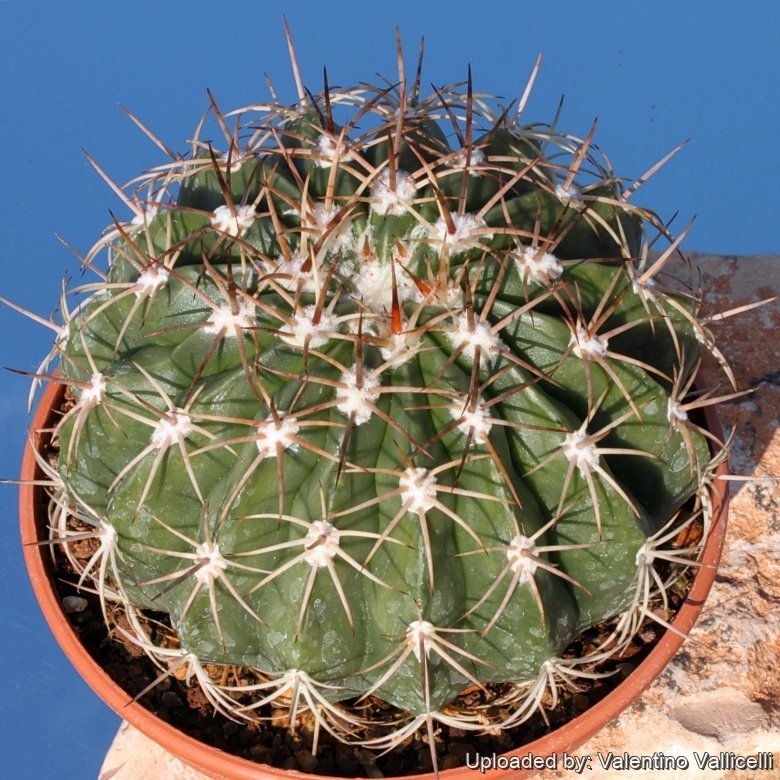
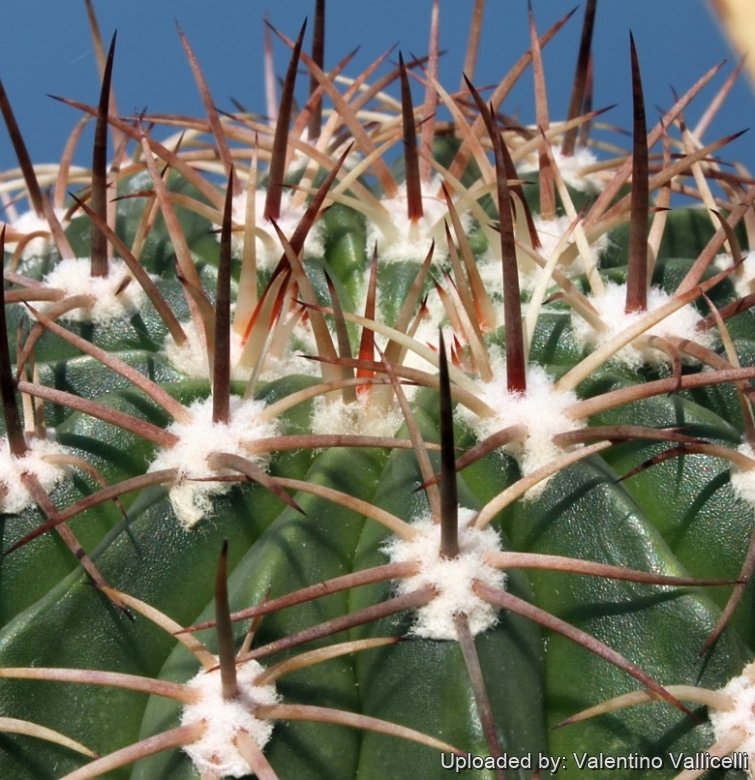
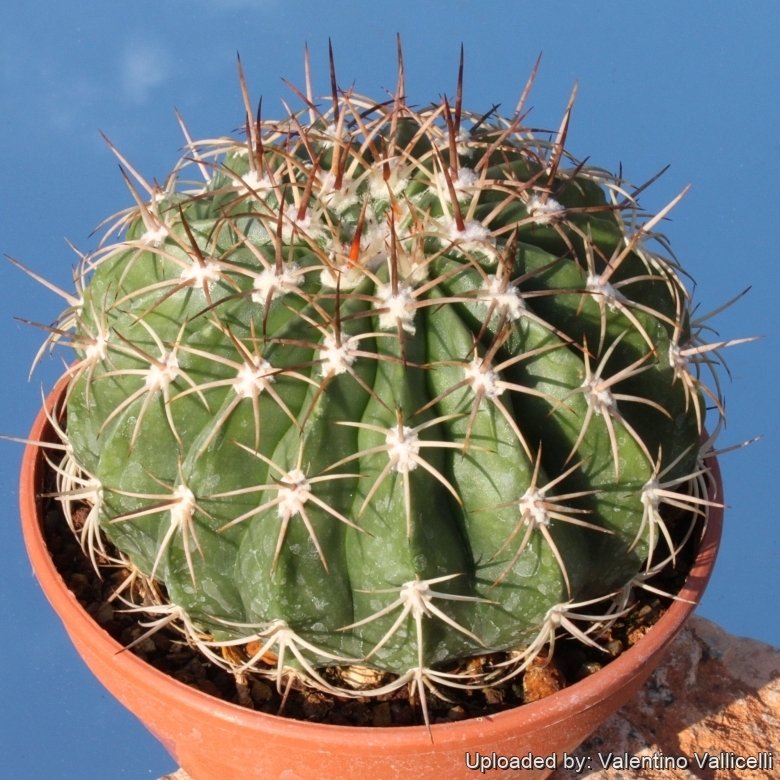
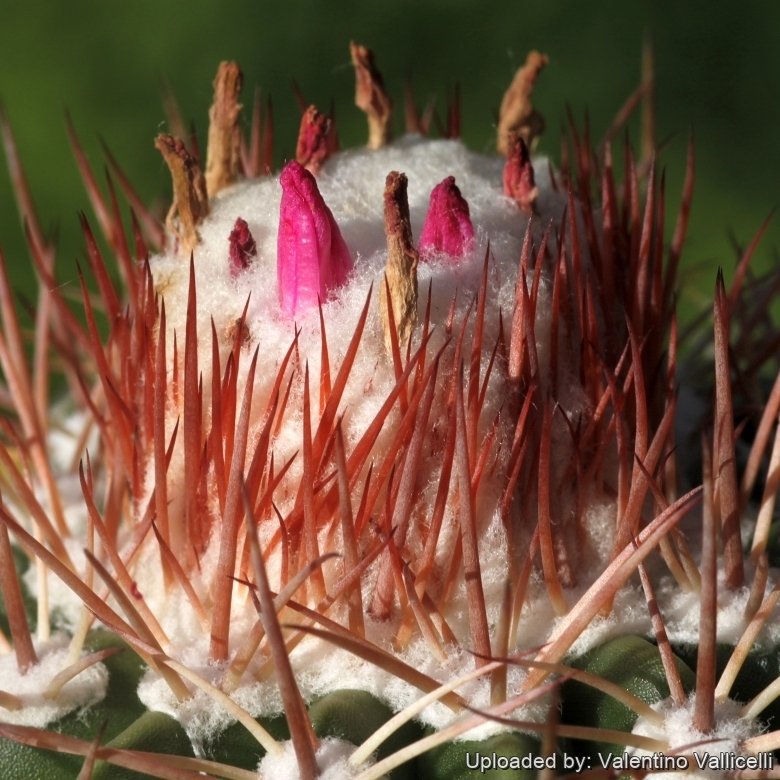
The Melocactus loboguerreroi is strictly related to the typical Melococactus curvispinus found in Mexico and central America, it is characterized by areoles 2-2,5 cm apart, radial spines medium sized and very recurved, seeds spherical-ovoidal and smaller than in the other subspecies (approx 1-1,1 per 1-1,1 mm)
Origin and Habitat
Dagua and Loboguerrero (Choco, Colombia, Western South America)
Habitat: Even though more than 90% of the Choco is made up of humid wooded formations, an enclave of dry xerophytic vegetation (subxerophytic forest) is found in the Dagua Valley surrounded by humid vegetation (tropical rainforest to the west and different levels of cloudy rainforest to the north, south and east), in which are found many endemic species, such as cactus (Frailea colombiana, Melocactus loboguerreroi, Opuntia bella) and Anthurium buenaventurae (Araceae) , Tillandsia mima (Bromeliaceae), and various subspecies of other plants and even animals, as is the case of an endemic race of white - tailed deer (Odocoileus virginianus daguae).
Altitude: 600-800 m.a.s.l.
Cultivation and Propagation
These cacti are not the easiest things to grow and aren’t plants for beginners. It grows from April to October, it can’t endure long stretches of total dryness, and also too much water will rot it, as its weak root systems tends to be inefficient at sucking up water from wet soil. Nonetheless, again as a result of their tropical origins, they need a fair amount of water, but allow the soil to dry quite a bit before watering again. Melocactus rests from October to April but can’t stand cold, or even fairly cool temperatures, so is indispensable to keep it above 8-12°C at all times, severe damage or death occurring at temperatures that the great majority of cacti wouldn’t mind in the least and prefer more frequent water in winter than other cacti, say once a month. Do not feed in winter.
The root system is weak and generally resents being repotted and can take a long time to re-establish. The soil mix should be very quick draining, prefers very bright light, not as much as the most arid growing cacti, but plenty nonetheless.
Propagation: Exclusively by Seeds. Sow in February-march in a light, sandy, porous soil. Cover germinating tray with glass to prevent seed from drying out. Germination is most successful at a temperature of 18 to 22° C.
Bibliography
Major references and further lectures
-
Stuart Max Walters “The European garden flora. 3.[Angiospermae], Dicotyledons. [Casuarinaceae to Aristolochiaceae]” Cambridge University Press, 1989
-
Edward Anderson “The Cactus family” Timber Press, Incorporated, 2001
-
David R Hunt; Nigel P Taylor; Graham Charles; International Cactaceae Systematics Group. “The New Cactus Lexicon” dh books, 2006
-
Urs Eggli, Leonard E. Newton “Etymological Dictionary of Succulent Plant Names” Birkhäuser 2004
-
Final Report UNEPGEF (September, 2003)“CATALYZING CONSERVATION ACTION IN LATIN AMERICA: IDENTIFYING PRIORITY SITES AND BEST MANAGEMENT ALTERNATIVES IN FIVE GLOBAL SIGNIFICANT ECOREGIONS” http://www.natureserve.org/latinamerica/prioritySites/docs/finalReportUNEPGEF.pdf
-
José Luis Fernandez-Alonso & Guy Xhonncux “Novedades taxonomicas y sinopsis del género Melocactus link& Otto (Cactaceae) in Colombia.” in: Colombia. Rev. Acad. Colomb. Cienc. 26(100): 353-365 2002 http://www.accefyn.org.co/revista/Vol\_26/100/353-365.pdf
Gallery