Description
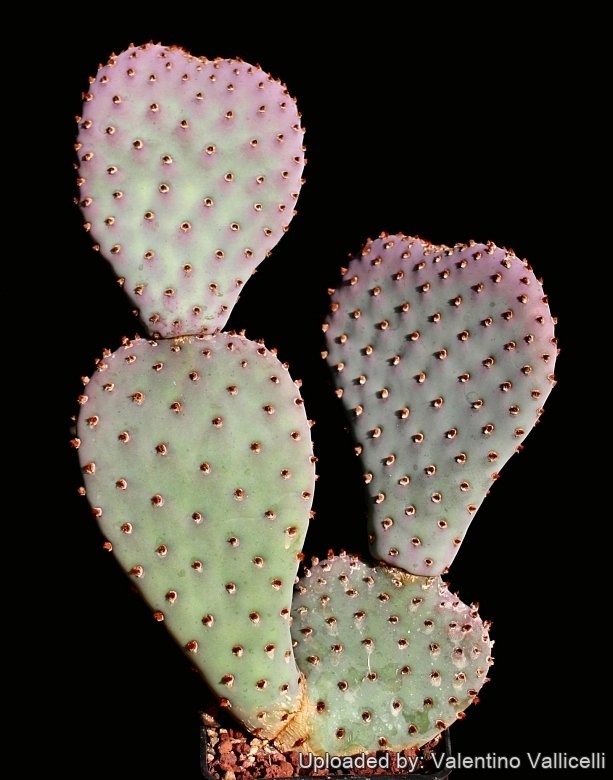
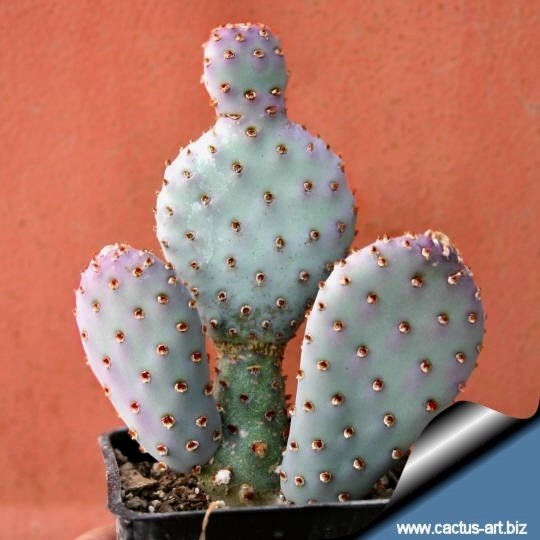
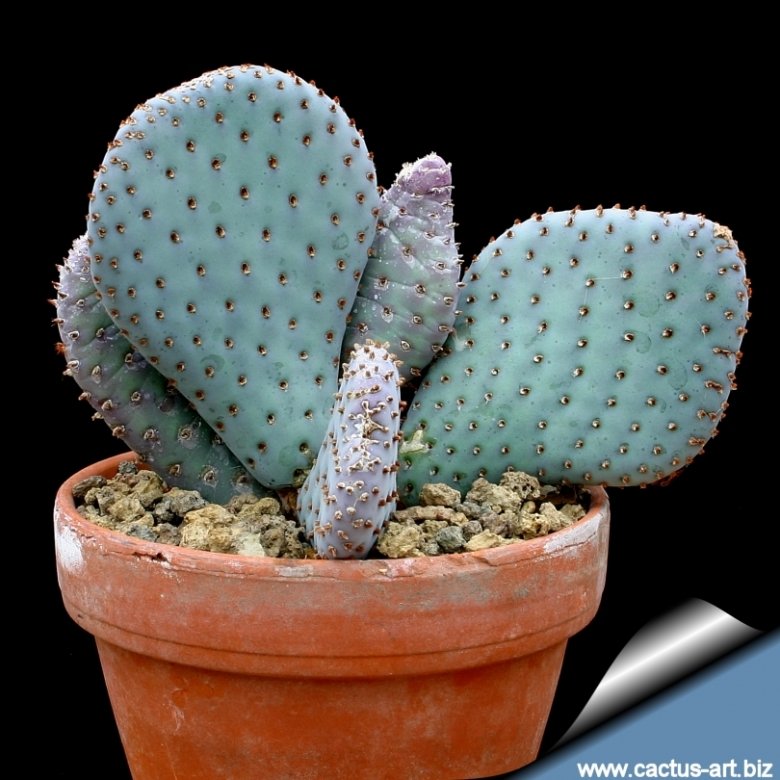
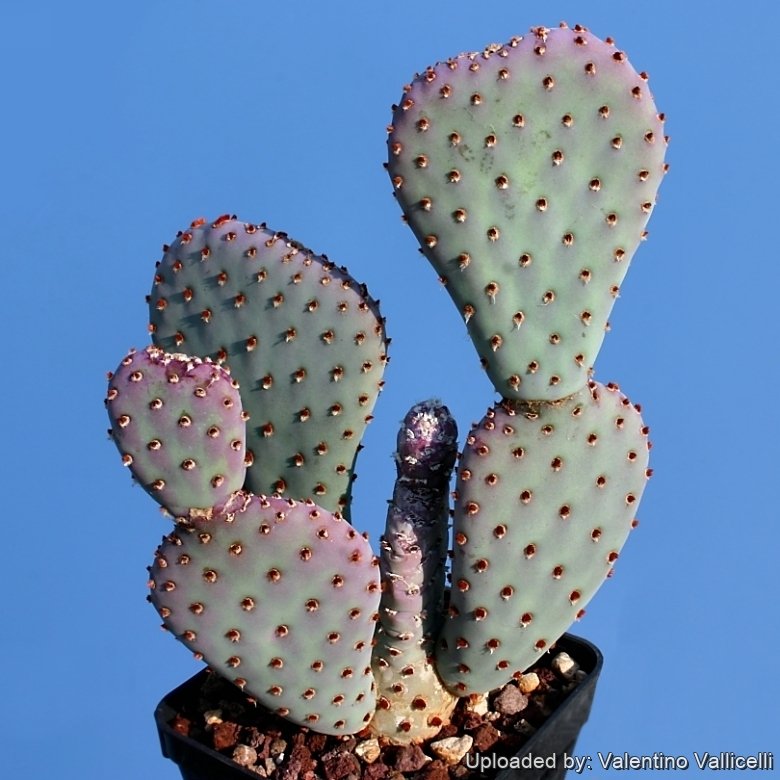
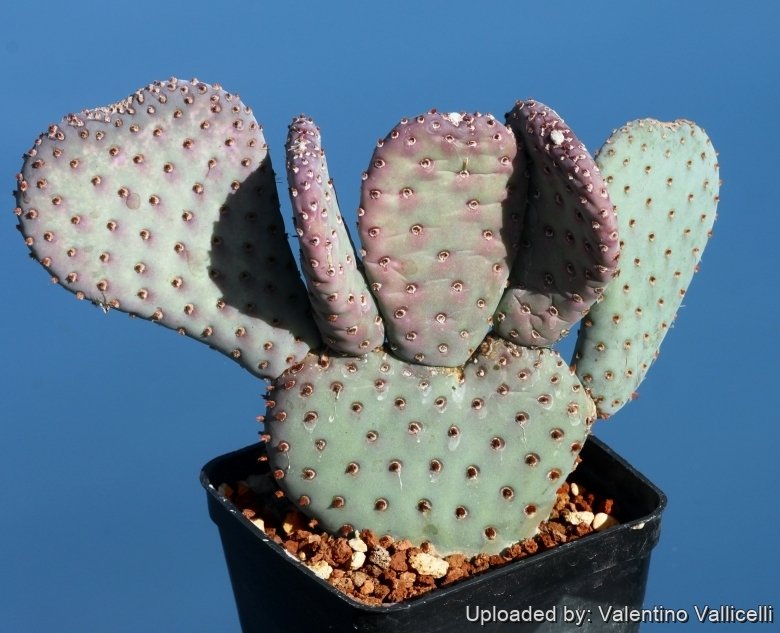
Branching upwards to 15-20 cm high in tight clumps up to 40 cm in diameter. The var. caudata is a very nice selected clone easily distinguscable from the standard for the more compct, shorter, thicker and brighter blue pads.
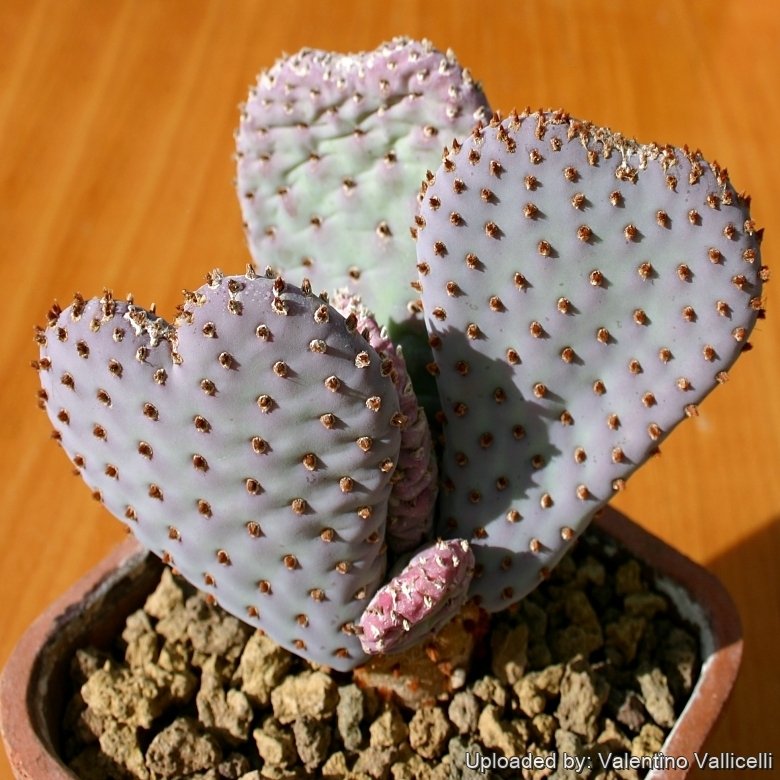
Stem: Oval to heart-shaped bright blue, with a blush of purple pigmentation (due to the presence of betacyanins pigments) that vary in function of temperature. New pads stretching from the lower areas of the plant.
Areoles : Numerous with white wool (3 mm of diameter), filled with brownish-reddish clustered glochids 3 mm long and easily penetrate the skin.
Spines: Spineless.
Flower: 5 cm in diameter and 6cm long; open from spring to early summer. They are intensely rose purple.
Origin and Habitat
Unknown, perhaps it is a nursery selected form.
Cultivation and Propagation
Best in very fast draining mineral soils this plant is very rot prone, needs little water once established, avoid acid soils rich in humus or clayey. Tolerates sand. Keep dry in winter.
Frost Tolerance: Hardy to -5° C.
Sun Exposure: They need maximum light exposure in full sun. Avoid shadow.
Warning: Handle with precautions to avoid the prickly glochids, besides the blue pruina that cover the cladodes may be allergenic for same people.
Reproduction: This selected clone may only be propagated vegetatively by cuttings taken in summer.
Gallery