Publication: Proc. Amer. Acad. Arts 3: 298-299 [preprint p. 51]. 1856 [Mar ? 1856]
Description
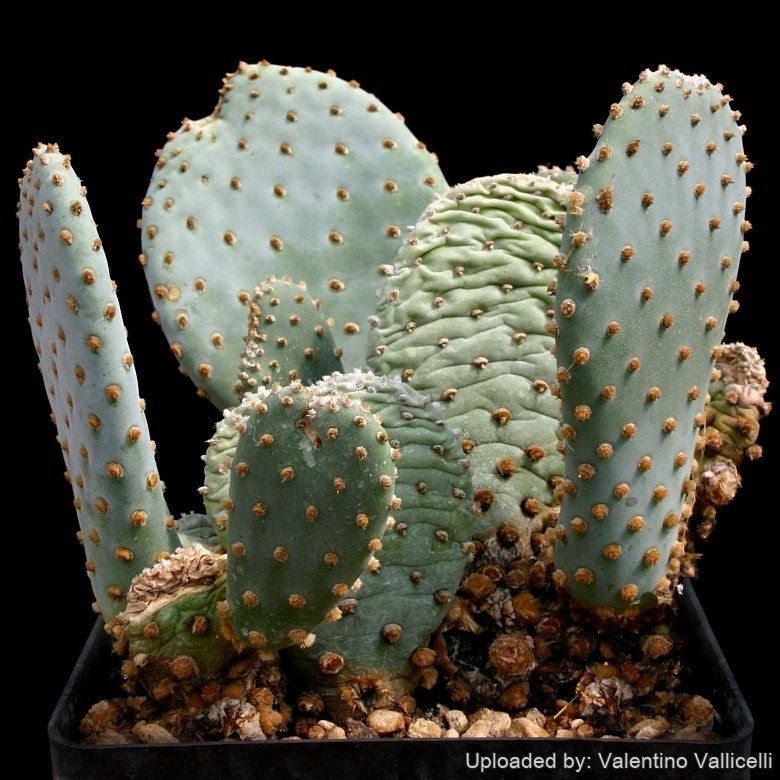
This is a smaller prickly pear, branching upwards to 30cm (60 cm) high in clumps up to 90cm (1.2 m) in diameter.
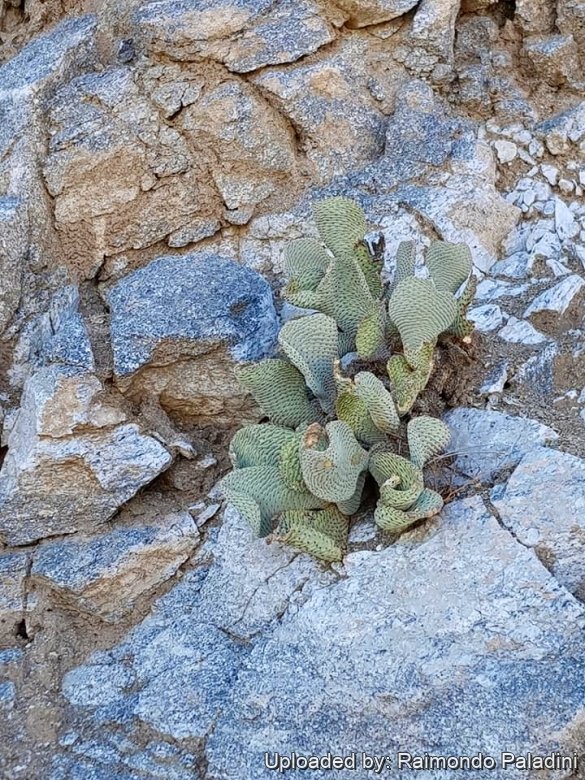
Stem: Oval to roundish blue-gray-green, with a blush of purple pigmentation (due to the presence of betacyanins pigments) that vary in function of temperature, glabrous or slightly covered with a velvety pubescence, smooth to wrinkled in dry conditions. New pads stretching from the lower areas of the plant.
Areoles: Numerous with white or brown wool (3 mm of diameter), filled with brownish-reddish clustered bristles 3mm long (glochids).
Glochids: While lacking spines the plant is well protected with copious and effective glochids that fill each areole and easily penetrate the skin.
Spines: Usually spineless, if a few spines are present they are confined to the upper rim of the pad.
Flower: 5cm in diameter and 6cm long; open from spring to early summer. They are intensely rose purple with deep magenta-red filaments and white or pink style, stigma is white. (yellow blooming plant are also know).
Fruit: Spineless, globular to obovate 4cm long. Tan grey and dry at maturity, areoles 24–76 usually puberulent.
Seeds: Large, rounded, smooth, cream colored, 0.5 to 1cm in diameter.
Notes: Plant from different places of origin are somewhat variable in coloration, growth habit, pubescence, and flower color.
Origin and Habitat
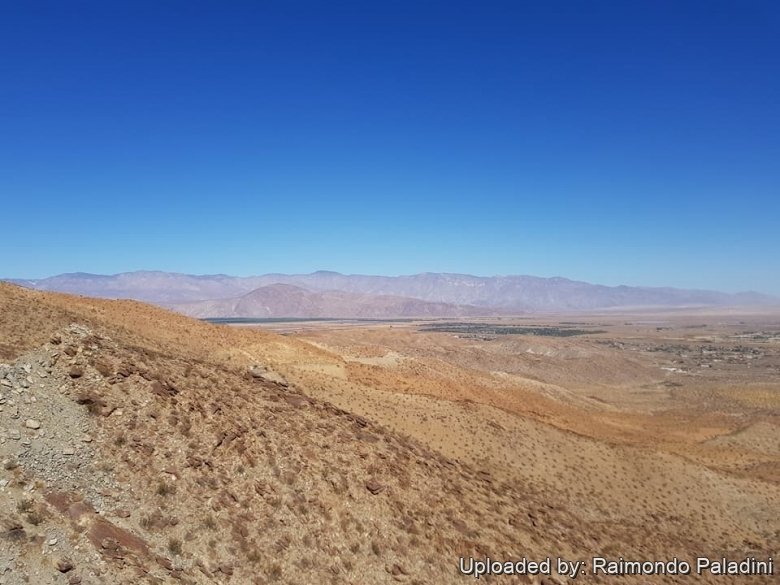
Beaver tail cactus occurs in Arizona, southern Utah, southern Nevada, southern California, north western Mexico (northern Baja California and northern Sonora) From the ridge crest area of Sonora, Mojave and Colorado Deserts.
Habitat: Grows in very arid plains and valleys (rainfall mostly in winter from 200 to 500 mm/year) in sandy or rocky soils with a basic pH (Ranges 6 to 8), from sea level to 1300m
Cultivation and Propagation
Best in very fast draining mineral soils this plant is very rot prone, needs little water once established, avoid acid soils rich in humus or clayey. Tolerates sand. Keep dry in winter.
Frost Tolerance: Hardy to -5° (or less)
Sun Exposure: They need maximum light exposure in full sun. Avoid shadow.
Warning: Handle with precautions to avoid the prickly glochids, besides the blue pruina that cover the cladodes may be allergenic for same people.
From llifle page Opuntia whitneyana var. albiflora
Origin and Habitat
Near Mount Whitney, eastern Sierra Nevada, California (Southwestern U.S.A., Northern America)
Source: Opuntia whitneyana var. albiflora, LLIFLE - Encyclopedia of living forms, CC-BY-SA, retrieved 2026-10-25.
Cultivars and forms (7)
Gallery