Publication: Cactaceae Consensus Init. 6: 11. 1998
Description
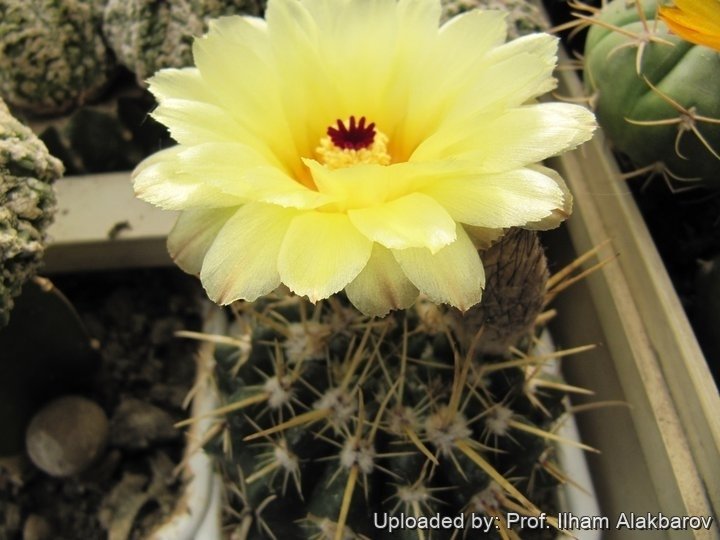
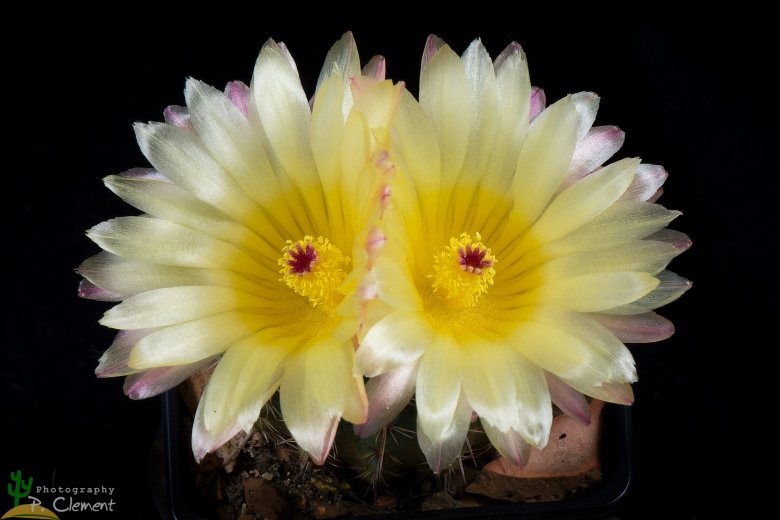
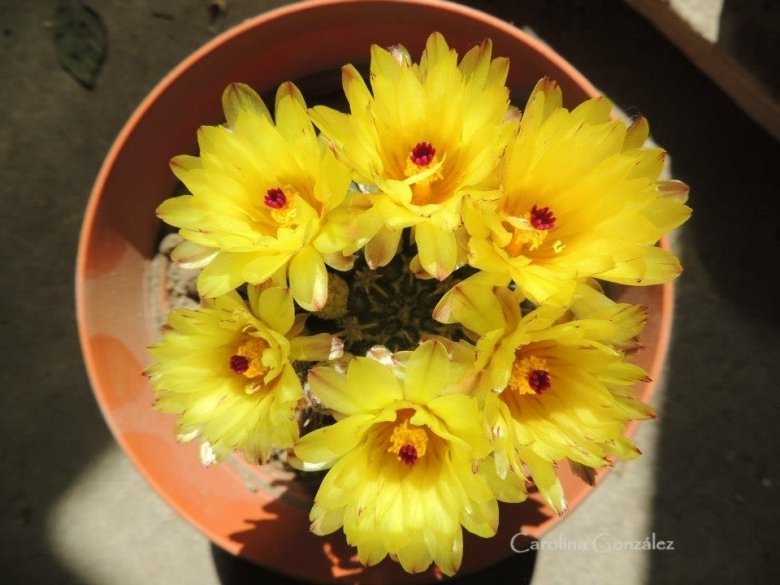
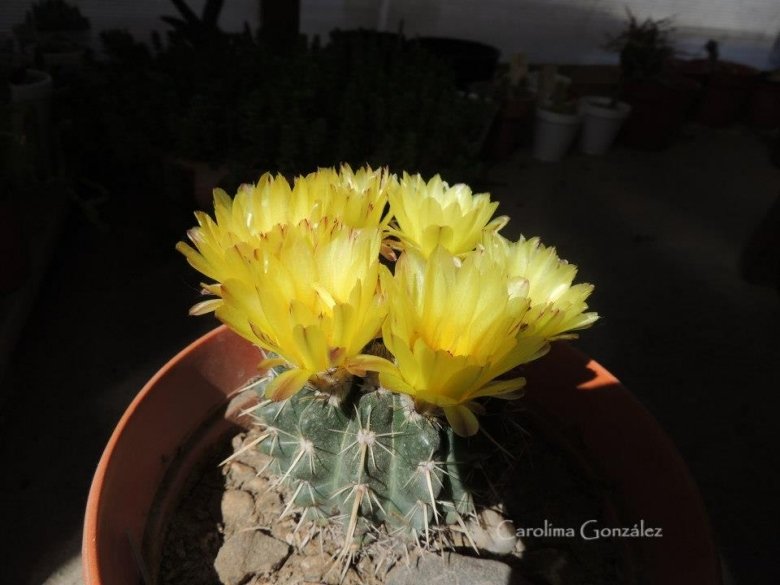
Parodia mammulosa subs. submammulosa commonly known as Notocactus submammulosus is a solitary cactus more or less covered by interlacing spines with large yellow, orange or red blooms with yellow centre, about 2,5-4.5 cm in diameter, short tubes and pink to red stigma. It is similar to Parodia mammulosa but with fewest number of ribs (about 13), about 6 radial spines spreading out horizontally, and two long and flat central spines, of which one longer and pointing down, and another a bit shorter and pointing up and also differing in quite a few other ways.
Note: Parodia mammulosa and Parodia mammulosa subs. submammulosa are
among the the most wide-spread of the Parodia species and are quite variable in appearance. The great variability is due to the fact that cross pollination among different forms and different species (both in habitat and in collections) is very frequent and it can be quite difficult to determine what is the “pure type” and the cross, and the differences among individuals may be remarkable. Plants may differs considerably about the form and arrangement of the spines, stems, ribs and flowers colour with unclear morphological limits between the different forms. It can happen that two individuals of two different populations can look very similar and also, two plants of the same population can look very different. There is so much variation that most authors choose to lump them together.
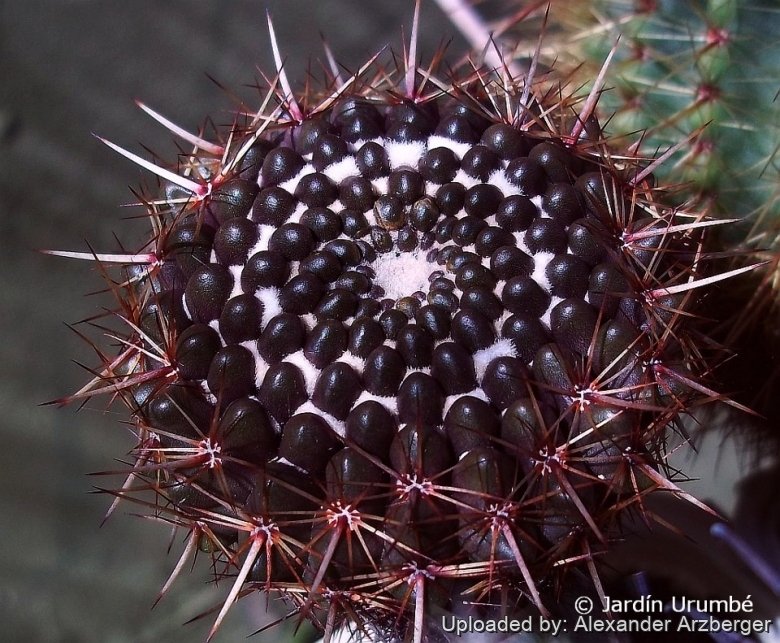
Stem: Globose, that elongates to a height of 5-10 cm and a diameter of 7-13 cm with a depressed, spineless apex. The epidermis is shiny, greysh-green to dark green.
Ribs: About 13 but occasionally up to 18, straight, well distinct, with prominent, rounded tubercles with chinlike protrusion.
Areoles: Small or large deeply embedded between the tubercles and set about 5 mm apart.
Radial spines: 8 to 30 slender whitish to brownish, needlelike, usually less than 10 mm long.
Central spines: 2 (or more) up to 20 mm long (or longer) usually flattened, of which one longer and pointing down, and another a bit shorter and pointing up, thicker, straight, white, yellow to brown with a brown tip.
Flowers: Pale pink, orange to golden yellow with a clear yellow centre, beautifully emphasized by the purplish/red stigma lobes, 2.5-4.5 cm in diameter, with a short tube covered with white wool and brown bristles.
Fruits: Globose, elongating at maturity, thin walled.
Seeds: Bell to helmet shaped, with obvious corky hilum, matte brown.
Origin and Habitat
Uruguay and Argentina.
Altitude range: 100 to 1800 metres above sea level.
Habitat and ecology: It grows among grasses in densely vegetated hilly terrain, in moderately steep rock grassy slopes, in rock-strewn terrain and flat meadows with rock inclusions.
Cultivation and Propagation
Frost Tolerant as low as -4°C (or possibly colder) but in cultivation it is best to avoid any frost when during the winter the temperature can go down to 2° C without any harm so long as the compost is very dry. During the summer it is best to keep the plants outside where the temperature can rise to over 30 C with no harm to the plant.
Allows good drainage and use a an open and free draining mineral compost that allows therefore roots to breath.
They like only a short winter’s rest and should be kept almost completely dry during the winter months, If the soil is allowed to be dry for too long root loss could follow but equally the same result would occur if the plants are both wet and cold. From March onwards the plant will begin to grow and watering should be increased gradually until late May when the plant should be in full growth.
Water regularly during the summer so long as the plant pot is allowed to drain and not sit in a tray of water. During hot weather you may need to water the plants more frequently so long as the plant is actively growing. From late September watering should be reduced to force the plant to go in to a state of semi dormancy, by October you should be back in to the winter watering regime.
Need full sun avoiding only the harshest summer sun, if kept too dark they may become overly lush and could be prone to rotting due to over watering, they will also be shy to produce flowers.
Feeding may not be necessary at all if the compost is fresh then, feed in summer only if the plant hasn’t been repotted recently. Do not feed the plants from September onwards as this can cause lush growth which can be fatal during the darker cold months.
Repotting should be done every other year or every three years, annual potting is not necessary. Do not be tempted to over pot as this will cause the unused compost to go stagnant and you may loose the plant.
Propagation: Seed sowing and cuttings.
Bibliography
Major references and further lectures
-
Edward F. Anderson “The Cactus Family” Timber Press, 2001
-
Curt Backeberg “Cactus Lexicon” Sterling Publishing Company, Incorporated, 1978
-
Hiroshi Hirao “Colour encyclopaedia of cacti” Japan 1979 (Japanese language and script)
-
Willy Cullmann, Erich Götz (Dozent Dr.), Gerhard Gröner “The encyclopedia of cacti” Portland, OR: Timber Press, 1986
-
David Hunt, Nigel Taylor “The New Cactus Lexicon” DH Books, 2006
-
James Cullen, Sabina G. Knees, H. Suzanne Cubey “The European Garden Flora Flowering Plants: A Manual for the Identification of Plants Cultivated in Europe, Both Out-of-Doors and Under Glass” Cambridge University Press, 11/August/2011
-
Larocca, J., Machado, M., Demaio, P. & Duarte, W. 2013. Parodia mammulosa. The IUCN Red List of Threatened Species. Version 2014.3. <www.iucnredlist.org>. Downloaded on 27 December 2014.
Gallery