Publication: Bradleya 5: 93. 1987
Description
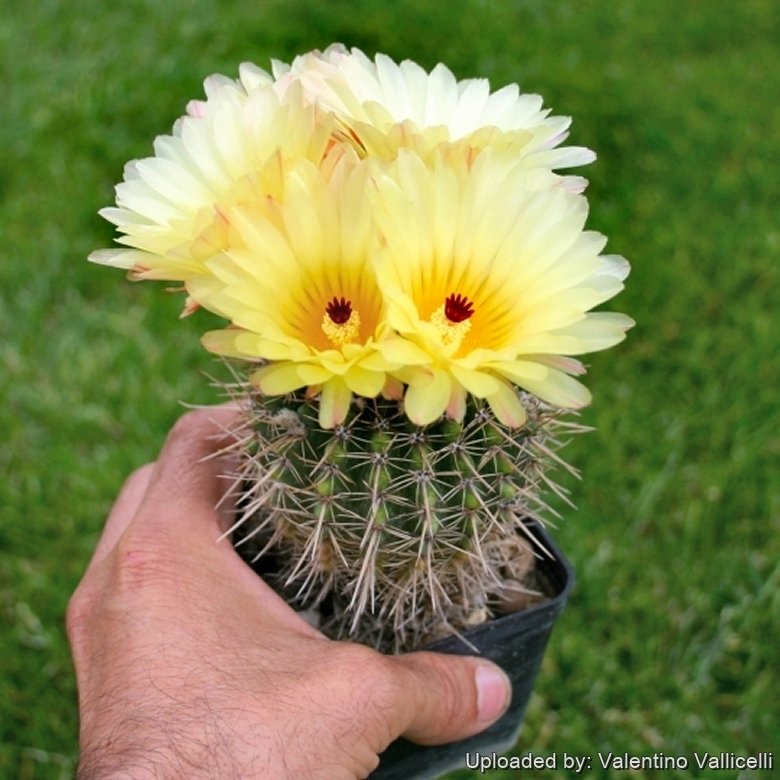
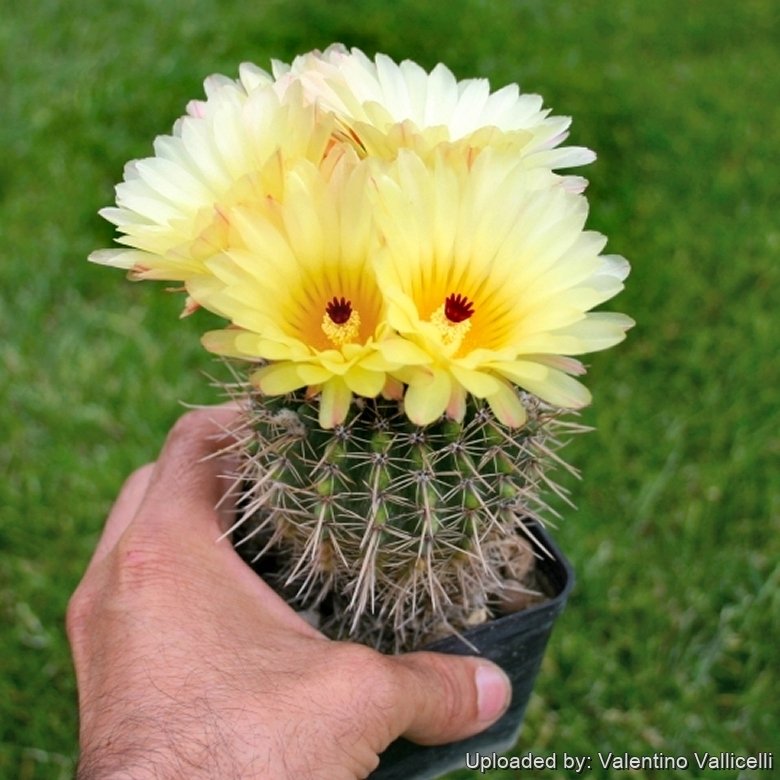
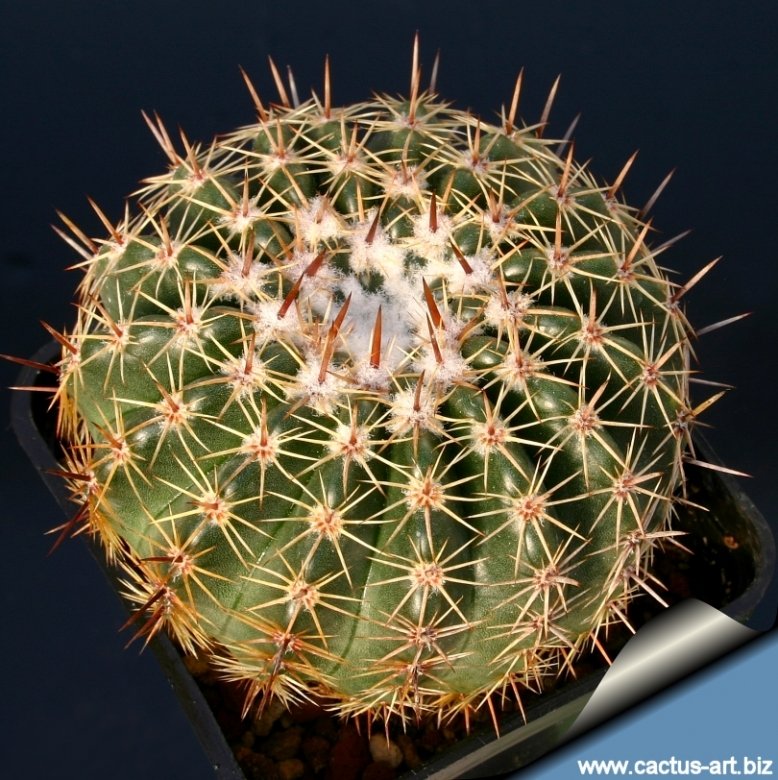
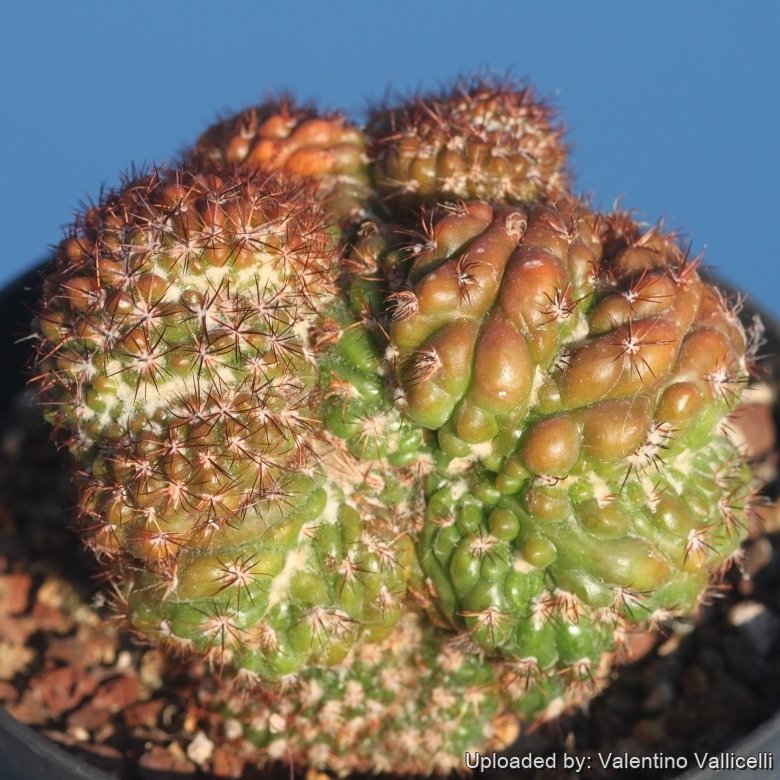
Parodia mammulosa is a usually solitary cactus more or less covered by interlacing spines.
Note: Parodia (Notocactus) mammulosa is among the the most wide-spread of the Parodia species and is very variable in appearance. The great variability of Parodia mammulosa is due to the fact that cross pollination among different forms and different species (in habitat and especially in collections) is very frequent and it can be quite difficult to determine what is the “pure type” and the cross, and the differences among individuals may be remarkable. Plants may differs considerably about the form and arrangement of the spines, stems, ribs and flowers colour with unclear morphological limits between the different forms. It can happen that two individuals of two different populations can look very similar and also, two plants of the same population can look very different. The P. mammulosa complex comprises lots of questionable names and lots of different population and its taxonomic history has undergone several changes. This species, however, needs taxonomic review, and it might split into different species that will need to be assessed separately.
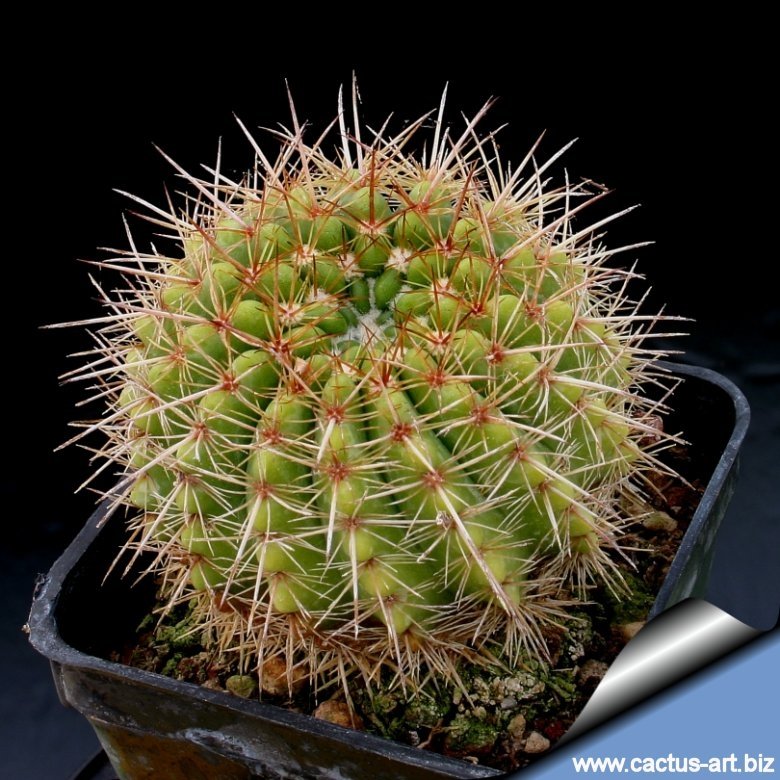
Stem: Globose, that elongates to a height of 5-10 cm and a diameter of 7-13 cm with a depressed, spineless apex. The epidermis is shiny, greysh-green to dark green.
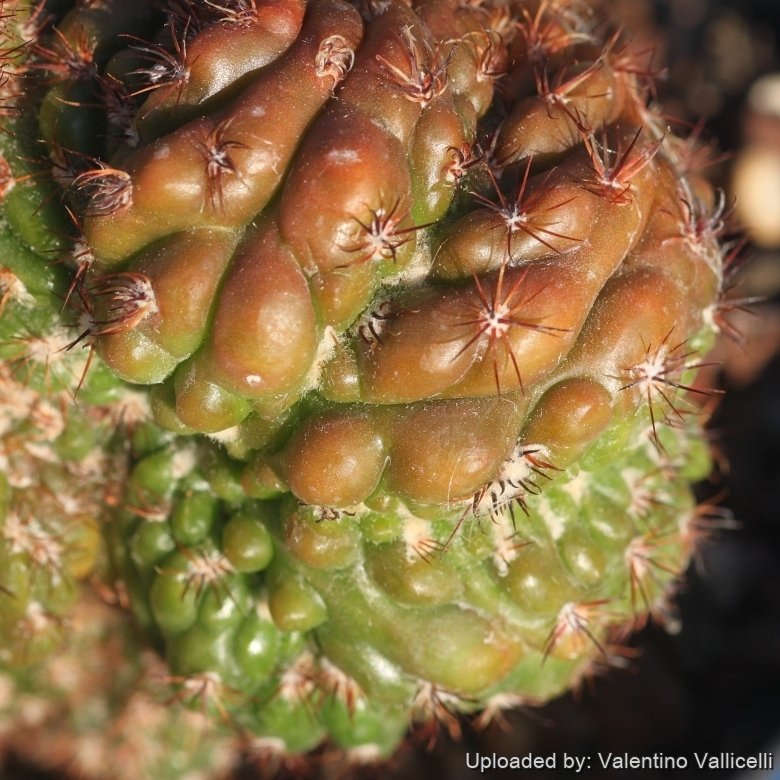
Ribs: 18 to 20(-25) straight, well distinct, with prominent, rounded tubercles with chinlike protrusion.
Areoles: Small or large deeply embedded between the tubercles and set about 5 mm apart.
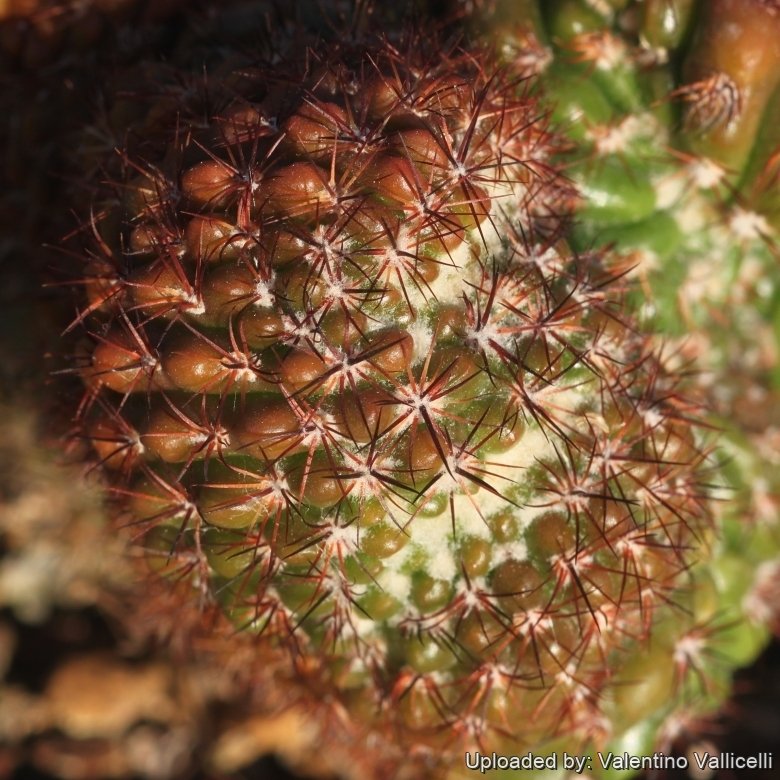
Radial spines: 8 to 30 slender whitish to brownish, needlelike, usually less than 10 mm long.
Central spines: 1-4 (or more) up to 20 mm long, not easily distinguishable from the radials, usually flattish, thicker, straight and more than twice as long white, yellow to brown with a brown tip, one usually flattened.
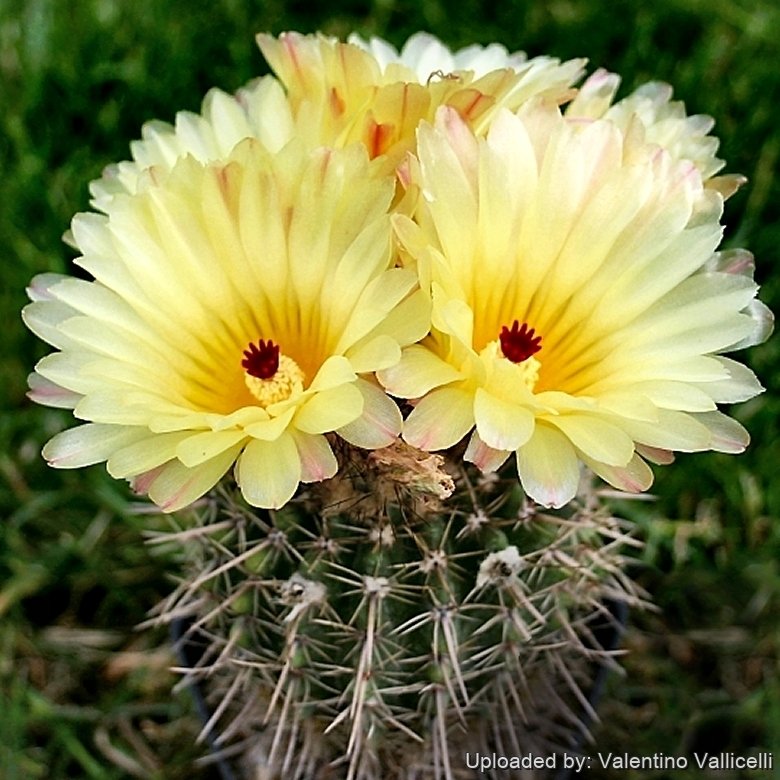
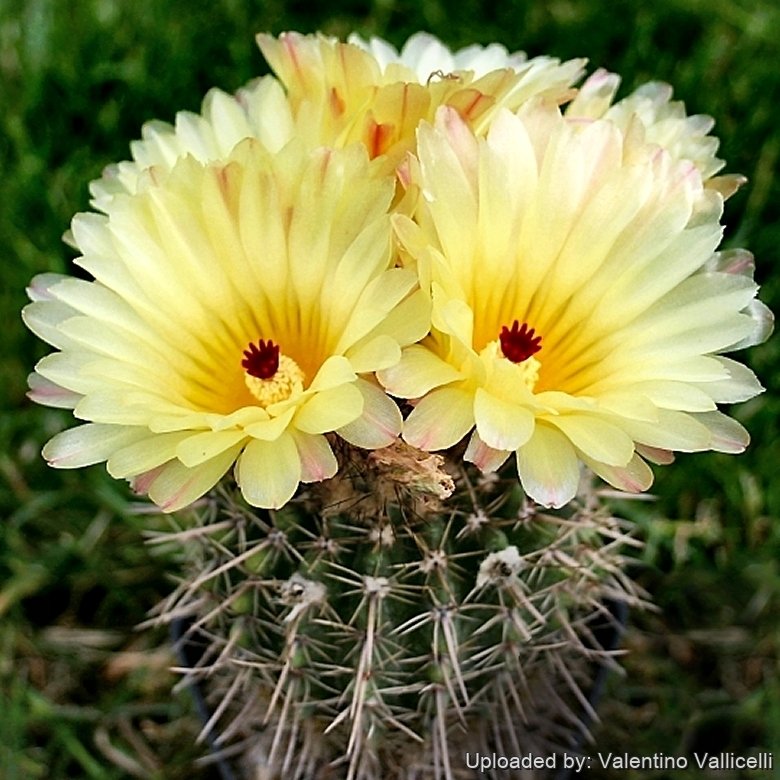
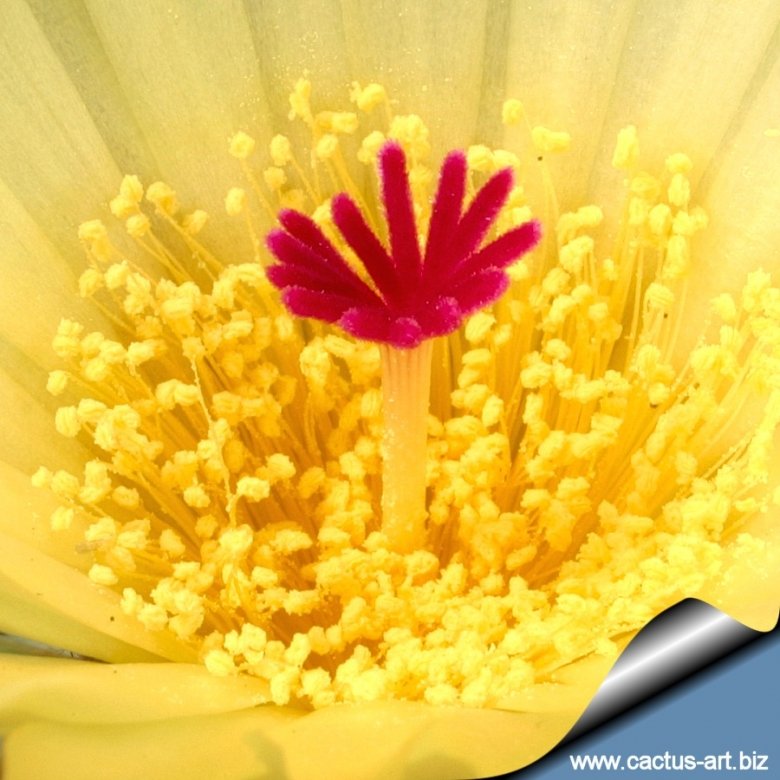
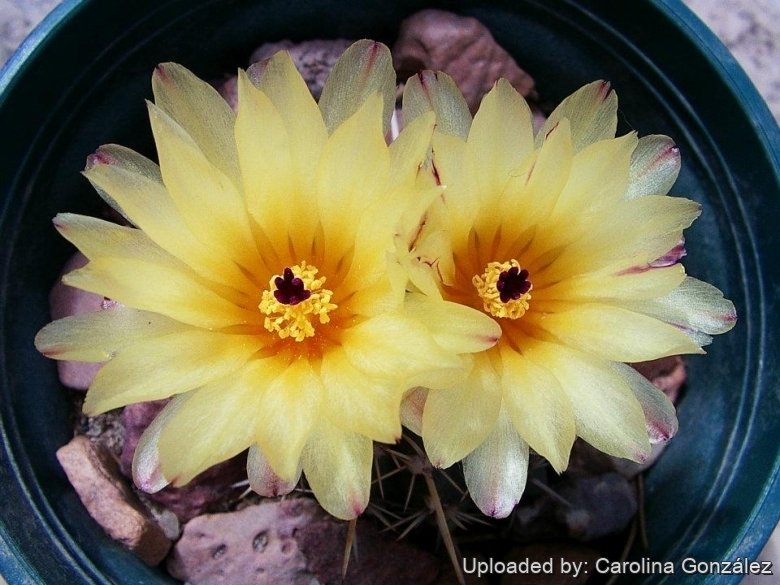
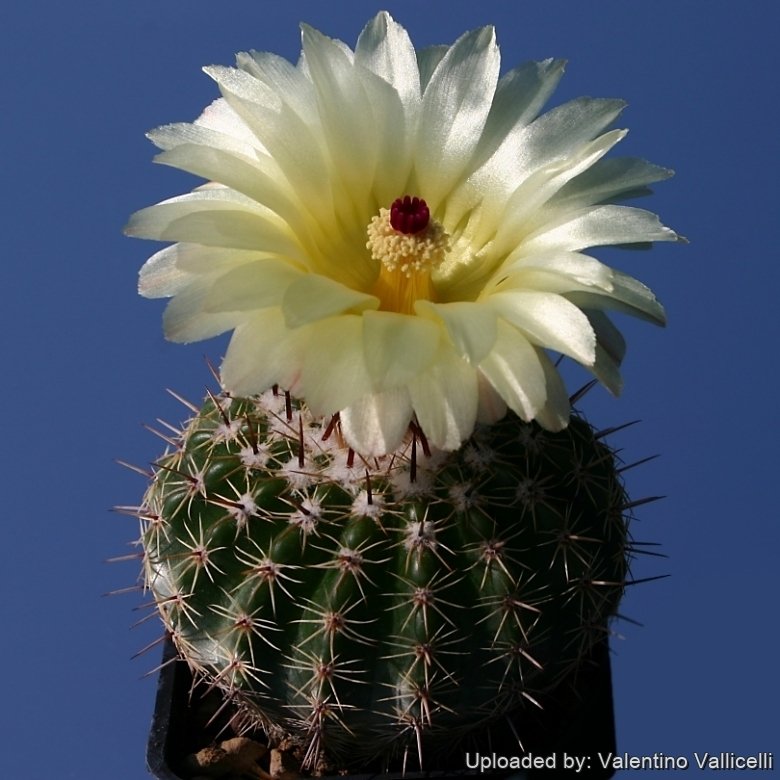
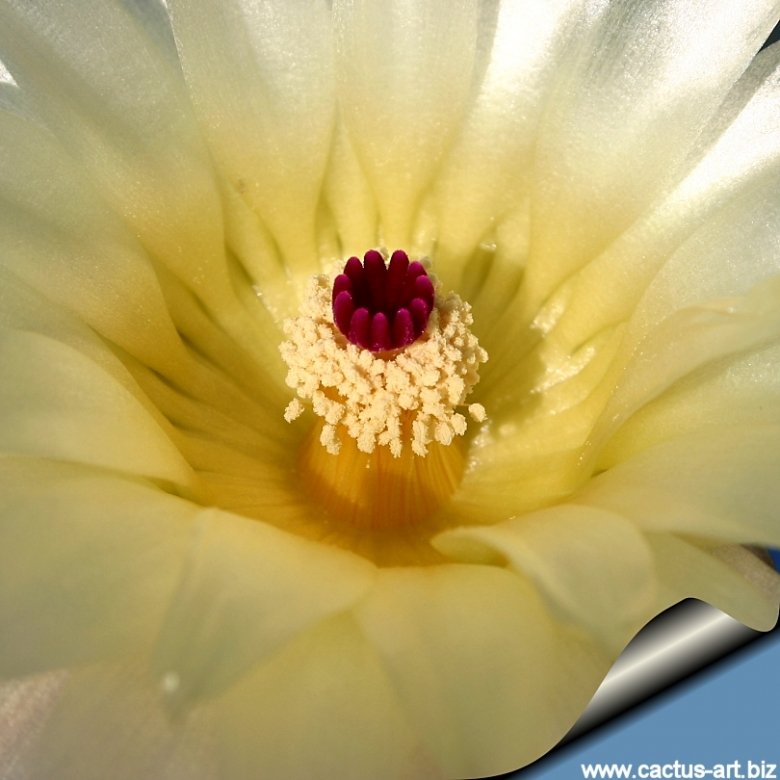
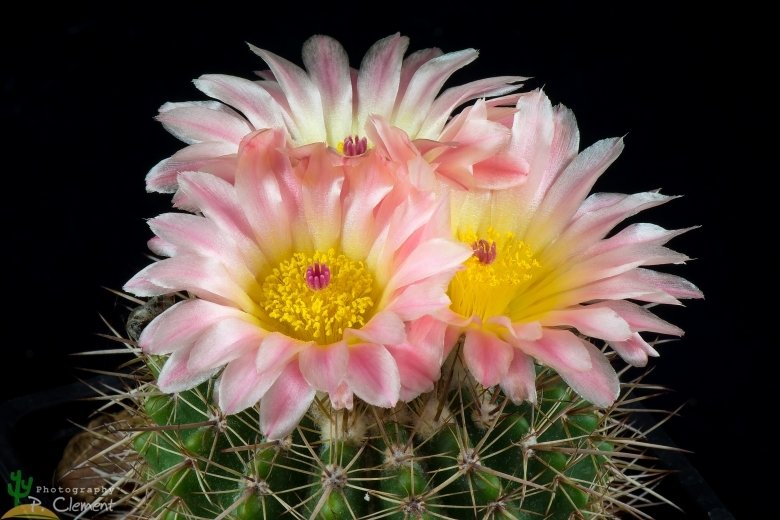
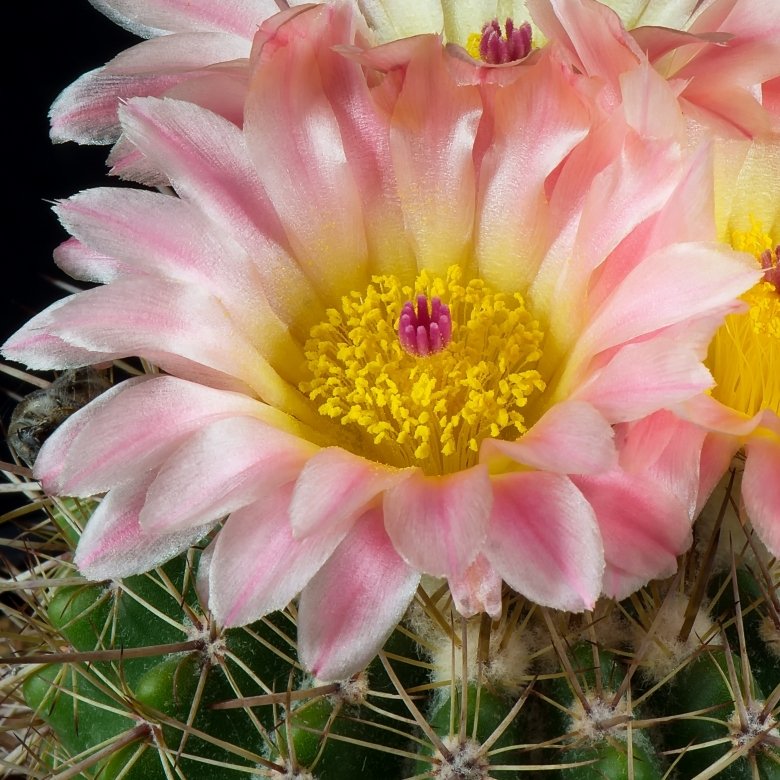
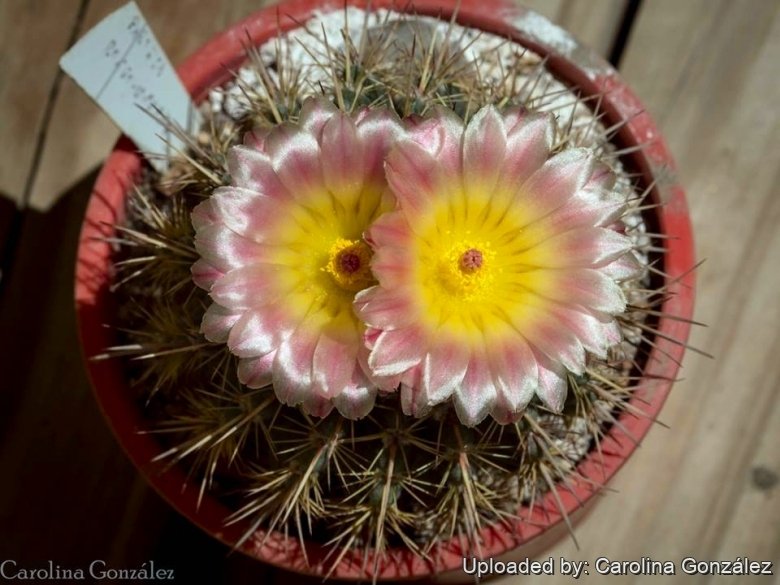
Flowers: Pale pink to golden yellow beautifully emphasized by the purplish/red stigma lobes, 4 cm in diameter, with a short tube covered with white wool and brown bristles.
Fruits: Globose, elongating at maturity, thin walled.
Seeds: Bell to helmet shaped, with obvious corky hilum, matte brown.
Origin and Habitat
Parodia mammulosa is distributed throughout southern Brazil(Rio Grande do Sul), all of Uruguay and northern Argentina(Buenos Aires, Catamarca, Córdoba, La Pampa, Mendoza, La Rioja, Santiago del Estero, Río Negro and San Luis provinces). This species is abundant, but some subpopulations in Brazil are declining.
Altitude range: 0 to 1,500(-1,800) metres above sea level.
Habitat and Ecology: This cactus grows on rocky outcrops, in grasslands or pampas, monte desert and high altitude grasslands. In Brazil the major threats are cattle grazing, agriculture and forestry. The subpopulations in Argentina and Uruguay, however, are not exposed to any major threats. This species is used as an ornamental in specialized collections, but the specimens are usually not collected from the wild.
Cultivation and Propagation
Frost Tolerant as low as -4°C (or possibly colder) but in cultivation it is best to avoid any frost when during the winter the temperature can go down to 2° C without any harm so long as the compost is very dry. During the summer it is best to keep the plants outside where the temperature can rise to over 30 C with no harm to the plant.
Allows good drainage and use a an open and free draining mineral compost that allows therefore roots to breath.
They like only a short winter’s rest and should be kept almost completely dry during the winter months, If the soil is allowed to be dry for too long root loss could follow but equally the same result would occur if the plants are both wet and cold. From March onwards the plant will begin to grow and watering should be increased gradually until late May when the plant should be in full growth.
Water regularly during the summer so long as the plant pot is allowed to drain and not sit in a tray of water. During hot weather you may need to water the plants more frequently so long as the plant is actively growing. From late September watering should be reduced to force the plant to go in to a state of semi dormancy, by October you should be back in to the winter watering regime.
Need full sun avoiding only the harshest summer sun, if kept too dark they may become overly lush and could be prone to rotting due to over watering, they will also be shy to produce flowers.
Feeding may not be necessary at all if the compost is fresh then, feed in summer only if the plant hasn’t been repotted recently. Do not feed the plants from September onwards as this can cause lush growth which can be fatal during the darker cold months.
Repotting should be done every other year or every three years, annual potting is not necessary. Do not be tempted to over pot as this will cause the unused compost to go stagnant and you may loose the plant.
Propagation: Seed sowing and cuttings.
Bibliography
Major references and further lectures
-
Edward F. Anderson “The Cactus Family” Timber Press, 2001
-
Curt Backeberg “Cactus Lexicon” Sterling Publishing Company, Incorporated, 1978
-
Hiroshi Hirao “Colour encyclopaedia of cacti” Japan 1979 (Japanese language and script)
-
Willy Cullmann, Erich Götz (Dozent Dr.), Gerhard Gröner “The encyclopedia of cacti” Portland, OR: Timber Press, 1986
-
David Hunt, Nigel Taylor “The New Cactus Lexicon” DH Books, 2006
-
James Cullen, Sabina G. Knees, H. Suzanne Cubey “The European Garden Flora Flowering Plants: A Manual for the Identification of Plants Cultivated in Europe, Both Out-of-Doors and Under Glass” Cambridge University Press, 11/August/2011
-
Larocca, J., Machado, M., Demaio, P. & Duarte, W. 2013. Parodia mammulosa. The IUCN Red List of Threatened Species. Version 2014.3. <www.iucnredlist.org>. Downloaded on 27 December 2014.
From llifle page Echinocactus floricomus
Origin and Habitat
Uruguay (Southern South America, Southern America)
Source: Echinocactus floricomus, LLIFLE - Encyclopedia of living forms, CC-BY-SA, retrieved 2026-10-25.
From llifle page Echinocactus mammulosus var. typica
Origin and Habitat
Argentina
Source: Echinocactus mammulosus var. typica, LLIFLE - Encyclopedia of living forms, CC-BY-SA, retrieved 2026-10-25.
From llifle page Echinocactus orthacanthus
Description
Usually single stemmed, perennial, succulent.
Stem: Large, spherical, up to 15cm in diameter with flattened apex, and with a dark-green to bluish-green epidermis.
Ribs: Approx. 18, vertical, well defined, forming large, distinct, pointed tubercles with chin-like protrusion.
Areoles: Between tubercles.
Radial spines: About 12, up to 1 cm long, needle-like, whitish, radiating flattened against the stem, interlacing.
Central spine: One, dark, strong, up to 2 cm long stinging.
Flowers: 5 cm (or more) in diameter, shining lemon-yellow, in rare cases also orange or reddish with dark purple-red stigma. Pericarpel and floral tubes short and broad, with dense wool and few bristles.
Blooming season: Spring. It will usually flower within 3 to 5 years.
Fruit: Globose, elongating at maturity, thin-walled.
Seeds: Bell to helmet-shaped, with corky hilum, brown and finely tuberculate.
Flowers: Lemon-yellow.
Origin and Habitat
Brazil (Rio Grande do Sul), Uruguay
Cultivation and Propagation
It is easy to grow. It prefers a neutral to slightly acidic mineral-based potting mix with a good drainage. It likes a warm bright location, does great in partial shade but doesn’t like full, hot blazing sun in the central summer month. Can support quite some water during the growing season but pot plants in winter are wet-sensitive and needs to be rather kept dry (rots easily if soil is wet and cold) tends to lose its roots in winter. Usually it is recommended to over-winter this plant in a bright and warm greenhouse with at least 8-10° C , but it has proved to tolerate temperatures as low as -5° C for short periods.
Propagation: Seeds, cuttings or root suckers (if available). Not too difficult to raise from seed.
Bibliography
Major references and further lectures
-
Edward F. Anderson “The Cactus Family” Timber Press, 2001
-
Curt Backeberg “Cactus Lexicon” Sterling Publishing Company, Incorporated, 1978
-
Hiroshi Hirao “Colour encyclopaedia of cacti” Japan 1979 (Japanese language and script)
-
Willy Cullmann, Erich Götz (Dozent Dr.), Gerhard Gröner “The encyclopedia of cacti” Portland, OR: Timber Press, 1986
-
David Hunt, Nigel Taylor “The New Cactus Lexicon” DH Books, 2006 ISBN 0953813444, 9780953813445
-
James Cullen, Sabina G. Knees, H. Suzanne Cubey “The European Garden Flora Flowering Plants: A Manual for the Identification of Plants Cultivated in Europe, Both Out-of-Doors and Under Glass” Cambridge University Press, 11/Aug./2011
Source: Echinocactus orthacanthus, LLIFLE - Encyclopedia of living forms, CC-BY-SA, retrieved 2026-10-25.
From llifle page Notocactus cupreatus
Description
Notocactus roseoluteus is probably only a variant in flower colour of the very variable Parodia mammulosa. It has stems to 18 cm in diameter, usually solitary or slowly branching from the base with Yellow/brown spines, and pink/light salmon flowers with yellow throat up to 8 cm in diameter. This plant seems to incorporate some of the features of both Parodia mammulosa and Parodia herteri. Both flower colour and spination seem to be midway between the two species. The plant can ultimately reach the size of P. herteri but it flowers at a much smaller size and withstands some winter coldness.
Stem: Spherical-flattened that can became shortly cylindrical when old, with a shiny coppery-green epidermis with a depressed crown covered in white wool.
Spines: 8-11 thin, flexible and acicular, needlelike, usually less than 12 long. whitish with a brownish-red tip.
Central spines: Strong, up to 25 mm long, subulated, brown-reddish, grayish when old.
Flowers: Apical, particularly large, bell-shaped, glossy, pink in shades of salmon with yellow centres, up to 8 cm in diameter.
Origin and Habitat
This variety is distributed throughout southern Brazil (Rio Grande do Sul), all of Uruguay and northern Argentina.
Cultivation and Propagation
Suitable for the home or a greenhouse, During winter’s rest period they should be dry and cool, it is frost resistant to -4°C but thrives best with additional heat, they like only a short winter’s rest. If the soil is allowed to be dry for too long root loss could follow but equally the same result would occur if the plants are both wet and cold, rot easily if the substrate is wet and cold. Prefers filtered bright light with ample airflow. Will enjoy regular water in summer. Best if watered with rain water, an acid compost and iron feed help to delay the onset of basal corking. A well grown plant is a fresh glossy grass- green, contrasting with reddish spines.
Propagation: Usually by seeds as it seldom produces offsets.
Bibliography
Major references and further lectures
-
Edward Anderson “The Cactus family” Timber Press, Incorporated, 2001
-
James Cullen, Sabina G. Knees, H. Suzanne Cubey “The European Garden Flora Flowering Plants: A Manual for the Identification of Plants Cultivated in Europe, Both Out-of-Doors and Under Glass” Cambridge University Press, 11/Aug/2011
-
British Cactus & Succulent Journal, Cactus & Succulent Society, page 59. 1995
Source: Notocactus cupreatus, LLIFLE - Encyclopedia of living forms, CC-BY-SA, retrieved 2026-10-25.
From llifle page Notocactus mammulosus f. cristatus
Description
The typical Parodia mammulosa is a small, usually solitary cactus more or less covered by interlacing spines. It is popular and grown for the large yellow flowers. The crested form can also get very nice making a spectacular specimen. The Parodia mammulosa is among the the most wide-spread of the Parodia species and is very variable in appearance and also the several crested clones can appear quite different.
Stem: Fan-shaped to a height of 5-10 cm and a diameter of up to 30 cm with a depressed, spineless apex. The epidermis is shiny, greysh-green to dark green.
Ribs: Straight, well distinct, with prominent, rounded tubercles with chinlike protrusion.
Areoles: Small or large deeply embedded between the tubercles and set about 5 mm apart.
Radial spines: 8 to 30 slender whitish to brownish, needlelike, usually less than 10 mm long.
Central spines: 0-4 (or more) up to 20 mm long, not easily distinguishable from the radials, usually flattish, thicker, straight and more than twice as long white, yellow to brown with a brown tip, one usually flattened.
Flowers: Pale pink to golden yellow beautifully emphasized by the purplish/red stigma lobes, 4 cm in diameter, with a short tube covered with white wool and brown bristles.
Fruits: Globose, elongating at maturity, thin walled.
Seeds: Bell to helmet shaped, with obvious corky hilum, matte brown.
Origin and Habitat
Garden origin (Nursery produced cultivar)
Cultivation and Propagation
Although regarded as a choice and difficult plant it is not too difficult in a greenhouse, but grows quite slowly. The crests are frequently grafted onto a strong Trichoceres trunks but grow very well on their own roots too.
Soil: Use mineral well permeable mineral soil with little organic matter (peat, humus).
Repotting: Repotting should be done every other year, or when the plant has outgrown its pot.
Exposure: They need a good amount of light shade to full sun this help to keep the plants healthy, although slow growth.
Watering: Water sparingly from March till October (weekly during summertime, if the weather is sunny enough) , with a little fertilizer added. Less or no water during cold winter months, or when night temperatures remain below 10° to prevent root loss. It is sensitive to overwatering (rot prone).
Fertilization: Feeding may not be necessary at all if the compost is fresh then, feed in summer only if the plant hasn’t been repotted recently. Do not feed the plants from September onwards as this can cause lush growth which can be fatal during the darker cold months.
Hardiness: They are moderately cold hardy, an can withstand to light frees down to -5° C or less for very short times, but make sure that they are not exposed to severe freezing temperatures, or they may die. Nevertheless it is good advice never let the night-time temperature fall below 5°C. In the rest period no high atmospheric humidity!! (Temperature Zone: USDA 9-11)
Crested growth: Unlike ‘monstrose’ varieties of plants, where the variation from normal growth is due to genetic mutation, crested growth can occur on normal plants. Sometimes it’s due to variances in light intensity, or damage, but generally the causes are unknown. A crested plant may have some areas growing normally, and a cresting plant that looks like a brain, may revert to normal growth for no apparent reason. If you have any of the crested part left you need to remove the normal growth and leave the crested part behind this will need to be done regularly.
Propagation: This plant, like other clonal cultivars, may be only propagated vegetatively by grafting or cuttings. Plants are usually grafted onto column-shaped cacti but proved to be able to produce their own roots if degrafted. Cuttings will take root in a minimum temperature of 20° C (but better in hot weather). Cuttings of healthy shoots can be taken in the spring and summer. Cut the stem with a sharp, sterile knife, leave the cutting in a warm, dry place for a week or weeks (depending on how thick the cutting is) until a callus forms over the wound. Once the callus forms, the cutting may be inserted in a container filled with firmed cactus potting mix topped with a surface layer of coarse grit. They should be placed in the coarse grit only; this prevents the cut end from becoming too wet and allows the roots to penetrate the rich compost underneath. The cuttings should root in 2 to 6 weeks. Large crested piece must be placed on the soil surface without burying the plant base down in the soil.
Notes
The cause of cresting is not fully explained; biologists disagree as to why some plants grow in this unusual form. Some speculate that it is a genetic mutation. Others say it is the result of lightning strike or freeze damage, but whatever the stimulus, the growth point of the stem has switched from a geometric point, to a line, which folds and undulates as the crest expands. Though these crested Parodia are somewhat rare, cresting occurs naturally throughout their range, and can be encountered in many other cactus species.
In the ontogenesis a crest can appear any time, but development of crests on large columnar cactus species (such as the saguaro Carnegia gigantea) in the early stages of ontogenesis is unlikely. On the other hand, small species (such as the saguaro Parodia mammulosa) may crest early already at the cotyledons stage.
Source: Notocactus mammulosus f. cristatus, LLIFLE - Encyclopedia of living forms, CC-BY-SA, retrieved 2026-10-25.
From llifle page Notocactus mammulosus cv. Red Flowers
Description
This is the very rare red blooming form of this popular species that usually has yellow flowers.
Stem: Globose, that elongates to a height of 5-10 cm and a diameter of 7-13 cm, with a depressed, spineless apex. The epidermis is green,.
Ribs: About 18 straight, well distinct, with prominent, rounded tubercles with chin-like protrusion.
Areoles: Large, deeply embedded between the tubercles, and set about 5 mm apart.
Radial spines: 8 to 10, slender, whitish to brownish, needlelike, usually less than 5 mm long.
Central spines: 4 (or more), up to 15 mm long, not easily distinguishable from the radials, usually flattish, thicker, straight and more than twice as long, white, yellow to brown with a brown tip, one usually flattened.
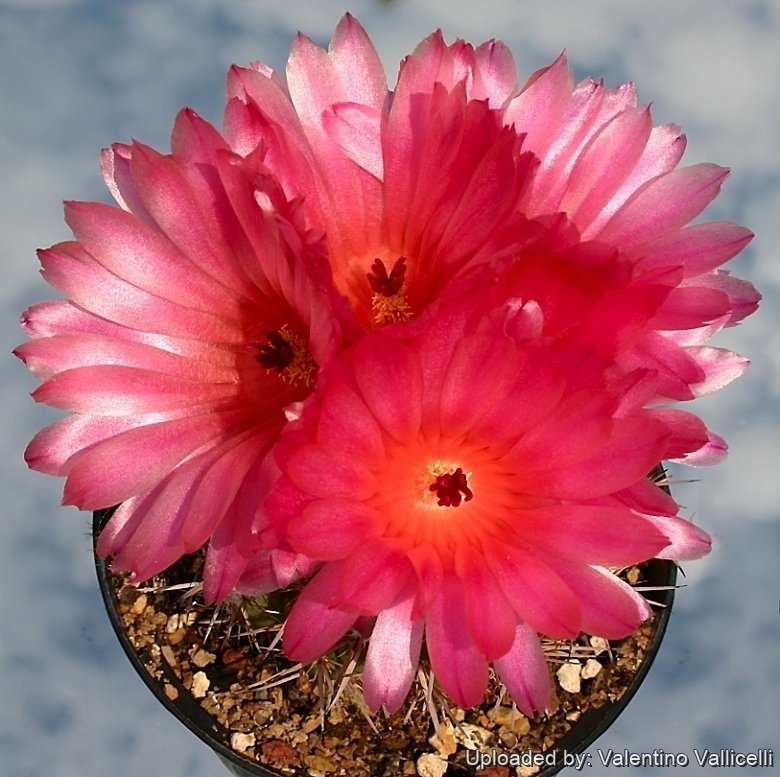
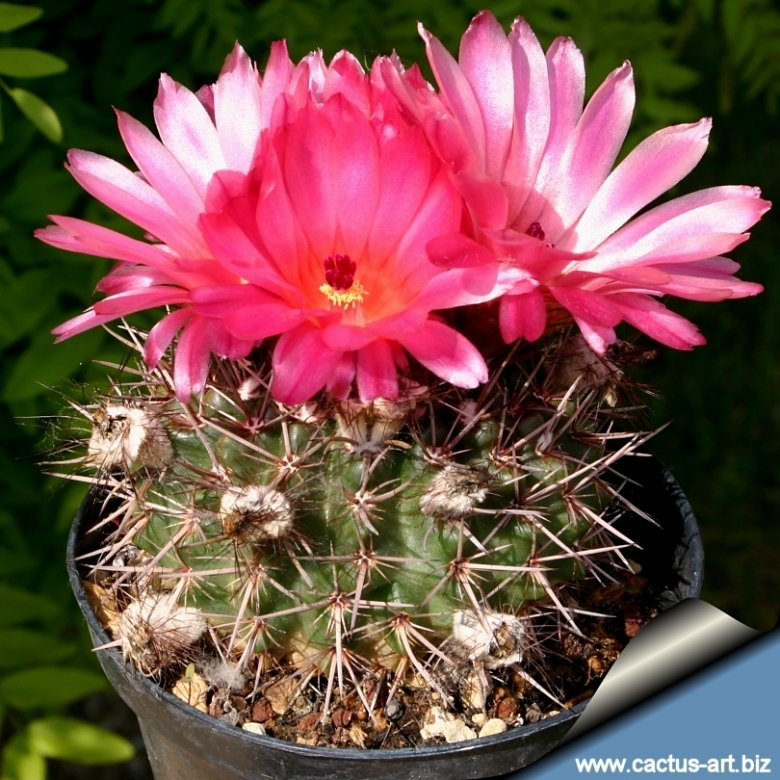
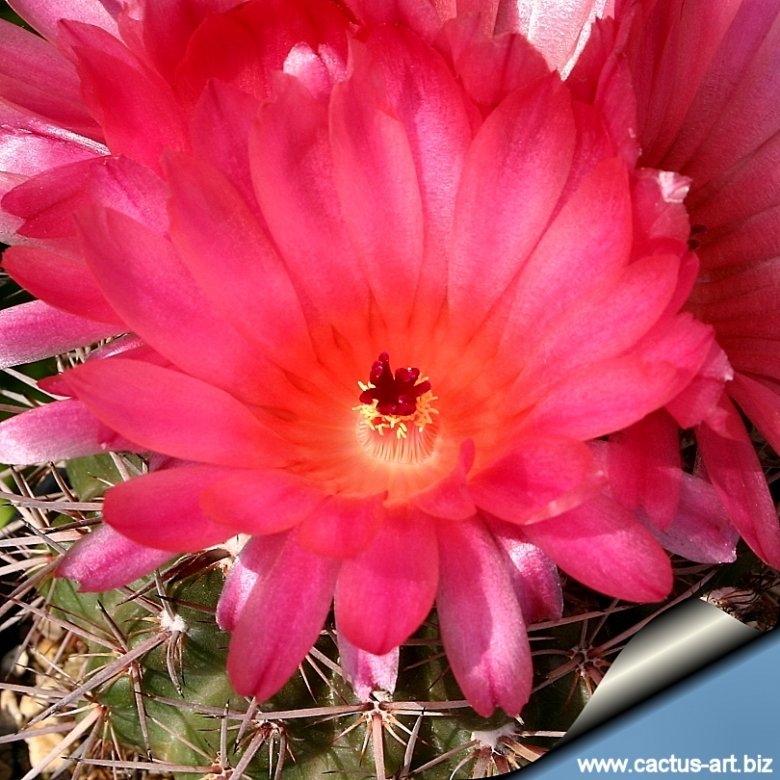
*Flowers: Bright magenta-pink with a orange-red throat, beautifully emphasized by the golden yellow stamens overtopped by the purplish-red stigma lobes, 5cm in diameter, with a short tube covered with white wool and brown bristles.
Origin and Habitat
This red population of Parodia mammulosa is reported from the north of Argentina.
Cultivation and Propagation
This is an easy plant to cultivate. Can support quite a lot of water during the growing season.
Watering Needs: Keep rather dry in winter. It rots easily if soil is wet and cold. Relatively cold hardy,
Sun Exposure: Light shade to full sun, but it doesn’t like full, hot blazing sun in the central summer months.
Propagation: Seed.
Source: Notocactus mammulosus cv. Red Flowers, LLIFLE - Encyclopedia of living forms, CC-BY-SA, retrieved 2026-10-25.
From llifle page Notocactus mammulosus f. monstruosus cristatus
Cultivation and Propagation
It is easy to grow. They like a warm bright location, does great in partial shade avoid full sun. They need good drainage and prefer a neutral to slightly acidic compost with plenty of extra grit. Water during the summer. Best if watered with rain water. Keep above 0°C and rather dry in winter, rot easily if the substrate is wet and cold, tends to lose its roots in winter.
Propagation: Grafting or cutting.
Source: Notocactus mammulosus f. monstruosus cristatus, LLIFLE - Encyclopedia of living forms, CC-BY-SA, retrieved 2026-10-25.
Cultivars and forms (4)
Subspecies (1)
Cultivars (1)
Gallery