Publication: Cactaceae Consensus Init. 6: 12. 1998
Description
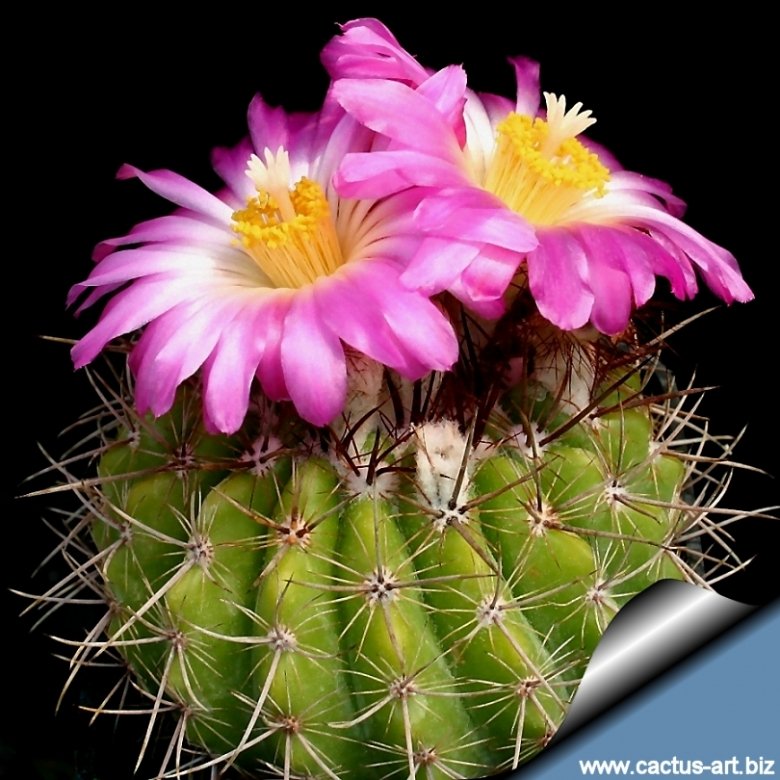
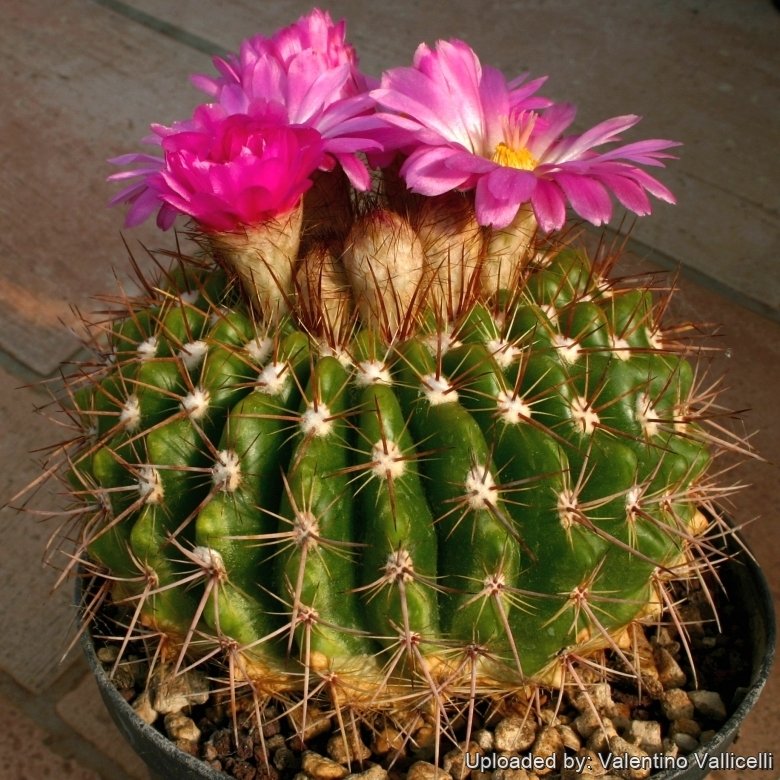
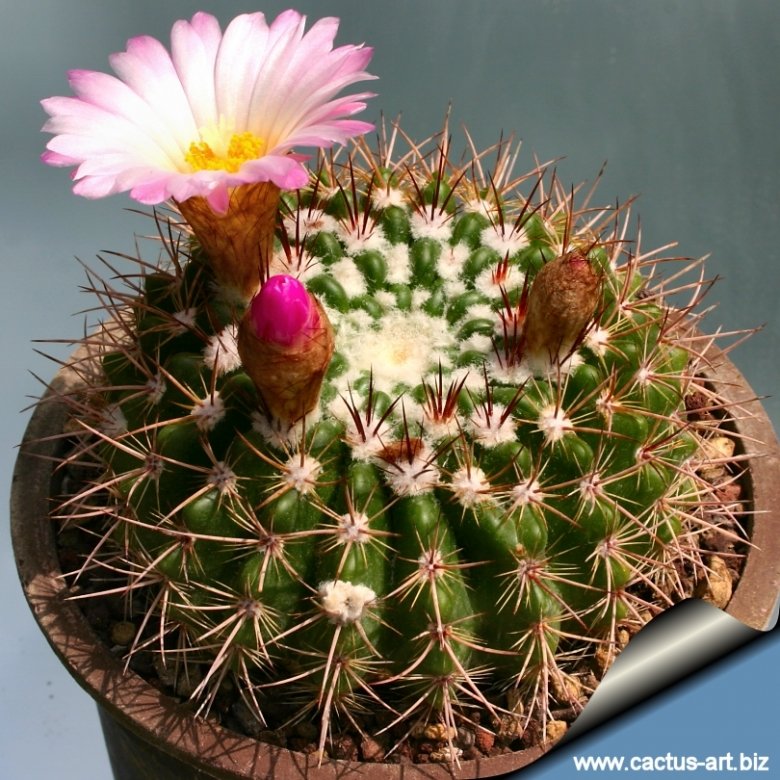
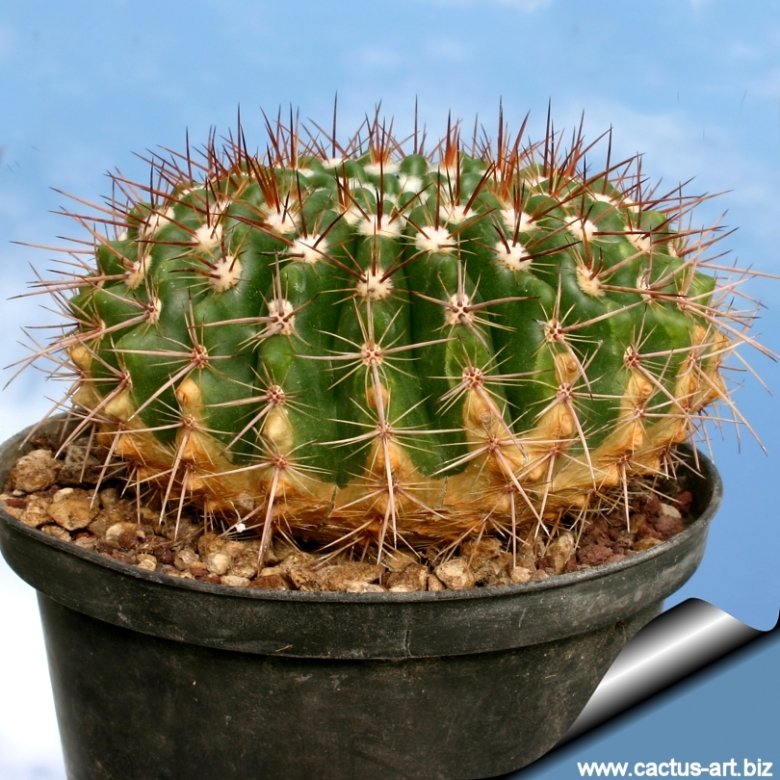
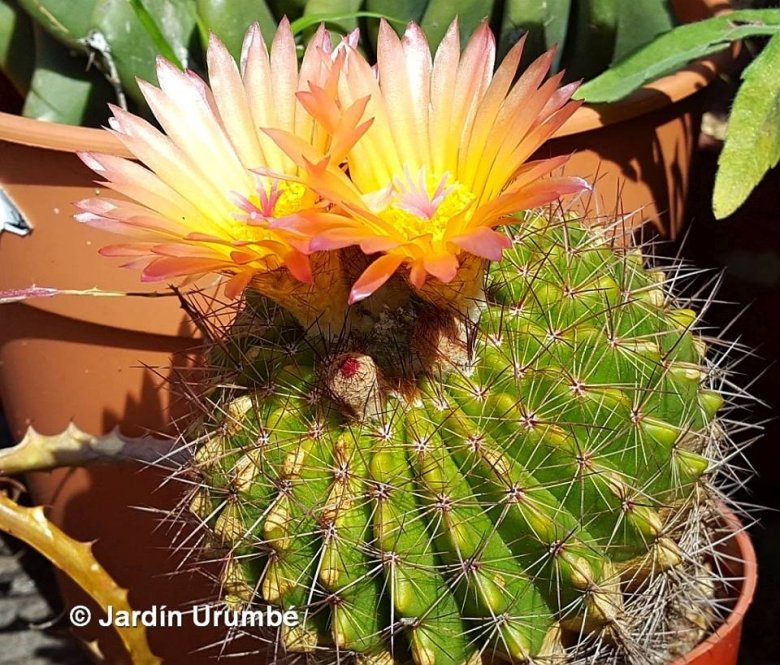
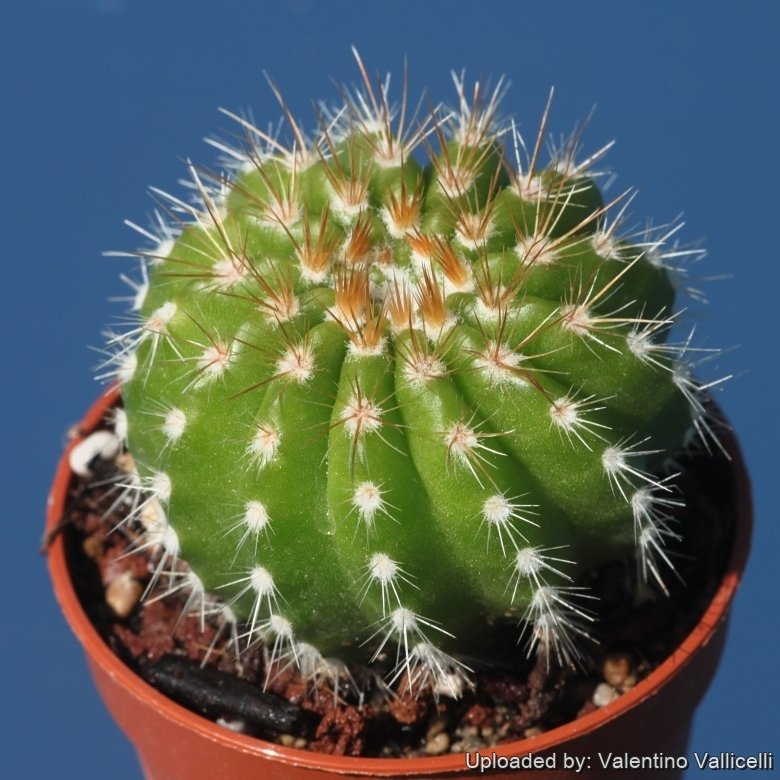
Parodia ottonis subs. horstii, best know as Notocactus horstii is a solitary or slowly clustering medium sized barrel cactus with many flowers in early spring.
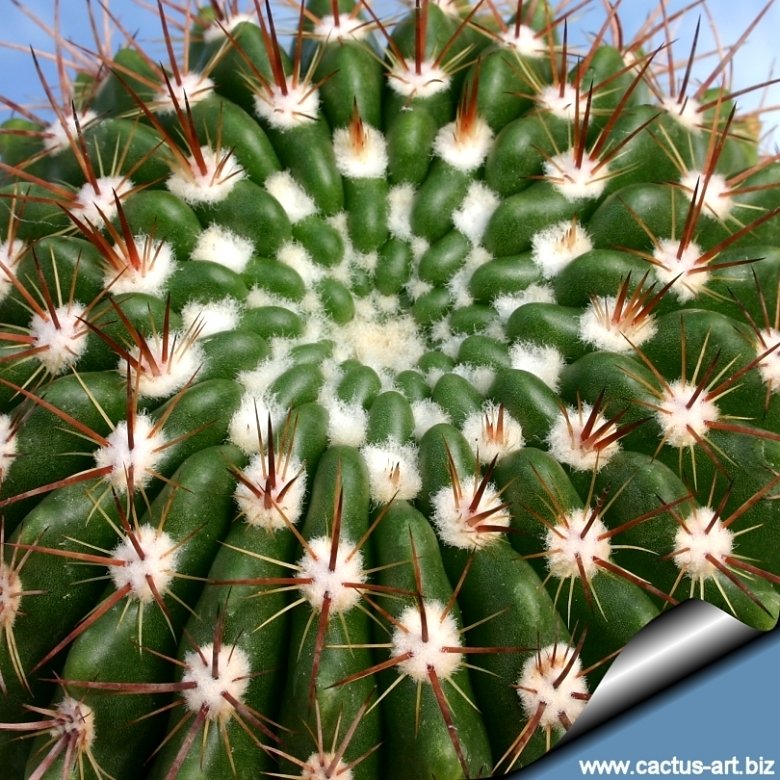
Stem: Flattened or spherical up to 10 cm tall and 15 cm in diameter (but in cultivation plant tends to elongate and can grow up to 30 tall) The crown of the plant is covered in spiny white wool.
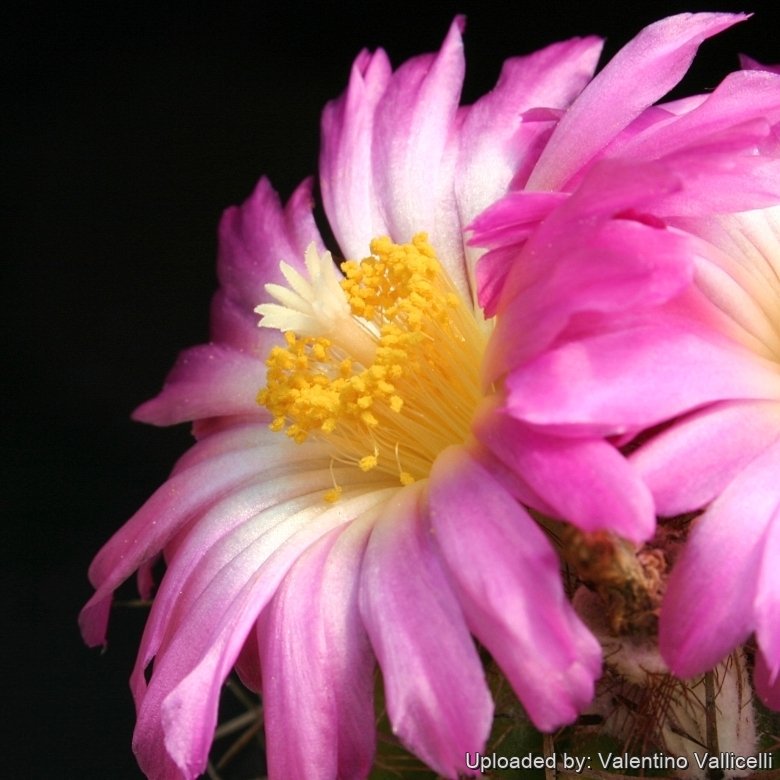
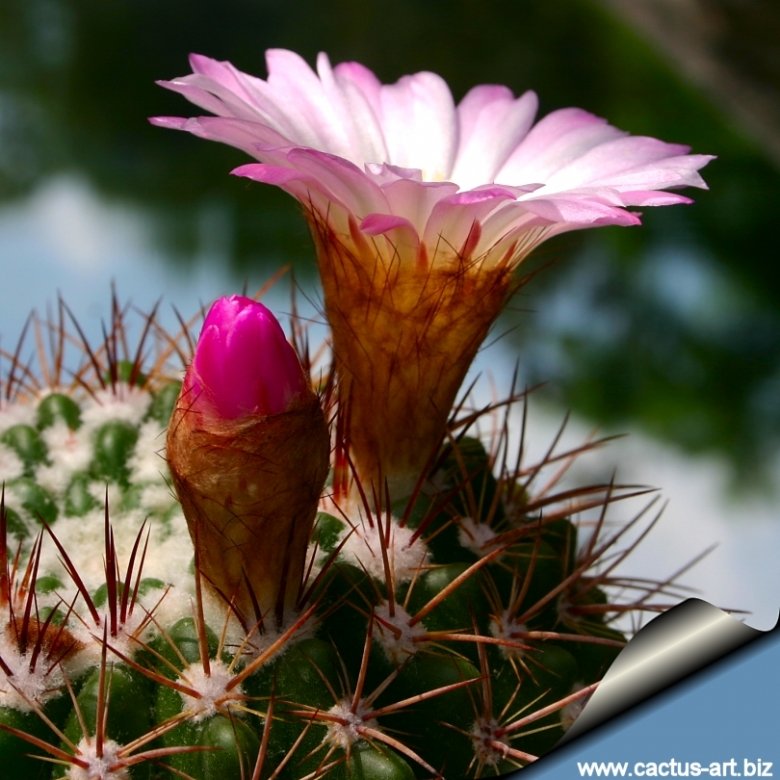
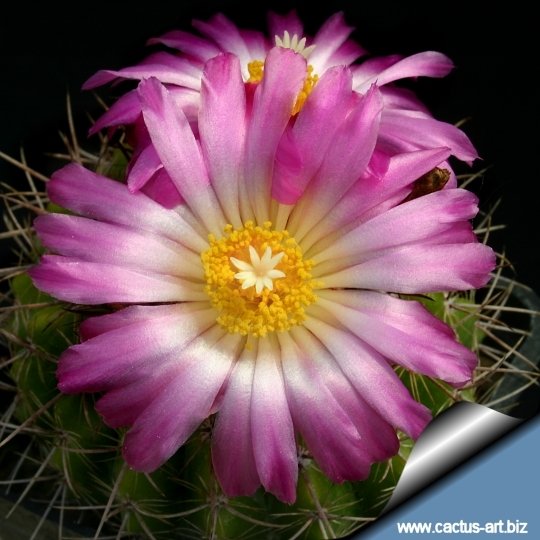
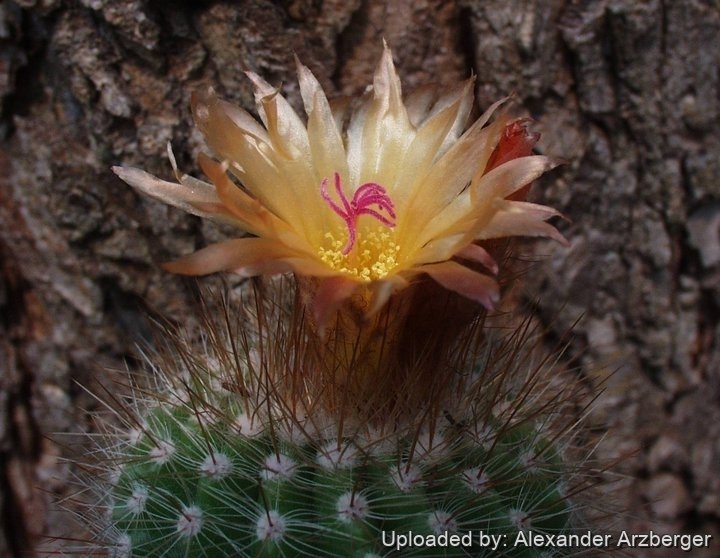
Flowers: Either orange or yellow for what used to be Notocactus horstii and violet-purple for what used to be Notocactus purpureus up to 3.5 cm in diameter.
Blooming season: Spring.
Origin and Habitat
Rio Grande do Sul (Brazil, Southern America)
Cultivation and Propagation
They like a warm bright location, and do great in partial shade. Avoid full sun. During winter’s rest period they should be dry and cool. It is best to avoid any frost, but during the winter the temperature can be as low as 2° C without any harm, as long as the compost is very dry. They like only a short winter’s rest. If the soil is allowed to be dry for too long, root loss could follow but equally the same result would occur if the plants are both wet and cold. Cold spots can mar its epidermis in cold damp conditions. They need good drainage and prefer a neutral to slightly acidic compost with plenty of extra grit and iron feed help to delay the onset of basal corking.. Water and feed during the summer. Best if watered with rain water and given an occasional tonic of sequestrated iron. A well grown plant is a fresh glossy grass- green, contrasting with reddish spines.
Propagation: Usually by seeds as it seldom produces offsets.
Bibliography
Major references and further lectures
-
Tony Mace “Notocactus: a review of the genus incorporating Brasilicactus, Eriocactus and Wigginsia” Editorial Board/National Cactus & Succulent Society, 1975
-
Edward Anderson “The Cactus family” Timber Press, Incorporated, 2001
-
James Cullen, Sabina G. Knees, H. Suzanne Cubey “The European Garden Flora Flowering Plants: A Manual for the Identification of Plants Cultivated in Europe, Both Out-of-Doors and Under Glass” Cambridge University Press, 11/Aug/2011
-
David R Hunt; Nigel P Taylor; Graham Charles; International Cactaceae Systematics Group. “The New Cactus Lexicon” dh books, 2006.
From llifle page Notocactus horstii f. muglianus
Description
Notocactus horstii fa muglianus is a form of Notocactus horstii, but not sufficiently differentiated and considered merely a local variant of the latter (if not the same). The key difference by which the two were separated, namely the presence of deeper rib with areoles more woolly and larger to 10 mm in diameter, flowers up to 5 cm wide with petals always tapering, 3-4 mm wide, orange red to salmon red, and stigma lobes coloured like the petals, seems entirely spurious. The fa mugelianus is not accepted by many botanists that treat it as synonym, but it still has a value for a collector because they identify plants with particular characters.
Origin and Habitat
Same as N. horstii.
Type locality: Candelaria, Rio Grande do Sul, Brazil.
Bibliography
Major references and further lectures
- Herm, Konrad (1993): “N. horstii Ritter forma muglianus Herm forma nova” Internoto 14 ( 2 ) 64.
Source: Notocactus horstii f. muglianus, LLIFLE - Encyclopedia of living forms, CC-BY-SA, retrieved 2026-10-25.
From llifle page Notocactus horstii f. purpureus
Description
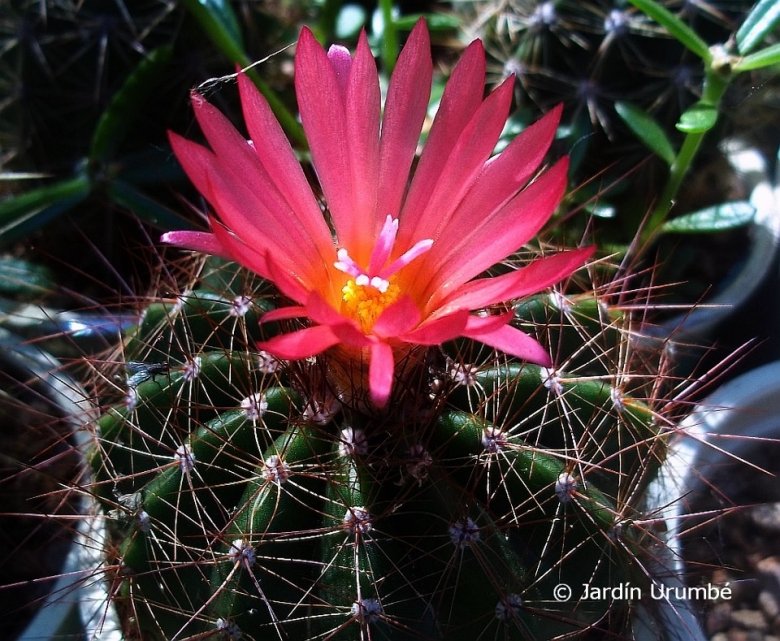
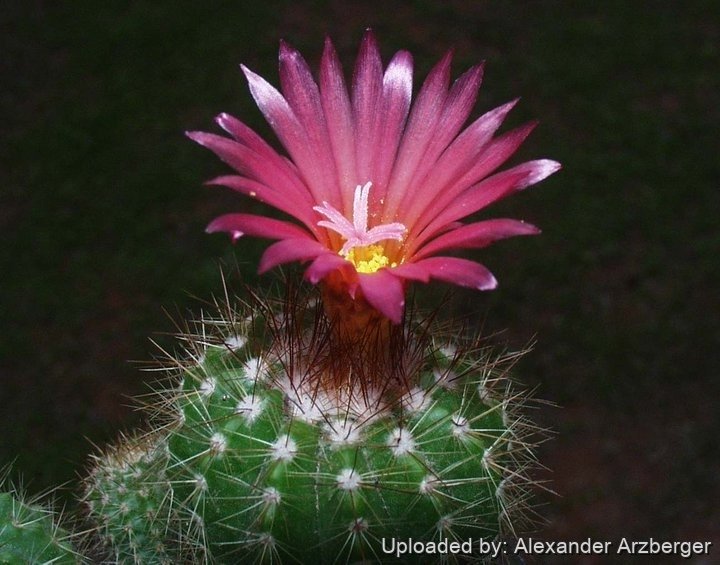
As the name implies Notocactus horstii f. purpureus is a distinct purple blooming form. However the plant occurs in several places, and is quite variable both in habitat and in our collections too. The spines range from nearly white to red-brown, and flowers from light-pink to dark purple.
Stem: Grass green, up to 14 cm in diameter, solitary (non-offsetting).
Central spines: 4-6, reddish brown, somewhat bent, up to 20 mm long.
Flower: Up to 4 cm wide. Inner perianth segments purple, 18 mm long and 4-5 mm wide. Nectar chamber narrow. Stamens inserted along the whole length of the tube. Style pink, stigma-lobes 10, spreading, almost white, 7-8 mm long.
Origin and Habitat
Rio Grande do Sul, southern part of the the range of Notocactus horstii (Santa Maria, Cerro Botucaraí, Candelaria, Sao Pedro do Sul, Sao Martinho) Brazil.
Type locality: Sao Martinho and Santa Maria, Serra Geral, Rio Grande do Sul, Brazil.
Altitude range: Around 150-350 metres above sea level.
Bibliography
Major references and further lectures
- Herm, Konrad “N. horstii (Ritter) forma purpureus (Ritter) Herm forma nova” in: Internoto 14 ( 2 ): 59-64, 1993
Source: Notocactus horstii f. purpureus, LLIFLE - Encyclopedia of living forms, CC-BY-SA, retrieved 2026-10-25.
From llifle page Notocactus muegelianus
Description
Notocactus muegelianus is a nomen nudum (without Latin description or type.) used to indicate a local or morphological form of Notocactus horstii (now reclassified Parodia ottonis subs. horstii).
Distinguishing characteristics: Notocactus muegelianus is the transitional form between the yellowishs-orange flowered Notocactus horstii and its purple flowered form Notocactus horstii f. purpureus. The stem is flattened spherical, up to 14 cm in diameter, but older specimens may become shortly columnar. The flowers are pinkish with a yellowish throat. Pistil are pinkish-yellow. However this form without flowers can not be distinguished from yellow-orange N. horstii and N. horstii f. purpureus. The distinguishing characteristics of Notocactus muegelianus, appear to fall within the natural variation of (Parodia ottonis subs. horstii) and it should be fully synonymized with the latter.
Origin and Habitat
The locality of origin of Notocactus muegelianus was not stated in the original description. The plants found in cultivation belongs to the field number HU82 (collector Leopoldo Horst) Locality Candelaria, Rio Grande do Sul, Brazil.
Cultivation and Propagation
Parodia ottonis subs. horstii is a summer grower species easy to grow and to bloom. It makes a very suitable indoor plants for any luminous windowsills.
Growth rate: It is a moderately fast growing and easily flowering species.
Soil: Use mineral well permeable substratum with little organic matter (peat, humus), plants may become too elongated if compost is too rich.
Repotting: Re-pot every 2 years. Use pot with good drainage.
Fertilization: It grows much faster with a low nitrogen content fertilizer in spring and summer.
Watering: Requires careful watering to keep plant compact. Water sparingly from March till October, the thin, fibrous roots suffer if there is humidity, therefore the plant should be watered only when the surrounding terrain is dry. Keep dry as soon as the temperature starts dropping in October and keep it perfectly dry in winter at temperatures from 5 to 15 degrees centigrade.
Hardiness: They need to be kept in a cool place during winter rest and are somewhat resistant to frost if kept on the dry side prior to, and during, cold weather ( they are hardy to -5 C ° C, for short periods). Although it is one of the easier Parodia to grow, it tends to rot in winter during the resting phase, if kept wet. In the rest period no high atmospheric humidity!!
Sun Exposure: Requires full sun in winter and some protection in summer, its colour tends to richer and darker when grown in light shade.
Uses: It is an excellent plant for container growing. It always looks good and stays small.
Pests & diseases: It may be attractive to a variety of insects, but plants in good condition should be nearly pest-free, particularly if they are grown in a mineral potting-mix, with good exposure and ventilation. Nonetheless, there are several pests to watch for:
- Red spiders: Red spiders may be effectively rubbed up by watering the infested plants from above.
- Mealy bugs: Mealy bugs occasionally develop aerial into the new growth among the wool with disfiguring results, but the worst types develop underground on the roots and are invisible except by their effects.
- Scales: Scales are rarely a problem.
- Rot: Rot is only a minor problem with cacti if the plants are watered and “aired” correctly. If they are not, fungicides won’t help all that much. To prevent rottenness it is also advisable to surround its root neck by very rough sand or grit, this help a fast water drainage.
Propagation: Almost exclusively by seed. Cutting scions from a flourishing plant may also been used to propagate this plant.
Bibliography
Major references and further lectures
-
Havlíček R., Minimus, příloha, 1982
-
Ritter F., Kakteen in Südamerika, 1 : 183, 1979
-
Schäfer G., Kakt./Sukk., 14 : 54, 1979
-
Schütz B., Kaktusy 76, 12 : 127, 1976 Otakar Šída and Karel Crkal. “NOTOCACTUS HORSTII Ritt. var. HORSTII” Cactus <http://www.cact.cz/galerie\_test/detail.php?id=160\> web 21 April 2015
Source: Notocactus muegelianus, LLIFLE - Encyclopedia of living forms, CC-BY-SA, retrieved 2026-10-25.
Gallery