Publication: Bradleya 5: 93. 1987
Description
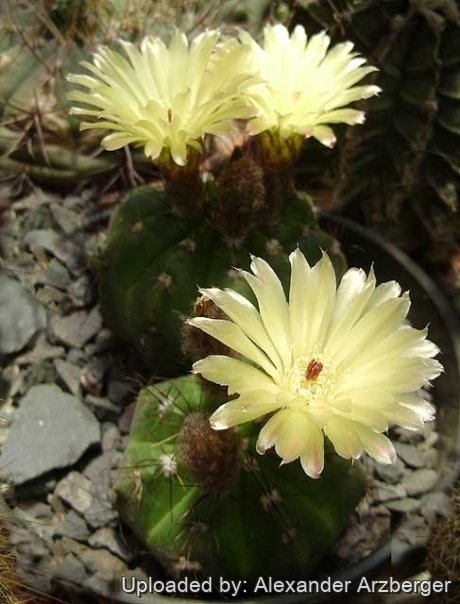
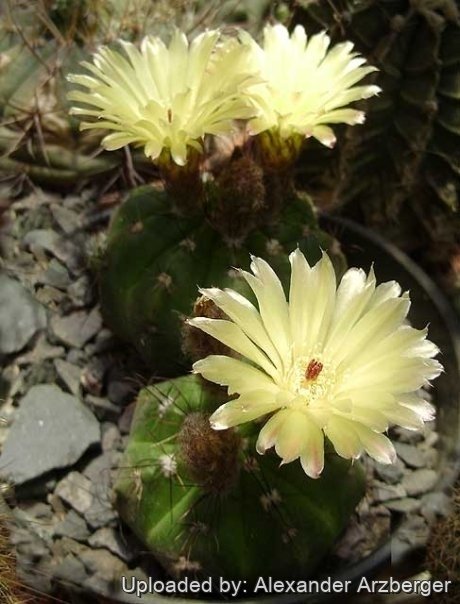
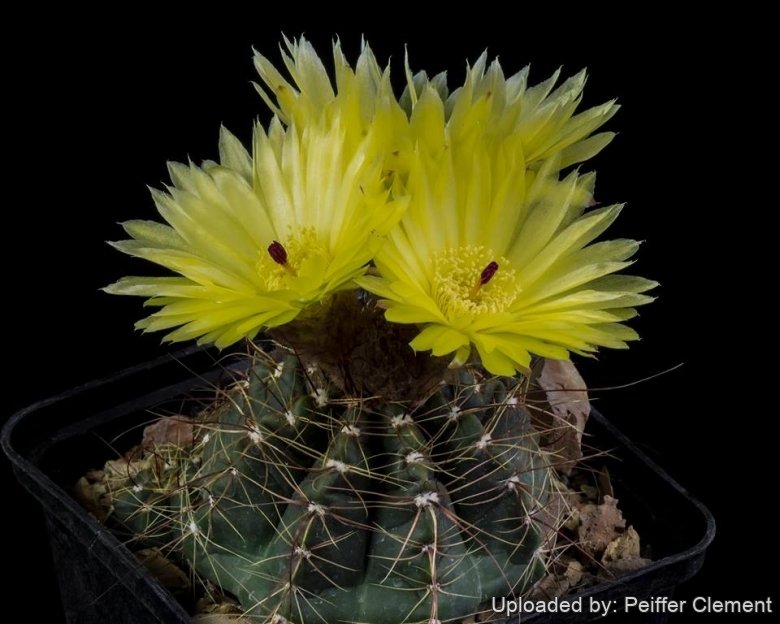
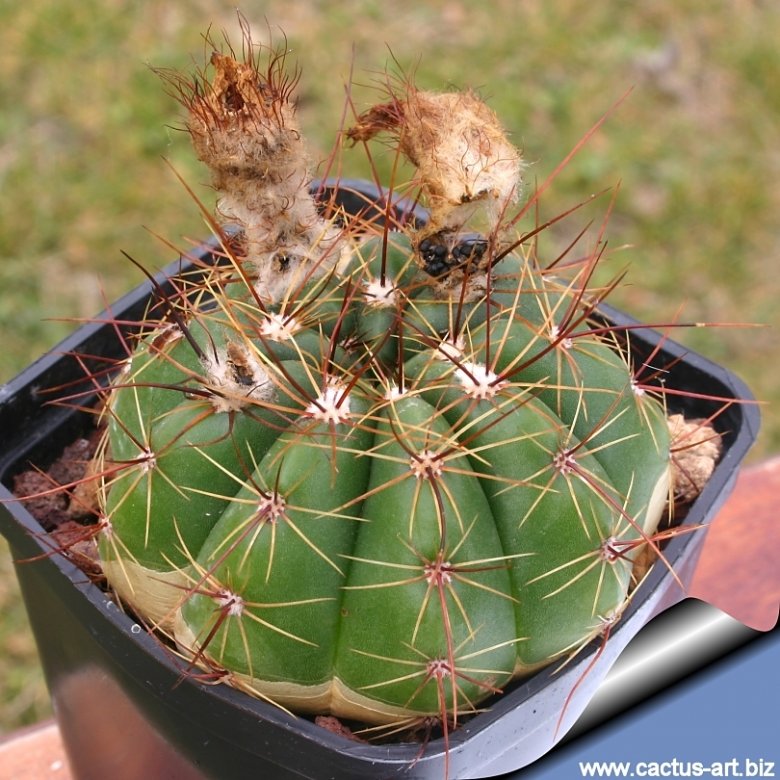
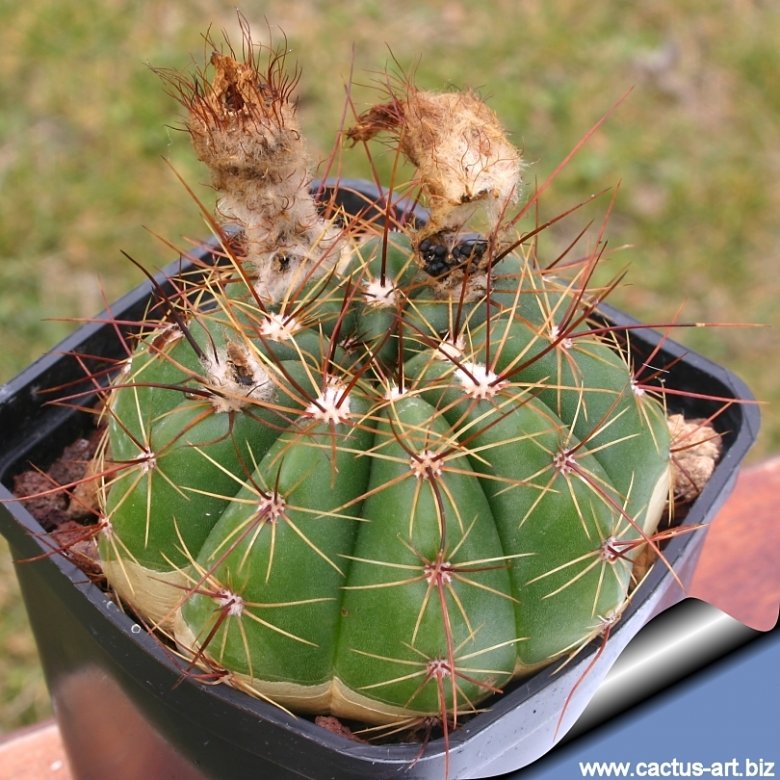
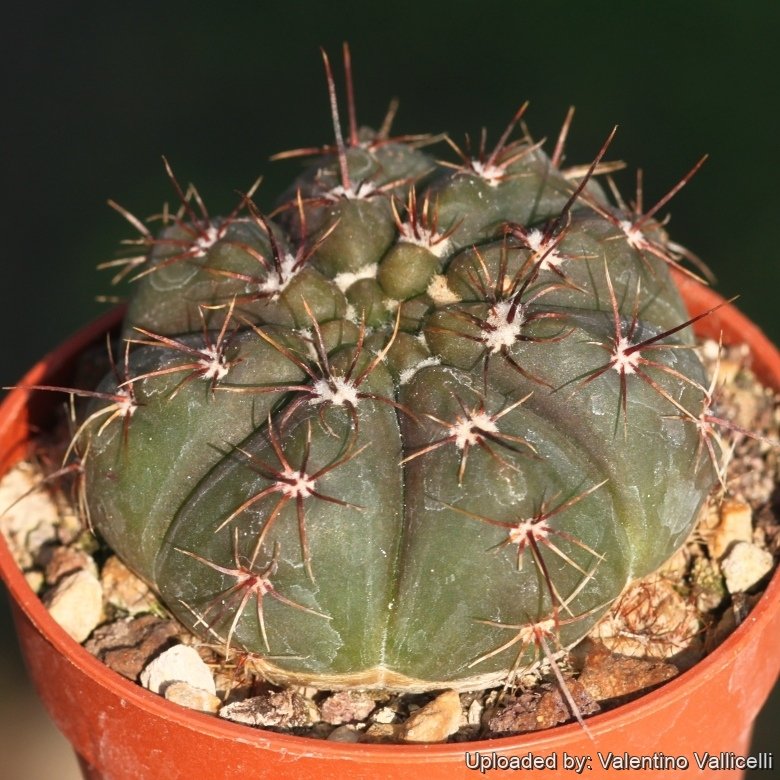
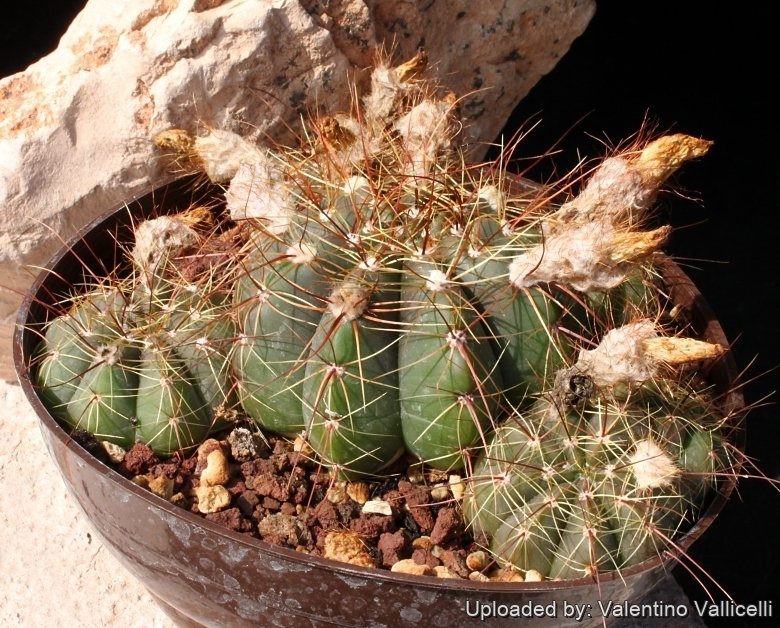
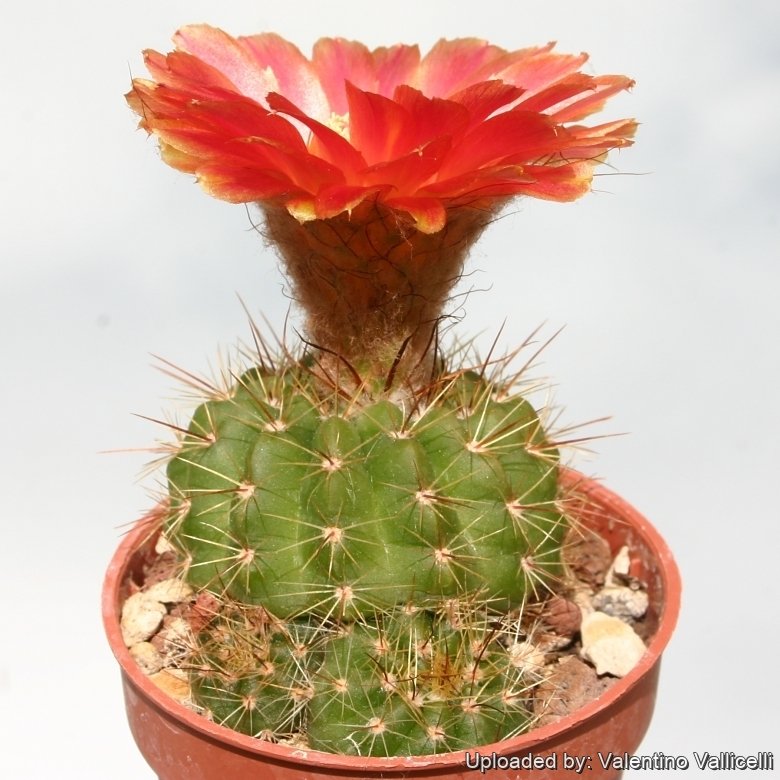
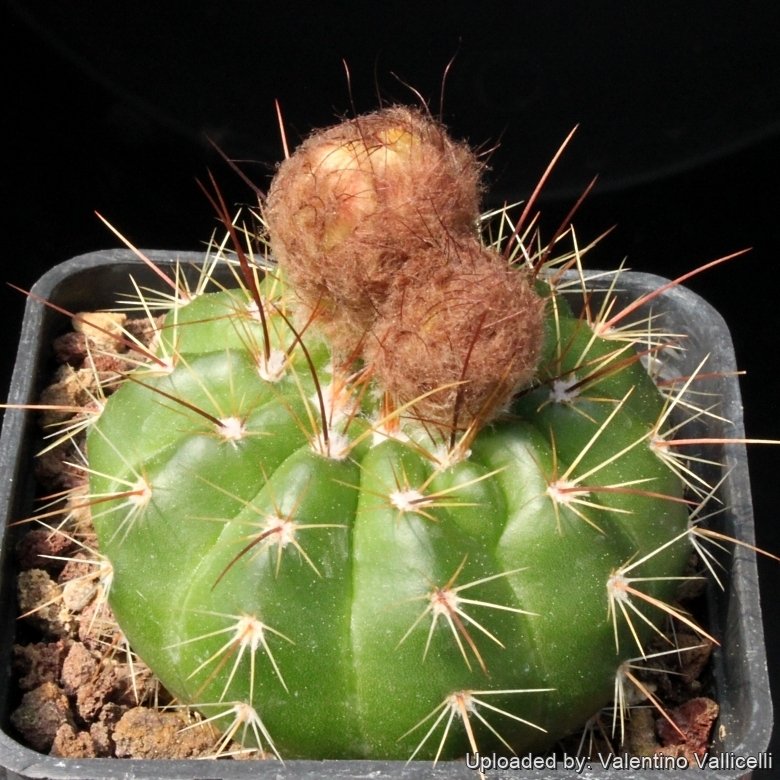
Parodia ottonis, better known as Notocactus ottonis, is a common attractive dwarf clumping cactus and particularly is fun as it matures and flowers at an early age. This is one of the most variable species in the genus and has lots of unnecessary synonyms and comprises a multitude of different regional forms as well as various cryptic allied species including the Parodia linkii, Parodia oxycostata, Parodia carambeiensis amd Parodia muricata. But where each form is linked to others by populations of plants with intermediate characteristics. This species is in cultivation with many cultivated and propagated forms. Generations of cactophiles have had this plant as one of their first acquisitions and few can have been disappointed by its easy cultivation and free-flowering habit.
Habit: Simple at first later usually clustering, the plants may form large clumps developing offsets on stolons which may emerge up to 20 cm away from the parent plant,
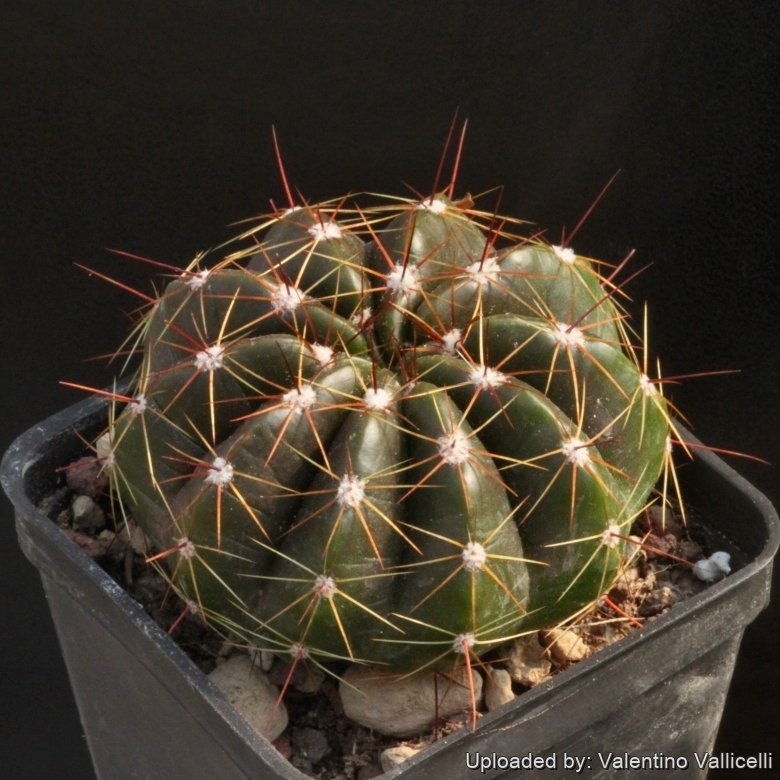
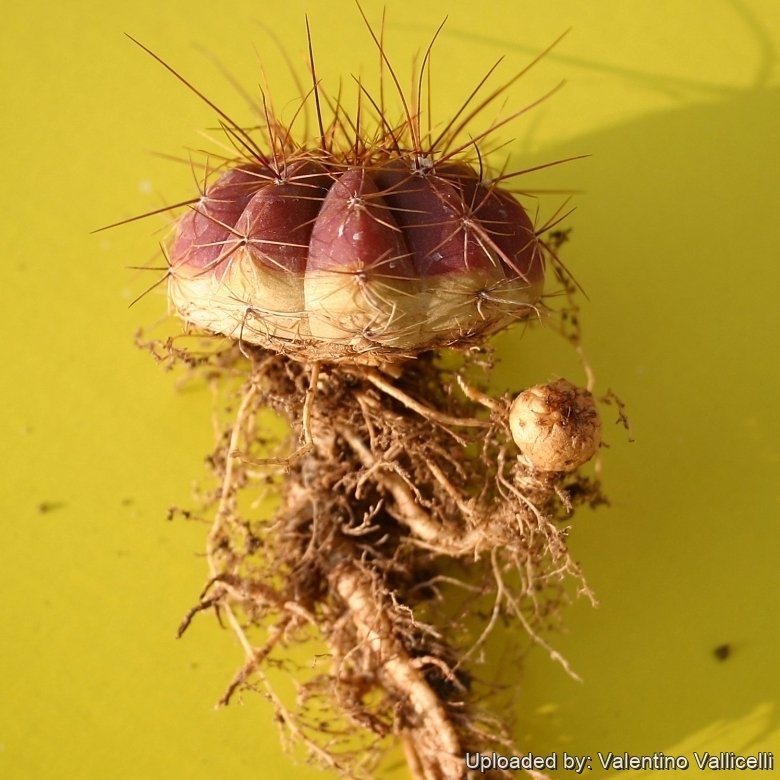
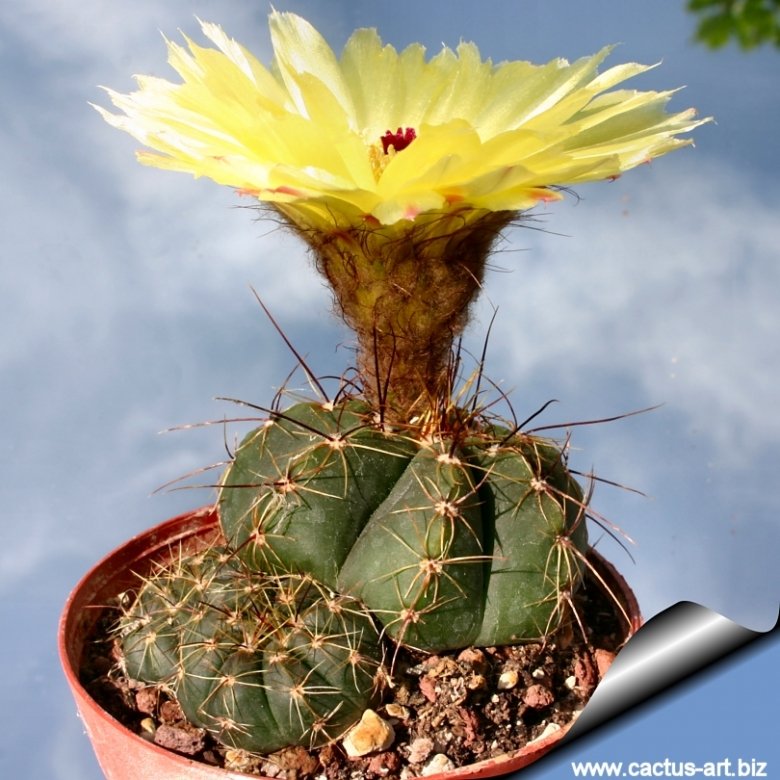
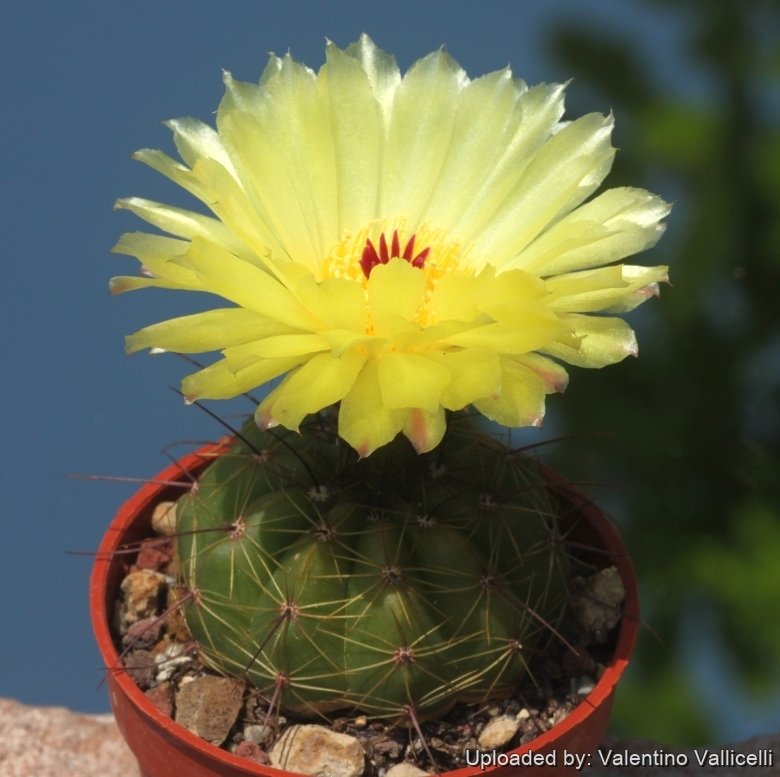
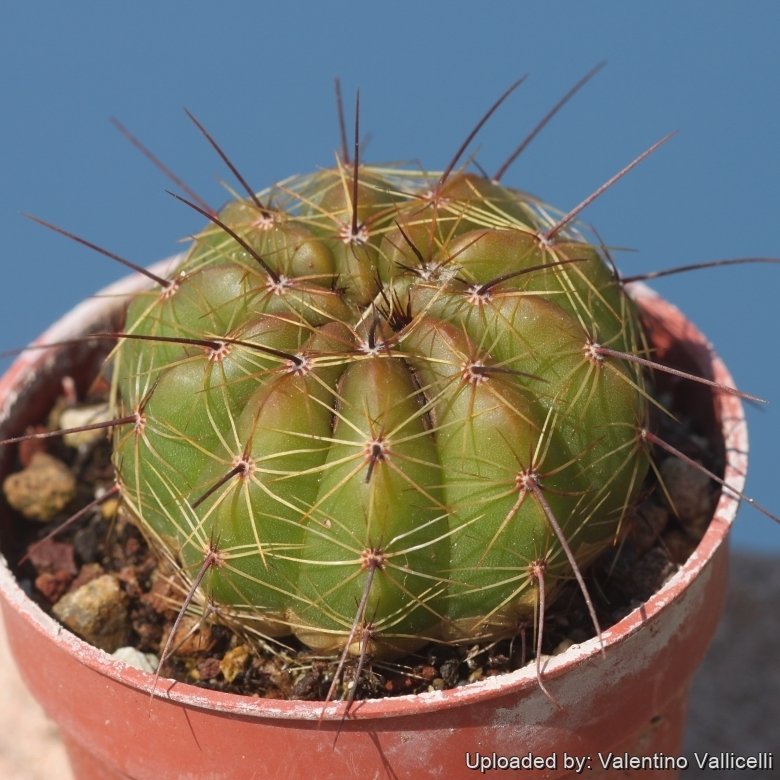
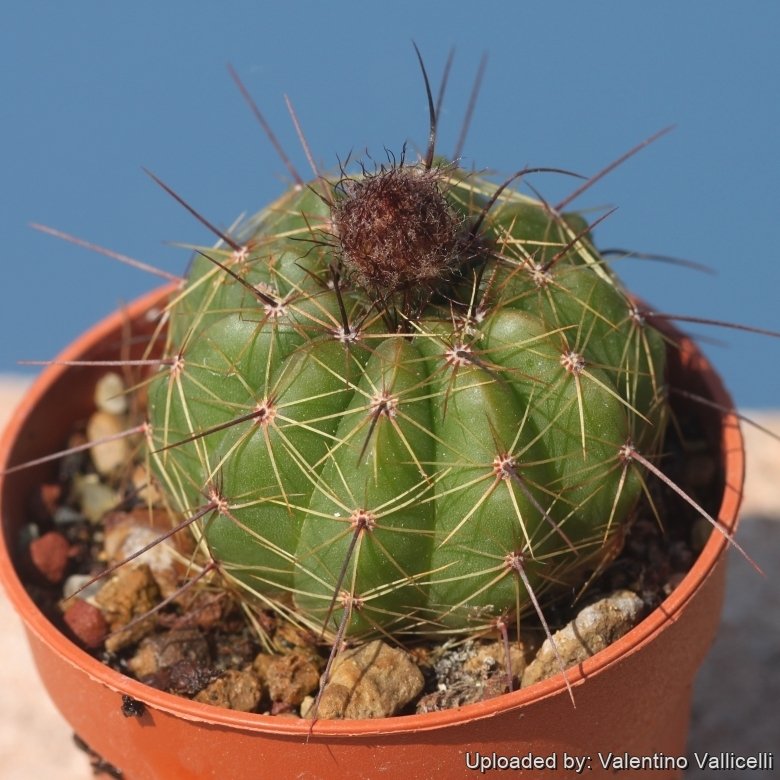
Stems: More or less spherical, tapered at base, eventually cylindrical with a flattened top, 2-15 cm in diameter (mostly less than 10 cm), light. Deep-green, bluish green, and can get deep purplish to maroon during winter dormancy, though this colour can be retained if grown in sufficient light. However the new growth is green but will soon darken to match the older epidermis.
Ribs: 6-12, rarely up to15, well defined. rounded or acute.
Spines: Slender hair-like, straight, curved or twisted, relatively sparse that does not hide the epidermis.
Central spines: 1-6, sometimes difficult to distinguish from radials, yellowish, pale to dark brown, light rose, reddish brown or black, 8-40 mm long tending to point downward.
Radial spines: 4-15 spreading radially, with a starlike appearance, whitish, yellow, pale rose or brown. 5-30 mm long.
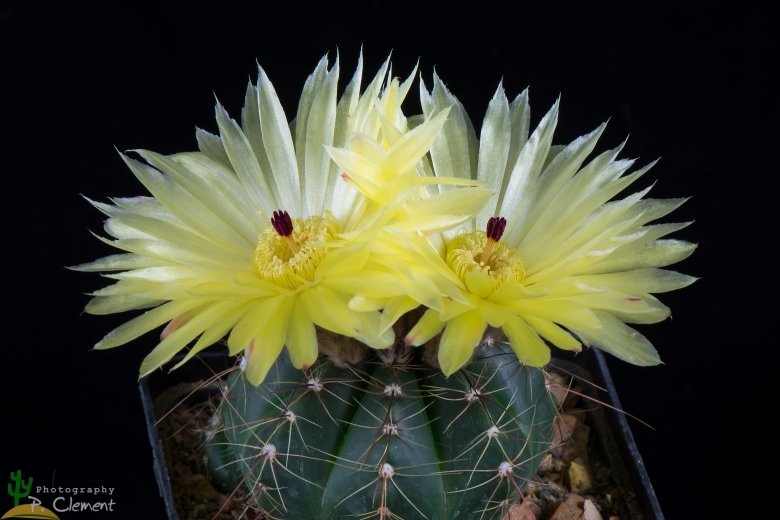
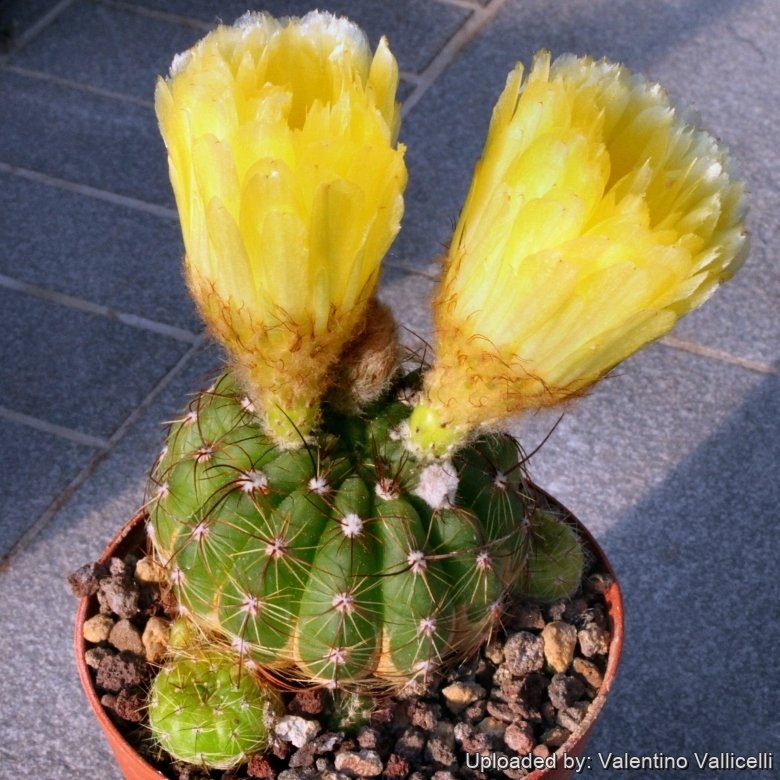
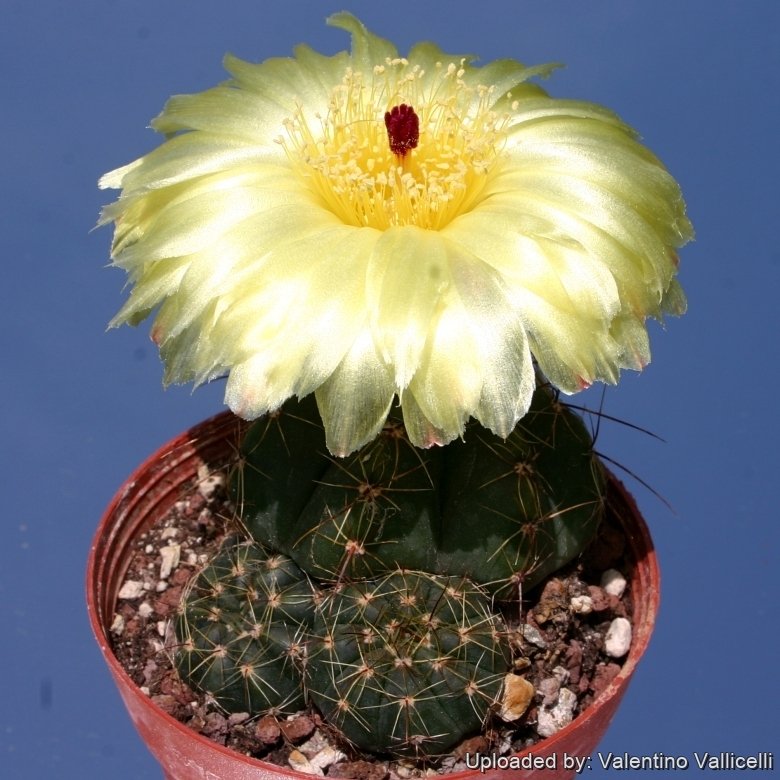
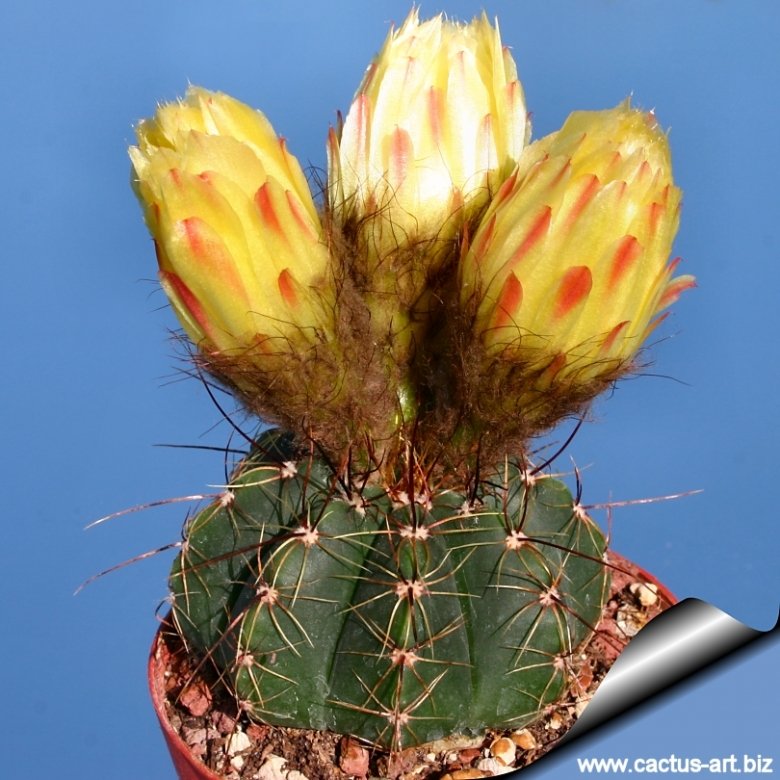
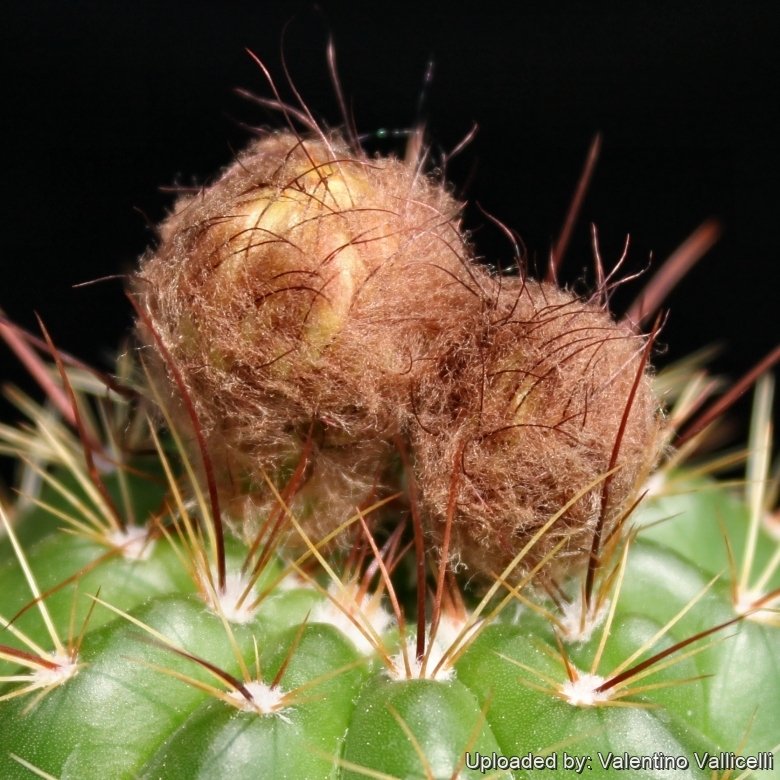
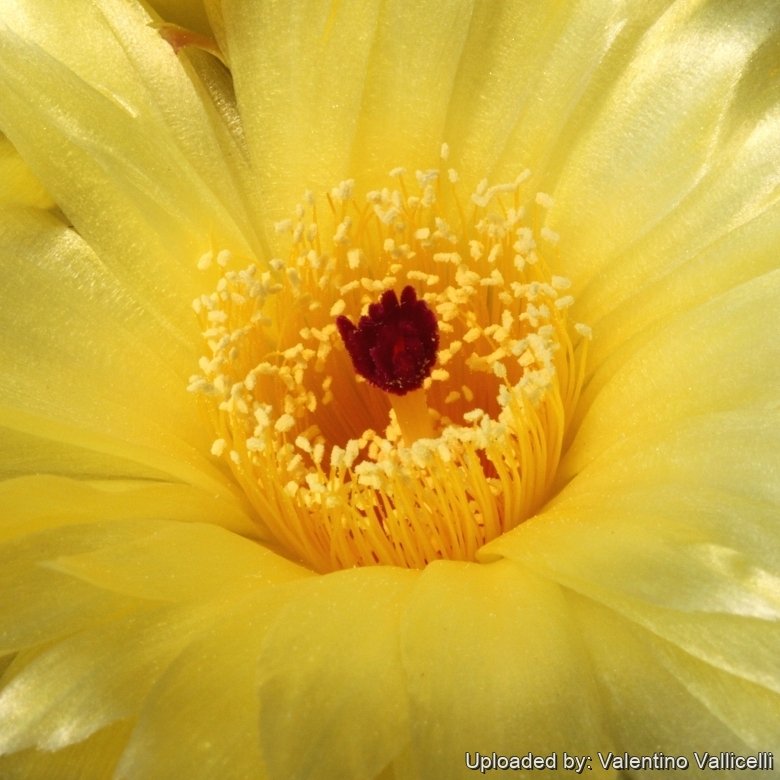
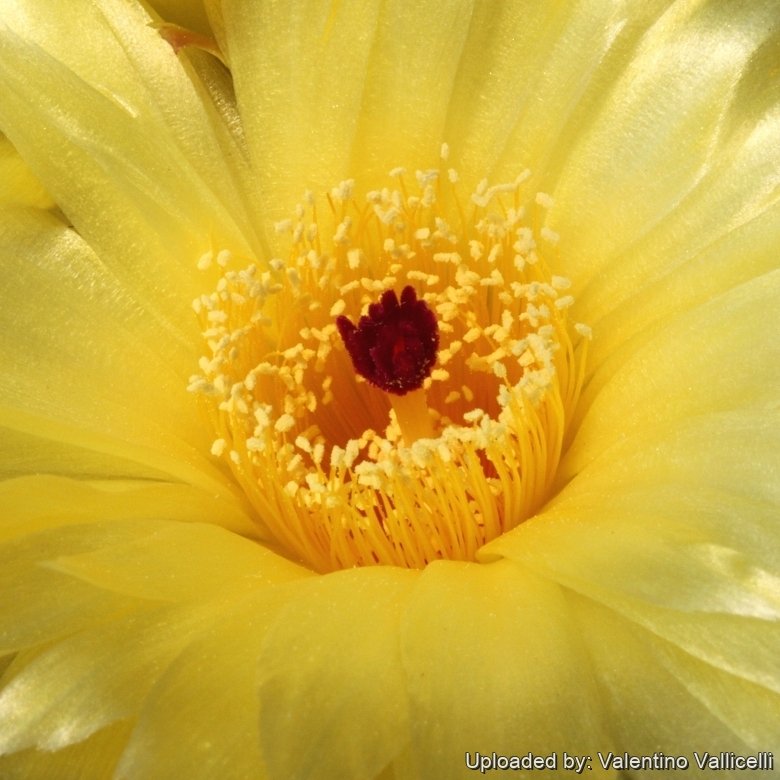
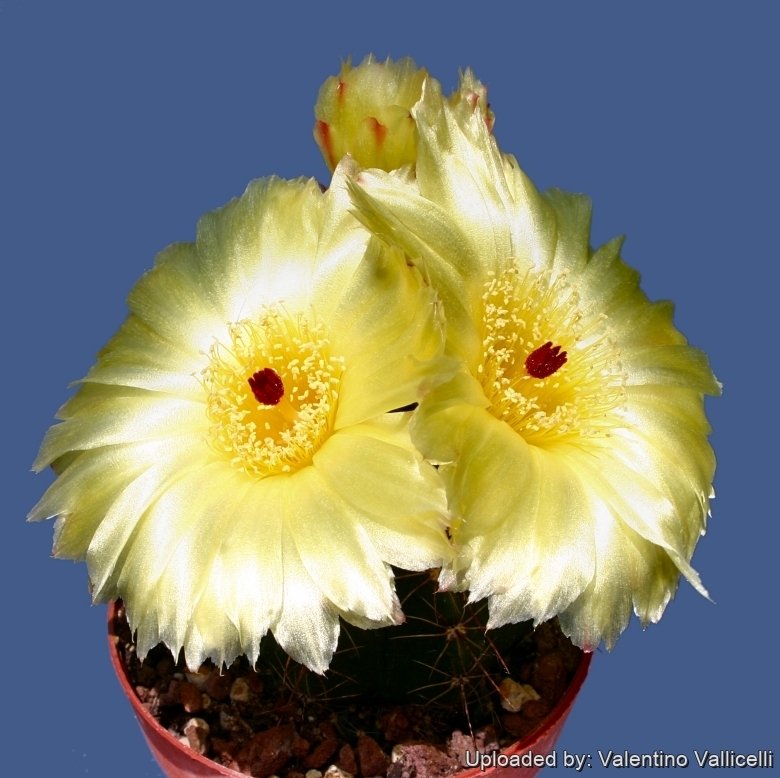
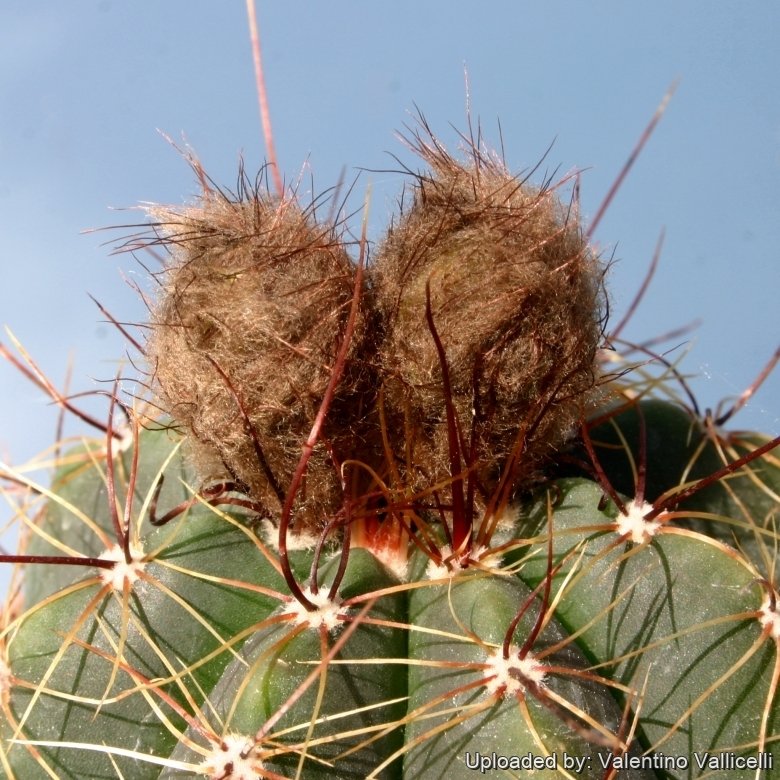
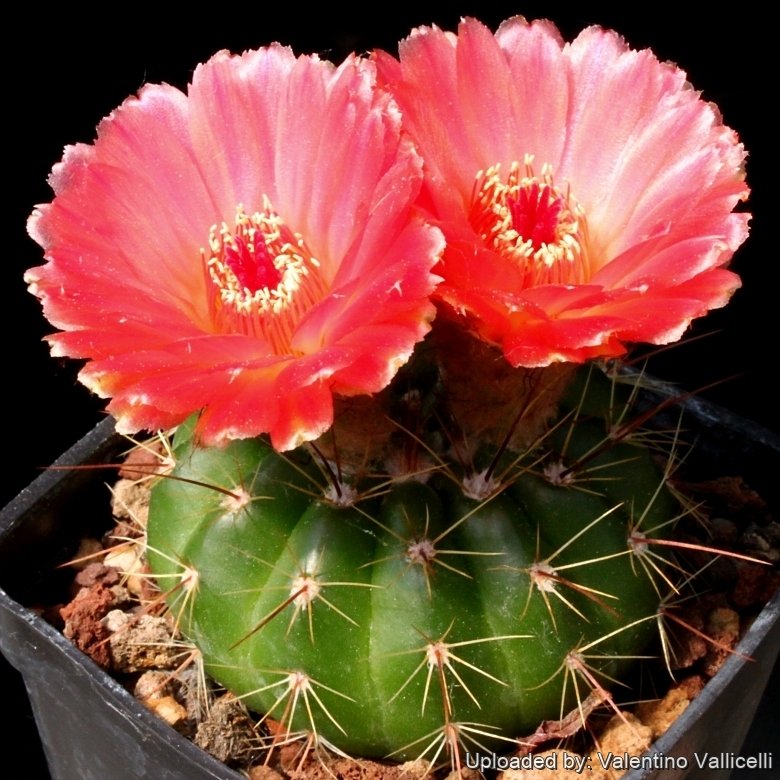
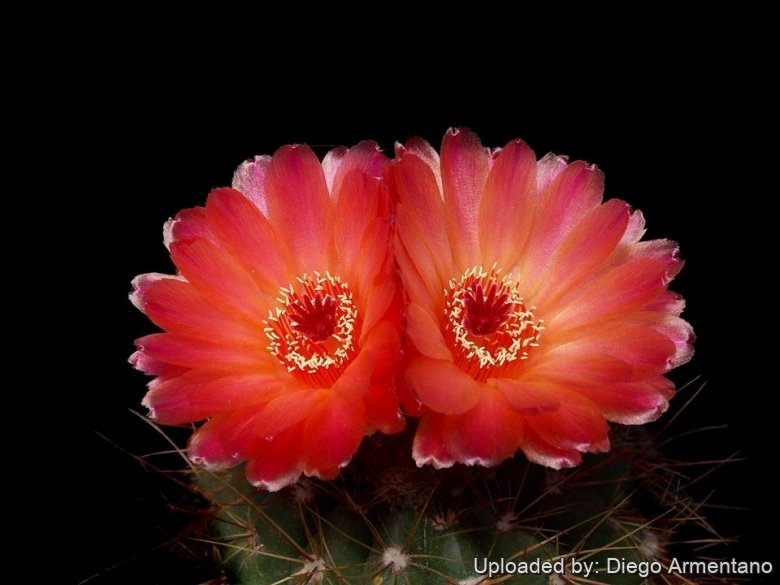
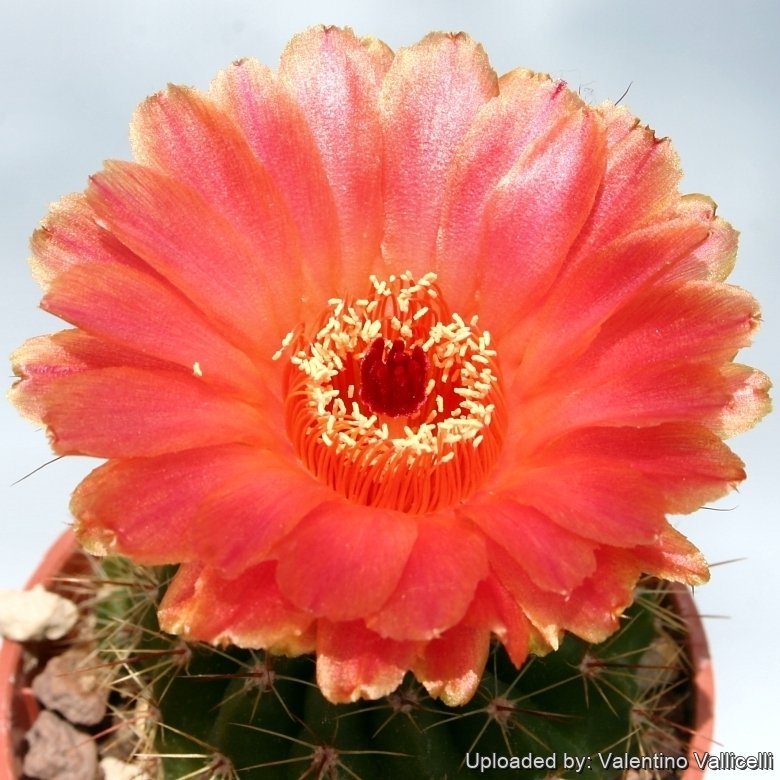
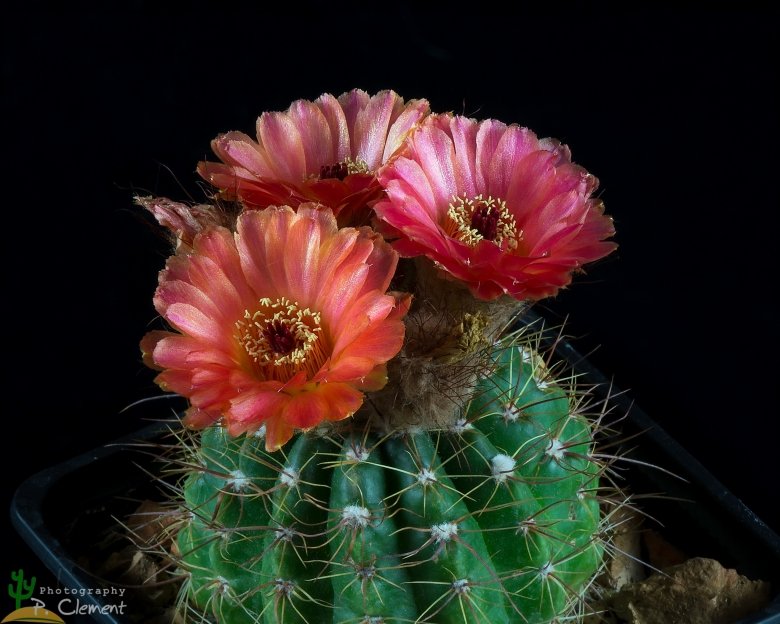
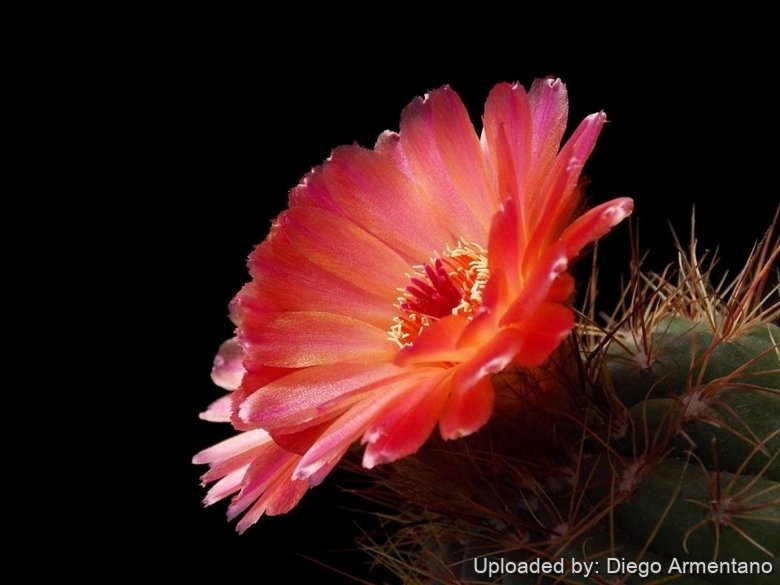
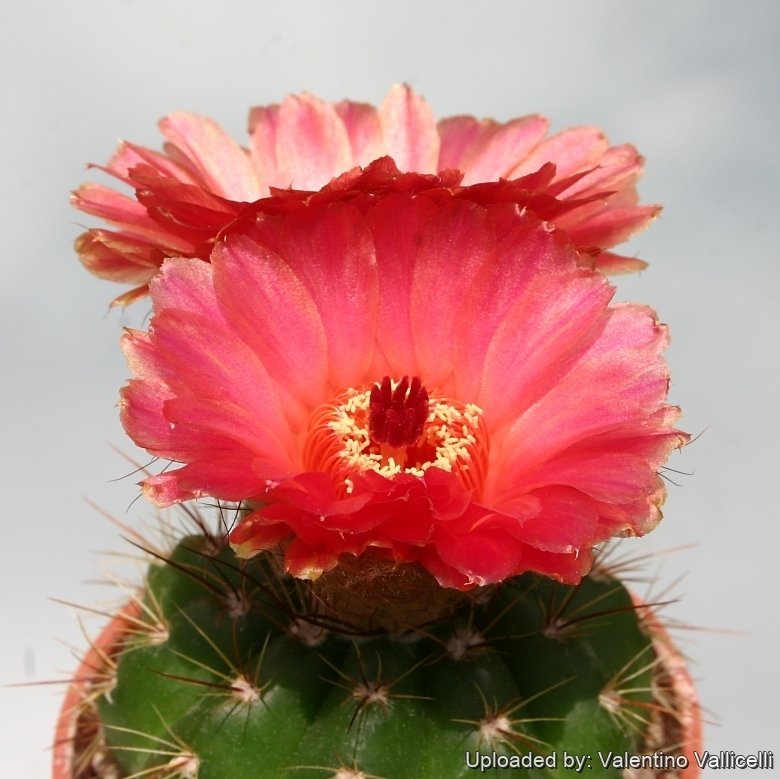
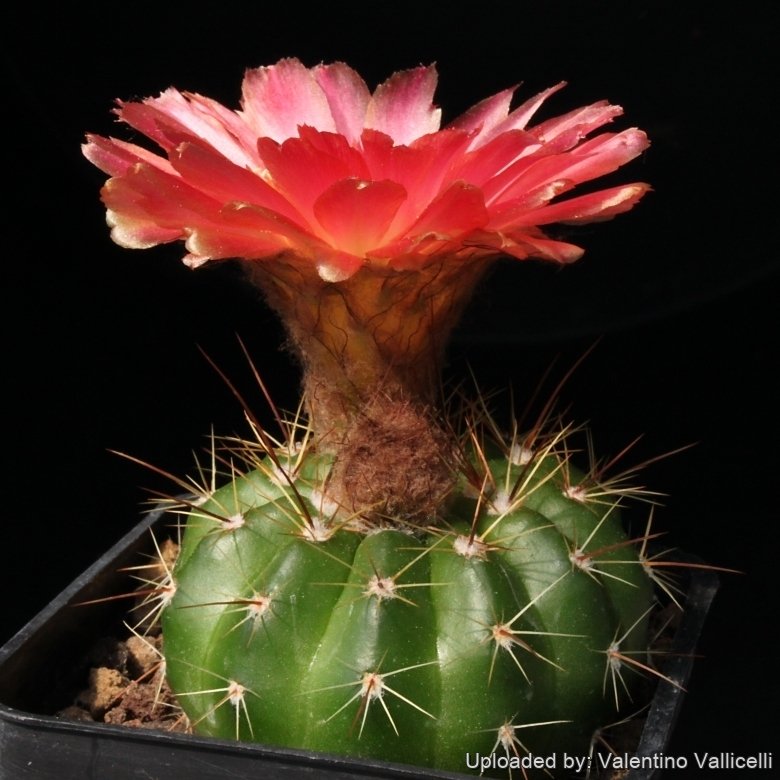
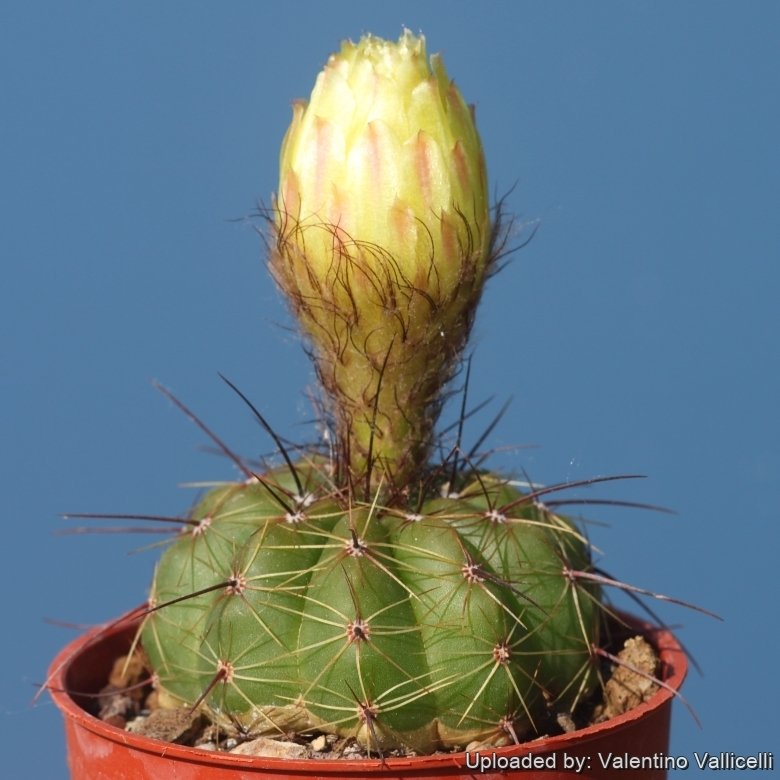
Flowers: 3,5-6 cm in diameter, few often closely packed apically, bright satiny yellow in one rare variant orange-red, pericarpels and tube with dense white to brownish wool and bristles. Stigma-lobes usually red or purplish, rarely orange or yellow.
Fruit: Ovoid to short oblong. 9-12 mm in diameter green, not elongating at maturity, thin to thick-walled. dehiscent lengthwise to expose the seeds and white pulp.
Seeds: 15-100 per fruit. Bell-shaped glossy black, 1,2-1,4 long and 11,7-1,2 mm broad strongly tuberculate.
Origin and Habitat
Parodia ottonis is widespread in South America in South Brazil, Uruguay, North-east Argentina and South Paraguay.
Habitat: Subtropical grasslands. And also in this area are several species of Frailea.
Cultivation and Propagation
Parodia ottonis is a summer grower species easy to grow and to bloom. It makes a very suitable indoor plants for any luminous windowsills.
Growth rate: It is a moderately fast growing and easily flowering species.
Soil: Use mineral well permeable substratum with little organic matter (peat, humus), plants may become too elongated if compost is too rich.
Repotting: Re-pot every 2 years. Use pot with good drainage.
Fertilization: It grows much faster with a low nitrogen content fertilizer in spring and summer.
Watering: Requires careful watering to keep plant compact. Water sparingly from March till October, the thin, fibrous roots suffer if there is humidity, therefore the plant should be watered only when the surrounding terrain is dry. Keep dry as soon as the temperature starts dropping in October and keep it perfectly dry in winter at temperatures from 5 to 15 degrees centigrade.
Hardiness: They need to be kept in a cool place during winter rest and are somewhat resistant to frost if kept on the dry side prior to, and during, cold weather ( they are hardy to -5 C ° C, for short periods). Although it is one of the easier Parodia to grow, it tends to rot in winter during the resting phase, if kept wet. In the rest period no high atmospheric humidity!!
Sun Exposure: Requires full sun in winter and some protection in summer, its colour tends to richer and darker when grown in light shade.
Uses: It is an excellent plant for container growing. It always looks good and stays small.
Pests & diseases: It may be attractive to a variety of insects, but plants in good condition should be nearly pest-free, particularly if they are grown in a mineral potting-mix, with good exposure and ventilation. Nonetheless, there are several pests to watch for:
- Red spiders: Red spiders may be effectively rubbed up by watering the infested plants from above.
- Mealy bugs: Mealy bugs occasionally develop aerial into the new growth among the wool with disfiguring results, but the worst types develop underground on the roots and are invisible except by their effects.
- Scales: Scales are rarely a problem.
- Rot: Rot is only a minor problem with cacti if the plants are watered and “aired” correctly. If they are not, fungicides won’t help all that much. To prevent rottenness it is also advisable to surround its root neck by very rough sand or grit, this help a fast water drainage.
Propagation: Almost exclusively by seed. Cutting scions from a flourishing plant may also been used to propagate this plant.
Bibliography
Major references and further lectures
-
Krainz, Hans “Die Kakteen” 1957-1975
-
Friedrich Ritter “Kakteen in Sűdamerika: Ergebnisse meiner 20jährigen Feldforschungen” Friedrich Ritter Selbstverlag, 1979
-
E Haustein “Der Kosmos Kakteenfuehrer (the Kosmos Cactus Guide)” Balogh Scientific Books 01 December 1998
-
Mariella Pizzetti, Giuseppe Mazza “Piante grasse: le cactacee” A. Mondadori, 1985
-
Edward Anderson “The Cactus family” Timber Press, Incorporated, 2001
-
James Cullen, Sabina G. Knees, H. Suzanne Cubey “The European Garden Flora Flowering Plants: A Manual for the Identification of Plants Cultivated in Europe, Both Out-of-Doors and Under Glass” Cambridge University Press, 11/Aug/2011
-
David R Hunt; Nigel P Taylor; Graham Charles; International Cactaceae Systematics Group. “The New Cactus Lexicon” dh books, 2006
-
Urs Eggli, Leonard E. Newton: “Etymological Dictionary of Succulent Plant Names” Springer, Berlin/Heidelberg 2010
-
- N. L. Britton, J. N. Rose: “The Cactaceae. Descriptions and Illustrations of Plants of the Cactus Family.” Volume III, The Carnegie Institution of Washington, Washington 1922
-
David Squire “Complete Indoor Plants” New Holland, 28/May/2007
-
Tony Mace “Notocactus: a review of the genus incorporating Brasilicactus, Eriocactus and Wigginsia” Editorial Board/National Cactus & Succulent Society, 1975
From llifle page Echinocactus acuatus var. arechavaletae
Description
Parodia ottonisarechavaletae| best knowns in cultivationas Notocactus arechavaletae is a local or morphologica form of the wide ranging and very variable Parodia ottonis. The differences with other Parodia ottonis are in reality very minimal and most botanist agree on the fact that both should all be included in the Parodia ottonis, and the two plants are not readily distinguishable, if not for the geographical provenance. The several varieties described (var. alacriportana, aurea, buenekeri, limiticola, nana, rubescens) are regarded as a mere ecotypes with size or colour modified by more humid or arid conditions and merging into typical plants in cultivation. However similar plants occurs at random elsewhere.
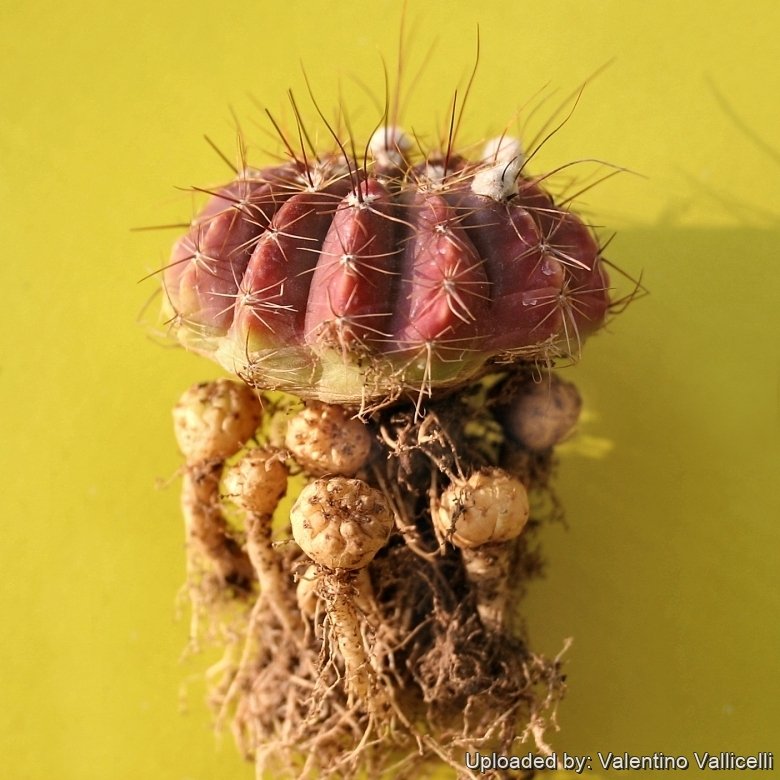
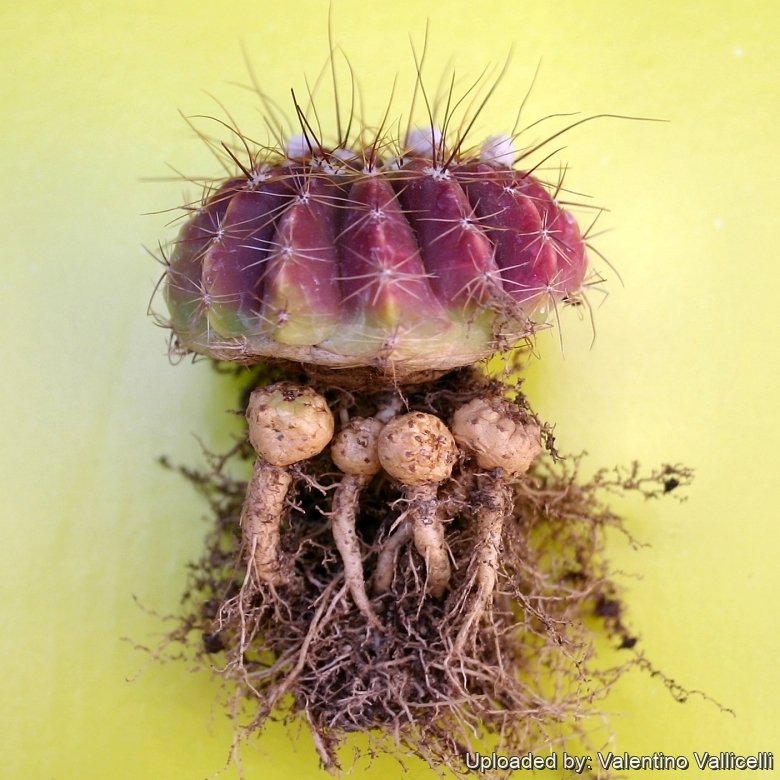
Habit: Plant at first solitary that matures and flowers at an early age. With time it form small colonies. One of the peculiarity of this species is the tendency to produce basal suckers on the lateral roots.
Stem: Up to 8 cm in diameter, 4 cm tall, somewhat depressed, with white wool apically, more or less glossy green or bluish green which can take a deep purplish to maroon colouring during winter dormancy, though this colour can be retained if grown in sufficient light. However the new growth is green but will soon darken to match the older epidermis.
Ribs: 8-9, broad and rounded, well defined.
Areoles: Few, circular up 1-2(-3) mm wide, 10-12 mm apart.
Spines: Bristly, acicular, slightly curved and spreading.
Central spines: Up to four, brownish, reddish brown or yellowish 20-40 mm long.
Radial spines: 7-9 up to 15 mm long, clearer.
Flowers: Yellow from the uppermost areoles, one or more appearing at a time, that open only during the dayt, 5-6 cm wide, floral tube with brownish wool and bristles. Perianth segments linear-oblong, acute, stamens about half the length of the perianth, segments, style yellow, stigma lobes red.
Fruits: 0,9-12 mm in diameter, ovoid to short cylindrical, thick walled, deishent often with large number of seeds.
Seeds: Bell shaped, glossy.
Origin and Habitat
Brazil (Rio Grande do Sul), Uruguay (Artigas, Rivera) and Paraguay (Paraguari), Southern South America.
Cultivation and Propagation
It is easy to grow. It prefers a neutral to slightly acidic mineral-based potting mix with plenty of extra grit and feed during the summer. It likes a warm bright location, does great in partial shade but doesn’t like full, hot blazing sun in the central summer month. Can support quite some water during the growing season but pot plants in winter are wet-sensitive and needs to be kept dry (rots easily if soil is wet and cold) tends to lose its roots in winter. Water Best if watered with rain water. Usually it is recommended to over-winter this plant in a bright and warm greenhouse with at least 8-10° C and rather dry (it tends to lose its roots and to rot if the substrate is wet and cold) but it has proved to tolerate temperatures as low as -5° C for short periods. It is susceptible to spider mites, so it should be check once in a while for it.
Propagation: Seeds, cuttings or root suckers (if available). Not too difficult to raise from seed.
Notes
Root suckers are new shoots that arise from adventitious buds developing on the lateral root system of many plants species. They are however a quite rare kind of vegetative reproduction strategy in cactus family, but occasionally occur in some cactus species when roots have been injured or felled. Notocactus arecavaletai is one of the few specie that produces naturally a large numbers of them and can develop into a small colony. The suckers have the potential to develop rapidly, fed by the existing root system. Often sprouting results in multiple stemmed plants.
Bibliography
Major references and further lectures
-
Tony Mace “Notocactus: a review of the genus incorporating Brasilicactus, Eriocactus and Wigginsia” Editorial Board/National Cactus & Succulent Society, 1975
-
Edward Anderson “The Cactus family” Timber Press, Incorporated, 2001
-
James Cullen, Sabina G. Knees, H. Suzanne Cubey “The European Garden Flora Flowering Plants: A Manual for the Identification of Plants Cultivated in Europe, Both Out-of-Doors and Under Glass” Cambridge University Press, 11/Aug/2011
-
David R Hunt; Nigel P Taylor; Graham Charles; International Cactaceae Systematics Group. “The New Cactus Lexicon” dh books, 2006.
Source: Echinocactus acuatus var. arechavaletae, LLIFLE - Encyclopedia of living forms, CC-BY-SA, retrieved 2026-10-25.
From llifle page Echinocactus ottonis f. paraguayensis
Description
Notocactus ottonis var. paraguayensis (firstly described as Echinocactus ottonis var. paraguayensis by Heese in 1905) is a local or morphological form of the widespread and variable Parodia ottonis , but not sufficiently differentiated and considered merely a local variant of the latter (if not the same). Notocactus ottonis var. paraguayensis is at most a race of Parodia ottonis . The key difference by which the two were separated, namely the ribs less rounded, almost acute and the longer reddish-brown spines, appear to fall within the natural variation of Parodia ottonis and it should be synonymized with the latter. The plants are also slightly smaller than the type of the species.
Stem: 48-60 mm wide, 35-50 mm tall, clumping darker green and can get deep purplish to maroon during winter dormancy, though this colour can be retained if grown in sufficient light. However the new growth is green but will soon darken to match the older epidermis.
Ribs: 8 to 9, deeply cut, vertical, up to 6 mm hight, maximum width at the base 12-18 mm.
Areoles: 4-5 mm in diameter, illiptical to round, 10 to 16 mm apart.
Central spines: 3, light brown to reddish, 12 to 20 mm long, the lowest the longest.
Radial spines: c. 9 light brown, reddish-brown, or yellowish.
Flowers: 37 to 40 mm long, 48 to 57 mm wide, deep yellow, with a slight reddish stripes; Inner perianth segments to 25 mm long. Corolla tube with green scales, axils with wool and 2-3 dark brown bristles (10 mm long). Style yellow, 2 mm in diameter, 22 to 24 mm long. Stigma 4 mm Ø, lobes 11, 3 to 4 mm long, purple. Stamens to 25 mm long, at the level of the stigma, above yellow, orange below, and red- purple at the base. Anther intensely yellow.
Origin and Habitat
Cordillera, and Misiones, Paraguay (Southern South America, Southern America)
Type locality: Barrero Grande = Eusebio Ayala
Altitude range: The species grows at low altitude (around 200 metres above sea level).
Habitat: Subtropical grasslands.
Bibliography
Major references and further lectures
-
William Taylor Marshall, Thor Methven Bock, Nathaniel Lord Britton “Cactaceae, with illustrated keys of all tribes, sub-tribes and genera” Theophrastus Publishers, 1941
-
Notocactus ottonis var. paraguayensis in: INTERNOTO AK1a February 1986
-
Notocactus ottonis var. paraguayensis retrieved 14 March 2016 from <http://www.s245090340.online.de/ug/gymnocephalus/ottonis/181-notocactus-ottonis-var-paraguayensis-haage-jr-1896-berger-ex-backeberg-1959.html\>
Source: Echinocactus ottonis f. paraguayensis, LLIFLE - Encyclopedia of living forms, CC-BY-SA, retrieved 2026-10-25.
From llifle page Echinocactus ottonis var. tortuosus
Description
Parodia ottonis var. tortuosa (Notocactus ottonis var. tortuosus) is a cryptic species allied both to Parodia linkii and the very variable Parodia ottonis that has numerous synonyms for its various regional forms. Parodia ottonis var. tortuosa has a very large body (13-18 cm), small flower (25 mm long and 25-50 mm in width) and its spines are almost equal. These characteristics are not usually found in Parodia ottonis but closely correspond to the description of Parodia linkii.
Derivation of specific name: tortuosus,-a,-um; from Latin. tortuosus (from torus, bend, curve), for the spines that are bent or twisted in different directions.
Stems: Hemispherical to depressed, dark green, 13-18 cm in diameter, apex woolly and somewhat depressed.
Ribs: 10-15, occasionally more, sub-vertical, arched, rounded-triangular in cross section, sides surfaces convex, forming deep angled sinuses and rounded apically
Areoles: Shallowly notches between tubercles, closely set. Juvenile ones woolly.
Spines: 4-16 mm long straight or somewhat curved and twisted, pale yellowish to reddish. Radial spines in 4-6(-7) pairs, the upper ones slightly shorter, the other all equally long. Central spines 4 to 6, brown, slightly larger and spreading, the upper one shorter.
Flowers: Several produced together at apex, yellow, about 2.5-5 cm in diameter. Tube short filled with wool, bristly brown hairs and green scales becoming gradually longer above. Outer segments oblong shortly pointed. Inner perianth-segments in two whorls, mucronate and fringed at apex. Stigma yellow or pale red.
Fruits (berries): Protruding, sub-globose, scales thin, with short wool and longer bristles.
Seeds: Sub-cylindrical, rounded, sometimes enlarged at base.
Origin and Habitat
Brazil and Uruguay.
Bibliography
Major references and further lectures
-
Linnaea: Ein Journal Für Die Botanik in Ihrem Ganzen Umfange, Volume 5 P. Parey, 1830
-
Edouard Spach “Histoire naturelle des végétaux: Phanérogames”, Volume 13 Librairie encyclopédique de Roret, 1846
-
Karl Friedrich Philipp von Martius “Flora Brasiliensis, Enumeratio Plantarum in Brasilia Hactenus Detectarum: Quas Suis Aliorumque Botanicorum Studiis Descriptas Et Methodo Naturali Digestas Partim Icone Illustratas”, 1840
-
James Cullen, Sabina G. Knees, H. Suzanne Cubey “The European Garden Flora Flowering Plants: A Manual for the Identification of Plants Cultivated in Europe, Both Out-of-Doors and Under Glass” Cambridge University Press, 11/August /2011
-
Friedrich Ritter “Kakteen in Suedamerika: Ergebnisse Meiner 20 Jaehrigen Feldforschungen” F. Ritter Selbstverlag, 1979
Source: Echinocactus ottonis var. tortuosus, LLIFLE - Encyclopedia of living forms, CC-BY-SA, retrieved 2026-10-25.
From llifle page Notocactus arechavaletae var. limiticola
Description
Plant at first solitary that matures and flowers at an early age. With time it form small colonies. One of the peculiarity of this species is the tendency to produce basal suckers on the lateral roots.
The “limiticola” is merely one of the several forms of the very variable Notocactus (Parodia) ottonis and is regarded as a mere ecotype with size or colour modified by more humid or arid conditions and merging into typical plants in cultivation. However similar plants occurs at random elsewhere.
Stem: Up to 8 cm in diameter, 4 cm tall, somewhat depressed, with white wool apically, more or less glossy green or bluish green which can take a deep purplish to maroon colouring during winter dormancy, though this colour can be retained if grown in sufficient light. However the new growth is green but will soon darken to match the older epidermis.
Ribs: 8-9, broad and rounded, well defined.
Areoles: Few, circular up 1-2(-3) mm wide, 10-12 mm apart.
Spines: Bristly, acicular, slightly curved and spreading.
Central spines: Up to four, brownish, reddish brown or yellowish 20-40 mm long.
Radial spines: 7-9 up to 15 mm long, clearer.
Flowers: Yellow from the uppermost areoles, one or more appearing at a time, that open only during the dayt, 5-6 cm wide, floral tube with brownish wool and bristles. Perianth segments linear-oblong, acute, stamens about half the length of the perianth, segments, style yellow, stigma lobes red.
Fruits: 0,9-12 mm in diameter, ovoid to short cylindrical, thick walled, deishent often with large number of seeds.
Seeds: Bell shaped, glossy.
Origin and Habitat
Livramento, border with Uruguay, Rio Grande do Sul, Brazil.
Altitude: It grows at elevations from 0 to 250 meters above sea level.
Habitat: The species grows in several fragmented populations on rocky outcrops, in grasslands or pampas.
Source: Notocactus arechavaletae var. limiticola, LLIFLE - Encyclopedia of living forms, CC-BY-SA, retrieved 2026-10-25.
From llifle page Notocactus arechavaletae var. rubescens
Description
Plant at first solitary that matures and flowers at an early age. With time it form small colonies. One of the peculiarity of this species is the tendency to produce basal suckers on the lateral roots.
The “rubescens” is merely one of the several forms of the very variable Notocactus (Parodia) ottonis distinguished by its redder stems. However Parodia ottonis occurs over quite a wide area and “rubescens” is regarded as a mere ecotype with size or colour modified by more humid or arid conditions and merging into typical plants in cultivation. However redder forms occours at random elswhere.
Stem: Up to 8 cm in diameter, 4 cm tall, somewhat depressed, with white wool apically, more or less glossy green or bluish green which can take a purple colour in under stress condition or in full sun. The rich magenta colour of the stem sometime seen is due to a full sun exposure along with short water supply during cold winter month, otherwise the plant is green.
Ribs: 8-9, broad and rounded, well defined.
Areoles: Few, circular up 1-2(-3) mm wide, 10-12 mm apart.
Spines: Bristly, acicular, slightly curved and spreading.
Central spines: Up to four, brownish, reddish brown or yellowish 20-40 mm long.
Radial spines: 7-9 up to 15 mm long, clearer.
Flowers: Yellow from the uppermost areoles, one or more appearing at a time, that open only during the dayt, 5-6 cm wide, floral tube with brownish wool and bristles. Perianth segments linear-oblong, acute, stamens about half the length of the perianth, segments, style yellow, stigma lobes red.
Fruits: 0,9-12 mm in diameter, ovoid to short cylindrical, thick walled, deishent often with large number of seeds.
Seeds: Bell shaped, glossy.
Origin and Habitat
North of Carazinha, Rio Grande do Sul, Brazil
Notes
Root suckers are new shoots that arise from adventitious buds developing on the lateral root system of many plants species. They are however a quite rare kind of vegetative reproduction strategy in cactus family, but occasionally occur in some cactus species when roots have been injured or felled. Notocactus arecavaletai var. rubescens is one of the few specie that produces naturally a large numbers of them and can develop into a small colony. The suckers have the potential to develop rapidly, fed by the existing root system. Often sprouting results in multiple stemmed plants.
Source: Notocactus arechavaletae var. rubescens, LLIFLE - Encyclopedia of living forms, CC-BY-SA, retrieved 2026-10-25.
From llifle page Notocactus ottonis var. vencluianus
Description
Plant at first solitary that matures and flowers at an early age. With time it form small colonies. One of the peculiarity of this species is the tendency to produce basal suckers on the lateral roots.
The “vencluiana” is merely one of the several forms of the very variable Notocactus (Parodia) ottonis distinguished by its red flowers and red anthers. Havlicek called it Notocactus ottonis cv. Venclu in 1993. Gerloff’s Notocacti book suggests that this particular cultivar originated from (habitat?) seed sown in a Czech nurser. However Parodia ottonis occurs over quite a wide area and “vencluiana ” is regarded as a mere ecotype with size or colour of flowers modified. However red flowering forms occours at random elswhere.
Stem: Up to 8 cm in diameter, 4 cm tall, somewhat depressed, with white wool apically, more or less glossy green or bluish green which can take a purple colour in under stress condition or in full sun.
Ribs: 8-9, broad and rounded, well defined.
Areoles: Few, circular up 1-2(-3) mm wide, 10-12 mm apart.
Spines: Bristly, acicular, slightly curved and spreading.
Central spines: Up to four, brownish, reddish brown or yellowish 20-40 mm long.
Radial spines: 7-9 up to 15 mm long, clearer.
Flowers: In various shades of peach, salmon, pink-red, vermilion and purple, from the uppermost areoles, one or more appearing at a time, that open only during the dayt, 5-6 cm wide, floral tube with brownish wool and bristles. Perianth segments linear-oblong, acute, stamens about half the length of the perianth, segments, style yellow, stigma lobes red.
Fruits: 0,9-12 mm in diameter, ovoid to short cylindrical, thick walled, deishent often with large number of seeds.
Seeds: Bell shaped, glossy.
Origin and Habitat
This particular cultivar originated from (habitat?) seed sown in a Czech nursery.
Bibliography
Major references and further lectures
-
Tony Mace “Notocactus: a review of the genus incorporating Brasilicactus, Eriocactus and Wigginsia” Editorial Board/National Cactus & Succulent Society, 1975
-
Edward Anderson “The Cactus family” Timber Press, Incorporated, 2001
-
James Cullen, Sabina G. Knees, H. Suzanne Cubey “The European Garden Flora Flowering Plants: A Manual for the Identification of Plants Cultivated in Europe, Both Out-of-Doors and Under Glass” Cambridge University Press, 11/Aug/2011
-
David R Hunt; Nigel P Taylor; Graham Charles; International Cactaceae Systematics Group. “The New Cactus Lexicon” dh books, 2006.
-
Walther Haage “Kakteen von A bis Z” Neumann Verlag, 1981
Source: Notocactus ottonis var. vencluianus, LLIFLE - Encyclopedia of living forms, CC-BY-SA, retrieved 2026-10-25.
From llifle page Notocactus tenuispinus f. cristatus
Cultivation and Propagation
Although regarded as a choice and difficult plant is not too difficult in a greenhouse, although grows quite slowly. It is sometime seen as a grafted plant but grows very well on its own roots too.
Soil: Use mineral well permeable mineral soil with little organic matter (peat, humus).
Exposure: They need a good amount of light shade to full sun this help to keep the plants healthy, although slow growth.
Watering: Water sparingly from March till October (weekly during summertime, if the weather is sunny enough) , with a little fertilizer added. Less or no water during cold winter months, or when night temperatures remain below 10° to prevent root loss. It is sensitive to overwatering (rot prone).
Fertilization: Feeding may not be necessary at all if the compost is fresh then, feed in summer only if the plant hasn’t been repotted recently. Do not feed the plants from September onwards as this can cause lush growth which can be fatal during the darker cold months.
Hardiness: Keep perfectly dry in winter at temperatures from 5 to 15 degrees centigrade. (but it is relatively cold resistant and hardy to -5° C, or possibly colder for short periods) In the rest period no high atmospheric humidity!! (Temperature Zone: USDA 9-11)
Crested growth: Unlike ‘monstrose’ varieties of plants, where the variation from normal growth is due to genetic mutation, crested growth can occur on normal plants. Sometimes it’s due to variances in light intensity, or damage, but generally the causes are unknown. A crested plant may have some areas growing normally, and a cresting plant that looks like a brain, may revert to normal growth for no apparent reason. If you have any of the crested part left you need to remove the normal growth and leave the crested part behind this will need to be done regularly.
Propagation: Grafting or cuttings. Plants are usually grafted onto column-shaped cacti but proved to be able to produce their own roots if degrafted. Cuttings will take root in a minimum temperature of 20° C (but better in hot weather). Cuttings of healthy shoots can be taken in the spring and summer. Cut the stem with a sharp, sterile knife, leave the cutting in a warm, dry place for a week or weeks (depending on how thick the cutting is) until a callus forms over the wound. Once the callus forms, the cutting may be inserted in a container filled with firmed cactus potting mix topped with a surface layer of coarse grit. They should be placed in the coarse grit only; this prevents the cut end from becoming too wet and allows the roots to penetrate the rich compost underneath. The cuttings should root in 2 to 6 weeks. Large crested piece must be placed on the soil surface without burying the plant base down in the soil.
Source: Notocactus tenuispinus f. cristatus, LLIFLE - Encyclopedia of living forms, CC-BY-SA, retrieved 2026-10-25.
From llifle page Notocactus ottonis var. tenebrosus
Description
Parodia ottonis var. tenebrosa| is one of the innumerable local form of the very variable Parodia ottonis. The varietal epithet “tenebrosus” is Latin word meaning “Of dark places” and may refer to the shaded habit in which this plant grows.
This variety has has dark green stems with 8-10 radial spines and 1 darker central spines. Flowers are bright satiny yellow.
Habit: Simple at first later usually clustering.
Stems: More or less spherical with flattened top, deep-green and can get deep purplish to maroon during winter dormancy, though this colour can be retained if grown in sufficient light. However the new growth is green but will soon darken to match the older epidermis.
Ribs: about 12, well defined rounded.
Spines: Slender hair-like, straight or slightly curved, relatively sparse that does not hide the epidermis.
Central spines: 1 (or more), brown or black, about 20 mm long tending to point downward.
Radial spines: about 12 spreading radially, with a starlike appearance, whitish, pale rose or brown about 10 mm long.
Flowers: Large up to 6 cm in diameter, few often closely packed apically, bright satiny yellow, pericarpels and tube with dense white to brownish wool and bristles. Stigma-lobes purplish.
Fruit: Ovoid to short oblong dehiscent lengthwise to expose the seeds and white pulp.
Seeds: Bell-shaped glossy black.
Origin and Habitat
Unknown.
Bibliography
Major references and further lectures
-
Krainz, Hans “Die Kakteen” 1957-1975
-
Friedrich Ritter “Kakteen in S?damerika: Ergebnisse meiner 20jährigen Feldforschungen” Friedrich Ritter Selbstverlag, 1979
-
E Haustein “Der Kosmos Kakteenfuehrer (the Kosmos Cactus Guide)” Balogh Scientific Books 01 December 1998
-
Mariella Pizzetti, Giuseppe Mazza “Piante grasse: le cactacee” A. Mondadori, 1985
-
Edward Anderson “The Cactus family” Timber Press, Incorporated, 2001
-
James Cullen, Sabina G. Knees, H. Suzanne Cubey “The European Garden Flora Flowering Plants: A Manual for the Identification of Plants Cultivated in Europe, Both Out-of-Doors and Under Glass” Cambridge University Press, 11/Aug/2011
-
David R Hunt; Nigel P Taylor; Graham Charles; International Cactaceae Systematics Group. “The New Cactus Lexicon” dh books, 2006
-
Urs Eggli, Leonard E. Newton: “Etymological Dictionary of Succulent Plant Names” Springer, Berlin/Heidelberg 2010
-
- N. L. Britton, J. N. Rose: “The Cactaceae. Descriptions and Illustrations of Plants of the Cactus Family.” Volume III, The Carnegie Institution of Washington, Washington 1922
-
David Squire “Complete Indoor Plants” New Holland, 28/May/2007
Source: Notocactus ottonis var. tenebrosus, LLIFLE - Encyclopedia of living forms, CC-BY-SA, retrieved 2026-10-25.
Cultivars and forms (2)
Subspecies (1)
Varieties (1)
Gallery